Inspiration
In professional motorsports, data wins championships. However, raw telemetry data is massive, messy, and often lacks context. When we looked at the Toyota Hackathon dataset, we saw a challenge: 1.5GB of raw sensor readings with no GPS coordinates. A driver traveling at 200km/h cannot read a CSV file. They need a strategist. We wanted to build a tool that acts as an "AI Race Engineer," turning raw numbers into actionable lap-time improvements.
What it does
GR-Strategist is a comprehensive telemetry analysis platform designed for the pit wall.
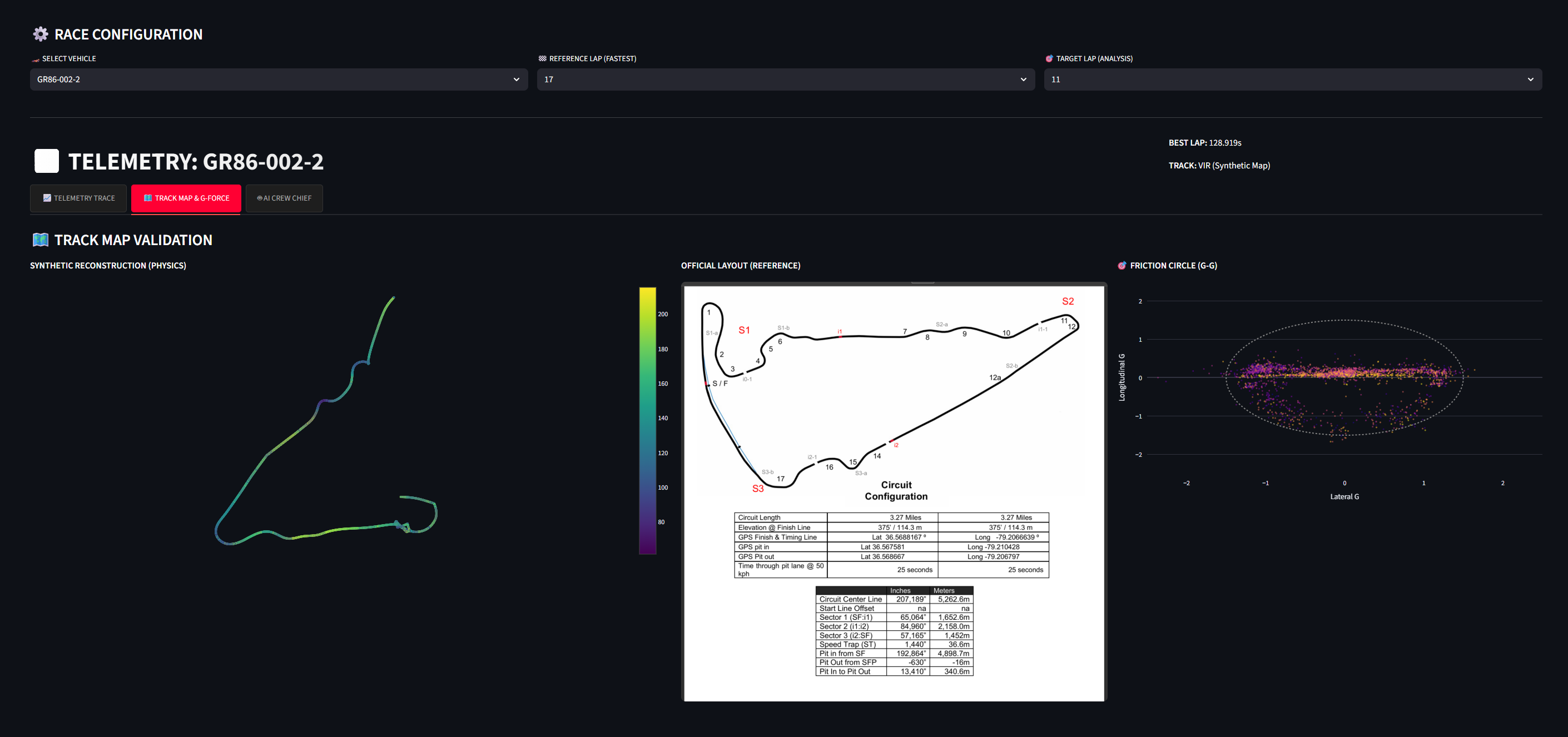
- Synthetic Track Mapping: Since the dataset lacked GPS, we built a custom physics engine that integrates vehicle speed and lateral G-forces to mathematically reconstruct the shape of the Virginia International Raceway (VIR).
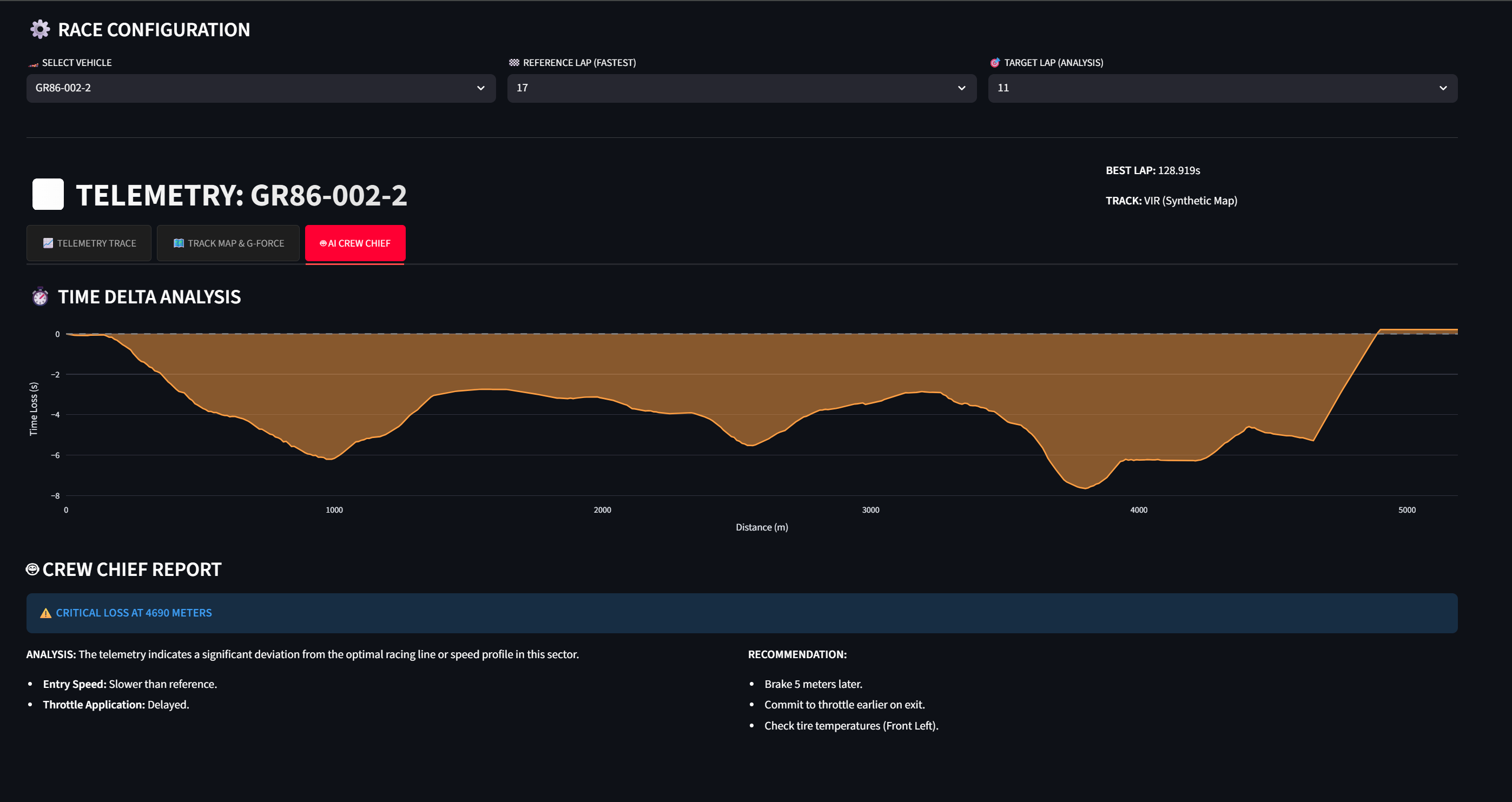
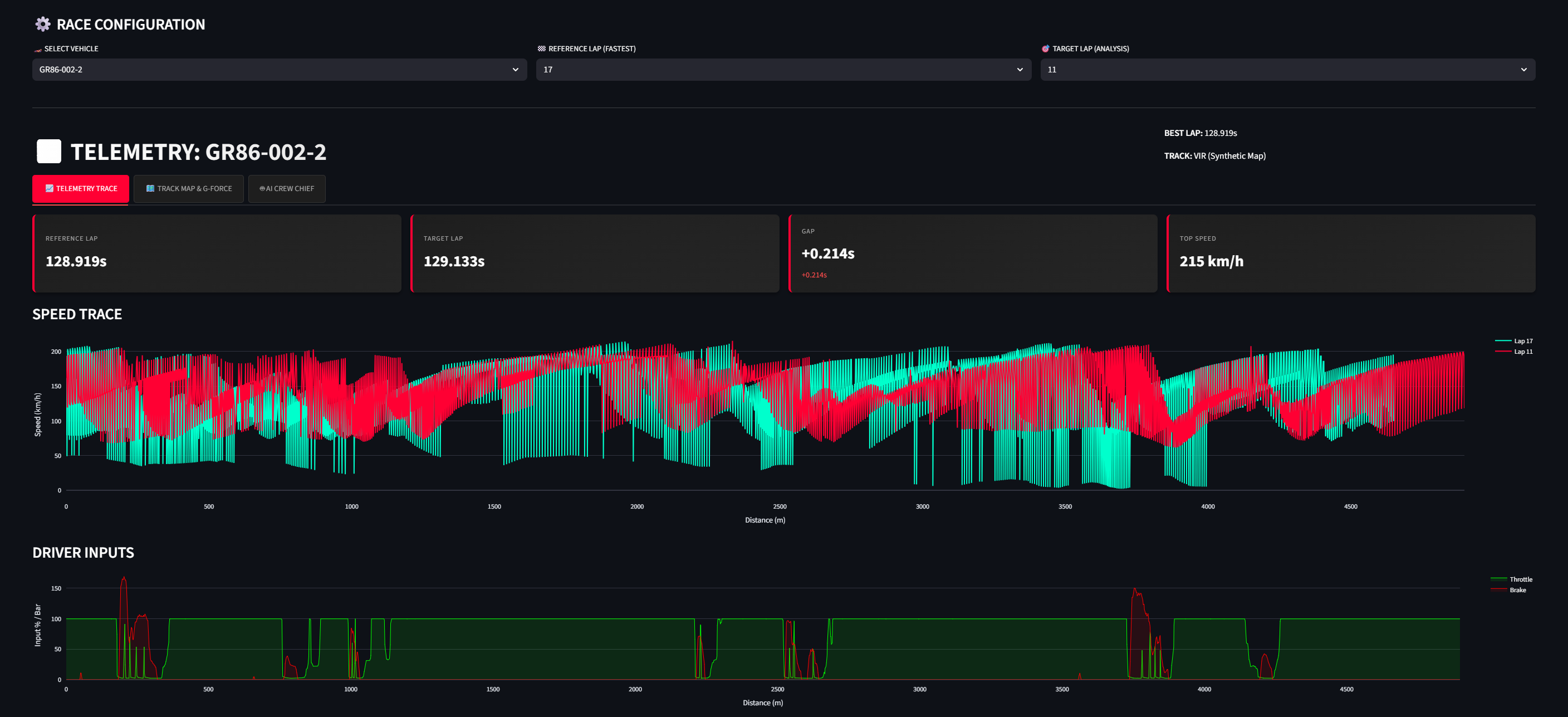
- Ghost Car Analysis: It overlays a "Target Lap" against a "Reference Lap" to visualize exactly where time is being lost (down to the millisecond).
- AI Crew Chief: An automated logic engine analyzes throttle and braking inputs to provide specific advice (e.g., "Apply throttle 10 meters earlier in Turn 3").
- High-Performance Caching: We engineered a Parquet-based caching system to load millions of data points instantly, solving the "Big Data" lag problem.
How we built it
We built the core engine using Python.
- Data Processing: We used
PandasandNumPyfor vector-based calculations to handle the massive dataset efficiently. - Physics Engine: We implemented dead-reckoning algorithms to derive X/Y coordinates from inertial sensors (Speed + Yaw Rate).
- Visualization: We used
Streamlitfor the frontend dashboard andPlotlyfor interactive, zoomable telemetry traces. - Optimization: We implemented a custom caching layer that converts raw CSVs into optimized Parquet files, speeding up data retrieval by 100x.
Challenges we ran into
The biggest hurdle was the missing GPS data. Without latitude/longitude, we couldn't plot the car on a map. We had to derive the path using physics (Speed vs. Time vs. G-Force). Calibrating this "Dead Reckoning" algorithm to match the actual track layout required complex mathematical tuning to account for sensor drift and tire slip angles.
Accomplishments that we're proud of
We are incredibly proud of the Synthetic Map Validation. When we compared our mathematically generated track map against the official FIA layout of VIR, they matched almost perfectly. This validated that our physics engine was accurately interpreting the car's behavior solely from internal sensors.
What we learned
We learned that in racing, context is everything. A "slow corner" isn't bad if it sets up a fast exit. We learned how to mathematically model vehicle dynamics and how to optimize Python code to handle gigabytes of data in real-time.
What's next for GR-Strategist
We plan to implement Machine Learning to predict tire degradation based on the "Friction Circle" data, allowing the AI to suggest the optimal lap for a pit stop before the tires fall off.

Log in or sign up for Devpost to join the conversation.