-
-
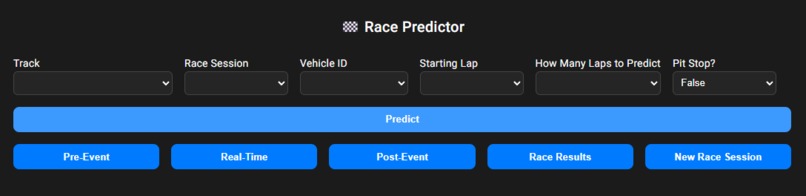
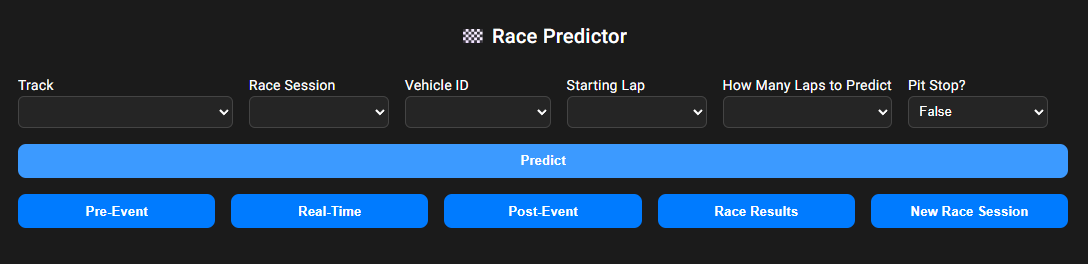
Base UI Layout
-
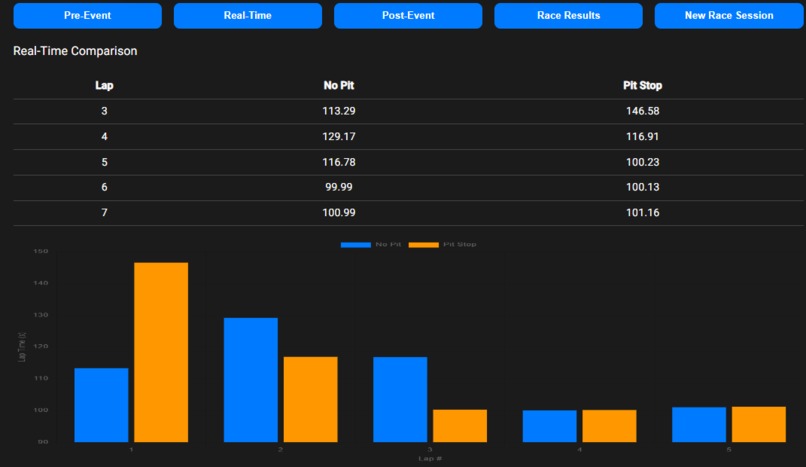
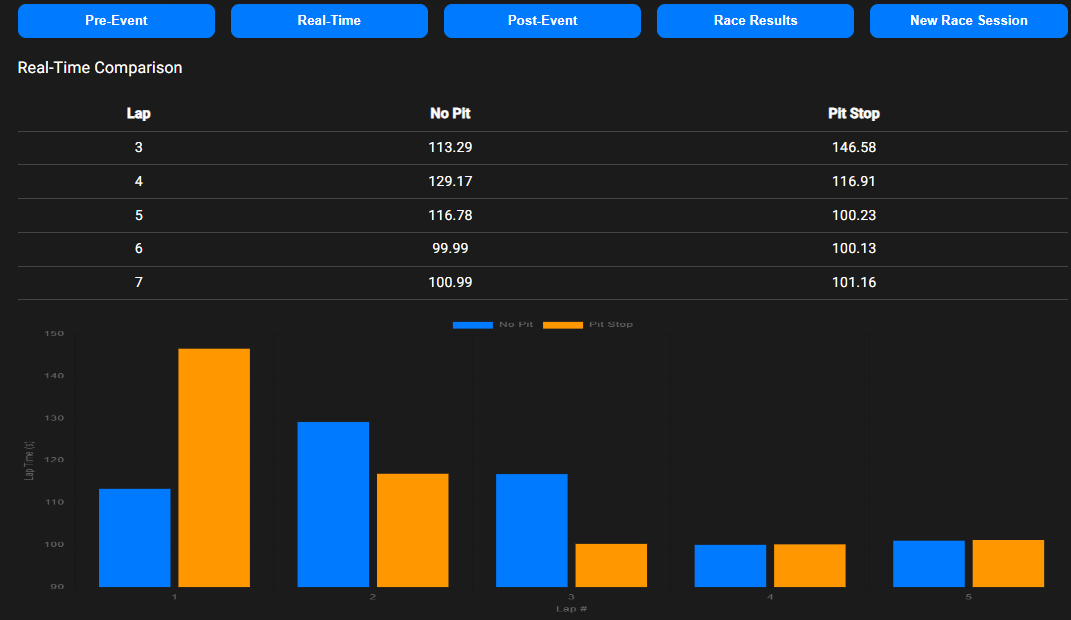
Should the car pit or not?
-
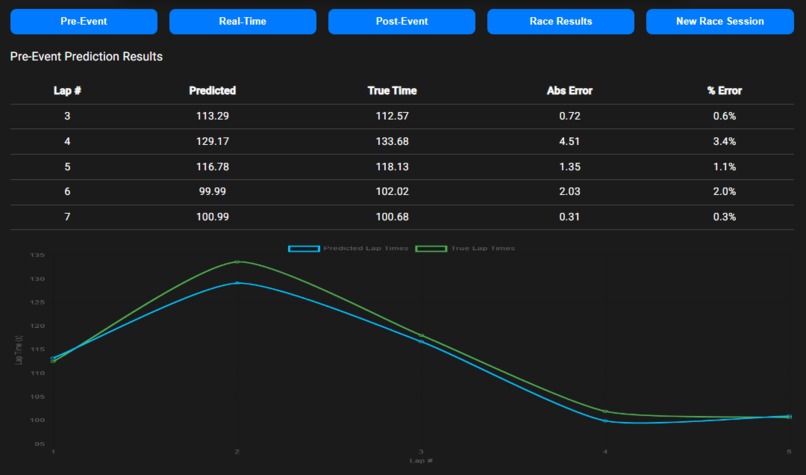
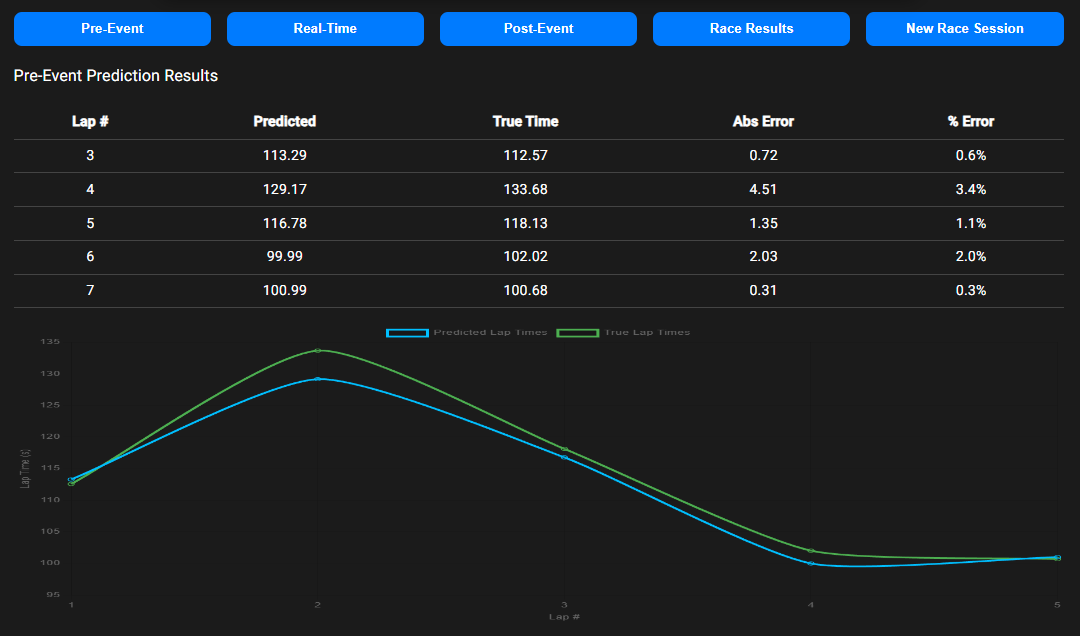
Comparing prediction to true lap times
-
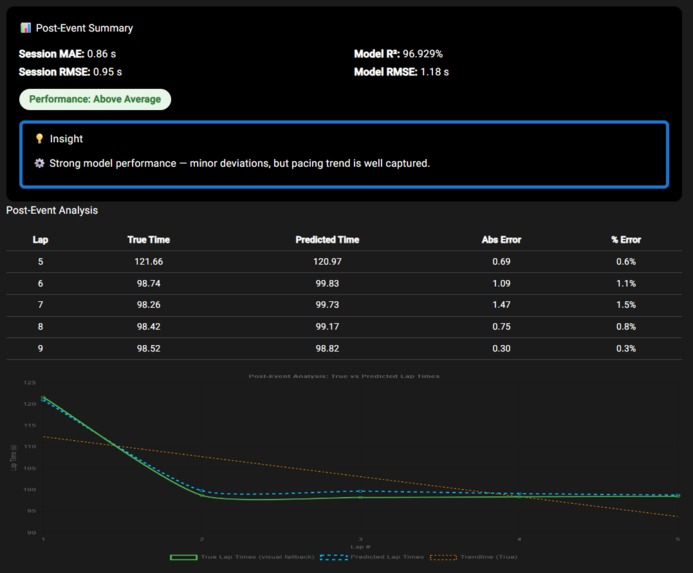
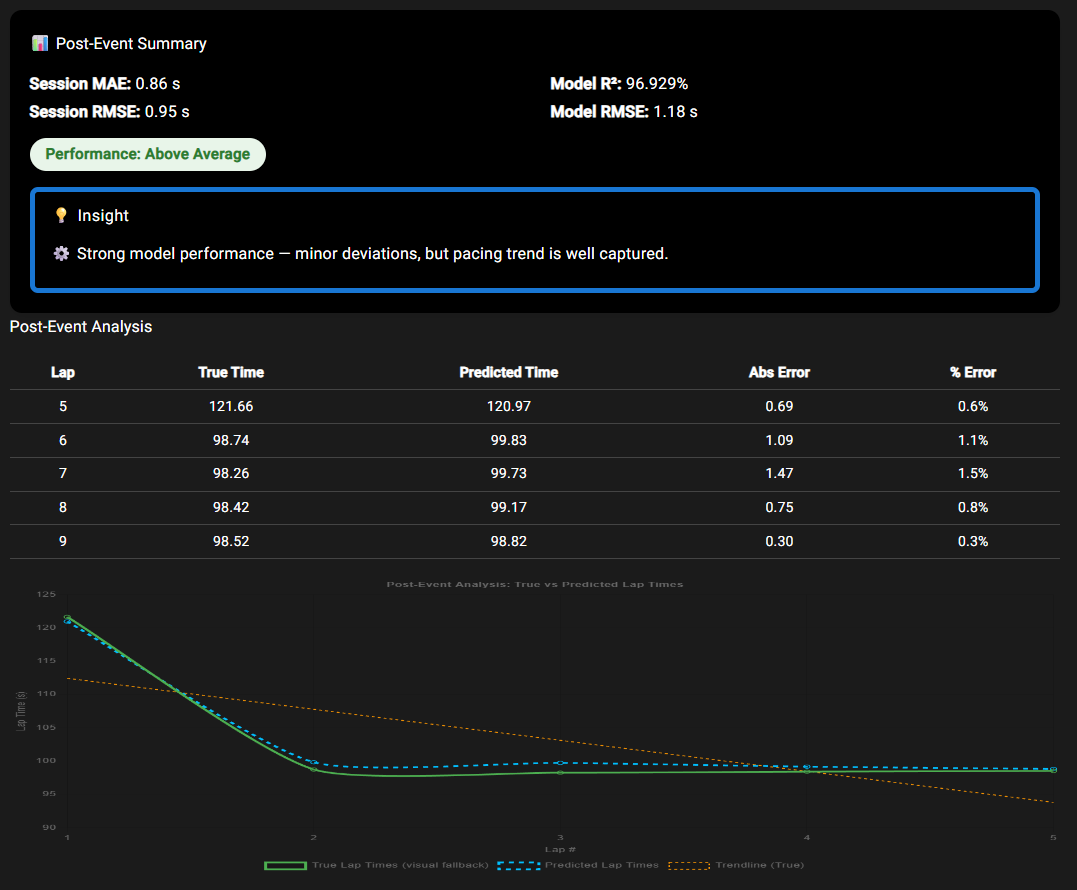
Seeing how well the model did
-
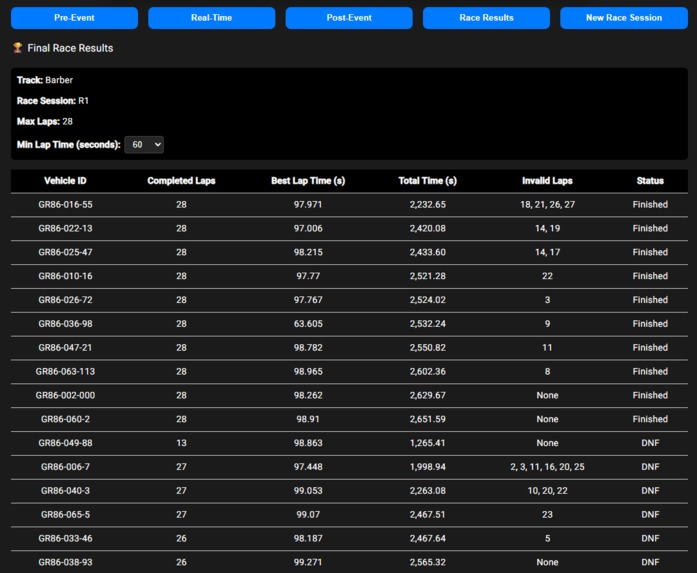
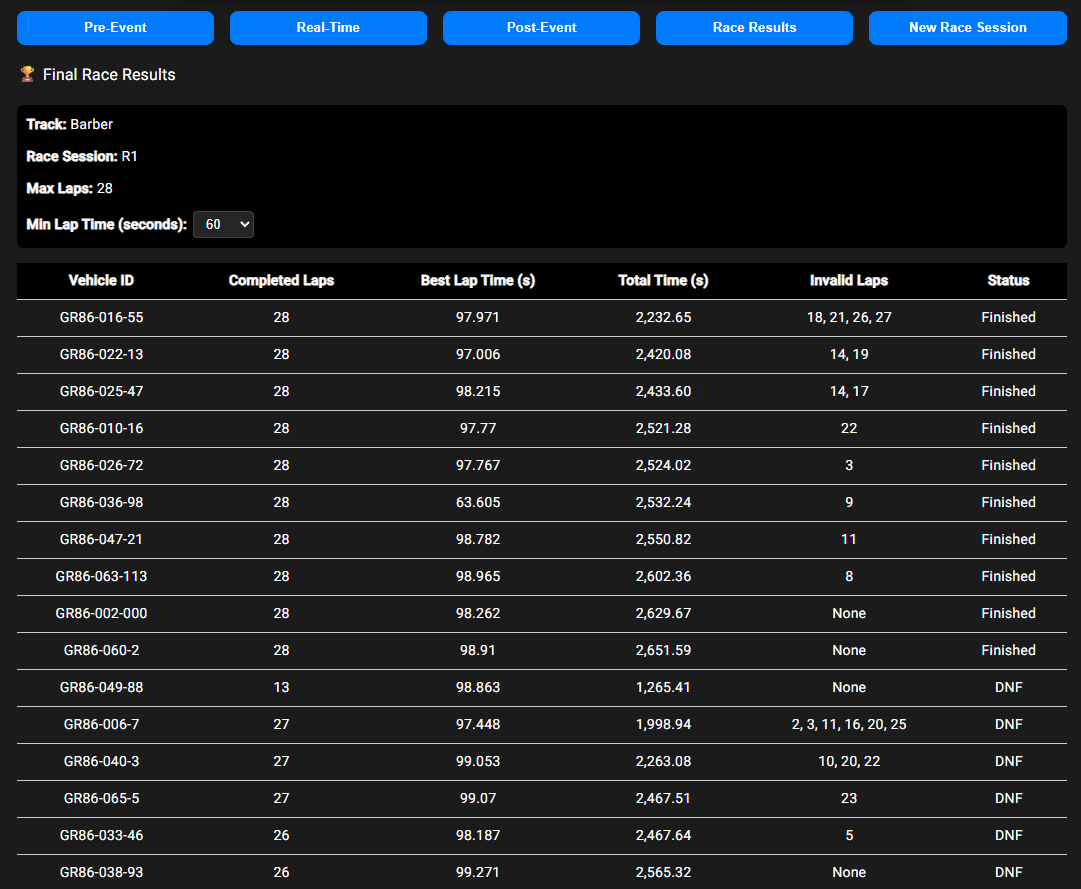
Showing final race results
-
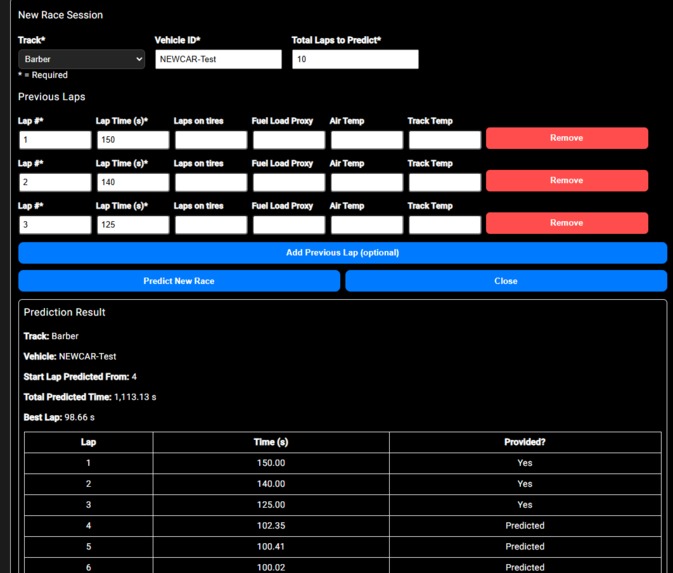
Predicting new races
-
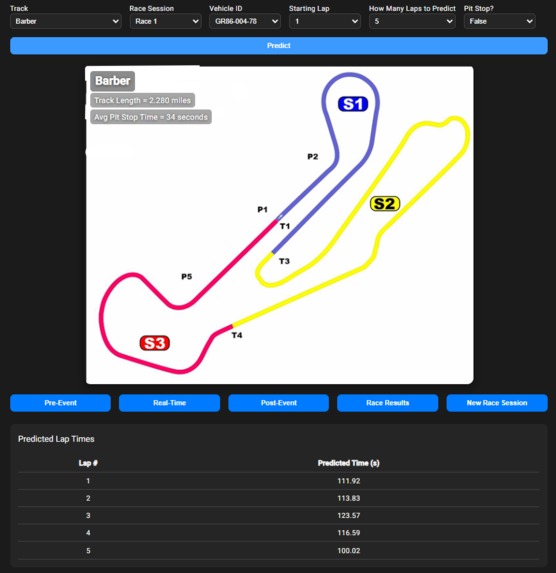
Showing track and model predictions on race car

Inspiration
Coming into this project as a graduate student with no racing experience, I was fascinated by how much strategy and data shape a driver’s performance in real time. After working multiple co-ops in software and analytics, I wanted to challenge myself to translate raw motorsport telemetry into something actionable, intuitive, and genuinely useful. GR PaceCraft grew out of that curiosity, a way to blend machine learning, system design, and race engineering into a single experience.
What it does
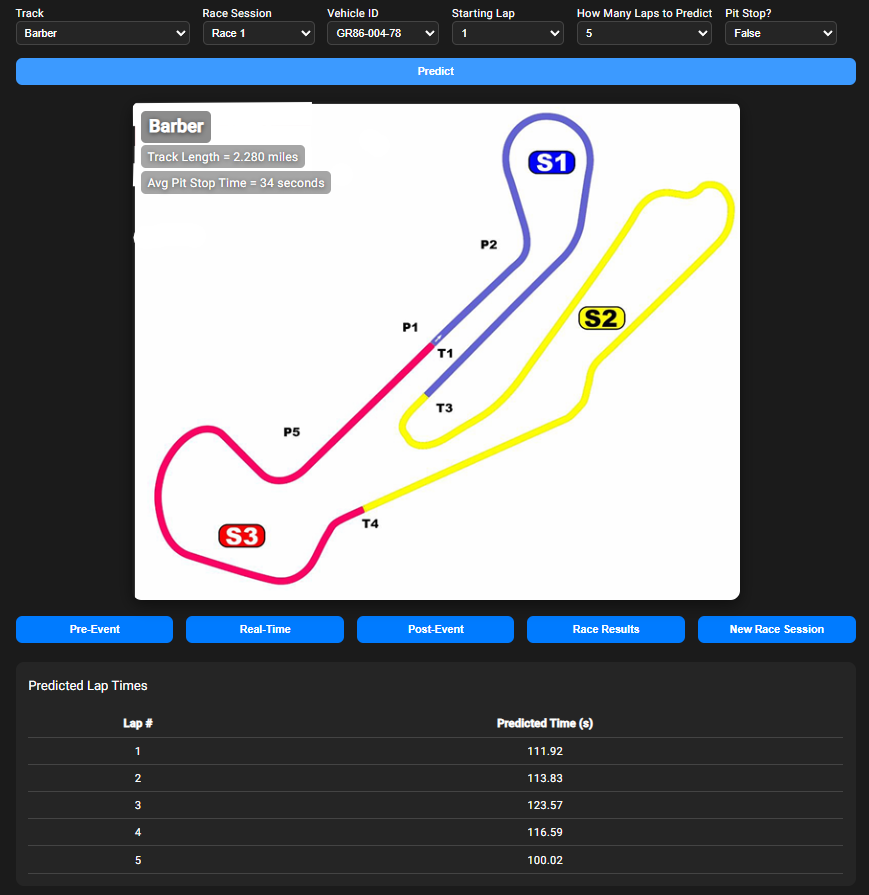
GR PaceCraft predicts lap pace, pit-stop impact, tire wear effects, and best-lap potential using machine learning paired with real-time analytics. It helps teams simulate race scenarios, compare strategies, and understand how decisions like pitting or pushing pace ripple through the rest of the race. It also supports future-race forecasting using new data as it becomes available.
How I built it
The system combines Python-based data processing, multiple ML models, and a fast API layer connected to an Angular front end. I engineered features to capture race context, filtered out unreliable data, and iterated heavily on validation to align predictions with real-world behavior. The front end visualizes simulations, historical comparisons, and strategy outcomes while dynamically interacting with the backend prediction engine.
Challenges I ran into
A major challenge was data inconsistency, from noisy laps to varying parameter formats, which required constant re-engineering and tuning of the models. Time was also tight as I balanced full-time graduate coursework and a part-time job, leaving only narrow windows for deep development work. Building the UI brought its own hurdles: debugging chart logic, handling edge cases, and ensuring everything reacted correctly to user inputs.
Accomplishments that I'm proud of
I’m proud that the system not only predicts future laps but also mirrors race dynamics in a way that feels intuitive to real users. The analytics dashboard, real-time stint simulation, and post-event results engine all came together as a polished, cohesive tool. Seeing clean predictions, smooth UI interactions, and accurate strategy insights felt like a big win after so many iterations. Also, anyone anywhere with an internet connection can use it.
What I learned
This project taught me how messy real-world data can be and how much thoughtful preprocessing, validation, and domain understanding matter before a model ever trains. I learned to architect a full-stack system that blends ML inference with dynamic UI components, and I got a crash course in designing user-centric racing analytics tools. Most importantly, I learned how to adapt quickly, and when to simplify instead of over-engineer.
What's next for GR PaceCraft: Real Time Race Strategy Engine
Next steps include integrating live telemetry streams to make the tool usable during an actual race, adding driver-specific performance profiles, and supporting more tracks and vehicle classes. I plan to improve pit-window predictions, create more nuanced tire-degradation models, and explore reinforcement learning for strategy optimization. Long term, GR PaceCraft could evolve into a full decision-support platform for engineers, drivers, and broadcasters.


Log in or sign up for Devpost to join the conversation.