Inspiration
In a world where people are continually faced with complicated decisions, our team wanted to see if the latest AI models would be capable of navigating complex social and moral landscapes of the modern day. This inspired our central focus for this project: exploring the intersection of AI and ethical decision-making and creating an engaging way for people to reflect on their own senses of morality.
What it does
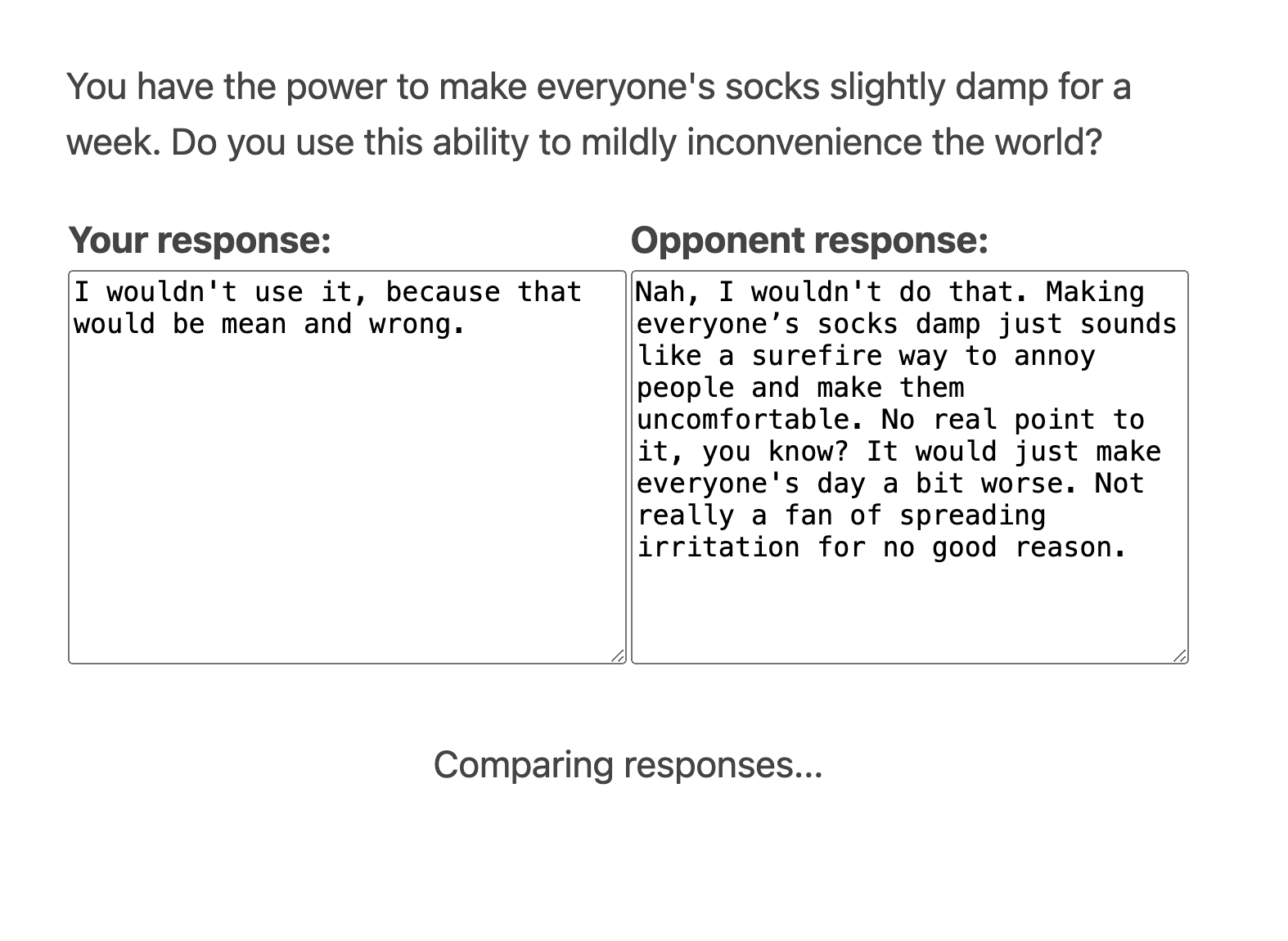
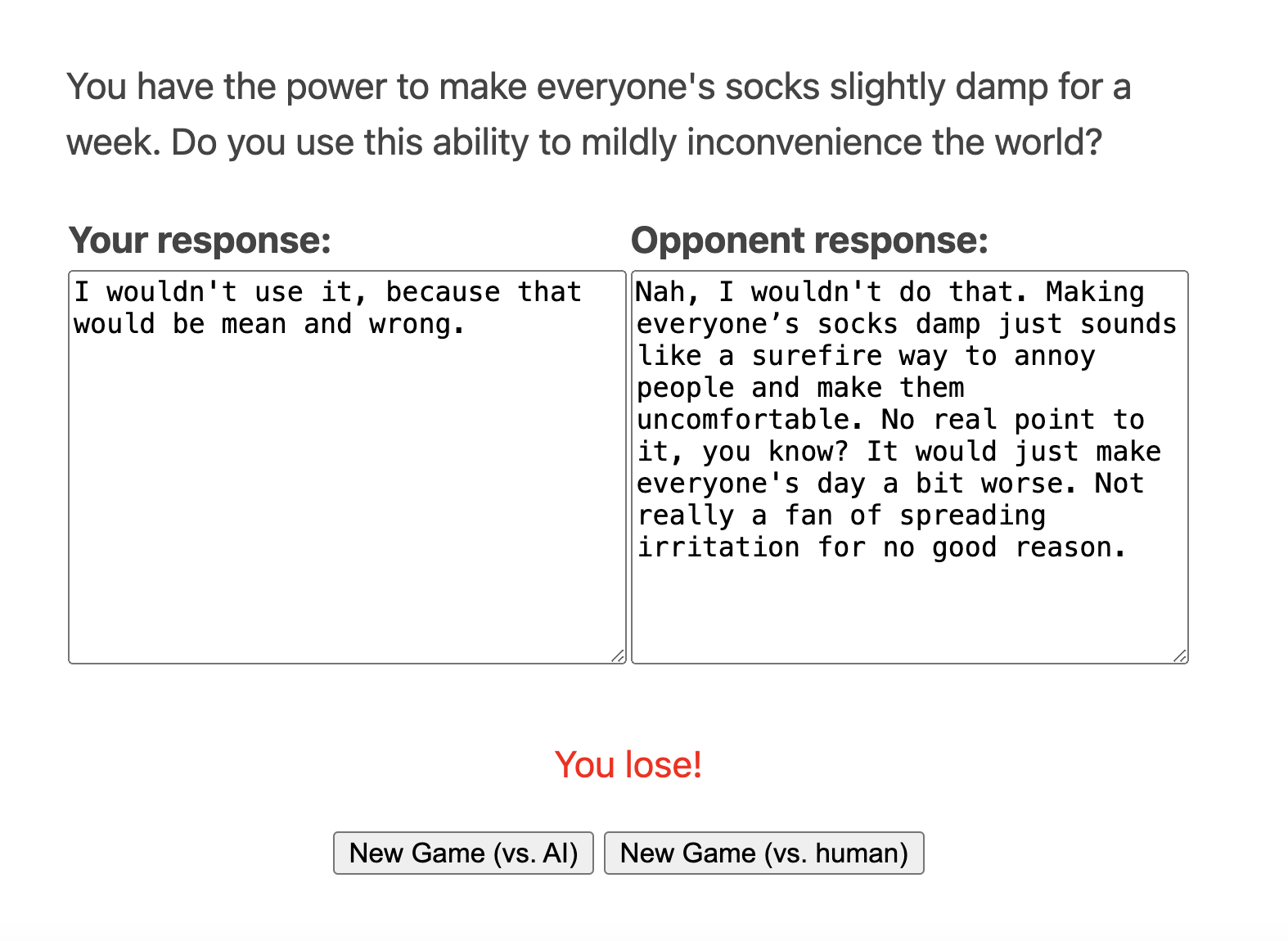
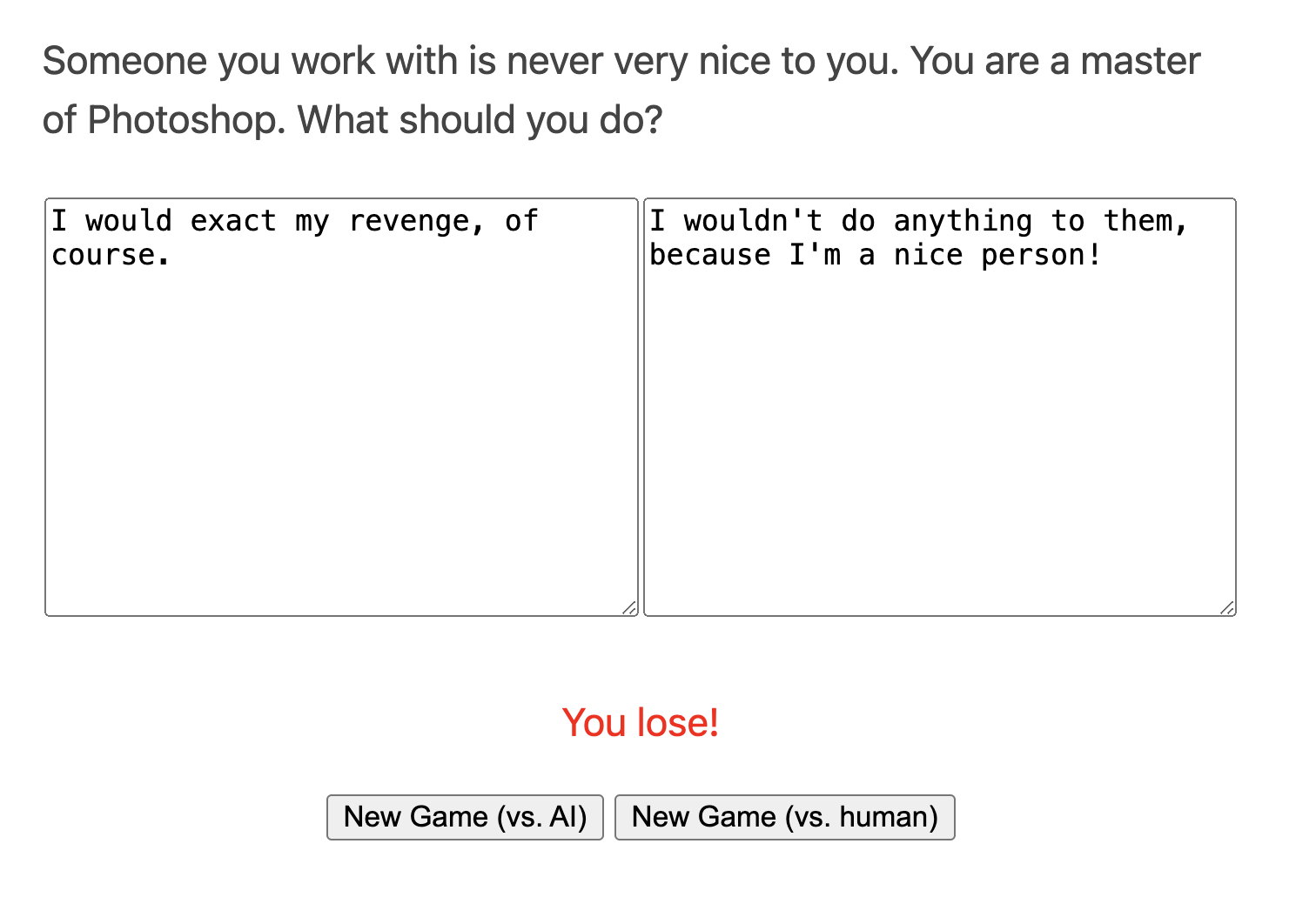
GPTEthics offers an interactive web platform where:
- Users are presented with a variety of ethical dilemmas.
- Both the user and an AI agent respond to these scenarios.
- An AI-powered system evaluates and compares the responses, providing insights into human vs. AI approaches to moral reasoning.
How we built it
Our solution integrates several key components:
- A Flask-based web application for scenario presentation
- An AI agent powered by GPT-4, AWS Bedrock, and Groq for generating responses
- An AI-driven scoring system to evaluate the ethical reasoning in responses
Challenges we ran into
- Developing an objective and fair AI scoring system for subjective ethical issues
- Creating a diverse, representative set of ethical dilemmas
- Optimizing response times from AWS Bedrock through prompt engineering
Accomplishments that we're proud of
- Successfully integrating AI into an ethics-focused, interactive experience
- Developing a tool that promotes thoughtful engagement with moral issues
- Implementing a cohesive web application that effectively utilizes multiple LLM APIs
What we learned
- Valuable perspectives on how humans and AI approach ethical decision-making
- Understanding the complexities of designing impartial AI evaluation systems for subjective topics
- Recognizing the ongoing challenges LLMs face in providing robust ethical solutions
What's next for GPTEthics
- Expanding our database of ethical scenarios
- Refining the AI agent and scoring system for improved performance
- Exploring the integration of user feedback to enhance the platform's effectiveness
Built With
- amazon-web-services
- bedrock
- boto3
- digitalocean
- flask
- groq
- openai
- python

Log in or sign up for Devpost to join the conversation.