Inspiration I've always been a builder, but what pulled me into building in the first place was looking at things. I'm the person who stops mid-game at 4K just to stare: the light on a hillside, the way a menu slides in, the weight of good typography on a loading screen. Visuals mesmerize me. I love both sides of the craft, the engineering and the design, but design has always had a special flavor for me: the difference between something that works and something that feels made.
Then agentic coding arrived, and I noticed something that bothered me: agents ship features incredibly fast, but they can't ship taste. Every agent-built page looks like the same rounded-corner gradient soup. The speed is real; the craft is missing.
So I built GPTDesign, so that anyone, with any agent, can make products that are actually crafted.
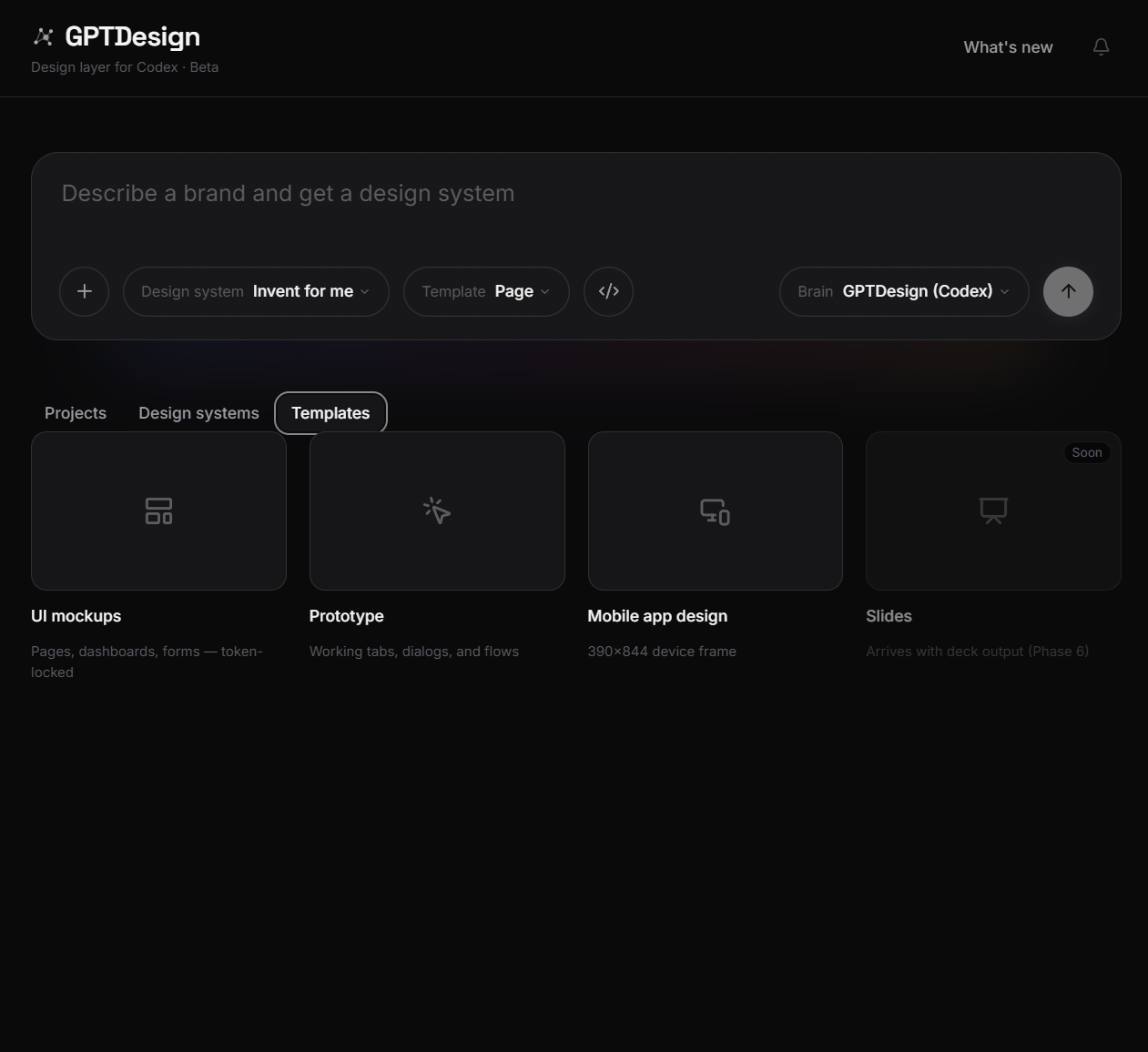
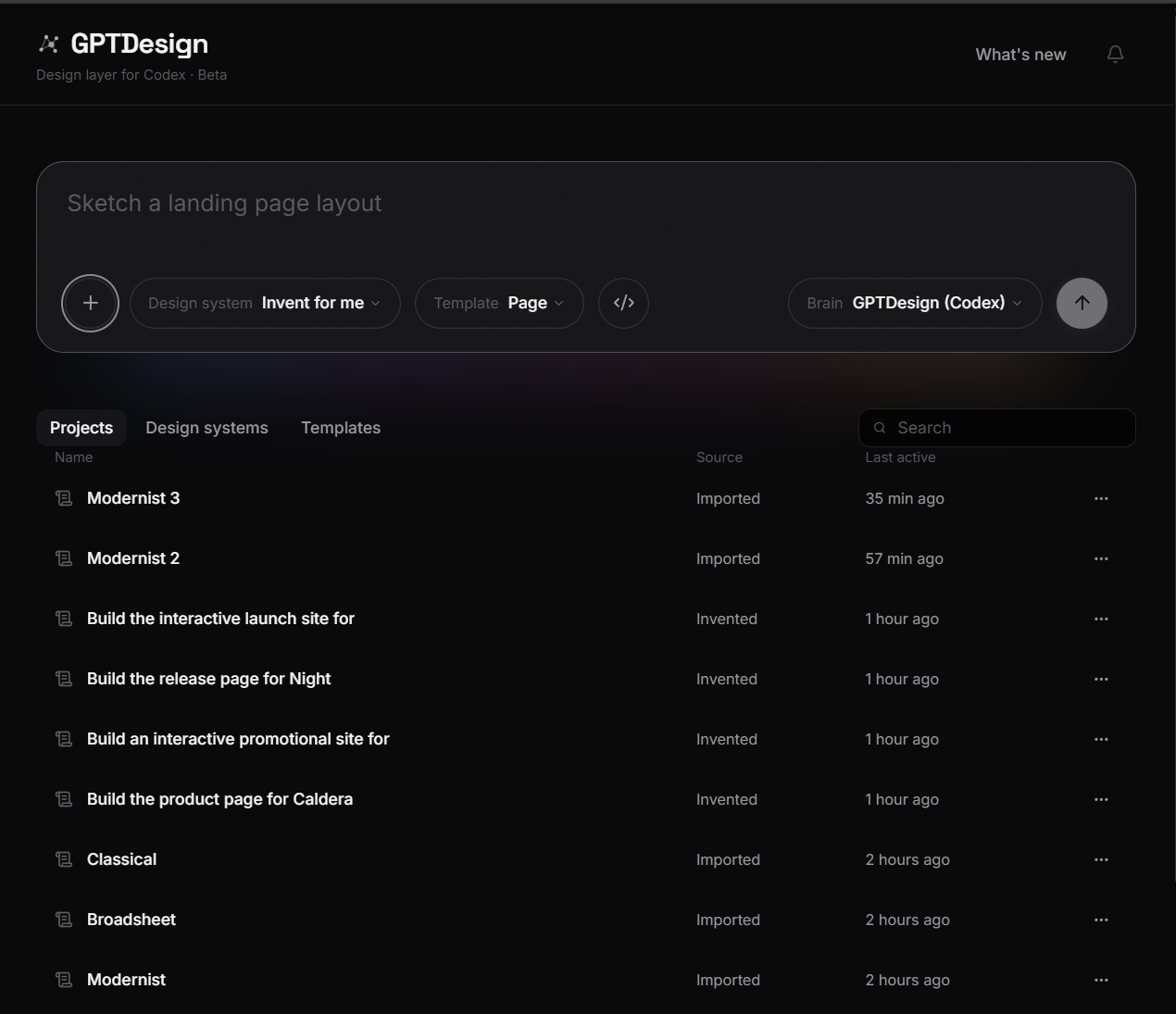
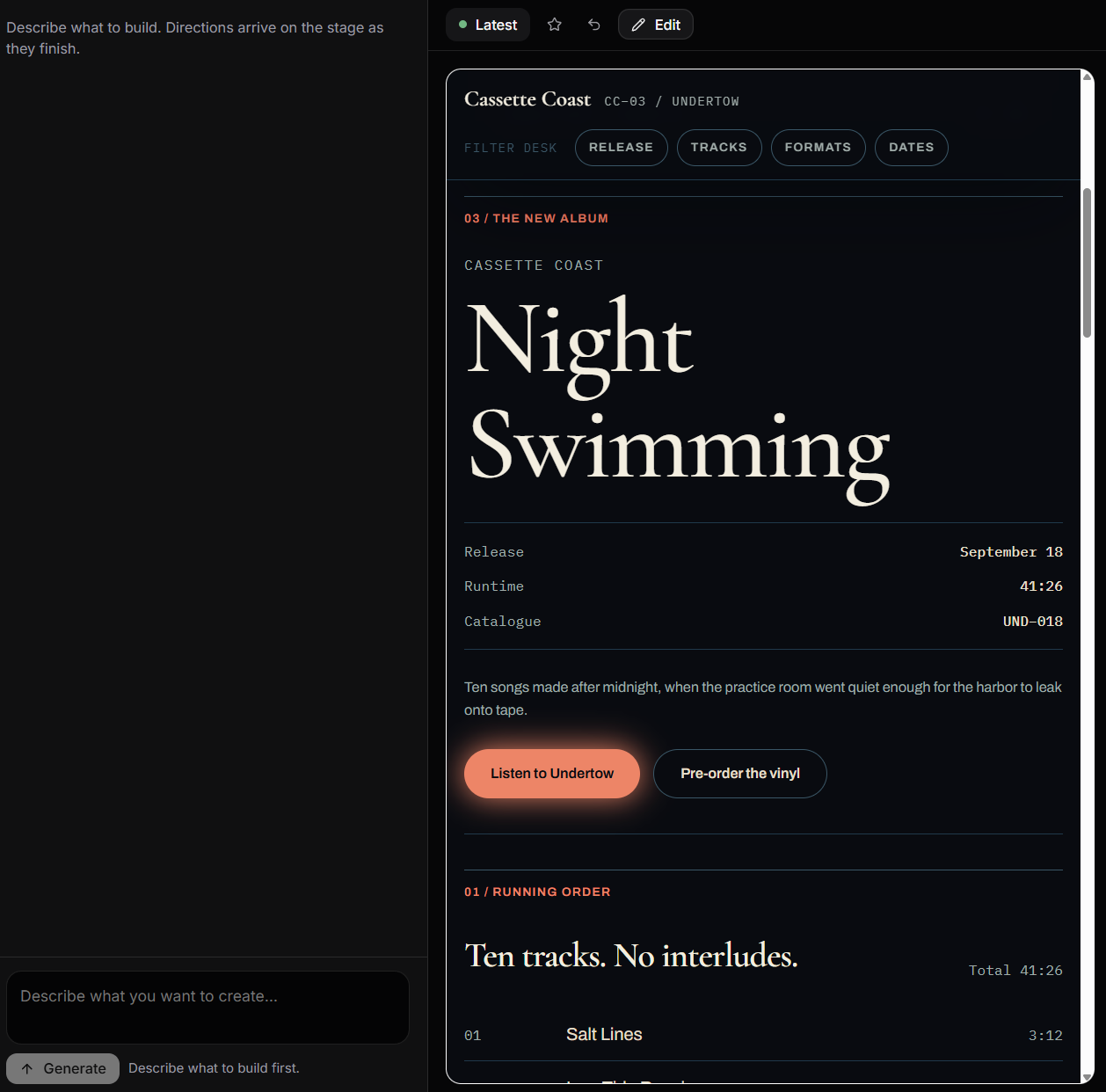
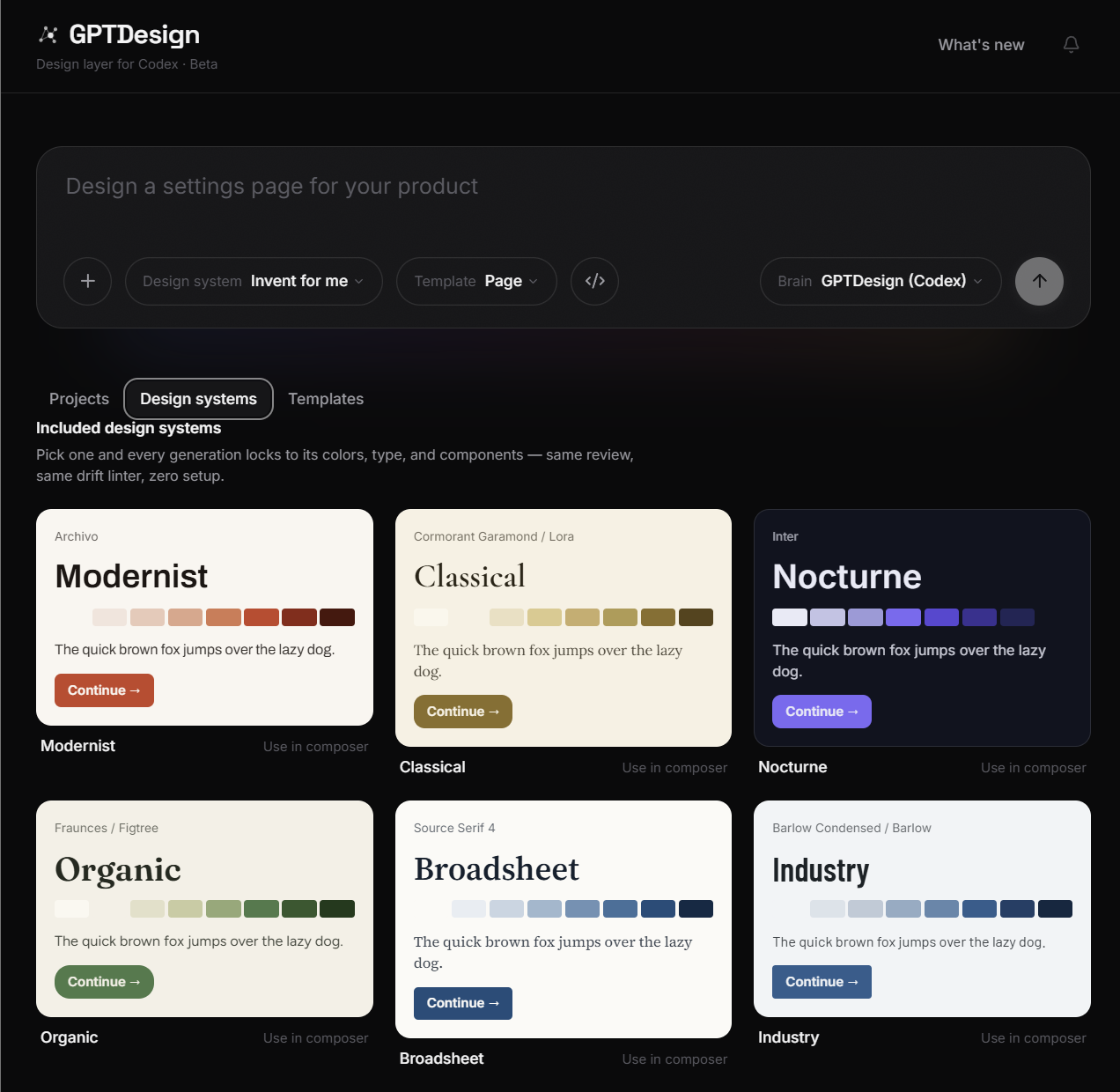
What it does GPTDesign is the design layer for Codex. You give it a design system, extracted from your repo, invented from a brand description, or picked from built-in starters, and from that moment the system is law. Any agent generates pages live on a canvas, and a deterministic drift linter hard-rejects every color, font, and spacing value outside the system. Not a model politely checking itself. A gate.
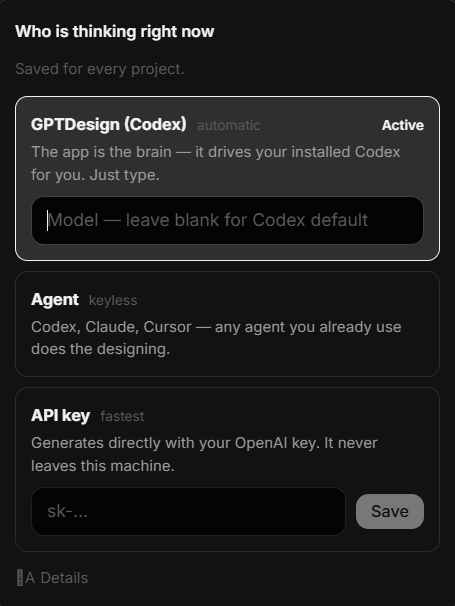
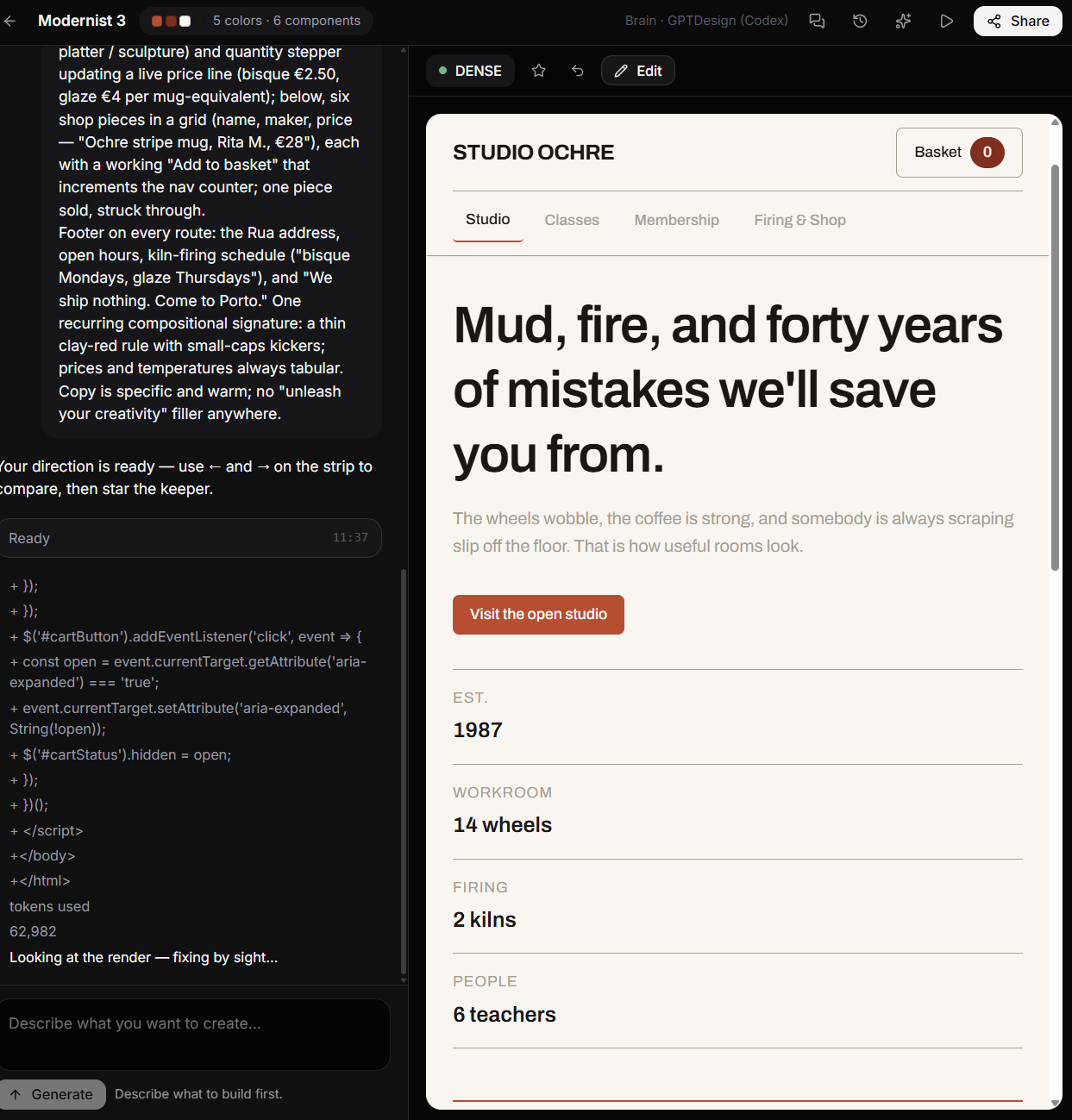
Three interchangeable brains: your installed Codex CLI (just type, GPTDesign drives it), any agent you use via MCP tools or a one-paste handoff, or GPT-5.6 directly with your key. Every run ends in proof: the drift gate, a sight pass where the model inspects a screenshot of its own render and fixes what it sees, and a behavior gate where a real browser walks every tab, dialog, and button of interactive prototypes. Then a design/ bundle hands the finished work back to Codex to implement.
How I built it With Codex, end to end: three spec-driven phases, each merged as the codex/* pull requests you can read in the repo. The core engine (token-locked generation, drift linting, briefs, behavior verification), the Fastify server, the MCP surface, the extraction pipeline: all built in Codex sessions against a written spec. GPT-5.6 runs inside the product too. The BYOK engine streams token-by-token over the Responses API, and the bridge spawns codex exec as a keyless brain with screenshots piped in for the sight loop.
Challenges The hardest one: live streaming across three completely different brains. An API streams tokens; an agentic CLI thinks silently and answers at the end; an external agent lives in another process entirely. Getting all three to paint the same canvas meant three different channels feeding one draft pipeline, and a sandboxed iframe renderer that had to be rebuilt twice before it stopped flickering. The deepest lesson was about verification: gates have hands, not eyes. Linting catches rule-breaking, but only making the model look at its own render (the sight loop) closed the taste gap.
What I learned Determinism and taste aren't enemies. The stricter the system, the more confident the design. The constraint is the product.
What's next Hosted workspaces with shareable links, an export suite (deploy/PPTX/PDF), and new output types: decks and diagrams under the same token lock.
Same tags and links as before. Go.
Built With
- codex
- fastify
- gpt-5.6
- mcp
- node.js
- openai-api
- playwright
- radix-ui
- react
- sse
- typescript
- vite
- zod
- zustand


Log in or sign up for Devpost to join the conversation.