Inspiration
AI agents are becoming capable of researching, booking services, calling APIs and completing complex tasks, but they still cannot independently manage payments inside a conversation. We wanted to build a secure payment layer that allows both users and autonomous AI agents to prepare, approve and execute transactions without leaving ChatGPT.
What it does
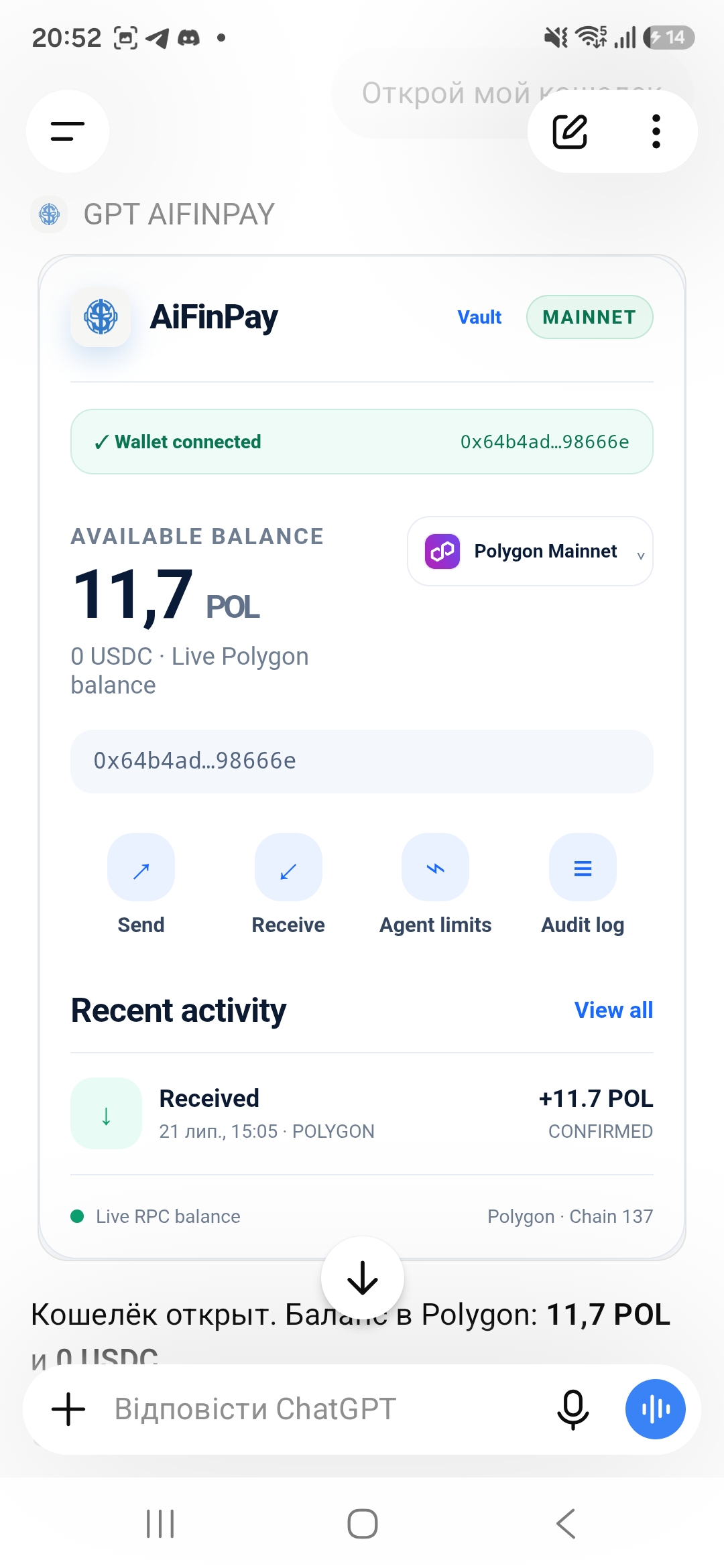
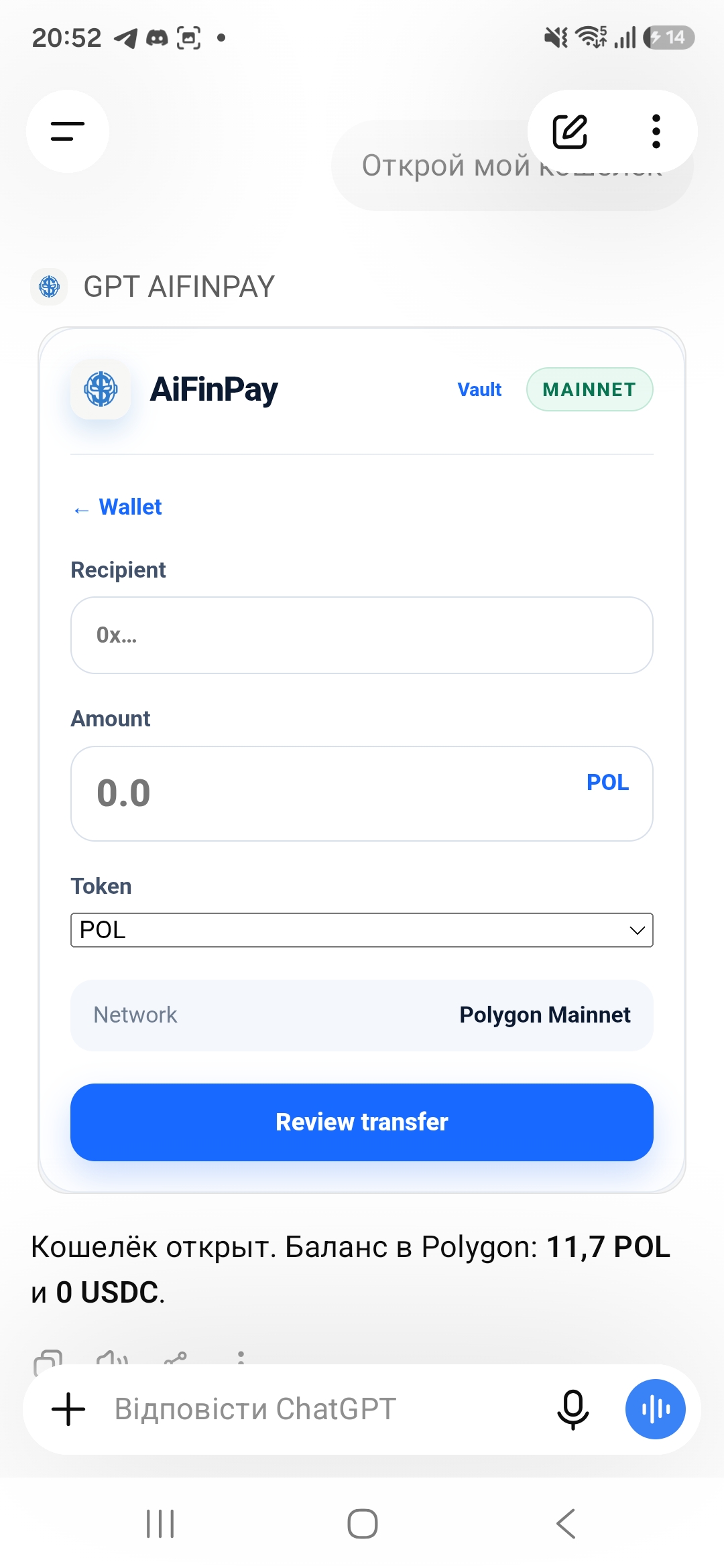
AiFinPay Wallet for ChatGPT is a programmable multichain wallet and payment approval layer built directly into ChatGPT.
Users can:
- Create or connect a wallet
- View balances and transaction history
- Receive assets
- Prepare and send payments through natural-language commands
- Select between 12 supported blockchain networks
- Set transaction limits and spending policies
- Review and approve payments before execution
- Track transaction status, receipts and audit history
The wallet is also designed for autonomous AI agents. An agent can prepare a payment request, but execution remains controlled by wallet permissions, limits and user approval rules.
Private keys and seed phrases are never exposed to ChatGPT or the language model.
How we built it
We built the project using GPT-5.6, Codex, the OpenAI Apps SDK and the Model Context Protocol.
The application consists of:
- A ChatGPT interface built with the OpenAI Apps SDK
- An MCP server with wallet and payment tools
- A Node.js and TypeScript backend
- A React-based wallet interface
- Persistent wallet linking through OAuth
- Multichain balance and transaction services
- A policy engine for limits and payment approvals
- SQLite storage for transaction history and audit events
- Idempotency protection to prevent duplicate payments
- An audit hash chain for verifiable operation history
GPT-5.6 helped us design the product architecture, user flows, security model and MCP tool structure. Codex was used to generate, refactor, debug and test the implementation.
Challenges we ran into
The main challenge was combining a conversational AI interface with secure wallet operations.
We had to make sure that:
- ChatGPT never receives private keys or seed phrases
- Payments cannot be executed twice
- The correct blockchain network is always selected
- Wallet sessions remain connected between conversations
- Agent-initiated payments follow spending limits and approval policies
- The interface works correctly on both desktop and mobile
- Blockchain errors are translated into clear responses for the user
Another challenge was creating one consistent user experience across multiple blockchain networks with different transaction formats and fee models.
Accomplishments that we're proud of
We built a working multichain wallet experience inside ChatGPT.
The project includes:
- A functional ChatGPT application
- 12 supported blockchain networks
- 16 MCP wallet and payment tools
- Persistent wallet linking
- Real balance retrieval
- Payment preparation and approval flows
- Programmable spending policies
- Transaction receipts and status tracking
- An auditable transaction history
- A mobile-compatible wallet interface
The result is a working foundation for both human-controlled payments and autonomous AI-agent commerce directly inside ChatGPT.
What we learned
We learned that AI-agent payments require more than a basic wallet connection. Agents need programmable permissions, transaction limits, approval rules, receipts, idempotency and a complete audit trail.
We also learned how to combine the OpenAI Apps SDK and MCP into one product where ChatGPT handles intent and interaction, while sensitive wallet logic remains isolated in a secure external service.
What's next
Our next step is to complete production-grade transaction signing and expand the wallet into a full payment infrastructure for autonomous AI agents.
We plan to add:
- More assets and blockchain networks
- Stablecoin payment support
- Agent-specific wallets and spending budgets
- Merchant payment requests
- x402 and AIFP-1 payment flows
- Subscription and usage-based payments
- More advanced security and approval policies
Built With
- a2a
- avalanche
- blockchain
- chatgpt-apps-sdk
- codex
- ecomers
- express.js
- gpt-5.6
- gptdev
- javascript
- m2m
- machine
- model-context-protocol
- node.js
- openai
- payments
- polygon
- react
- rest-api
- solana
- typescript
- vite
- wallet
- web3


Log in or sign up for Devpost to join the conversation.