Inspiration
We've all been there: spending hours wrestling with image generators that butcher text on posters, distort hands, or produce that unmistakable "AI-generated" plastic sheen. When OpenAI announced its next-generation image model, we saw an opportunity to build something the creative community has been waiting for — a frictionless, browser-based studio that finally delivers photoreal quality and accurate typography without forcing users to juggle APIs, GPUs, or steep learning curves. We wanted marketers, designers, and indie creators to feel the magic in under sixty seconds.
What it does
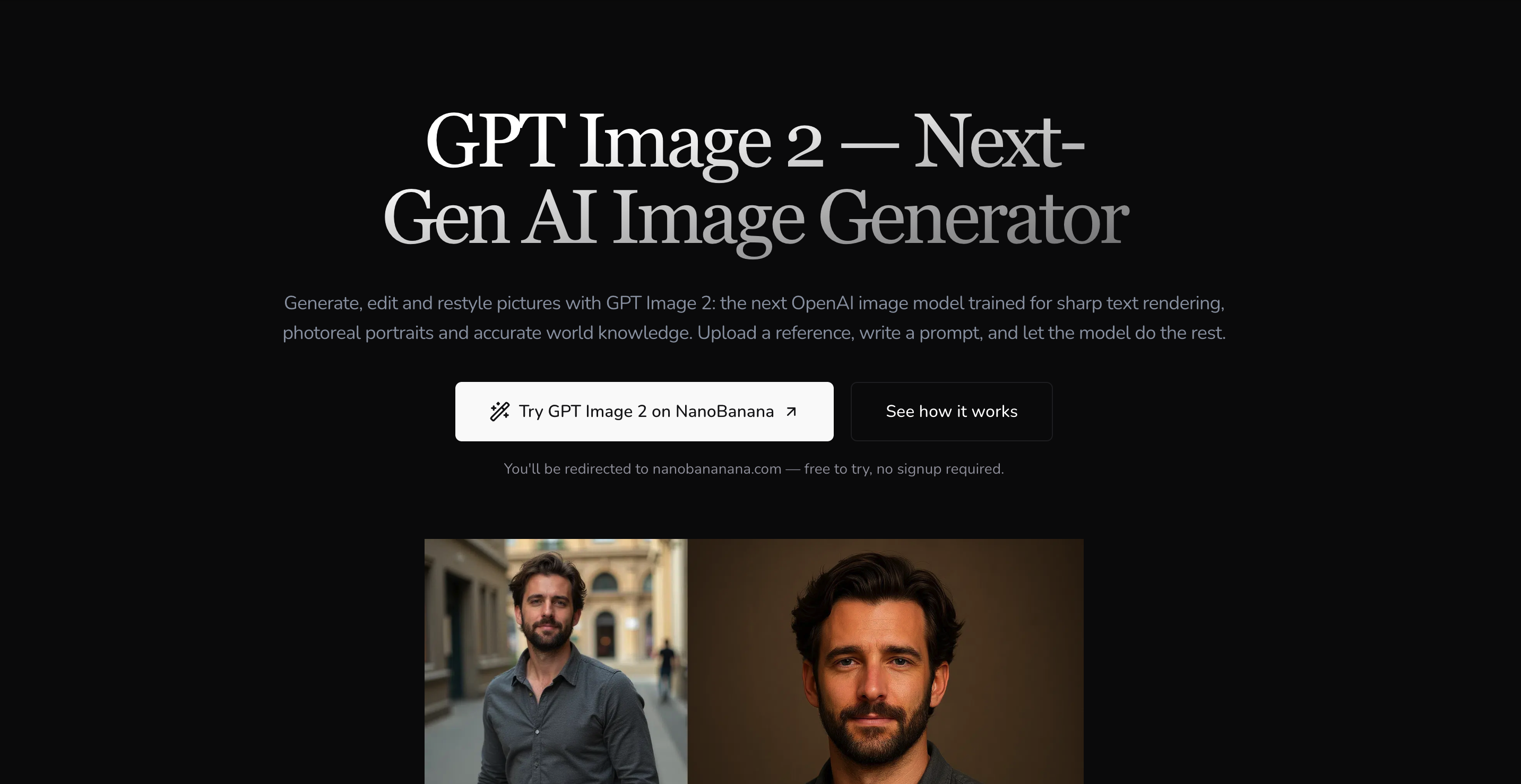
GPT Image 2 is a web-based AI image generator that lets anyone create, edit, and restyle visuals directly in the browser. Users type a prompt, optionally upload a reference image, and receive high-resolution, on-brand variations within seconds. The platform handles ad creatives, product shots, social media content, poster typography, and photoreal portraits — all without installs or technical setup. It also supports head-to-head comparisons against models like Nano Banana Pro and Midjourney so users can see the quality difference for themselves.
How we built it
We built the frontend with Next.js and Tailwind CSS for a fast, responsive studio experience, and Vercel for edge deployment. The backend is a Node.js service that orchestrates calls to the underlying image model, handles prompt preprocessing, manages reference image uploads, and streams results back to the client. We used Cloudflare R2 for image storage, Redis for queue management during peak load, and a lightweight credit system to track generations. The comparison feature pipes the same prompt through multiple model endpoints in parallel and renders results side by side.
Challenges we ran into
Latency was our biggest enemy — users expect results in seconds, but high-resolution generation is computationally heavy. We tackled this with aggressive caching, request batching, and progressive image loading. Prompt engineering was another hurdle: raw user inputs often produced inconsistent quality, so we built a prompt-enhancement layer that quietly refines vague inputs without taking creative control away from the user. Handling reference image uploads safely — filtering NSFW content, stripping metadata, and respecting copyright — also required a dedicated moderation pipeline.
Accomplishments that we're proud of
We shipped a polished, production-ready studio that loads in under two seconds and generates images in roughly five to ten. We're especially proud of the typography accuracy — posters, packaging mockups, and ad creatives come out with legible, correctly spelled text on the first try, which has been a long-standing pain point in the industry. Our side-by-side comparison tool has become a favorite feature, giving users transparent, honest visibility into model differences instead of marketing fluff.
What we learned
We learned that user experience matters as much as model quality. A state-of-the-art model wrapped in a clunky interface still feels frustrating, while a thoughtfully designed studio makes even small improvements feel transformative. We also learned to respect the long tail of use cases — wedding invitations, indie game assets, real estate listings, classroom materials — that we never anticipated but that now drive a meaningful share of our traffic. Listening to early users reshaped our roadmap more than any internal planning session.
What's next for GPT Image 2 — Next-Gen AI Image Generator
Next, we're rolling out a multi-image canvas for composing scenes from several references, a brand kit feature that locks in fonts, colors, and logos across every generation, and an API for developers who want to embed GPT Image 2 into their own products. We're also exploring lightweight video generation, real-time collaborative editing, and deeper integrations with Figma, Canva, and Shopify — so creators can move from idea to published asset without ever leaving their workflow.
Built With
- nextjs

Log in or sign up for Devpost to join the conversation.