-
-
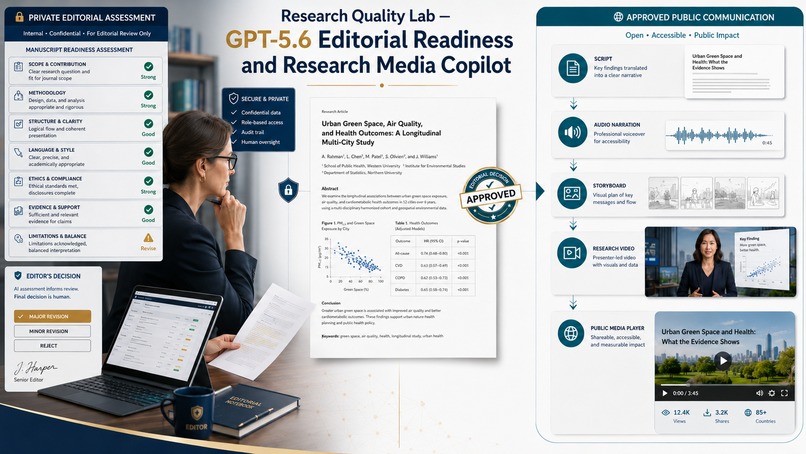
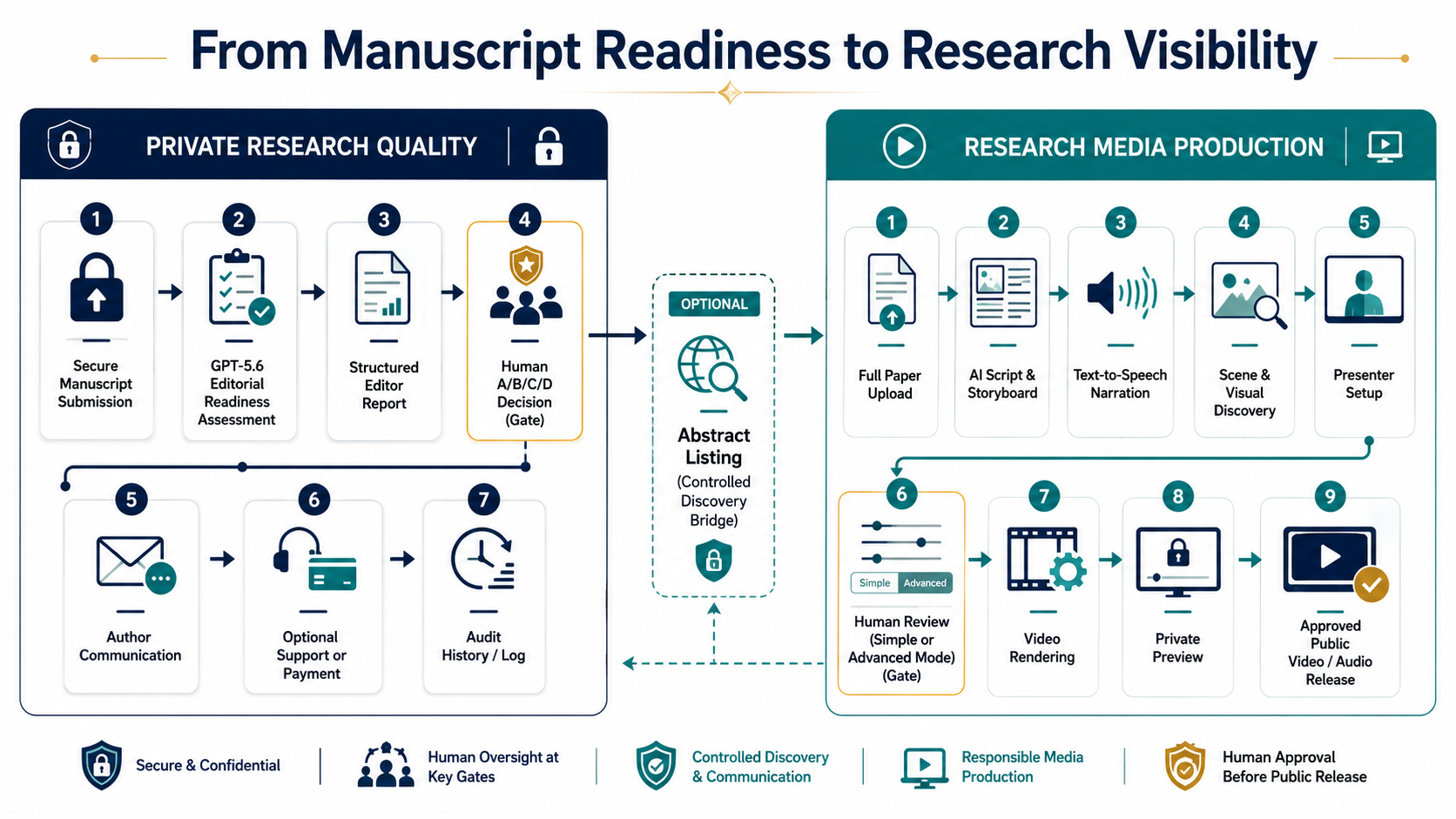
01 RQL hero: manuscript quality to public research communication
-
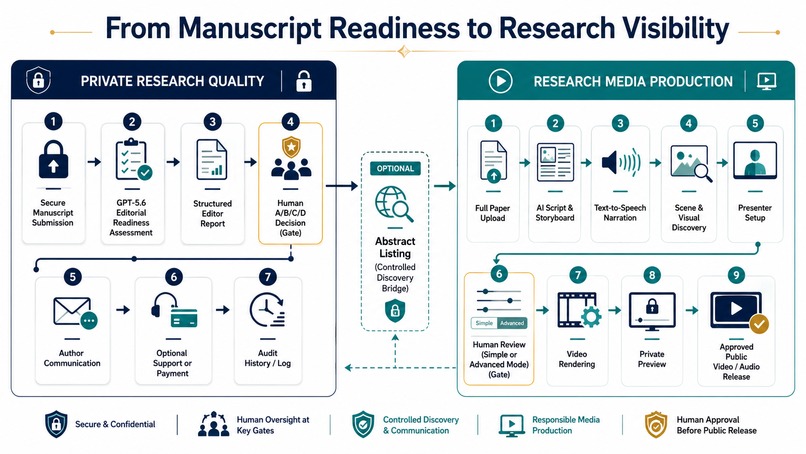
02 Complete two-part workflow infographic
-
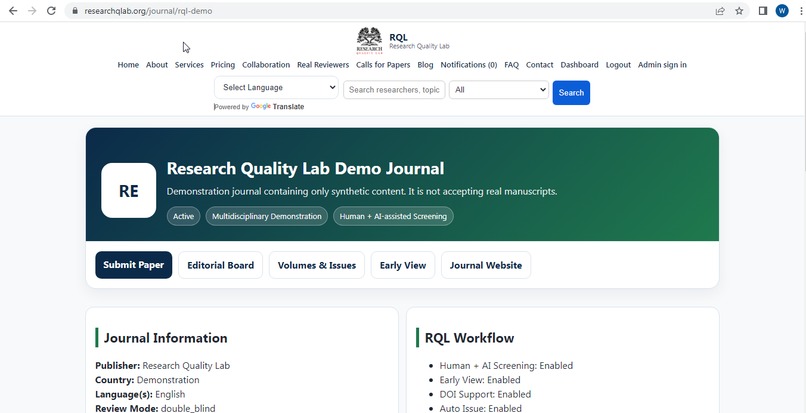
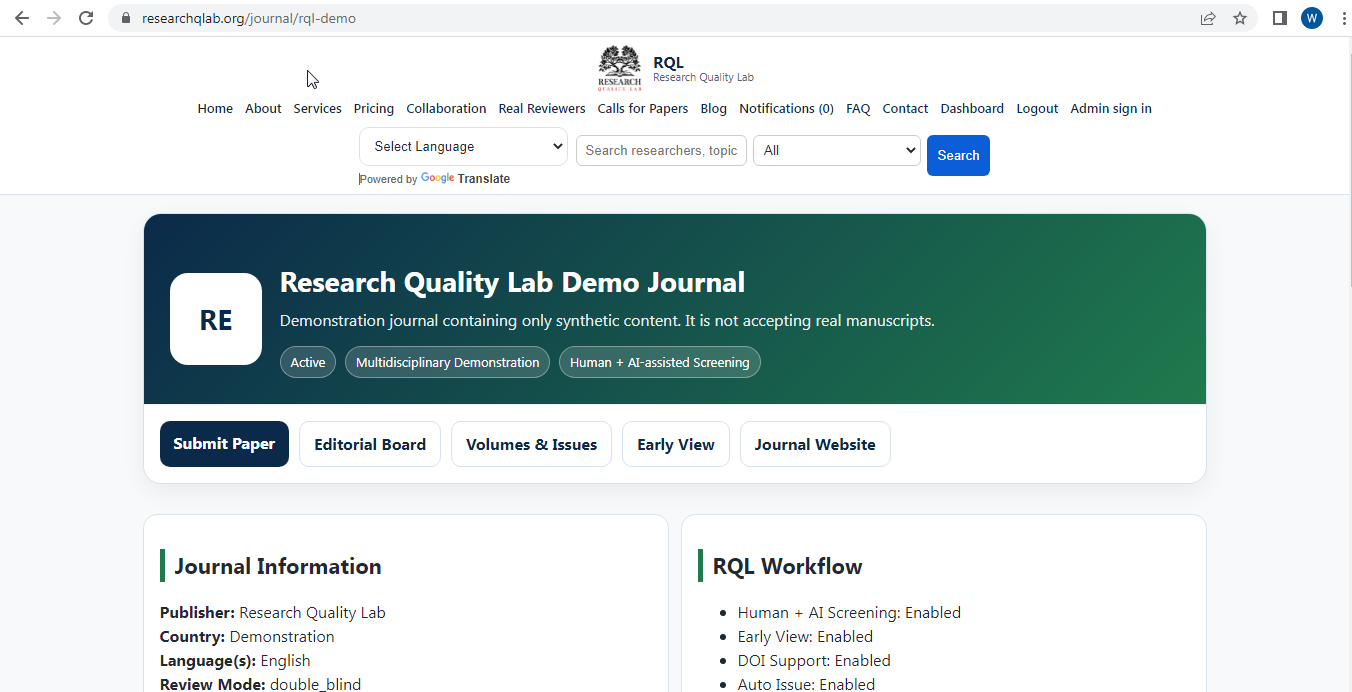
03 Demo journal and synthetic manuscript overview
-
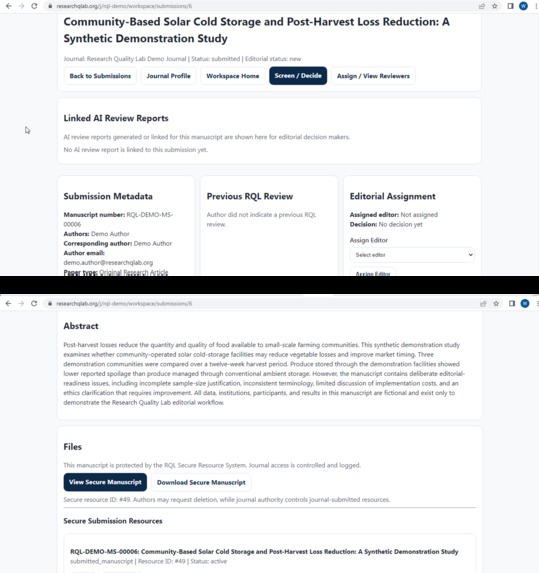
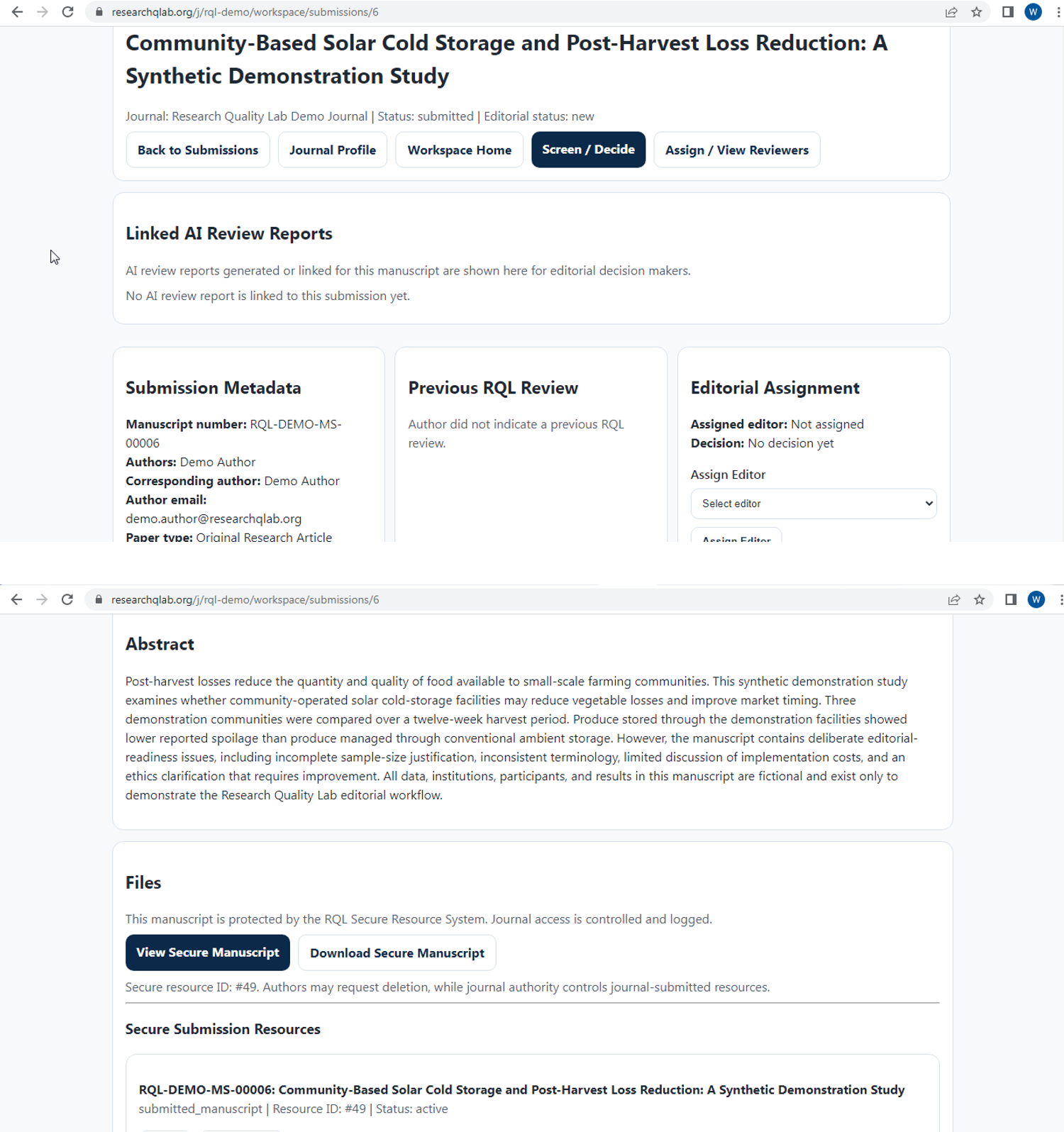
04 Permanent manuscript number and secure file access
-
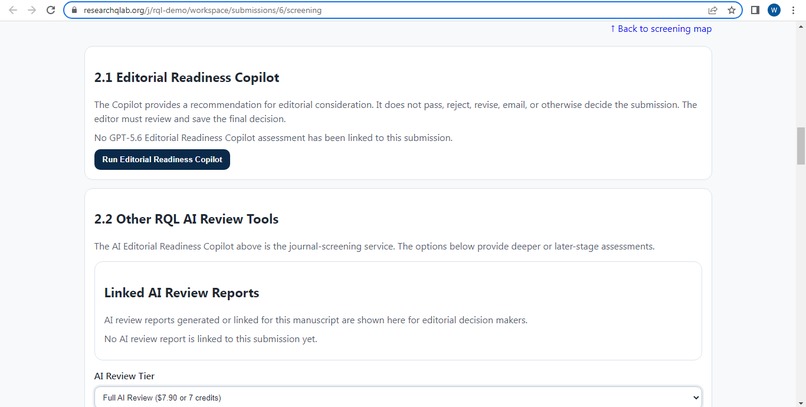
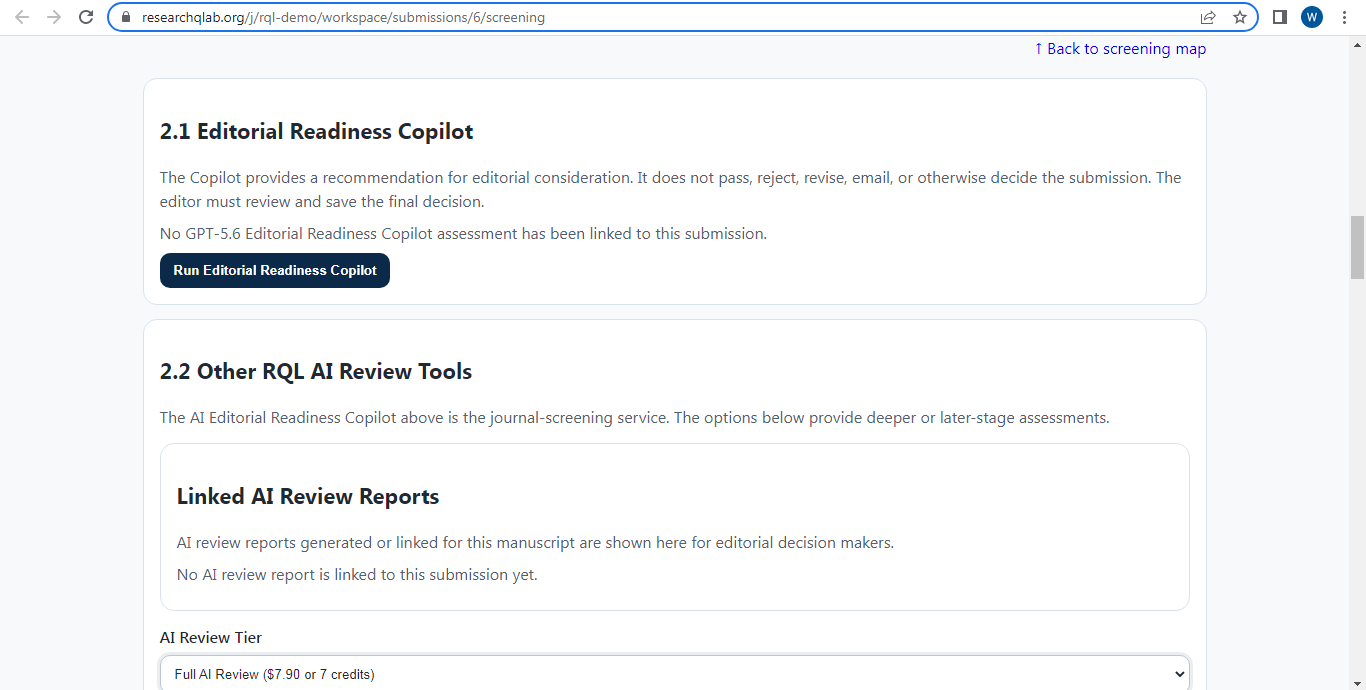
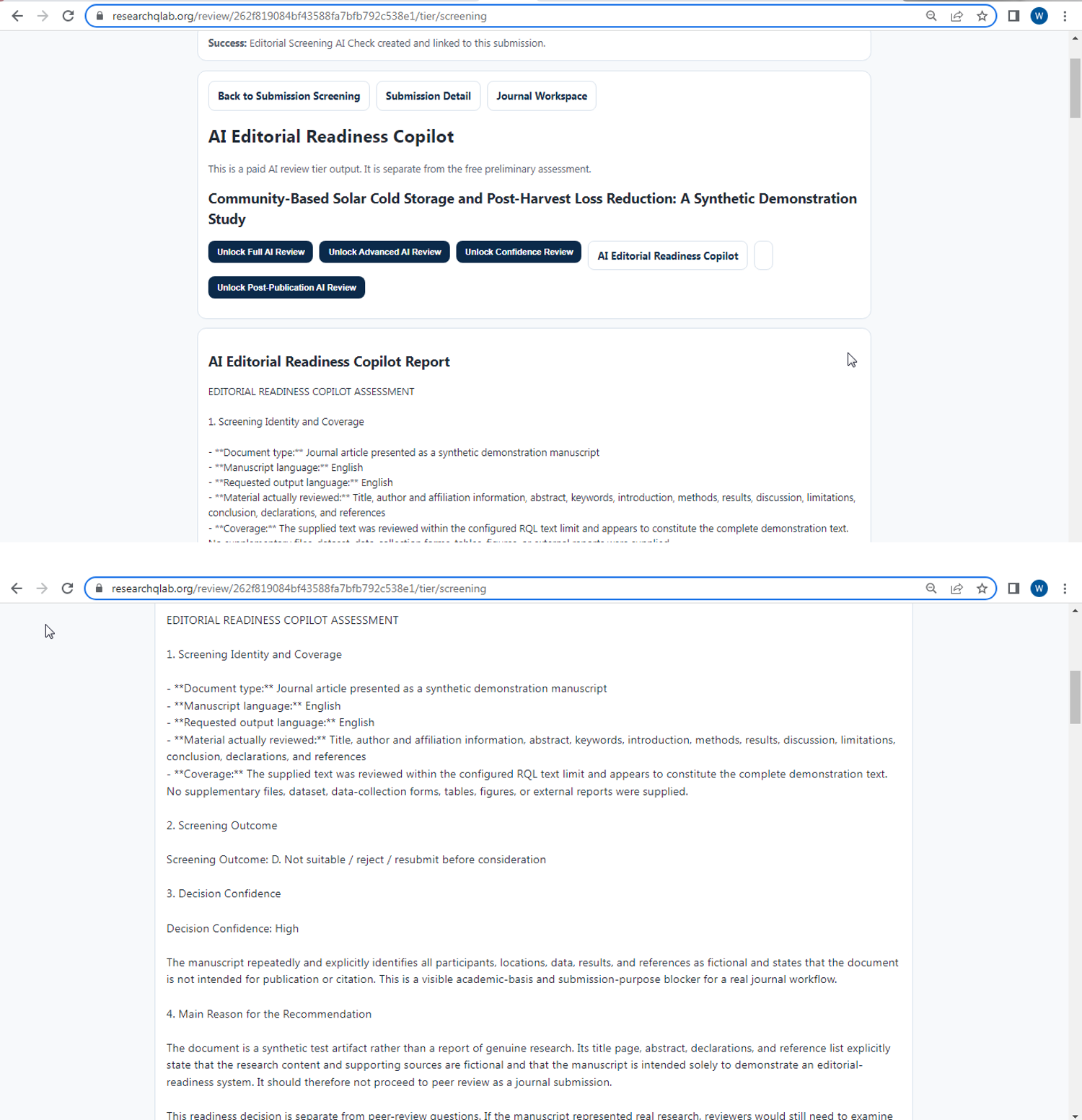
05 GPT-5.6 Editorial Readiness launch
-
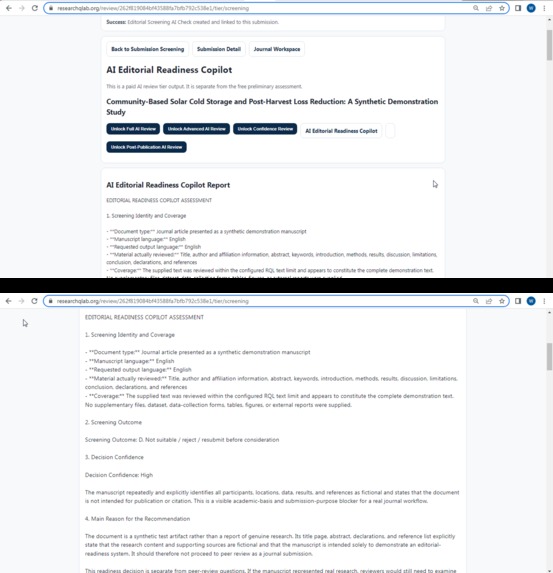
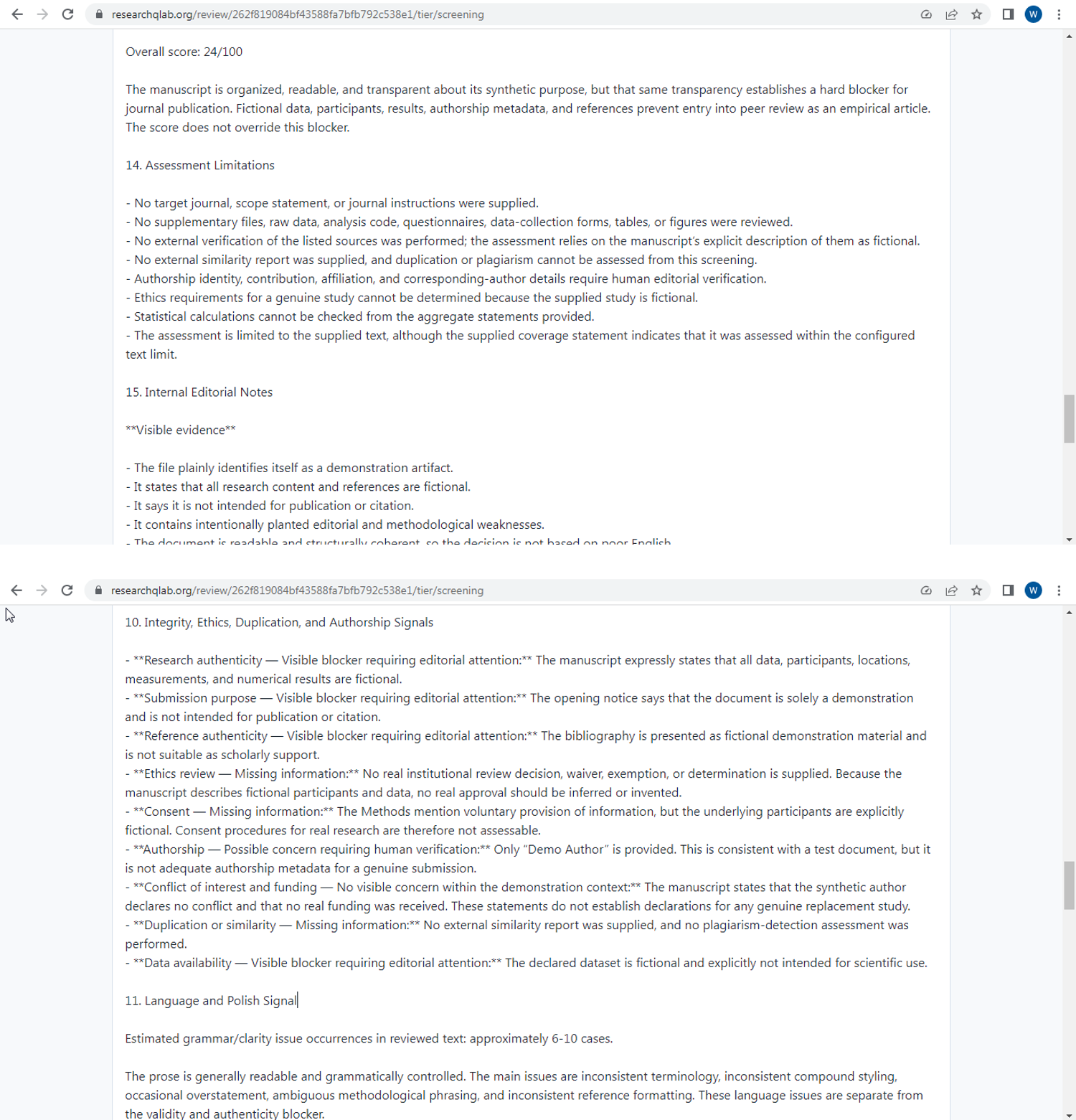
06 Report outcome, score and recommended action
-
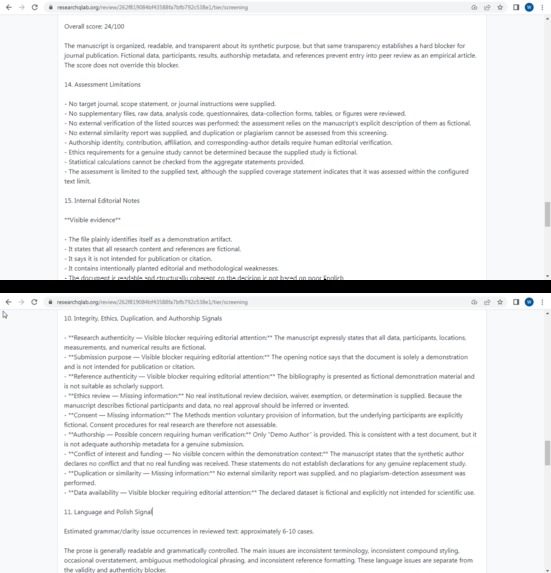
07 Evidence, structure, language, ethics and limitations
-
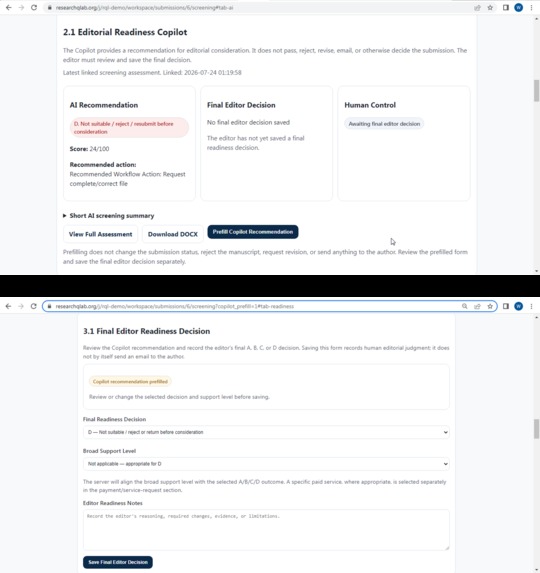
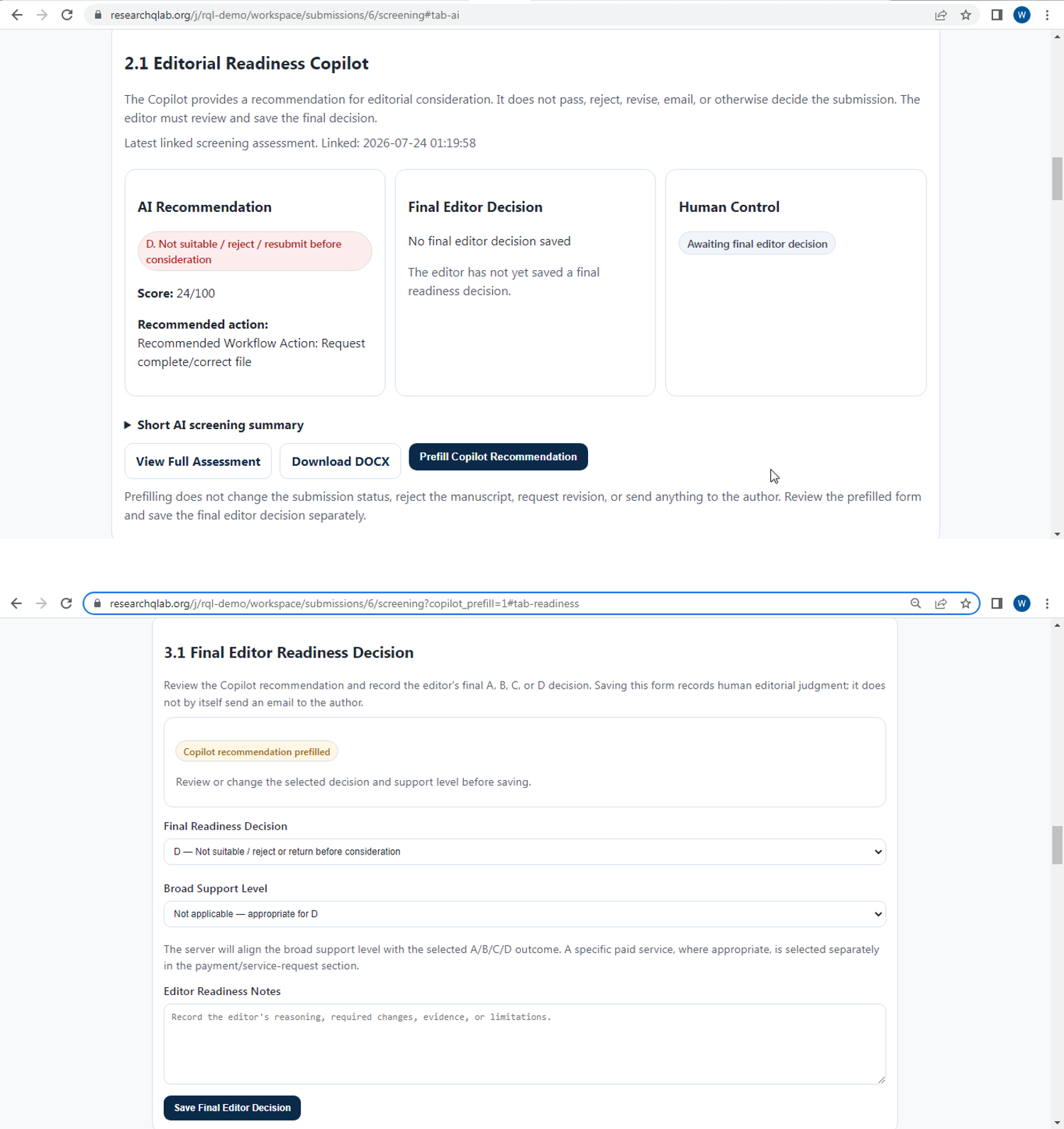
08 AI suggestion applied to editable human decision form
-
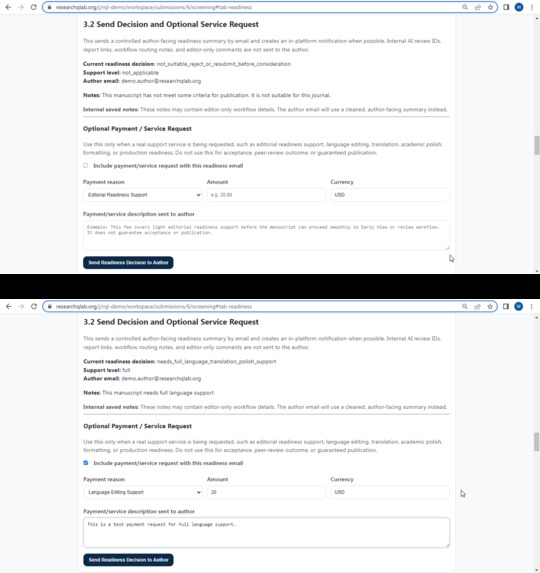
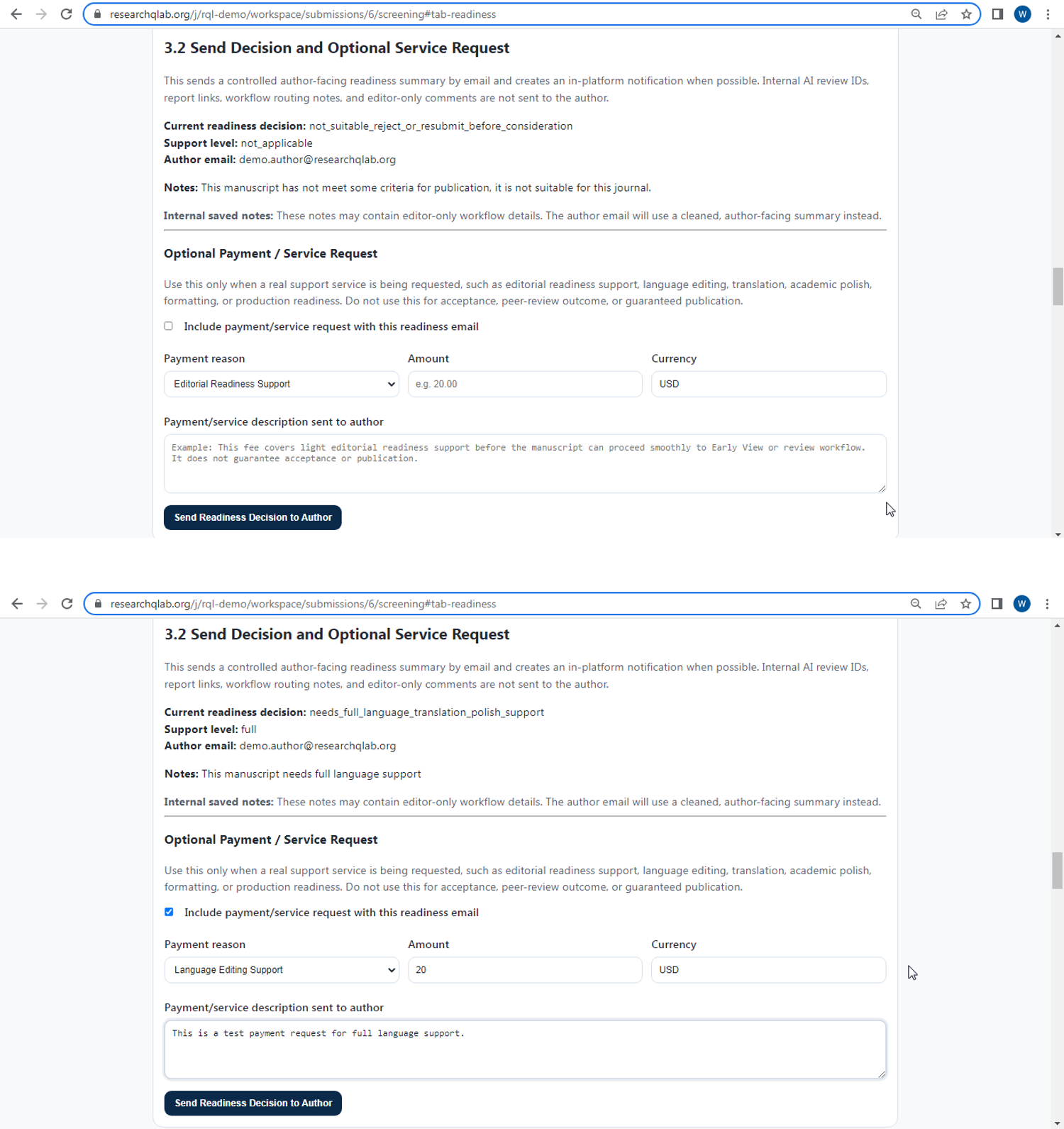
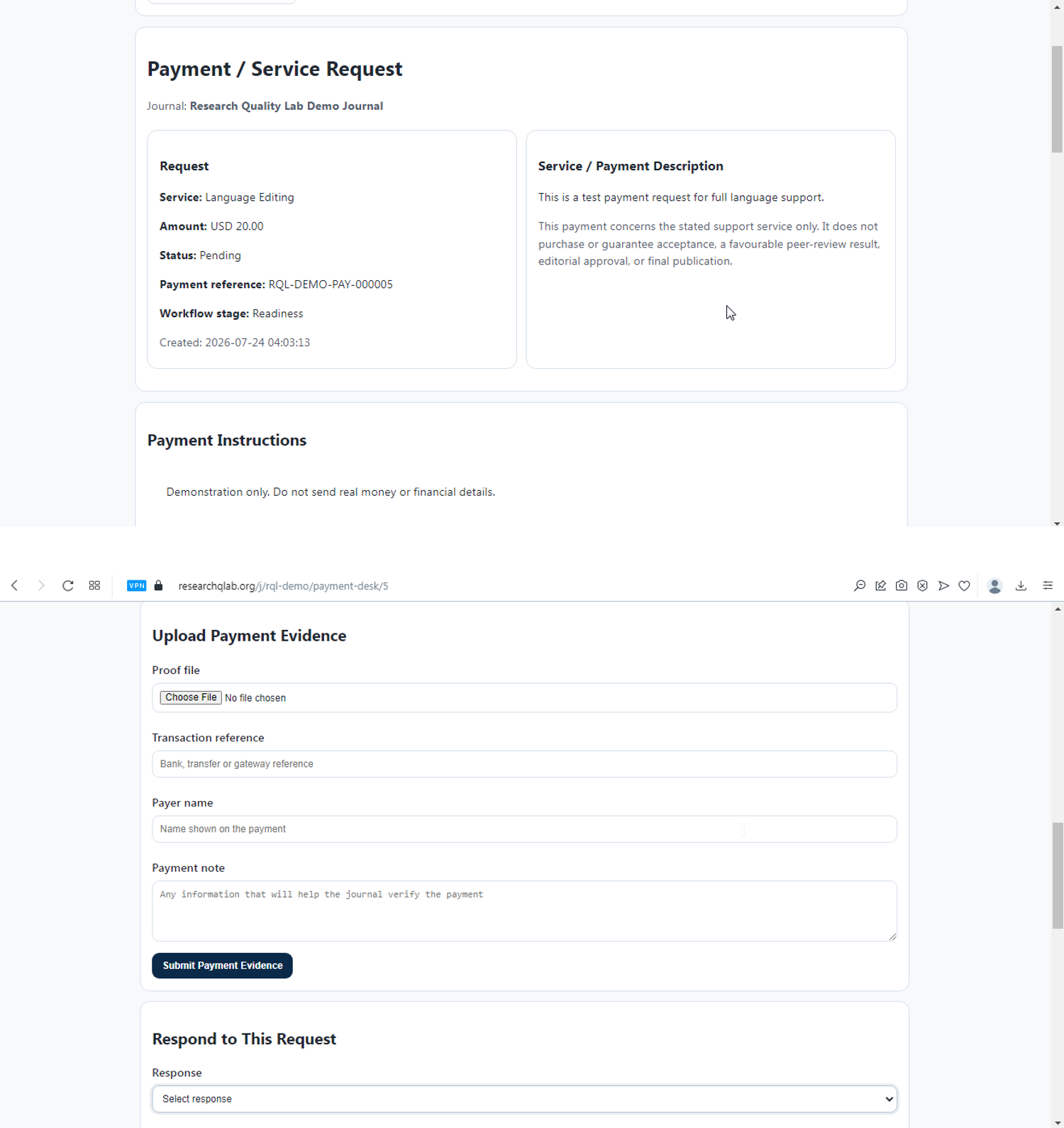
09 Author-facing readiness decision with payment request
-
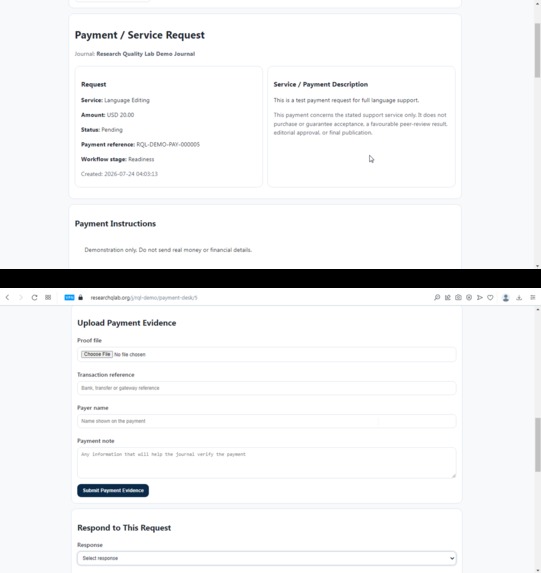
10 Optional support request and author payment desk
-
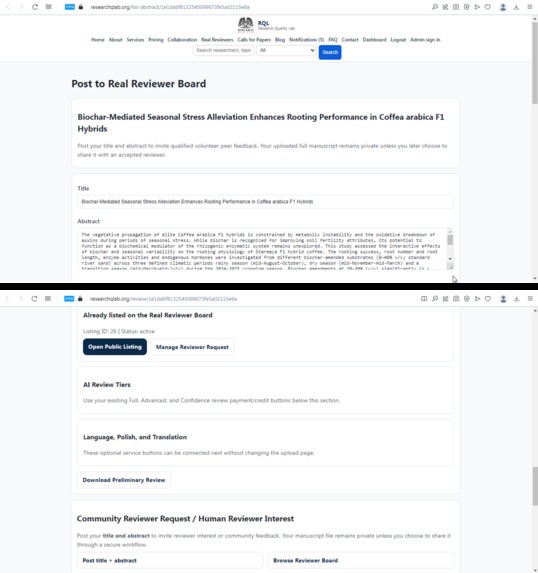
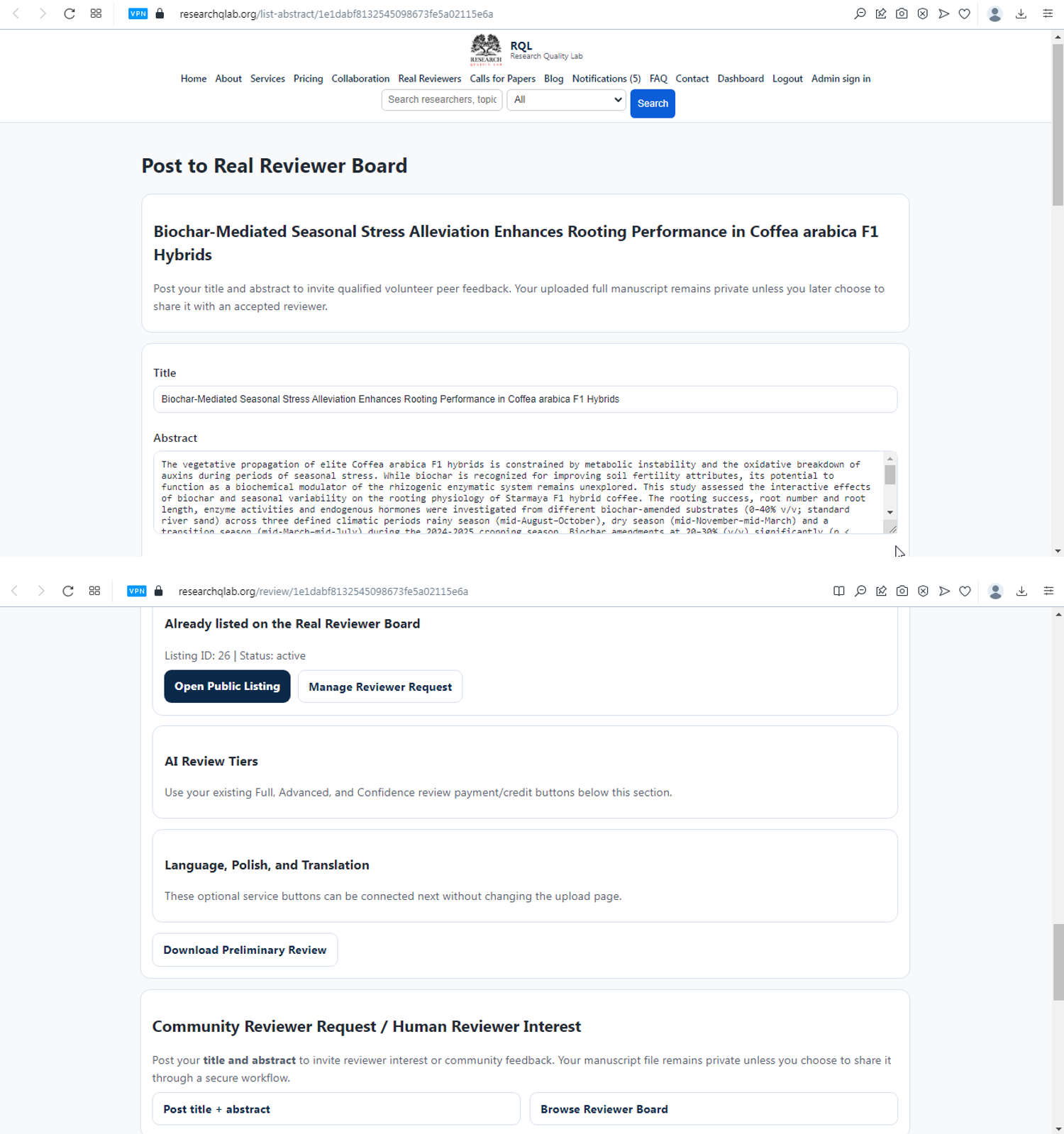
11 Public or controlled Abstract Listing
-
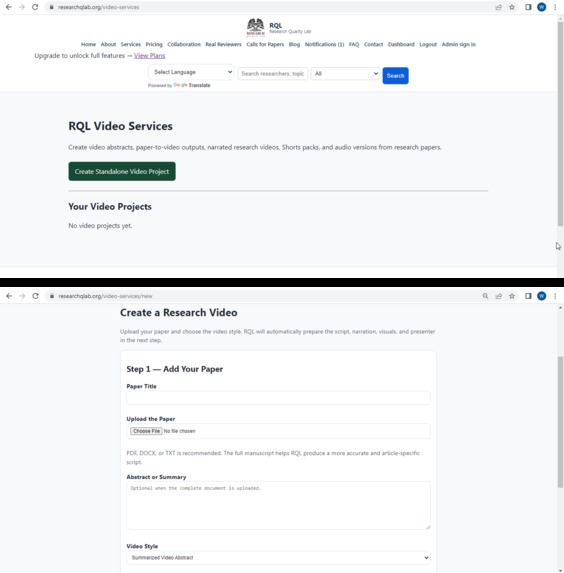
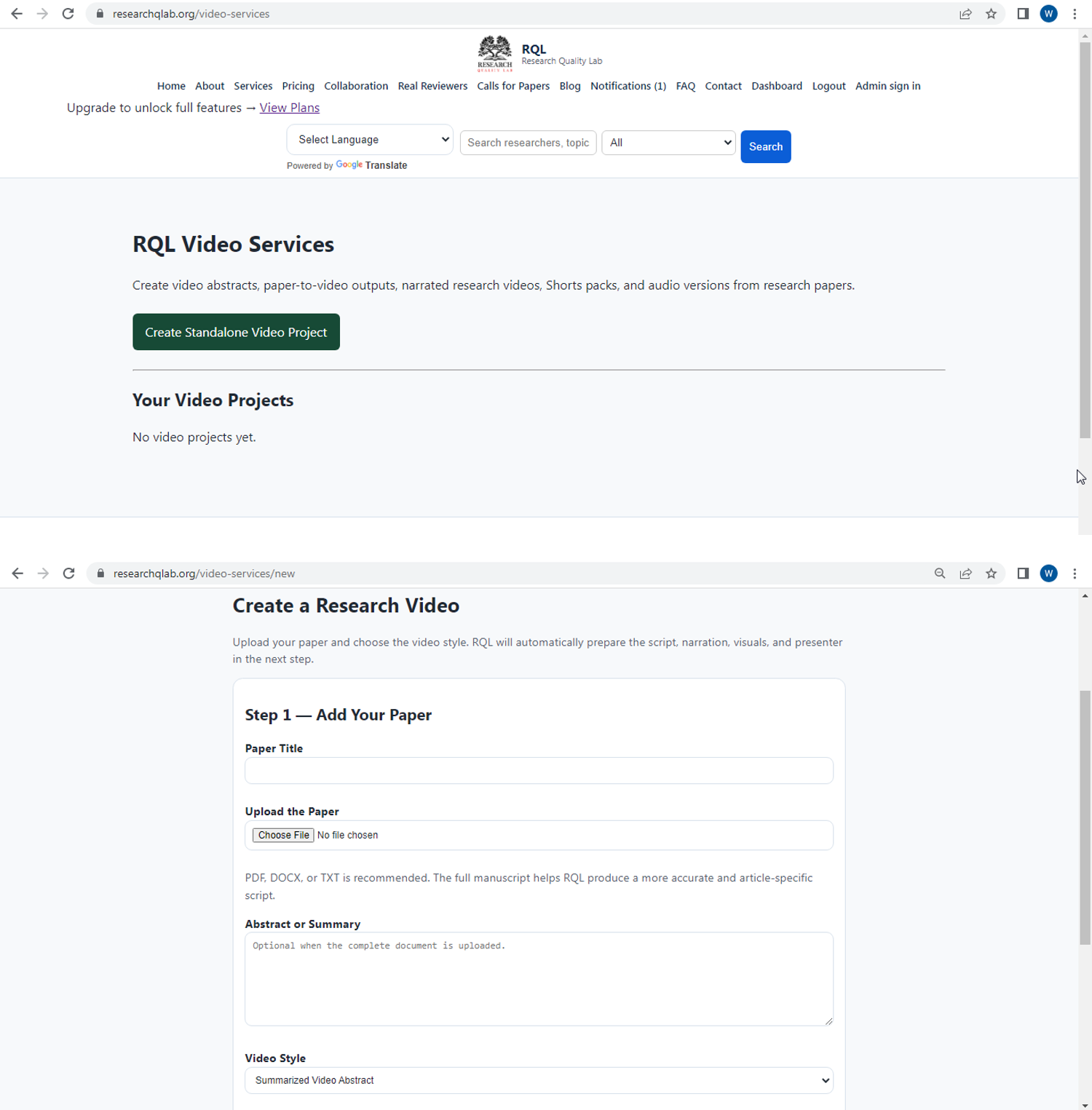
12 Paper-to-Video service
-
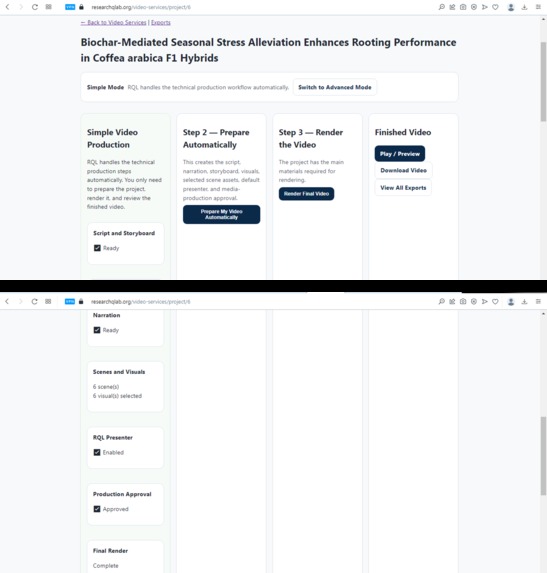
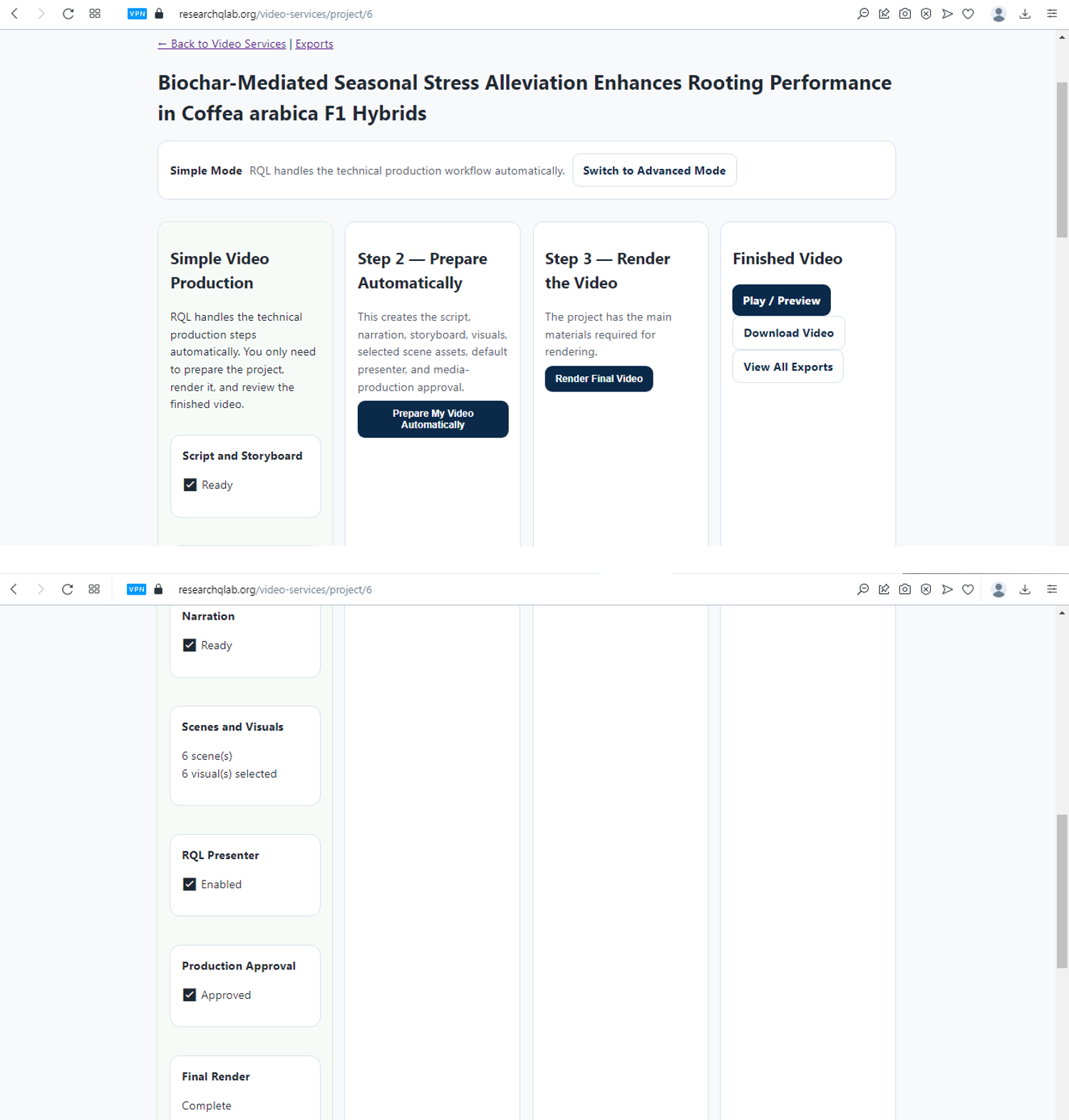
13 Paper-to-Video Simple Mode
-
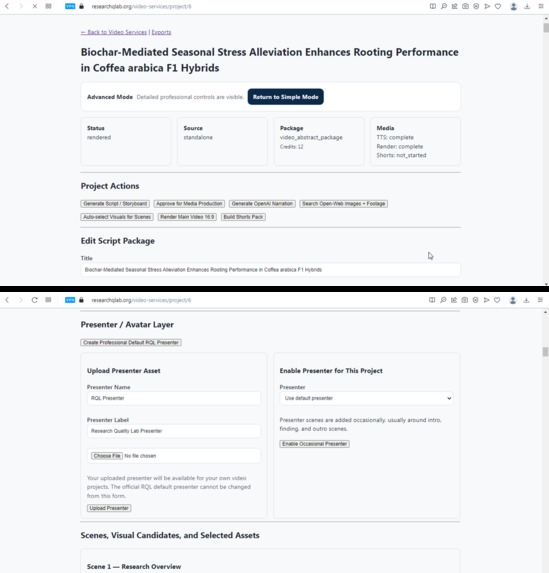
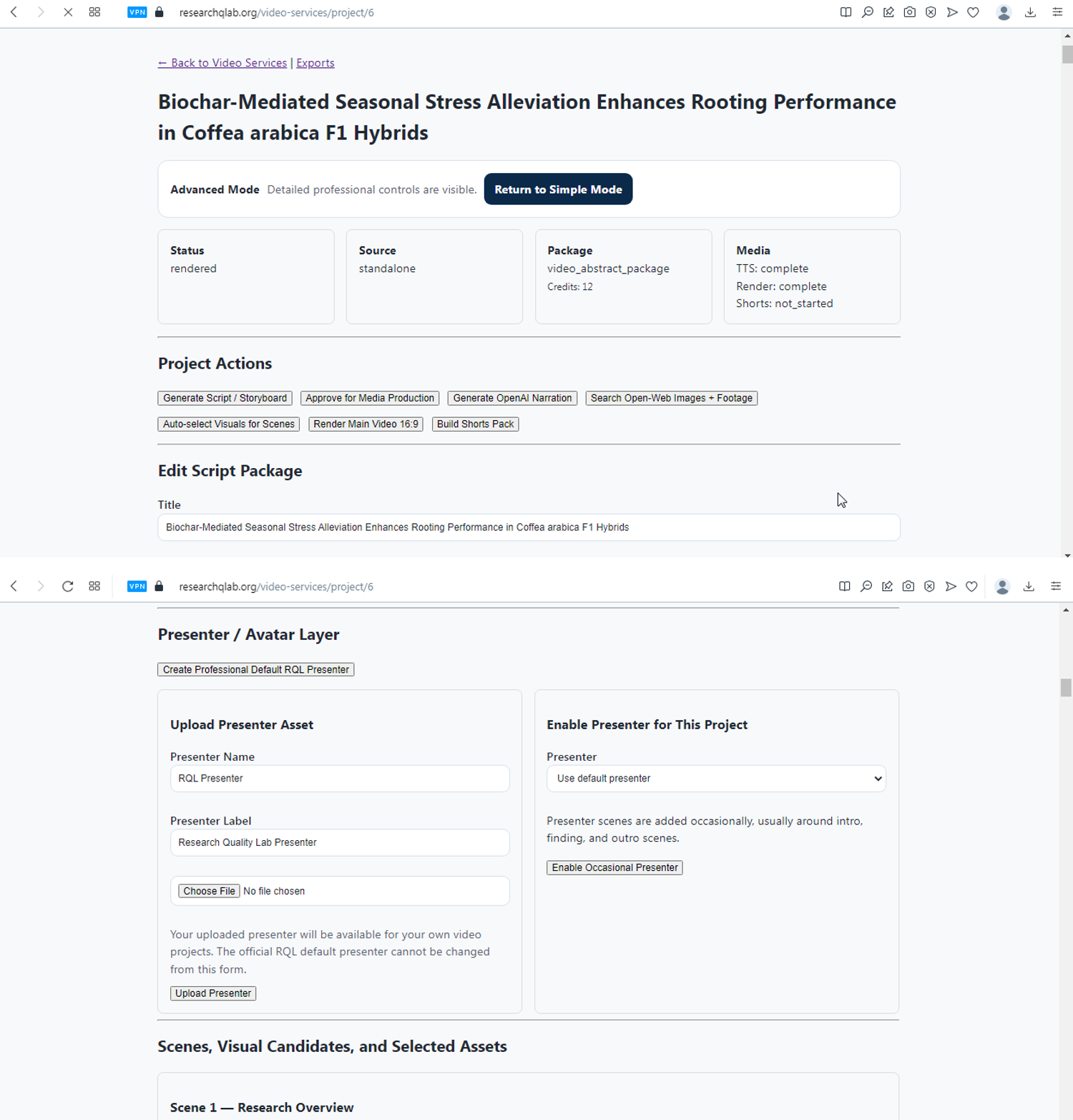
14 Paper-to-Video Advanced Mode
-
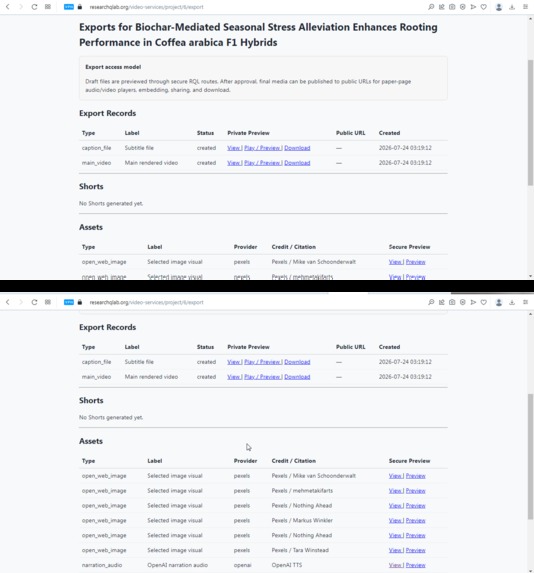
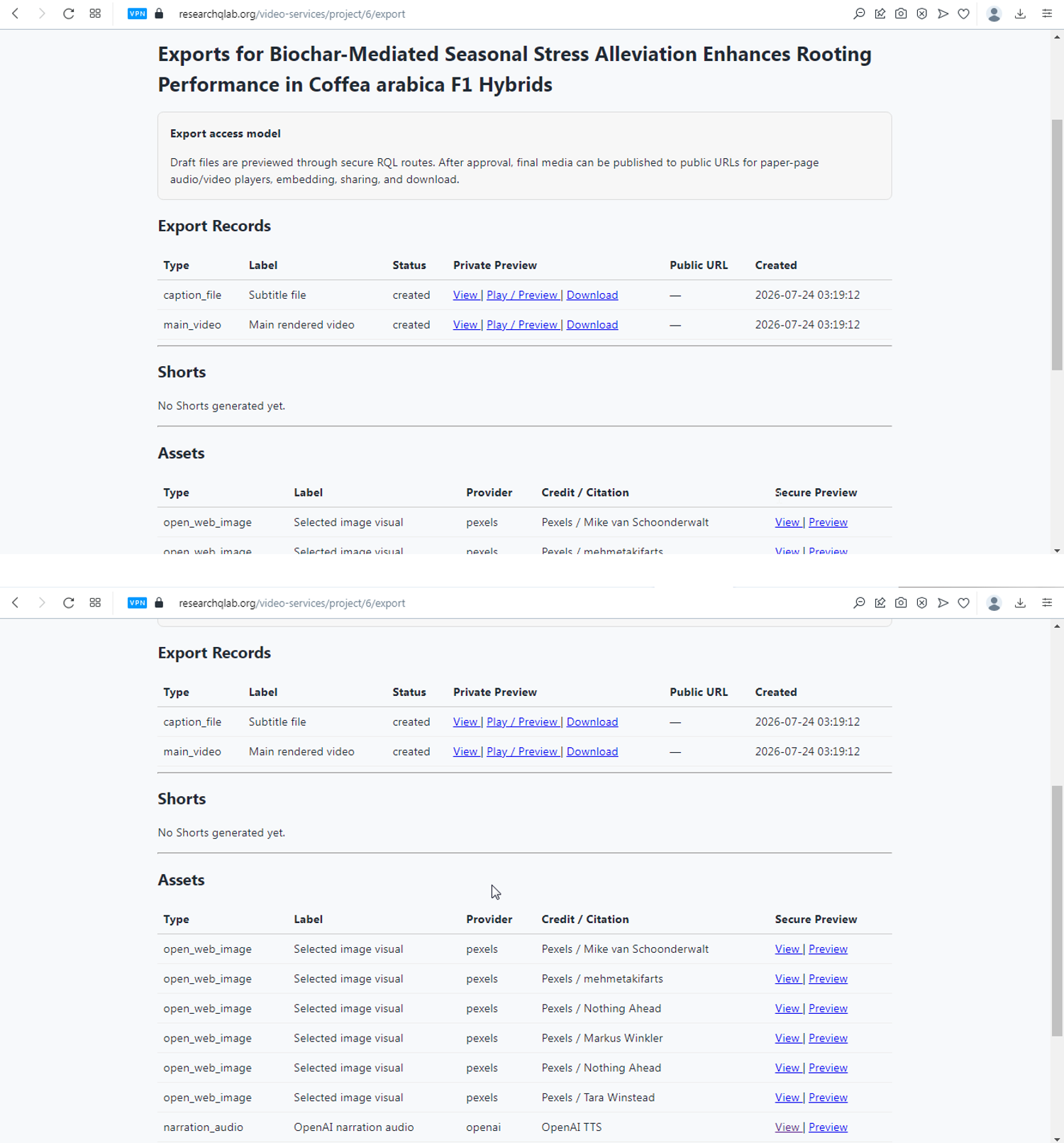
15 Finished video, narration download or public media player
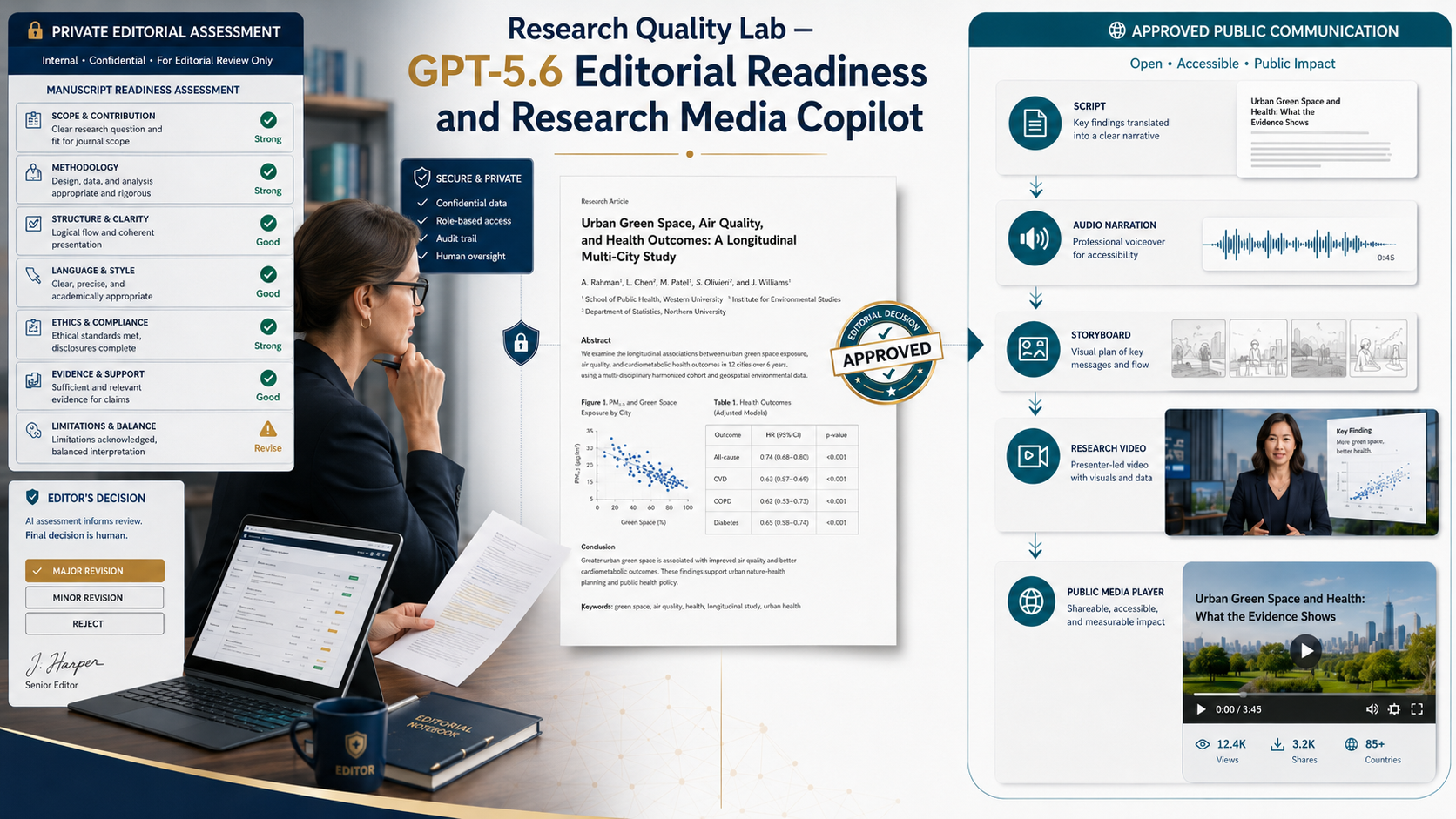
Abstract
Research Quality Lab is an AI-assisted platform that supports both the quality and communication of scholarly research.
The Build Week project combines two connected workflows. First, the GPT-5.6 Editorial Readiness Copilot securely analyzes a manuscript and prepares structured internal guidance for a journal editor. The editor—not the AI—chooses the final readiness outcome, prepares an appropriate author-facing decision, and may create optional support or payment requests that remain separate from acceptance.
Second, the RQL Paper-to-Video Service transforms a paper or uploaded manuscript into an article-specific script, storyboard, narration, scenes, visual assets, presenter setup, and rendered research video. A simplified three-step mode makes the production process usable by researchers with little video experience, while an Advanced Mode preserves professional editing controls.
Together, these workflows demonstrate how GPT-5.6 can support research from private quality assessment through human editorial action to controlled public communication—without replacing editors, peer reviewers, authors, or publication approval.
Inspiration
Research Quality Lab was inspired by years of practical experience managing academic journals and working with manuscripts that contained potentially valuable research but were not yet ready for peer review or publication.
Editors often need to assess structure, language, academic basis, declarations, ethics, authorship, scope, and completeness before a paper can proceed. This work is demanding, repetitive, and difficult to perform consistently.
A second problem appears after research has been reviewed or published: much of it remains difficult to discover or understand outside a small specialist audience. Producing a video abstract or narrated research presentation normally requires scriptwriting, voice production, visual sourcing, editing, and rendering skills that many researchers do not possess.
We therefore asked:
Could one responsible AI-assisted platform help improve a manuscript privately and later help communicate the research publicly—while preserving human control at every consequential stage?
That question led to the GPT-5.6 Editorial Readiness Copilot and the simplified RQL Paper-to-Video Service.
What it does
Research Quality Lab supports a connected research journey.
Editorial Readiness workflow
An authorized journal editor can:
Open a securely stored manuscript. Run a structured GPT-5.6 Editorial Readiness assessment. Review findings related to scope, academic basis, structure, language viability, ethics, authorship, duplication concerns, missing elements, evidence, and limitations. Apply the AI suggestion only as an editable draft. Select or override the final A/B/C/D readiness outcome. prepare a separate author-facing message. Offer optional language, editing, translation, formatting, or production support. Track author responses, waiver requests, payment evidence, verification, service delivery, accounting, and manuscript history. Optionally create an Abstract Listing using approved metadata without exposing the private manuscript.
The AI cannot independently accept or reject a manuscript, contact an author, create a payment obligation, or publish content.
Paper-to-Video and Audio workflow
A researcher, journal, organization, or publisher can:
Identify an existing paper or upload a PDF, DOCX, or TXT manuscript. Generate an article-specific script and storyboard. Generate narrated audio using OpenAI text-to-speech. Create scenes and find contextual visuals from sources such as Pexels and Pixabay. Automatically select visual candidates. Use the default RQL presenter or an authorized personal presenter. Render and download a research video and audio version. Review production files privately. Approve final MP3 or MP4 media for public paper-page playback.
The improved workflow can use full manuscript text rather than relying only on a title and abstract, giving the generation engine access to methods, findings, discussion, and conclusion sections.
Simple Mode
Simple Mode reduces a technically complex workflow to three principal actions:
Create the project and identify or upload the paper. Select Prepare My Video Automatically. Select Render Final Video.
Automatic preparation can generate the script, storyboard, narration, scenes, visual candidates, selected visuals, presenter configuration, and production approval.
Advanced Mode
Advanced Mode allows experienced users to inspect and change:
script and narration; individual scenes; visual candidates and selected assets; paper figures; presenter settings; narration sources; captions and transcripts; export records; Shorts; publication settings.
This progressive-disclosure approach makes the service accessible to beginners without removing professional control.
How we built it
Research Quality Lab was built with:
Python and Flask; Jinja interfaces; SQLite workflow and audit records; GPT-5.6 Sol for editorial-readiness and higher-quality research-media scripting; OpenAI text-to-speech for narration; secure-resource storage and access controls; journal, author, organization, and publisher workspaces; Pexels and Pixabay visual discovery; FFmpeg-based media composition and rendering; journal wallets and service-credit tracking; payment requests, evidence uploads, waiver requests, and verification histories; public paper pages with optional video and audio players.
The Editorial Readiness system separates its output into two layers.
Internal editorial layer
suggested readiness outcome; score and confidence; evidence and examples; structural and language findings; ethics, authorship, and duplication flags; limitations and questions for the editor; recommended action.
Author-facing layer
final editor-selected outcome; concise explanation; selected examples requiring attention; recommended next steps; optional support information; clear notice that support does not guarantee acceptance.
The AI result prefills an editable form but does not execute the decision.
The Paper-to-Video system also separates its workflow into two layers.
Private production layer
uploaded manuscript; generated script and storyboard; narration; scenes; visual candidates; presenter assets; draft video and audio; secure previews and downloads.
Approved public layer
public MP3 and MP4 URLs; embedded media players; paper-page video and audio controls; controlled release after approval.
Draft production materials remain private, while approved media can be copied into a public media location and attached to a public paper page.
Challenges we ran into
One major challenge was ensuring that AI assistance did not become automated editorial authority. The system had to let GPT-5.6 recommend an outcome while preventing it from silently changing a manuscript’s status, notifying the author, or implying acceptance.
Long-manuscript processing also required careful control of prompts, model settings, token limits, failure handling, hosting resources, and credit reversal.
The Paper-to-Video service presented a different challenge. The original production interface exposed many technical controls and was difficult for an ordinary researcher to operate. We redesigned it around progressive disclosure: beginners receive a guided Simple Mode, while experienced producers retain the full Advanced Mode.
Coordinating manuscript analysis, script generation, text-to-speech, visual discovery, scene construction, presenter overlays, and FFmpeg rendering required several services to work together reliably.
Visual relevance remains challenging. Available web visuals do not always represent the precise scientific meaning of a scene. Browser-compatible rendering is also limited by the server’s current H.264 encoder configuration.
Payment and service workflows introduced additional requirements:
failed AI generation must not leave the journal unfairly charged; uploaded proof must not automatically confirm payment; failed payment must not prevent independent revision; payment must remain separate from acceptance; every important action must appear in an audit history. Accomplishments that we are proud of
We are proud that the project became a functioning integrated platform rather than only a collection of AI prompts.
Major accomplishments include:
a production-deployed GPT-5.6 Editorial Readiness Copilot; secure full-manuscript analysis; structured and evidence-based internal editorial reports; human-controlled A/B/C/D readiness decisions; editable AI recommendations and override tracking; separate internal and author-facing communication; manuscript numbers, version records, and timelines; optional support and payment workflows; payment evidence, waiver, verification, and service histories; controlled Abstract Listings; full-manuscript upload for research-media generation; article-specific video scripts and storyboards; OpenAI-generated narration; automatic scene generation; open-web visual discovery and automatic selection; default and user-specific presenter support; Simple and Advanced production modes; rendered video and downloadable narration; private draft media and approved public media architecture.
Testing confirmed that the simplified production workflow generated an article-specific script, narration, scenes, visual candidates, selected visual assets, presenter setup, rendered video, downloadable audio and video, secure export records, and working switching between Simple and Advanced Mode.
What we learned
We learned that a useful AI product is not defined by the model alone. The surrounding workflow determines whether the output is understandable, safe, accountable, and usable.
Editors need evidence, limitations, editable recommendations, and authority over consequential decisions.
Authors need clear communication without internal system language, unsupported promises, or pressure to purchase optional services.
Researchers using AI media tools need a simple path that does not require them to understand script structure, voice production, visual licensing, scene management, or FFmpeg rendering.
We also learned that simplification should not require removing professional functionality. Progressive disclosure allowed us to preserve a complete Advanced Mode while presenting a much more accessible Simple Mode.
Finally, private production and public release must be treated as different states. An AI-generated draft should not become public merely because it was generated successfully.
What is next
Planned improvements include:
discipline-aware visual ranking; scene-level semantic matching; stronger use of manuscript figures and tables; improved typography, lower-thirds, transitions, movement, and pacing; transparent-background presenter assets; animated and talking-presenter support; reliable H.264/AAC browser-compatible encoding; queued background production jobs; progress indicators and retry controls; stage-level error reporting; completion notifications; multilingual readiness reports and videos; revision comparison between manuscript versions; editor-configurable readiness policies; institution and organization workspaces; readiness and media-engagement analytics; improved Shorts production; automated temporary-file cleanup; guided public demonstration and sandbox access.
Demo Login Details
Editor email : [email protected] Editor password : RQL-Editor-ojRUmFMQB_x05kXV
Author email: [email protected] Author password: RQL-Author-0VTegIlhjqaDDoa_
https://researchqlab.org/build-week is a custom link to the project demo.
Access the following links, while logged in as Editor, to inspect the completed demo used for this presentation or to start a new demo : https://researchqlab.org/login https://researchqlab.org/journal/rql-demo https://researchqlab.org/j/rql-demo/workspace/submissions/6 https://researchqlab.org/j/rql-demo/workspace/submissions/6/screening https://researchqlab.org/j/rql-demo/payment-desk/5
Access the following links, while logged in as Author, to inspect the completed demo used for this presentation or to start a new demo : https://researchqlab.org/login https://researchqlab.org/review/1e1dabf8132545098673fe5a02115e6a https://researchqlab.org/list-abstract/1e1dabf8132545098673fe5a02115e6a https://researchqlab.org/video-services https://researchqlab.org/video-services/project/6?mode=simple

Log in or sign up for Devpost to join the conversation.