-
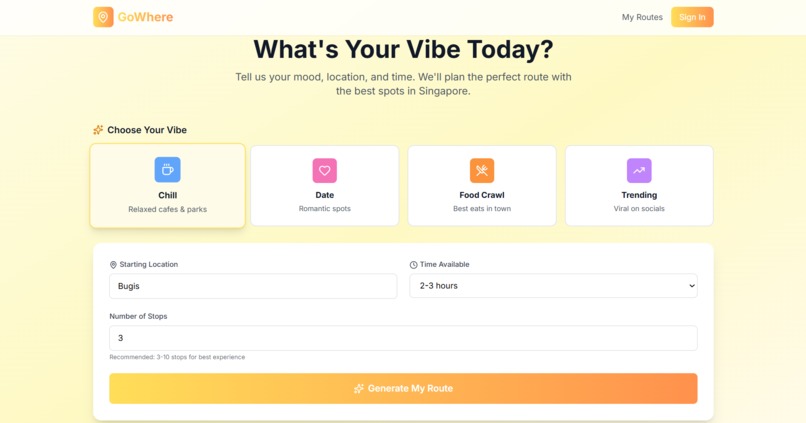
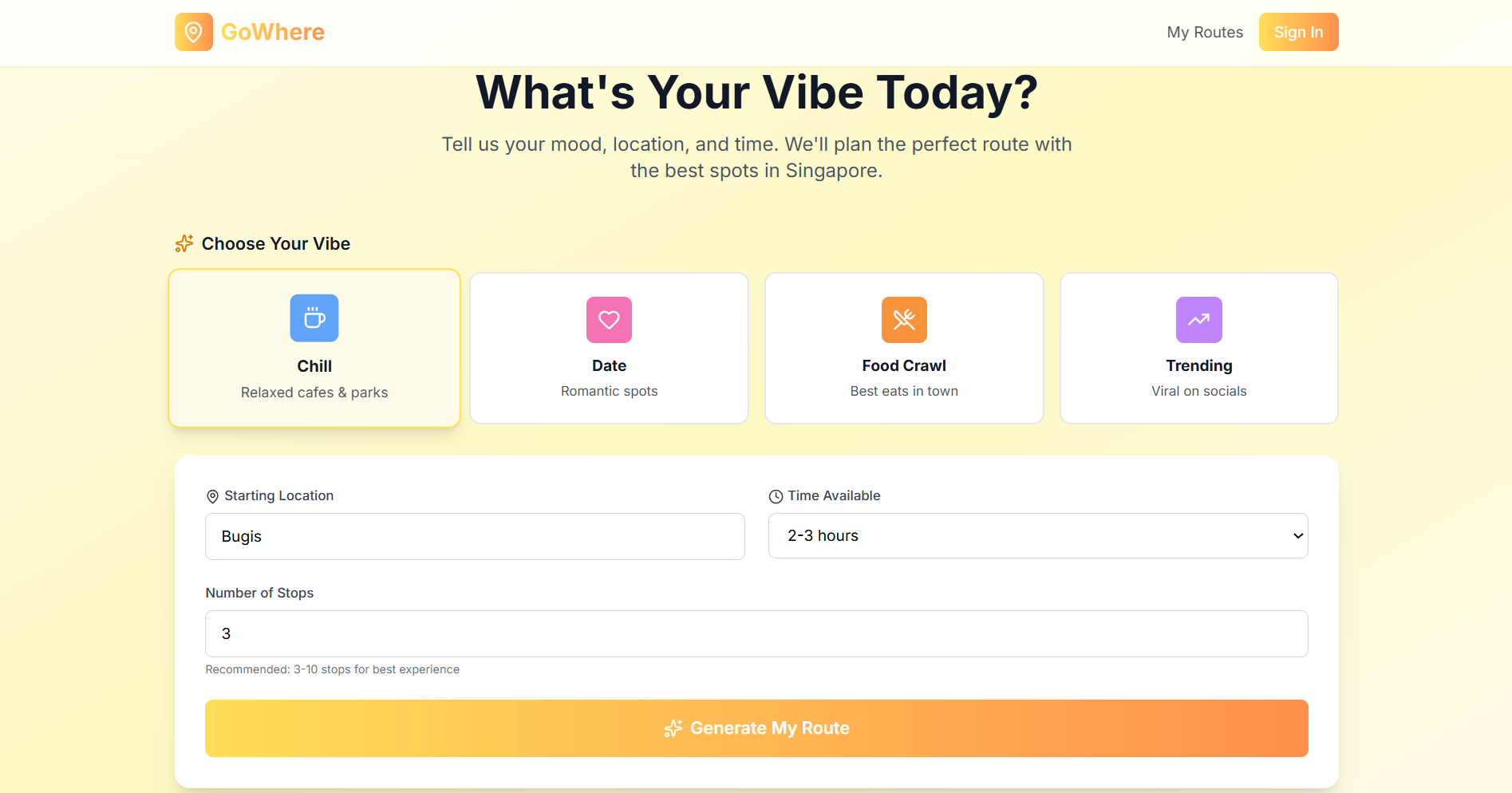
Illustration of the app UI when wanting to get some recommendations
-
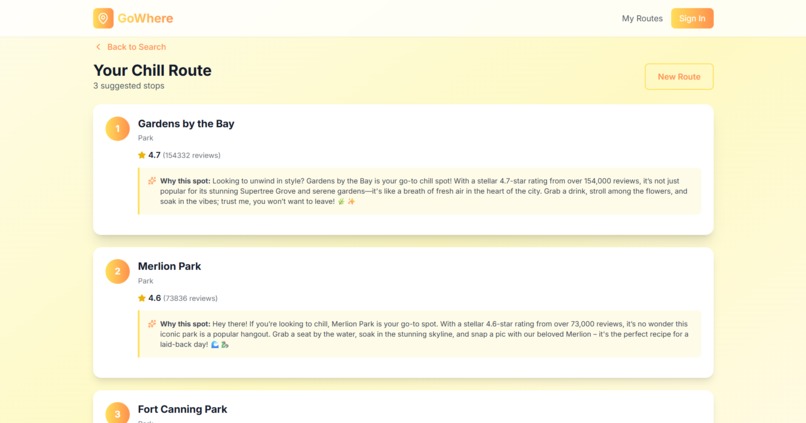
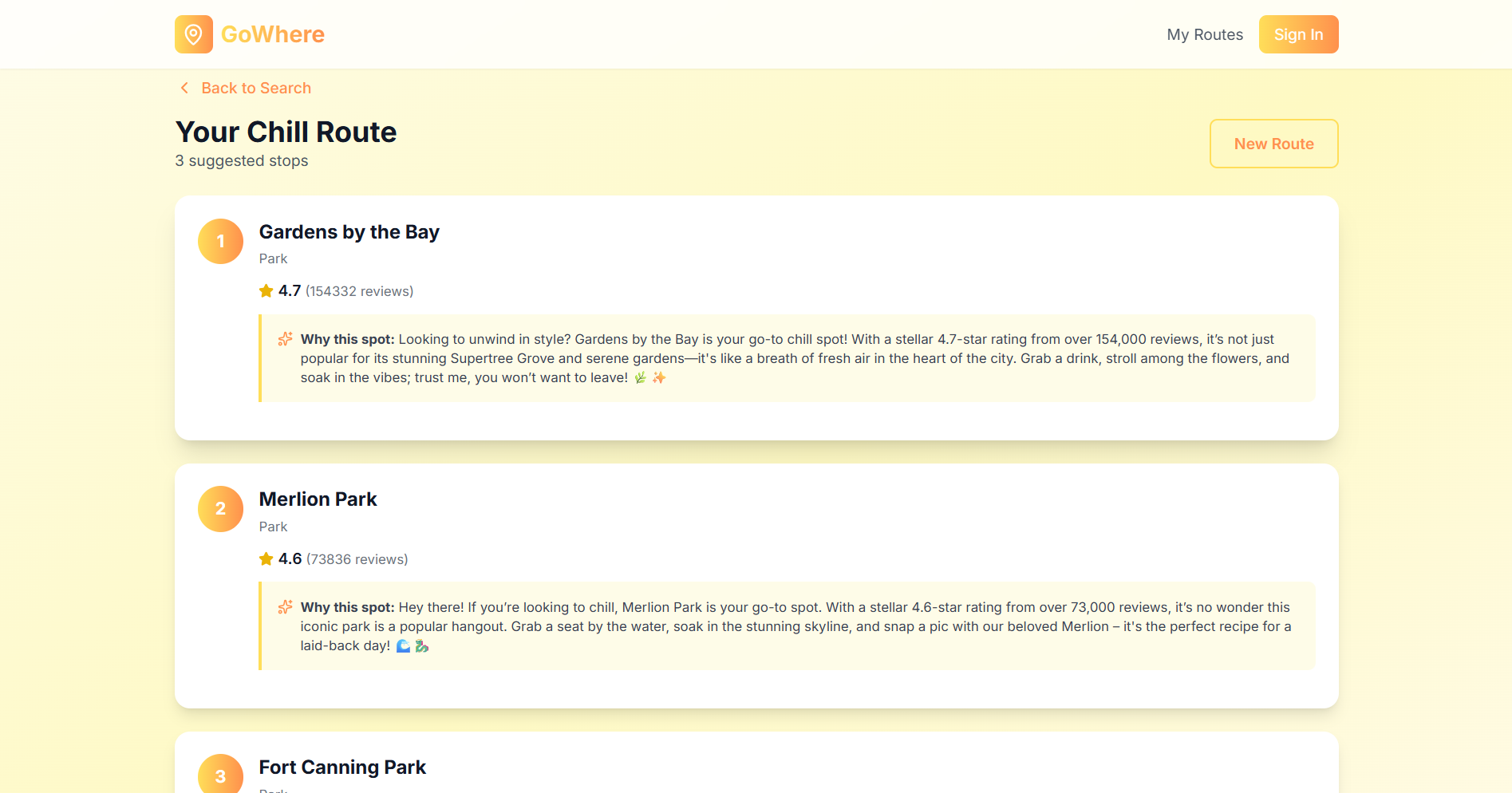
Illustration of the results generated together with the AI description
Inspiration
Planning a simple outing in Singapore often turns into an exhausting process. Even though the country is small, we constantly switch between Google Maps to check distances, TikTok and Instagram for recommendations, and Google Reviews to evaluate places. Deciding what to do, in what order, and whether locations are walkable is surprisingly time-consuming. This frustration inspired us to build GoWhere, an app that reduces planning friction by turning a user’s vibe into a complete, sensible route.
What it does
GoWhere is an AI-powered hangout route planner. Users input their vibe (e.g. chill, food crawl, date), starting location, and time available. The app then generates a route with 3–5 stops in order, showing cafes, restaurants, or activities that fit the vibe. Each stop comes with an AI-generated explanation describing why it was chosen, helping users understand the recommendation instead of just seeing a list of places.
How we built it
GoWhere is built as a web application with a React frontend and a Node.js backend. We use Maps and Places APIs to fetch nearby locations based on the user’s input. These locations are scored using simple heuristics such as ratings, number of reviews, and keyword relevance. An LLM is then used to interpret user intent and generate short explanations for each stop. The frontend visualises the route on a map and displays place cards for each location.
Challenges we ran into
One major challenge was scoping the project realistically for a hackathon. While social media data seems appealing, scraping platforms like TikTok or Instagram is unreliable and not feasible within the time constraints. We addressed this by simulating “trendiness” using public review data and AI summarisation. Another challenge was ensuring stable API usage and setting up the development environment under time pressure.
Accomplishments that we're proud of
We are proud of building a full-stack, AI-powered web application within a limited timeframe. We successfully integrated multiple APIs, translated vague user intent into structured routes, and delivered a clean, demo-friendly experience.
What we learned
Through this project, we learned how to scope AI projects effectively, balance ambition with feasibility, and make technical trade-offs under time constraints. We also gained hands-on experience with API integration, prompt design, and building user-centric features for a real-world use case.
What's next for GoWhere
In the future, we would like to expand GoWhere with real-time routing, more personalised preferences, and collaborative planning for groups. We also aim to support more cities, improve trend detection using richer data sources, and optimise routes based on time and transportation mode.
Built With
- api
- css
- git
- github
- google-maps
- javascript
- openai
- places-api
- react
- tailwind
- vite

Log in or sign up for Devpost to join the conversation.