Inspiration
We have carefully observed the difficulties citizens face when it comes to paying taxes in the current environment of Nepal. Despite the existence of online portals, the procedure is still difficult. However, it doesn't end there because there is a disappointingly low level of civic participation in local government decisions and community events. Additionally, there is hardly any participation incentive.
We set out on a mission to innovate as a result of these problems. Our motivation comes from the potential of blockchain gamification to change the face of civic engagement. Our intention is to make tasks rewarding as well as efficient in order to encourage people to actively participate in and give back to their community.
What it does
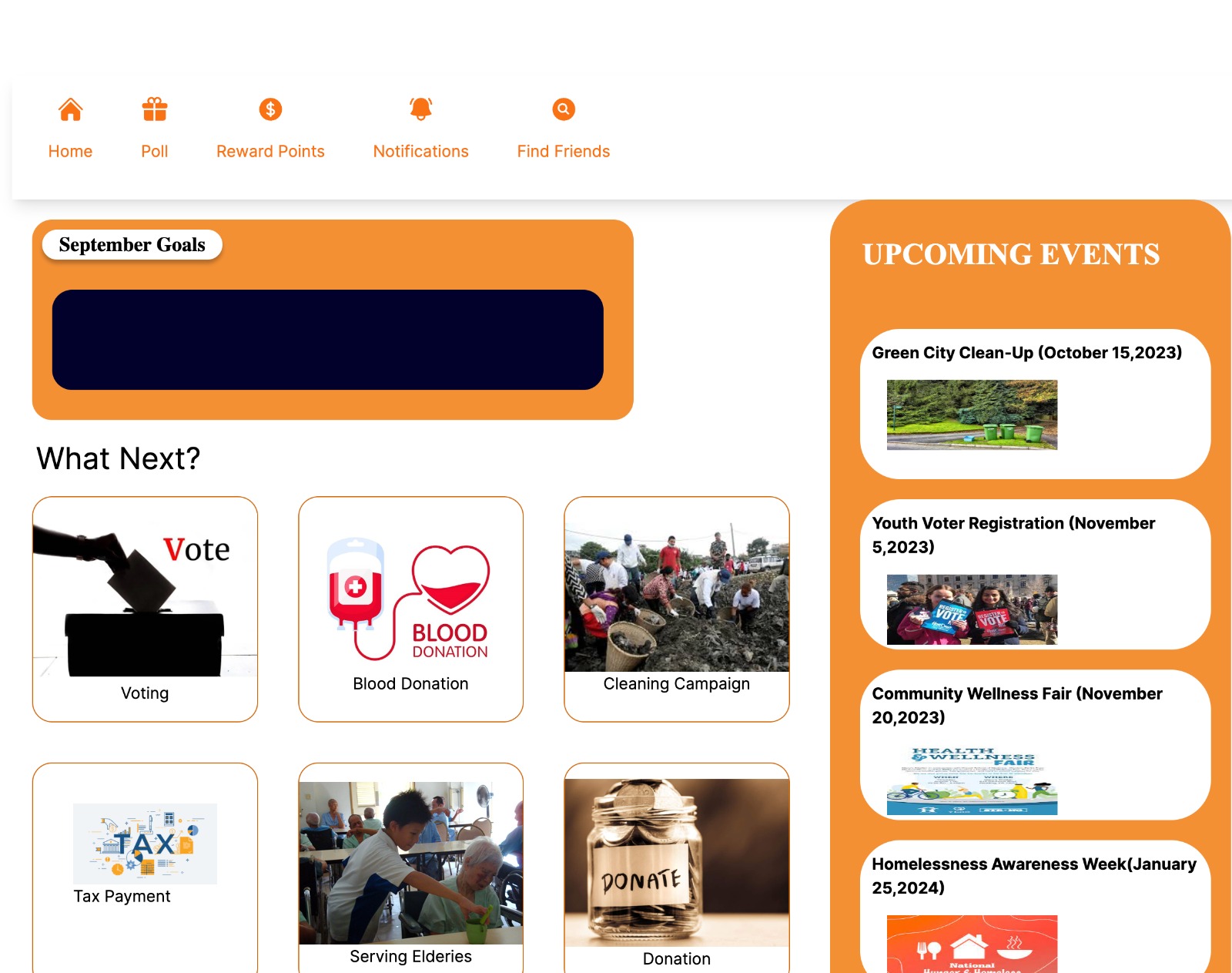
Our website acts as a ground-breaking platform for civic engagement that incorporates gamification. Through our portal, citizens can conveniently pay their taxes. While traditional tax payments are made with fiat money, our system rewards users with the ERC-20 token $GOV. This token rewards people who pay their taxes on time and actively take part in community engagement activities like donation drives and cleaning campaigns. It is drawn from a contract pool.
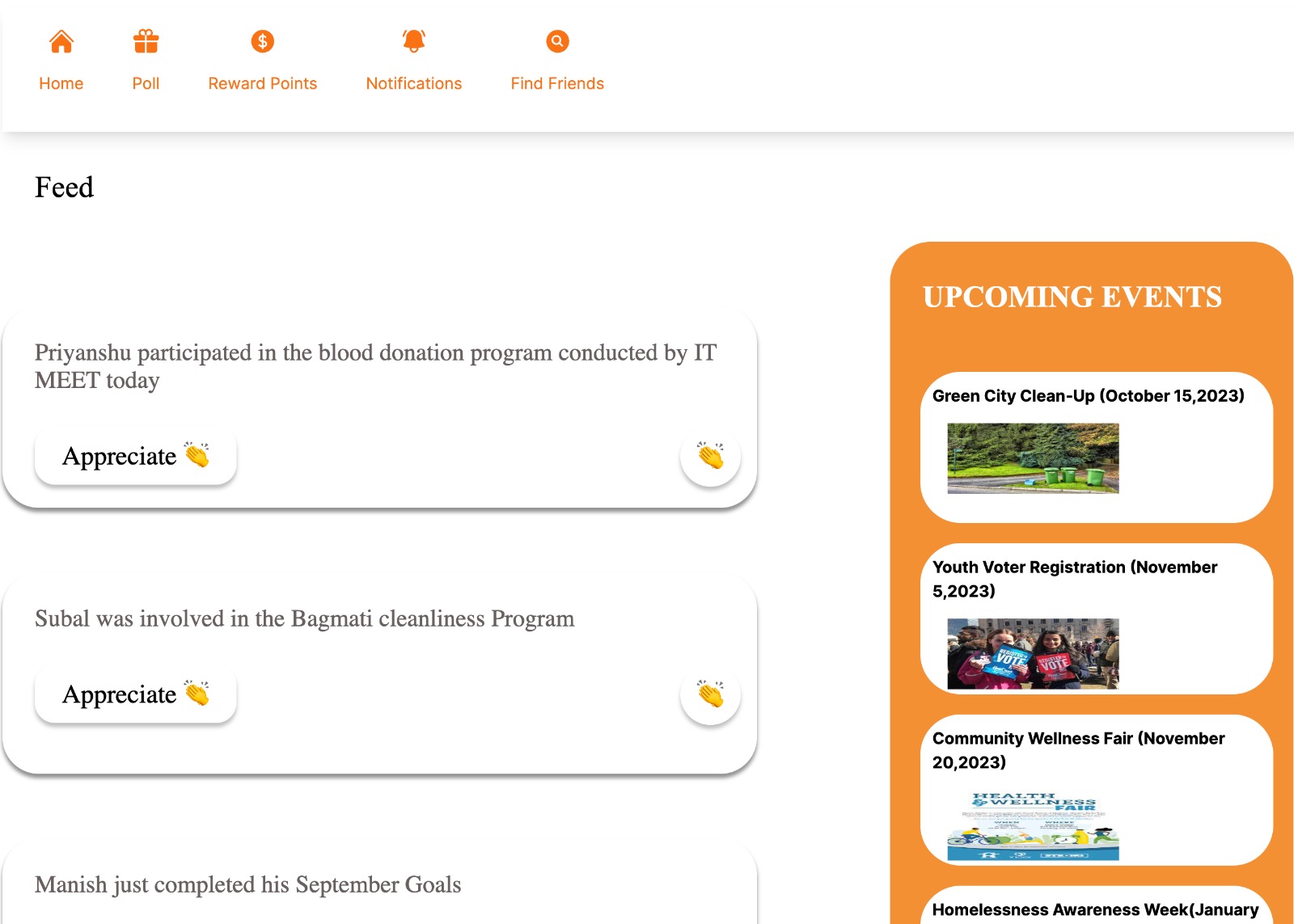
These tokens have a variety of uses, including the ability to cast votes for local government policies. They can also be used to pay utility bills and, on rare occasions, to get tax breaks. We provide a "Add Friends" feature that sends notifications about friends' activities and rewards to improve the gamification experience and promote engagement.
How we built it
To ensure a seamless user experience, we used a variety of technologies and tools in the process of building this platform. ReactJS, MySQL, and Solidity were used in its development. Solidity was used to create smart contracts. We tapped into the power of Web3.js and seamlessly integrated it with Metamask to interact with blockchain, ensuring a safe and straightforward process.
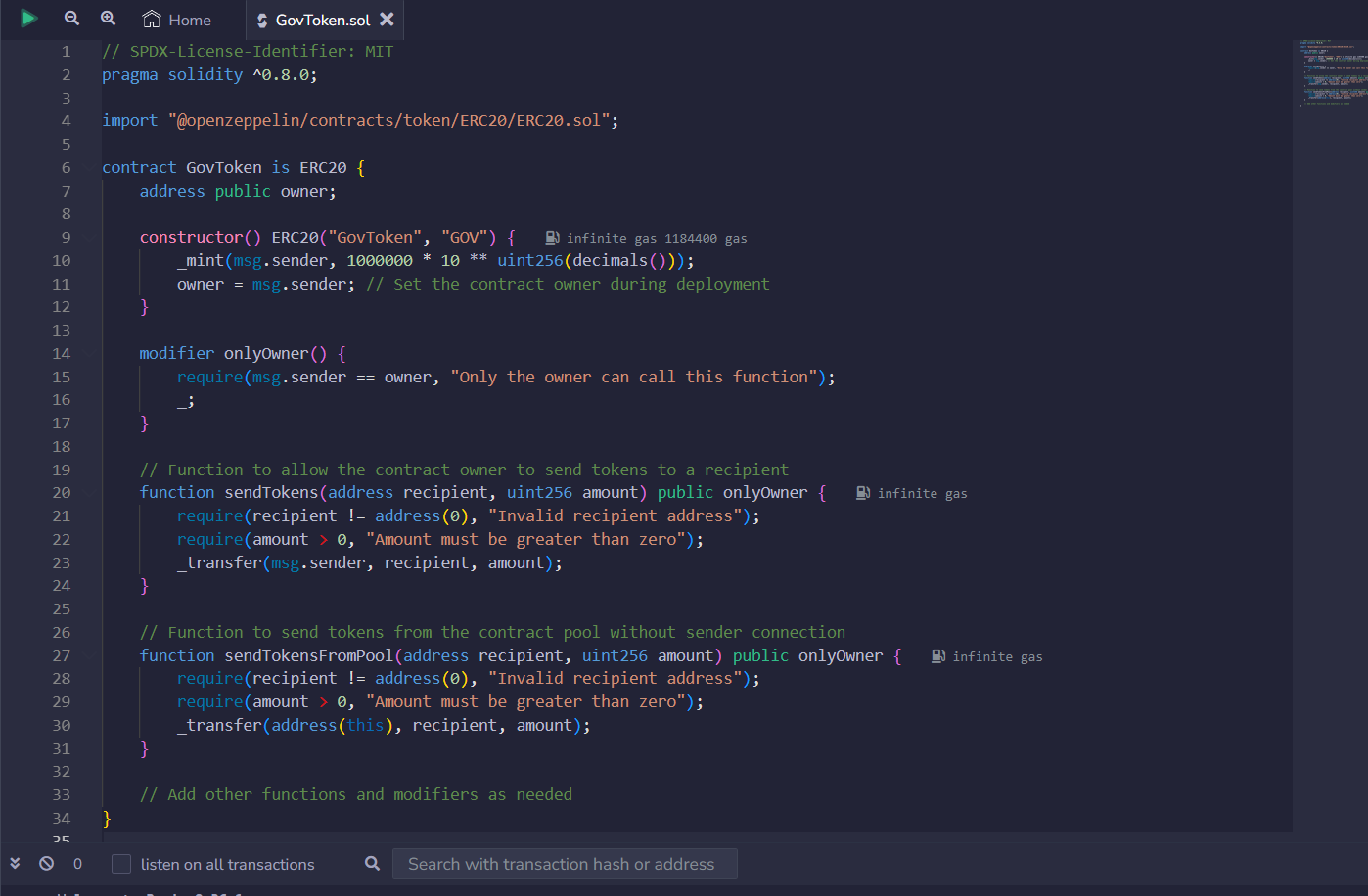
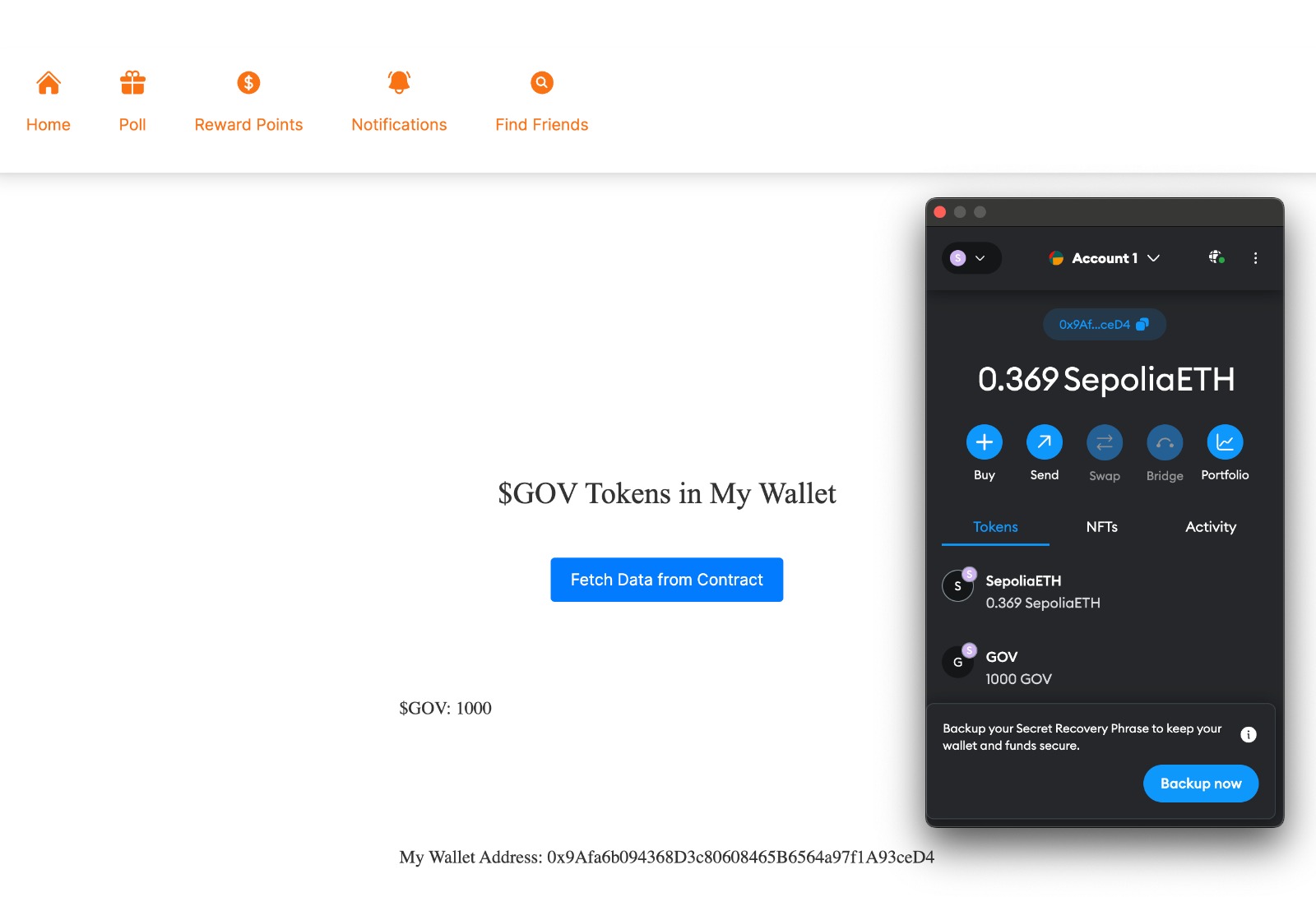
We effectively implemented some features using a local database due to our lack of experience in blockchain development. Nevertheless, we were able to deploy our $GOV token on the network, connect Metamask, and use Web3.js to display user balances in the frontend.
The platform's design were greatly influenced by CSS in terms of design, and elements from Next.js were added to improve performance and functionality.
Challenges we ran into
Numerous obstacles stood in our way, most of which were brought on by the fact that we were intermediate web developers and had little prior knowledge of blockchain technology. We faced a steep learning curve when using React JS to interact with smart contracts. Additionally, we ran into internet connectivity problems during the hackathon, which made it difficult for us to conduct research on novel technologies.
We used a practical strategy to get past these obstacles. We turned to Web2 features in areas where we lacked expertise because integrating Web3 proved difficult. Additionally, we chose a minimalist frontend and design strategy, which allowed us to focus our resources and efforts more effectively on building the platform's essential features.
Accomplishments that we're proud of
We are proud of our accomplishments, especially in light of the fact that we have only recently begun using blockchain technology. We created a smart contract in Solidity with success and then released our own ERC-20 token, $GOV. Thanks to the web3.js library, we were able to learn a lot about how to link a React frontend with a smart contract during this journey.
We were able to demonstrate our project using tools like React, Solidity, CSS, and more despite the difficulties caused by internet connectivity issues. Most importantly, our team gained a deeper understanding of blockchain concepts, which was a major accomplishment and evidence of our perseverance.
What we learned
We learned a lot about blockchain technology and its potential for decentralization through this project, addressing current worries about centralization in the tech sector. Along with these crucial project management and teamwork skills, we successfully delegated tasks to meet time constraints.
As part of our learning process, we mastered Solidity and libraries like web3.js for use in our web platform. This experience improved our technical knowledge and our ability to collaborate and adapt, enabling us to better meet the challenges of the rapidly changing tech industry.
What's next for GovToken - Gamified E-Governance with Blockchain
As GovToken looks to the future, we have exciting plans for improving our blockchain implementation, especially in decentralized voting, where we'll switch from a weaker and less secure Web2 framework to a more robust and secure Web3 framework. Additionally, we are committed to improving our frontend and backend by incorporating Node.js and React.js, ensuring a more seamless and user-friendly experience.
As we broaden our horizons, we plan to develop additional smart contracts to support functions like taxation, enabling a more thorough and efficient system for paying taxes. We're also investigating the switch from conventional fiat-based tax payments to blockchain-based solutions as part of our long-term vision, paving the way for a more effective and transparent tax system.


Log in or sign up for Devpost to join the conversation.