-
-
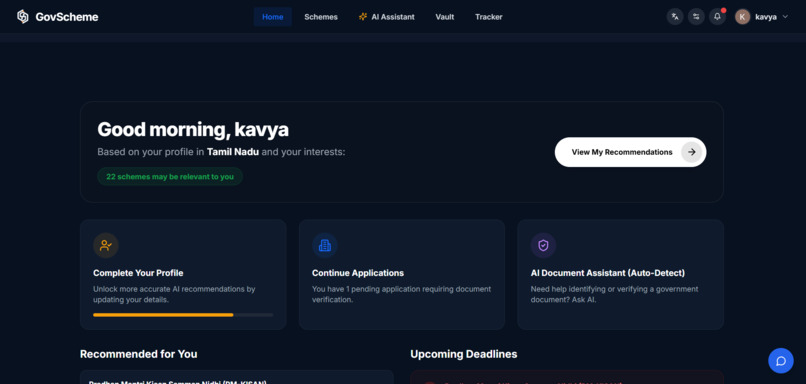
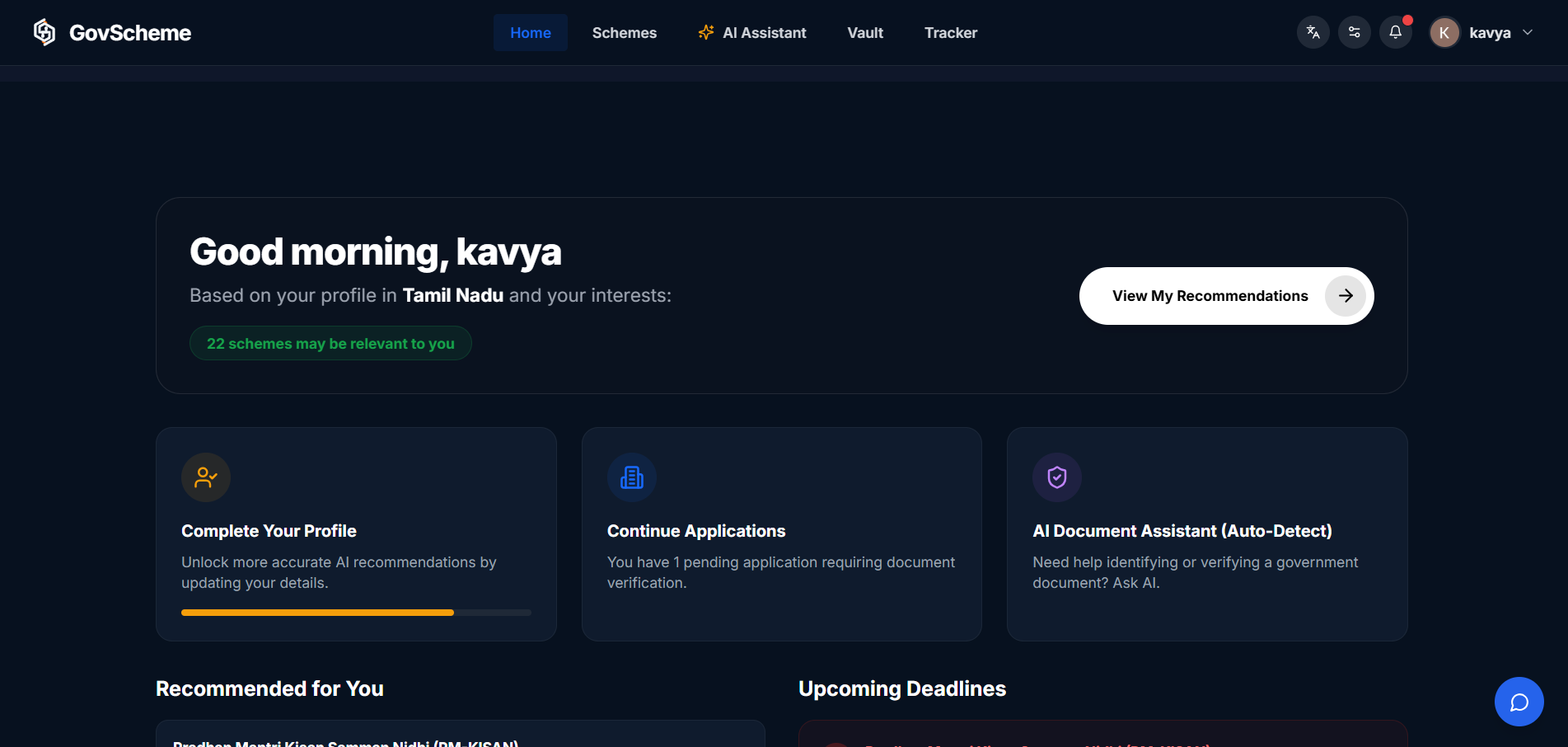
home page of GovSchemeAI
-
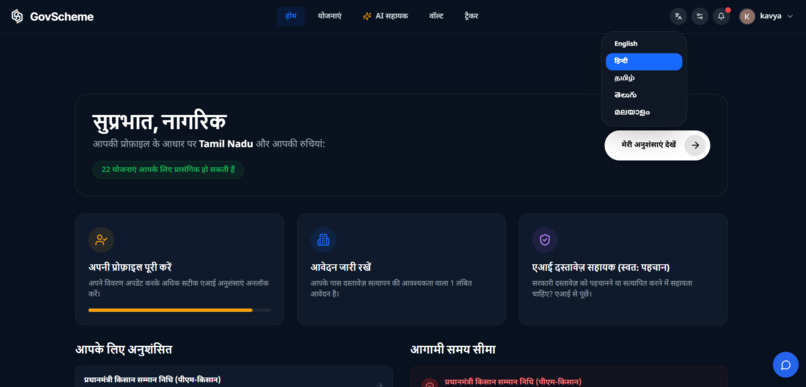
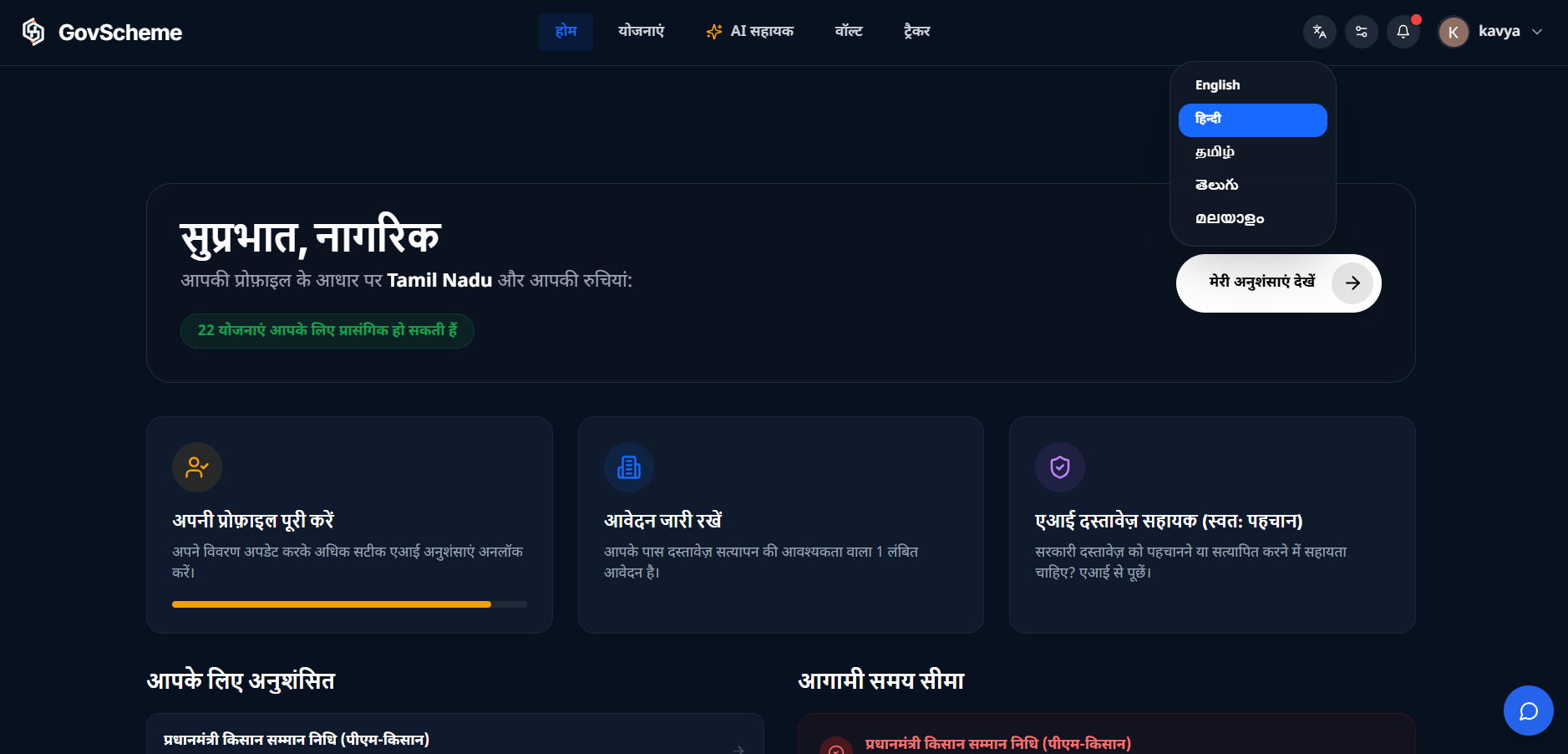
multilingual characteristic for 5 regional languages
-
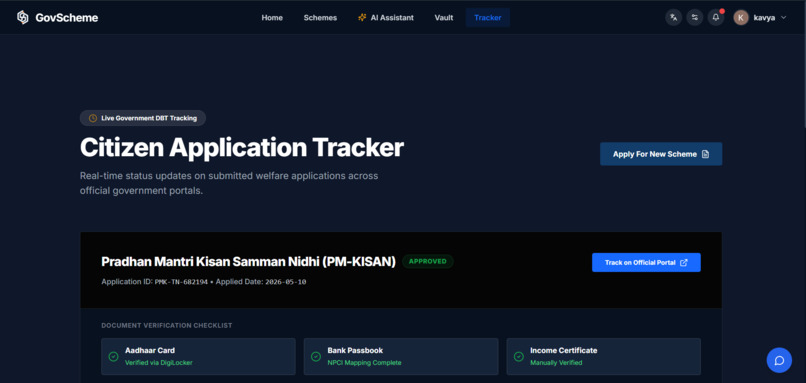
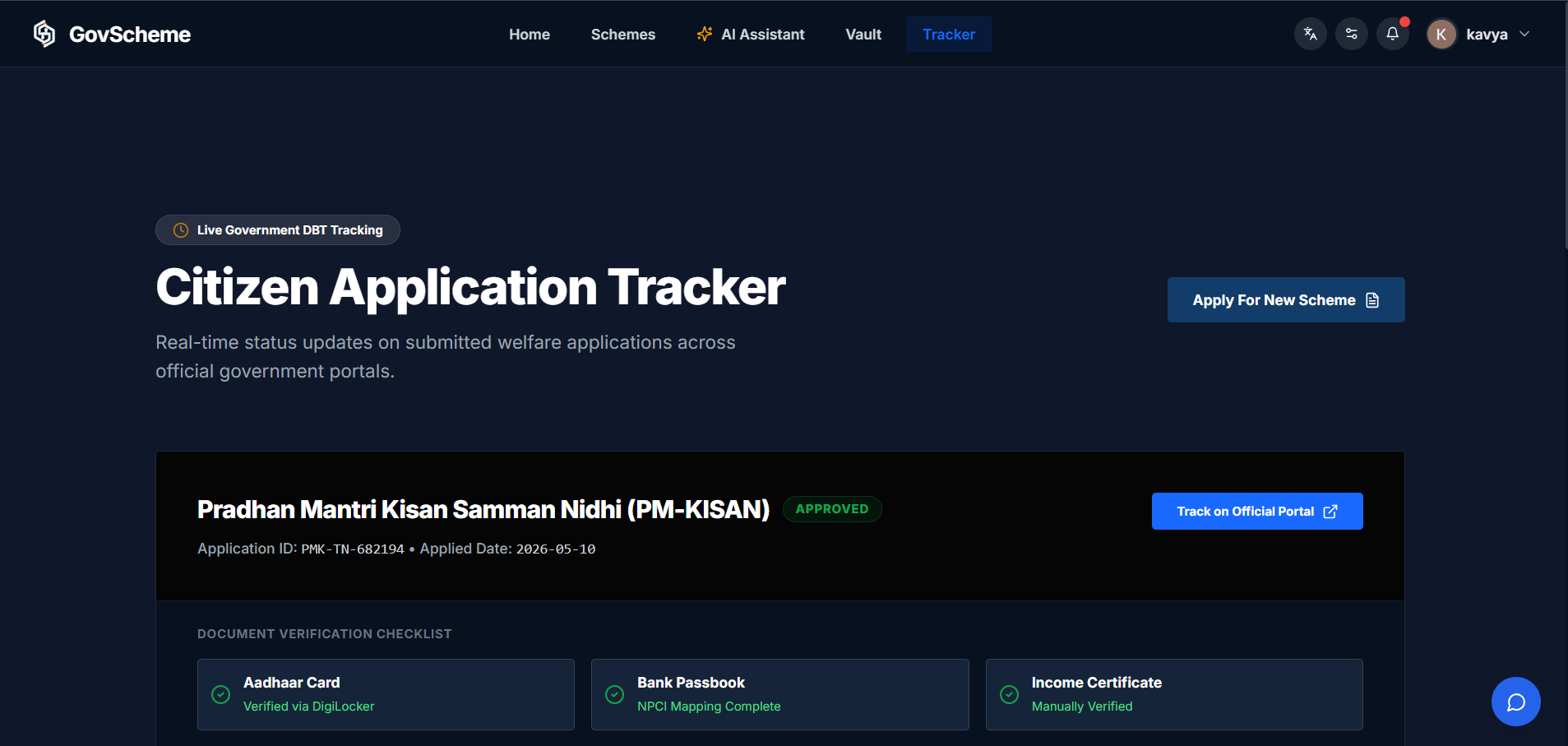
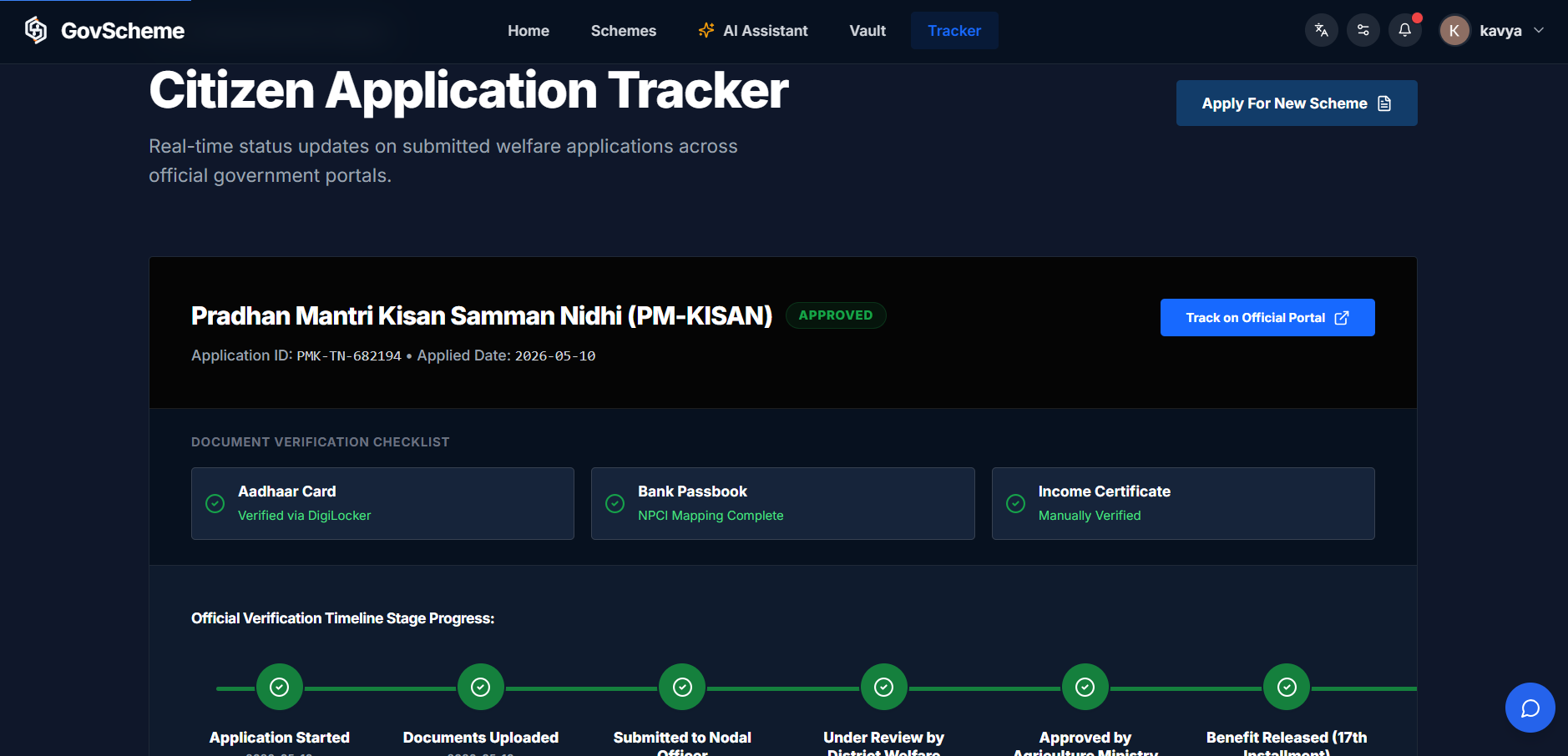
application tracker which tracks users status
-
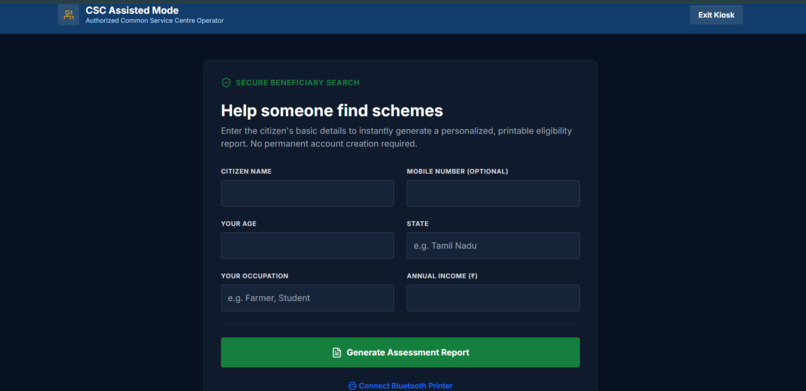
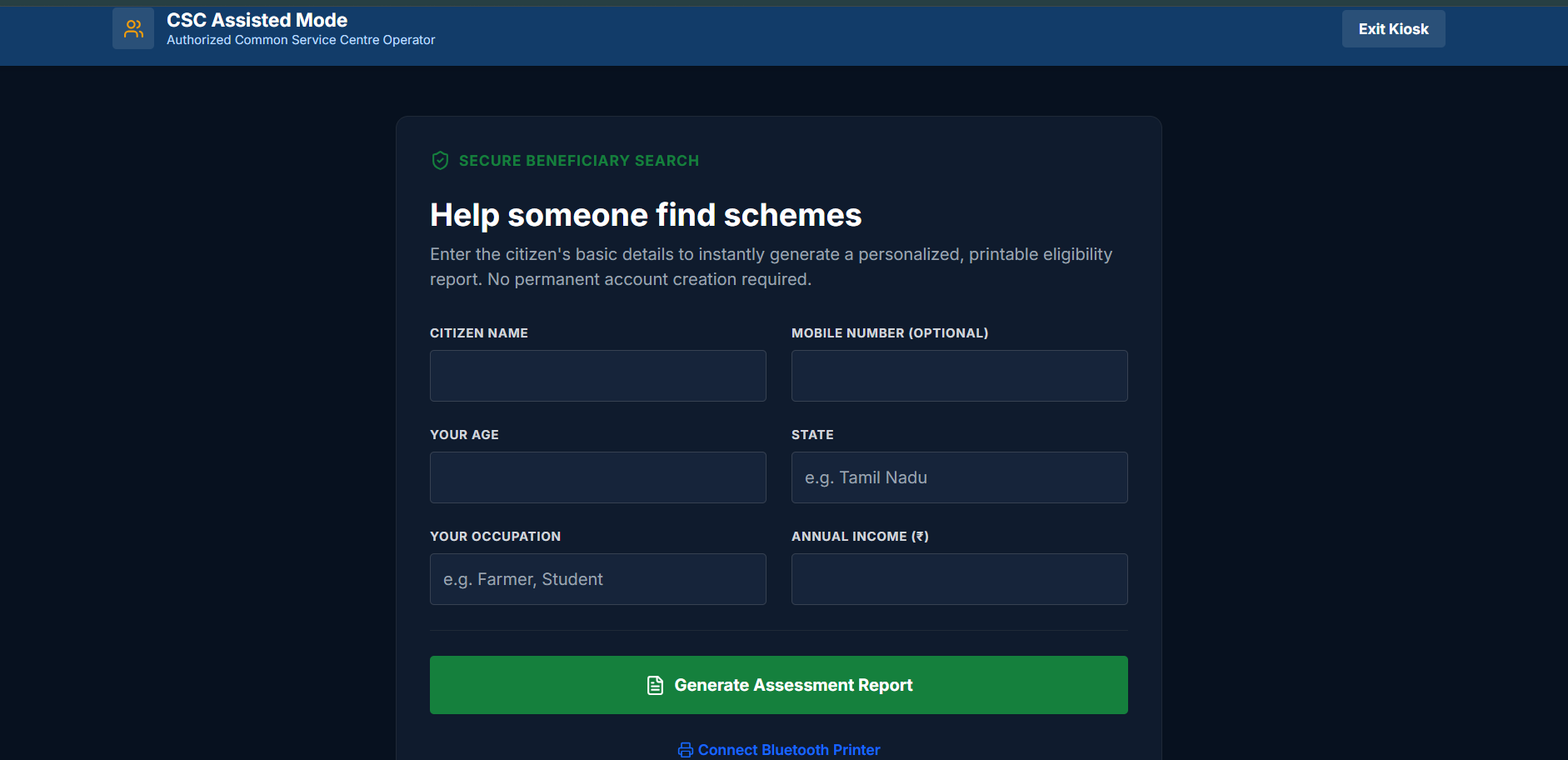
kiosk mode for rural households
-
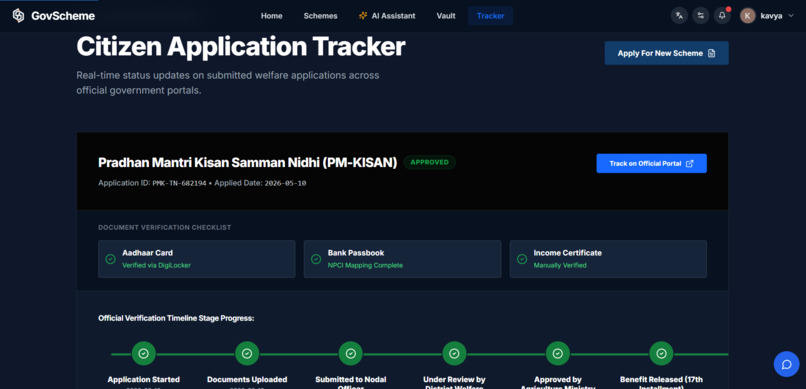
status map of application
-
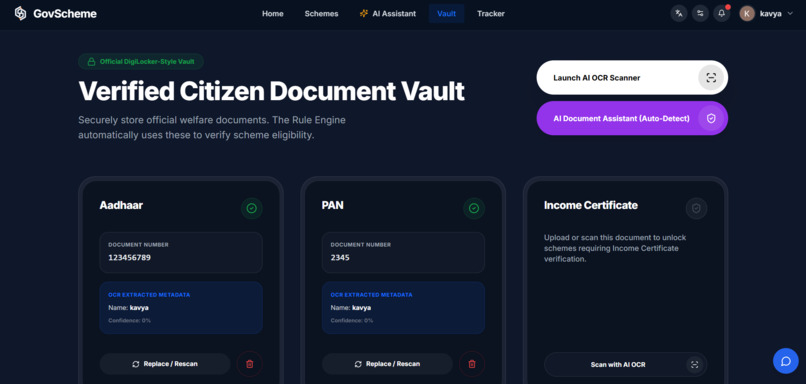
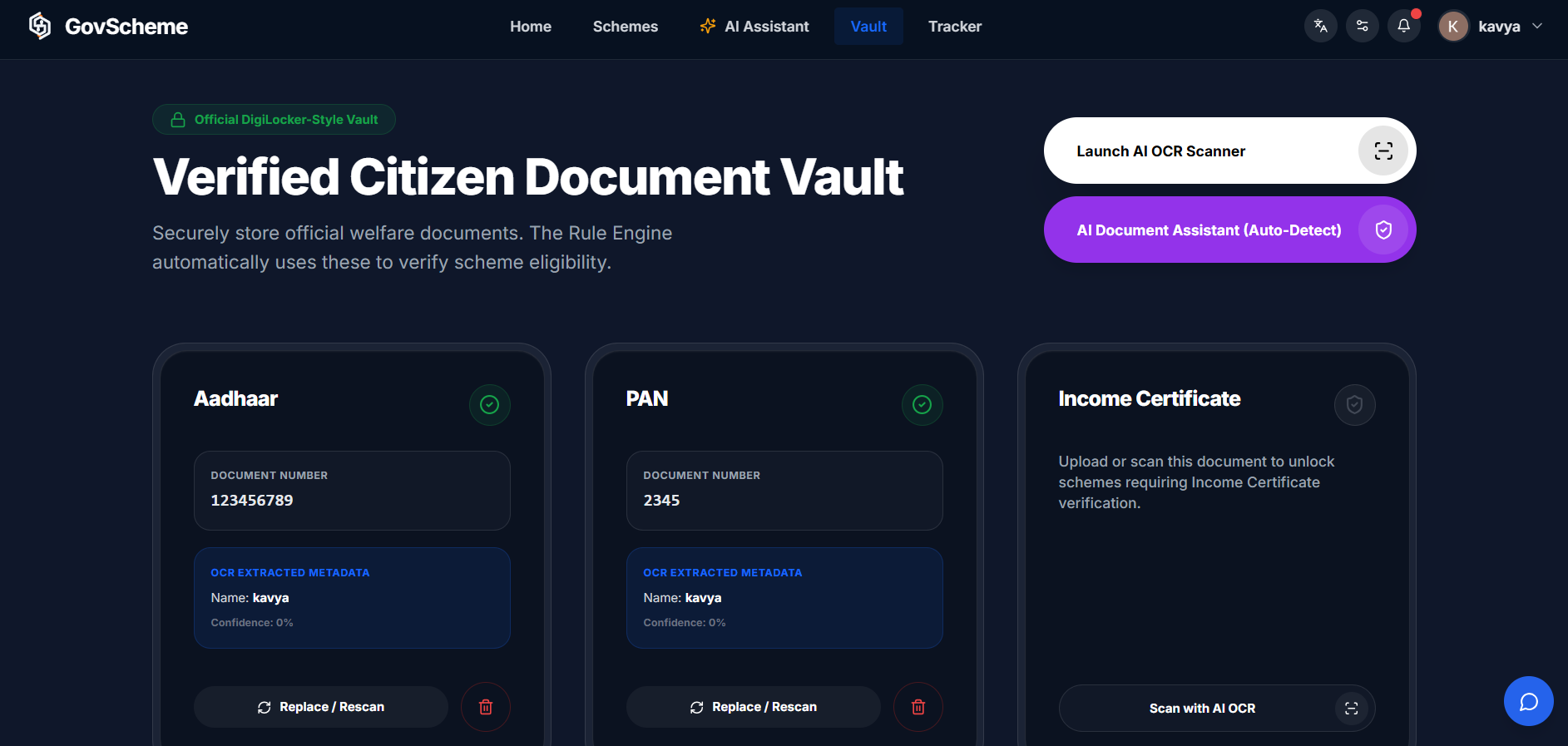
AI OCR scanner for neglecting manual entry
-
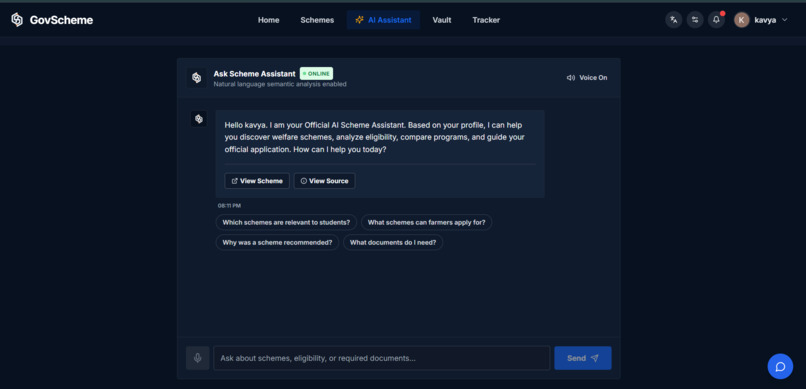
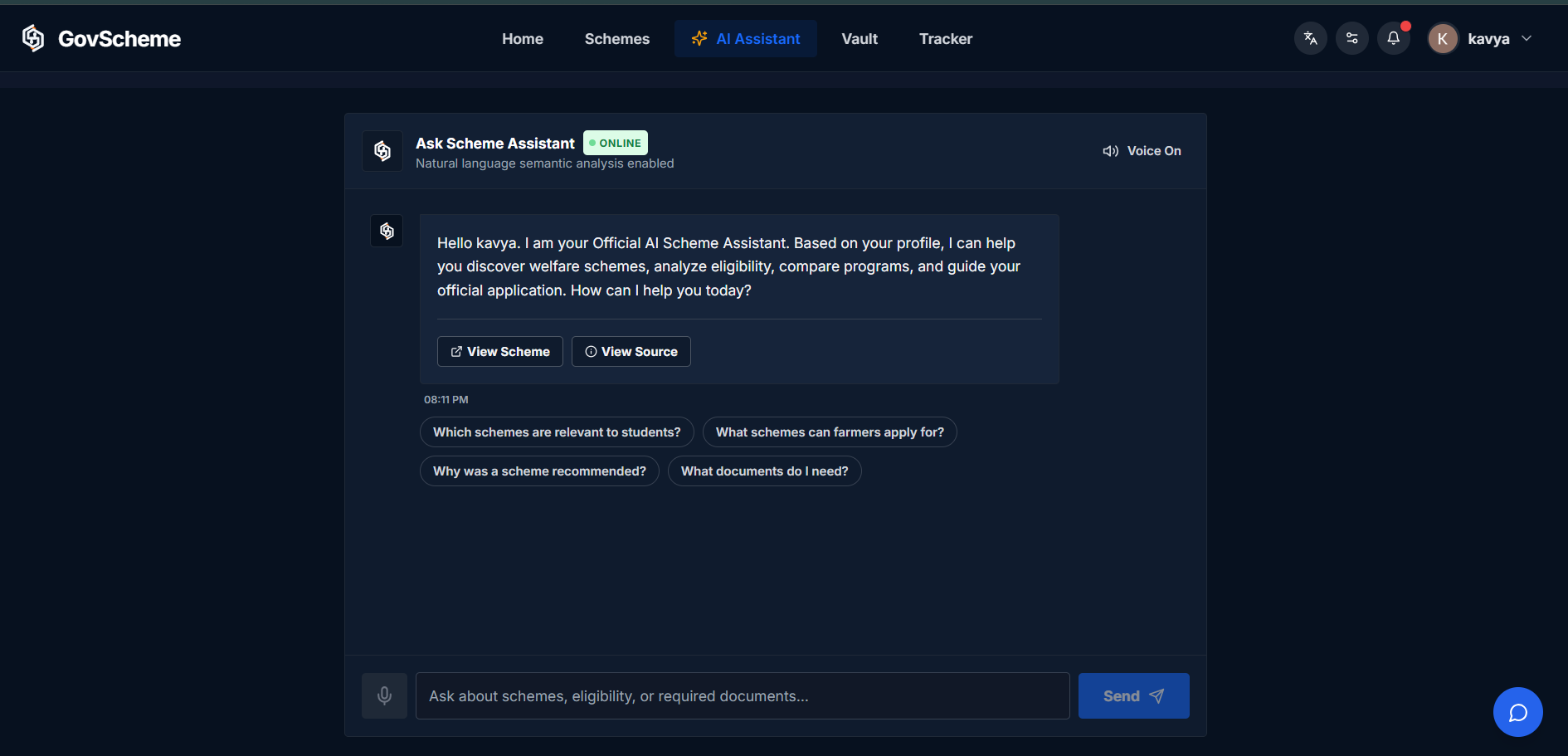
voice enabled ai assistant for helping user
-
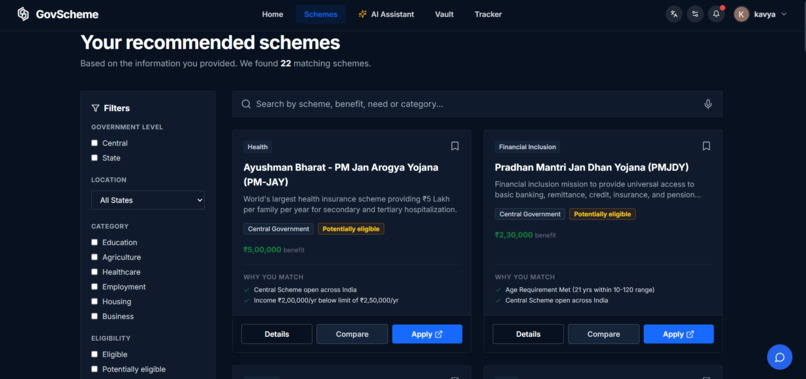
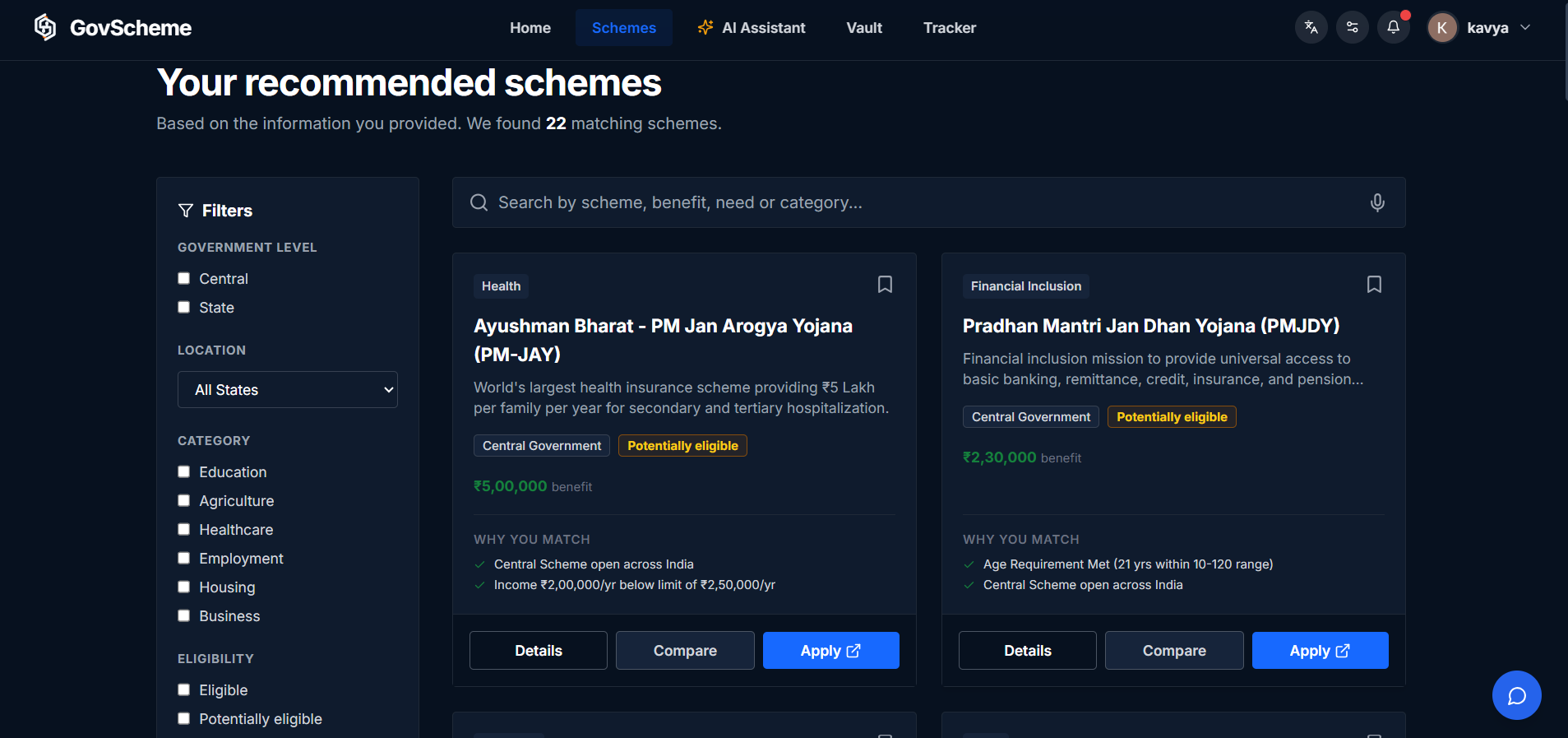
main searching and filtering page
Inspiration
Government welfare schemes are designed to support citizens, but discovering the right scheme and understanding eligibility can be difficult. People often have to manually search through different sources, understand complex eligibility conditions, and overcome language barriers.
We wanted to solve this problem with a simple idea: What if citizens could describe their situation and receive personalized guidance about the schemes they may be eligible for?
That idea led us to build GovScheme AI.
What it does
GovScheme AI is an AI-powered multilingual government scheme recommender and assistance platform.
Users can provide details such as age, income, occupation, gender, location, and category. Our eligibility engine identifies relevant schemes based on these details.
The AI assistant helps users understand the results in simple language by explaining why a scheme is recommended, what documents may be required, and how they can proceed.
The platform also uses OCR to extract information from uploaded documents, reducing repetitive manual data entry.
How we built it
We built the frontend using React, TypeScript, Vite, and Tailwind CSS, with a Node.js and Express.js backend and MongoDB for data management.
The system combines a rule-based eligibility engine with AI-powered assistance. The rule-based layer handles structured eligibility conditions, while the AI assistant provides natural-language explanations and helps users navigate the scheme discovery process.
We also integrated OCR technology for document information extraction and designed the platform with multilingual interaction in mind.
Challenges we ran into
One of our biggest challenges was converting complex scheme eligibility conditions into structured rules that could be processed consistently.
We also had to ensure that AI assistance remained useful without relying on AI alone to determine eligibility. This led us to separate eligibility filtering from AI-powered explanations, making the system more structured and reliable.
Handling document extraction, multilingual interaction, and keeping the interface simple were additional challenges we worked through during development.
Accomplishments that we're proud of
We are proud of building a working prototype that combines AI-powered assistance, rule-based eligibility matching, multilingual support, and OCR to address a real-world problem.
Instead of simply listing government schemes, GovScheme AI focuses on the questions citizens actually have:
“Am I eligible?” “Why is this scheme recommended?” “What documents do I need?” “What should I do next?”
What we learned
This project taught us that AI becomes more useful when combined with structured logic and reliable information.
We gained practical experience in full-stack development, API integration, database management, OCR, AI integration, prompt design, eligibility-rule implementation, and building user-focused AI applications.
We also learned that solving a social problem is not just about adding technology—it is about making technology simple and accessible to the people who need it.
What's next for GovScheme
Our next goal is to expand the scheme database, improve multilingual and voice-based AI assistance, strengthen document extraction, and provide clearer application guidance.
We also plan to explore integrations with official government data sources to improve the accuracy and freshness of scheme information.
Our long-term vision is to make government scheme discovery as simple as describing your situation and receiving clear, personalized AI-powered guidance.
Built With
- ai
- express.js
- gemini-api
- generative-ai
- git
- github
- javascript
- mongodb
- multilingual
- node.js
- ocr
- react
- rest-api
- tailwind-css
- typescript
- vite

Log in or sign up for Devpost to join the conversation.