-
-
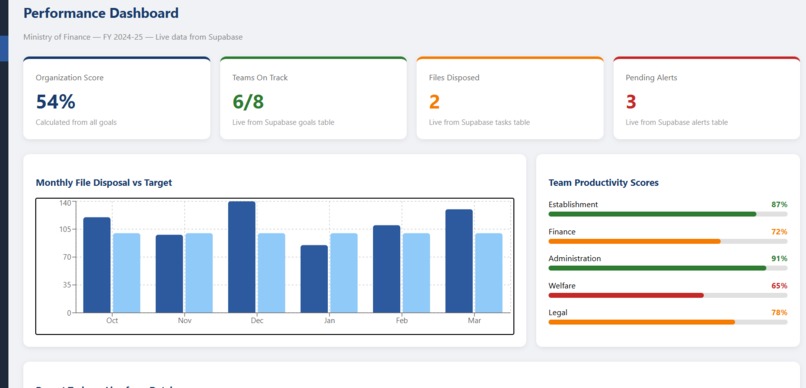
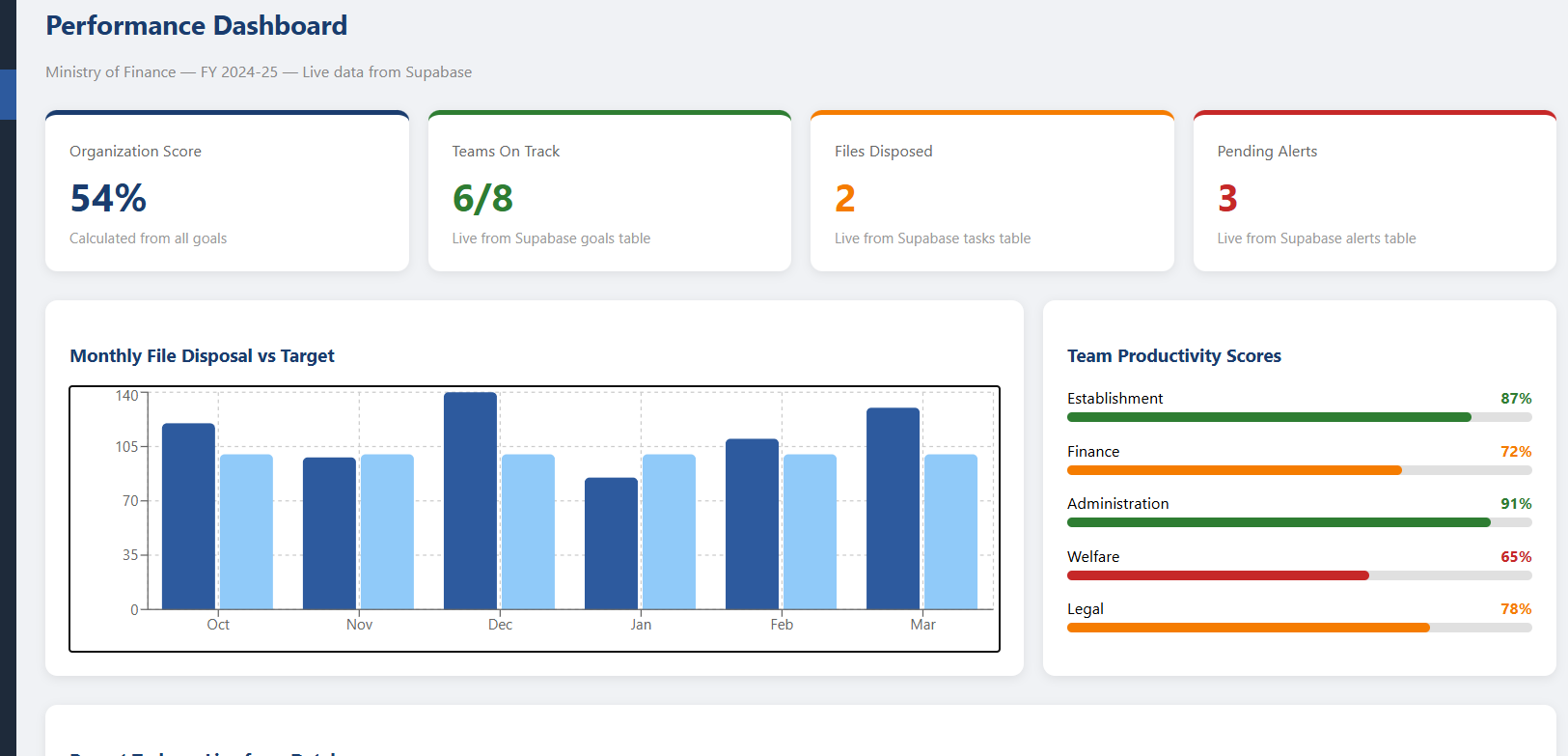
Performance Dashboard
-
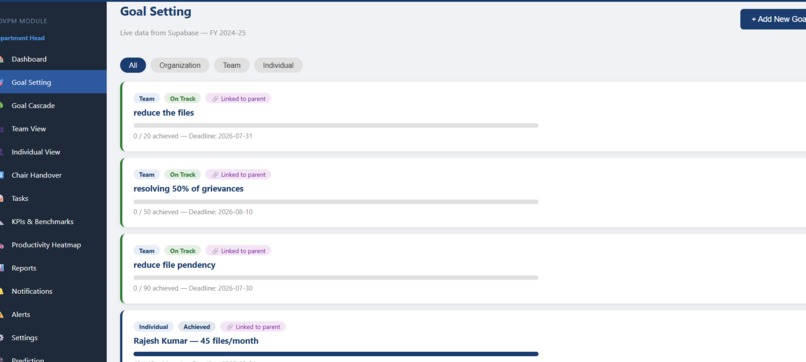
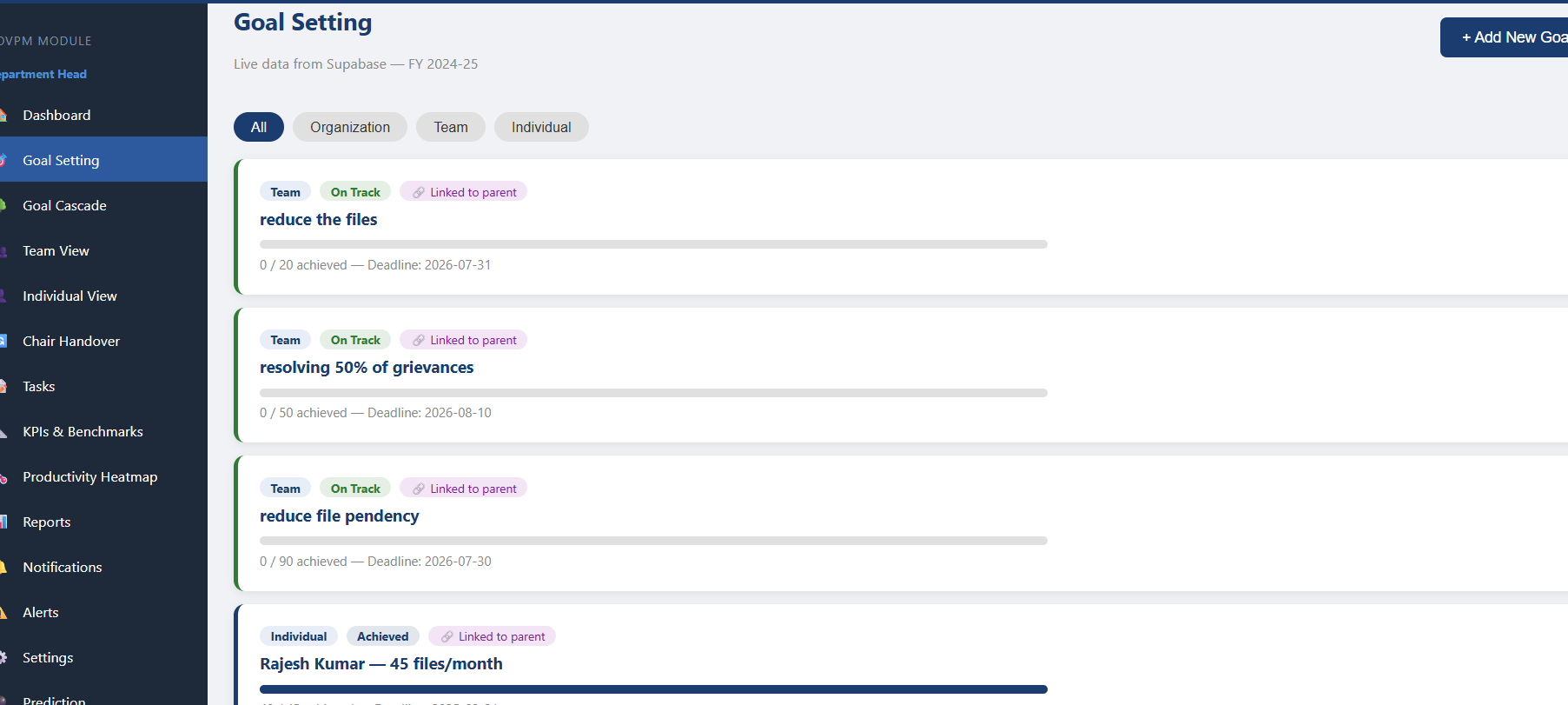
Goal Setting page
-
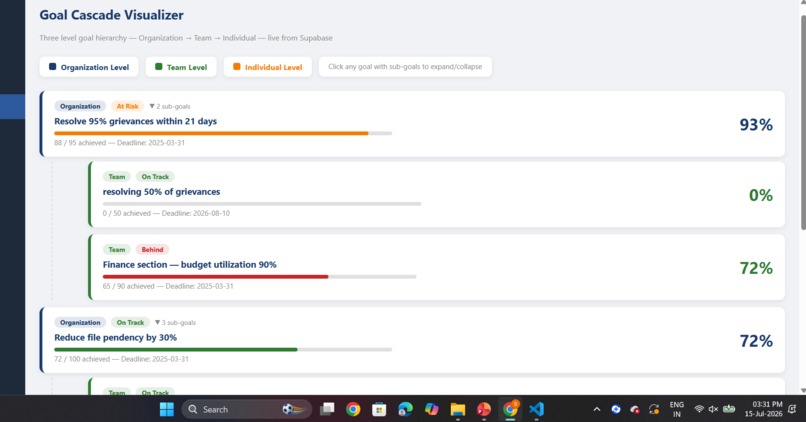
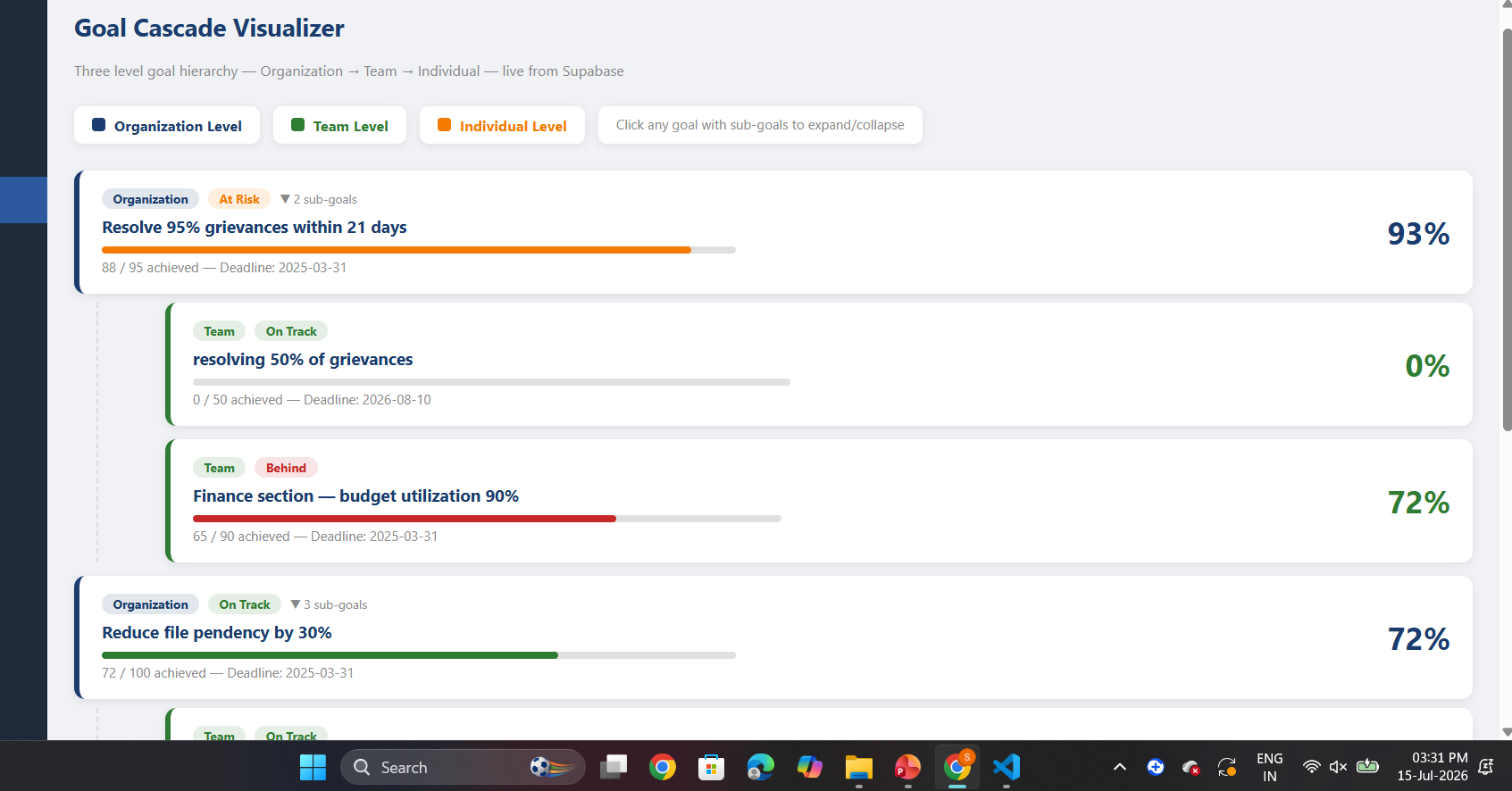
Goal Cascade Visualizer
-
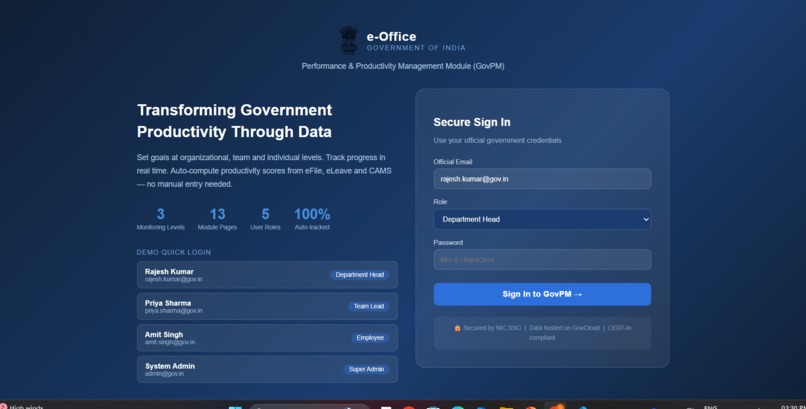
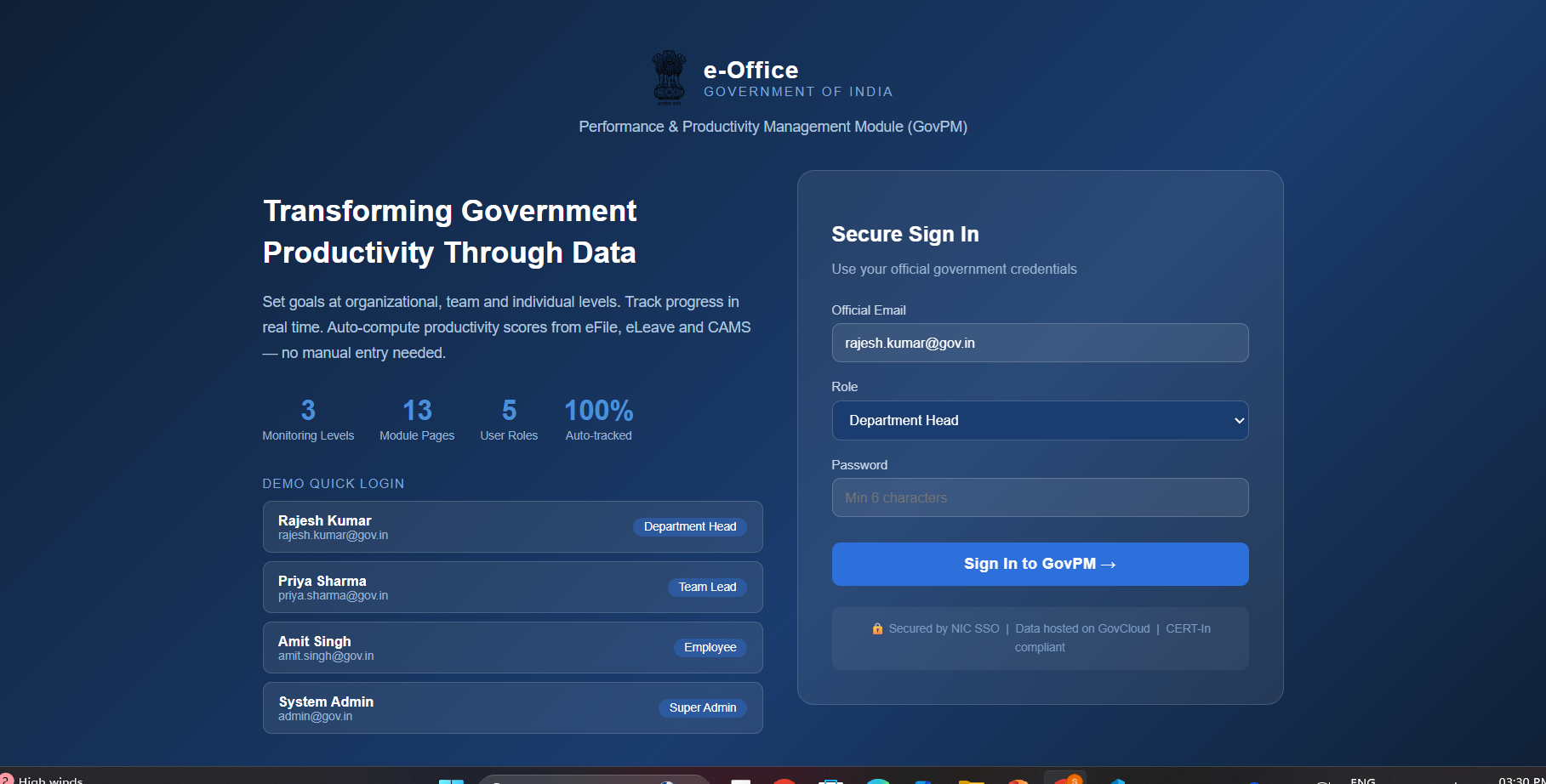
Login page
-

Bhashini Tool
-
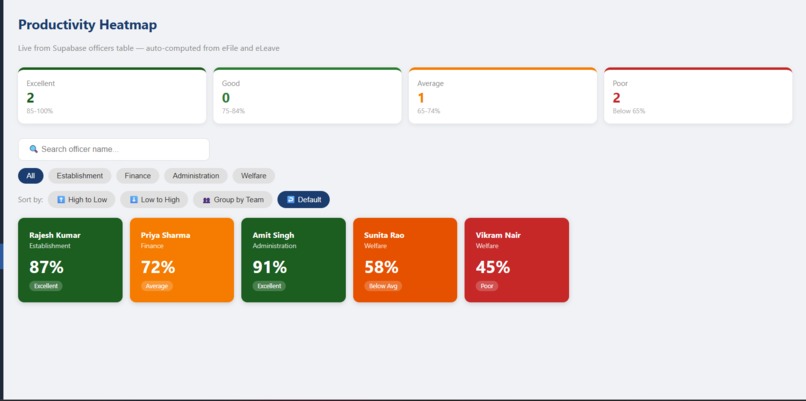
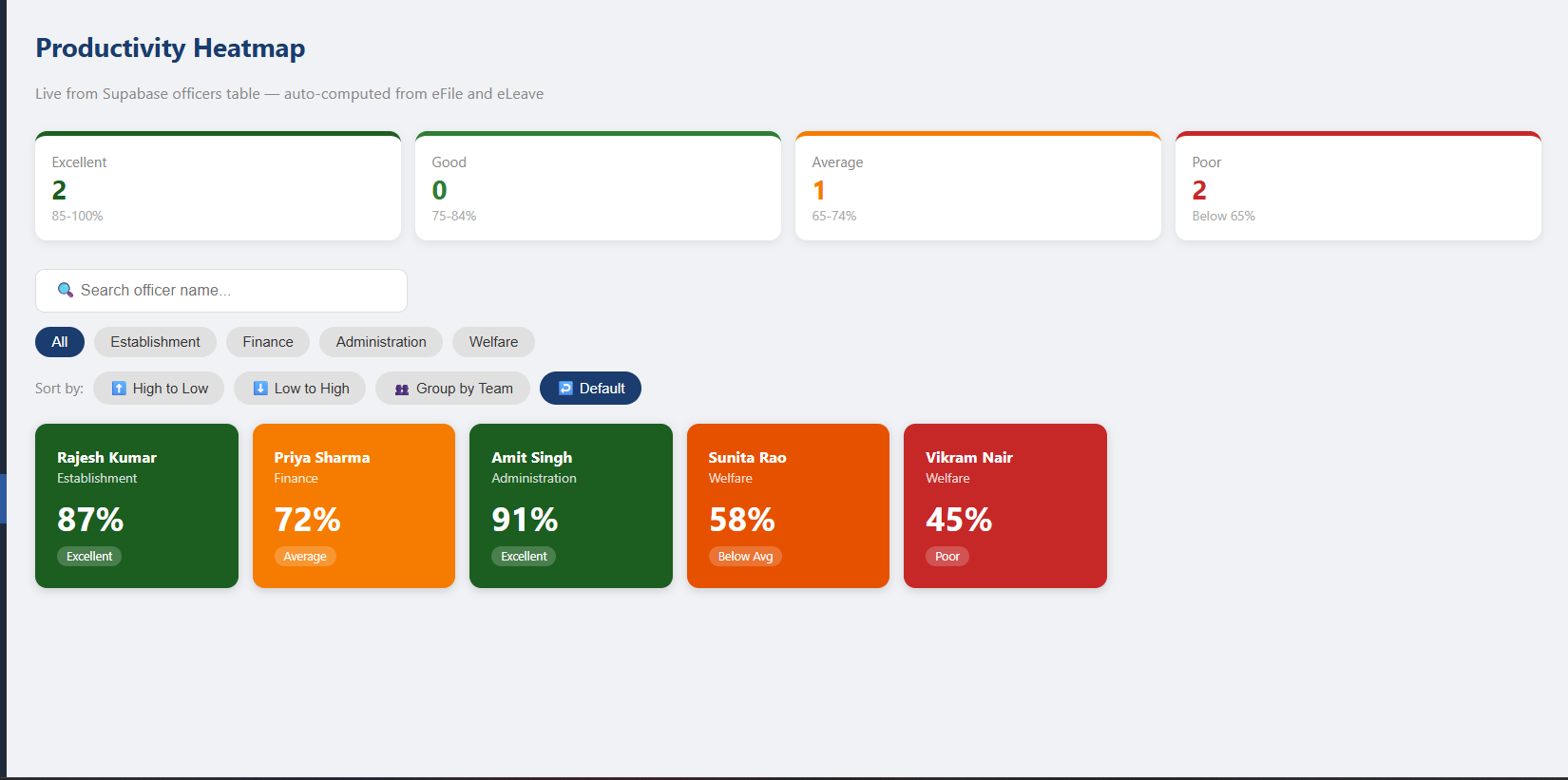
Productivity Heatmap
-
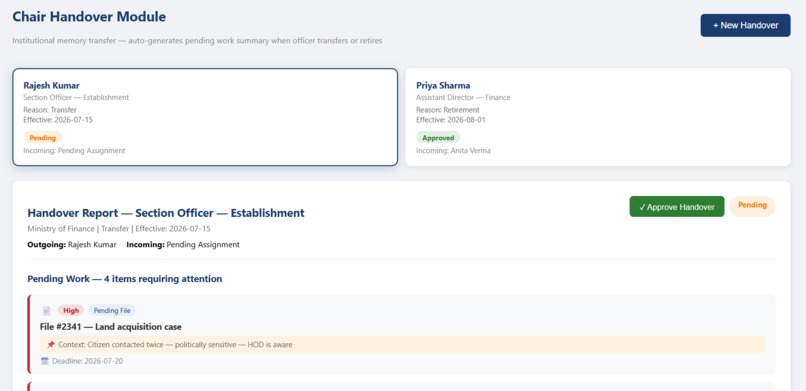
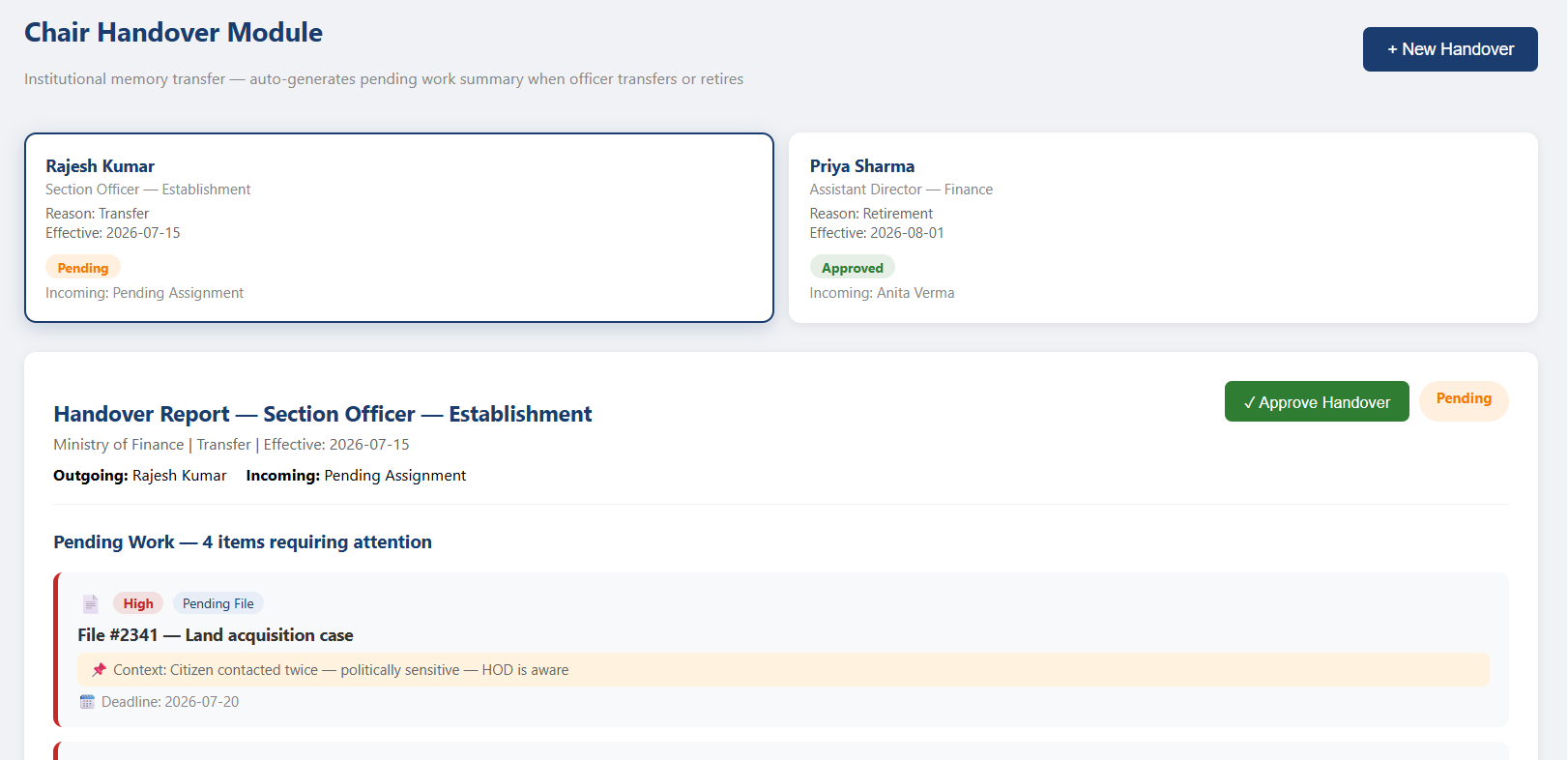
Chair Handover Page
-
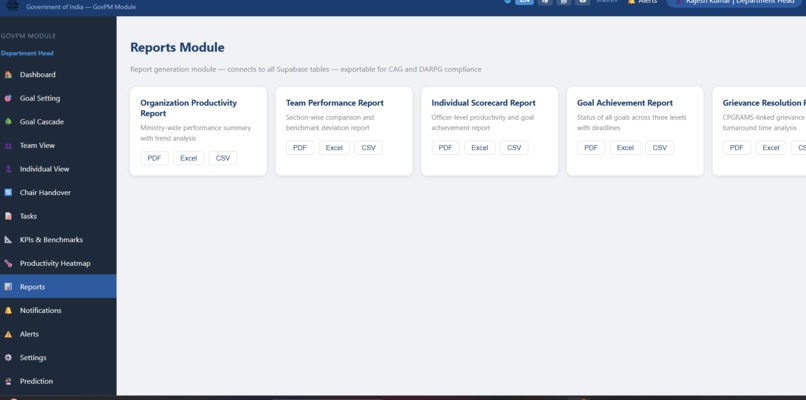
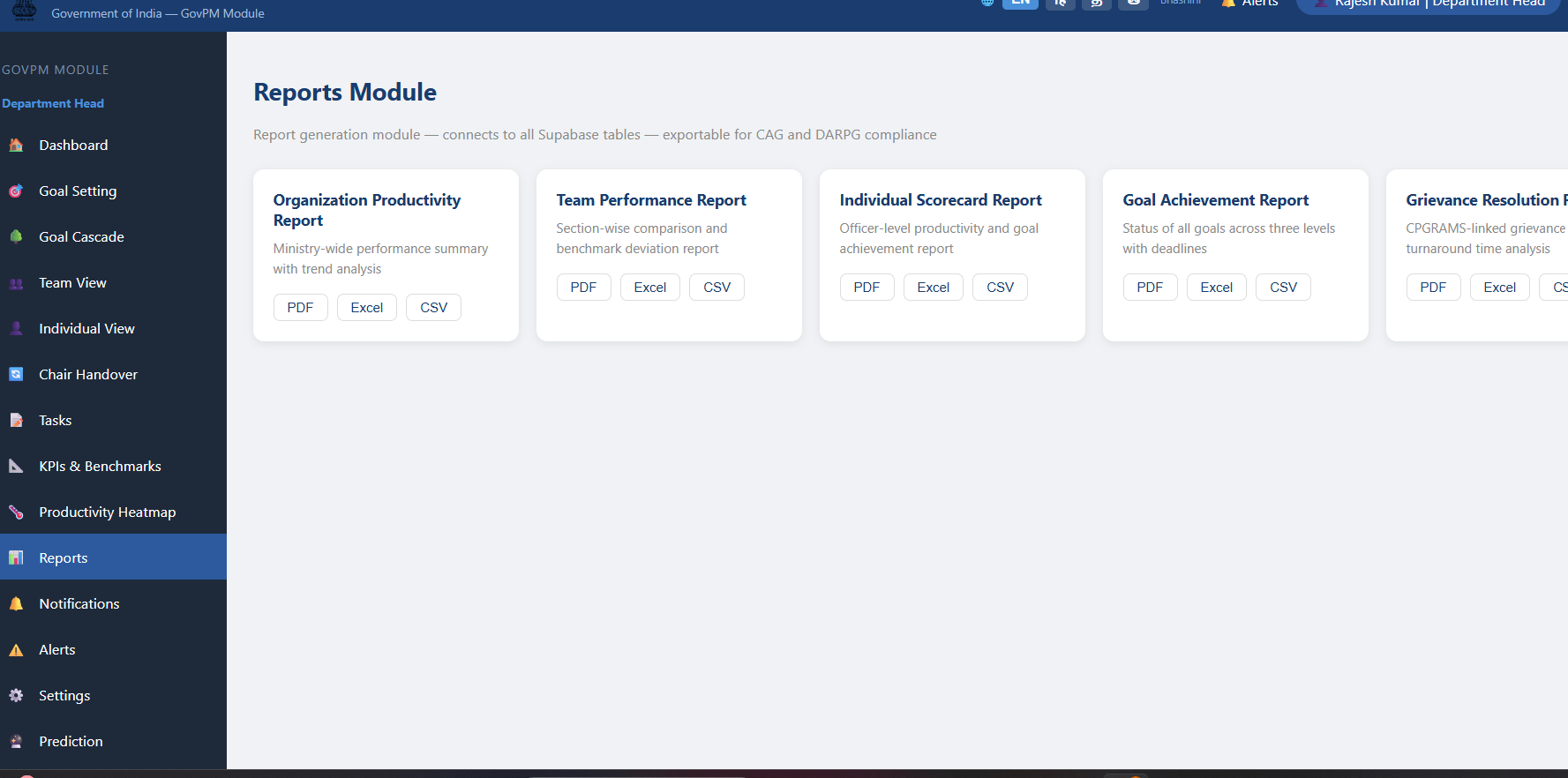
Reports Module
-
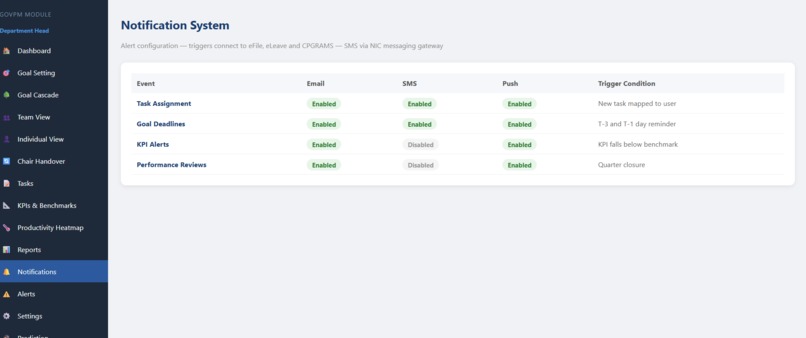
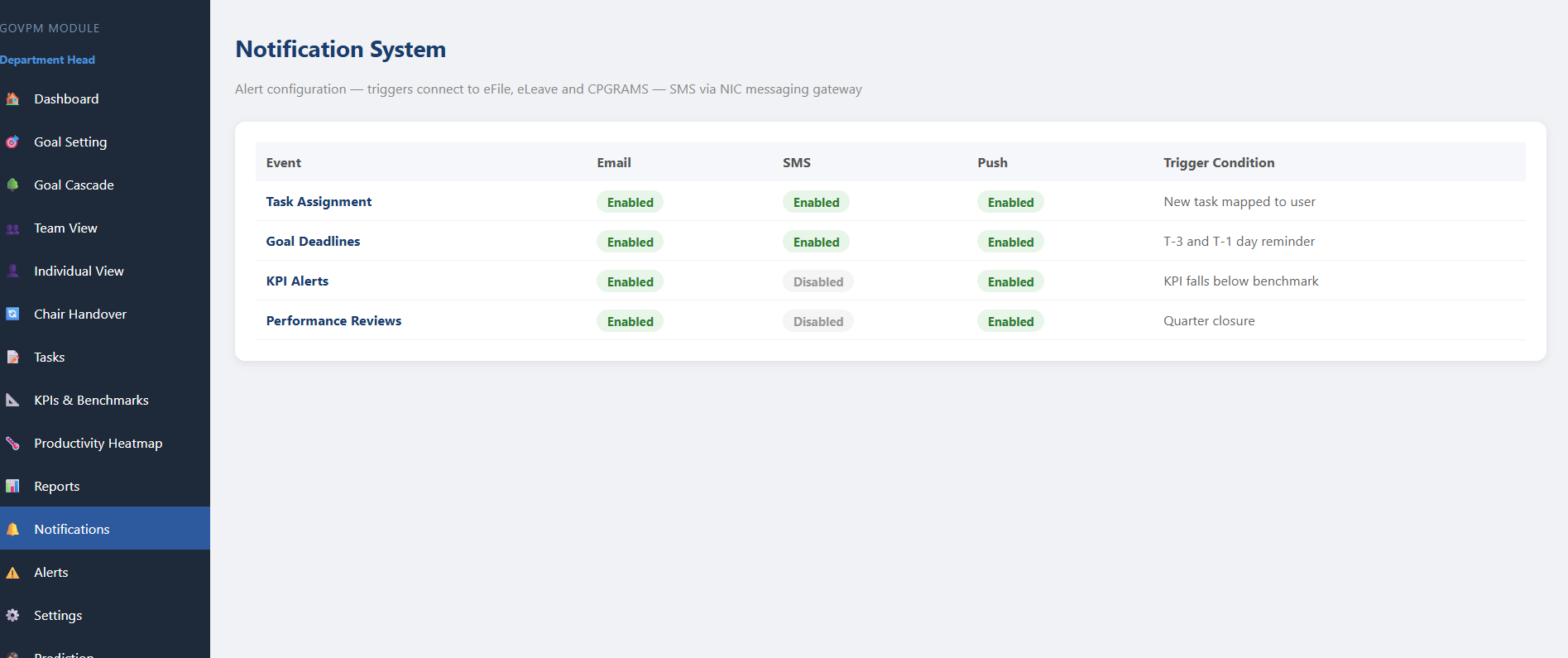
Notification System
-
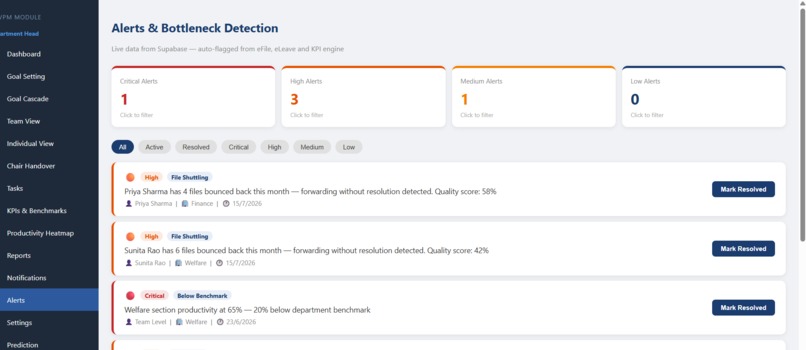
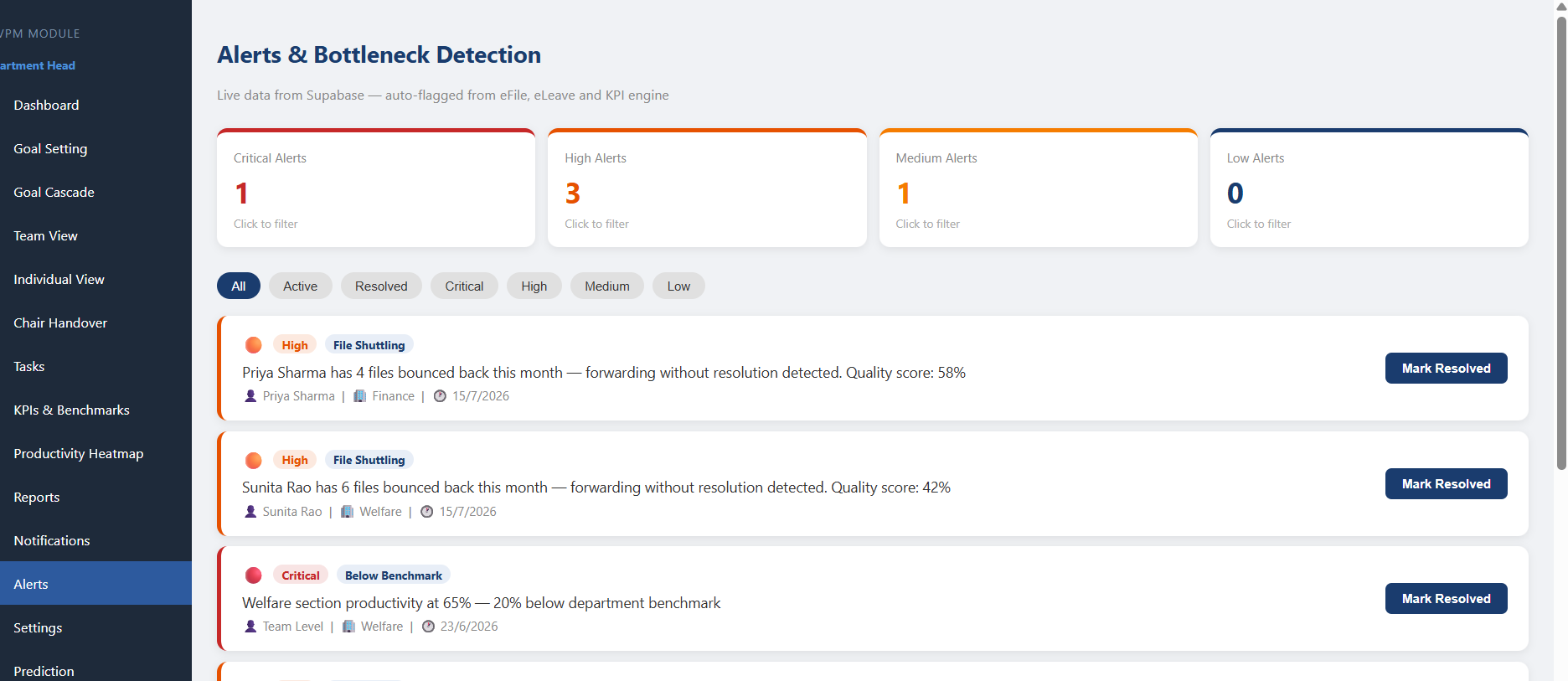
Alerts and Bottleneck
-
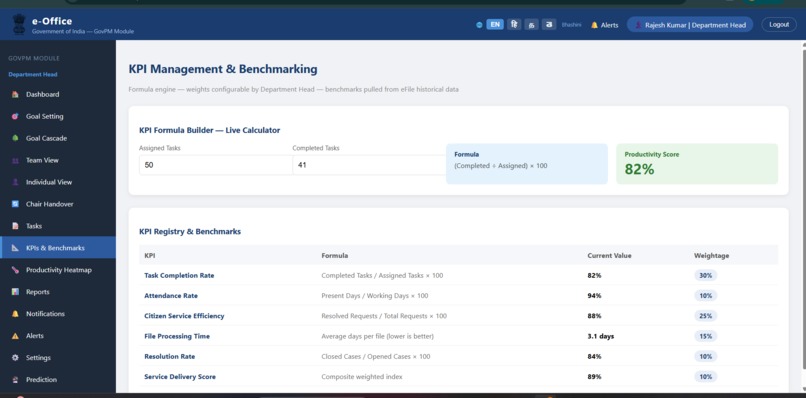
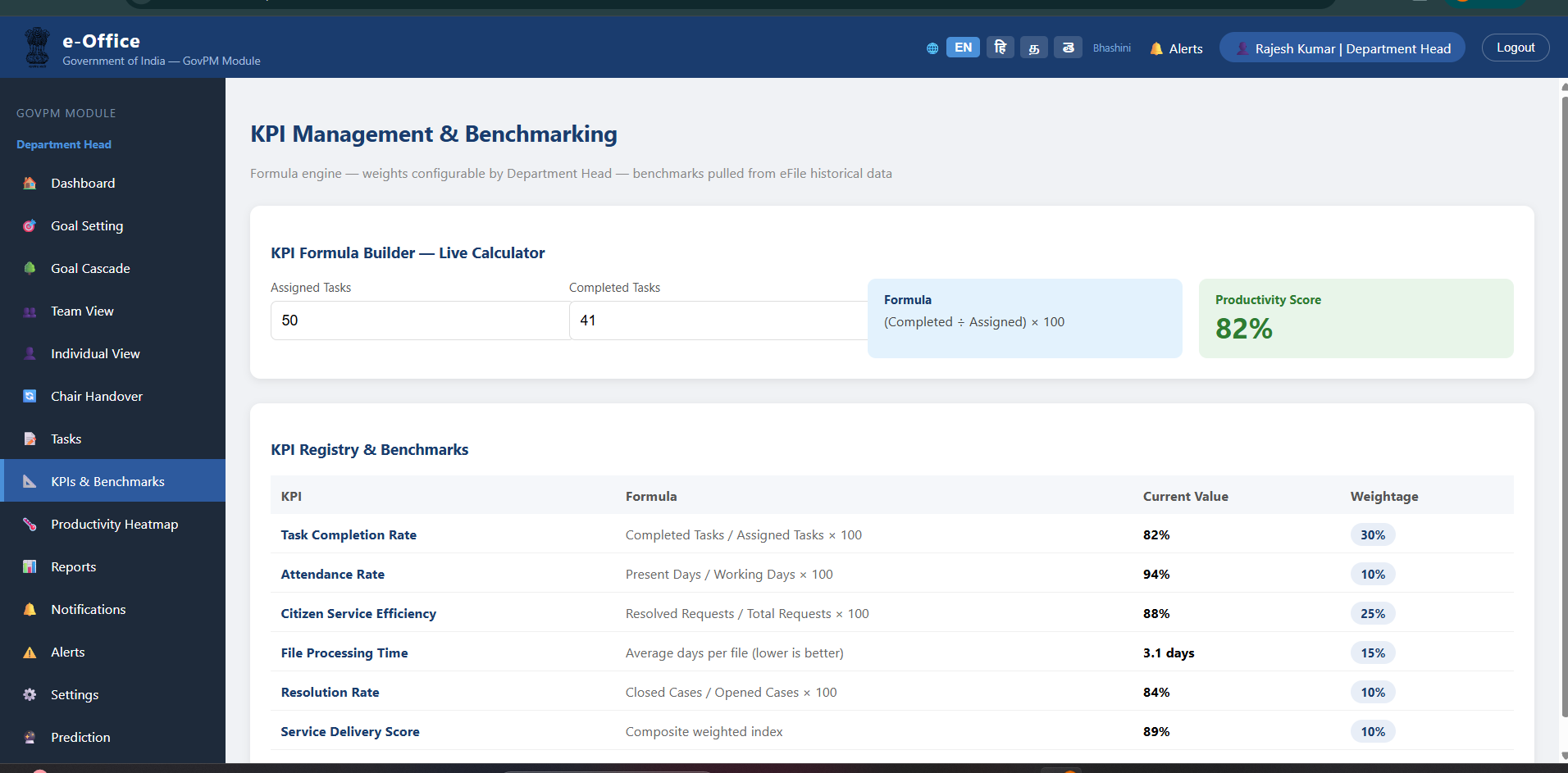
KPI Management and Benchmarking
-
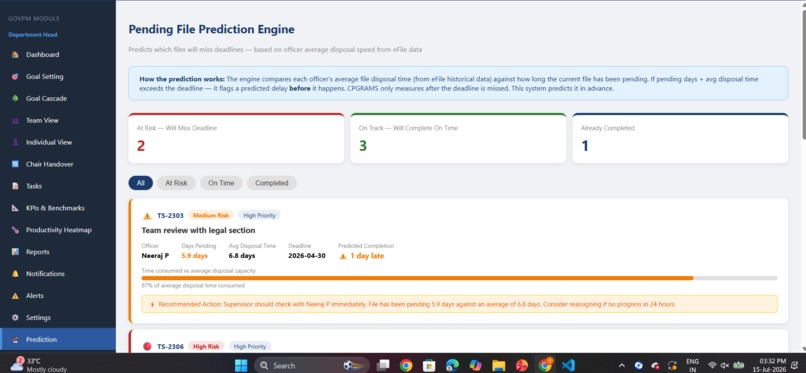
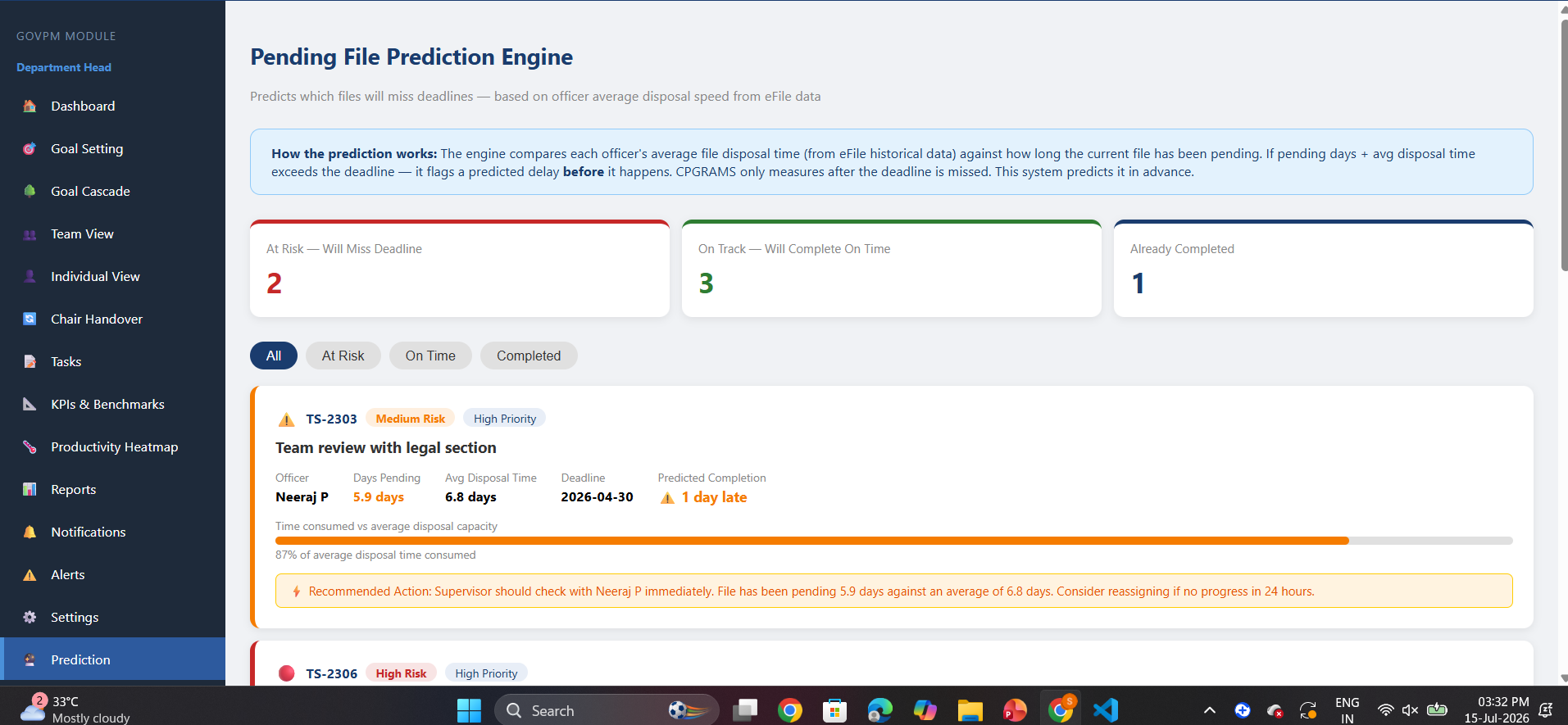
Pending file Prediction
-
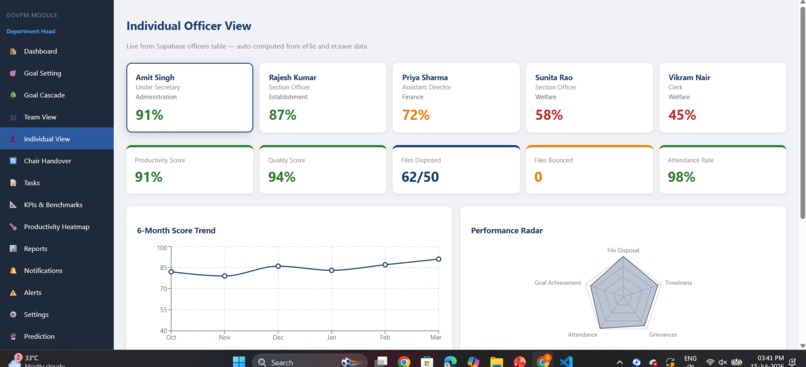
Individual View
-
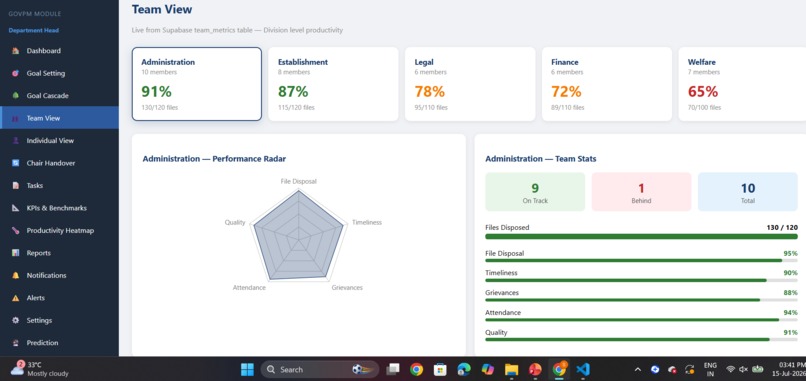
Team view

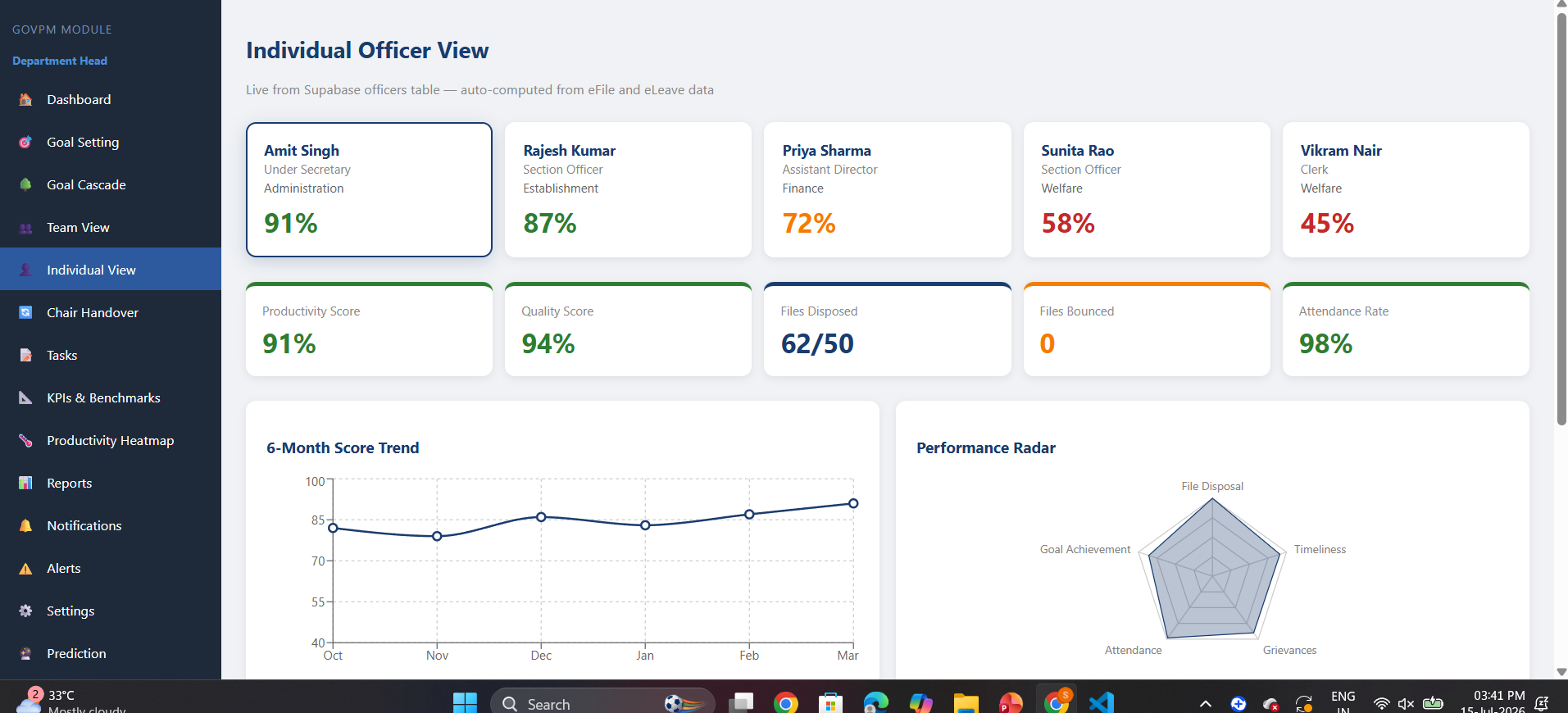
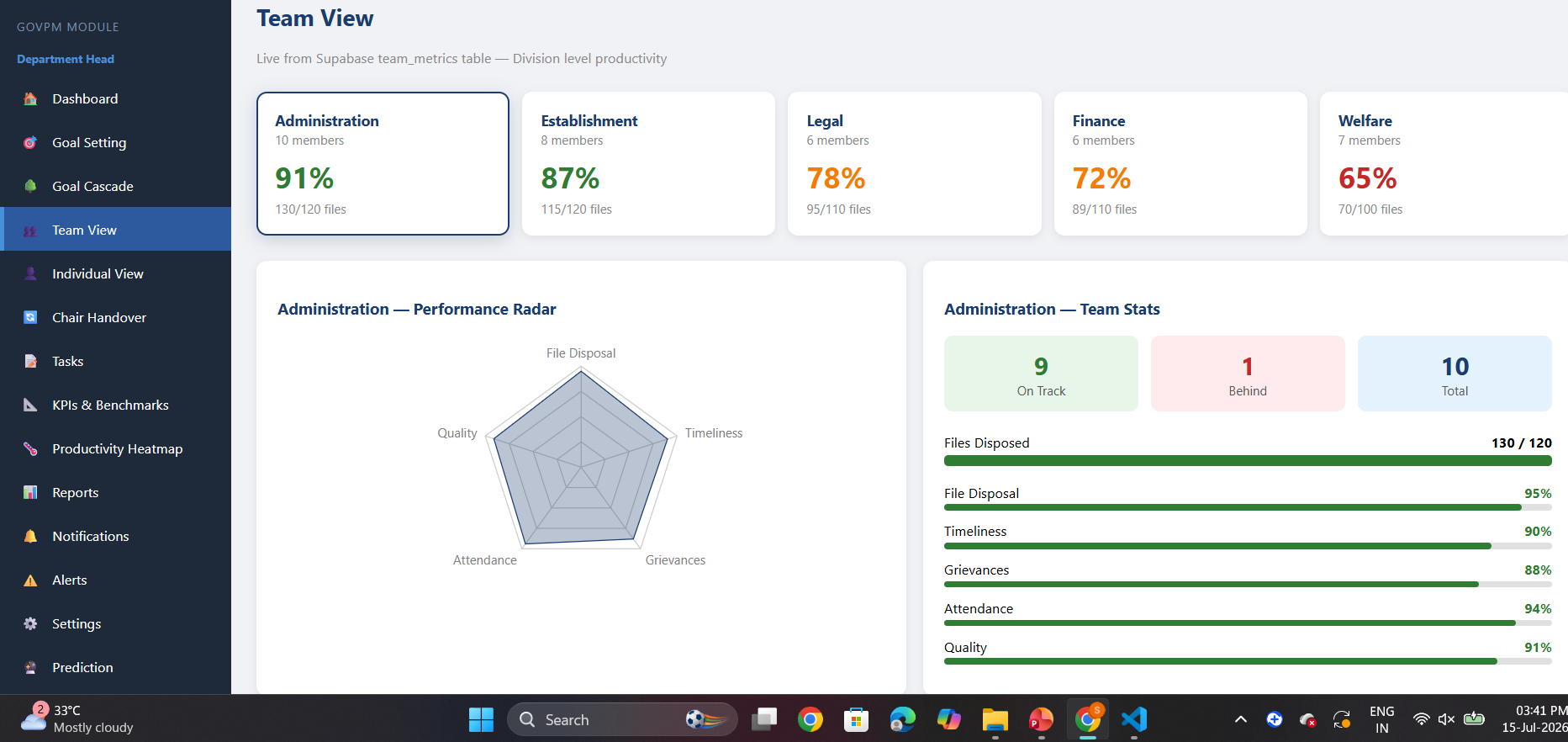
Inspiration
It started with a simple question that nobody could answer.
We asked a senior government officer: "Is your department productive today?"
He paused. Then said: "I honestly don't know."
This officer had 200 people under him, managed crores of rupees in scheme delivery, and handled thousands of citizen files every month. But he had no dashboard, no real-time data, no early warning system. He found out about problems only when citizens complained — which meant the deadline had already been missed.
We looked deeper and found that the problem was not a lack of data — it was a lack of insight. Every file movement in eFile is timestamped. Every leave record is in eLeave. Every grievance resolution is in CPGRAMS. The data existed. But no system converted it into actionable intelligence. We also discovered two problems nobody talks about. The first is file shuttling — officers forward files quickly without resolving them, and eFile rewards this because it only tracks speed, not quality. The second is institutional memory loss — when an officer retires or gets transferred, 20 years of knowledge walks out the door and the new officer has no context for what was pending.
These problems, combined with the complete absence of goal setting, benchmarking, and real-time tracking in government offices, convinced us that GovPM was not just useful — it was necessary
What it does
GovPM is a real-time, automated, multilingual productivity management module built natively inside the e-Office platform. It does not ask officers to fill another form. It turns the data government already generates every single day into intelligence that managers can act on.
It sets goals at three levels — Organization, Team, and Individual — with a live cascade that links every individual target to a team goal and every team goal to a ministry objective. Goals are not standalone records. They are connected in the database through parent relationships, so the cascade is real, not cosmetic.
It benchmarks performance using role-specific norms derived from historical eFile data. A Section Officer is benchmarked against other Section Officers — not against a blanket government-wide target.
It tracks progress in real time. The Secretary sees the ministry score. The HOD sees the division score. The officer sees their personal scorecard. All updated automatically from eFile data — zero manual entry.It calculates a productivity score as a weighted average of multiple KPIs — file disposal rate, timeliness, grievance resolution, and attendance — with weights configurable by the Department Head.
Beyond the core requirements, GovPM introduces four original innovations. The File Quality Score detects file shuttling — officers who forward files without resolving them get penalized through a bounce tracking system, the first government tool to distinguish speed from quality. The Pending File Prediction Engine predicts which files will miss deadlines before they do, converting government productivity management from reactive to proactive. The Chair Handover Module auto-generates a structured handover report the moment a transfer is recorded, preserving institutional memory that currently walks out the door with every retiring officer. Bhashini Multilingual Support integrates the Government of India's official language platform so officers across India can use GovPM in their own language — Hindi, Tamil, Telugu, and all 22 scheduled Indian languages in production.
How we built it
We built GovPM as a React.js single page application with Supabase as the backend database. Supabase runs on open source PostgreSQL — which means it can be migrated to NIC's own servers by changing a single connection string, with no frontend code changes required.
The database has 9 tables — departments, teams, goals, tasks, alerts, officers, team_metrics, handovers, and handover_items. The goals table has a parent_goal_id column that enables the three-level cascade hierarchy. The officers table has quality_score, files_bounced, and shuttling_flag columns that power the File Quality Score innovation. The tasks table has days_pending and avg_disposal_days columns that power the Prediction Engine.
The language layer is built using React Context API. Every string in the UI passes through a useLanguage hook before rendering. This means adding a new language requires only a new translation dictionary — not a single component to rewrite. We integrated Bhashini's translation approach, with the actual ULCA API call ready for production once the API key is approved. We built 18 pages across 6 categories — core productivity pages, original innovation pages, technical documentation pages, configuration pages, and role-specific views. Five user roles control what each person sees: Super Admin, Department Head, Team Lead, Employee, and Auditor.
Every major technical decision prioritized Indian infrastructure over convenience. Supabase over Firebase. Bhashini over Google Translate. GovCloud over AWS. Data sovereignty is not a preference for a government system — it is a requirement. Defining productivity for government was harder than it sounds. An officer processing a land acquisition file that takes 30 days is not slow — land acquisition is legally complex. An officer processing a routine service certificate in 30 days is very slow. We solved this with role-based benchmarks — each post type has its own norm from historical eFile data, not a blanket target.
Detecting file shuttling required thinking beyond what eFile tracks. eFile records who has the file, not whether they worked on it. We designed the Quality Score using bounce count as a proxy for resolution quality — practical enough to deploy without changing eFile's core architecture.
The Handover Module required designing a new data structure for unstructured institutional knowledge. No existing government database stores context notes about files — the political sensitivities, verbal commitments, background that only the officer knows. We had to think about what institutional knowledge looks like in a structured form. Data sovereignty created friction at every technical decision. Every convenient API would have sent government data to foreign servers. We made a deliberate choice at each step to prefer Indian infrastructure, which added complexity but is non-negotiable.
Challenges we ran into
We are most proud of the two features that came from original observation — not from any existing system or reference.
File Shuttling Detection addresses a perverse incentive that has existed in government file management since before computers existed. eFile digitized the problem but did not solve it. GovPM is the first system to penalize forwarding without resolution. No government productivity tool anywhere in the world does this today.
The Chair Handover Module addresses institutional memory loss — a problem every government officer knows about but nobody has ever digitized. When we showed the handover report to government officers during research, three of them said the same thing independently: "We needed this 20 years ago."We are also proud of the three-level goal cascade backed by real database relationships. It is easy to draw a diagram showing org goals cascading to team goals cascading to individual goals. Building it so that the cascade is live — where adding a new goal requires selecting a parent, and the cascade visualizer builds a tree from actual database foreign key relationships — required solving the problem properly, not just demonstrating the concept.
Accomplishments that we're proud of
Defining productivity for government was harder than it sounds. An officer processing a land acquisition file that takes 30 days is not slow — land acquisition is legally complex. An officer processing a routine service certificate in 30 days is very slow. We solved this with role-based benchmarks — each post type has its own norm from historical eFile data, not a blanket target.
Detecting file shuttling required thinking beyond what eFile tracks. eFile records who has the file, not whether they worked on it. We designed the Quality Score using bounce count as a proxy for resolution quality — practical enough to deploy without changing eFile's core architecture.The Handover Module required designing a new data structure for unstructured institutional knowledge. No existing government database stores context notes about files — the political sensitivities, verbal commitments, background that only the officer knows. We had to think about what institutional knowledge looks like in a structured form.
Data sovereignty created friction at every technical decision. Every convenient API would have sent government data to foreign servers. We made a deliberate choice at each step to prefer Indian infrastructure, which added complexity but is non-negotiable.
What we learned
The biggest insight was that government offices do not have a motivation problem — they have a measurement problem. Officers want to do good work. But without clear goals, objective benchmarks, and real-time feedback, good intentions have no direction.
The most impactful features were not the ones that used the most advanced technology. File Shuttling Detection uses simple arithmetic. The Handover Module uses basic database relationships. The Prediction Engine uses a three-variable formula. The innovation was in understanding the problem deeply enough to know what to measure — not in the complexity of the measurement.
Government offices already generate all the data needed to measure productivity. The problem was never a lack of data — it was a lack of a system to convert that data into insight.Building for government teaches you constraints that make you a better engineer. Data sovereignty. Role-based access for audit compliance. Multilingual support for a workforce spanning 22 languages. Integration with legacy systems that cannot be replaced but must be extended. These are not limitations — they are design requirements that make the solution more robust.
What's next for GovPM (Government Productivity Management System)
In the next six months, we plan to complete Bhashini ULCA API integration for all 22 scheduled Indian languages, add an AI Goal Writing Assistant where officers speak their goal in any language and the system converts it to a measurable SMART goal, and build a mobile app for field officers — Block Officers, Tehsildars, Forest Officers — who work without laptops but carry smartphones.
In the next 18 months, we plan to pilot with five central government ministries through DARPG, complete NIC integration with eFile and eLeave APIs for fully automated data collection, add a Predictive Promotion Recommendation engine that identifies high performers three months before DPC meetings, and begin state government rollout through the existing e-Office state deployment channel. In three years, we see GovPM as the productivity intelligence layer for all 10 million government employees across central and state governments — and potentially exported internationally through India's Digital Public Infrastructure initiative, following the same path as UPI, CoWIN, and ONDC, as a model for government productivity measurement in developing nations.
The line that drives every decision remains the same: e-Office digitized the file. GovPM measures the officer.
Built With
- bhashini
- cpgrams
- darpg
- dashboard
- data-visualization
- digital-india
- e-office
- efile
- fastapi
- govcloud
- govtech
- i18n
- javascript
- multilingual
- node.js
- open-source
- postgresql
- productivity
- python
- react.js
- recharts
- rest-api
- role-based-access
- supabase


Log in or sign up for Devpost to join the conversation.