-
-
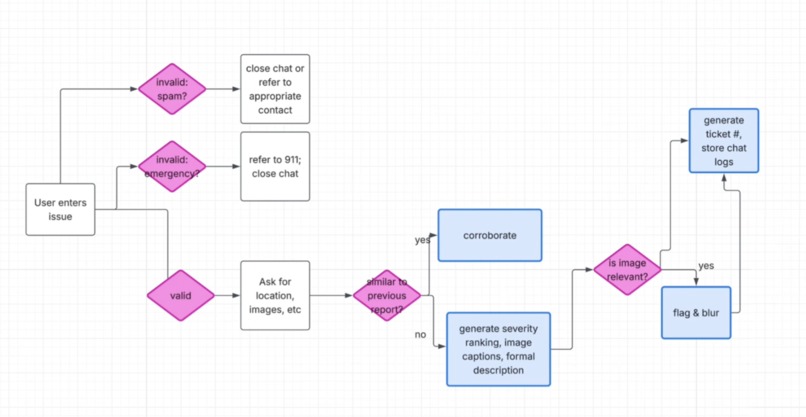
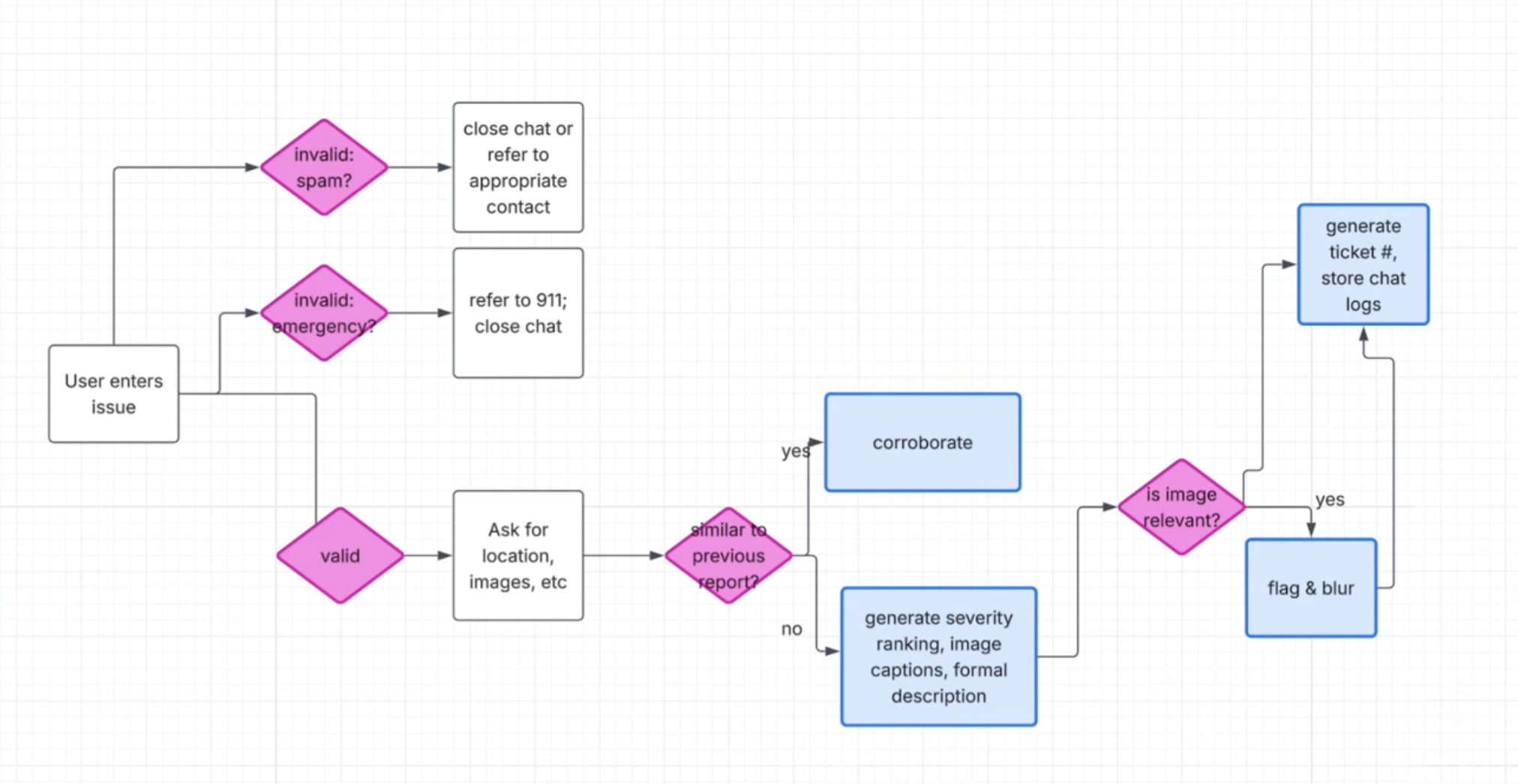
beacon conversation pipeline (AI intake chatbot)
-
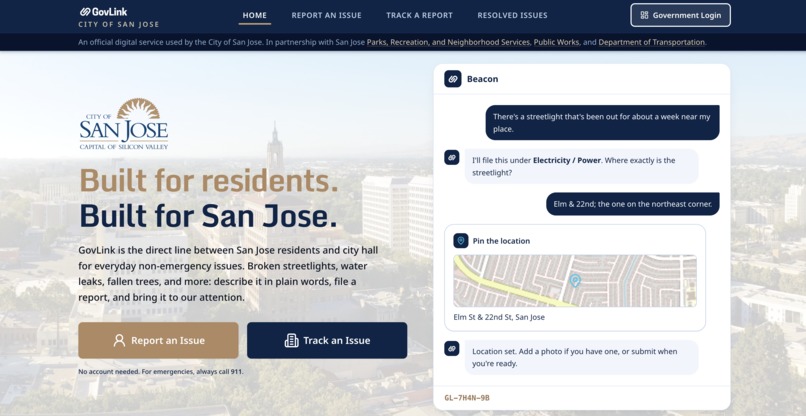
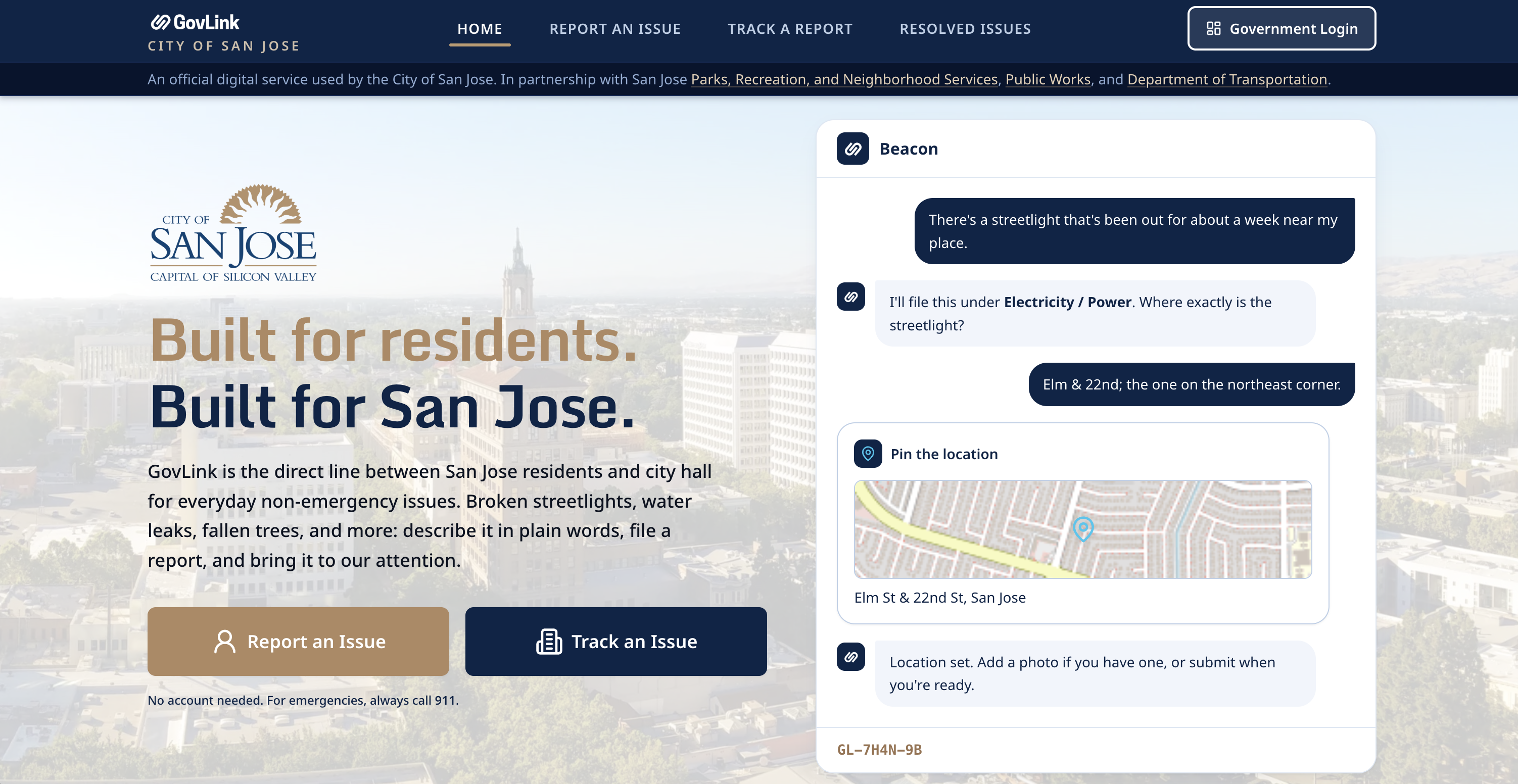
citizen landing page
-
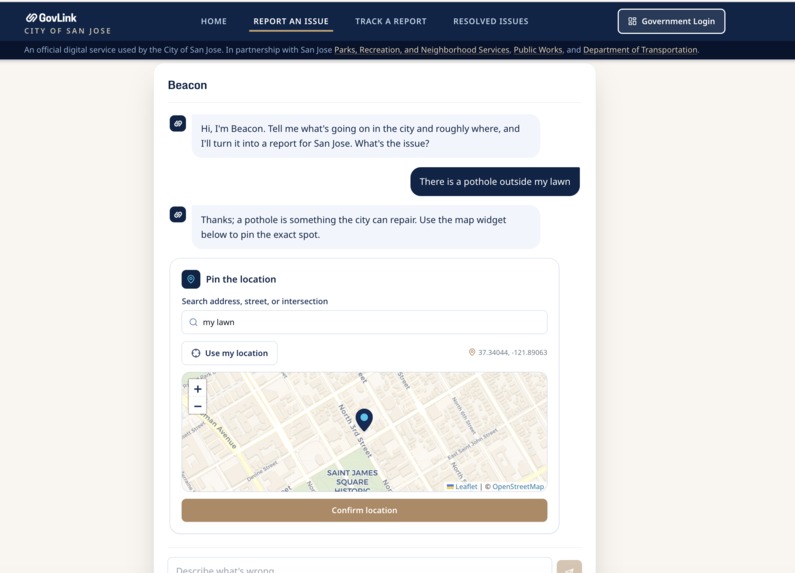
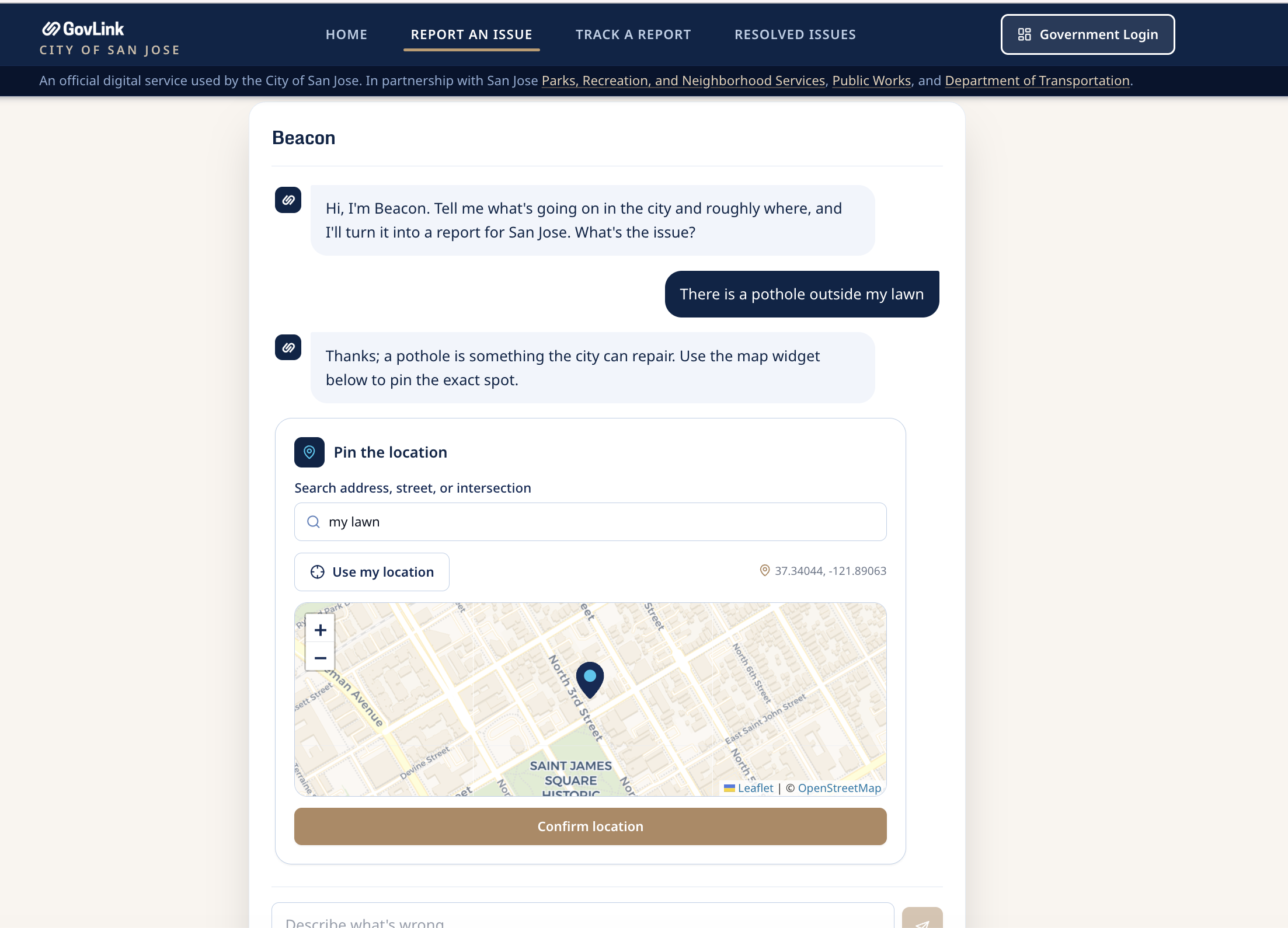
citizen beacon chat
-
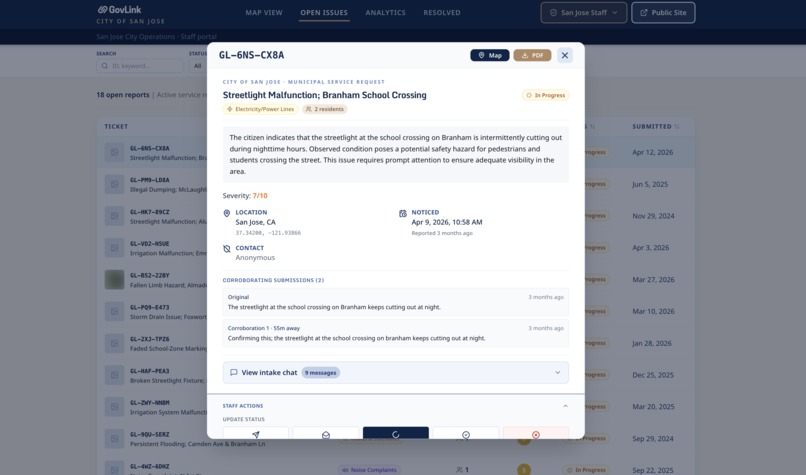
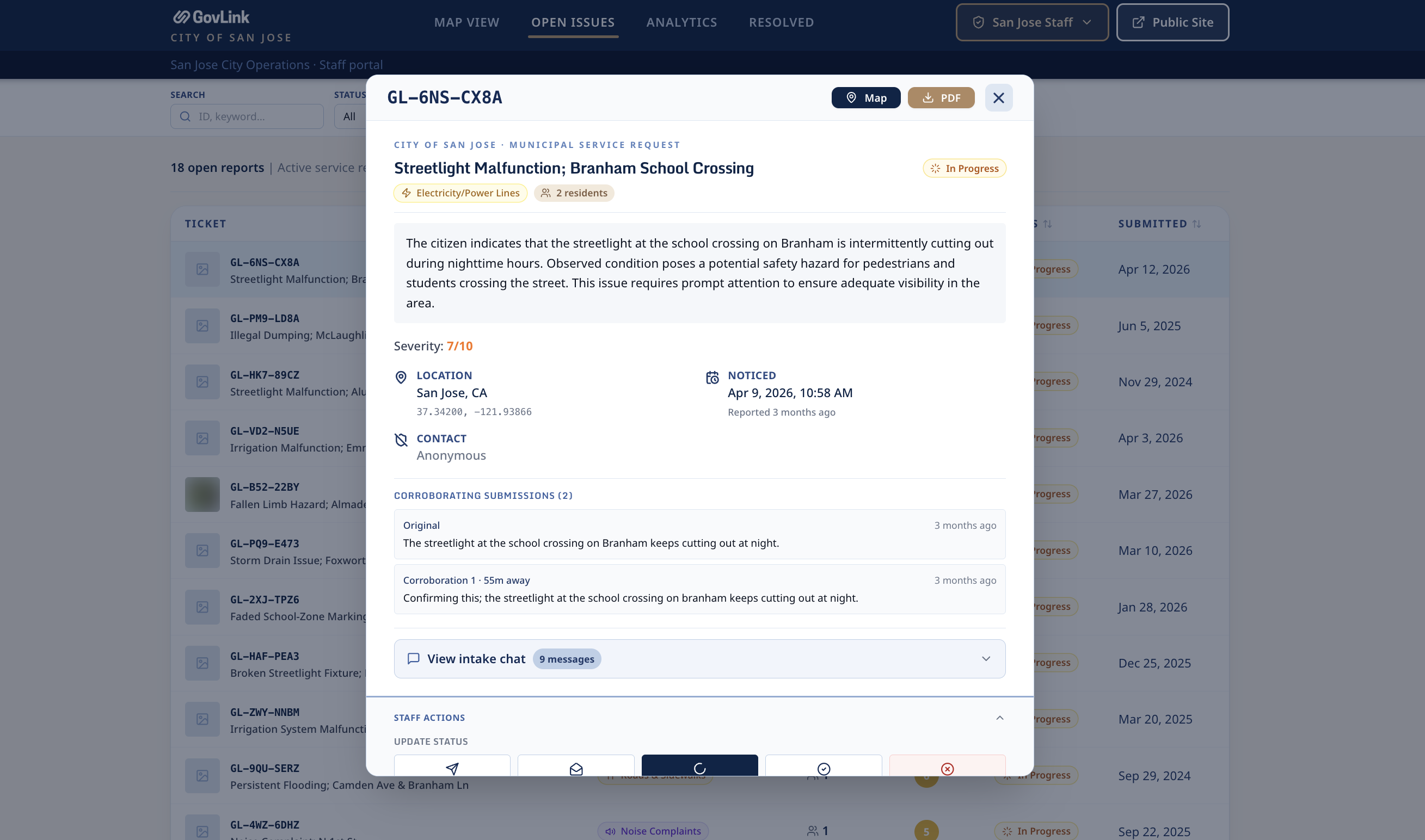
government report overview
-
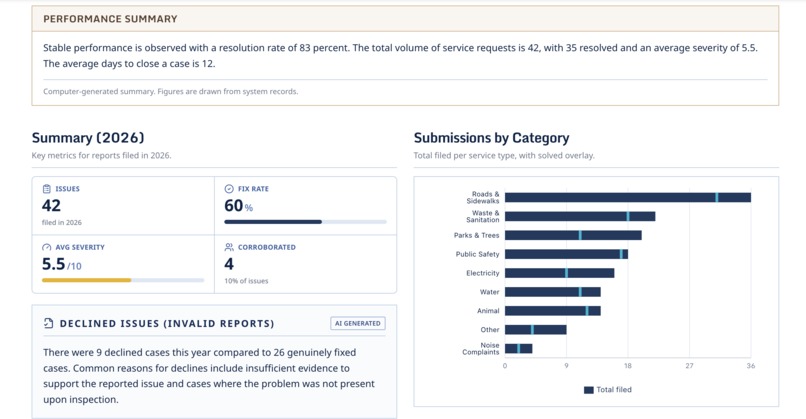
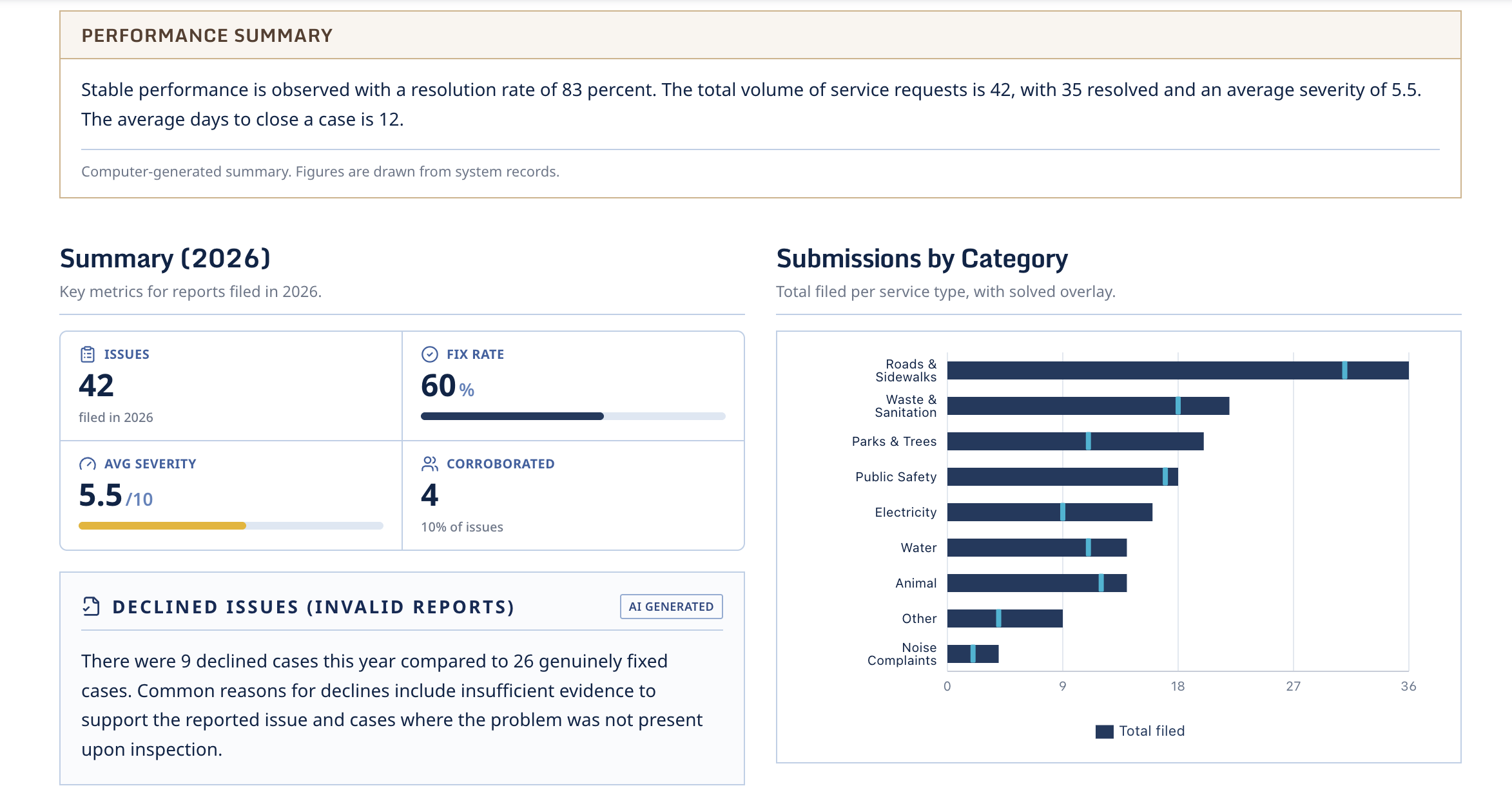
government analytics dashboard
-
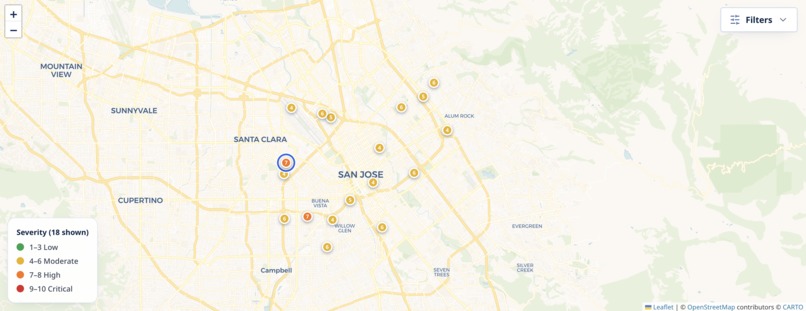
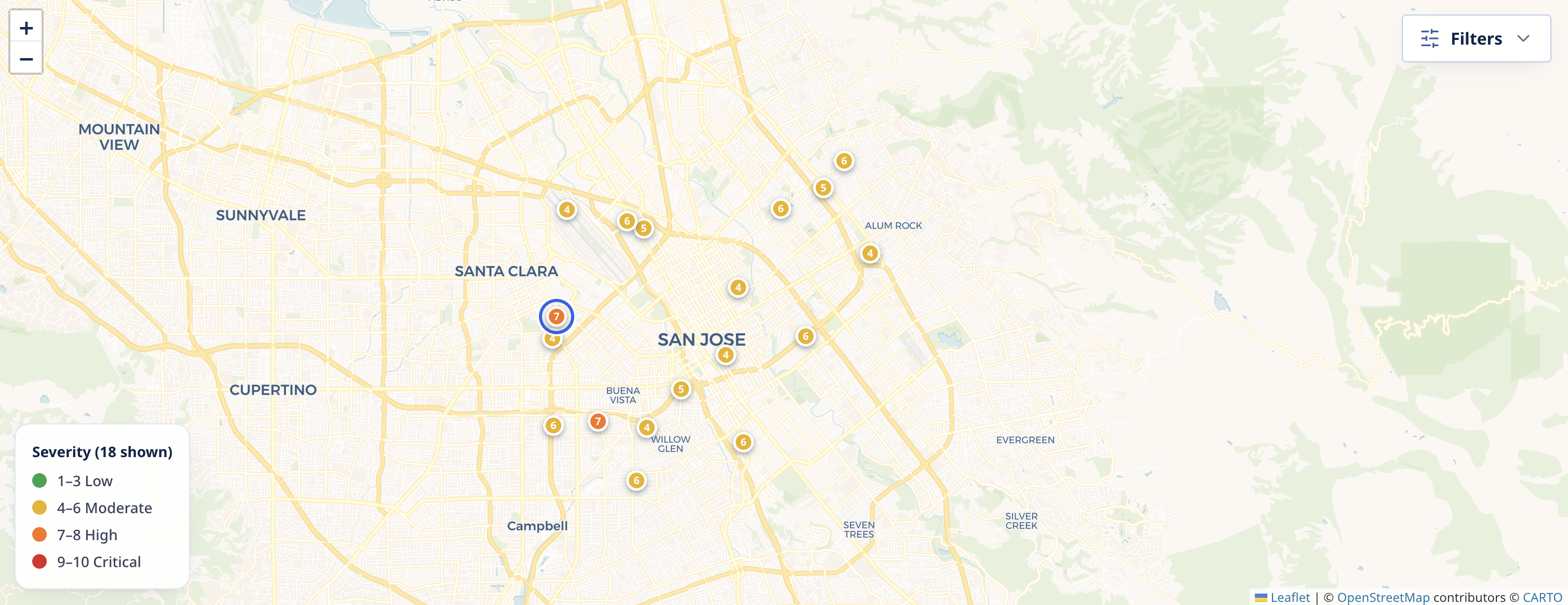
government map view
Inspiration
We built GovLink after noticing common problems in cities: governments overpromising and underdelivering on civic issues. With various forms and emails, reporting issues to the government lacks a clear and consistent procedure for citizens to follow. Furthermore, reported issues often result in citizens being left in the dark of the government's response. For the FutureHacks hackathon, we envisioned a "future city" flipping that idea, and instead highlighting a government that actually engages with citizen problems, understands them properly, and addresses them, instead of letting reports disappear into a black box in citizens eyes. GovLink demo site linked here
GovLink reimagines that process for the city of San Jose by creating a communication platform that increases transparency and accountability. Citizens can submit standardized reports, while government staff receive organized requests that can be efficiently reviewed, routed to the appropriate departments, and tracked through resolution.
What it does
GovLink is a civic reporting platform that gives San Jose residents a direct, structured way to flag non-emergency issues like potholes, broken streetlights, water leaks, fallen trees, and gives city staff a single place to triage, track, and close them.
Residents don’t need to know which department to call or how to write a work order. Beacon, our AI intake assistant, guides them through a short conversation: it clarifies vague reports, flags emergencies to 911, rejects out-of-scope requests, and turns plain-language descriptions into formal service tickets with severity ratings and map locations. When multiple residents report the same problem, Beacon merges them into one case and raises priority automatically.
On the government side, staff get a live operations dashboard: map view, open-issue queue, resolved archive, and analytics on volume, resolution times, and category trends. Every report carries a full audit trail including status history, internal government notes, and citizen-visible resolution notes.
GovLink is built for transparency and speed: residents can track their ticket; the public can browse closed cases. It’s a prototype that shows how AI can lower the friction of civic participation while giving cities cleaner data and faster response, without replacing 911 or human judgment where it matters.
How we built it
We started by mapping out the platform's architecture and core features before designing the interfaces for both users. For each feature, we used AI-assisted prompting to accelerate development, followed by multiple rounds of testing and iteration to refine the functionality and user experience.
Afterwards, we built Beacon, our AI-powered chatbot that guides citizens through reporting issues, alongside a government dashboard where officials can review, manage, and download standardized PDF reports.
For Beacon, rather than building a general-purpose chatbot, we created a structured pipeline that collects the exact information government officials need to process a report. Each stage is driven by rule-based if-then logic, with severity scoring calibrated using 100 sample reports.
We realized through iteration/testing that having a structured pipeline is the best way to control edge cases.
Challenges we ran into
A key challenge was ensuring citizens’ uploaded images would accurately match their reported issue. To address this, we implemented AI-powered image classification using GPT-4o that compares uploaded photos against the report. If an image appears unrelated, GovLink will flag it and automatically blur it for government officials to review.
Furthermore, we accounted for false negatives in Beacon's image flagging. For example, a citizen reporting a fallen tree on a public street may upload a photo showing the tree over a nearby pool because it blocks the street from view. While the image could be incorrectly flagged as unrelated, government officials read the AI-generated image caption and the citizen's written description to understand the context. Rather than automatically rejecting flagged images, GovLink accounts for false classifications and blurs them and displays a warning, allowing officials to manually open and review the original image before making a decision.
Accomplishments that we're proud of
Completing our first ever hackathon! While we both have take computer science courses in school, this hackathon challenged us in a completely unique way. From our initial brainstorming meeting to submission together, we've learnt more about ourselves as developers and found our collaboration style. We both look forward to competing in more hackathons together!
What we learned
We learned the importance of defining a clear project scope before development begins. Early on, we aligned on GovLink’s target users (citizens and government officials), core features, and how each part of the platform would fit into the overall workflow and project scope.
Keeping San Jose residents as our primary users, we designed the platform to be intuitive and accessible. The landing page clearly explains how GovLink works, using visuals to walk users through the entire reporting process from chatting with Beacon to tracking their issue through resolution. For government officials, the issues dashboard prioritizes functionality over simplicity, providing filters and sorts to help staff review, address, and monitor citizen requests efficiently.
What's next for GovLink
On the government side of GovLink, we'd expand the platform by allowing officials to assign verified reports directly to the appropriate city department. For example, after confirming a report of a fallen tree in a park, an official could assign the case to the Trees and Sidewalks department with a single click. GovLink would automatically route the standardized report and all supporting information to the responsible team while updating the issue's status. This would reduce manual administrative work, improve coordination between departments, and help city staff respond to citizen reports more efficiently!
Overall, we built GovLink because it reflects our vision of a future city where governments and citizens communicate openly, efficiently, and transparently. We hope you share the same vision. Try it out here!
Built With
- css
- gpt-4o
- next.js
- node.js
- react
- recharts
- typescript
- vercel


Log in or sign up for Devpost to join the conversation.