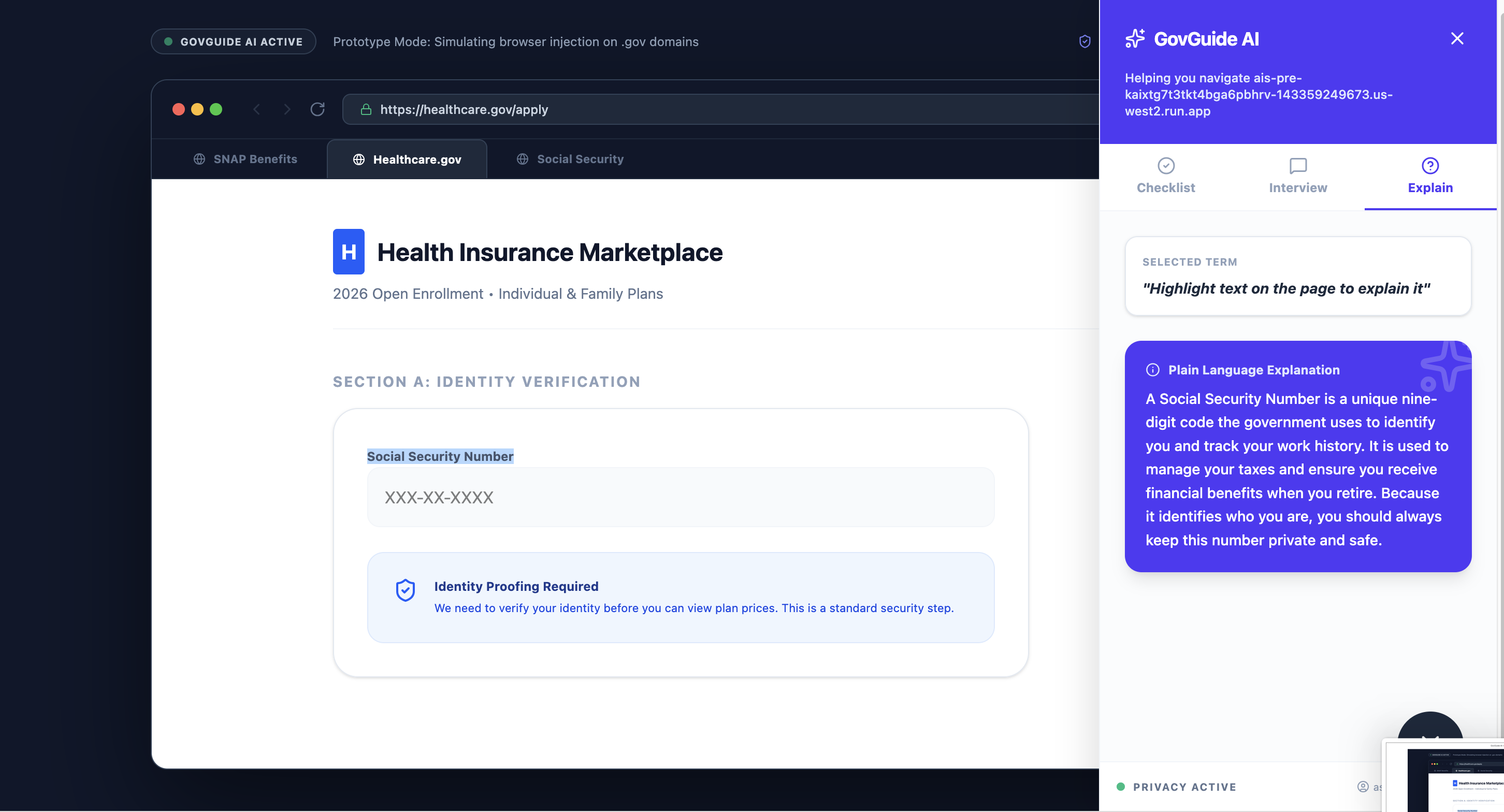
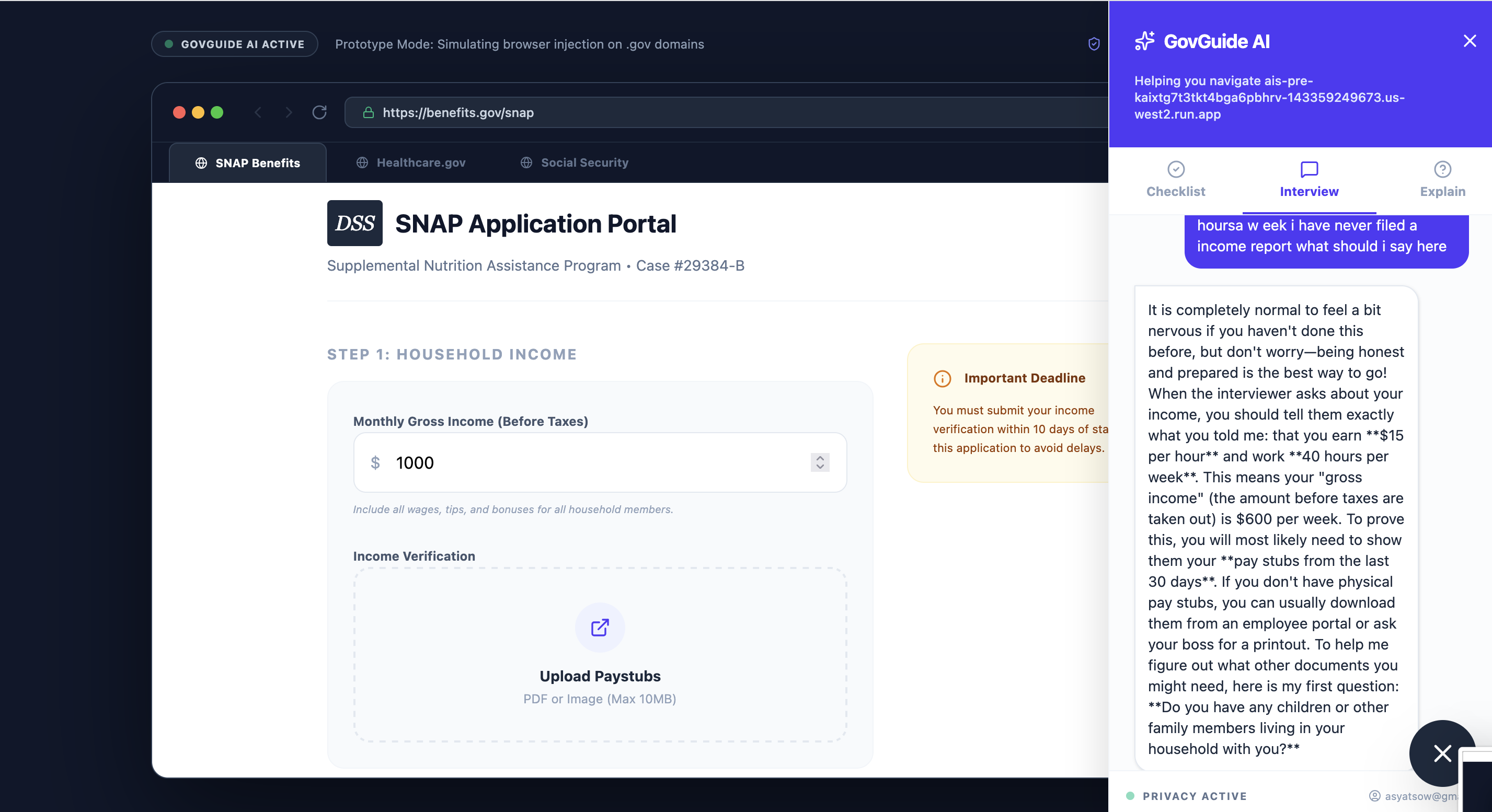
The inspiration came from witnessing firsthand how bureaucratic complexity becomes a barrier to essential services. When government forms use jargon-heavy language, require obscure documentation, and lack clear guidance, vulnerable populations those who need assistance most, face the biggest obstacles. We believed technology and AI could bridge this gap, making access equitable.
Through the process we got to know that User-centered design matters as we are building for real people, not hypothetical users, revealed that clarity trumps completeness and AI has limits as LLM output was not always grounded in the truth and needed validation of outputs against official SNAP rules and provide human-reviewed guidance. We built the solution as a React-based browser extension designed for speed, clarity, and accessibility. The frontend was developed using React 19, TypeScript, and Tailwind CSS to ensure a responsive and accessible interface across devices. For AI-powered assistance, we integrated Google’s Gemini API to generate real-time explanations and contextual guidance directly within government forms. Interactive checklists and dynamic UI behavior were implemented using React’s component-based state architecture, allowing users to track progress seamlessly. On the infrastructure side, we used Vite to enable fast development cycles and produce optimized production builds, ensuring the extension loads quickly and performs efficiently. The overall technical stack was selected with a clear priority: users should receive immediate, frictionless assistance without latency or interface lag.
Throughout development, several challenges required deliberate architectural decisions. One major constraint was balancing response speed with legal accuracy. To address this, we implemented verification layers and structured fallbacks to official government resources to mitigate misinformation risks. Another difficulty was contextual variability—government forms differ by state and are frequently updated. We therefore designed systems capable of detecting form context and dynamically adjusting guidance. Accessibility also presented technical complexity; the overlay had to integrate without disrupting form navigation, particularly for keyboard-only users, which required careful CSS isolation and event management. Finally, given the sensitive financial and personal information involved, privacy was treated as a core design principle. Data collection was minimized, no sensitive information is stored, and handling protocols were structured to reduce exposure risk.
Built With
- browser
- extension
- google-gemini-api
- react-19
- tailwind-css
- typescript
- vite

Log in or sign up for Devpost to join the conversation.