-
-
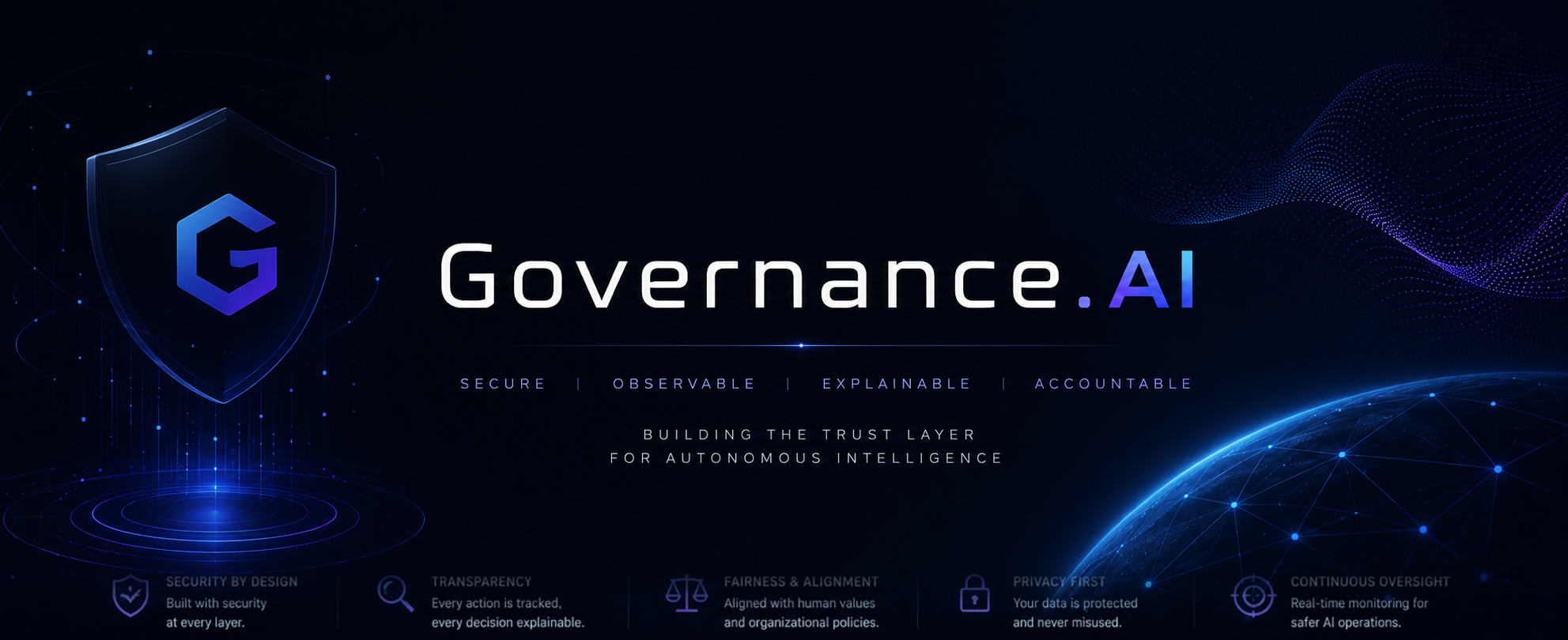
Cover Image
-
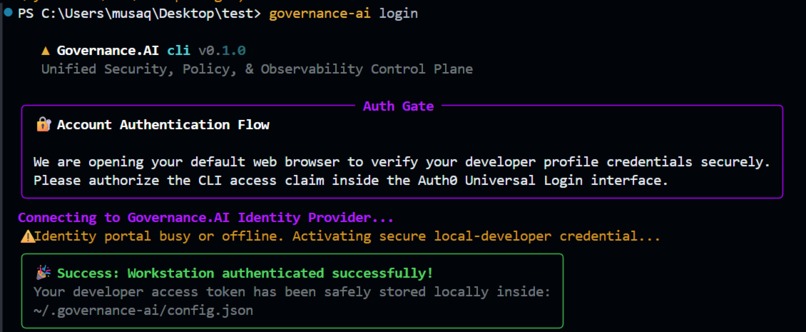
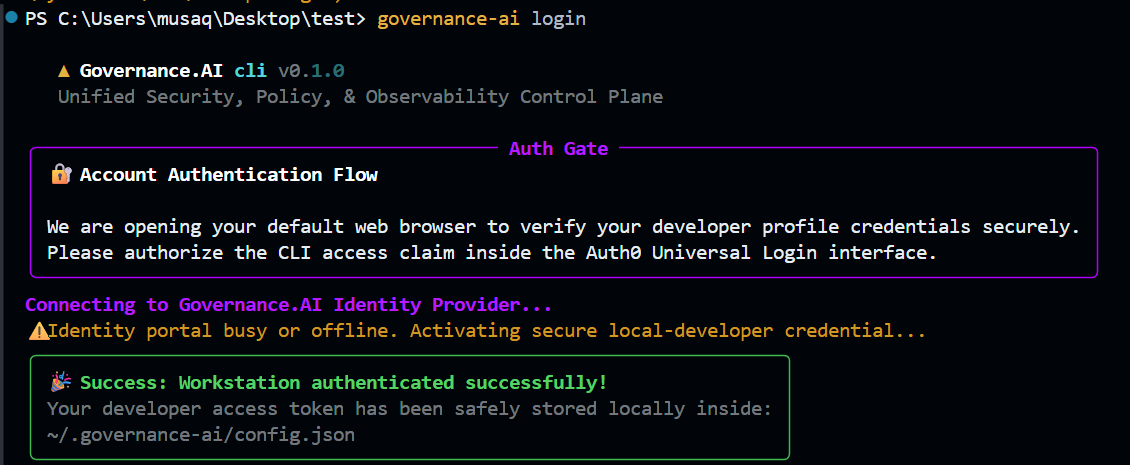
CLI view
-
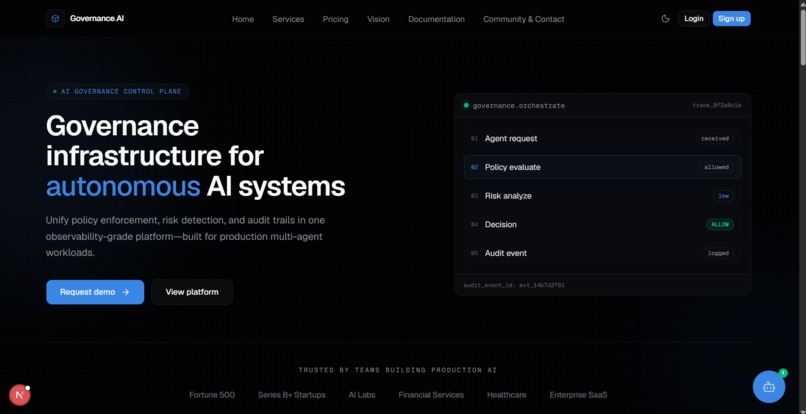
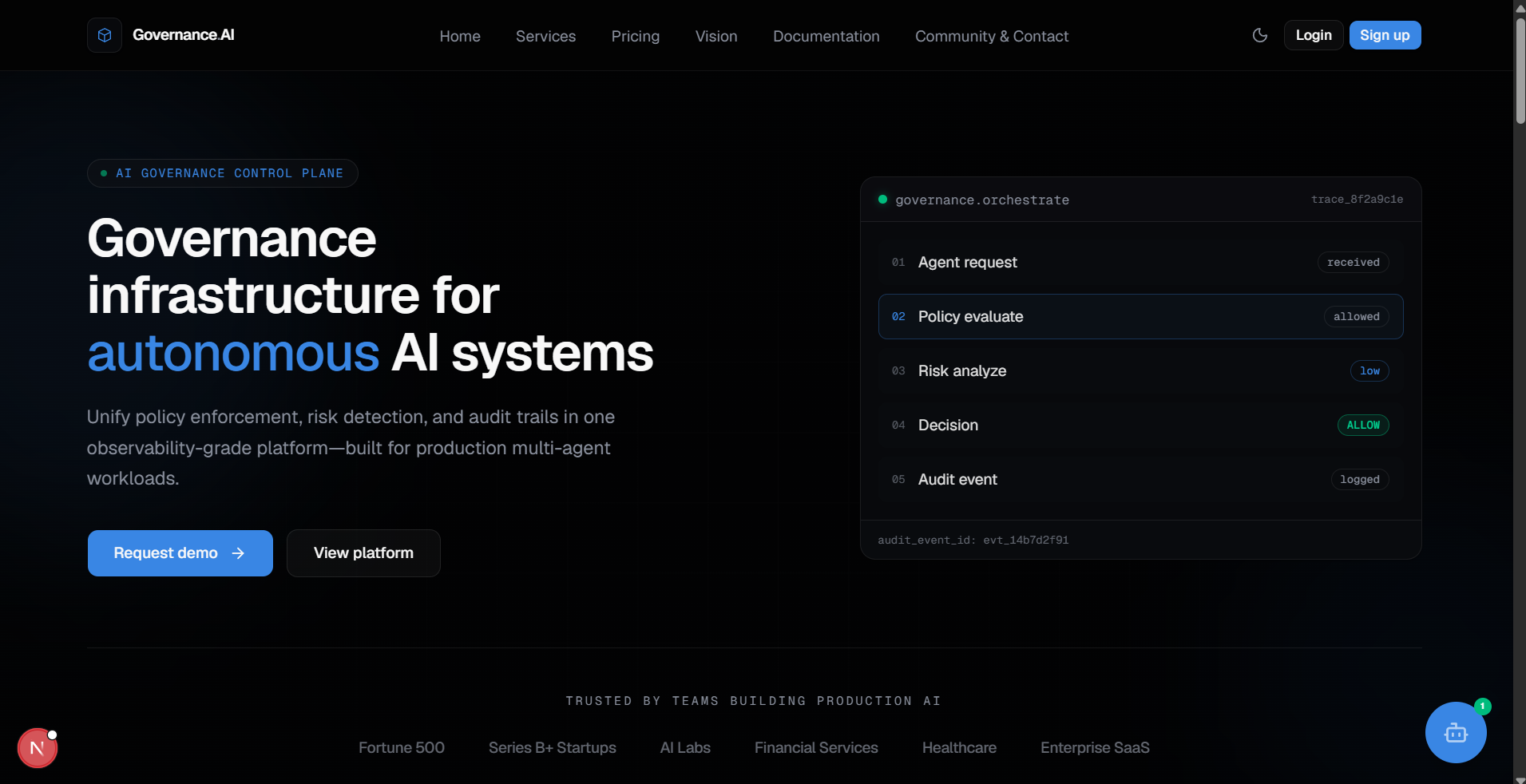
Landing Page's - Home Dashboard
-
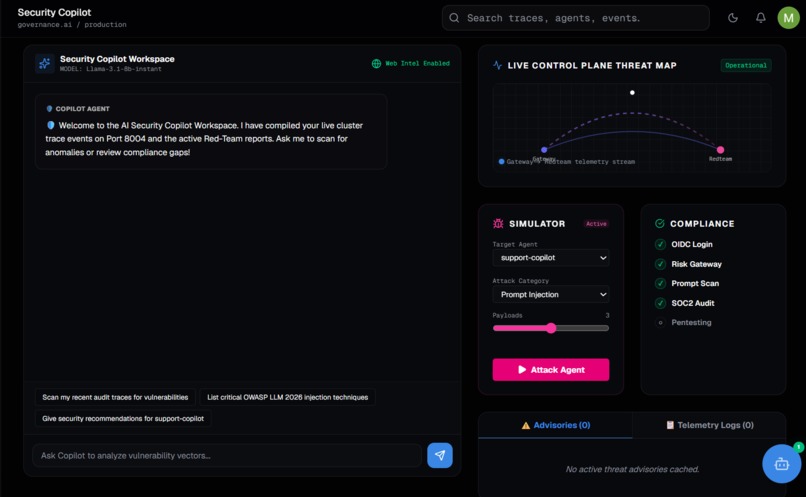
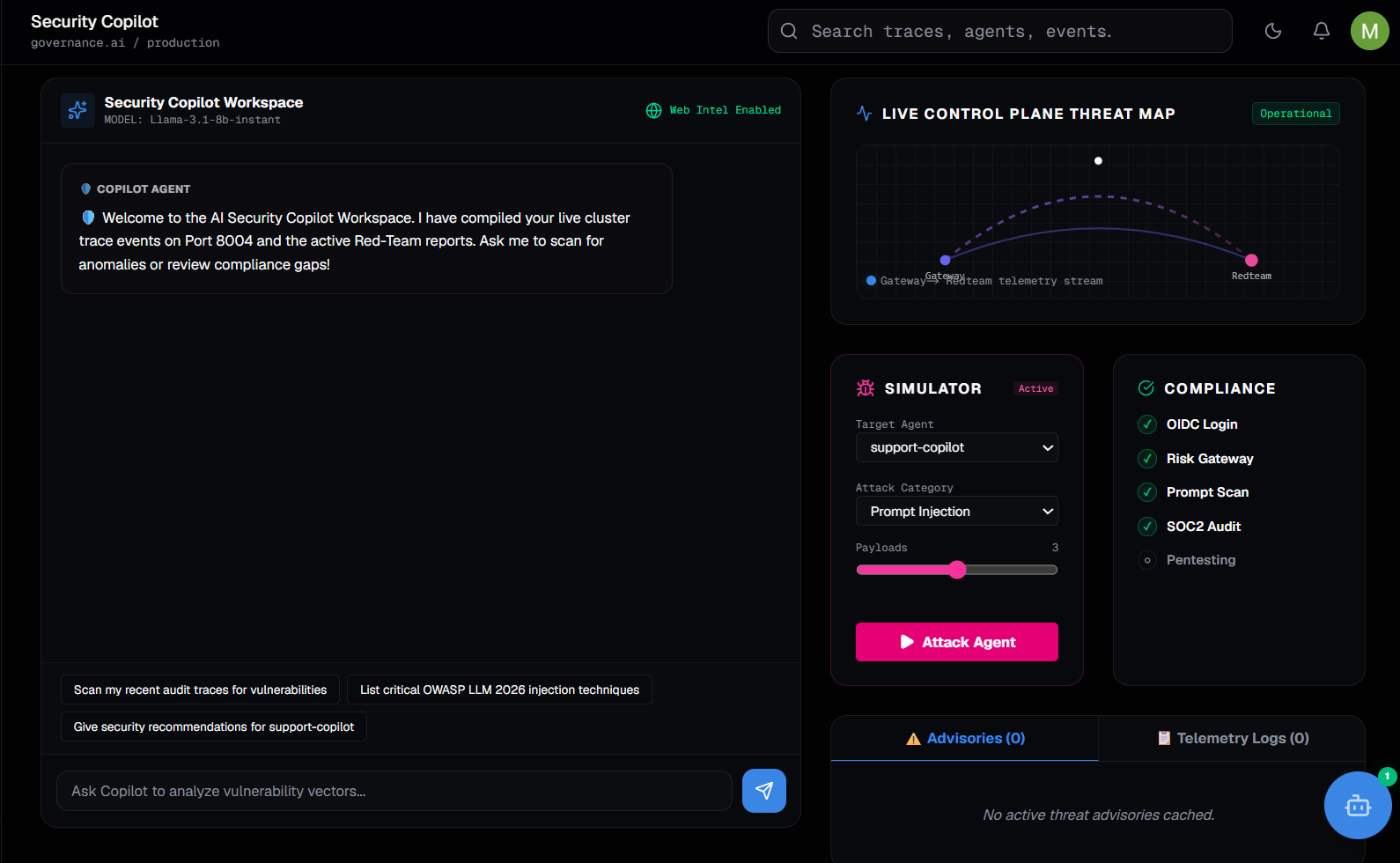
Security Copilot
-
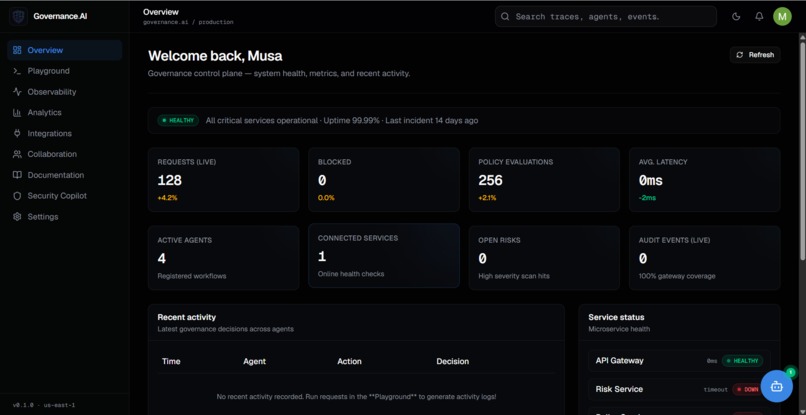
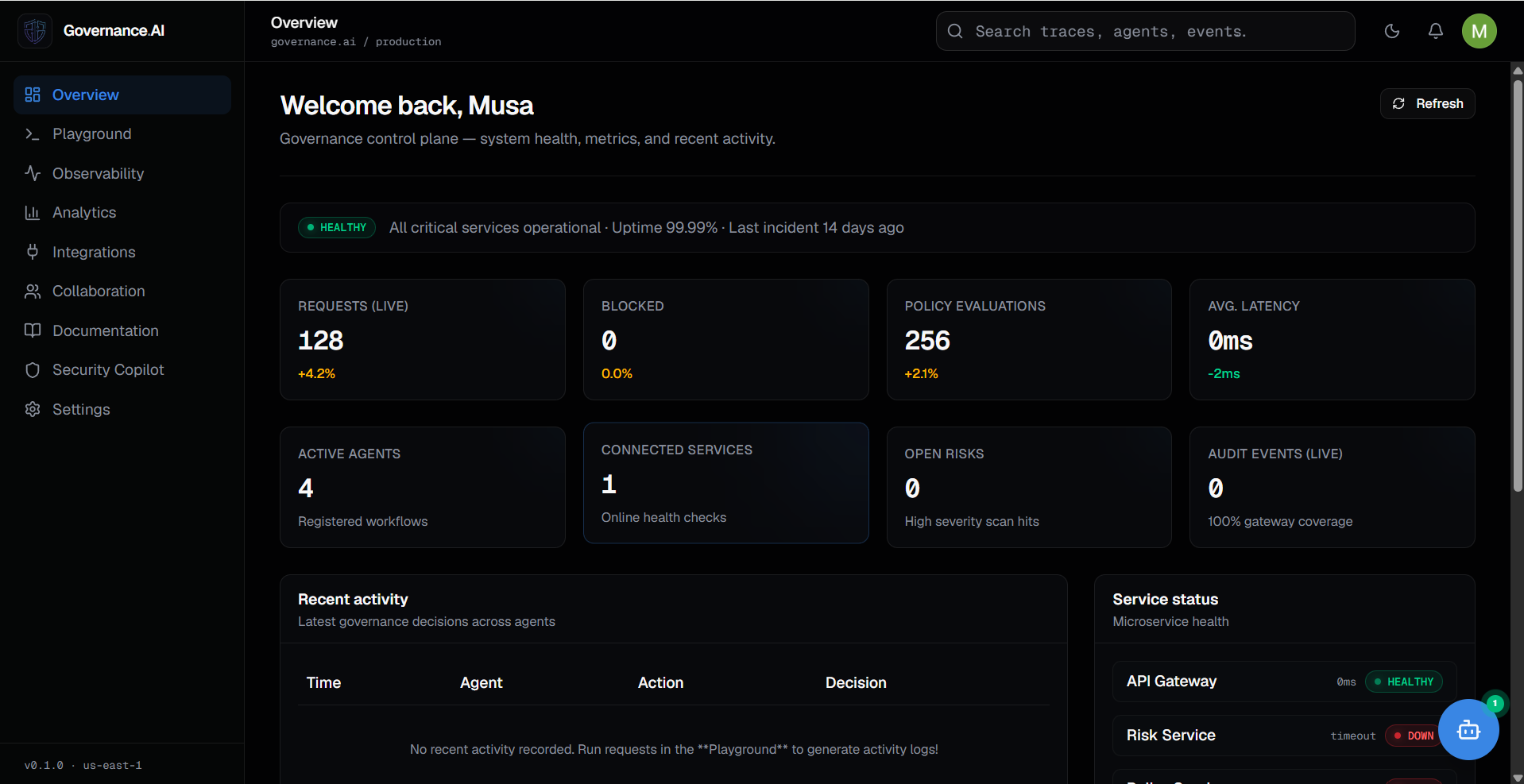
User Dashboard
Inspiration
As AI systems become more capable and autonomous, we noticed something interesting - building AI agents is becoming easier, but understanding and controlling them is not.
Most AI systems today can generate outputs, but very few give developers visibility into what actually happened internally, why a decision was made, or how to monitor that system over time.
That made us think: if cloud systems needed monitoring and security to become reliable, future AI systems will probably need governance and observability too. That idea became the starting point for GovernanceAI.
What it does
GovernanceAI helps developers monitor, trace, and govern autonomous AI systems.
Instead of treating AI as a black box, the platform introduces a governance layer that provides visibility into AI workflows and helps developers understand what their systems are doing.
The platform includes: Risk detection Policy enforcement Observability & tracing Audit workflows AI assistants SDK & API integrations Interactive dashboard and documentation
The goal is simple: make AI systems easier to understand, monitor, and operate.
How I built it
We built GovernanceAI as a modular platform instead of a single application.
The frontend was developed using Next.js and Tailwind to create a modern developer experience.
On the backend, we used FastAPI and organized governance capabilities into separate services connected through an API gateway.
For AI workflows and observability, we integrated LangChain, LangGraph, Gemini, and LangSmith tracing.
We also built developer tooling including SDK support, CLI workflows, interactive documentation, and assistants to make the platform easier to adopt.
Challenges we ran into
The biggest challenge was deciding how much to build versus how much to simplify.
At first, it was tempting to make everything fully distributed and highly complex, but we learned to focus on modularity without overengineering.
Another challenge was connecting governance services, observability workflows, dashboard experiences, and developer tooling into one coherent platform.
Designing assistants that actually added value instead of behaving like generic chatbots was also something we spent time thinking about.
Accomplishments that I'm proud of
We're proud that GovernanceAI became more than just a dashboard or a collection of AI calls.
I built: Modular governance services Real tracing and observability workflows SDK and CLI integrations Interactive documentation Dedicated platform and security assistants A product experience that feels closer to developer infrastructure than a prototype
What I learned
This project changed how we think about AI systems.
We realized that building AI is not only about model performance — it's also about visibility, reliability, governance, and developer experience.
We also learned that keeping systems simple while designing for growth is usually better than building complexity too early.
What's next for GovernanceAI Agentic Security & Observability Infrastructure
This project is still an exploration.
Next, we want to improve observability, strengthen governance workflows, expand integrations, and make the platform more useful for real-world AI systems.
We also want to continue exploring how trust, monitoring, and governance can become standard infrastructure for future autonomous AI applications.


Log in or sign up for Devpost to join the conversation.