-
-
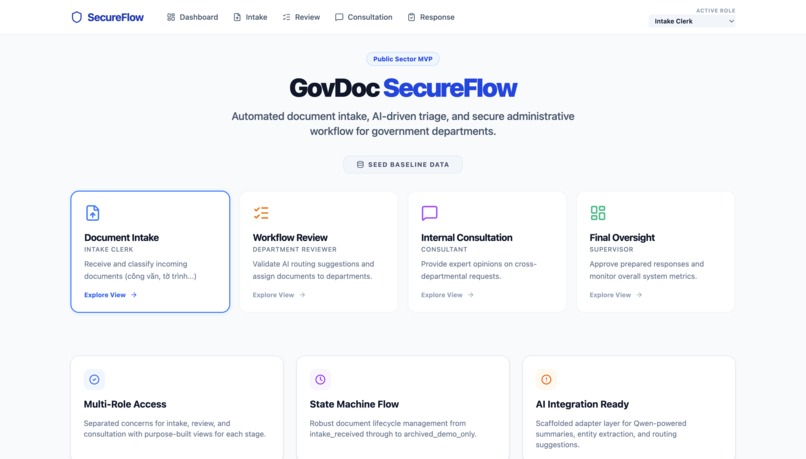
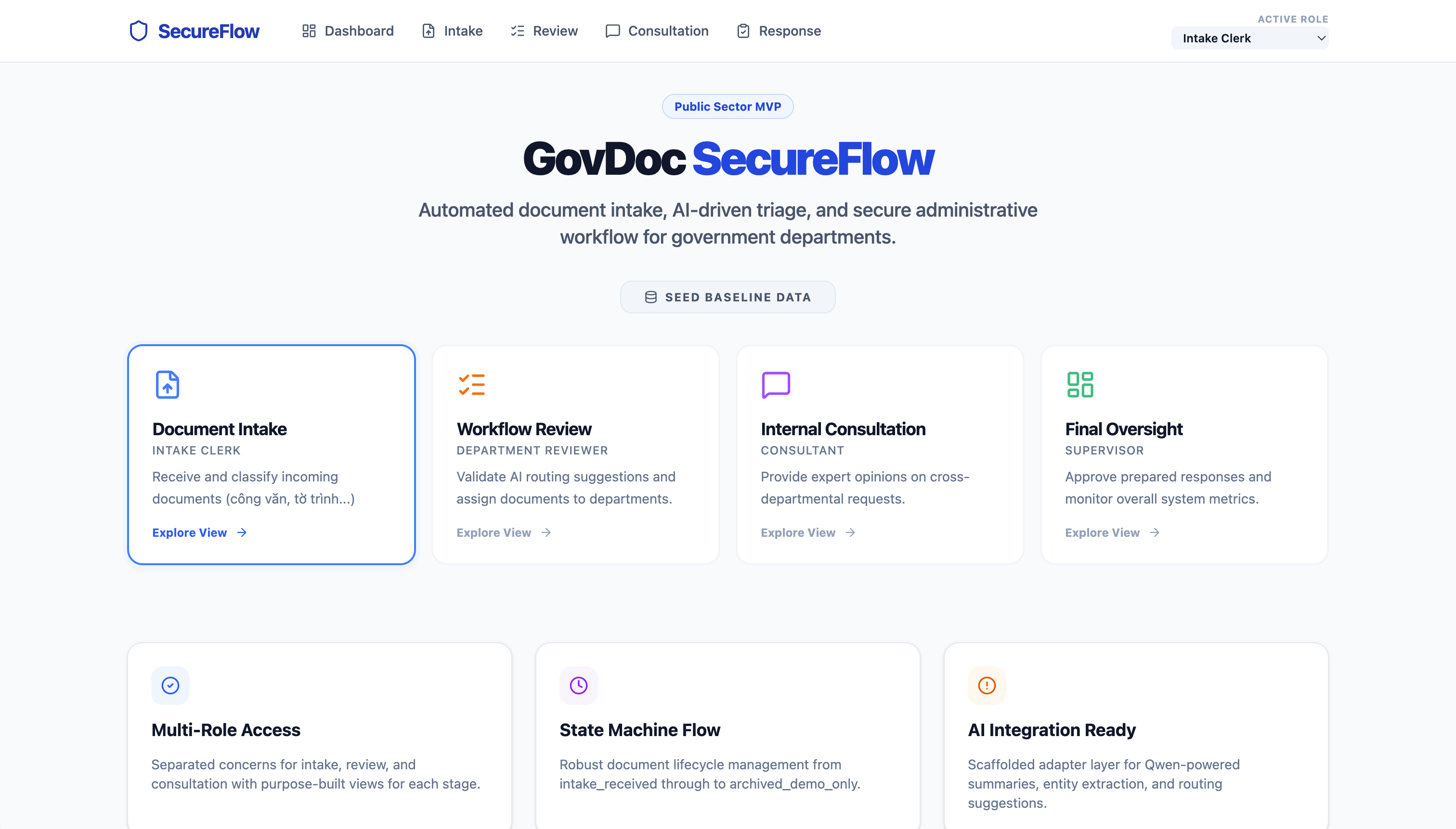
Homepage
-
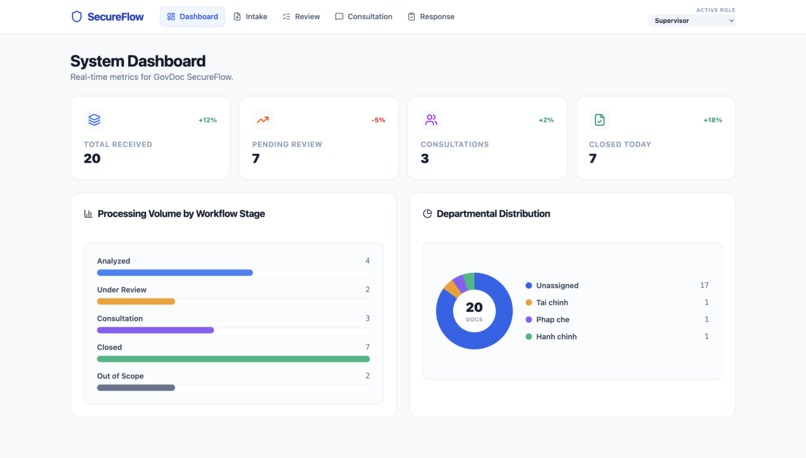
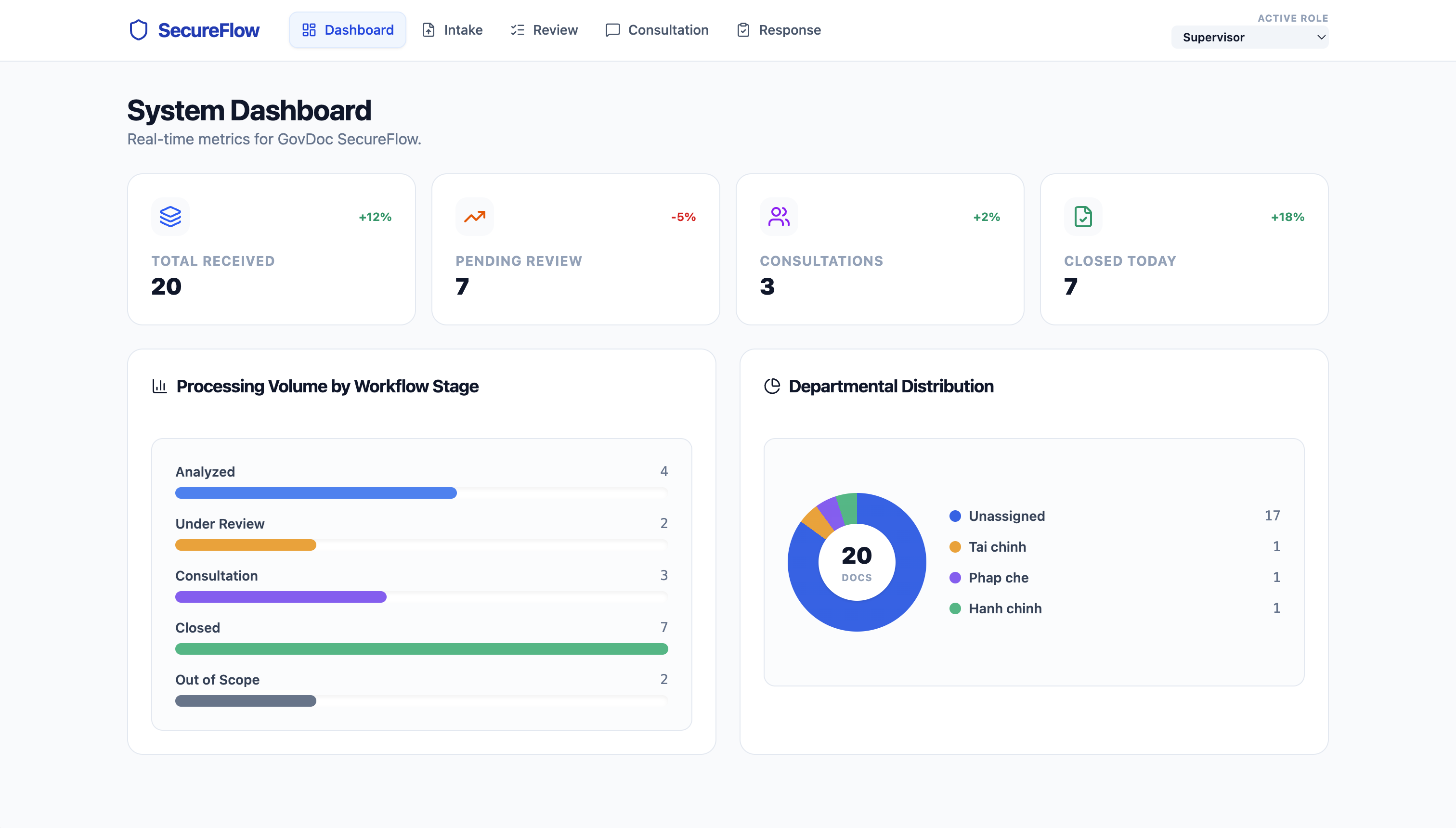
Dashboard for statistics
-
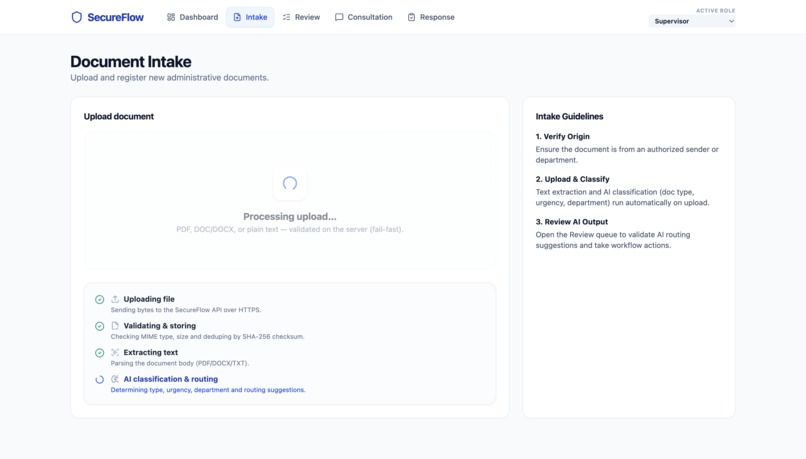
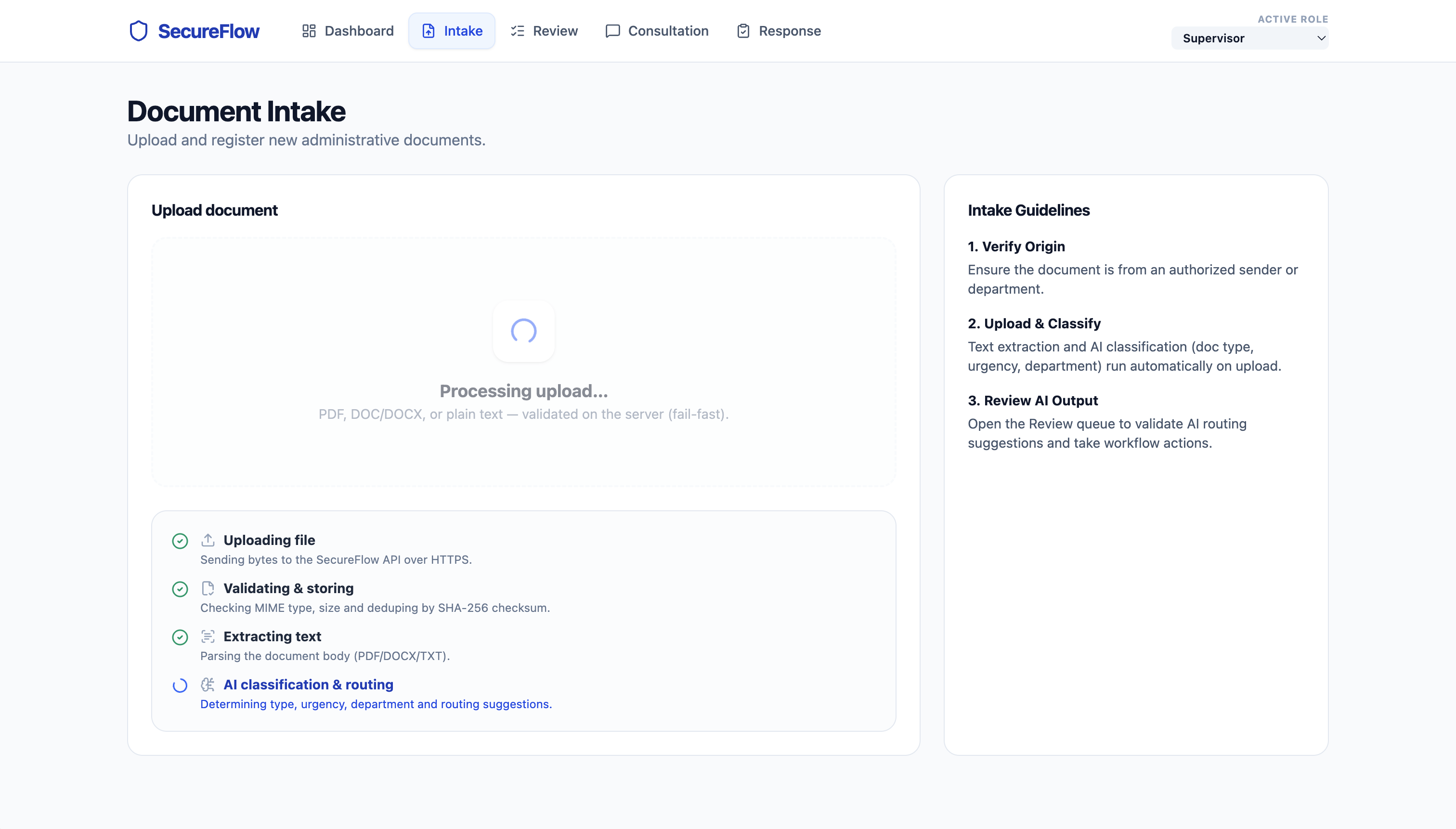
File upload portal, show the progress and status
-
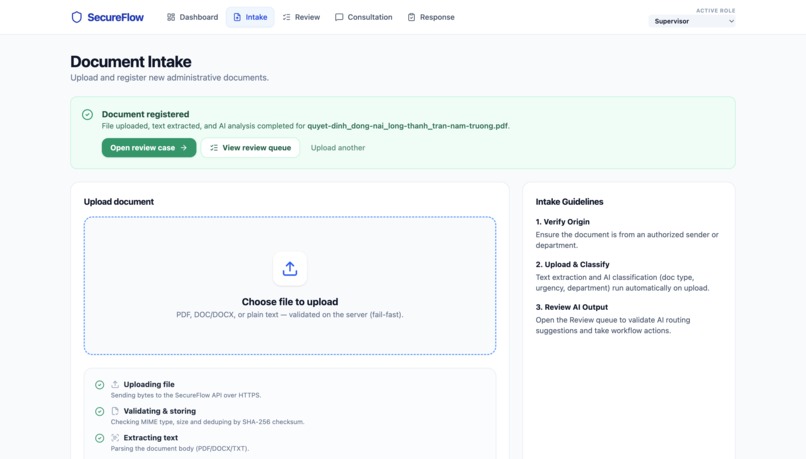
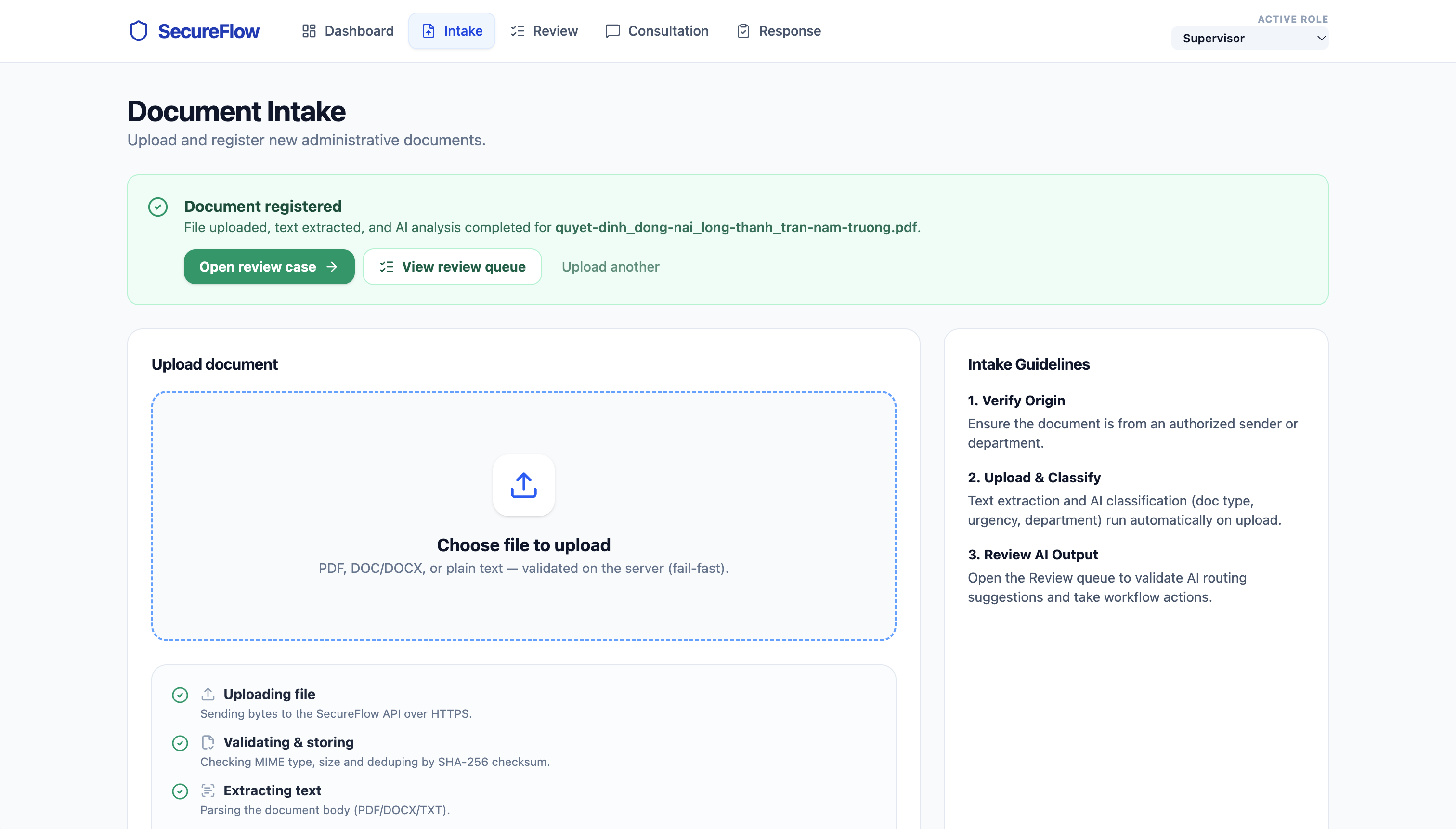
After uploading, show the button to go to the review case.
-
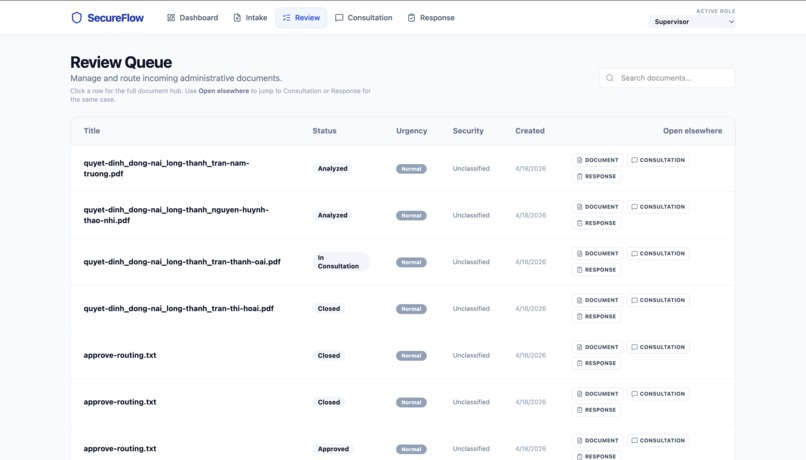
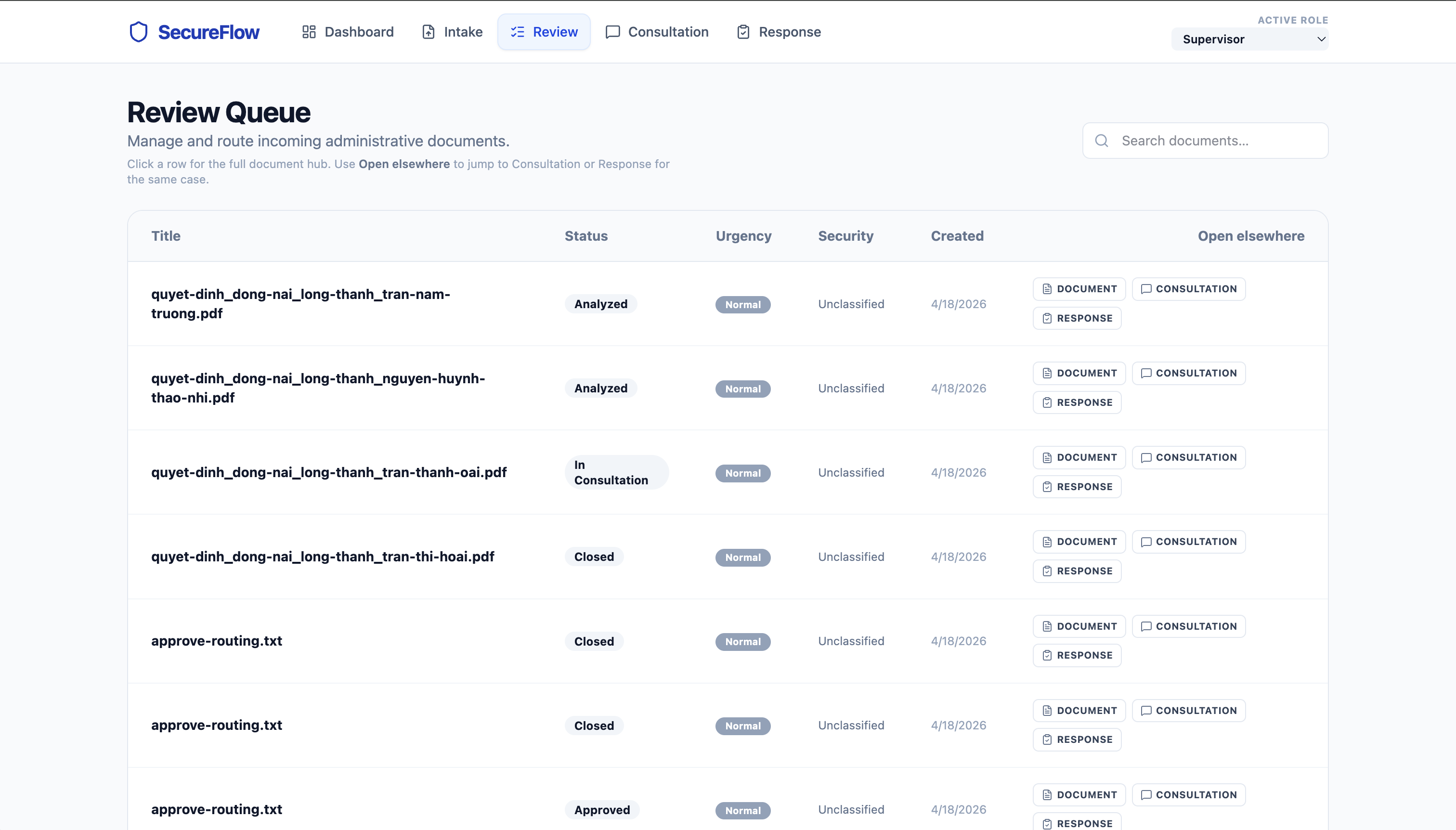
List of review items
-
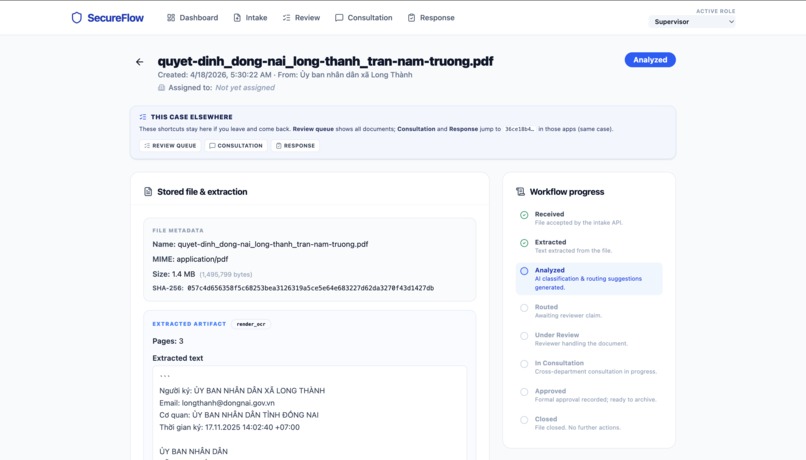
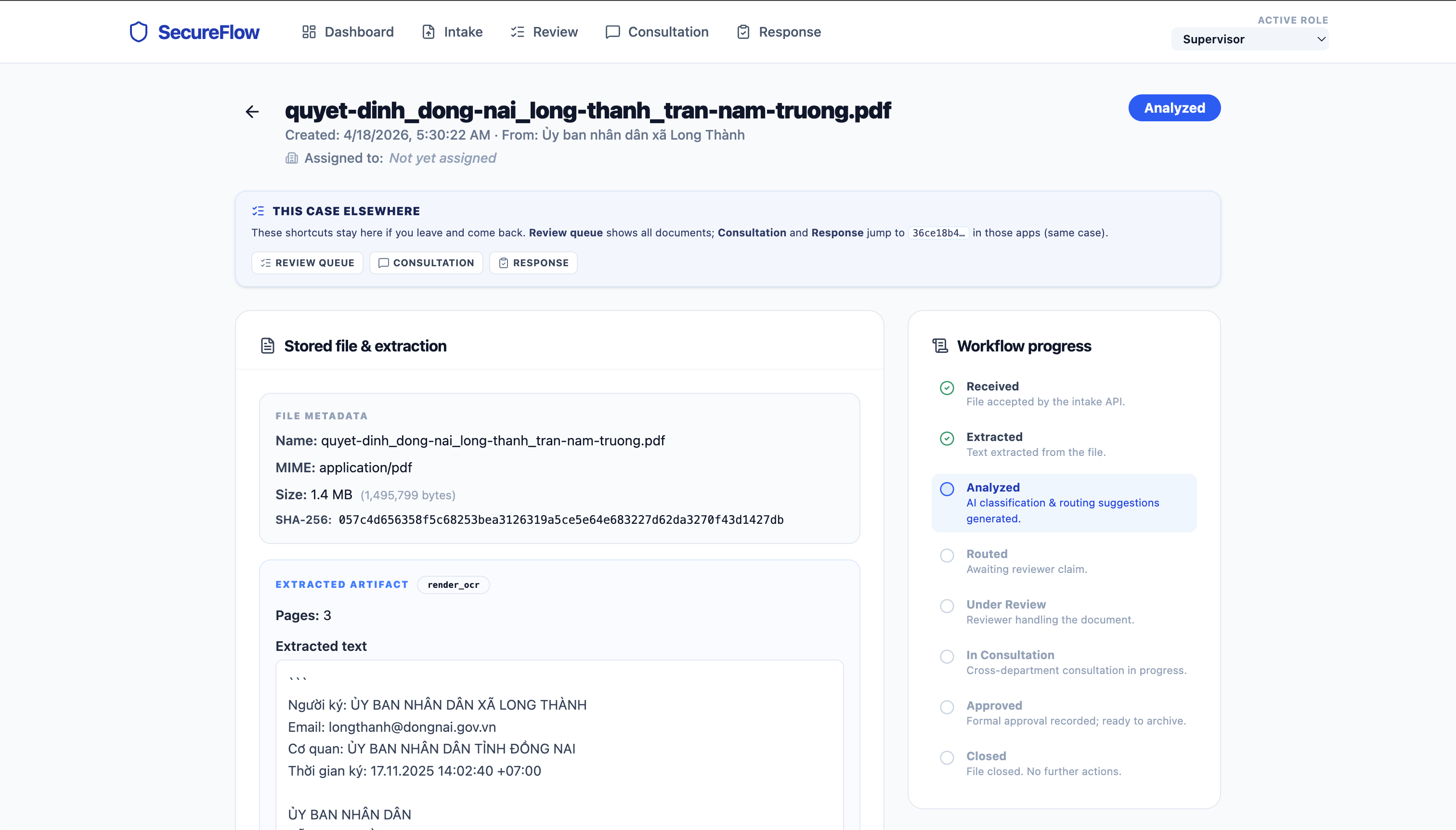
Review page, with current step, state and next step instruction
-
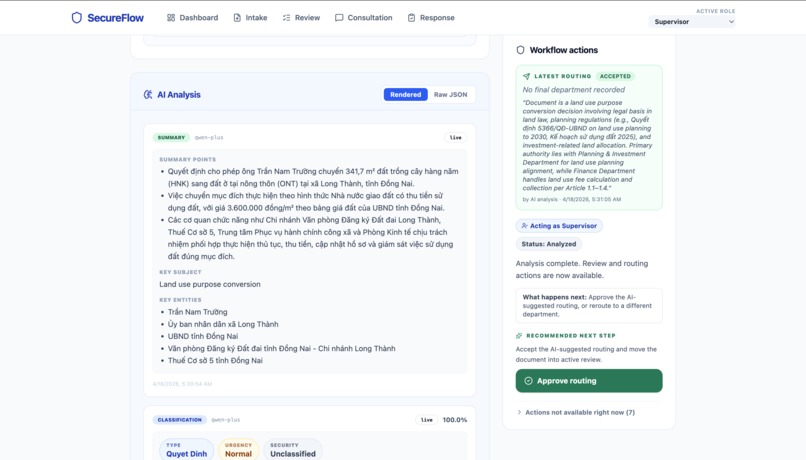
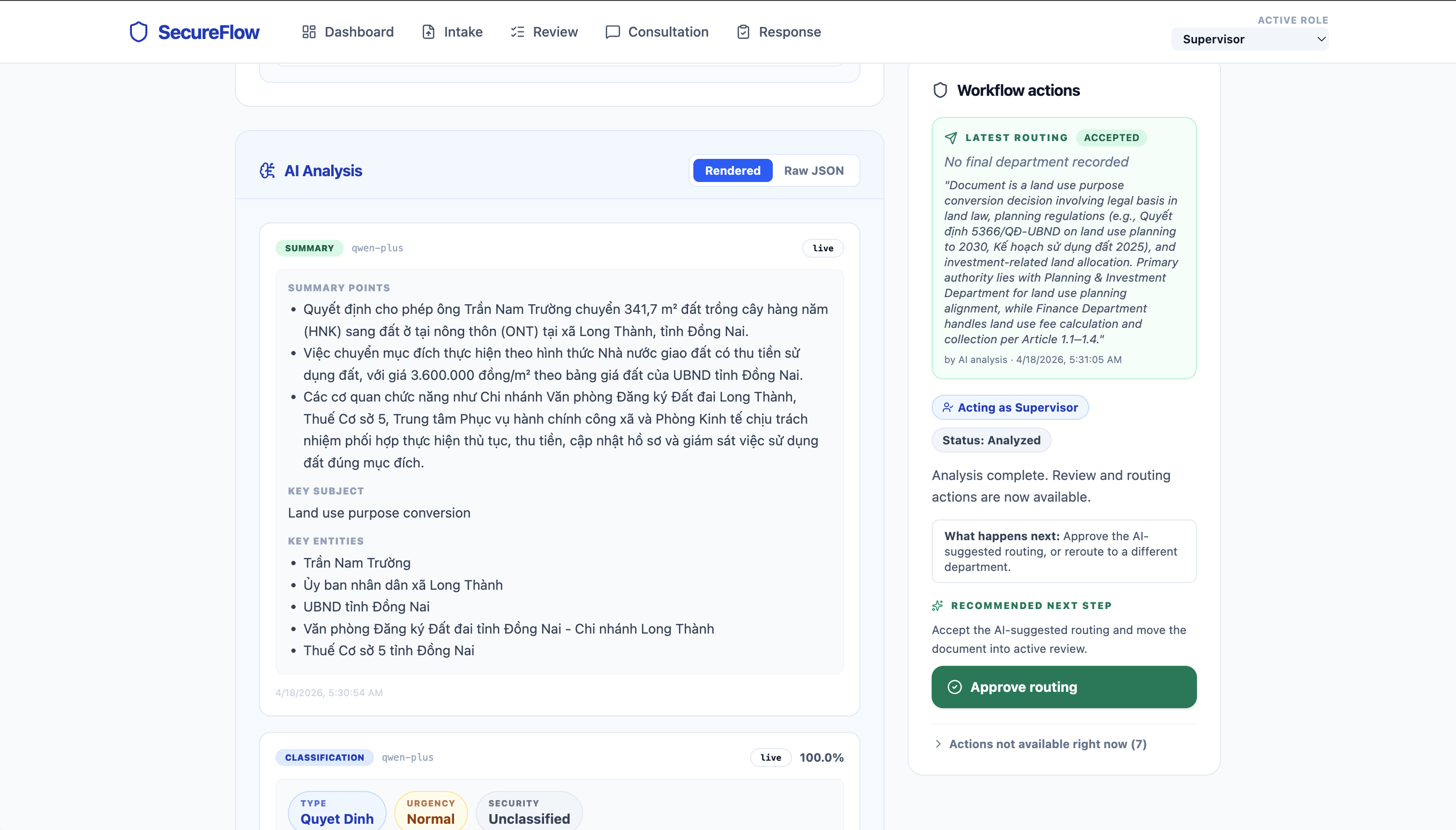
AI Analysis results and Workflow action buttons on the right (currently in the Supervisor role, can switch on the top-right corner)
-
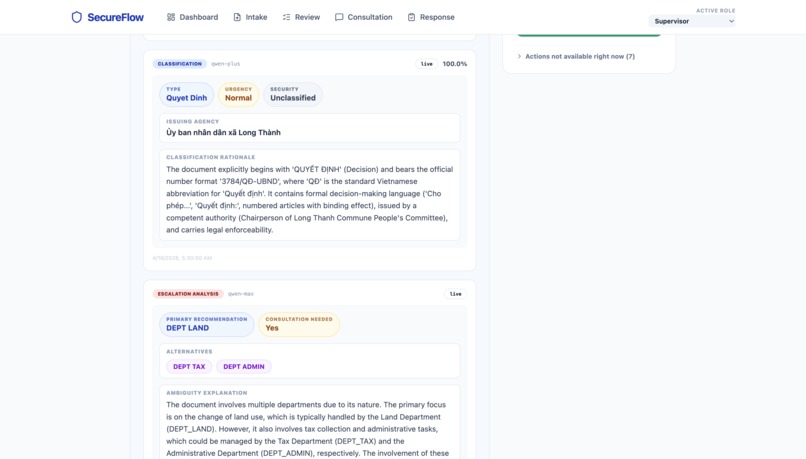
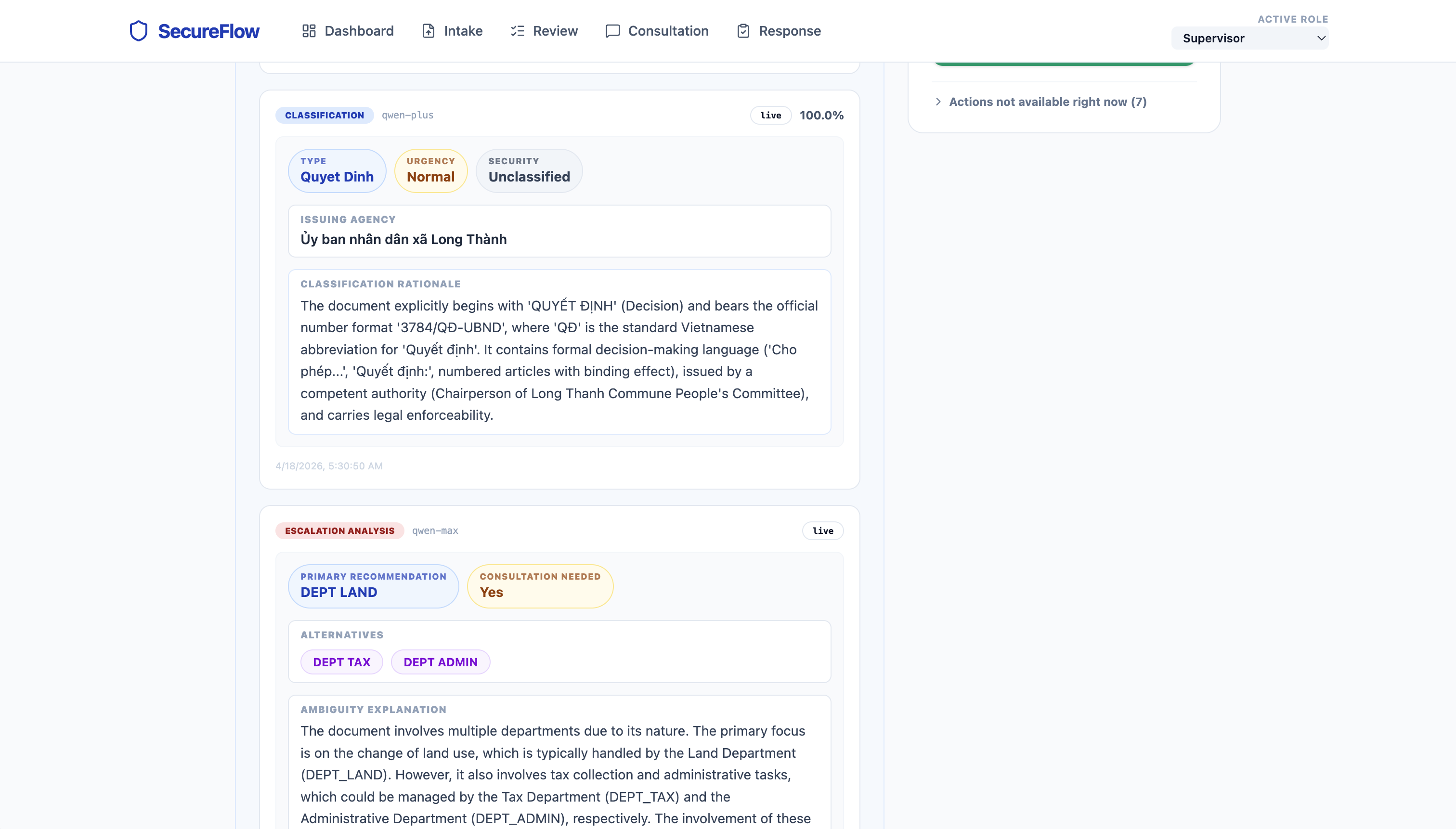
AI routing/classification results
-
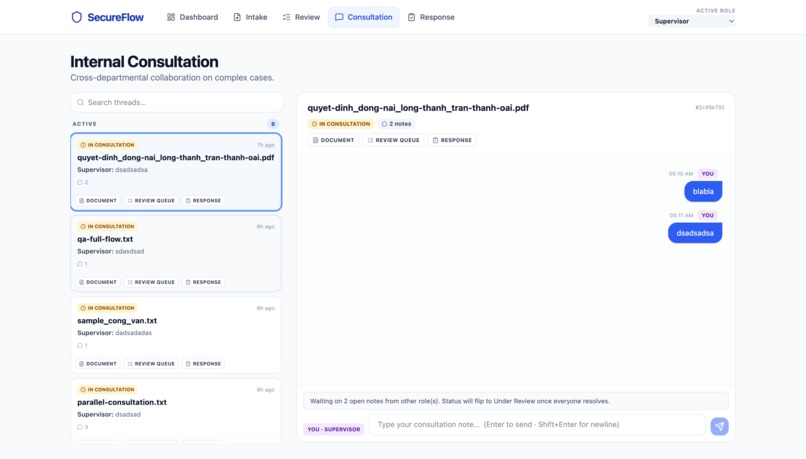
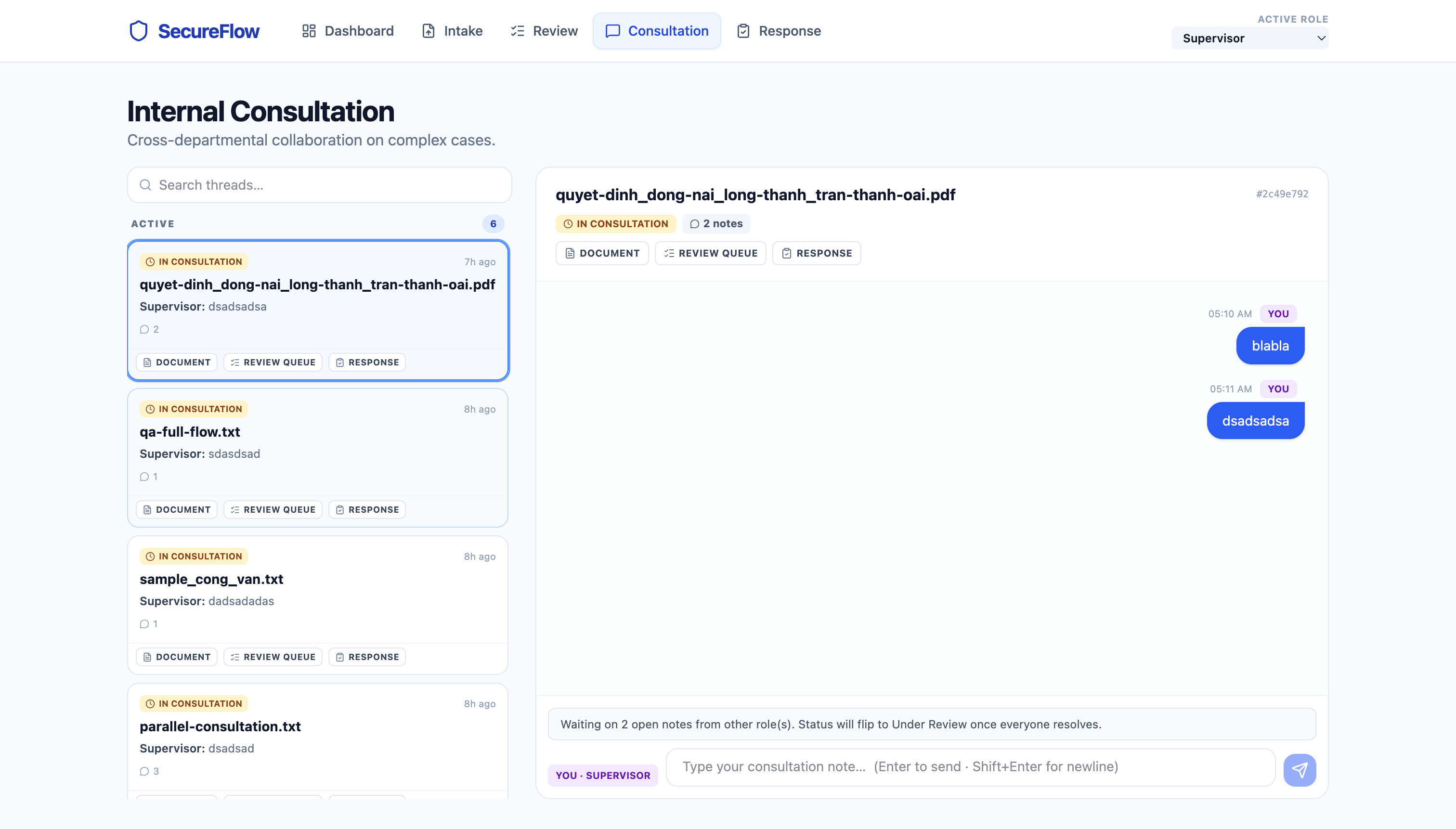
Consultation chat box to discuss among different roles/departments
-
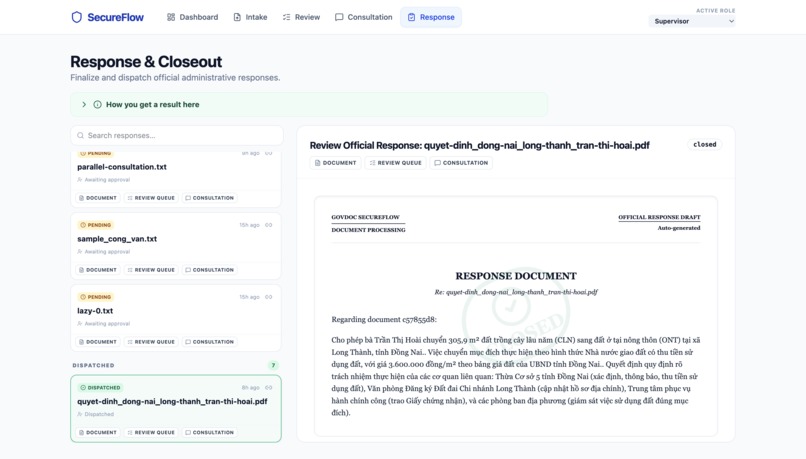
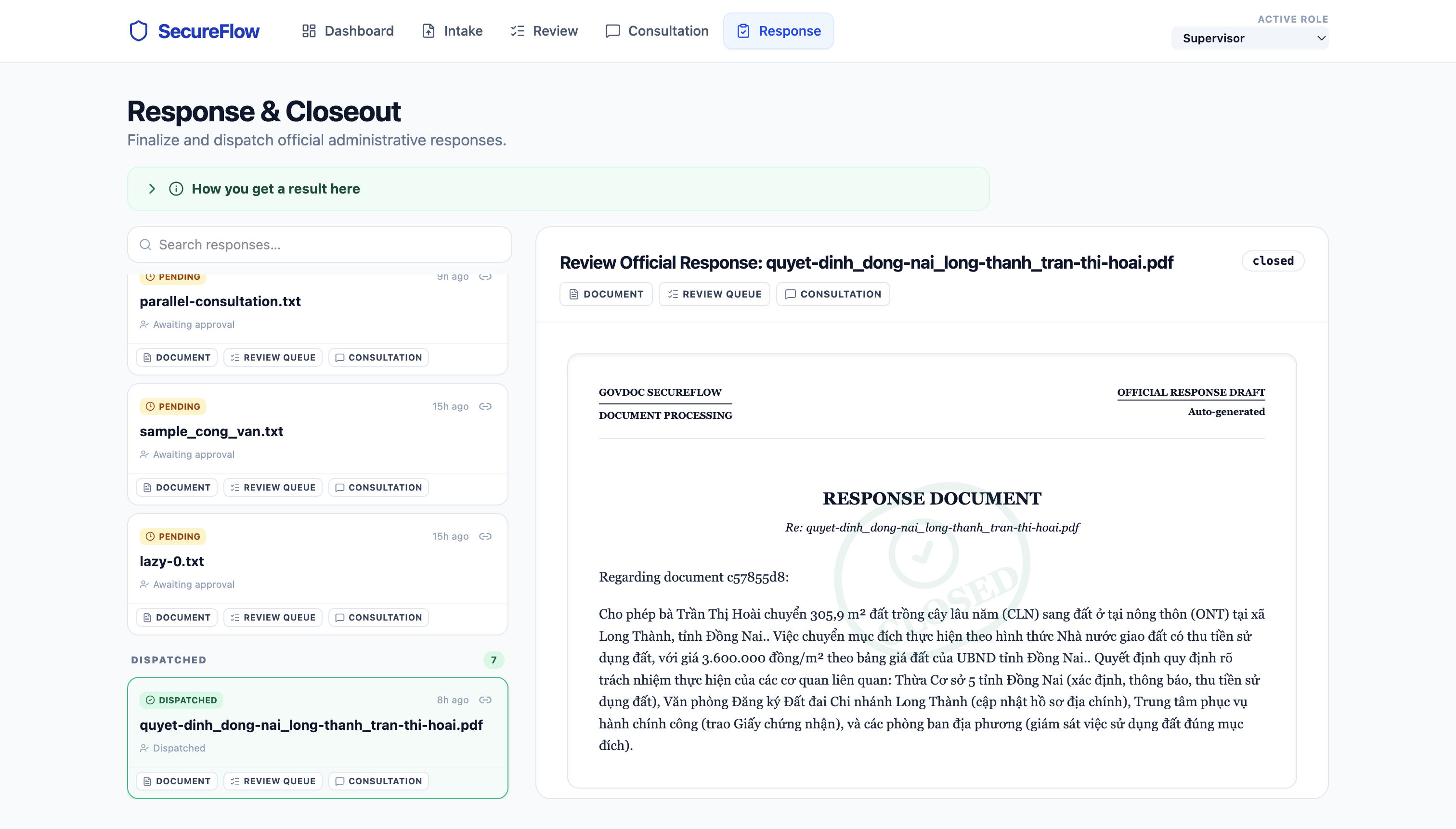
Final response document generated.
Public Sector Track Submission
Track: Public Sector Track (Government)
Project Name: GovDoc SecureFlow
Elevator pitch: GovDoc SecureFlow helps public offices intake, summarize, route, and track incoming documents with Qwen-powered assistance, human review, and audit-ready workflows.
Built with: Python, TypeScript, React, FastAPI, SQLite, Docker, Qwen, Alibaba Cloud Model Studio, Qwen-OCR, text-embedding-v4, Text Rerank API, audit logging, workflow state machine
Video demo link (required): https://youtu.be/-ibDNYrCPso
Inspiration
Public-sector teams still spend too much time manually receiving, reading, forwarding, and tracking incoming administrative documents. A single document can pass through multiple desks, departments, and review layers before anyone has a clear answer on what it is, who should handle it, and what its current status is.
That inspired us to build GovDoc SecureFlow: not just an OCR demo, and not just a chatbot, but an AI-assisted operational workflow for the actual first mile of government document handling. We wanted to show how Qwen and Alibaba Cloud can help reduce intake friction while still keeping human review, traceability, and access control front and center.
What it does
GovDoc SecureFlow is a secure intake and triage system for incoming administrative documents.
It helps a records desk or government office:
- receive born-digital or scan-like incoming documents
- extract text and metadata from uploaded files
- classify the document type
- generate a concise summary of what matters
- suggest the right receiving department
- flag ambiguous cases for consultation or supervisor review
- track the document through a visible workflow
- keep an audit trail of AI suggestions and human actions
Instead of manually passing documents across email, chat, or spreadsheets, teams get one structured workflow from intake → review → consultation → response preparation.
How we built it
We built GovDoc SecureFlow as a workflow-first system with AI assistance at the decision points that matter most.
The application uses a React frontend and a FastAPI backend with persistent workflow state, audit events, role-based visibility, and seeded demo scenarios. Uploaded files are stored as source-of-truth records, then converted into normalized extracted artifacts for downstream analysis.
On the AI side, we designed the system around the Alibaba Cloud stack:
- Qwen / Model Studio for classification, summarization, and routing recommendations
- Qwen-OCR for scan-heavy or image-like documents
- text-embedding-v4 for retrieval-ready document/reference embeddings
- Text Rerank API for improving evidence and reference ranking
Our intended MVP flow is:
- upload an incoming document
- validate and register it as a tracked record
- extract text and structured metadata
- generate AI summary and routing suggestion
- let a human approve, reroute, or request consultation
- track the case state and preserve the full audit trail
Challenges we ran into
The hardest challenge was balancing automation with public-sector reality. In this context, speed is important, but trust is even more important. The system cannot behave like a black box or pretend certainty when a document is ambiguous.
Another challenge was document variability. Administrative files can arrive as clean PDFs, poor scans, inconsistent templates, or mixed-format attachments. Designing a flow that handles both structured and messy inputs without breaking the user experience forced us to think carefully about fail-fast validation, fallback paths, and human review.
We also had to resist over-scoping. It was tempting to build a broad “AI for government” platform, but the better choice was to focus on one realistic workflow and make it credible end-to-end.
Accomplishments that we're proud of
We are proud that GovDoc SecureFlow addresses the real operational workflow instead of only one isolated AI task. The prototype connects intake, extraction, classification, summarization, routing, consultation, and tracking into one coherent system.
We are also proud that the design treats human oversight as a first-class feature. AI helps prioritize and recommend, but the application preserves review points, auditability, and visible workflow state. That makes the solution feel much closer to something a real public-sector team could trust.
Finally, we are proud of how clearly the product aligns with the track: it directly targets administrative document handling, cross-department coordination, and secure workflow visibility.
What we learned
We learned that document AI in the public sector is really workflow AI. The biggest value does not come from text extraction alone; it comes from reducing coordination cost, routing mistakes, and status ambiguity across teams.
We also learned that a strong AI-assisted system must be explicit about uncertainty. Low-confidence or multi-department cases should not be hidden — they should be surfaced and escalated in a controlled way.
And we learned that grounded, inspectable outputs matter. Users are much more likely to trust AI recommendations when they can see the extracted artifact, the suggested route, the rationale, and the action history in one place.
What's next for GovDoc SecureFlow
Next, we want to replace the remaining mocked intelligence modules with live Alibaba Cloud integrations for classification, OCR, retrieval, and reranking. We also want to improve confidence scoring, strengthen reference-grounded explanations, and support configurable routing rules for different ministries or provincial offices.
After that, we want to expand quality evaluation with harder scan cases, more document categories, and deeper SLA/backlog dashboards so agencies can measure not just document understanding quality, but also operational impact.
Built With
- alibaba-cloud
- audit
- fastapi
- ocr-pipeline
- postgresql
- python
- qwen
- react
- redis
- role-based-access-control
- typescript
- workflow-engine


Log in or sign up for Devpost to join the conversation.