GovAid AI
What inspired me
Each year, over $30 billion in public benefits go unclaimed by seniors alone, largely due to complex applications and lack of awareness. That’s just one group - millions of others face similar challenges when trying to access the help they deserve.
Benefits like healthcare, housing assistance, and student aid are buried behind dense language, bureaucratic websites, and legal terms that overwhelm most people.
This directly aligns with Hackathon Track 1: “The economy is becoming more automated, but a lot of people are being left behind.”
GovAid AI uses AI to close that gap by making complex, bureaucratic systems understandable and accessible to everyone. Not just lawyers, policy experts, or the tech-savvy.
How I built it
I built GovAid AI as a full-stack application in under 24 hours. The stack includes:
- React for the frontend.
- Node.js + Express for the backend
- OpenRouter API (Qwen3 30B A3B and Claude 3 Haiku) for summarizing policies, generating eligibility checklists, and answering user questions
- LangChain for document Q&A and retrieval-augmented generation (RAG)
- Cheerio for extracting meaningful content from government URLs
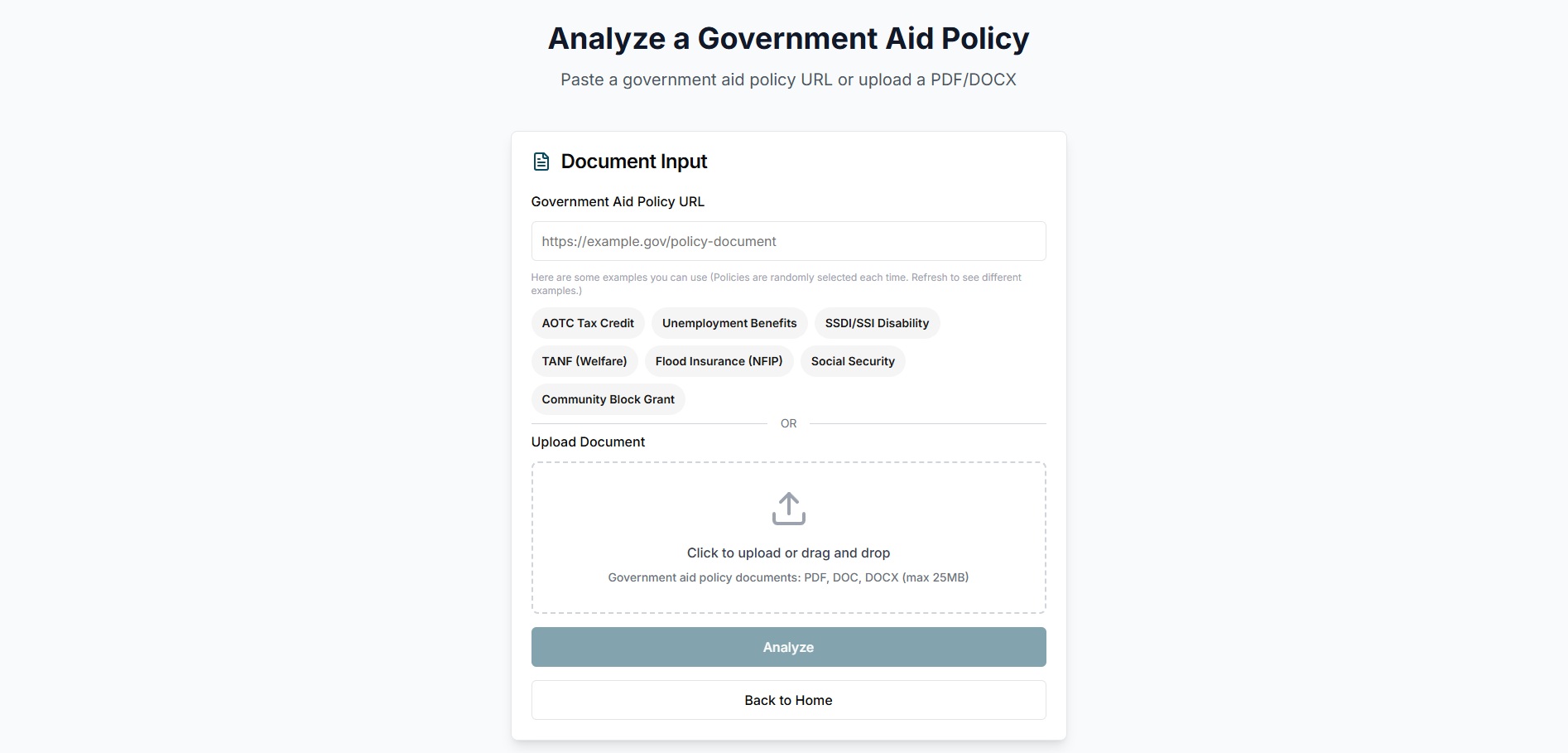
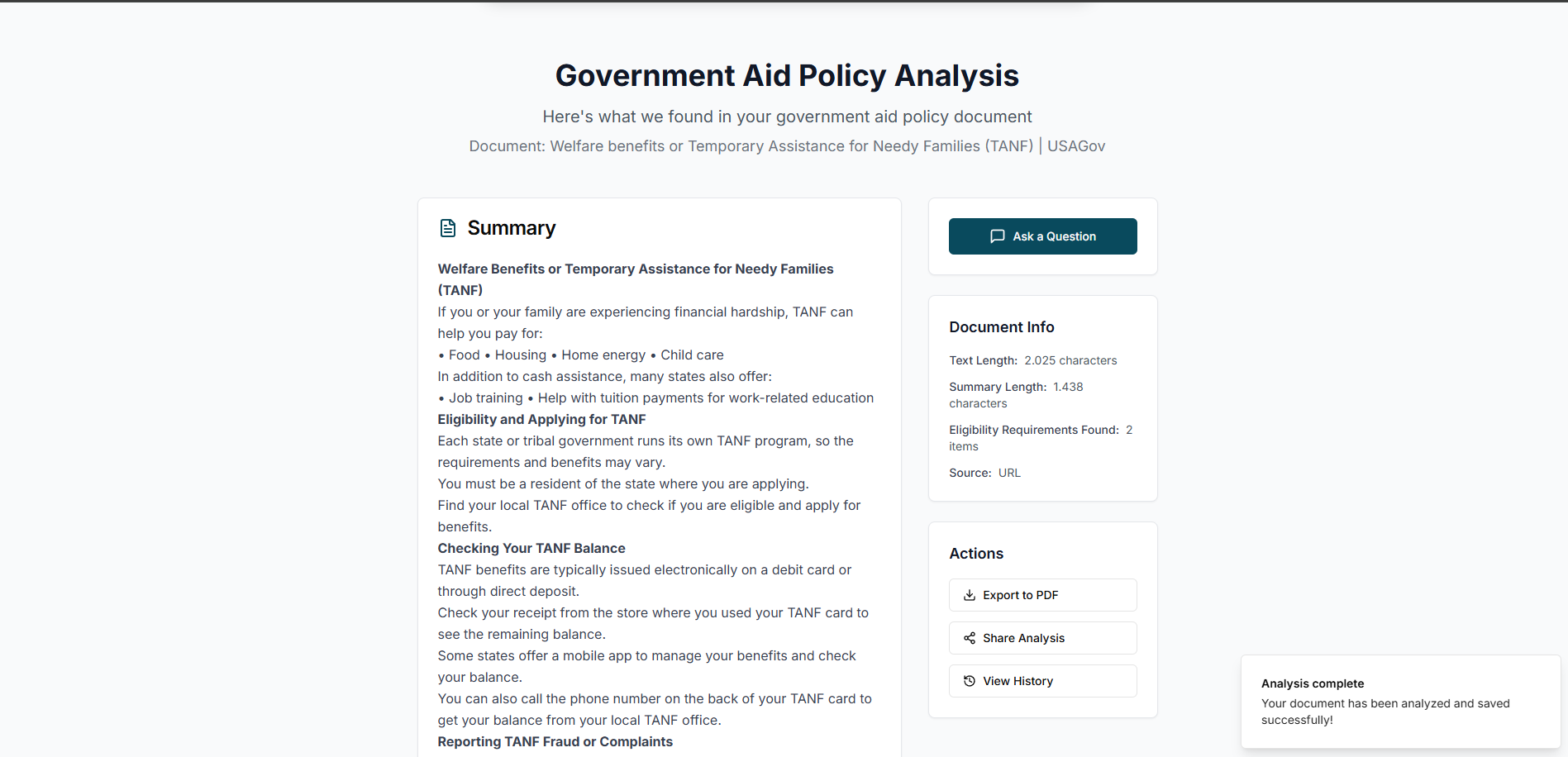
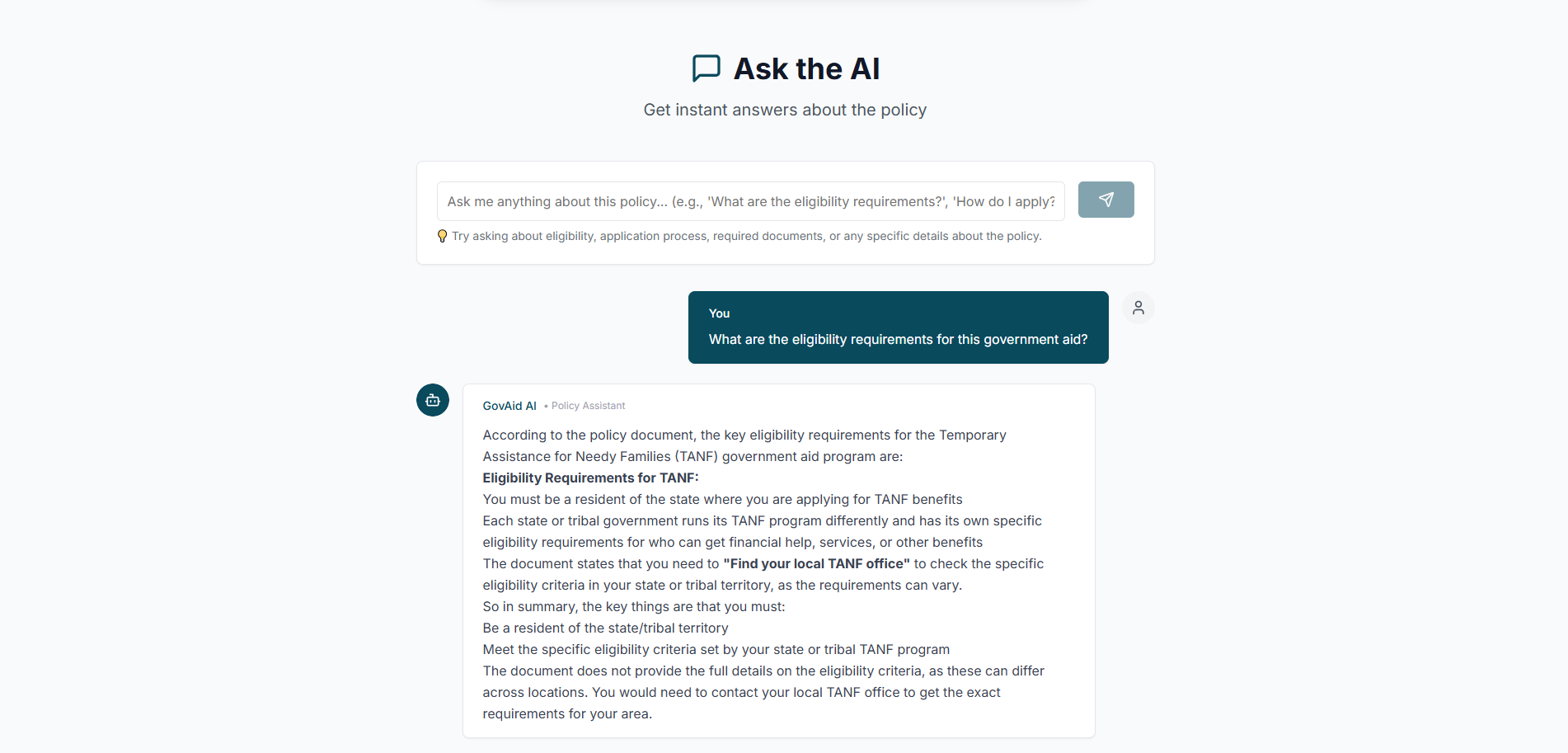
Users can paste a link to a policy or upload a document. The backend extracts the text, feeds it through LLM model to generate a summary and checklist, and allows the user to ask follow-up questions, all grounded in the source content.
What I learned
- How to design and execute a multi-step LLM workflow
- Techniques for parsing unstructured data from real-world government websites
- How to use LangChain to improve retrieval-based question answering
- The importance of fast, intuitive UX when working with complex backend systems
Challenges I faced
- Extracting clean and relevant text from inconsistent and often unstructured government websites
- Reducing hallucinations from the LLM by grounding responses in source content
- Handling long-form documents while staying within OpenRouters token limits
- Balancing time between backend logic, AI workflows, and frontend implementation as a solo builder
What’s next
I plan to expand GovAid AI with several key features:
- Translation to multiple languages for broader accessibility
- Document upload support for scanned policies and PDFs
- User history and analysis saving
- A database of commonly accessed policies with public summaries
This project was built in one weekend, but the mission behind it is much bigger: making government benefits easier to understand, more accessible, and more human.
Built With
- claude
- openrouter
- radix
- react
- reacthook
- reactrouterdom
- shadcn
- tailwind
- tanstackquery
- typescript
- vite

Log in or sign up for Devpost to join the conversation.