-
-
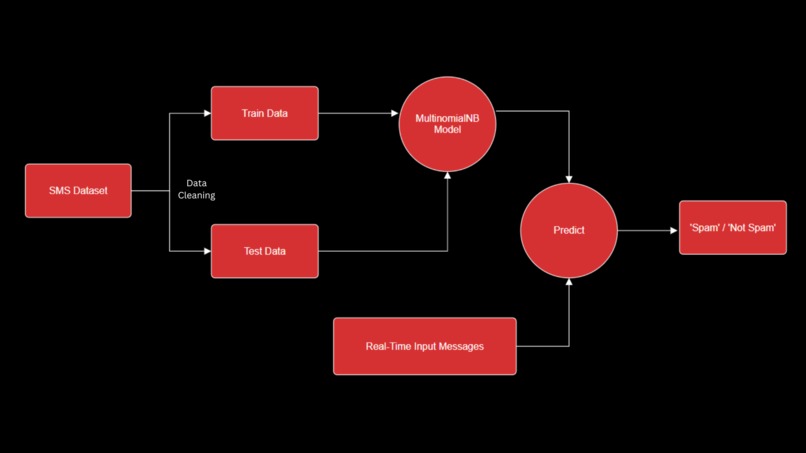
Flow Chart for ML model
-
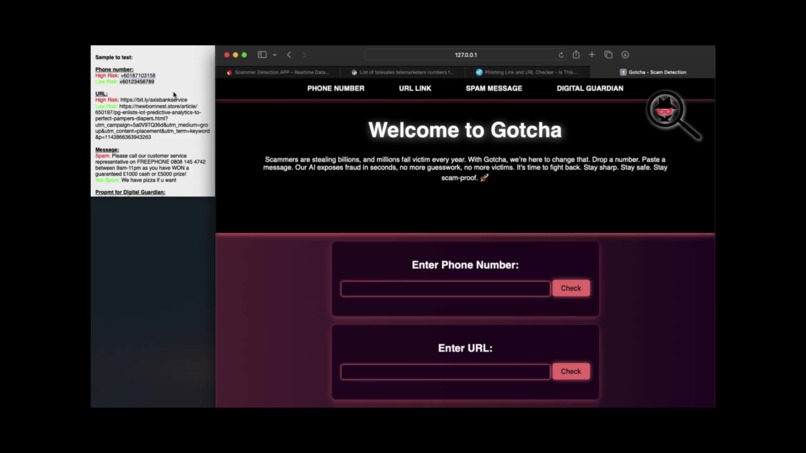
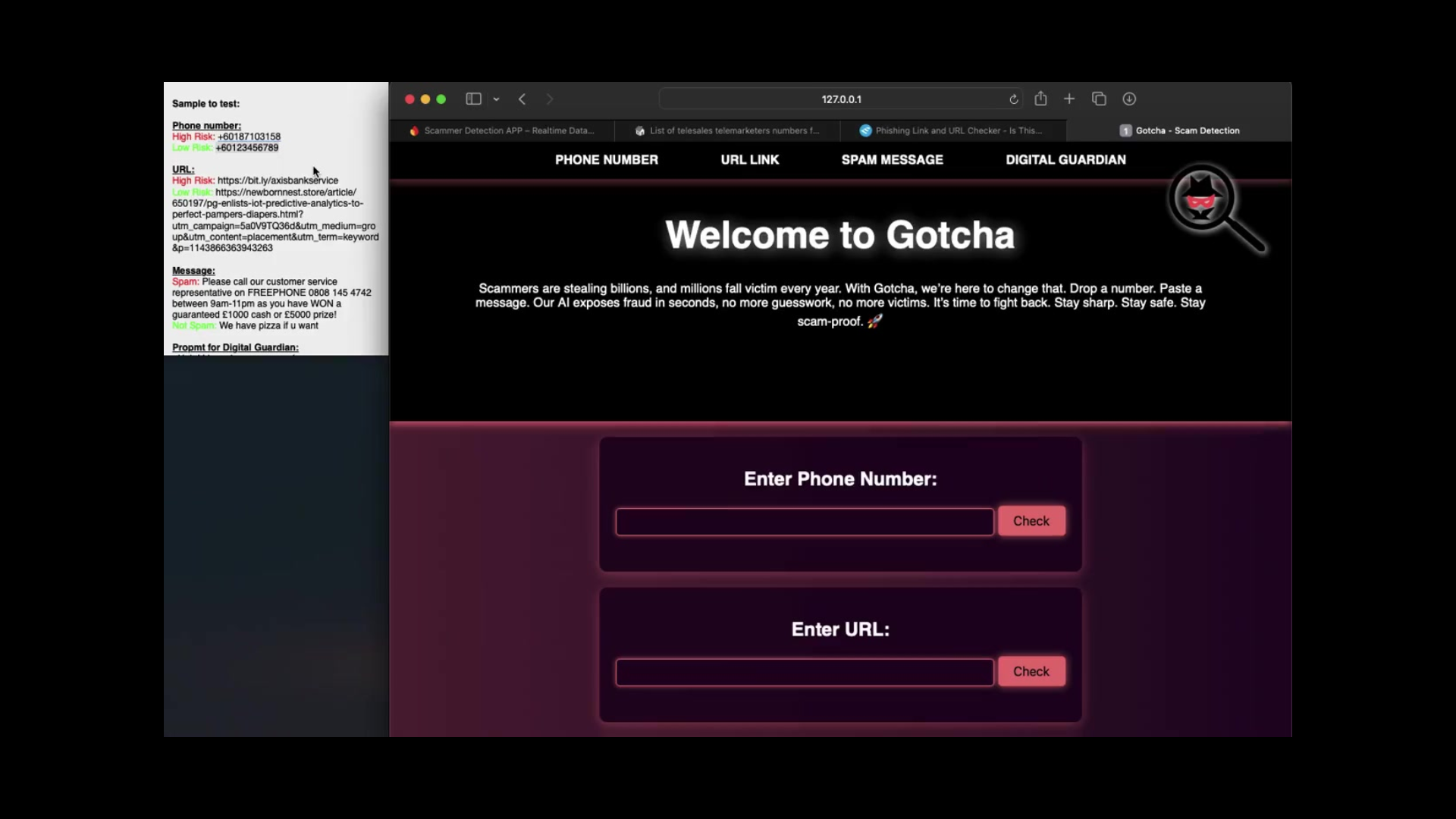
User Interface
-
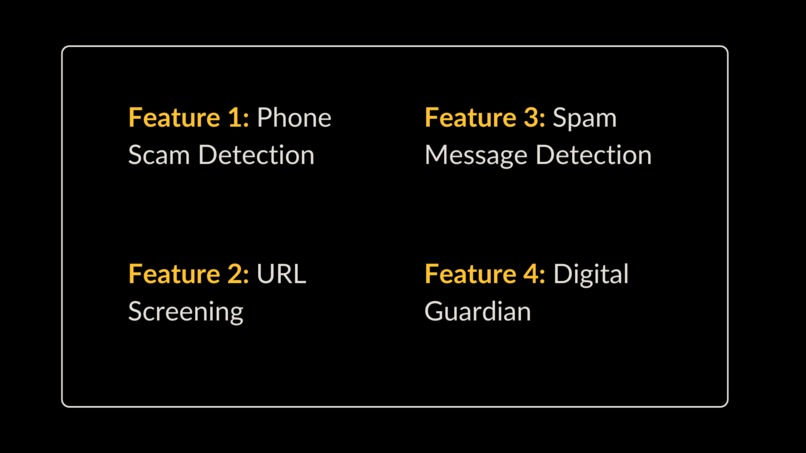
Features

Inspiration 🕯️
In today’s digital age, the proliferation of cyber scams has become a pressing concern, leading to billions of dollars in financial losses and stolen personal information. Witnessing this problem, we were inspired to develop an accessible tool that helps individuals identify and combat scams effectively before it is too late.
What it does 🕶️
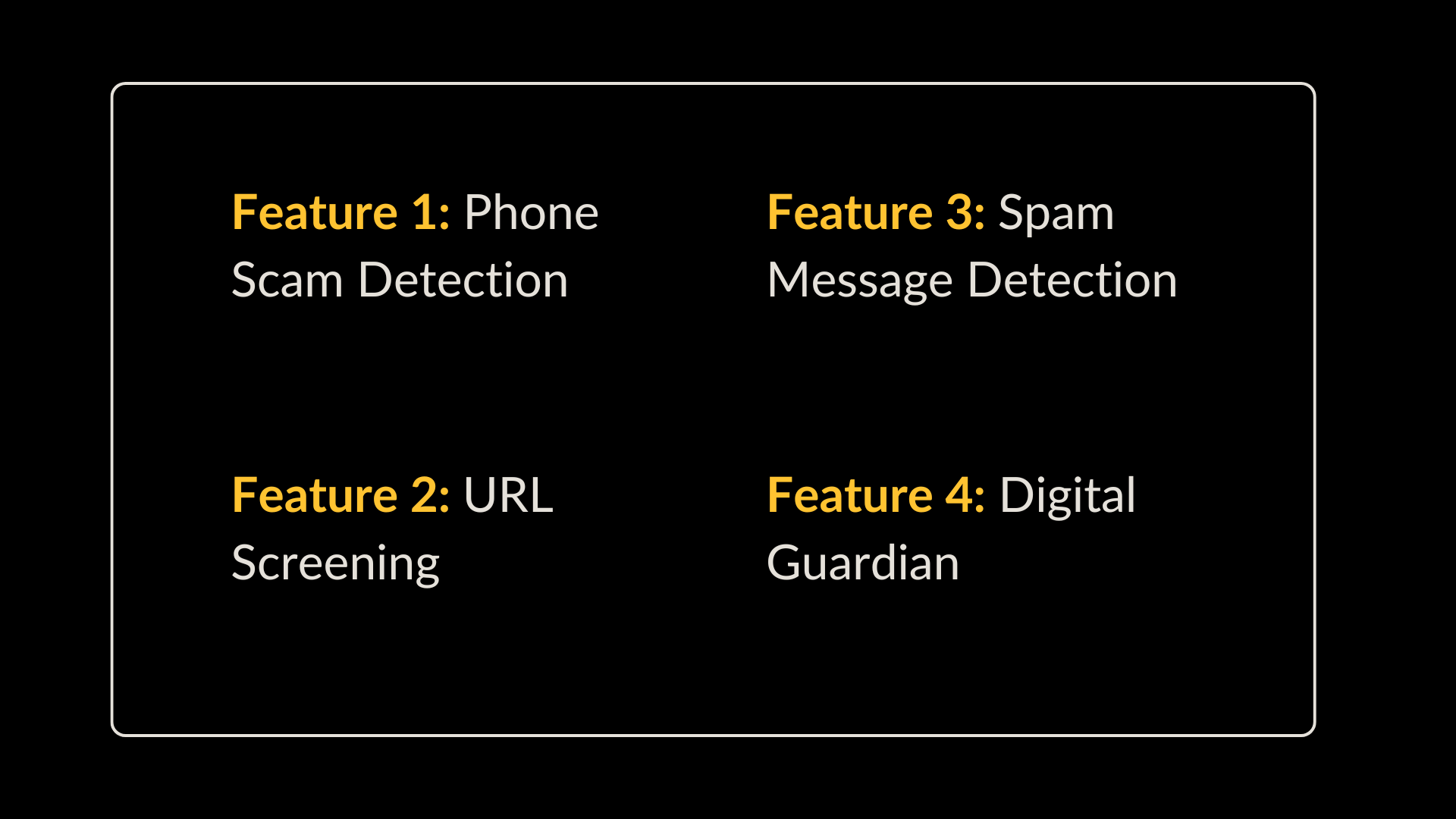
Our web application offers 4 key cybersecurity features to protect users from online threats. The scam phone number checker classifies phone numbers as high-risk or low-risk, helping users identify potential scam calls. The URL screening feature detects suspicious links and provides alerts before users interact with potentially harmful websites. Our spam message detector flags suspicious messages, reducing the risk of phishing and fraud. Lastly, the Digital Guardian chatbot serves as one’s own cybersecurity assistant. It is capable of offering scam prevention tips and post-scam advice. Together, these features create a comprehensive all-in-one tool to stay safe online.
How we built it 💻
We developed our software using Python with the Flask library for the backend, integrating APIs such as Numverify, urlscan, and GEN AI. A supervised machine learning algorithm, based on the Naïve Bayes theorem, was implemented to detect spam messages. For enhanced adaptability, we incorporated the Firebase Realtime Database. Meanwhile, the frontend was built using HTML and CSS.
Challenges we ran into ✂️
The first major challenge was finding the right APIs for our system. Most emotional support APIs came with significant costs, leading us to explore alternatives. After extensive research, we found our solution in Gemini's API, which provided both cost-effectiveness and the functionality we needed for our application.
Additionally, some messages may contain words commonly found in both scam and legitimate messages, which might make classification difficult. For example, phrases like “Congratulations! You’ve won a prize” could be a scam, but a genuine promotional message from a business might use similar wording. Naive Bayes, which relies on word frequency, may struggle to differentiate between them without additional context, leading to misclassification.
For system reliability, we focused on implementing robust error handling when connecting URLScan and phone verification services. We developed fallback systems to ensure consistent performance, particularly during service interruptions. Through Gemini's AI integration, we created a Digital Guardian that effectively balances technical accuracy with helpful user guidance.
Accomplishments that we're proud of 📣
First, we cracked the code on real-time scam detection, almost like having a personal security guard that checks phone numbers, links, and suspicious messages instantly. Just paste and click!
Then there's our smart message analyzer, where it can spot potential scams in messages. The best part? You can see it catching those tricky scam attempts in real-time.
And our personal favorite is that we created this super helpful Digital Guardian. It's not just cold technology; it actually understands when users are worried and provides thoughtful guidance.
What we learned 📓
Throughout the duration of this hackathon, our team learned several valuable lessons:
Technical Insights One of the biggest takeaways was integrating APIs effectively. By using URLScan.io for real-time URL safety detection as well as Python and Flask for scam phone number and email verification, we saw how external services can enhance functionality without reinventing the wheel. We also learned the importance of maintaining a clean separation between the backend, UI, and external data sources to ensure scalability and flexibility.
Problem-Solving & Cost-Effectiveness A major challenge was finding cost-effective solutions without sacrificing performance. We evaluated multiple APIs and tools, balancing security with affordability. This helped us reinforce the importance of critical thinking- knowing when to build from scratch and when to leverage existing technologies to save time and resources.
Time Management & Collaboration Minding the deadline, we had to prioritize tasks and work together efficiently as a team. Dividing responsibilities such as the backend security, API integration, and UI design taught us how to collaborate effectively under pressure! We also had to make quick decisions while ensuring our solution was of high quality and functional.
What's next for GOTCHA 📨
Moving forward, we aim to broaden our impact, improve real-time detection, and work with local authorities to boost enforcement. By combining technology with regulation, we strive to build a safer digital environment for everyone.


Log in or sign up for Devpost to join the conversation.