-
-
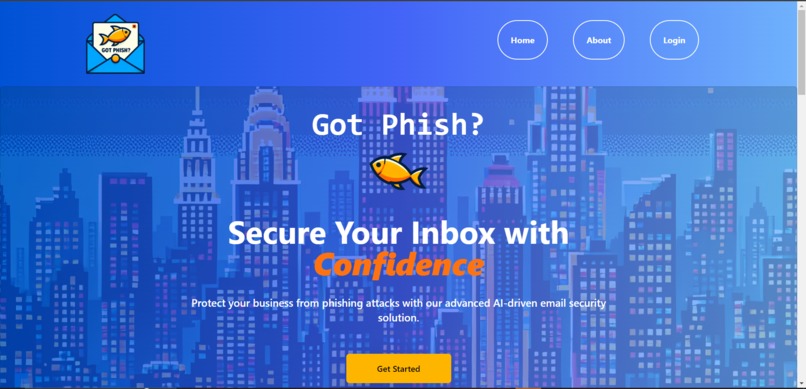
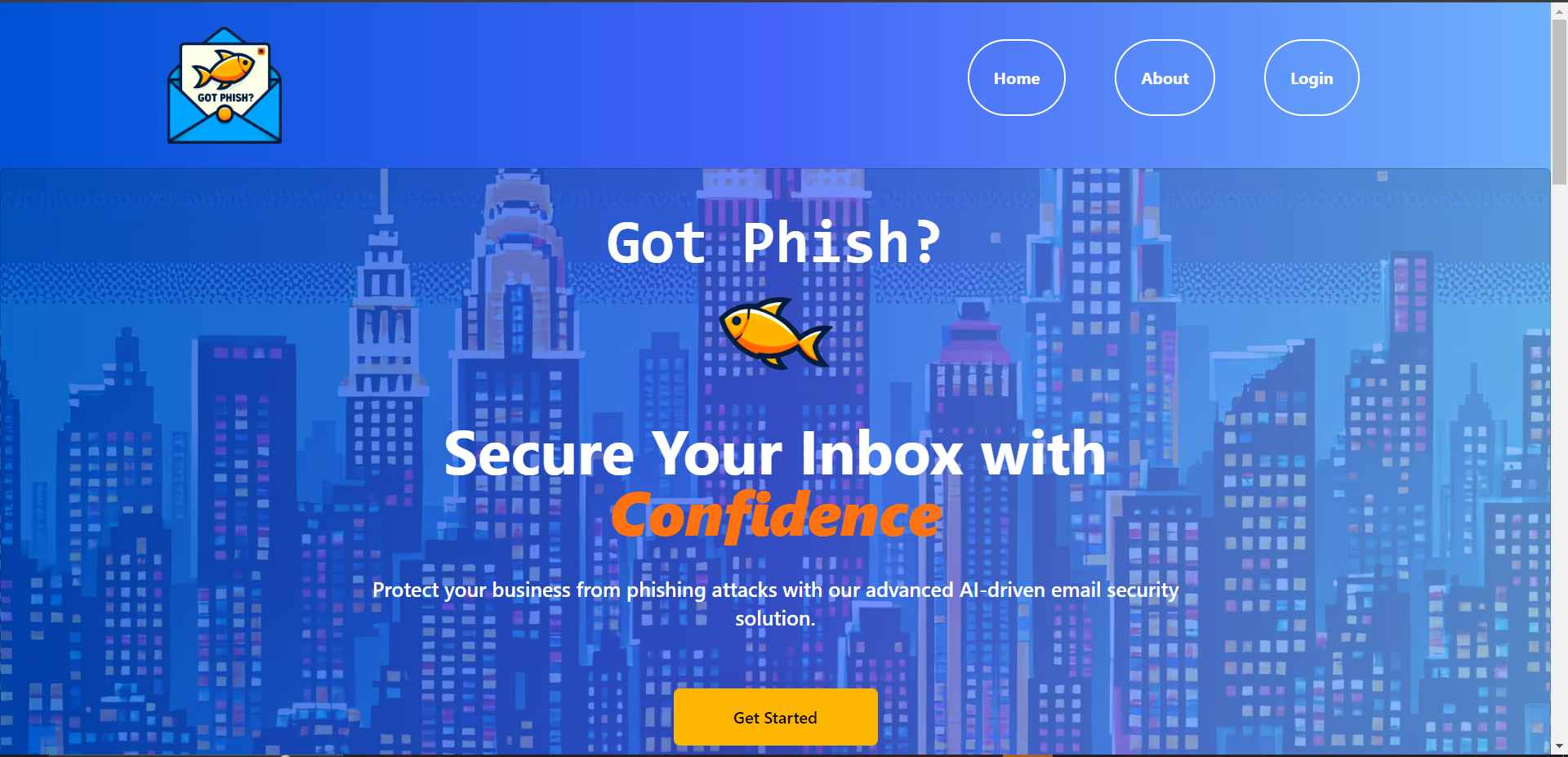
Home Page
-

Login Page
-
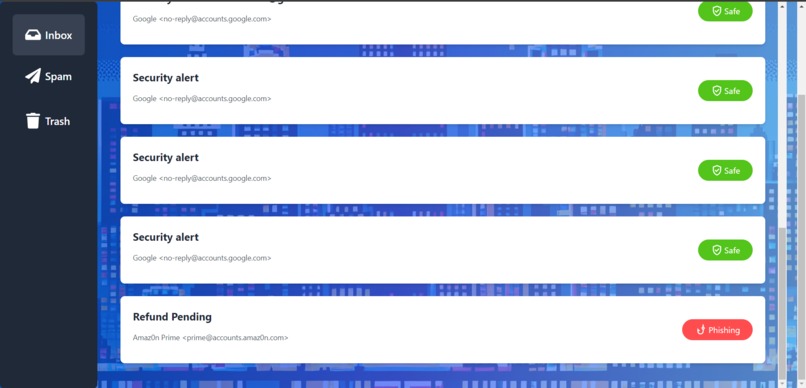
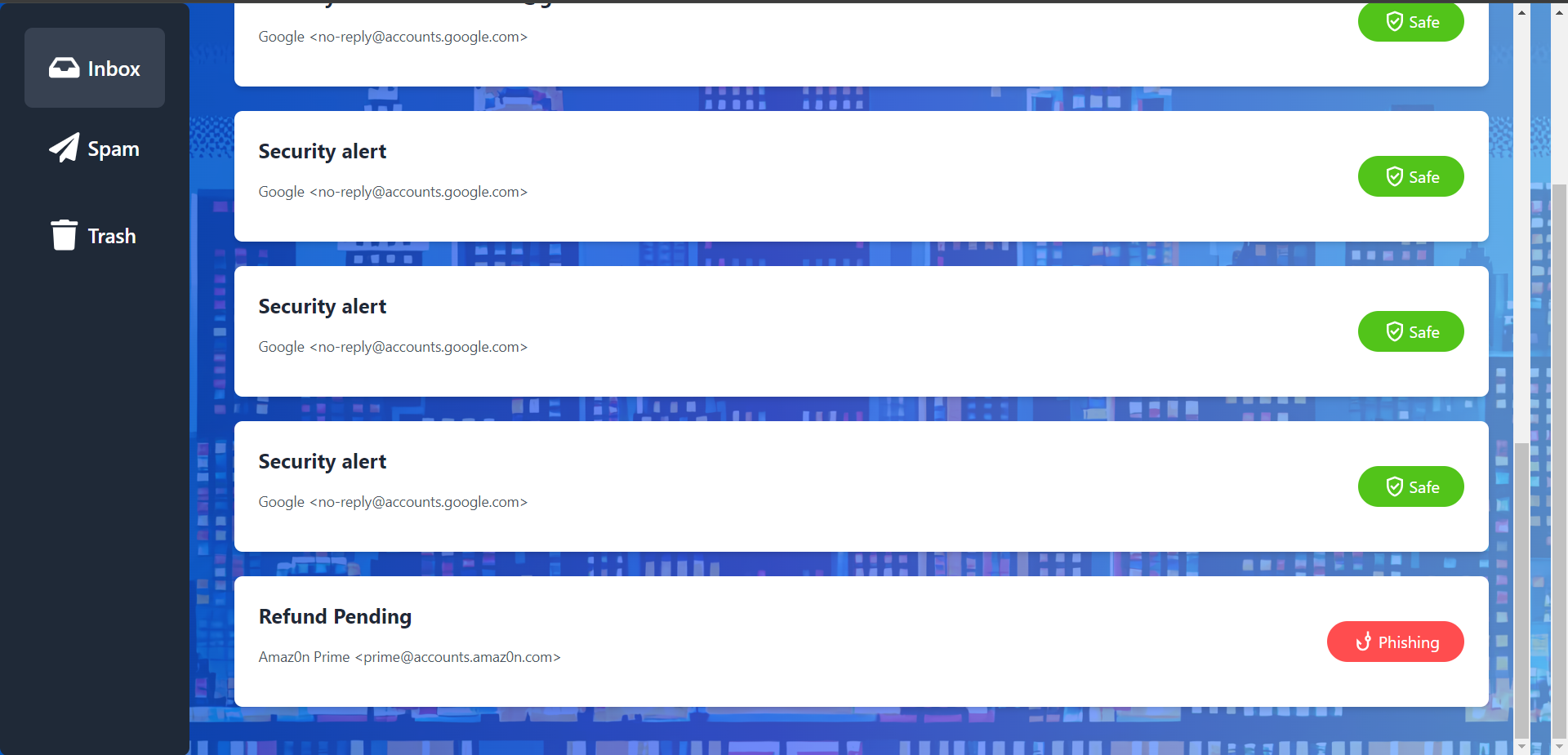
Dashboard

Inspiration
According to a report released today by State Comptroller Thomas P. DiNapoli, cyberattack complaints in New York state increased 53% between 2016 and 2022, jumping from 16,426 incidents in 2016 to 25,112 in 2022, according to the FBI. The number of attacks targeting critical infrastructure in New York State nearly doubled to 83 in the first half of 2023 compared to 48 during the entirety of last year.
What it does
Our advanced AI-driven phishing detection system empowers NYC businesses to identify and thwart phishing emails, safeguarding against potential privacy invasions, identity theft, and fraud. Our advanced AI-driven solution identifies and blocks malicious emails, ensuring a worry-free communication environment.
How we built it
For the frontend, we leveraged the power of React and Tailwind CSS. React provided us with a highly efficient and component-based architecture, allowing us to manage complex UI elements with ease. Tailwind CSS streamlined our styling process, enabling rapid prototyping and aesthetic design implementation. By utilizing these technologies, we were able to create a visually appealing and responsive frontend interface that enhances user interaction.
On the backend, we employed a diverse array of tools and frameworks to handle various aspects of our application's functionality. Flask, a lightweight and versatile Python web framework, served as the backbone of our backend infrastructure. Its simplicity and flexibility allowed us to quickly develop robust APIs and manage our application's routing logic efficiently.
In addition to Flask, we integrated advanced AI-powered tools to enhance our cybersecurity capabilities. OpenAI provided natural language processing (NLP) capabilities, enabling us to analyze and understand user inputs more effectively. Cohere supplemented our backend with powerful language models, enriching our application's ability to detect and respond to potential threats intelligently.
Furthermore, we integrated Pinecone for advanced similarity search functionality, empowering our platform to quickly identify patterns and similarities within vast datasets. This enabled us to deliver real-time insights and recommendations to our users, enhancing their cybersecurity posture and mitigating potential risks effectively.
Challenges we ran into
- Connecting Google Cloud API to our Flask server for user to sign in with Google authentication.
- Learning how to use datasets and AI models for the first time.
- Havin to learn new technologies in a short period of time.
- Running across technical problems since our team was using different OS.
Accomplishments that we're proud of
- An application that utilize AI models to detect phishing emails in the inbox to protect businesses from cyber attacks.
- Built and trained AI models to detect phishing emails using OpenAI, Cohere, and Pinecone.
- The ability to raise awareness of cybersecurity and provide protection against scams by introducing this application.
What we learned
- Building and training AI models to analyze emails, and determine whether if email is scam or not.
- How to build web application using React and Flask, with APIs such as OpenAI, Google Cloud, etc.
What's next for Got Phish?
- We aim to continuously refine and improve our AI-driven phishing detection algorithms. By leveraging ongoing advancements in machine learning and natural language processing, we will enhance our system's ability to accurately identify and thwart evolving phishing tactics.
- Providing more access with different email platforms such as Outlook.
- User feedback is invaluable in refining and optimizing our platform. We will actively solicit input from our users to identify pain points, gather feature requests, and prioritize enhancements. By iterating based on real-world usage and user insights, we will ensure that Got Phish remains effective and user-friendly.
Built With
- cohere
- flask
- gmail
- google-cloud
- google-gmail-oauth
- javascript
- openai
- pinecone
- python
- react
- tailwind


Log in or sign up for Devpost to join the conversation.