Inspiration
The inspiration for GORILLA GUN: SURVIVORS came from analyzing the current VR landscape. We noticed two dominant trends: the highly engaging, physical locomotion of Gorilla Tag, and the addictive, "just one more run" loop of Roguelike survivors like Vampire Survivors.
We asked ourselves: "What if we gave a gorilla a minigun?"
We wanted to bridge the gap between young audiences who crave high-energy physical movement and core gamers who want depth, progression, and intense combat. Our goal was to create a "physical Roguelike" where your survival depends not just on your build strategy, but on your physical agility.
What it does
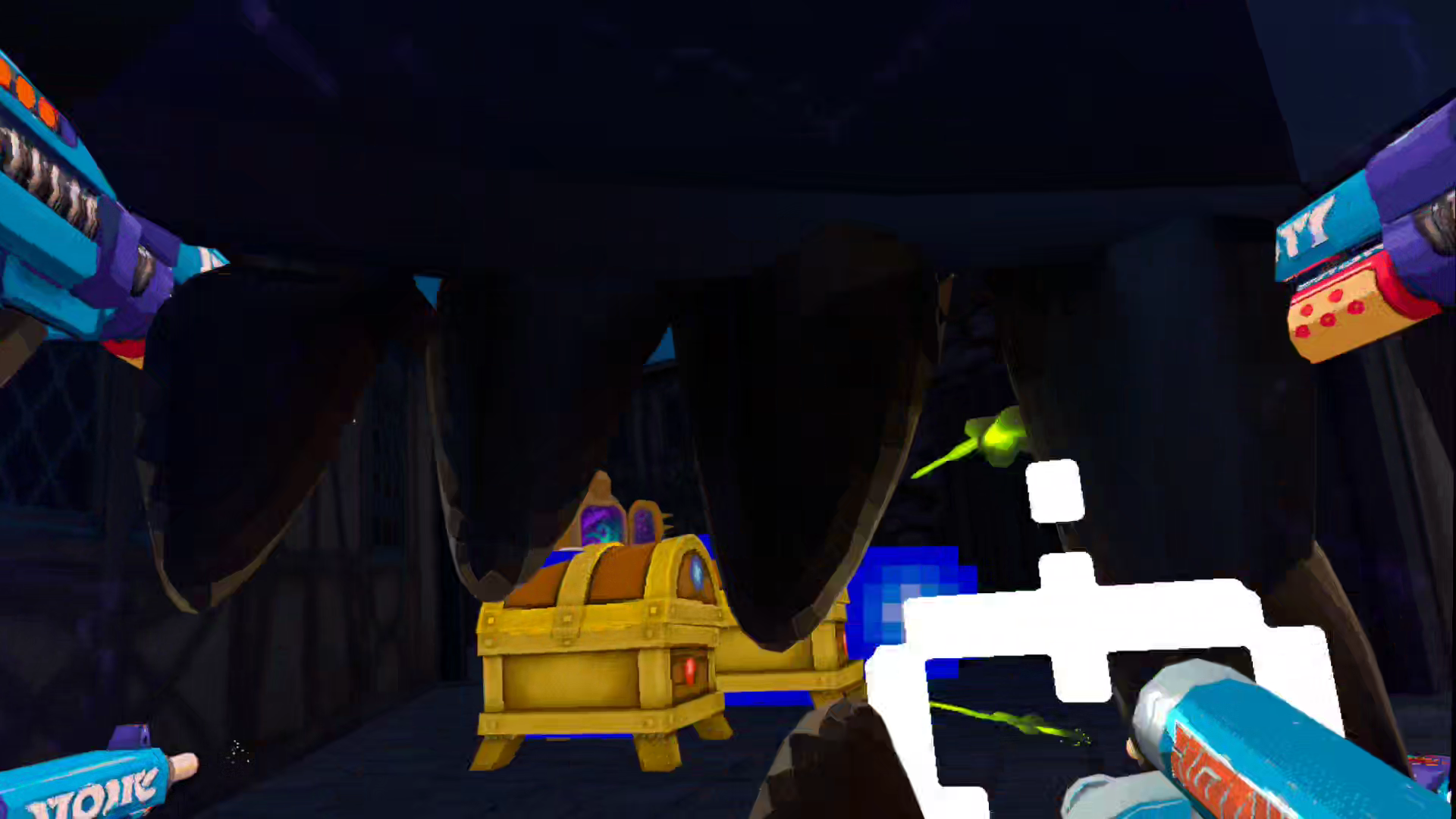
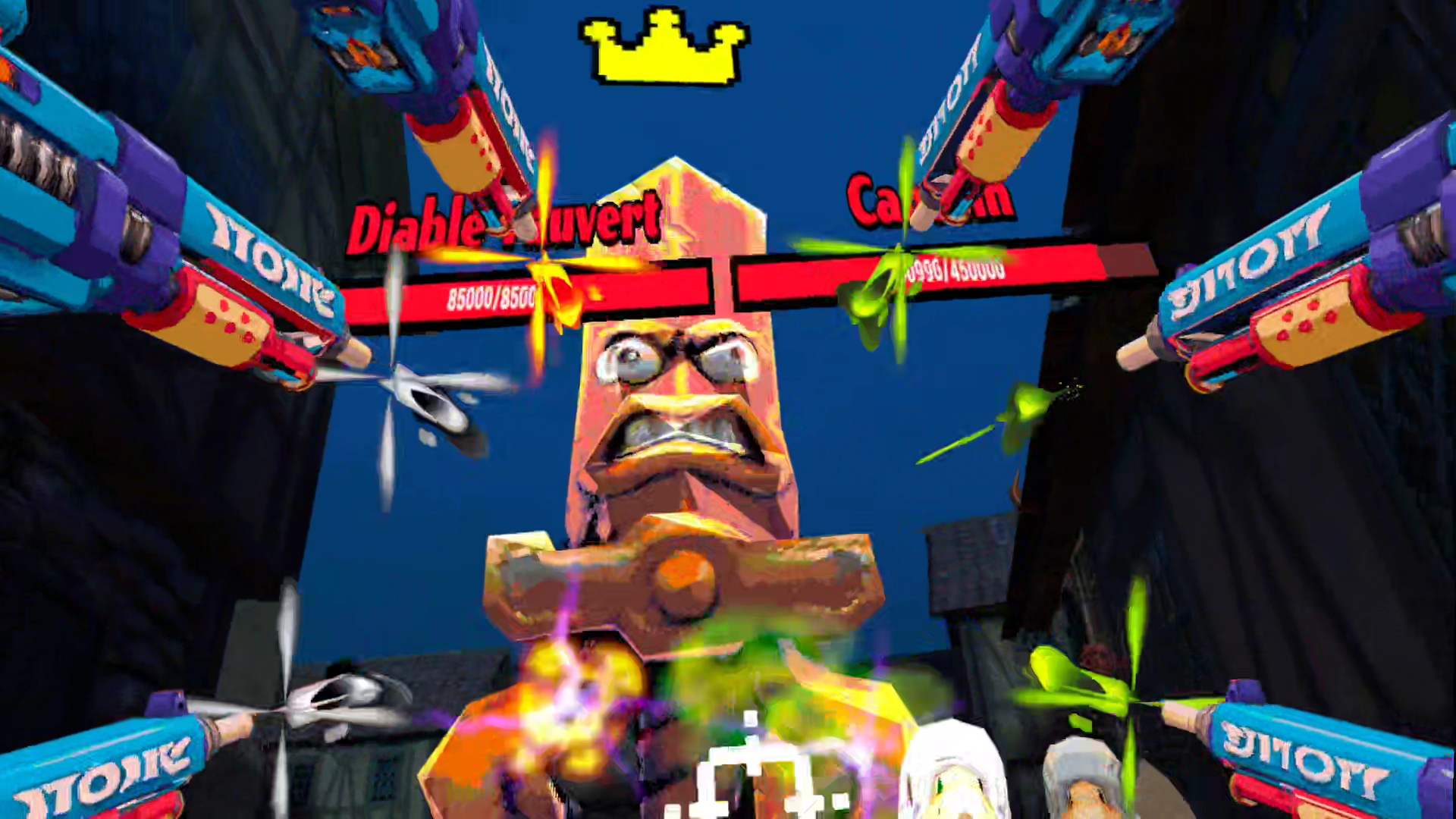
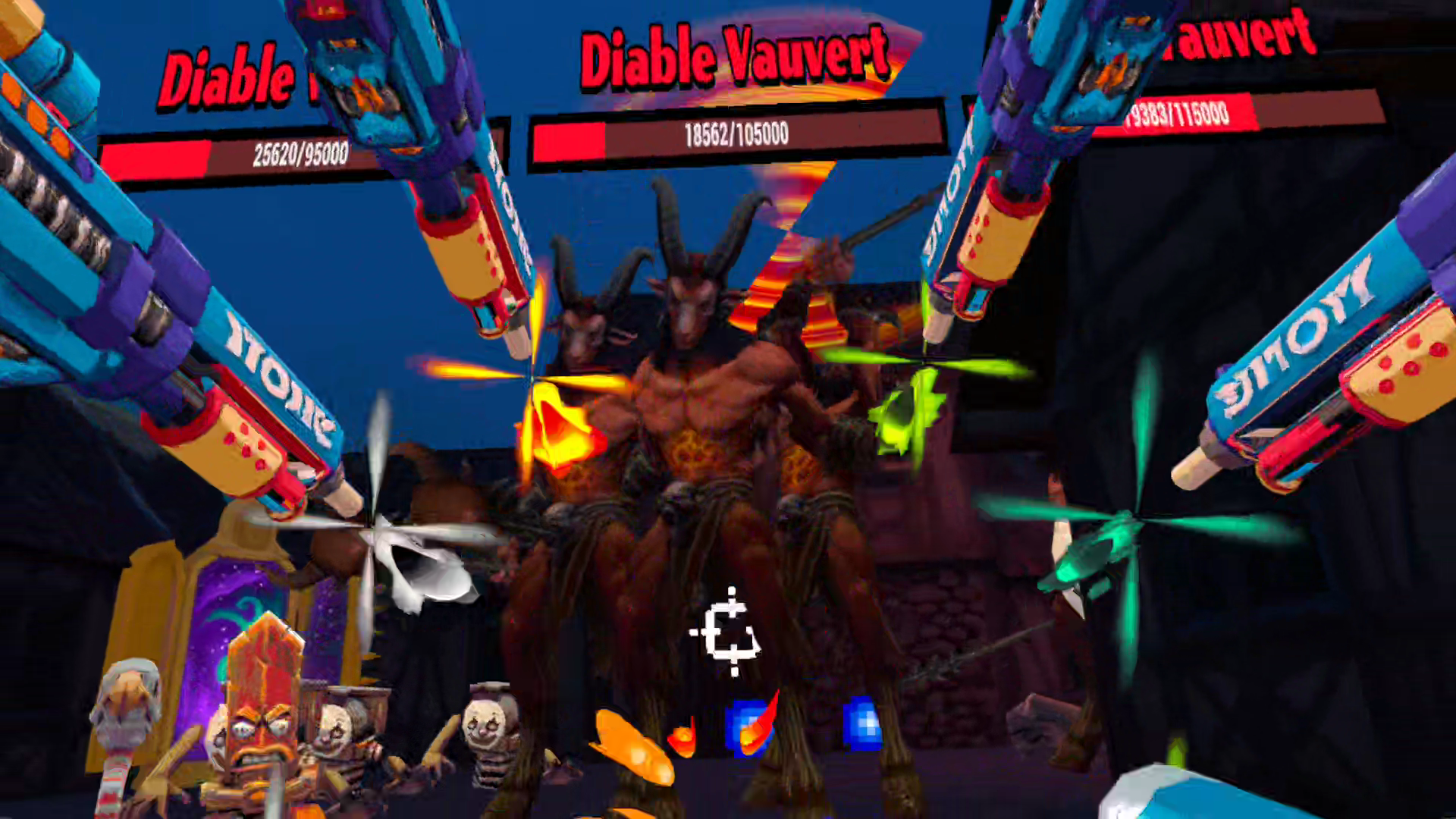
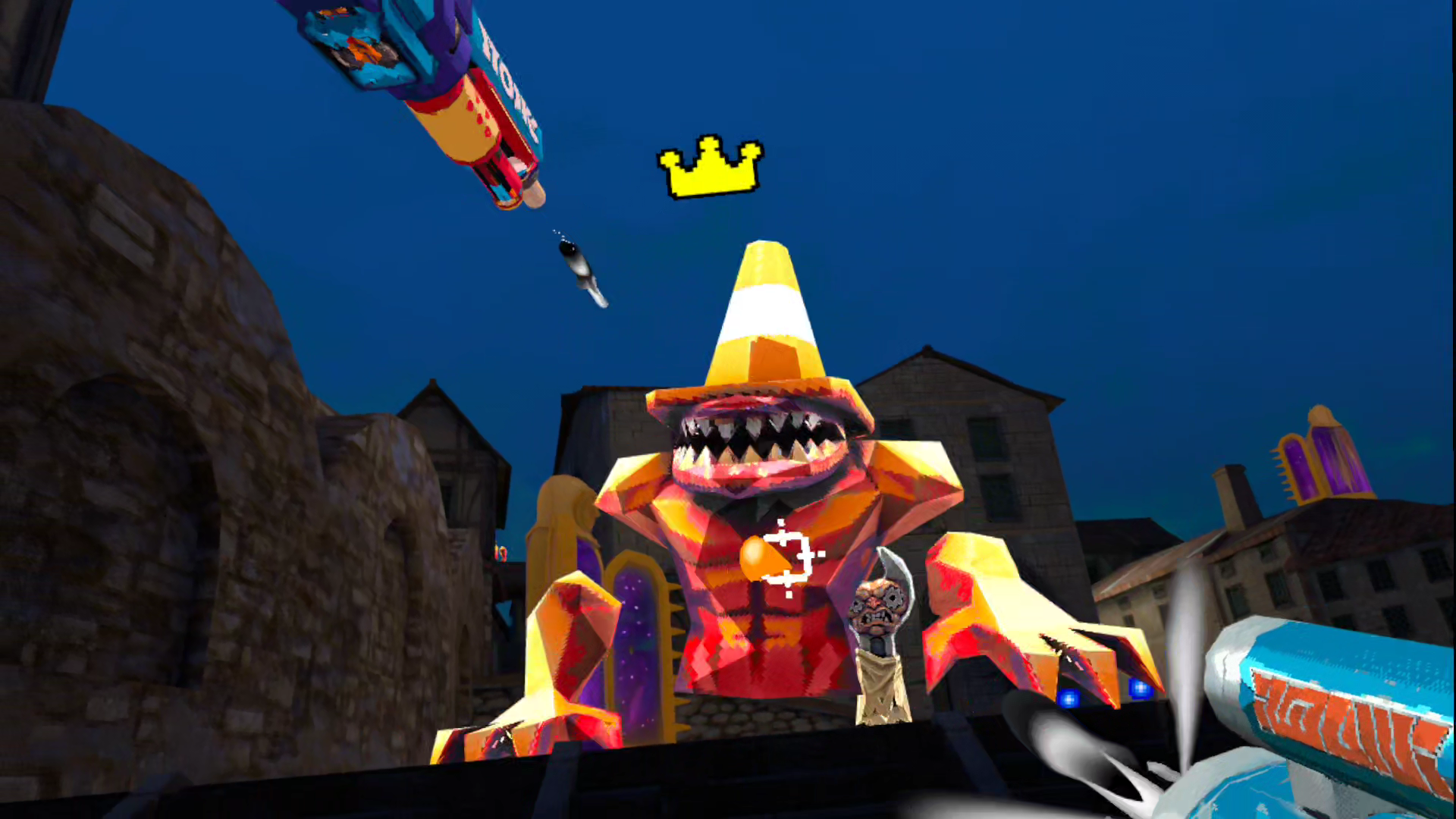
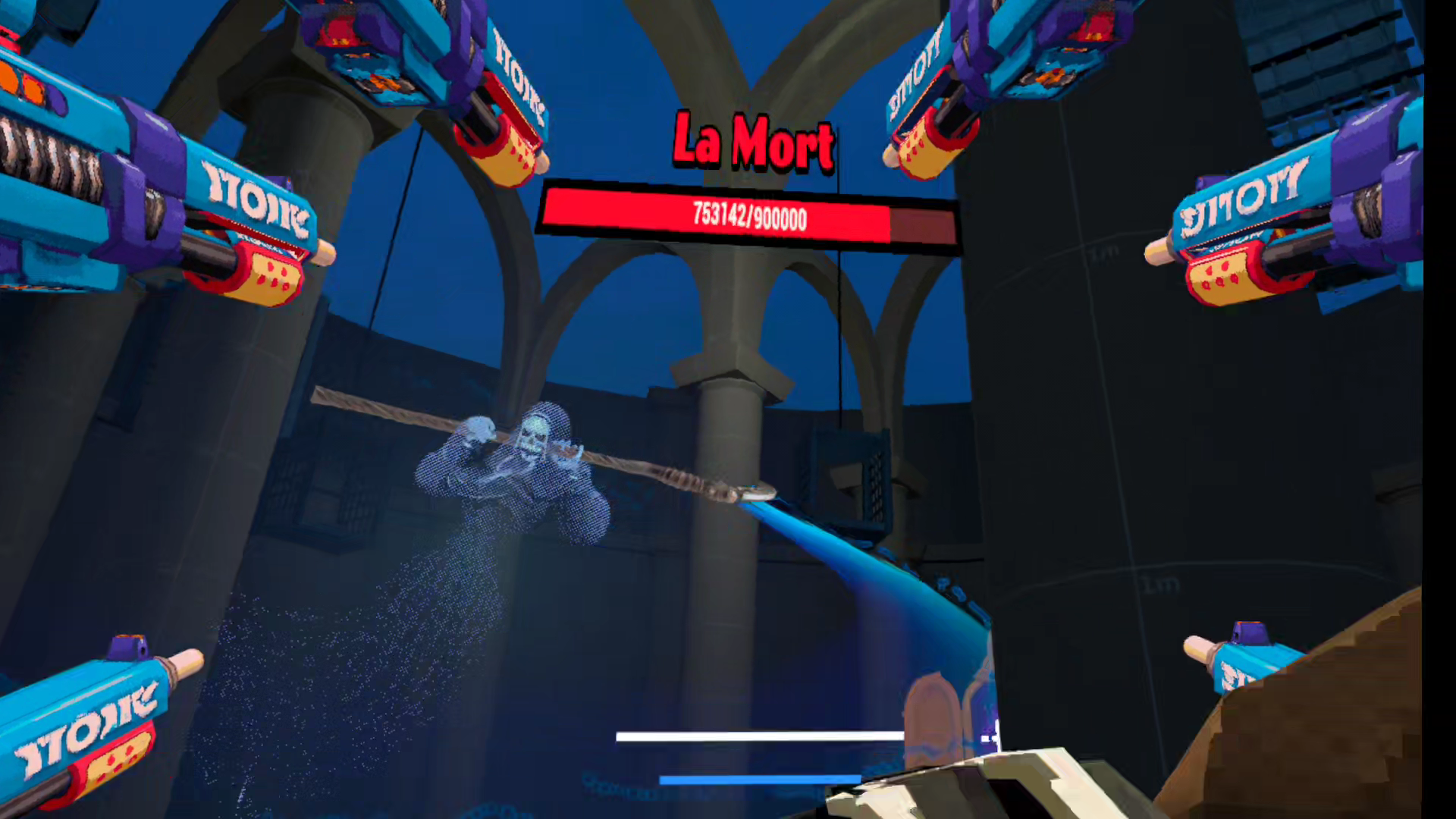
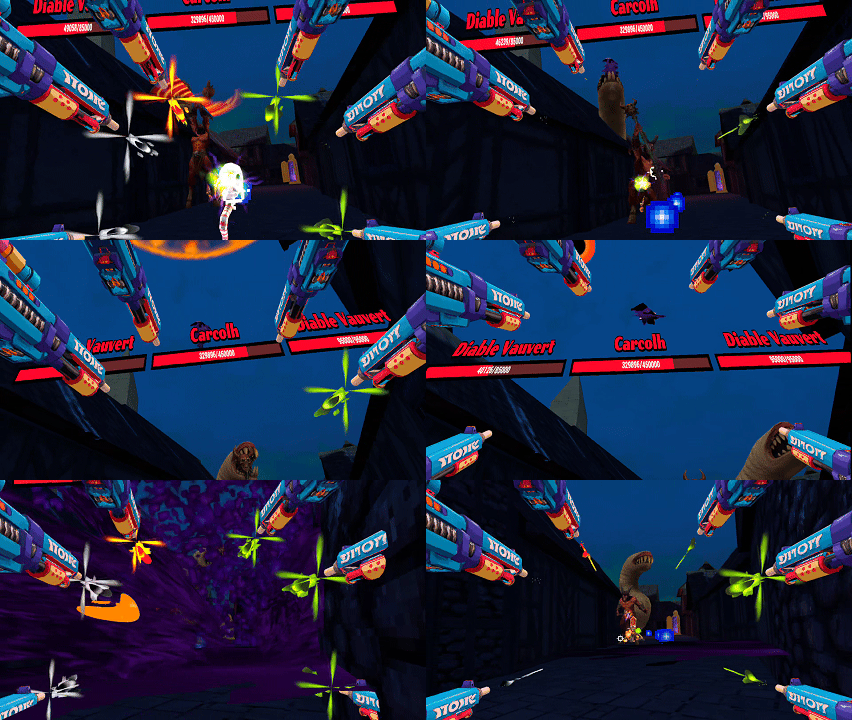
GORILLA GUN: SURVIVORS is a fast-paced VR Roguelike shooter built for Meta Quest. Physical Locomotion: Players use arm-swinging mechanics to move, climb, and fling themselves across the map. No thumbstick walking—you are the engine. Roguelike Loop: Survive endless waves of enemies. [cite_start]Collect XP to trigger a randomized card drafting system (3-choice selection) to upgrade weapons, stats, and abilities on the fly. Deep Customization: Between runs, players access a permanent Tech Tree and equip "Cores" to define their playstyle. Combat: It features a variety of weapons (from shotguns to turrets) that interact with the physics system, including recoil management while mid-air.
How we built it
We developed the game using Unreal Engine, leveraging its powerful physics capabilities to create a satisfying and responsive movement system. Development: Created by Pumpkin VR, a veteran XR team with experience since 2016. Optimization: We spent significant time optimizing for the Meta Quest mobile chipset to handle large enemy hordes without sacrificing the high frame rate required for comfortable physical movement. Partnership: We are working closely with our publisher Astrea and the Taiwan Creative Content Agency (TAICCA) to bring this vision to the global market.
Challenges we ran into
- Motion Sickness vs. Speed: Creating a high-speed movement system that doesn't make players sick was our biggest hurdle. We iterated through multiple physics tunings and worked with VR Oxygen for user testing to find the "sweet spot" of comfort and adrenaline.
- Input Management: Mapping complex actions (shooting, reloading, ability usage) while the player's hands are also used for movement (running/climbing) required creative UX solutions.
- Performance: Rendering "Survivor-style" enemy density on a standalone VR headset while calculating complex physics for the player and projectiles was a major technical optimization challenge.
Accomplishments that we're proud of
Genre Fusion: Successfully blending the "Tag" movement genre with "Survivor" combat mechanics into a cohesive experience. Strategic Partners: Securing a publishing partnership with Astrea and receiving content development support from TAICCA (Taiwan Creative Content Agency). This dual backing validates both the commercial potential and the creative quality of our project. Community Feedback: Early testing showed strong retention, confirming that the "physical Roguelike" concept resonates with players.
What we learned
We learned that VR players are hungry for mechanics that utilize their whole body, not just their fingers. We also discovered that "rage-inducing" difficulty, when paired with fair mechanics and quick restarts, creates a highly shareable and viral loop perfect for the current VR content creator ecosystem.
What's next for GORILLA GUN: SURVIVORS
We are currently pushing towards our Early Access launch. The roadmap includes: Multiplayer Co-op: Allowing friends to survive the hordes together. Global Leaderboards: To foster competition. More Content: New biomes, diverse enemy types, and more "OP" weapon combinations. Launch: Targeting a release on the Meta Horizon Store in early 2026.
Built With
- blueprints
- c++
- meta
- quest
- unreal-engine
- vr


Log in or sign up for Devpost to join the conversation.