-
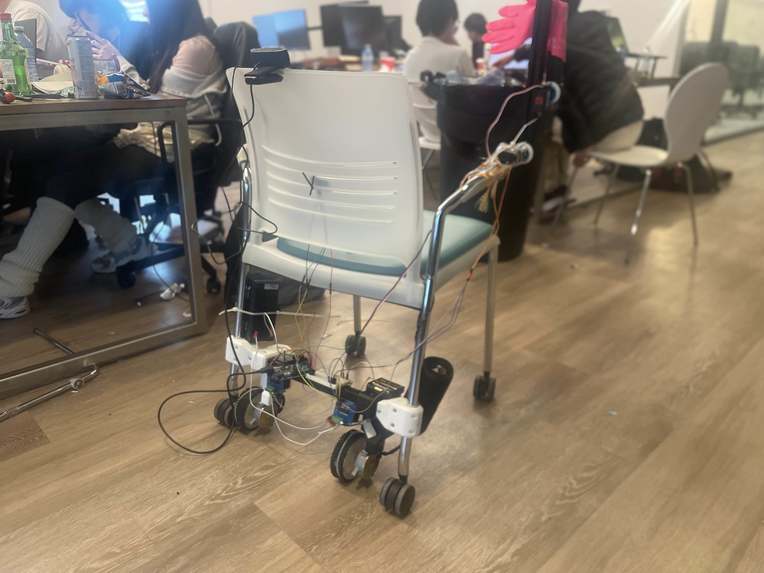
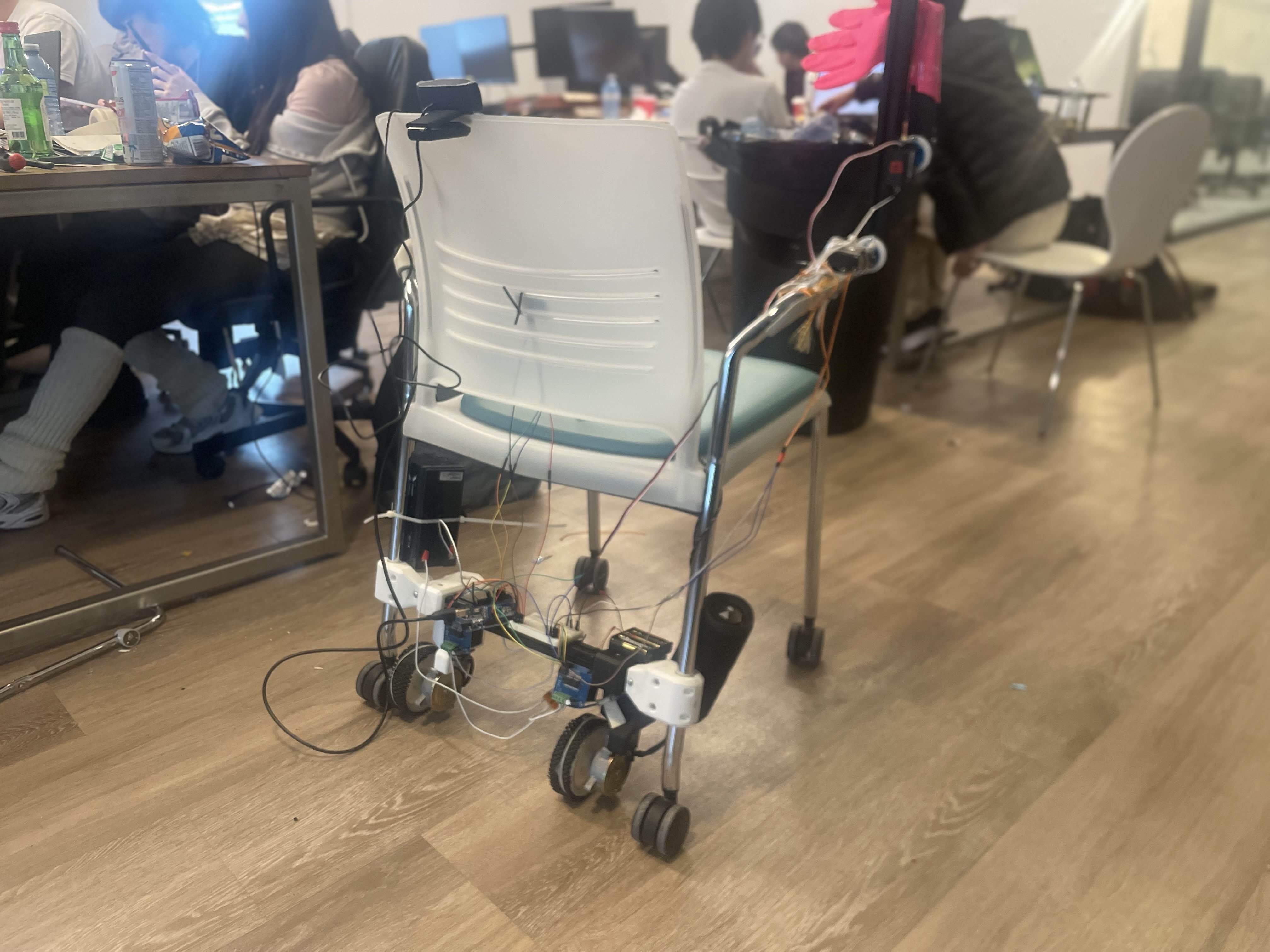
Goon Chair
Inspiration
Our team wanted to explore how robotics and computer vision can be used to automate delicate clinical or laboratory procedures where precision, safety, and privacy are essential. We were inspired by the potential to reduce human involvement in repetitive or discomfort-inducing tasks while maintaining accuracy, reliability, and user comfort.
What We Learned
Throughout the project, we learned how to:
- Use OpenCV for real-time human tracking and object recognition.
- Interface Arduino microcontrollers with motor drivers and ultrasonic distance sensors for coordinated movement.
- Design a mechanical actuation system for repeatable, controlled motion.
- Implement feedback loops for adaptive and safe robotic behavior.
- Consider ethics, safety, and privacy in human-interactive robotics.
How We Built It
Hardware Setup
Connected an Arduino to two 12V DC motors via a motor driver.
Added an ultrasonic sensor to detect proximity and user presence.
Software & Communication
Used Python with OpenCV to implement a real-time person-following and object-detection system.
Sent commands from Python to Arduino via serial communication, synchronizing movement and feedback.
Control & Actuation
Programmed logic for speed adjustment, direction control, and presence detection.
Designed mechanical components to perform automated actions based on sensor input.
Challenges We Faced
Maintaining stable OpenCV tracking under variable lighting conditions.
Synchronizing real-time vision processing with hardware actuation.
Balancing torque and power constraints to prevent stalling or overheating.
Ensuring electrical and mechanical safety during continuous operation.
Key Takeaway
This project combined software, hardware, and design thinking to demonstrate how robotics can improve precision, automation, and safety in assistive and clinical environments.


Log in or sign up for Devpost to join the conversation.