Inspiration
People always have small tasks they need a hand with, and plenty of people want to earn money doing them. Odd-job apps already prove the model works, but they are built for adults and stop there. The gap we kept noticing is that they either lock teens out completely or, on sketchier sites, let them in with no thought at all. We wanted a neighborhood marketplace that is simply open to everyone, and that handles the one case those apps duck: a younger worker who still wants to earn, done in a way a parent would be fine with.
What it does
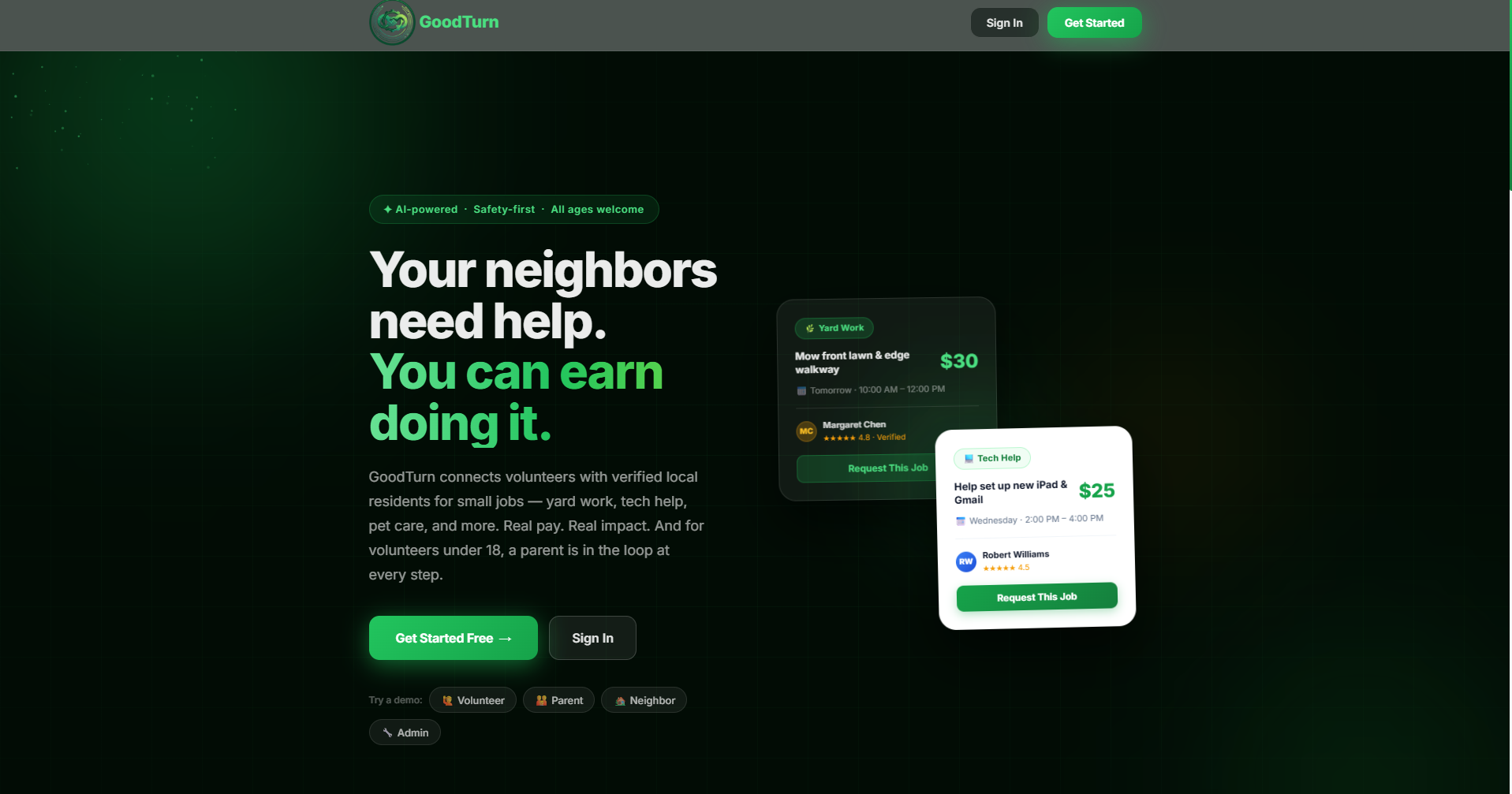
GoodTurn is a neighborhood task marketplace. Anyone can post a small job with a price, such as yard work, tech help, tutoring, pet care, or a grocery run, and anyone can accept it, do it, get paid, and rate each other. For most people it works like a simple, local version of the gig apps they already know, with private messaging and quick payment.
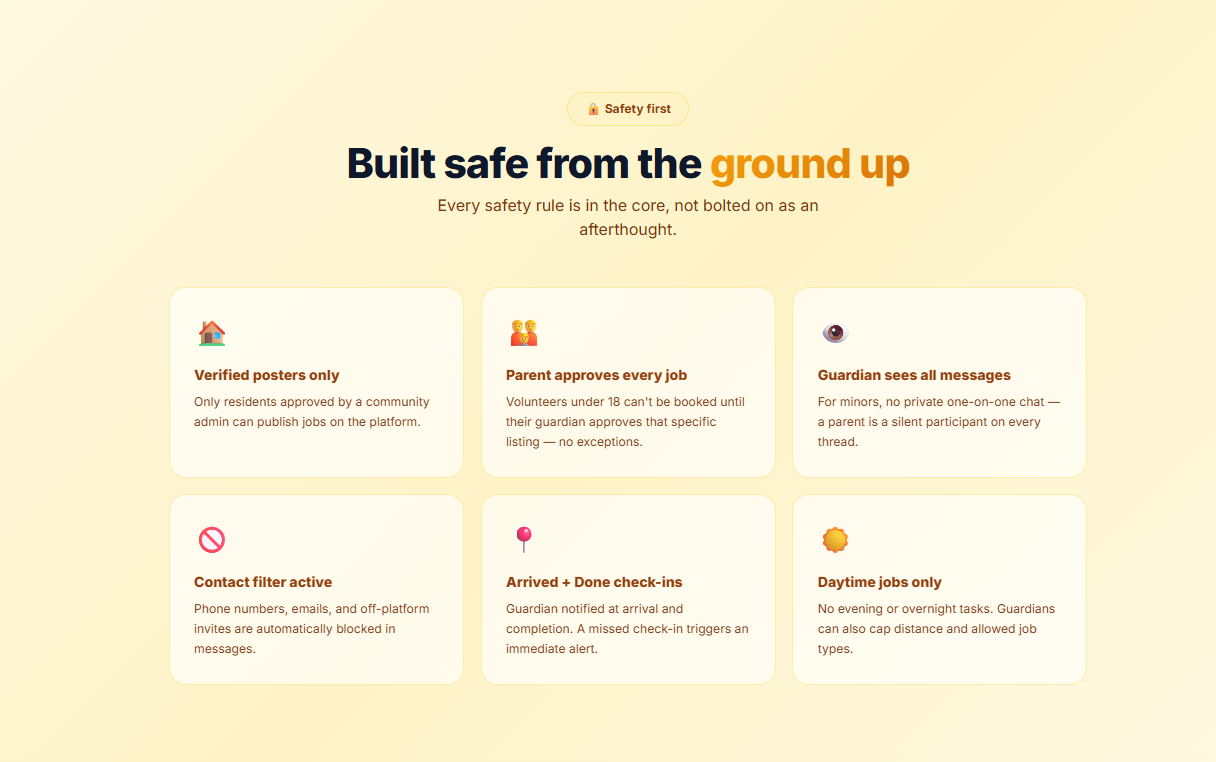
The part that sets it apart is how it handles workers aged 13 to 17. When a minor takes a job, a light protection layer turns on: the minor is linked to a guardian who approves the job, the message thread with the adult is visible to that guardian instead of being private, and the minor checks in when they arrive and when they finish, with an alert to the guardian if they do not. Adults using the app with other adults get a normal, private experience with none of that. The protections are aimed only at the people who need them and stay out of the way for everyone else.
How we built it
We built GoodTurn as a mobile-friendly web app with one shared marketplace and a few user roles: adult users who post and work freely, minor workers aged 13 to 17, guardians, and an admin. The same job board, messaging, and escrow payment flow serve everyone. Each account carries an age band, and the minor protections are written as conditional logic that only fires when a minor is the worker on a job.
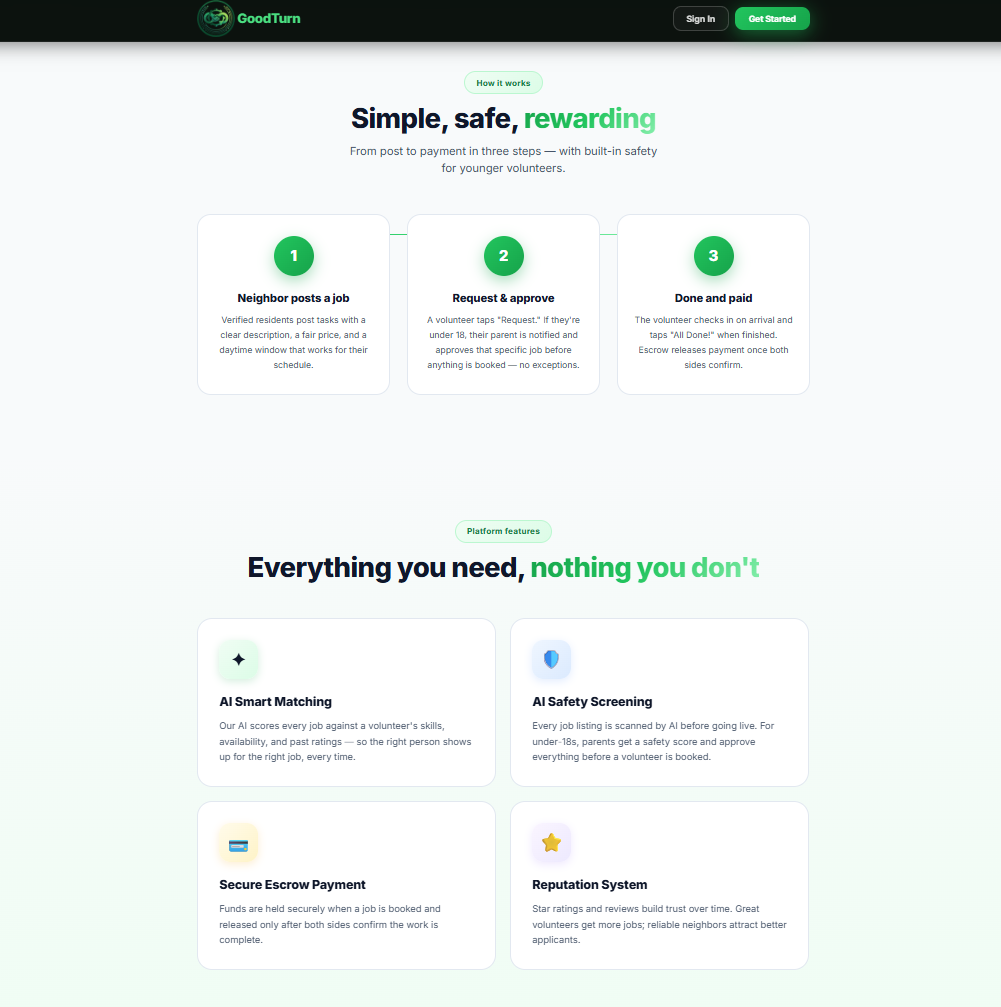
For the open marketplace we built the full loop: post a job, request it, accept a worker, message, fund and release a mock escrow payment, and rate. We then layered the minor case on top: the guardian link and approval, the guardian-visible thread when a minor and an adult talk, and the arrived and done check-ins with an alert on a miss. Payments are simulated with a mock balance and a note that a real processor would come later, so we could show the whole flow without touching card data. We seeded the app with sample adults, a minor, a guardian, and several jobs so it can be demoed from a clean start.
Challenges we ran into
The interesting challenge was making one app serve two cases at once: a fast, open marketplace for adults, and a protected version for teen workers, without turning it into two clunky products. We solved it by treating the minor protections as a layer that switches on by age, so the core experience stays simple and the extra steps only appear when a teen is involved. Tuning the check-in was also fiddly, since a missed check-in should raise a real alert without nagging guardians over small delays, so we tied the timer to the job's time window.
Accomplishments that we're proud of
We built a marketplace that is genuinely open to all ages, where teens can take part without the whole app feeling locked down and without leaving them exposed. The conditional protection layer is the piece we are most proud of, because it solves a problem most of these apps just avoid. The full loop works end to end for both an adult worker and a teen worker, and the app stays simple enough for someone new to tech to use.
What we learned
We learned that you can include younger users without either shutting them out or putting them at risk, as long as the protections are scoped to exactly when they are needed. The trick was to build the general case well first, then add the special case as a thin layer rather than a separate app. We also learned to keep the smallest reliable safeguards, the guardian approval and the check-in, and not pile on more than the situation calls for.
What's next for GoodTurn
The next step is replacing the placeholders with the real thing, which means proper verification and real payments through a payment processor. From there we want to partner with schools and senior centers to bring in trusted posters and workers, add optional location sharing with the guardian during a job, and open up more task types as the community grows. Further out, we would let older teens post certain low-risk jobs themselves instead of only working them.

Log in or sign up for Devpost to join the conversation.