-
-
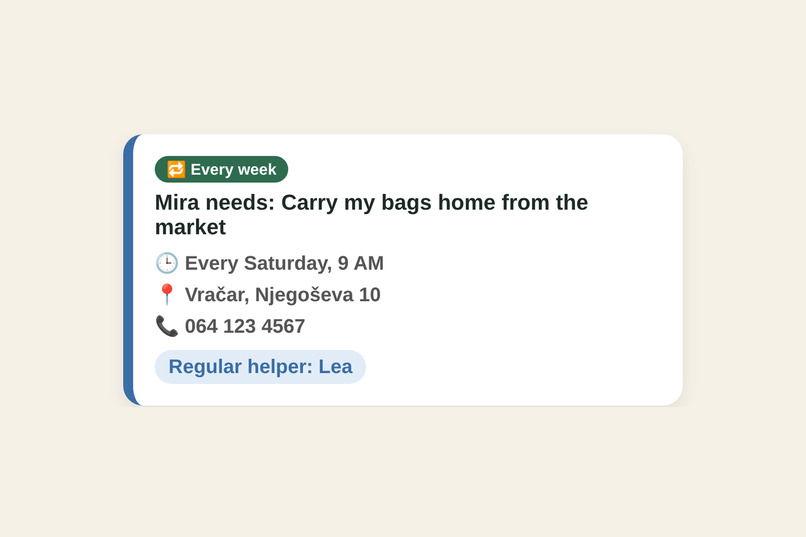
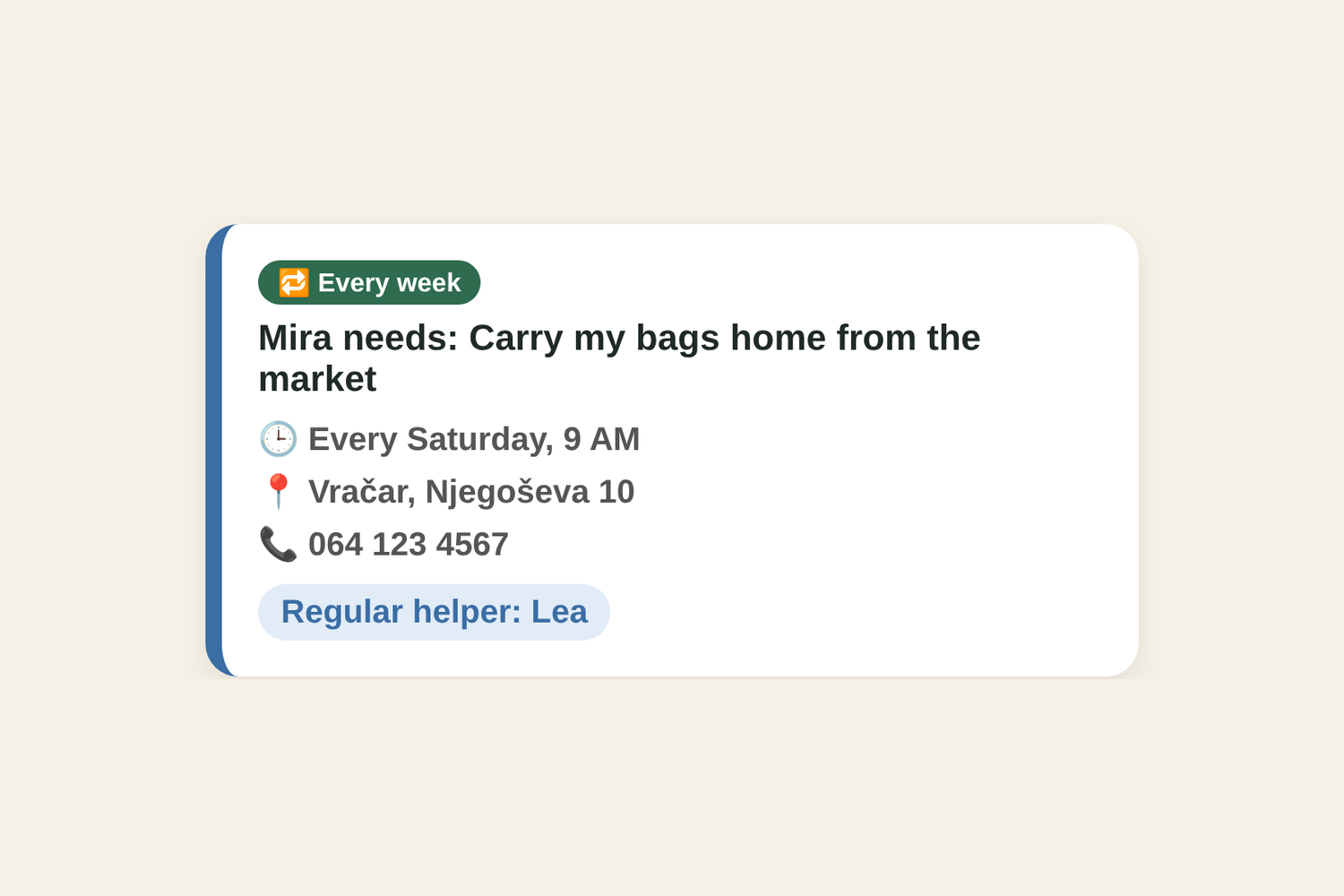
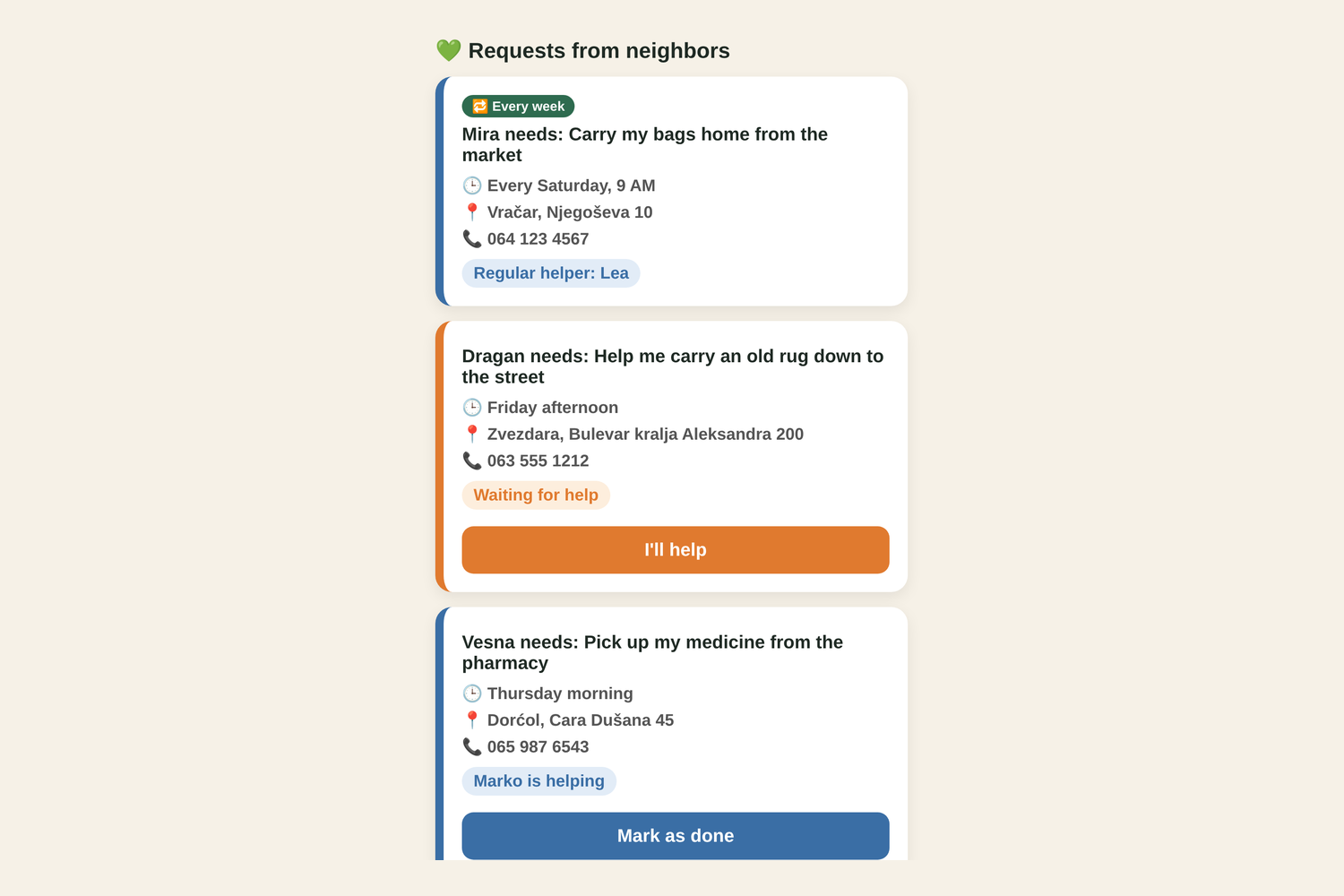
Weekly requests connect the same neighbor every week: a regular, trusted helper.
-
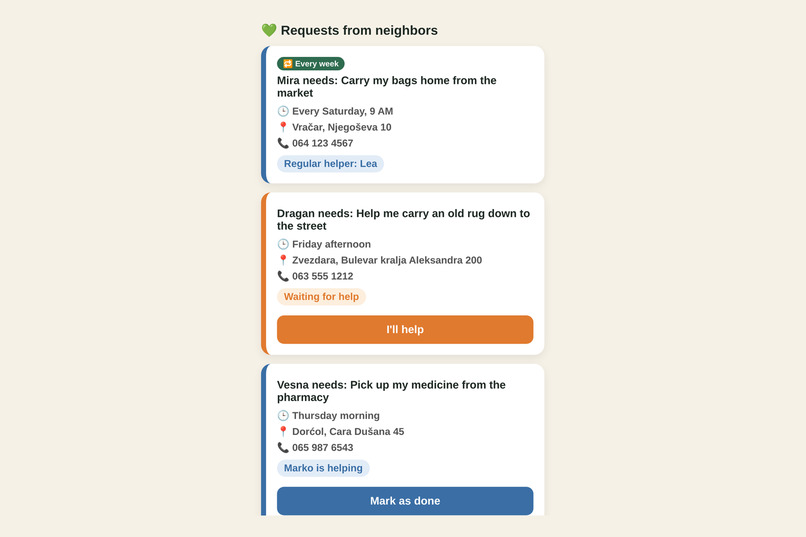
Neighbors see open requests and offer help with one tap, and the list updates live on every phone.
-
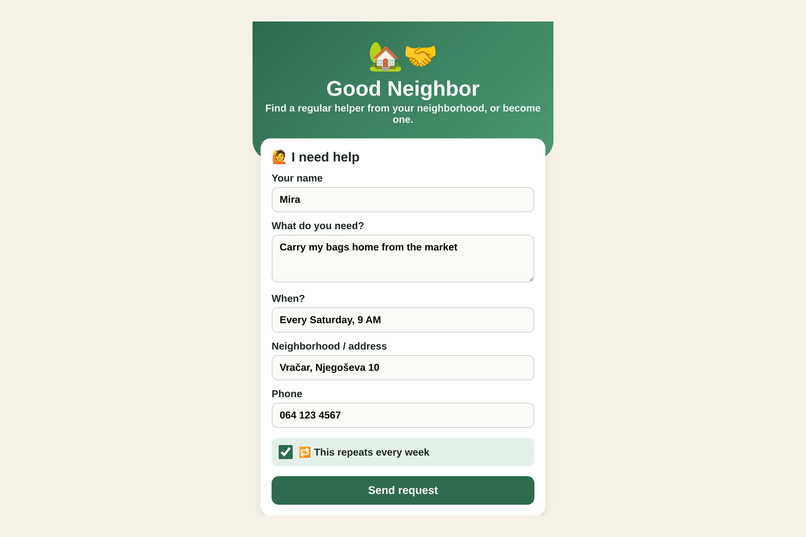
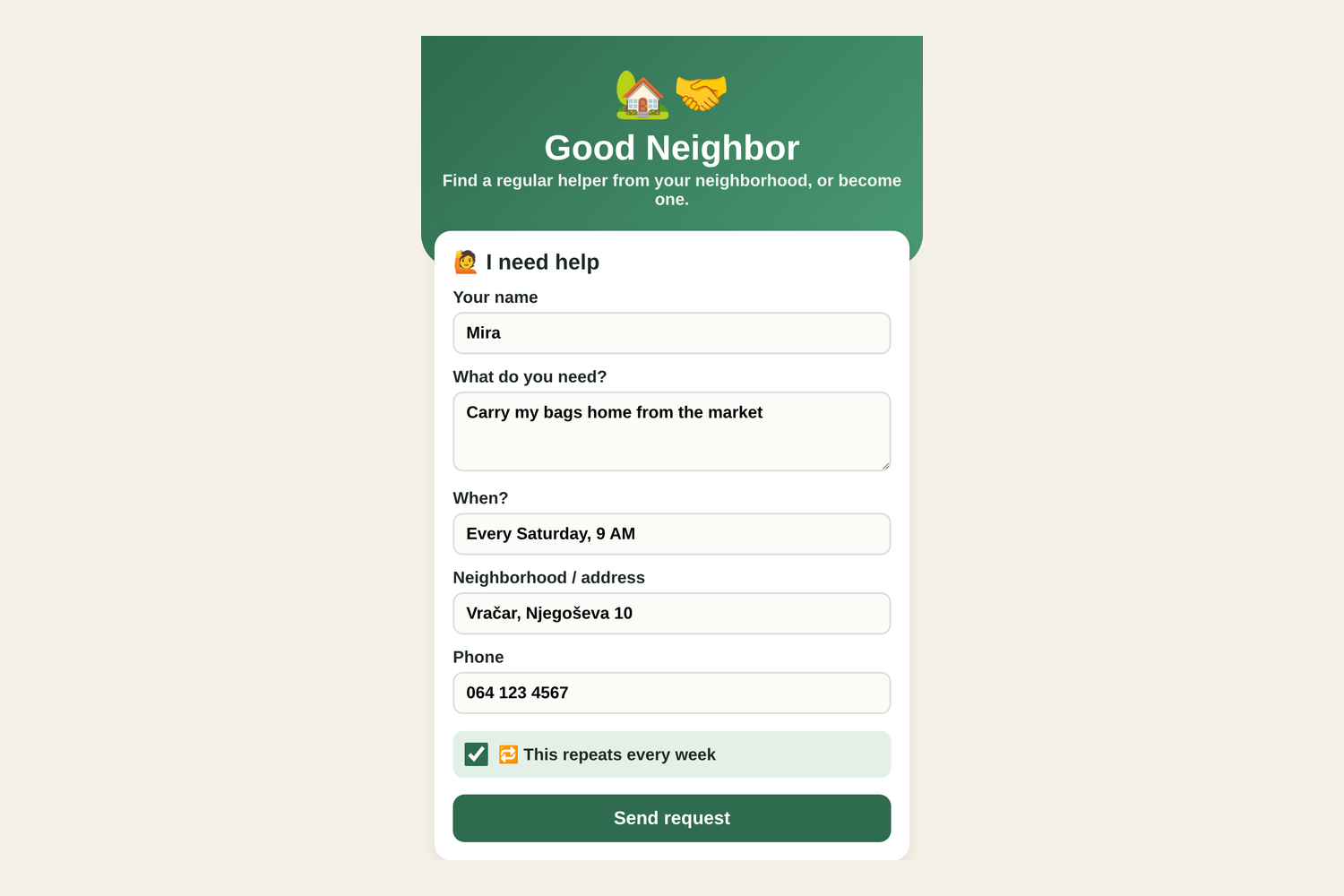
Ask for help in one simple form: large teext, big buttons, no acount needed
Inspiration
In our neighborhood we often see elderly women carrying heavy bags home from the market, alone. Many older people live by themselves, their children have moved to other cities, and they have no one to ask for small, everyday help. At the same time, young people living a few doors away would gladly help, but they don't know who needs it, and knocking on a stranger's door feels awkward. For many older people, asking for help is just as hard. We wanted to build a simple bridge between the two.
What it does
Anyone can post a small request: buying groceries, carrying something heavy, a short visit for company. Neighbors see open requests, tap "I'll help" and leave their name. Requests update live on every phone.
The key feature is weekly requests. Most help older people need is planned, not urgent ("I go to the market every Saturday"). With a weekly request, the same neighbor becomes their regular helper: no waiting, a familiar and trusted face, and a real connection instead of a one-time favor.
The design uses large, bold text and big buttons. Since many elderly people don't use technology much, a grandchild or neighbor can also post a request on their behalf. It also helps anyone who temporarily needs a hand: someone who is sick, a person with a disability, or a parent with a newborn.
How we built it
HTML, CSS and JavaScript for the app, Firebase Firestore as the online database so requests are shared between devices in real time, and GitHub Pages for hosting.
Challenges we ran into
Our biggest challenge wasn't technical. It was the question: would people actually use this? We realized that if someone needs groceries right now, waiting for a stranger to see the request and come over is simply too slow. So we changed our approach. Instead of focusing on urgent, one-time favors, we added scheduled requests and the regular helper option, which fit the planned, everyday help older people really need and make the app far more realistic.
The second challenge was that many older people struggle with technology. That's why there are no accounts or passwords, only one short form, and every step uses large text and big, simple buttons. A family member or neighbor can also post a request for them.
Accomplishments that we're proud of
This is our first hackathon and our first real app, and we're proud that it isn't just a coding exercise: it's something that can genuinely help people in our own neighborhood. We went from an idea to a working app that updates live across devices in one week, and we're proud that we kept questioning our idea until it became something people could actually use. If Good Neighbor helps even one older person get home from the market without struggling, it has made a difference.
What we learned
On the technical side, we learned how a web app works with an online database, especially Firebase, and how data can update in real time on different devices. But the most valuable lesson was a different one: you don't need to be an expert or build something huge to make a change. With a bit of effort, empathy, and willingness to listen to real problems around us, even two beginners can build something that makes their community a little kinder.
What's next
Filtering requests by neighborhood, a phone line for people without smartphones, and partnering with local community centers and the Red Cross to reach older people directly.

Log in or sign up for Devpost to join the conversation.