-
-
Introduction - Slide Deck - (1/10)
-
Problem Statement - Slide Deck - (2/10)
-
Target Users - Slide Deck - (3/10)
-
User Research - Slide Deck - (4/10)
-
Solution Overview - Slide Deck - (5/10)
-
Key Features - Slide Deck - (6/10)
-
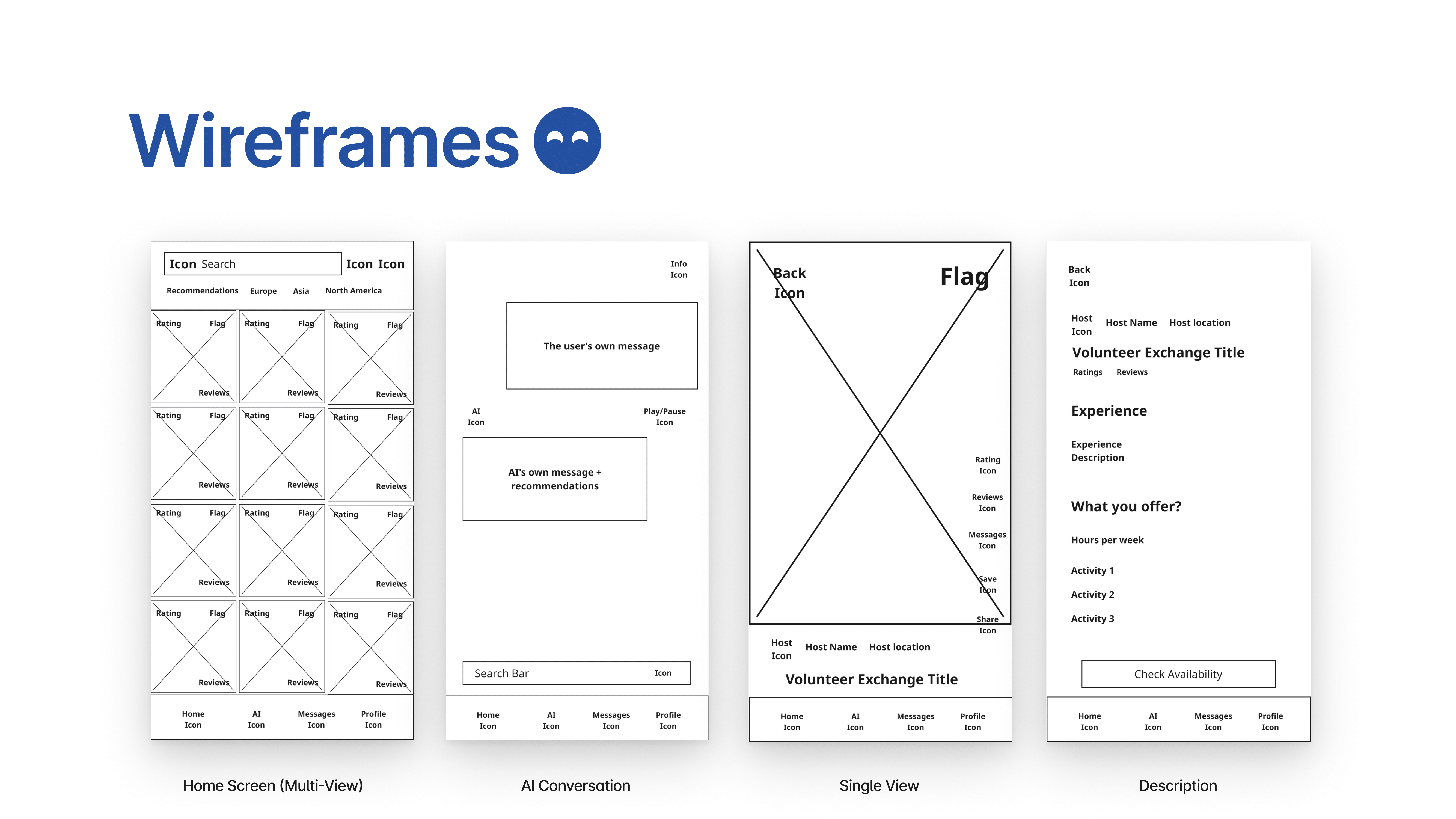
Wireframes - Slide Deck - (7/10)
-
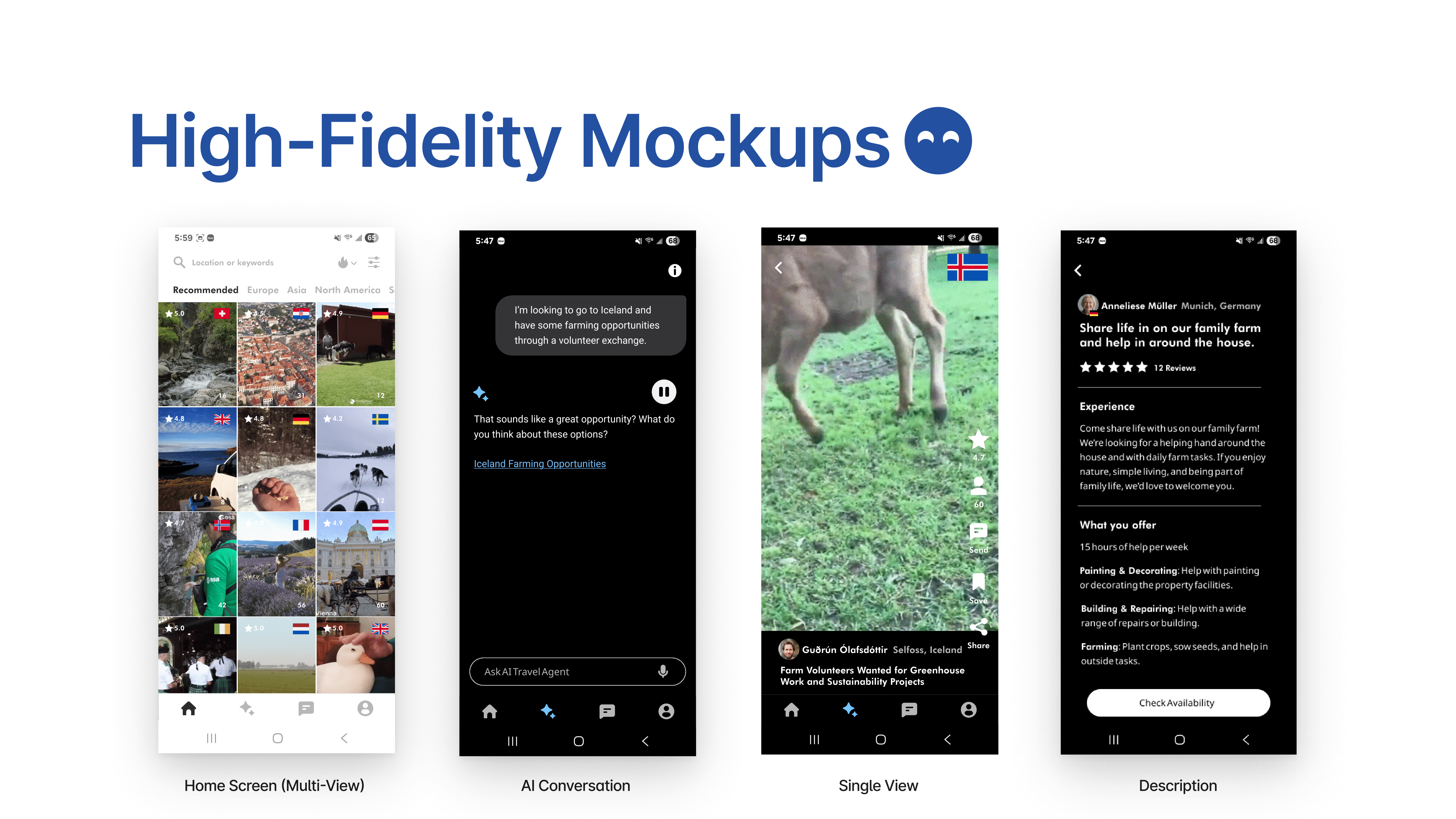
High-Fidelity Mockups - Slide Deck - (8/10)
-
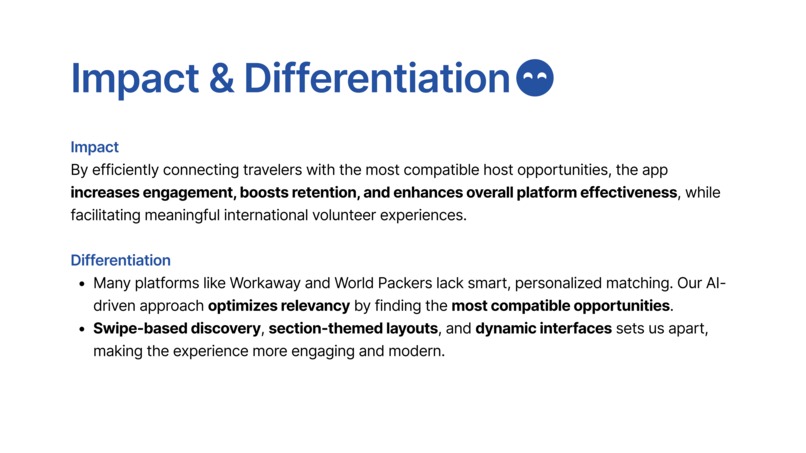
Impact & Differentiation - Slide Deck - (9/10)
-
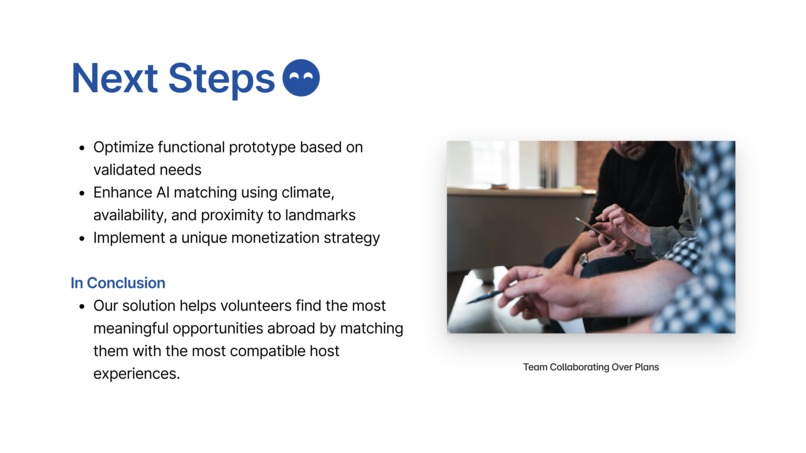
Next Steps - Slide Deck - (10/10)
-
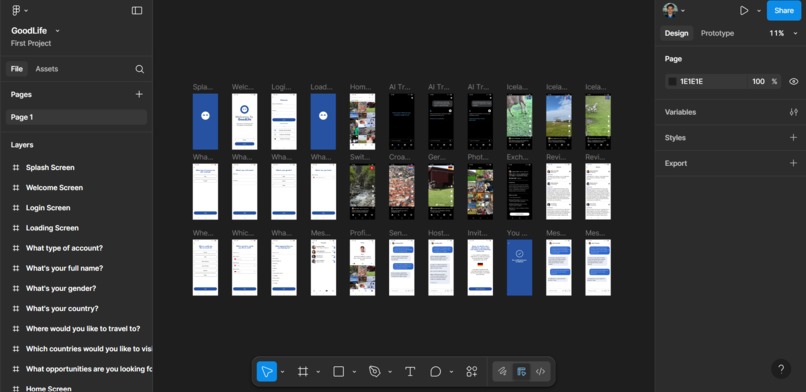
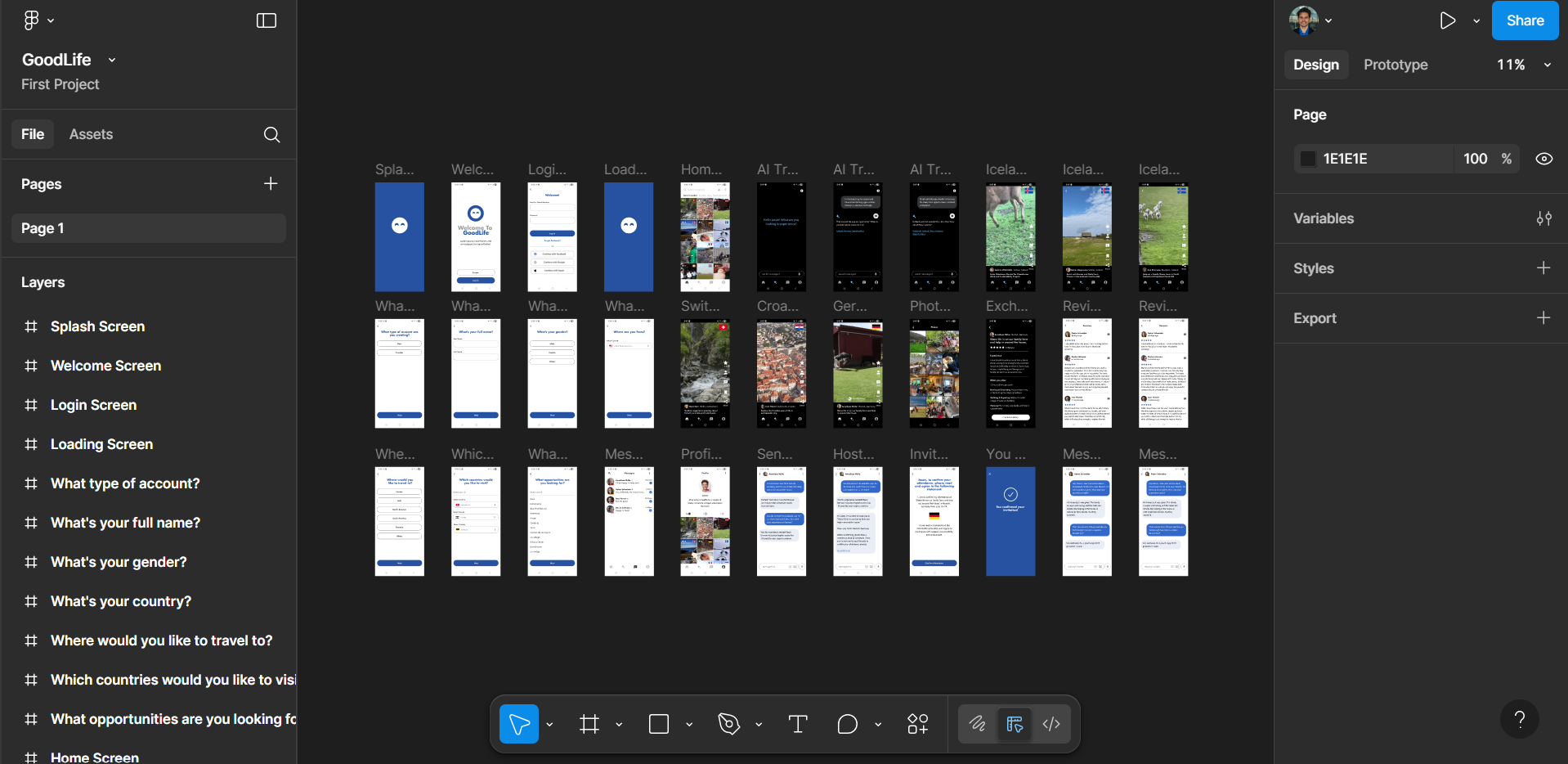
High Fidelity Mockups on Figma
-
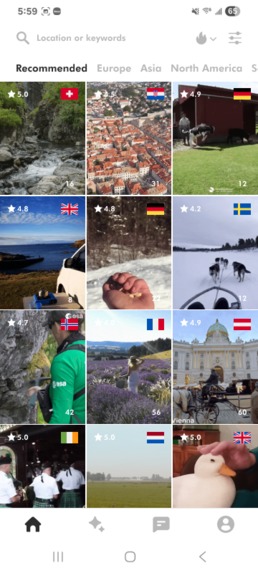
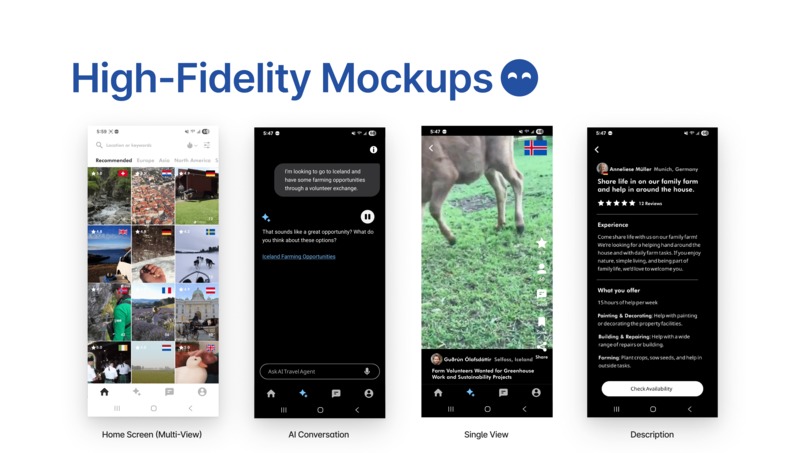
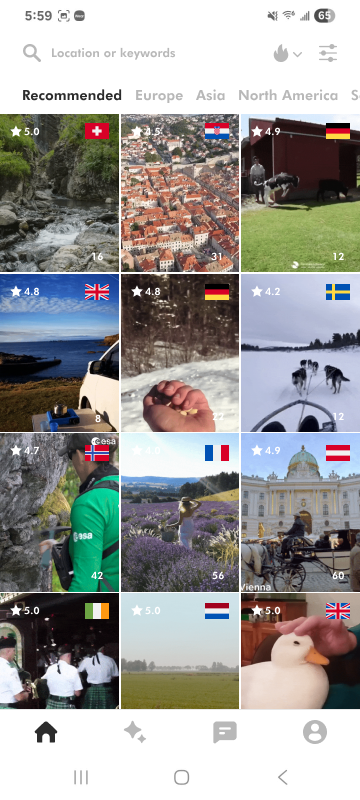
Home Screen (Multi-Grid) - Design Prototype - Figma
-
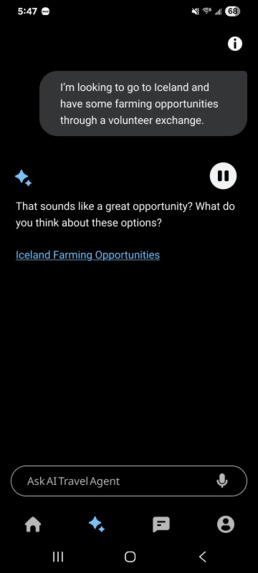
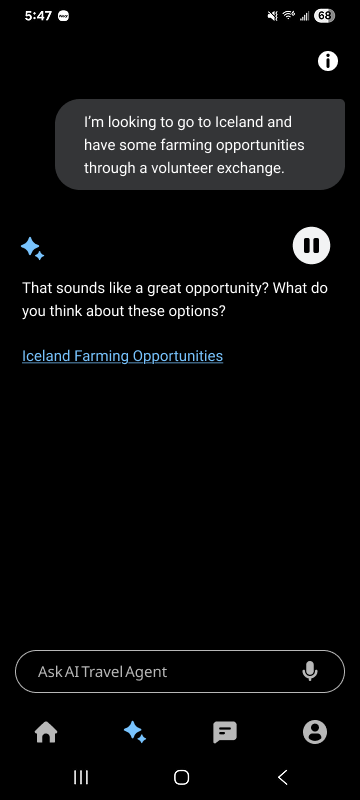
AI Travel Agent interaction Example - Design Prototype - Figma
-
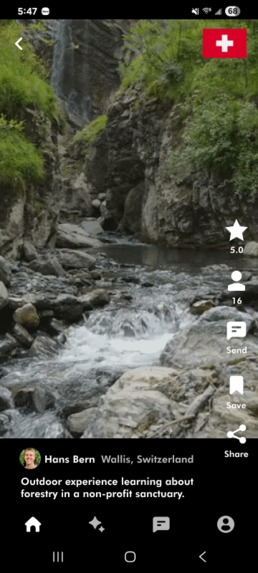
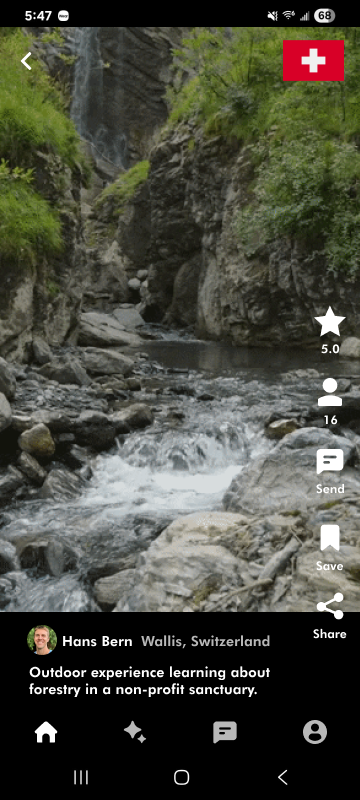
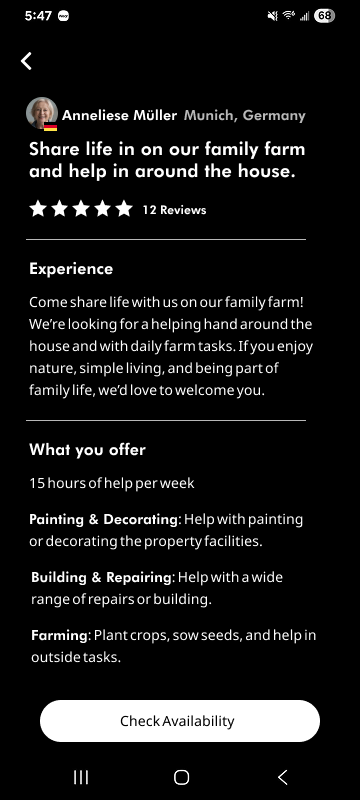
Single View Post Screen - Design Prototype - Figma
-
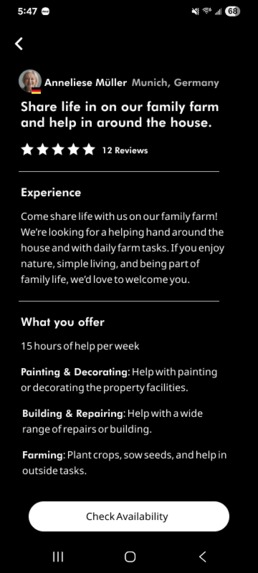
Description - Design Prototype - Figma
-
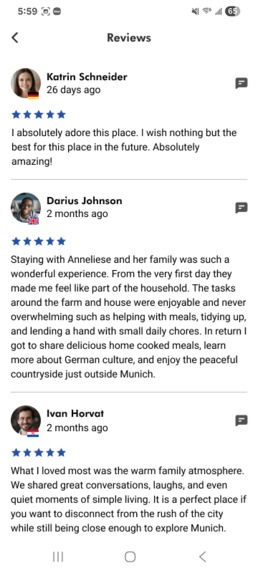
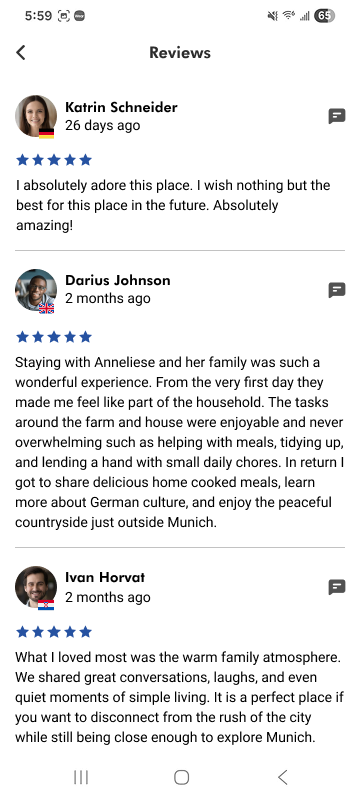
Reviews - Design Prototype - Figma
-
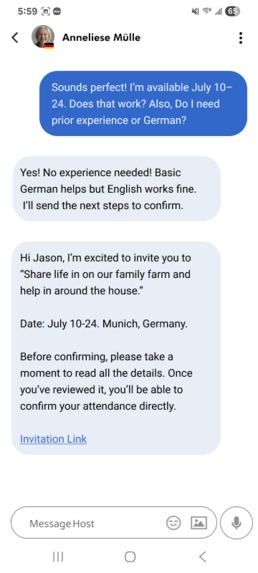
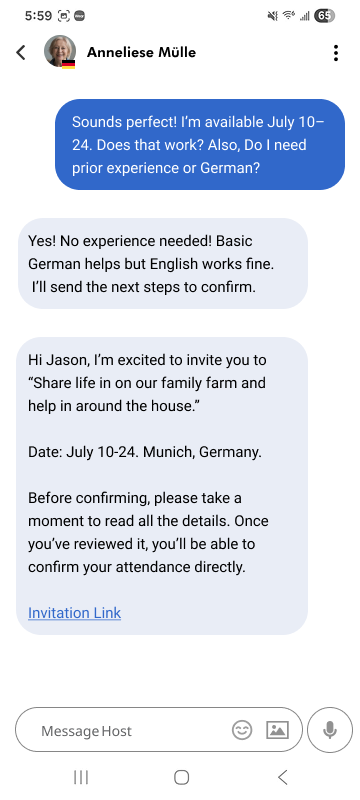
Messaging Host - Design Prototype - Figma
-
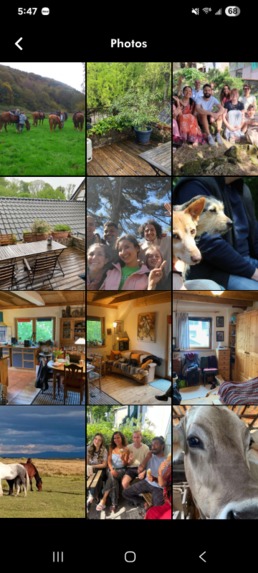
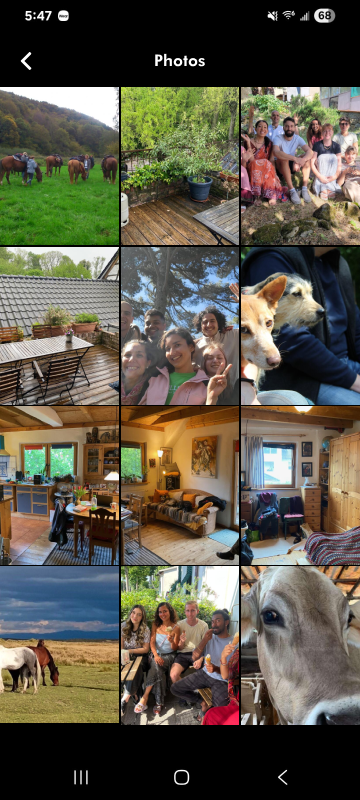
Photos - Design Prototype - Figma
Inspiration
Regardless of what we could do, one thing was certain: we wanted to create something meaningful that made us happy. With our love for both making a positive impact in our community and traveling, we sought to combine these passions. This led us to build GoodLife, a name that reflects our philosophy—a mobile app that allows users to explore new places, make friends, and spread good around the world.
What it does
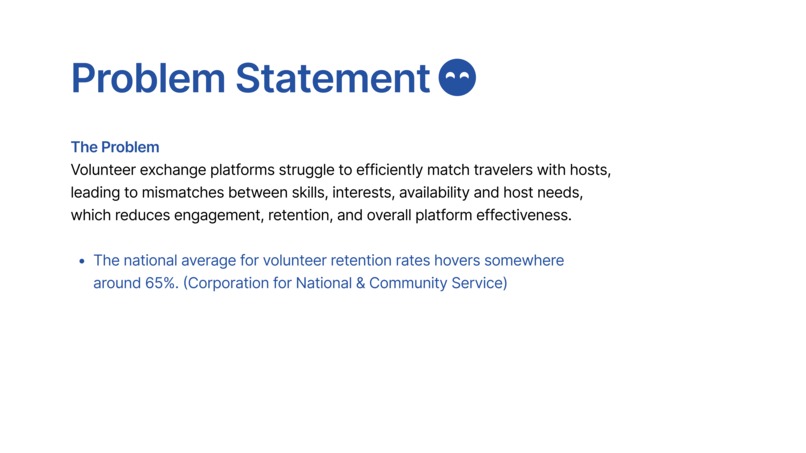
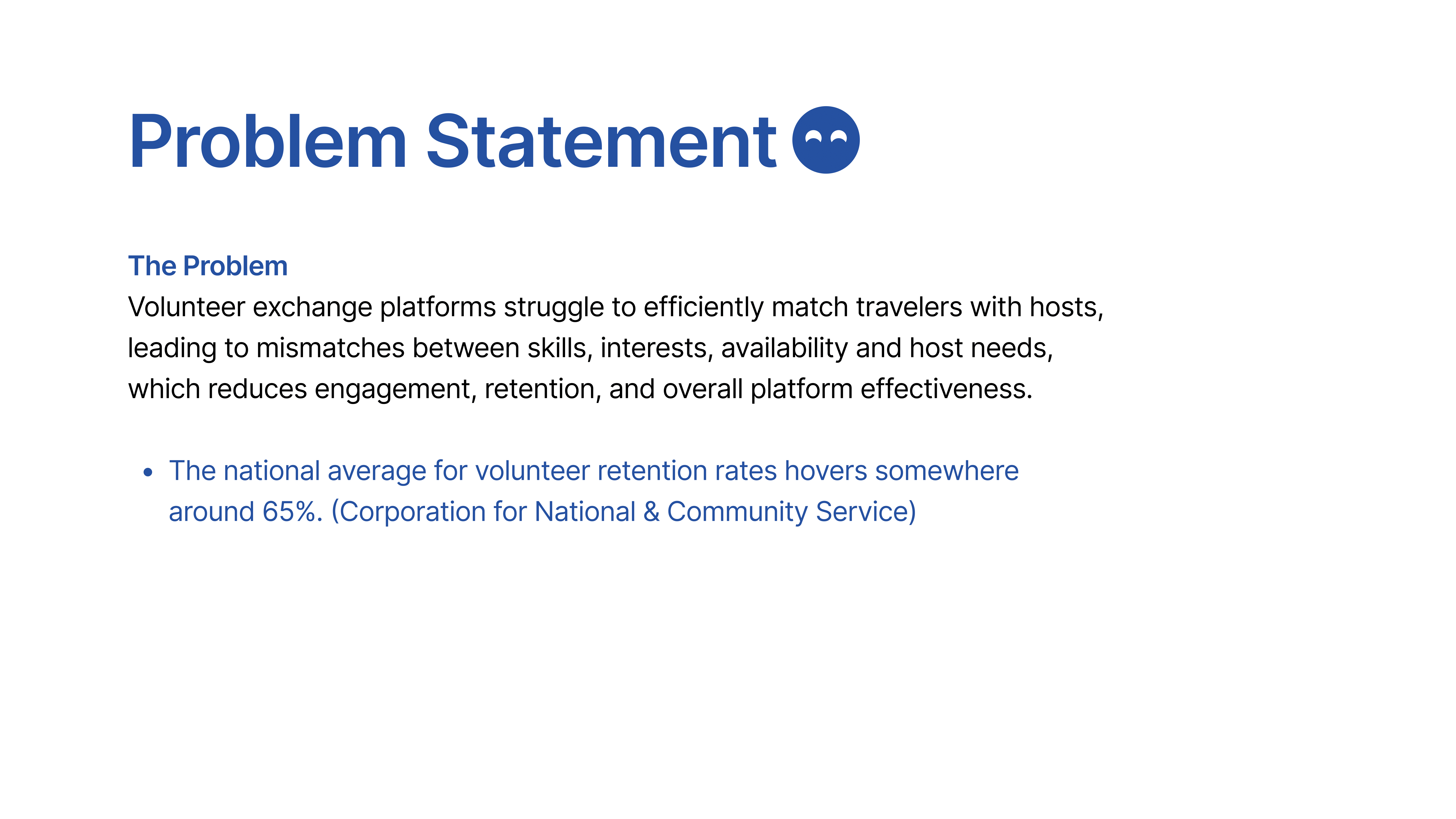
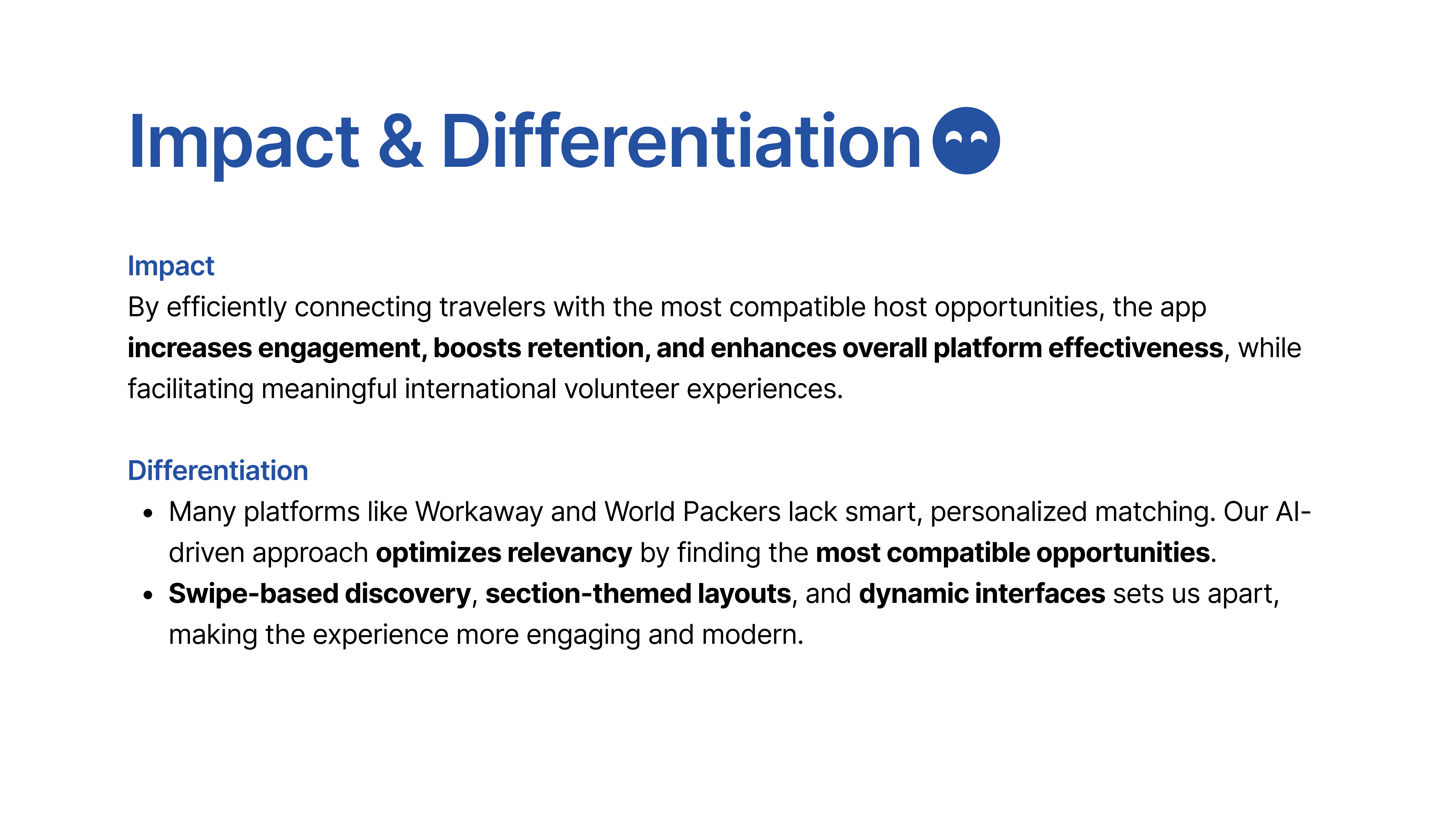
Problem Statement: Popular volunteer exchange platforms, like Workaway or Worldpackers, are outdated and struggle to efficiently match travelers with hosts, leading to mismatches between skills, interests, and availability, which reduces engagement, retention, and overall platform effectiveness.
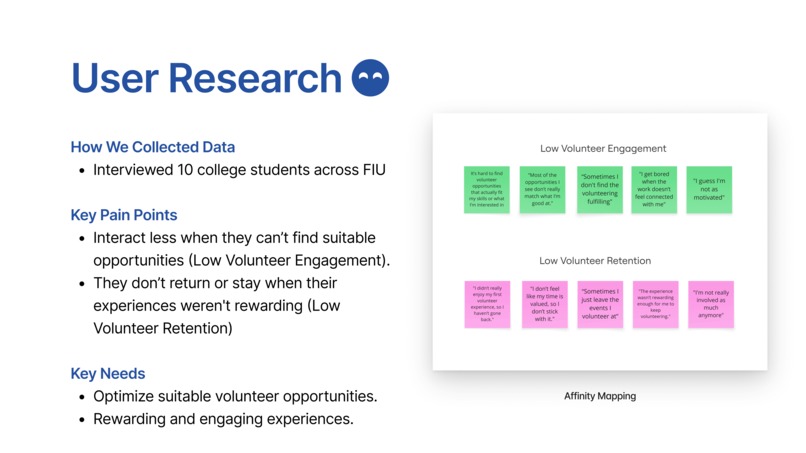
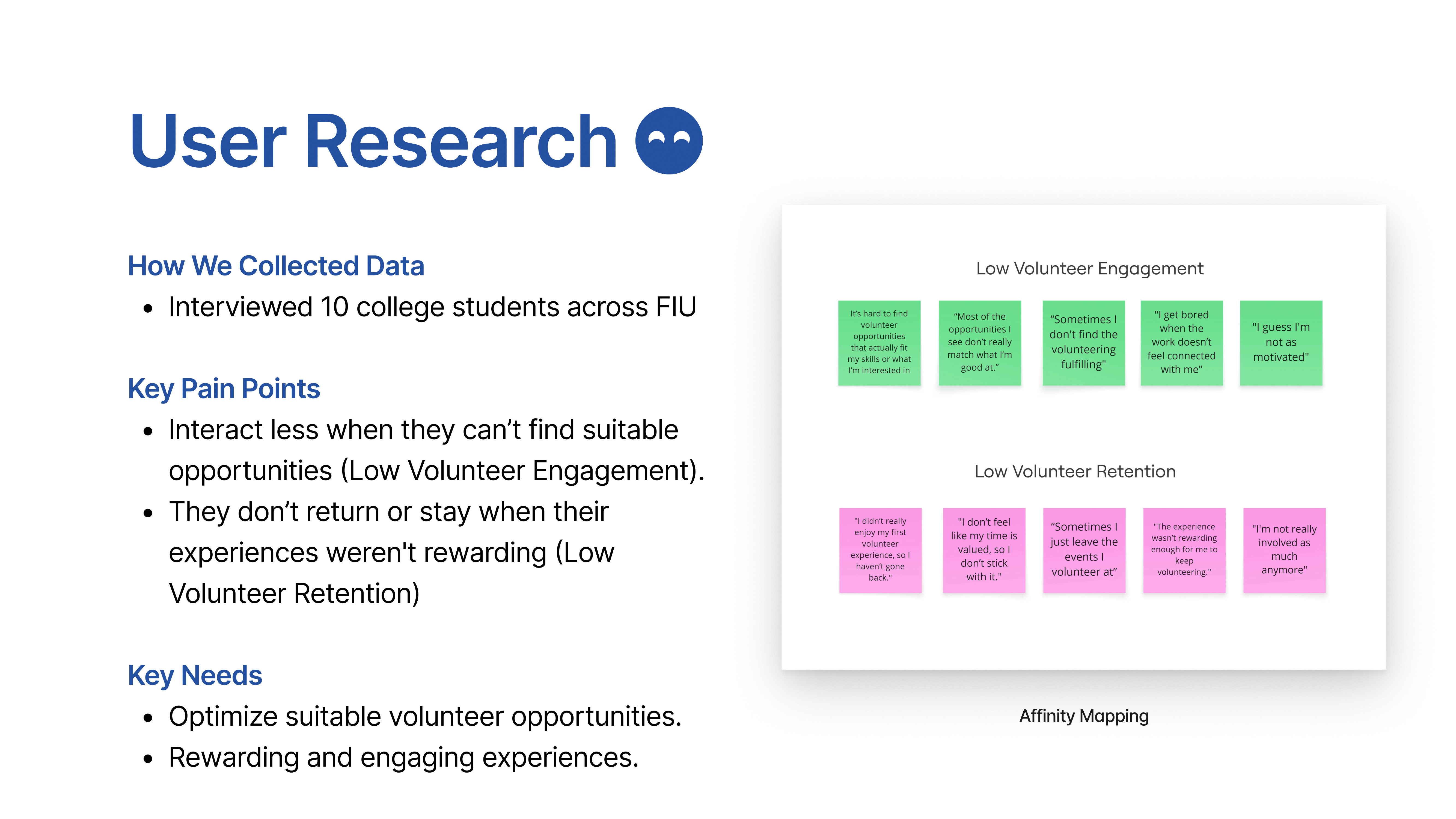
User research was conducted to validate the problem, and through Affinity Mapping, two consistent key pain points were identified:
- Volunteers interact less when they cannot find opportunities that match their skills or interests, leading to low volunteer engagement.
- Volunteers are less likely to return or stay when their experiences are not rewarding, resulting in low volunteer retention.
This is supported by data from the Corporation for National & Community Service, which specifies that the national average for volunteer retention rates hovers around 65%.
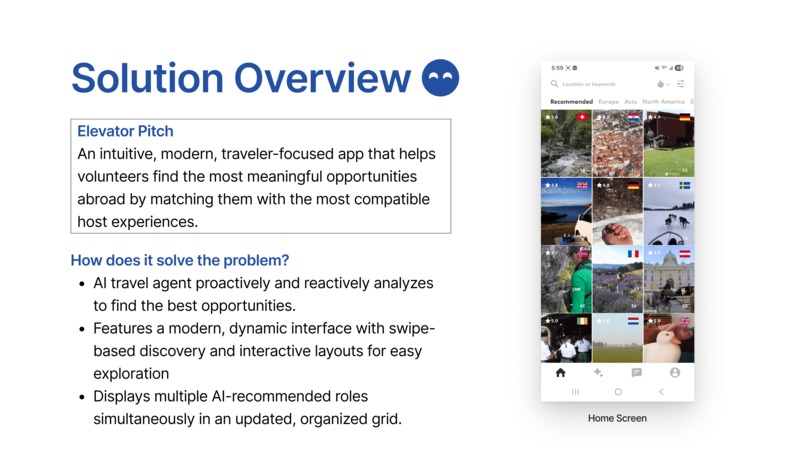
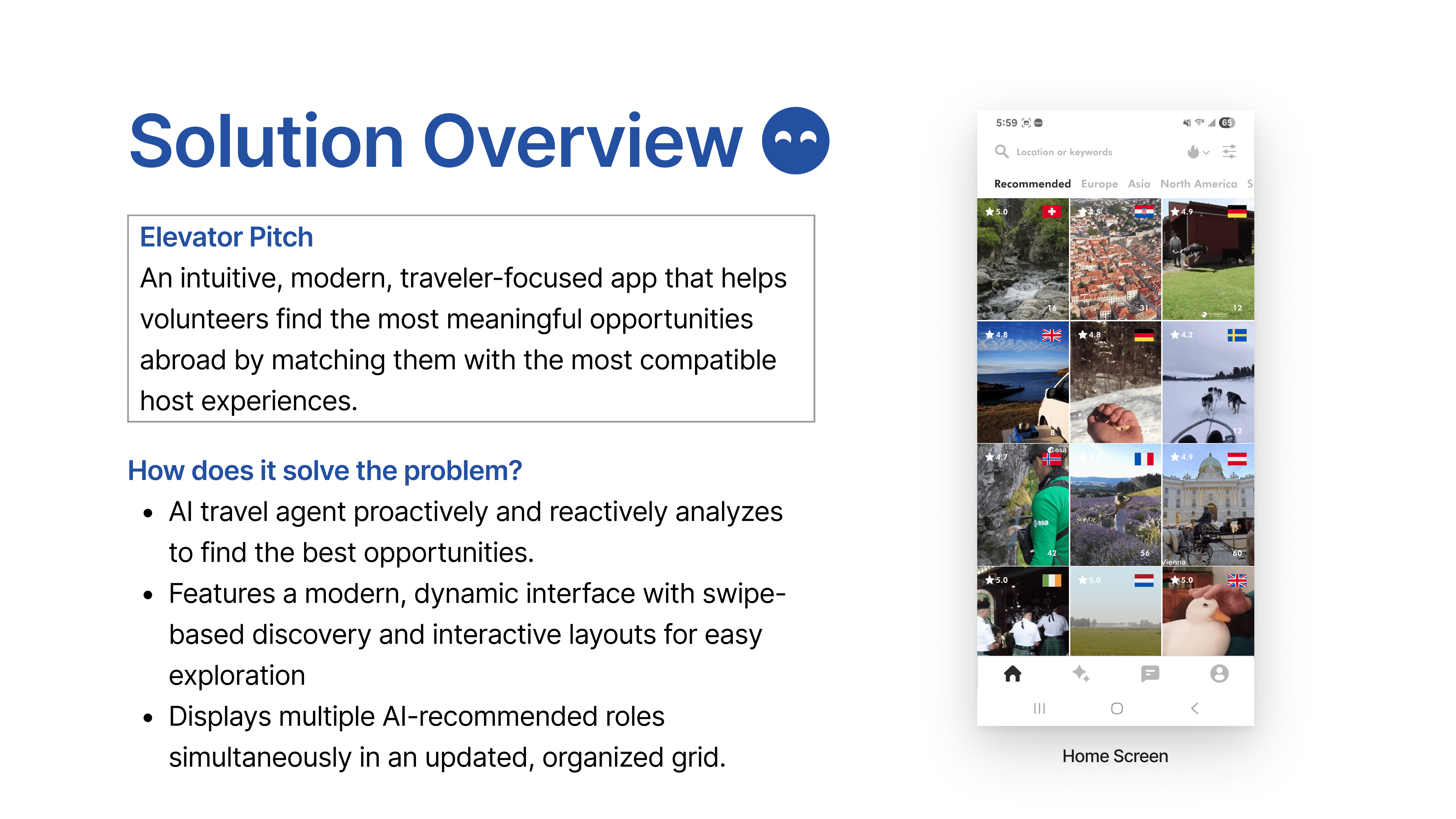
Elevator Pitch: GoodLife is an intuitive, modern, traveler-focused app that helps volunteers find the most meaningful opportunities abroad by matching them with the most compatible host experiences.
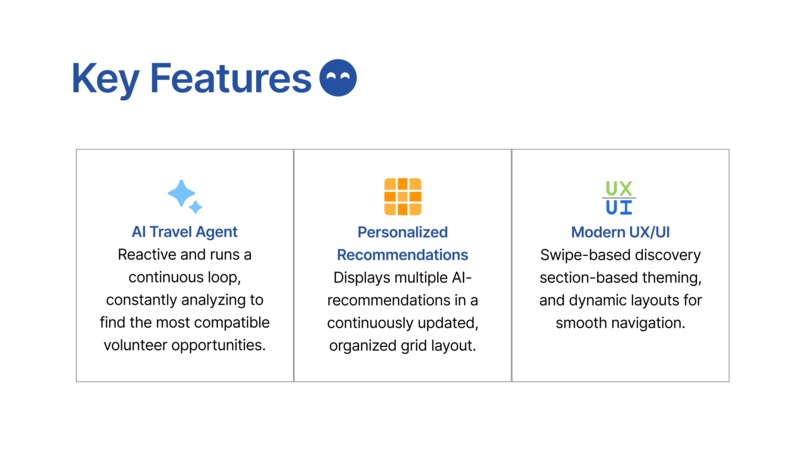
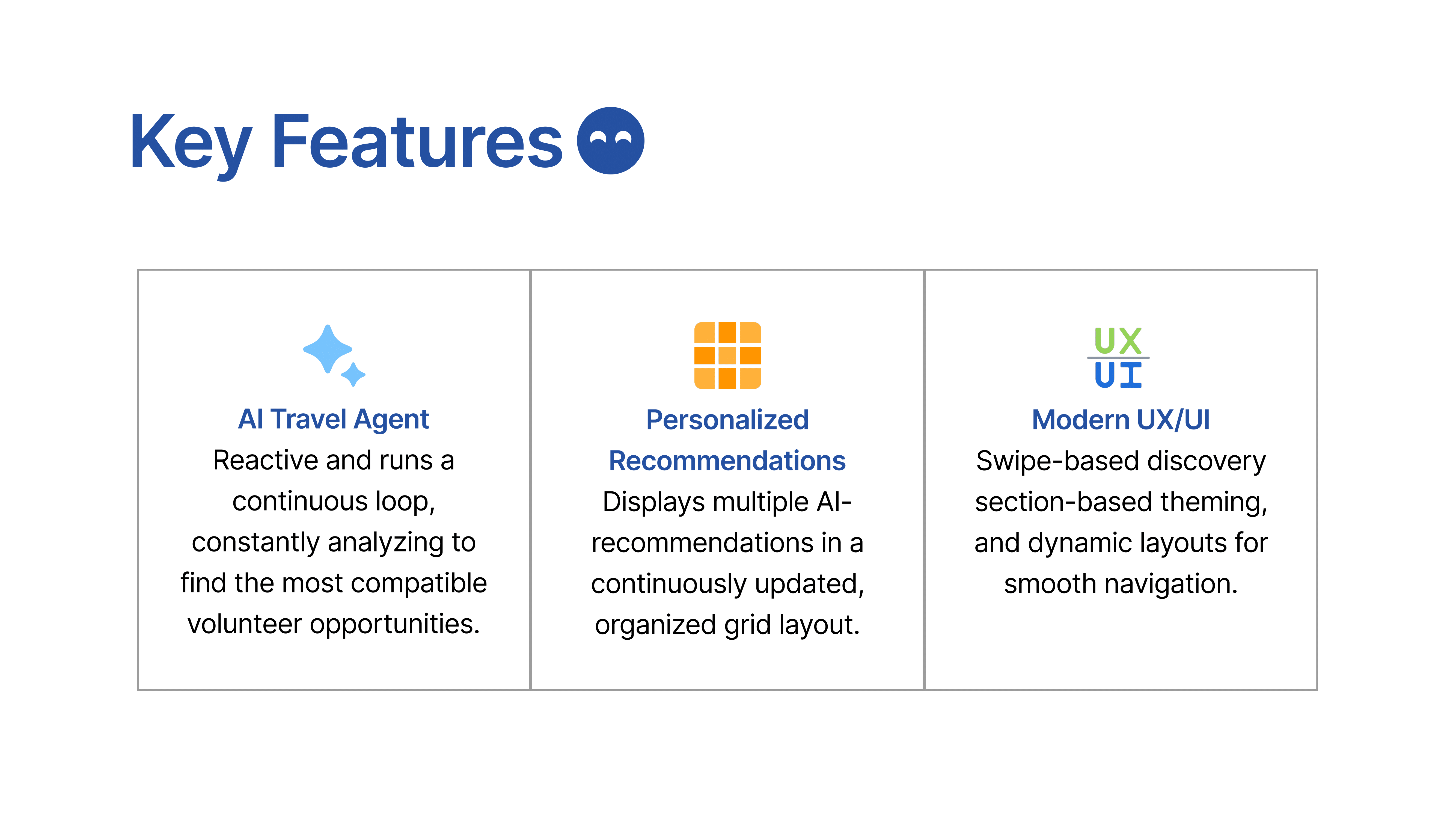
Solution: GoodLife solves the problem through three key features:
- AI Travel Agent – Runs a continuous loop, constantly analyzing to find the most compatible volunteer opportunities.
- Personalized Recommendations – Displays multiple AI recommendations in a continuously updated, organized grid layout.
- Modern UX/UI – Swipe-based discovery, section-based theming, and dynamic layouts for smooth navigation.
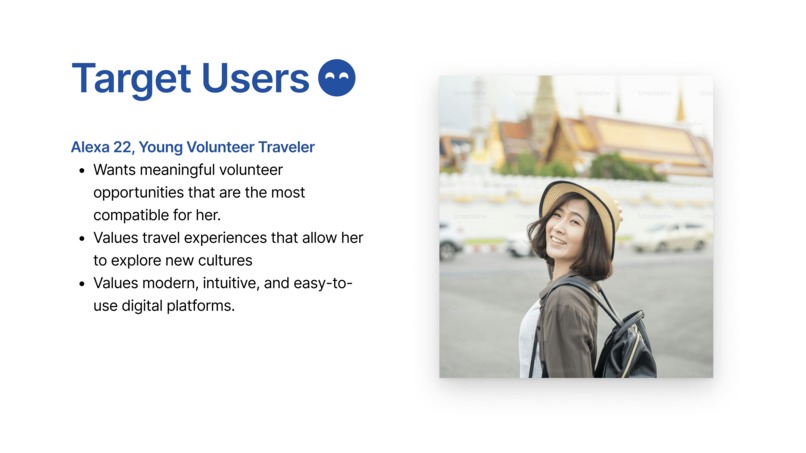
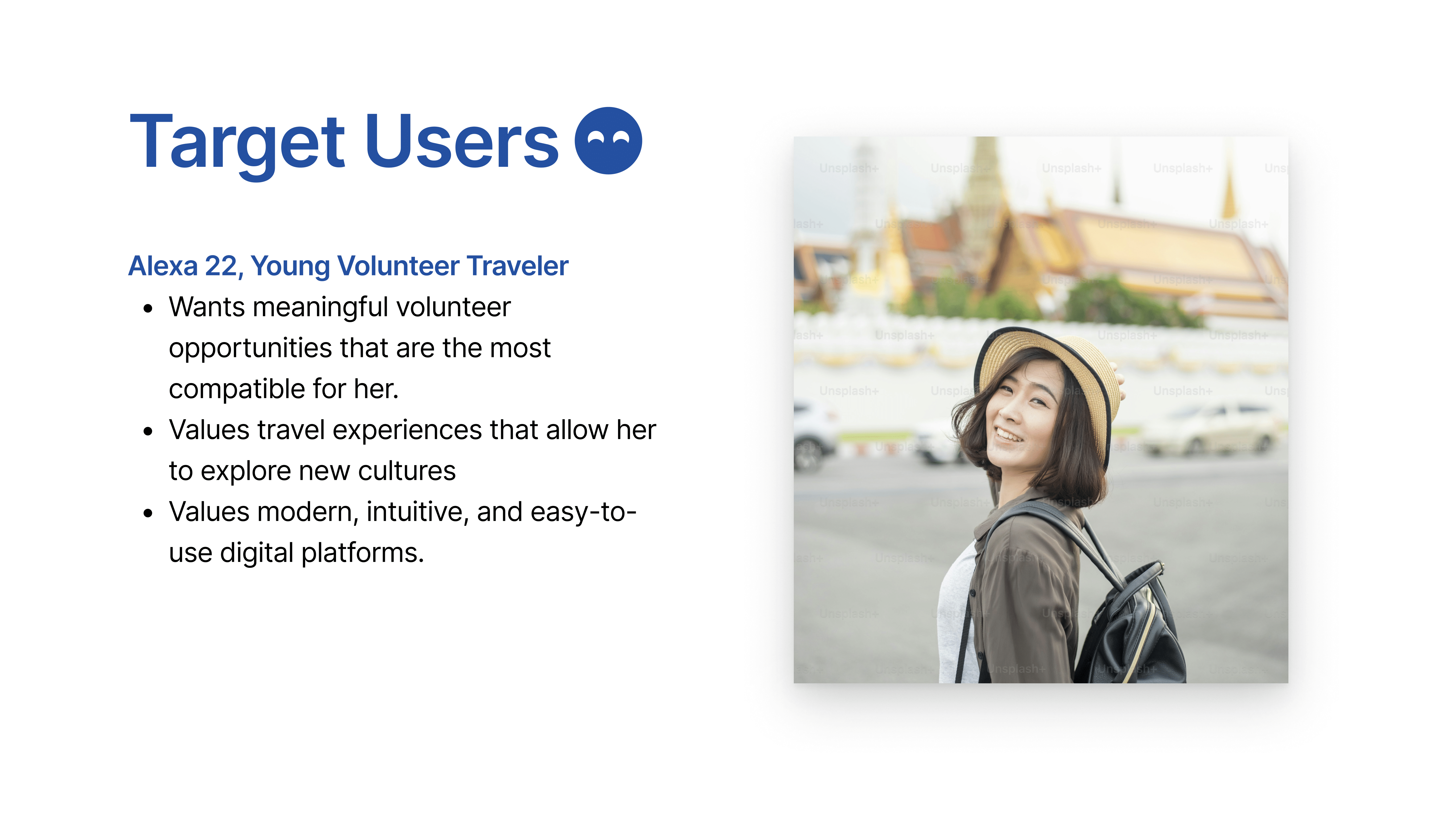
Primary beneficiaries: Young travelers who want to find the most compatible volunteer opportunities globally.
Secondary beneficiaries: Other types of travelers (families, professionals, retirees).
Hosts / Local communities: Gain better access to more compatible volunteers.
How we built it
We designed and built GoodLife with the following tools and technologies: Miro, Figma, JavaScript, Python, React Native, Google Gemini API, GitHub, and Discord/WhatsApp for communication.
Challenges we ran into
- Technical blockers: Bugs, unfamiliar technologies, deployment issues.
- Team challenges: Team members using different programming languages.
- Time constraints: Hackathon time crunch made full implementation difficult.
- Unexpected issues: Attempting to integrate Gemini AI with Supabase created a major blocker.
Accomplishments that we're proud of
- Setting up the Supabase database.
- Accessing the Gemini API for the AI agent.
- Completing the design prototype early.
- Separating responsibilities to optimize workflow.
What we learned
We learned that strong collaboration between software developers and UI/UX designers improves workflow efficiency. Our UI/UX designer and Product Manager:
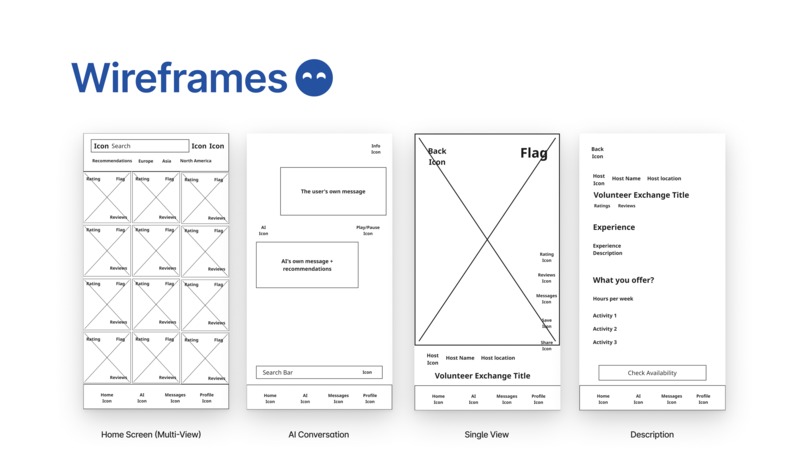
- Wireframed and created high-fidelity mockups
- Developed the design prototype
- Conducted user research and testing
- Prepared hackathon documentation, including answers to key questions, methodology, design decisions, and user insights
This division of work allowed the development team to focus fully on coding, reducing disorganization and optimizing workflow. These lessons will help us apply a more structured and efficient process in future projects.
What's next for GoodLife
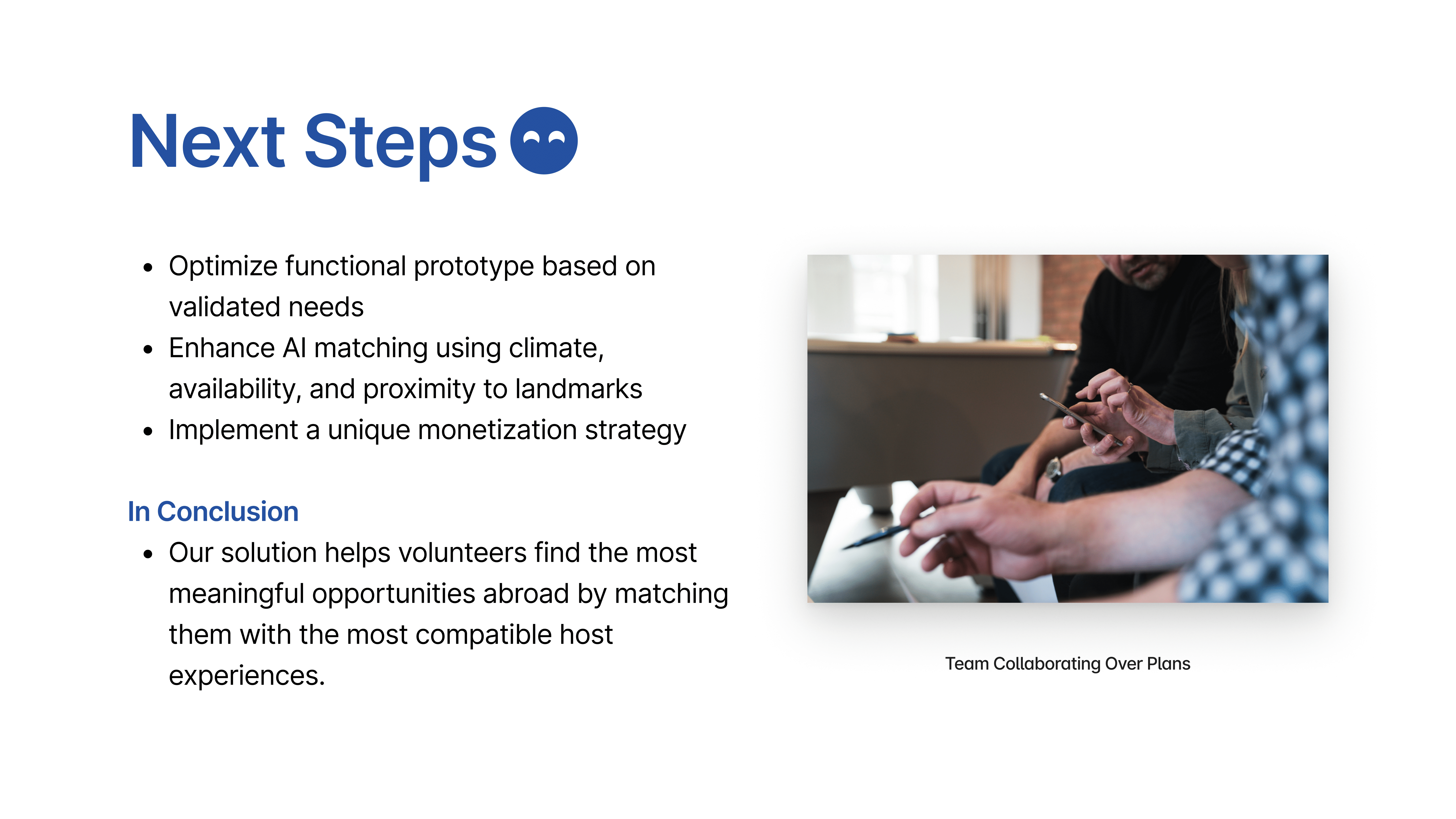
- Improve AI matching system with factors such as climate, time/date availability, and proximity to key landmarks (like hospitals or churches).
- Implement a unique monetization strategy not currently used by popular volunteer platforms like Workaway or Worldpackers to maximize ROI.
- Further iteration and optimization of the functional prototype.
Built With
- figma
- github
- google-gemini-api
- javascript
- miro
- python
- react-native


Log in or sign up for Devpost to join the conversation.