-
-
Logo-Round
-
-
-
Inspiration
Throughout the pandemic, we have seen numerous incidents linked to poor mental well-being in Singapore, e.g the River-Valley High School attack incident. This raised questions and doubts about the mental health and mental state of Singaporeans during the COVID pandemic. According to a survey on Singaporean youths' challenges and sentiments on COVID-19 by National Youth Council (NYC), Mental well-being was a challenge for over half of the youth population (52%) polled during the second half of 2020. [1]
Government ministries and agencies have since then taken initiatives to focus on improving mental health in Singapore across Whole-of-Government (WOG). For instance, the Ministry of Education (MOE) has since taken action on mental wellness by providing more enhanced education to educators on mental wellness literacy as well as deploying more teacher-counselors to schools. [2] With the new spotlight brought onto mental health, we were inspired to build a solution that could gain the support of Whole-of-Government.
What it does
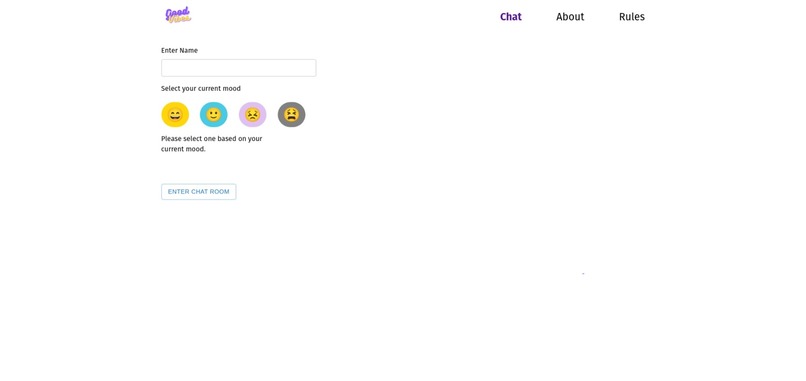
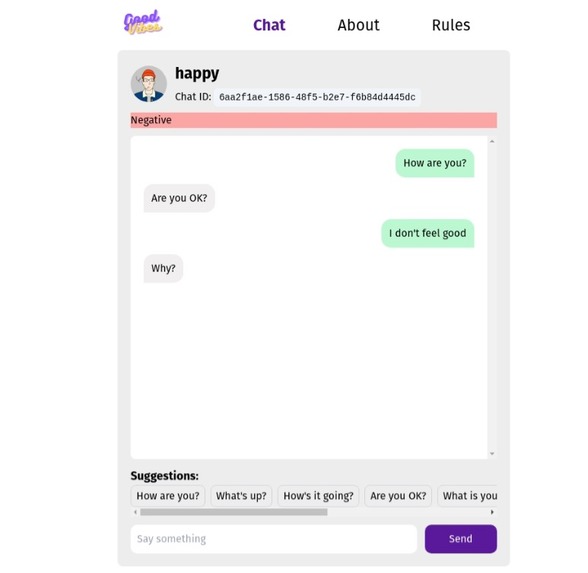
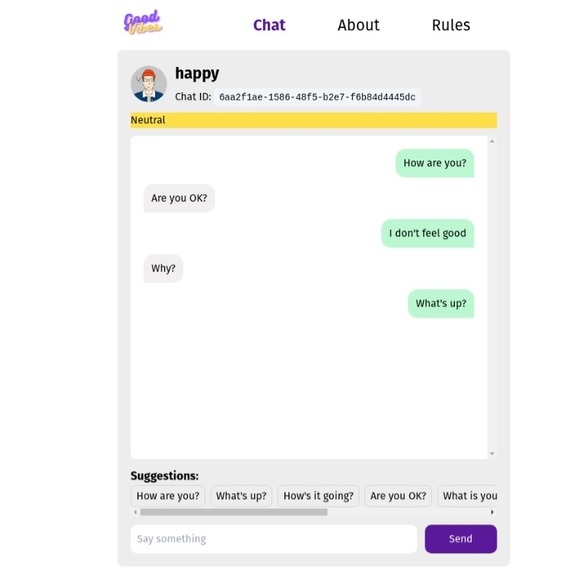
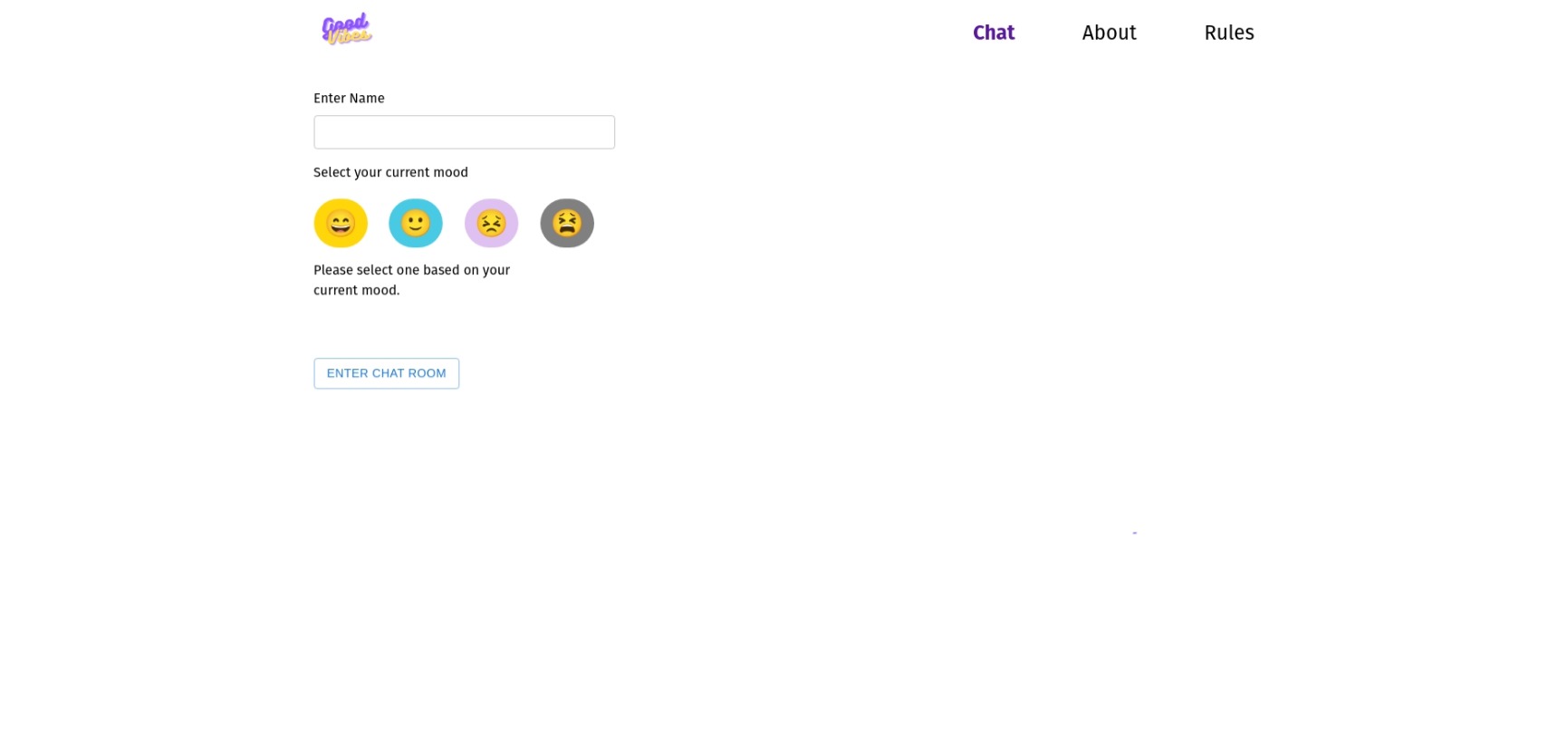
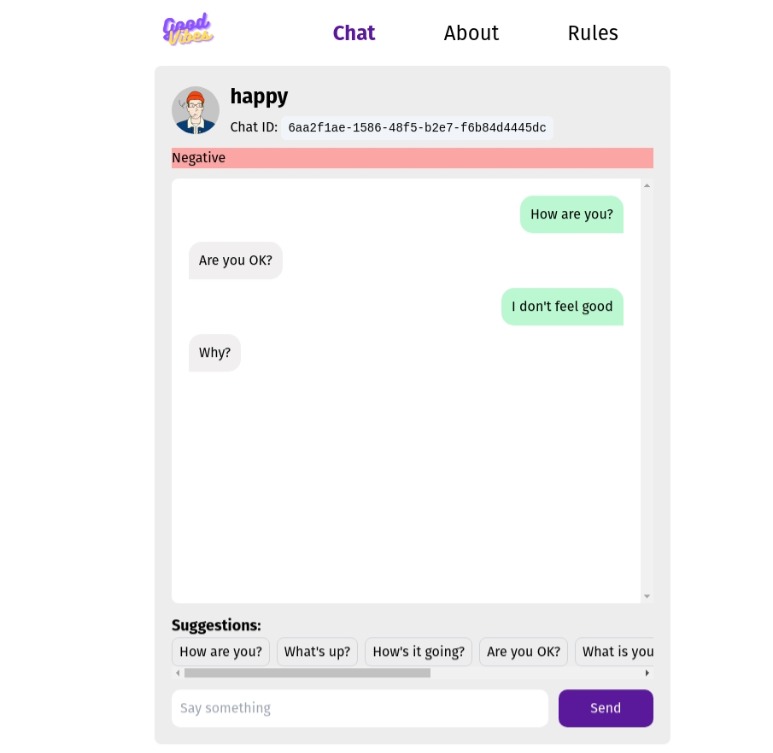
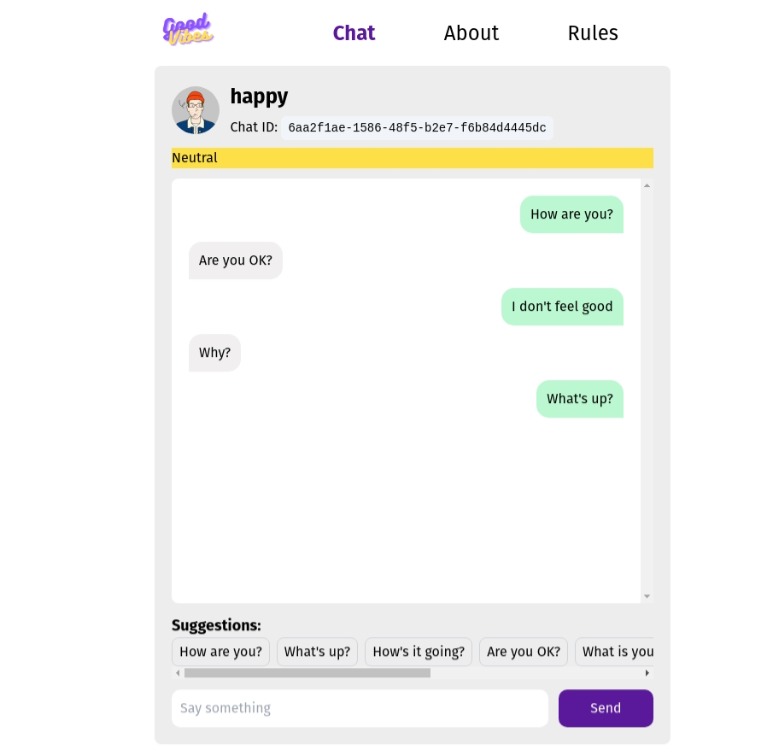
Our application provides an online chat room platform by leveraging digital innovations with AI to promote a friendly environment where users can chat anonymously with strangers based on our mood-matching algorithm to encourage a positive vibe amongst all users. We aim to support digital mental well-being for the whole-of-Singapore in response to the Smart Nation Initiative.
How we built it
The project can be split into three layers - (1) Front-End (2) Back-End & (3) AI/DL.
- Front-End: React, Tailwind CSS
- Back-End: node.js, socket.io
- NLP Model: Sentiment Analysis (Multi-class Text Classification), Hate Speech Detection (Multi-label Text Classification)
Challenges we ran into
Front-end collaboration was one of our biggest challenges faced. It was tough for us as we must coordinate our tasks to avoid conflicts in our version control. Our technical stack was complex as we utilized TensorFlow, PyTorch, Flask, Heroku, Socket.io, and Selenium all in our application. Another challenge we faced was the training process, as it was computationally expensive. It took us 2 hours to complete 1 epoch on a 3090 GPU.
Accomplishments that we're proud of
- An effective and accessible platform for people to chat anonymously and help each other to catch a positive vibe
- Trained 2 AI models on large datasets successfully while producing high accuracy results within a short period of time
- Clean and user-friendly interface
What we learned
We learned to never underestimate the complexity of a problem, as it could cause further issues or bugs in the application. We also learned how to collaborate with each other effectively, and distribute tasks to each member accordingly to complete our project
What's next for Good Vibes
- Support other languages (E.g. Chinese, Malay) and Singlish slang
- Video recommendation for users to watch together in real-time based on Sentiment Analysis results
Slide Deck
Google Slide URL: https://docs.google.com/presentation/d/1pYWOkgSL0DK7EMdpOsN1jFPibctbPvr0/edit?usp=sharing&ouid=105611302203892624314&rtpof=true&sd=true

Log in or sign up for Devpost to join the conversation.