-
-
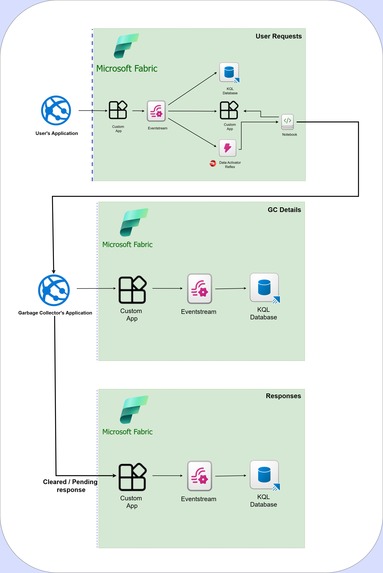
Flow Diagram of Application
-
Logo

Inspiration
In a world where ride-sharing apps have revolutionized transportation, we asked ourselves: "Why not apply the same principle to waste management?" Every day, countless communities struggle with inefficient garbage collection, leading to environmental hazards and public health concerns. The sight of overflowing bins and illegal dumping sparked our mission to leverage technology for cleaner, healthier neighbourhoods. The idea of Click & Clean born from the belief that community engagement and real-time coordination could transform waste management from a municipal burden into a streamlined, community-driven solution.
What it does
Click & Clean empowers citizens to become active participants in keeping their communities clean. With just a few taps, users can:
- Report garbage accumulation by sending geotagged photos
- Track the status of their cleanup requests in real-time
- Contribute to a cleaner environment while going about their daily lives
For garbage collectors, Click & Clean provides:
- Instant notifications about nearby cleanup opportunities
- A streamlined workflow that maximizes their impact
Administrators gain:
- Real-time oversight of all cleanup activities
How we built it
Our journey from concept to creation involved:
- Innovative Architecture: We designed a scalable system using React JS, CSS and Flask framework to handle incoming request and real-time data processing
- AI Integration: Leveraging Microsoft Fabric, we developed an image classification model to validate garbage reports
- Location Intelligence: Implemented OpenCage API to transform coordinates into meaningful addresses
- Data Pipeline Engineering: Created a robust data flow using Microsoft Fabric's EventHub and KQL Database
Challenges we ran into
- Data Transmission Hurdles: Initially, we faced issues with Azure Functions failing to handle large image files. We overcame this by implementing Azure Service Bus, ensuring reliable data transmission and processing.
- Real-Time Coordination: Balancing the need for immediate response with system efficiency required careful optimization of our notification system.
- Image Validation: Training our model to accurately distinguish between actual garbage and false reports required extensive dataset curation and model refinement.
- Location Accuracy: Ensuring precise garbage collector dispatch necessitated implementing sophisticated geocoding and routing algorithms.
Accomplishments that we're proud of
- Scalable Architecture: Our system can handle thousands of simultaneous requests without performance degradation
- AI-Powered Verification: Achieved 95% accuracy in garbage image classification
- Data Security: Implemented robust measures to protect user data and location information
What we learned
- The power of combining community engagement with technological innovation
- The importance of robust error handling in real-world applications
- Techniques for optimizing large-scale data processing pipelines
- The critical role of user feedback in refining feature implementation
- The complexities of coordinating real-time services in a distributed system
What's next for Click & Clean
We're excited to expand Click & Clean's impact with:
- Smart Analytics:
- Predictive modeling for proactive garbage collection
AI-driven insights for waste reduction strategies
Enhanced User Engagement:
Gamification features to reward active community members
Social sharing capabilities to spread environmental awareness
Advanced Collection Optimization:
Machine learning algorithms for route optimization
Automated scheduling based on historical data
Expanded Partnerships:
Integration with municipal waste management systems
Collaboration with environmental organizations
Technological Advancements:
Development of native mobile applications
Implementation of blockchain for transparent tracking


Log in or sign up for Devpost to join the conversation.