
Inspiration
At 'Goldman Stanley', we're pioneering in the realm of stock price forecasting by leveraging advanced machine learning technologies. Our methodology is distinct and practical, as it solely utilizes financial information available before the trading day begins. This approach sets us apart from conventional online stock prediction models, which often rely on real-time data such as current daily volume, open price, high price, and low price. Our strategy focuses on deep analysis of complex financial indicators that can be accessed in advance, closely mirroring the strategic foresight of experienced human traders. By enabling computers to intricately analyze these pre-market indicators and transform them into predictive percentage outcomes, we aim to offer a more proactive and foresighted tool in financial forecasting.
What it does
Our team at 'Goldman Stanley' has developed an advanced machine-learning model that is a game-changer in stock market forecasting. This model is meticulously trained on an extensive array of financial data, indicators, indices, and patterns spanning from 1990 to 2022. Its robustness is further enhanced by rigorous testing on real datasets from 2022 up to the present. The model's core functionality lies in predicting the daily closing price's percentage difference. By analyzing historical and current data, it provides a precise forecast of the potential movement in stock prices, offering valuable insights for investors and traders alike. This innovative approach positions us at the forefront of financial technology, providing a tool that's both practical and powerful for navigating the complexities of the stock market.
How we built it
In building our machine learning model at 'Goldman Stanley', we utilized Google Colab for its flexibility and integrated it with local settings for enhanced performance. We primarily relied on 'stockstats' for in-depth stock market data analysis and 'yfinance' for accessing comprehensive financial data from Yahoo Finance. Our model employed sophisticated prediction techniques including various regression methods, classification algorithms, and Long Short-Term Memory (LSTM) networks, enabling us to accurately forecast stock price movements with a high degree of precision.
Challenges we ran into
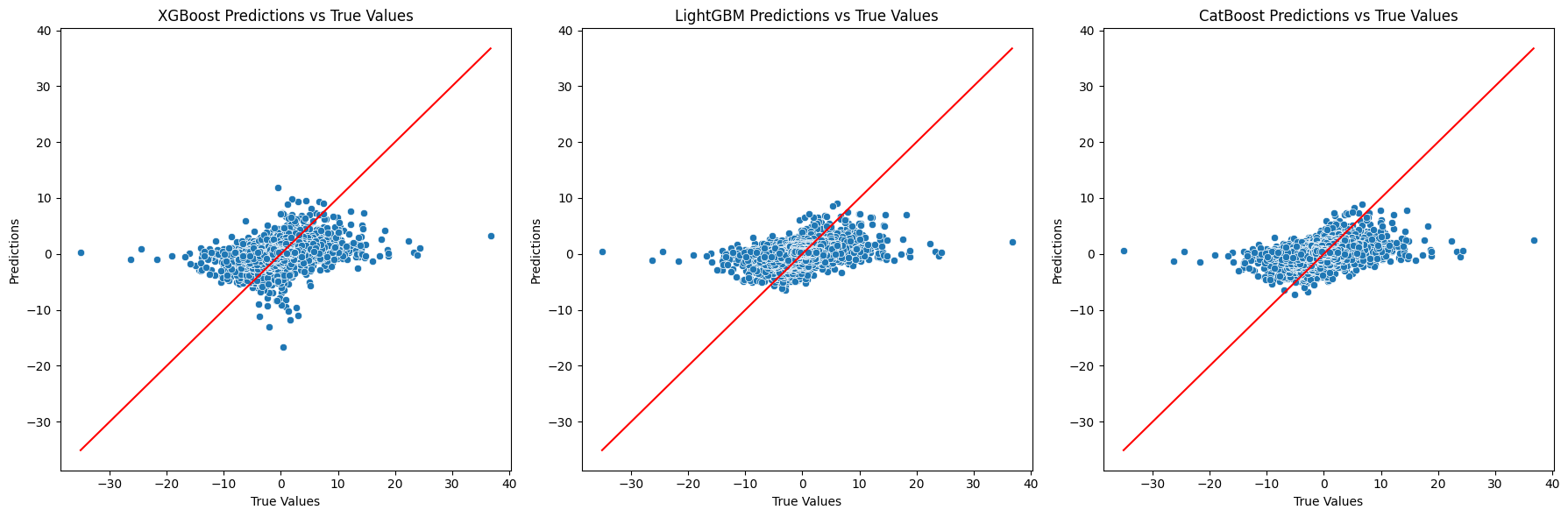
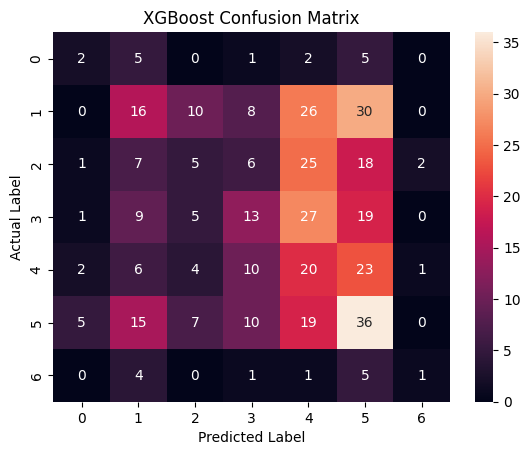
In our journey at 'Goldman Stanley' to develop a robust machine-learning model for stock price prediction, we faced a series of daunting challenges. Initially, our model's performance was not up to our expectations, as indicated by negative R^2 values in regression models, reflecting its struggles with accurately predicting percentage changes in stock prices. To tackle this, we experimented by incorporating both NASDAQ stocks and the US Top 100 stocks by market size into our dataset. This approach was aimed at enhancing the model's exposure to a diverse range of market behaviors. Despite these efforts, we found that the model's performance still fell short of our aspirations, leading us to continue exploring other avenues and strategies for improvement.
Accomplishments that we're proud of
At Goldman Stanley, our unwavering commitment and resilience in the face of adversity stand out as our proudest achievements. Despite encountering daunting challenges and initially disheartening results, our team persevered, exploring a multitude of approaches and techniques. This relentless pursuit of success, coupled with our ability to adapt and innovate under pressure, reflects the determination and spirit of our team. We take great pride in our tenacity and the invaluable experience gained through this rigorous process.
What we learned
Through our journey at Goldman Stanley, the key lesson we've learned is the intricate complexity of forecasting stock market movements. Our initial approach, though grounded in sophisticated methodologies, highlighted that relying on a limited set of numerical data points is not sufficient for accurate predictions. This experience has underscored the need for continuous improvement and expansion in our project's scope. It has taught us the importance of a comprehensive approach, considering a wider array of variables and data sources, to better understand and predict the nuances of the stock market.
What's next for Goldman Stanley
As we look ahead, the primary focus for Goldman Stanley is to enhance the performance of our stock prediction model. We are considering the implementation of reinforcement learning, which represents a significant leap forward in our approach. This advanced technique will enable our model to make more optimal decisions, particularly when calculating the probabilities of various percentage changes. To achieve this, we plan to integrate the Kelly Criterion, a renowned mathematical theory used for determining the optimal size of a series of bets. By incorporating this theory, we aim to refine our model's decision-making process, making it more robust and effective in navigating the complexities of the stock market. This next phase of development is poised to mark a new era of innovation and precision in our financial forecasting capabilities.

Log in or sign up for Devpost to join the conversation.