
Inspiration
Golden Grants was inspired by a persistent bottleneck facing small nonprofits: access to funding. Many organizations serving vulnerable communities don’t have dedicated grant writers, so they lose major time navigating long, bureaucratic grant pages and PDFs. That overhead can stop otherwise qualified orgs from applying at all.
I wanted to modernize this process in a way that fits the “Golden Age” theme: improving long-term access to opportunity, not just building a short-lived productivity demo.
What it does
Golden Grants is a Chrome extension that helps nonprofits evaluate grants directly while browsing the web. Instead of copying text into external tools, users get structured, explainable analysis from real grant pages.
It lets users:
- Build a nonprofit profile (mission, legal structure, geography, programs, compliance signals)
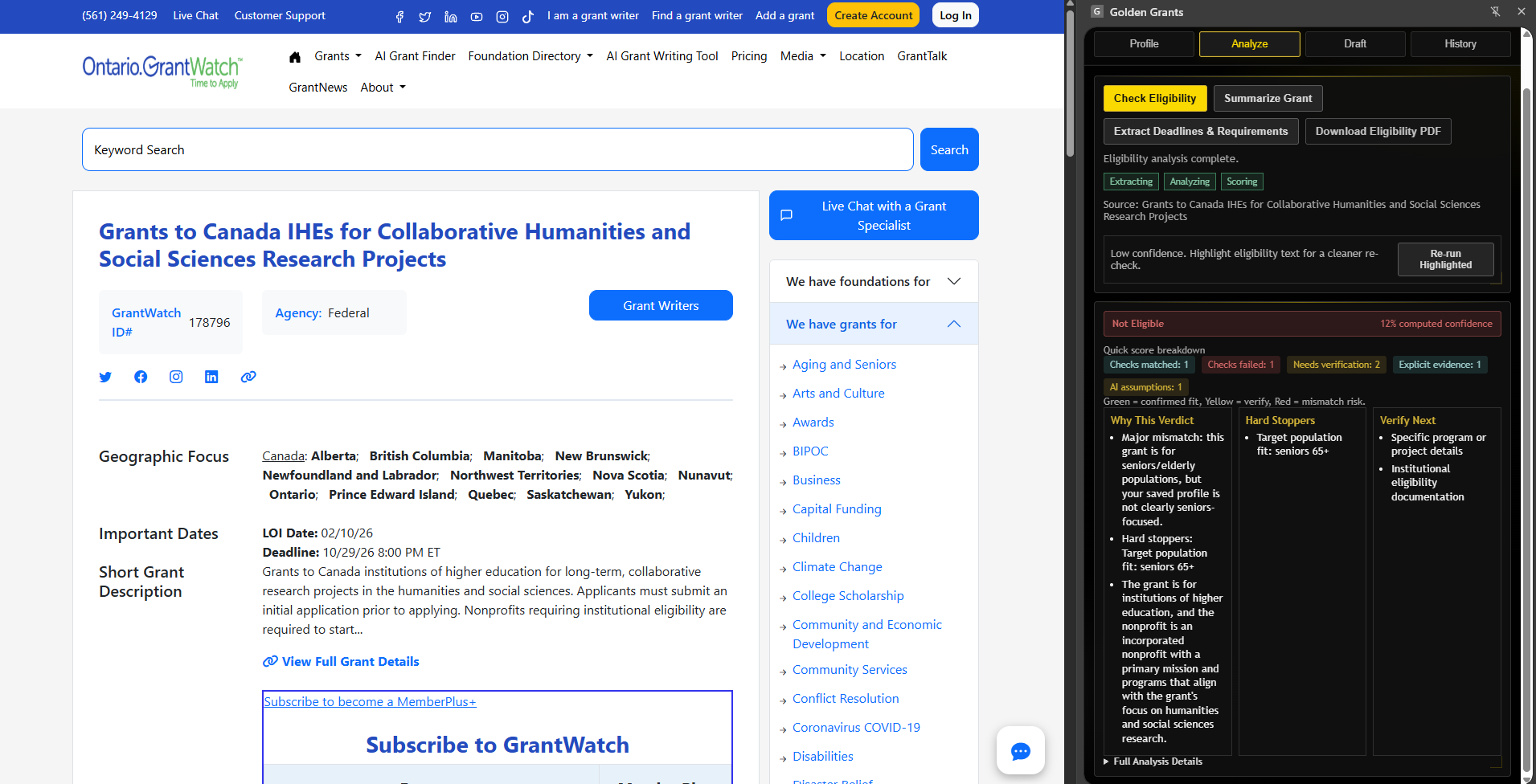
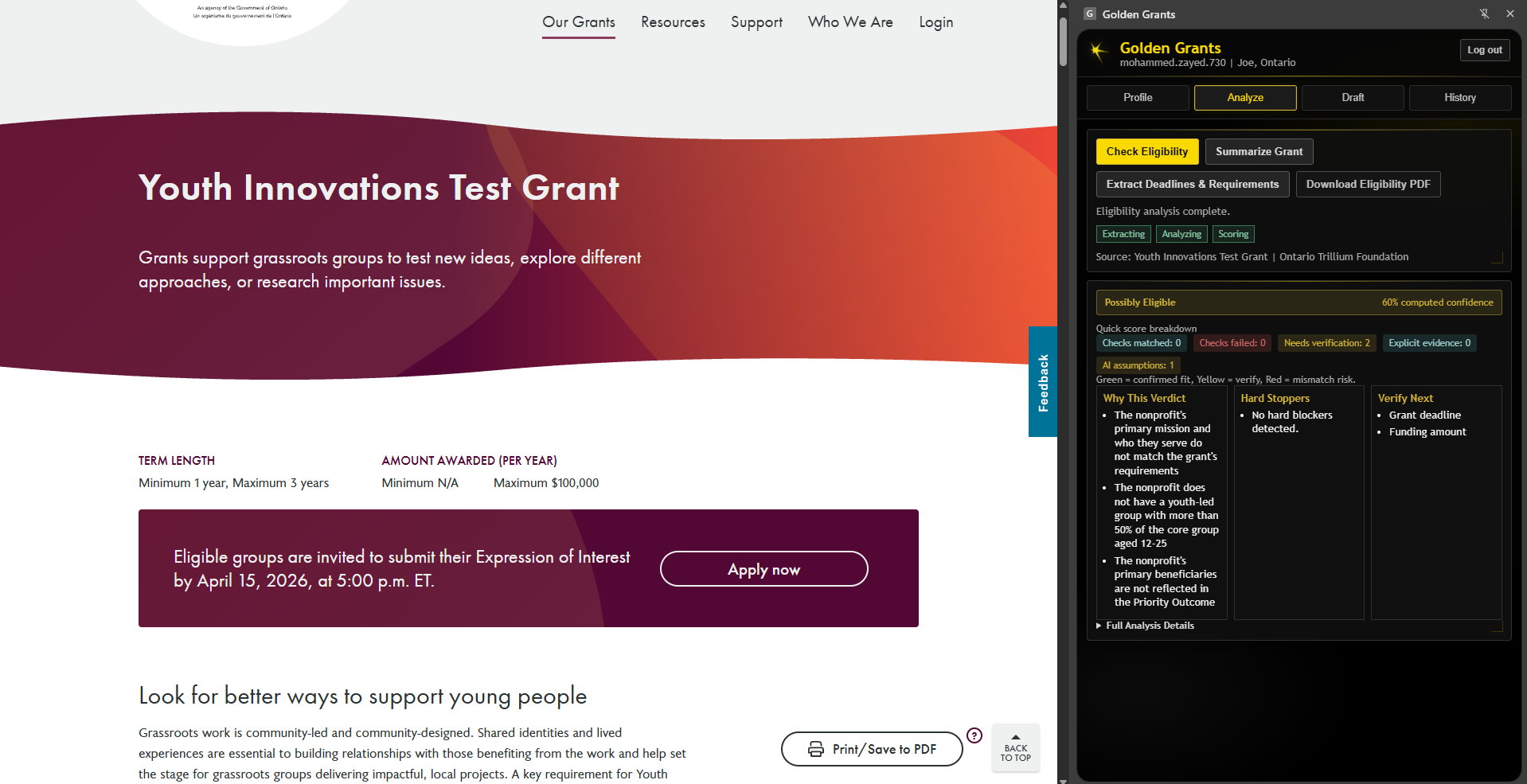
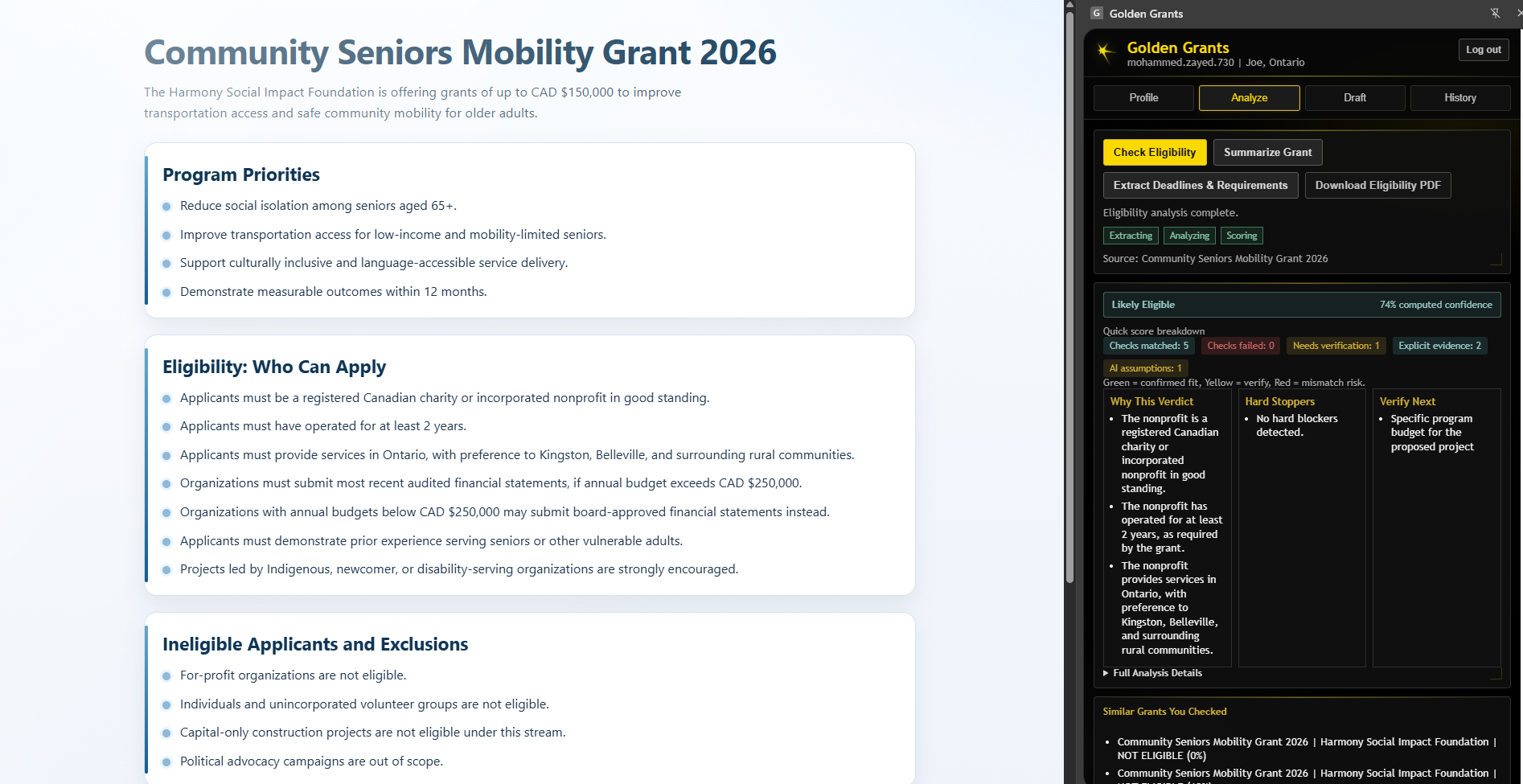
- Check eligibility against live grant page text
- Summarize grants quickly
- Extract deadlines, required documents, and process steps
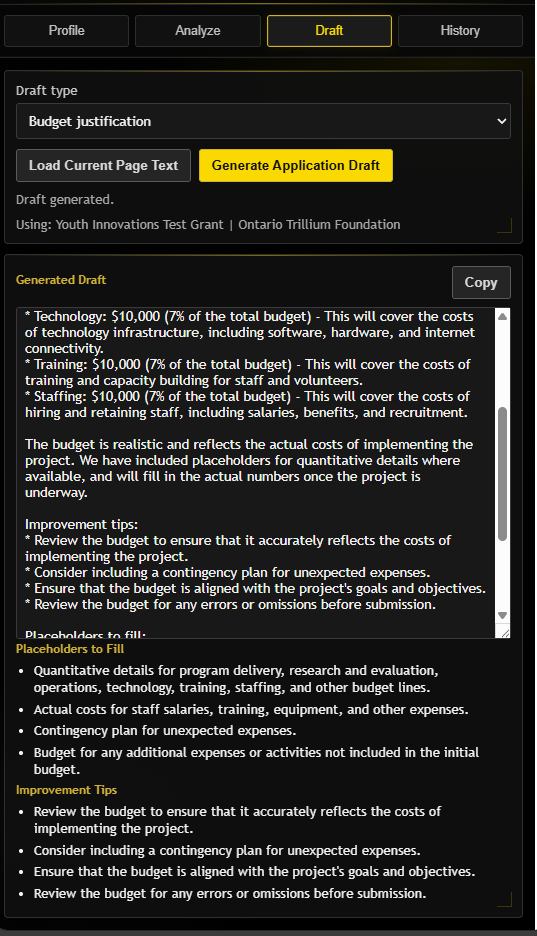
- Generate draft responses for common application sections
- Save and review analysis history, and export results
Outputs are structured and explainable, including verdicts, confidence, hard disqualifiers, and verification items.
How I built it
Golden Grants is a full-stack monorepo designed for reliability, security, and explainability:
- Chrome Extension (Manifest V3, TypeScript, React side panel UI)
- Node.js + Express backend (TypeScript)
- Shared Zod schemas for strict validation and consistent types
- Snowflake SQL API + Cortex as the core AI reasoning layer
Snowflake drives the heavy language reasoning and structured extraction, while backend logic enforces validation and consistent, explainable verdicts. The extension never stores Snowflake credentials; all inference runs securely through the backend. Google OAuth gates all APIs, and per-user profile/history storage keeps data isolated by account. The eligibility flow combines chunking, caching, schema validation, and confidence calibration.
Challenges I ran into
A lot of issues landed at the intersection of infrastructure, model behavior, and product UX:
- Snowflake SQL API context issues (warehouse/role/database behavior)
- Network policy and authentication configuration hurdles
- Model region availability constraints
- Structured JSON edge cases (invalid or truncated outputs)
- Confidence calibration (too lenient, then too strict)
- UX complexity around onboarding, login gating, and first-time guidance
Accomplishments I'm proud of
- Built a Snowflake-first AI workflow, not a superficial integration
- Shipped end-to-end grant analysis + draft generation in a working Chrome extension
- Added explainable eligibility verdicts with deterministic guardrails
- Implemented auth-gated, per-user data separation with Google OAuth
- Enabled history export and eligibility PDF export for real usability
What I learned
Reliable AI products require more than prompt quality. Structured outputs with strict validation are critical for trust, and explainability matters as much as model performance. I also learned that strong UX is essential for high-stakes decisions, and that security boundaries (client vs server) must be designed early. Debugging production-like AI integrations is mostly systems engineering, not just model tuning.
What's next for Golden Grants
- Deeper grant-to-profile explainability with section-level traceability
- Multi-grant comparison and recommendation views
- Better PDF/document ingestion for complex grant sources
- Collaboration features for nonprofit teams
- Stronger Snowflake-backed analytics for long-term organizational learning
- Continued confidence calibration with real nonprofit feedback
The long-term goal is to make funding discovery and application prep faster, clearer, and more equitable for under-resourced organizations.

Log in or sign up for Devpost to join the conversation.