Inspiration
Data center cooling has been everywhere the past few months; but we were more interested to look at thermal management from a different angle : one that actually impacts regular people, not just server racks. Living in LA, we've felt firsthand how brutal the heat waves have gotten. A few Google searches later, we found the piece of infrastructure quietly taking the hit every summer: transformers, overheating right when people need power the most. In September 2024, LADWP restored power to more than 129,000 customers over the course of a multi-day heat wave, and its own explanation was that equipment can overload and overheat when it can't cool down overnight. Honestly, no class or lab sparked this project; it came from our own interests in the electrical and thermal side of things, and this weekend's prompt (prevent shutdowns in a crisis, and keep the power on when the grid is strained) was exactly the problem we've been wanting to solve for a long time.
What it does
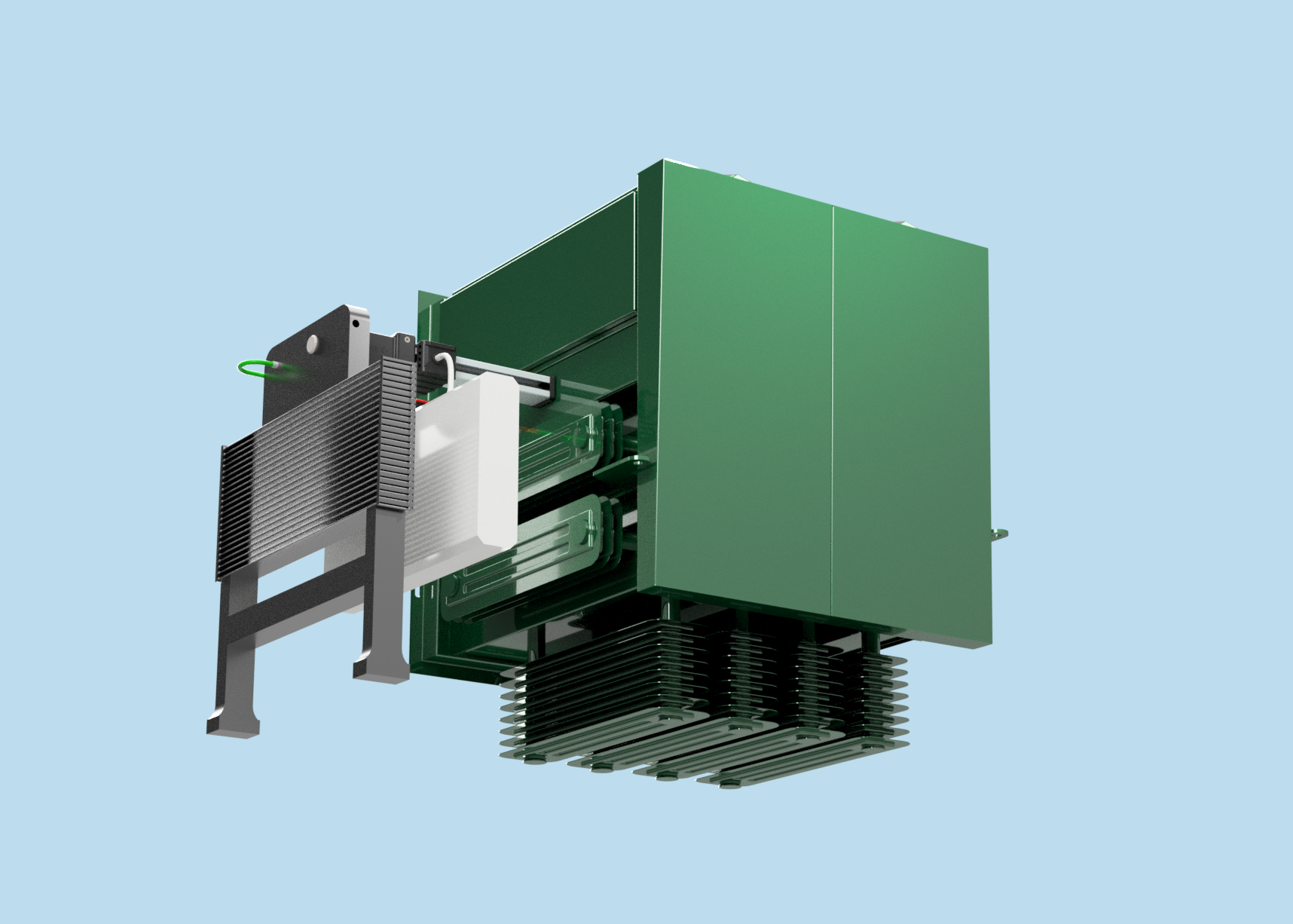
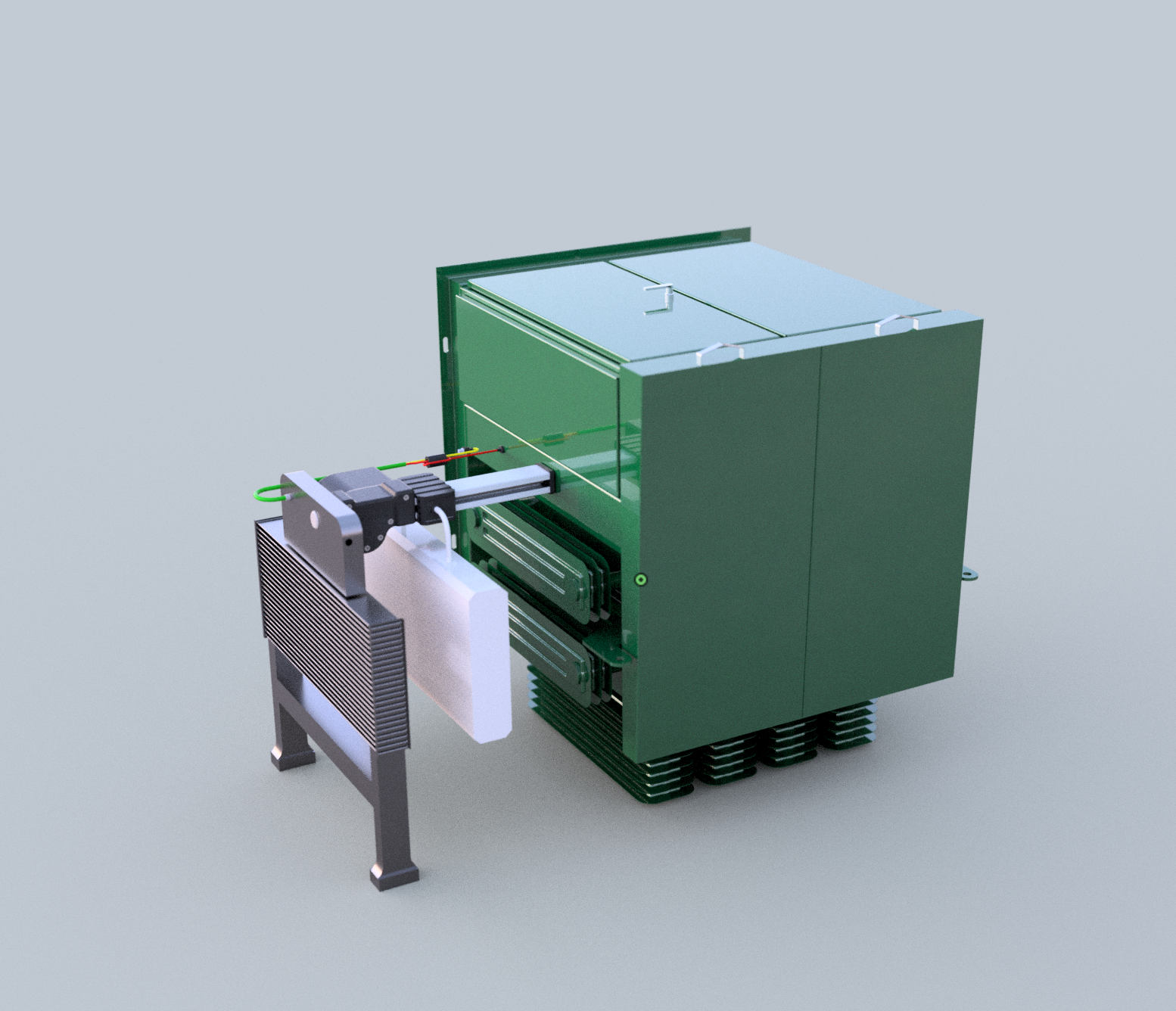
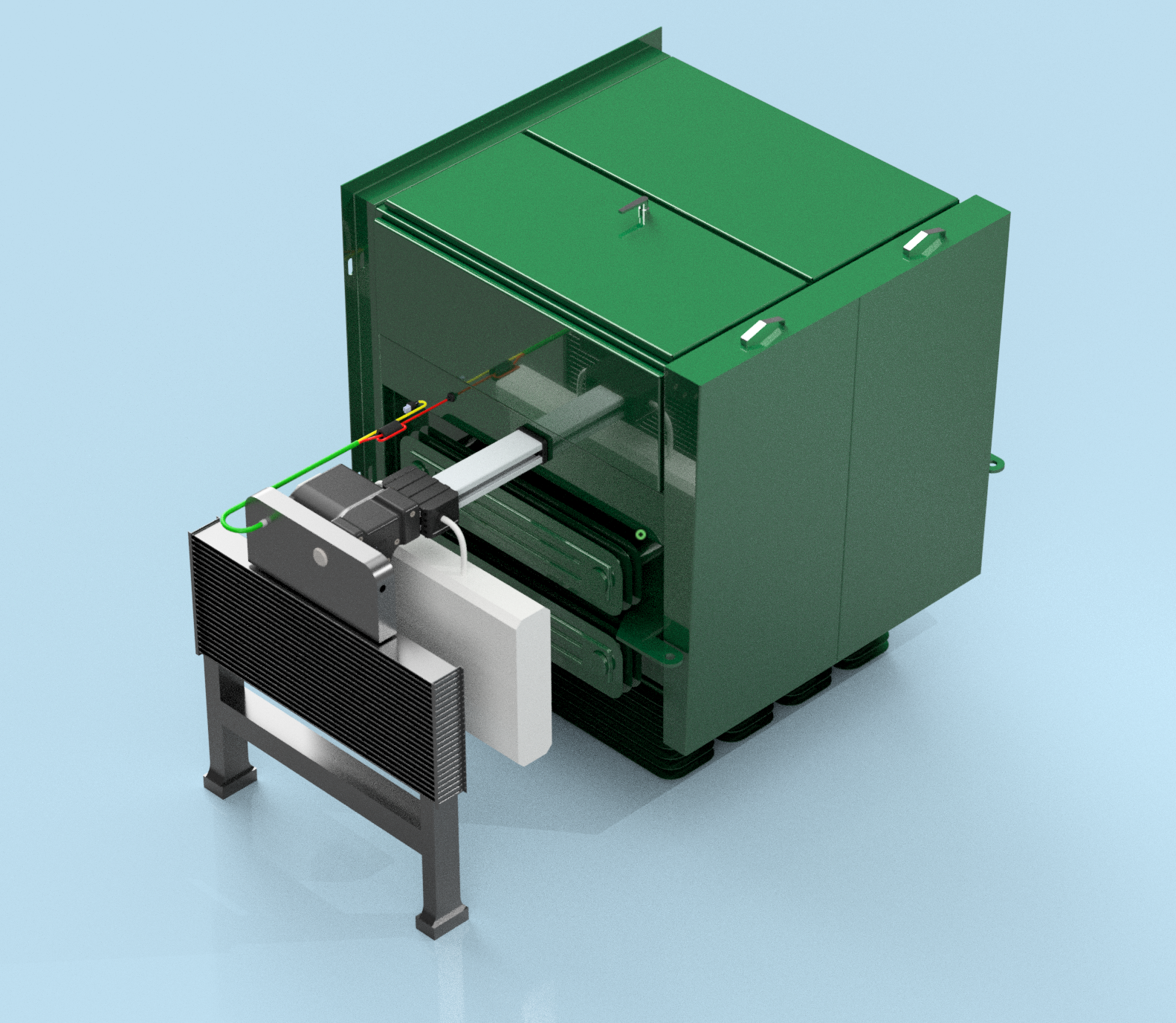
Golden Fleece is a device that helps keep transformers (the equipment on your street that steps down power for your home) from overheating during a heat wave or a city-wide event, paired with software that tells utilities which ones are at risk before they fail. The hardware is a panel filled with paraffin wax that clips onto the transformer's existing cooling fins. As the transformer heats up under peak load, the wax melts and absorbs that heat instead of letting the temperature spike : so there are no fans added, no pumps, no added electricity, just a thermal buffer for the worst hours of the day. In our simulation (400 kg of 44°C wax, an LA heat-wave load profile), the peak temperature drops from 81.6°C to 64.0°C. That buffer matters because a single 750 kVA pad-mounted transformer lists at about $47,500 (one retailer's list price), so every failure we prevent is real money saved, not just an outage avoided. We paired that with a monitoring platform that tracks each transformer's load, utilization and temperature, adds context like the weather and scheduled city events, and ranks which units need attention first, so utilities know which one's about to become a problem before it happens.
We built it to have two lives. On an ordinary day, utilities mostly check transformers by sending someone out to look at them (one utility we looked at, PECO, inspects its pad-mounted units by eye every eight years), so the dashboard lets crews inspect by exception and put jackets where the load is heading. In a crisis, at 3 AM with the network down and no staff around, the wax still works, because it needs no power, no network and no person. To be honest, our idea leans more into it's the crisis side; the ordinary-day case is inspecting by exception and a longer-lived transformer. The same idea could also carry over to outdoor telecom cabinets and backup batteries, which sit through the same daily heat cycle.
How we built it
Golden Fleece started at an earlier hackathon; so we decided to use this weekend to push it further for this prompt. We didn't build a physical prototype; instead, we modeled the full device in Fusion 360 and ran the thermal physics in MATLAB, using real transformer specs to figure out how much cooler the wax jacket keeps it during a heat spike. The model tracks how much of the wax has melted, so we could see when the buffer runs out. On the software side, we built a working MVP dashboard in Lovable with a live map of 42 transformers, per-unit risk scores, a 24-hour load profile, a daily context view with weather and scheduled city events, and a running simulation showing risk rise and fall over a day. We couldn't get real transformer data, so we built the platform on realistic synthetic data instead, and the demo says so on screen.
The twists were very interesting to work with, and very valuable information to think about for the future. For funding, we mapped a federal path : NSF America's Seed Fund first, with DoD SBIR as an alternative, and utility pilots (LADWP, SCE) as a later step; all of it is planned, we haven't applied yet. To make it global, we reran the model for a hotter climate and looked at heat-wave outages in France, Spain and Italy. And we made a poster for demo day.
Challenges we ran into
Previously, we went through a lot of back-and-forth before landing on the final version of the design: the original concept was a whole active coolant loop tapping into the transformer's oil system, and we eventually scrapped it for something simpler and safer. The thermodynamics of the wax jacket was its own problem: once the wax absorbs heat and starts melting, you have to make sure that heat doesn't just sit there and radiate back into the transformer instead of escaping outward. Figuring out a design where the heat actually flows the right direction (out through the fins, not back in) took a lot longer than we expected.
This weekend however added a different kind of challenge, which was being honest about where the idea breaks. Our first simulation looked great for a single hot day, but when we ran several days in a row we found that on nights that stay hot, the wax never refreezes. With 38°C afternoons and 34°C nights, the 44°C wax only helps by about 2°C, while with 24°C nights it keeps the peak around 64°C instead of 87°C every day (all simulated). That means the melt point has to be matched to the climate, which is also what we found when we tried a hotter region: in an illustrative 45°C scenario, the 44°C wax starts melted and barely helps, while an assumed 55°C wax cuts the peak from 94.6°C to 75.0°C (that grade is an assumption, not a real datasheet yet). In other words, the idea can be applied to other scenarios and environments, as long as we match the corresponding wax values to them; which was valuable information considering the question of how to apply the idea globally. The other challenge was dual use. The crisis case was easy to explain, but we had to work out who would pay for this on a calm Tuesday, which is how we landed on inspecting by exception.
Accomplishments that we're proud of
Very proud of the 3D model video and the added simulations (that run a multi-day scenario and hotter-climates) we ran over the weekend. And the 3D model is fully real and functional! It's a doable solution, and getting to the point where we had a design that actually worked, after all the back-and-forth on the thermodynamics, was a real high point for us. We're also happy we turned the three twists into something concrete : a funding path, a global comparison built on real outage cases, and a poster.
What we learned
We learned a lot about thermodynamics and specifically applications of thermodynamics in devices this weekend, in a much deeper scale than before. It was also a good exercise to think about how a problem can be used not only to mitigate crisis, but in a daily use/ordinary type of way. We also got to speak with a few very interesting people and got wonderful pitching advice along the way.
What's next for Golden Fleece
The immediate next step is building a small-scale physical prototype to validate what we've only simulated so far, including a higher melt-point wax and a thermometer in the wax so the dashboard can show whether the buffer is solid, melting or used up. From there, we wait to hear back from LADWP and Southern California Edison (with the contacts we received from the weekend) and apply to federal funding like NSF America's Seed Fund; and once we've proven the small-scale version actually works, the plan is to test it on a real transformer and scale from there.
Built With
- 3d
- autodesk-fusion-360
- canva
- matlab

Log in or sign up for Devpost to join the conversation.