-
-
The Players
-
Your God Hands
Inspiration
I've always loved the idea of giving players the power to shape an entire world. Godling takes inspiration from classic god games, but reimagines the genre around real-time terrain manipulation and natural, hands-first VR interaction.
The goal is to make players feel less like they're issuing commands from above and more like actual gods physically shaping the world with their hands.
Godling is built around one central idea: the terrain itself should be gameplay. Raising, lowering, and flattening land affects where people can live, how settlements expand, how civilizations grow, and how destructive god powers reshape the world.
I also wanted to create a VR experience that can be enjoyed while comfortably sitting in a chair. Being a god shouldn't have to be exhausting!
What it does
Godling is a god game where players grow and guide a living civilization using their hands.
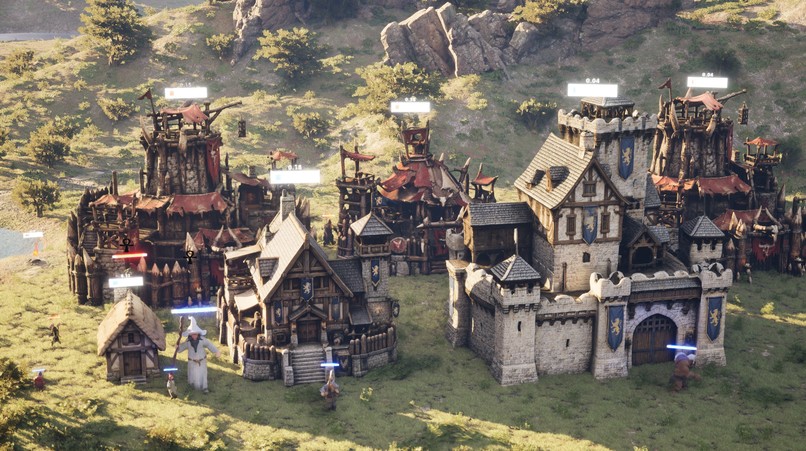
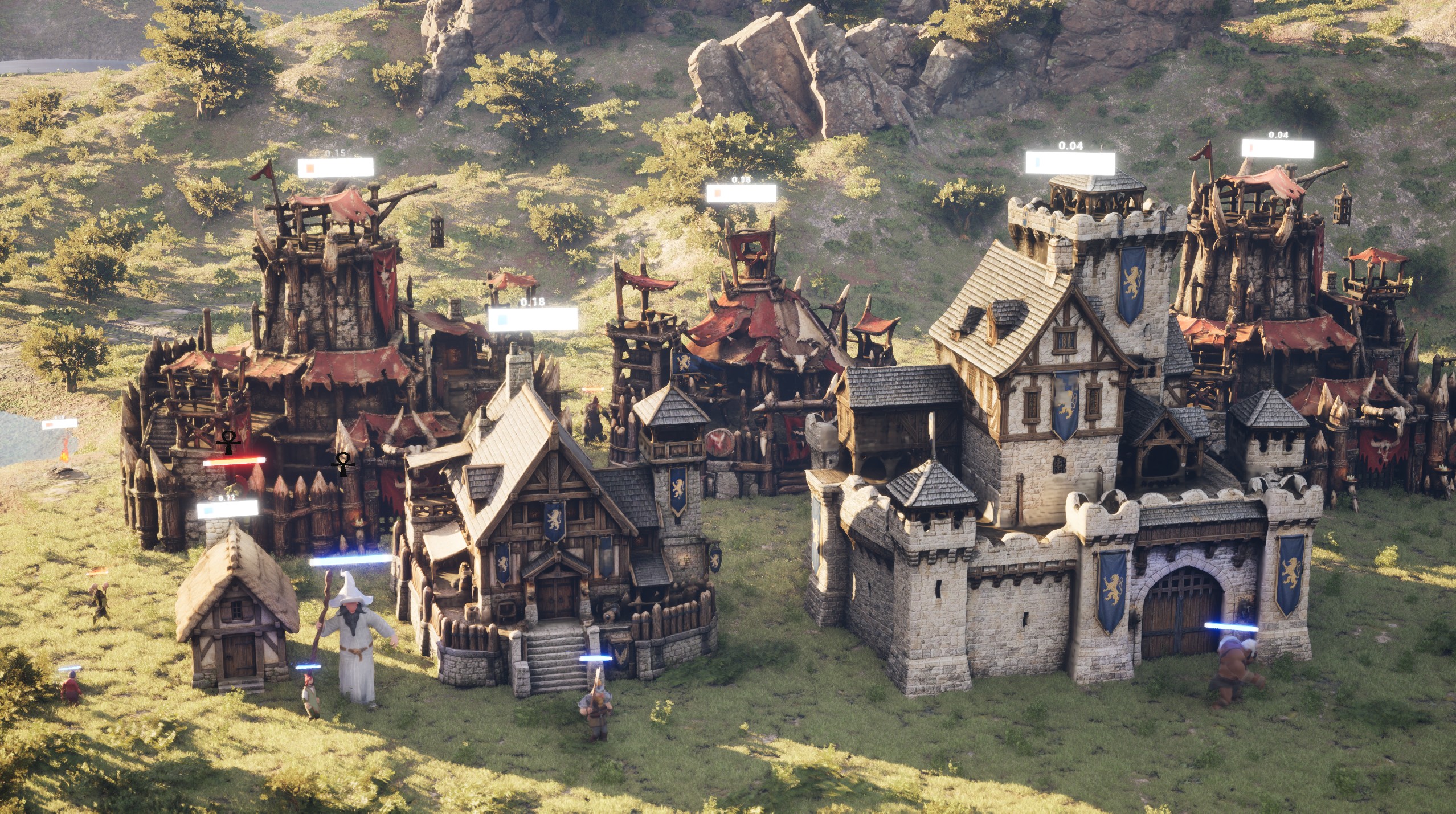
Settlers are born from houses, wander the world, build new homes, and expand their civilization. Flattening terrain allows settlements to grow and houses to upgrade, generating Faith, the resource used to unlock and unleash god powers.
Players can reshape landscapes, summon followers, command armies, unleash volcanoes and plagues, and ultimately create a powerful giant leader by merging villagers together.
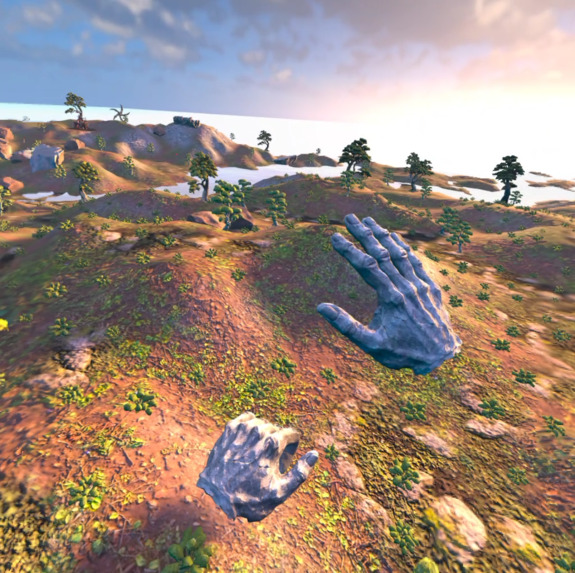
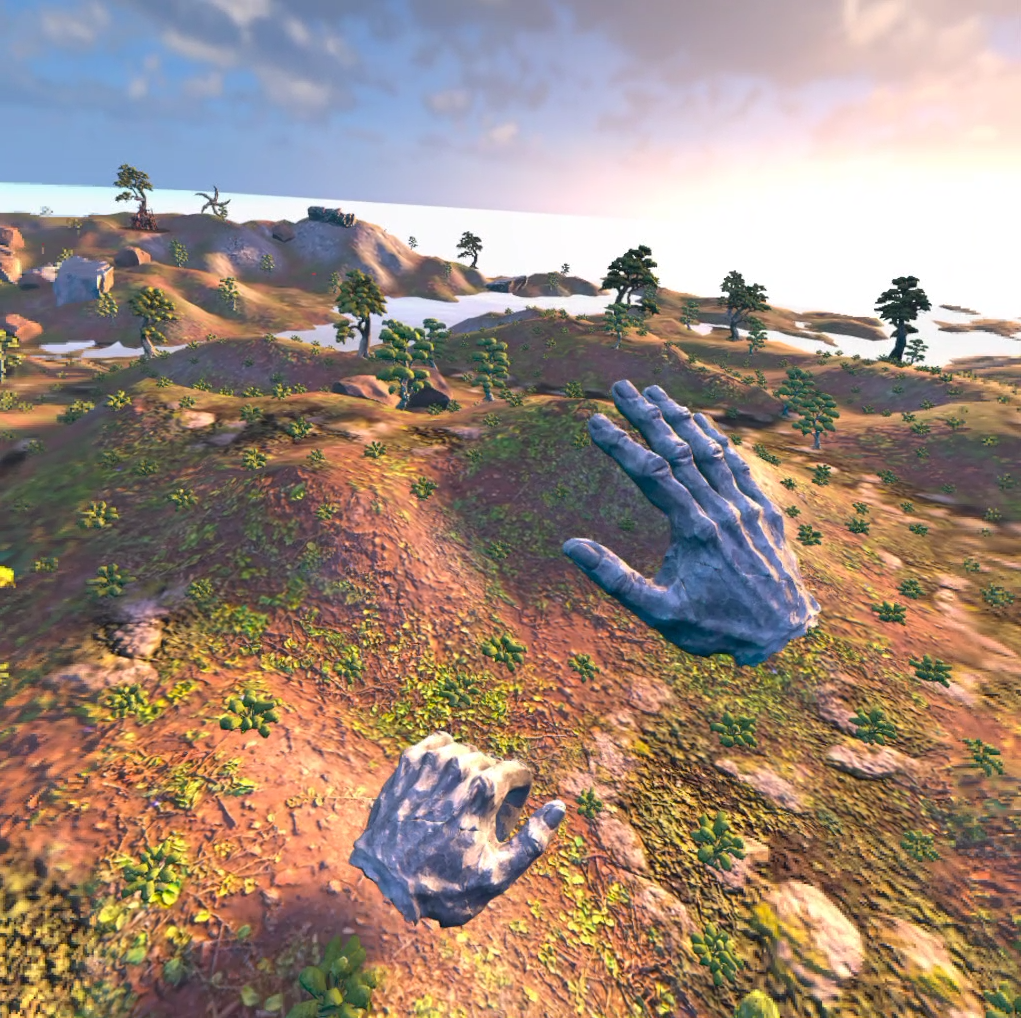
For the Meta VR Start Developer Competition, I've brought Godling to Meta Quest 3 as a hands-first VR experience, allowing players to interact directly with their world using natural hand tracking instead of traditional controllers.
How I built it
Godling is built in Unreal Engine 5.8, using Blueprints, custom gameplay systems, AI, procedural generation, VFX, and hand tracking through Meta XR.
The original desktop version used Voxel Plugin 2 for runtime terrain sculpting. For Quest 3, I adapted the terrain system to a heightfield-based implementation designed for standalone VR hardware.
A custom Civilization Manager tracks settlements, Faith generation, leaders, and the overall gameplay state.
Settlers use AI-driven behaviors to explore, build houses, respond to commands, fight enemies, and merge into leaders. Unreal's Procedural Content Generation framework creates environmental details such as trees, rocks, and vegetation.
Much of the work involved translating traditional god-game interactions into physical gestures. Players can move the world with their hands, flatten terrain, summon followers, and activate god powers without holding controllers.
Challenges I ran into
One of the biggest challenges was making large-scale systems interact cleanly with one another in real time.
Dynamic terrain deformation affects building placement, AI navigation, procedural foliage, combat, and performance. Systems that work independently become much more complicated when players can reshape the world while everything else continues running.
Optimizing for standalone Quest hardware was another major challenge. Procedural vegetation, autonomous settlers, terrain manipulation, VFX, and AI all compete for limited processing resources.
Adapting the game from desktop to VR also required rethinking its interaction design. I didn't want to simply translate mouse and keyboard controls into VR gestures. I wanted interactions that felt intuitive, physical, and satisfying.
Finding the right balance between gesture recognition, responsiveness, world scale, and comfort required considerable experimentation.
Accomplishments that I'm proud of
Godling has grown from an early prototype into a functioning god-game simulation with a complete core gameplay loop.
Settlers can spawn, wander, build settlements, upgrade houses, generate Faith, respond to commands, and participate in combat. Terrain manipulation directly influences civilization growth, connecting the player's physical actions to the simulation.
One of my favorite systems is the Summon mechanic, where villagers converge on a leader and merge into them, creating an increasingly powerful giant capable of leading an army.
I'm particularly proud of bringing this experience to Quest 3 with controller-free hand interaction.
Godling has also been developed largely as a solo project, combining gameplay programming, AI, procedural generation, terrain systems, VFX, sound design, interface design, and VR interaction.
What I learned
Building Godling has reinforced the importance of designing gameplay systems around player interaction rather than treating terrain, AI, visual effects, and progression as separate features.
Terrain manipulation becomes much more interesting when the entire world responds to it.
I've also learned that performance must be considered from the beginning, especially when combining large environments, procedural content, autonomous agents, and standalone VR hardware.
Moving to hands-first VR fundamentally changed how I think about interaction. Actions like sculpting terrain, casting god powers, and moving through the world become more immediate when players interact directly with their hands.
Perhaps the most important lesson has been that VR doesn't need to be physically demanding to be immersive. There's enormous potential for experiences that allow players to relax while feeling genuinely present and powerful within a virtual world.
What's next for Godling
I plan to continue developing Godling into a full god game with deeper civilization progression, more terrain-driven gameplay, additional god powers, larger battles, and a broader campaign structure.
As VR hardware becomes lighter and more accessible, I believe hands-first interaction will open the door to an entirely new generation of immersive strategy and simulation games.
My goal is to make Godling part of that future.
Built With
- blueprints
- c++
- houdini
- meta-xr
- pcg
- unreal-engine
- unreal-engine-5.7.4


