Title: goCart The AI-Powered Task-to-Cart Agent for Every Shopper
Inspiration
We've all been there.
You open your shopping app, just trying to cook biryani or prep for a house party. But then 23 ingredients, 10 YouTube videos, and 14 tabs later you are frustrated, confused, and still forget the milk.
Shoppers don't want filters and categories. They want help. They want something that understands the task behind the purchase.
Ecommerce stores are struggling too. Carts are abandoned, budgets blown, essentials forgotten. Shoppers waste time. Merchants lose revenue.
We weren't just building a feature. We were solving a human emotion, the gap between "I want to" and "I bought it."
That's why we created goCart, your shopping copilot.
What it does
goCart transforms a user's task like "Make biryani under $500" into a complete, ready-to-checkout cart on any ecommerce site.
With one line of input, goCart:
- Understands what you need (ingredients, items, quantities)
- Understands how you feel (lazy Sunday? busy Monday? festive mood?)
- Stays within your budget
- Saves your habits into reusable smart bundles
- Lets you reorder anything in one tap
It works across any ecommerce store. It's fast, smart, and deeply personalized.
From forgetful shoppers to merchants struggling with low cart size, goCart solves both.
How we built it
We built goCart inside the Kiro AI IDE, using its spec-driven development workflow to go from concept to production in record time. Instead of writing boilerplate code by hand, we collaborated with Kiro through natural conversations, structured specifications, and inline coding assistance. Every module, from the frontend to the backend, was scaffolded and refined directly within Kiro.
Here’s how Kiro supported us across the build process:
- Spec-to-Code: We defined our shopping agent requirements in Kiro specs, and Kiro translated them into production-ready React components, Supabase integrations, and API endpoints. This eliminated ambiguity and gave us a solid technical foundation.
- Agent Hooks: Kiro hooks were used to automate repetitive workflows like schema validation, bundle memory persistence, and edge function triggers. This allowed us to focus on the creative logic instead of wiring and debugging.
- Inline AI Coding: Whenever we needed refinements, Kiro generated clean, context-aware code snippets on demand, helping us align frontend SDK design with backend data models without breaking flow.
- Multi-Modal Chat: We brainstormed and iterated inside Kiro’s chat, sketching ideas and evolving them into structured implementations. Kiro helped us evaluate trade-offs, debug faster, and keep consistency across modules.
Modules built with Kiro
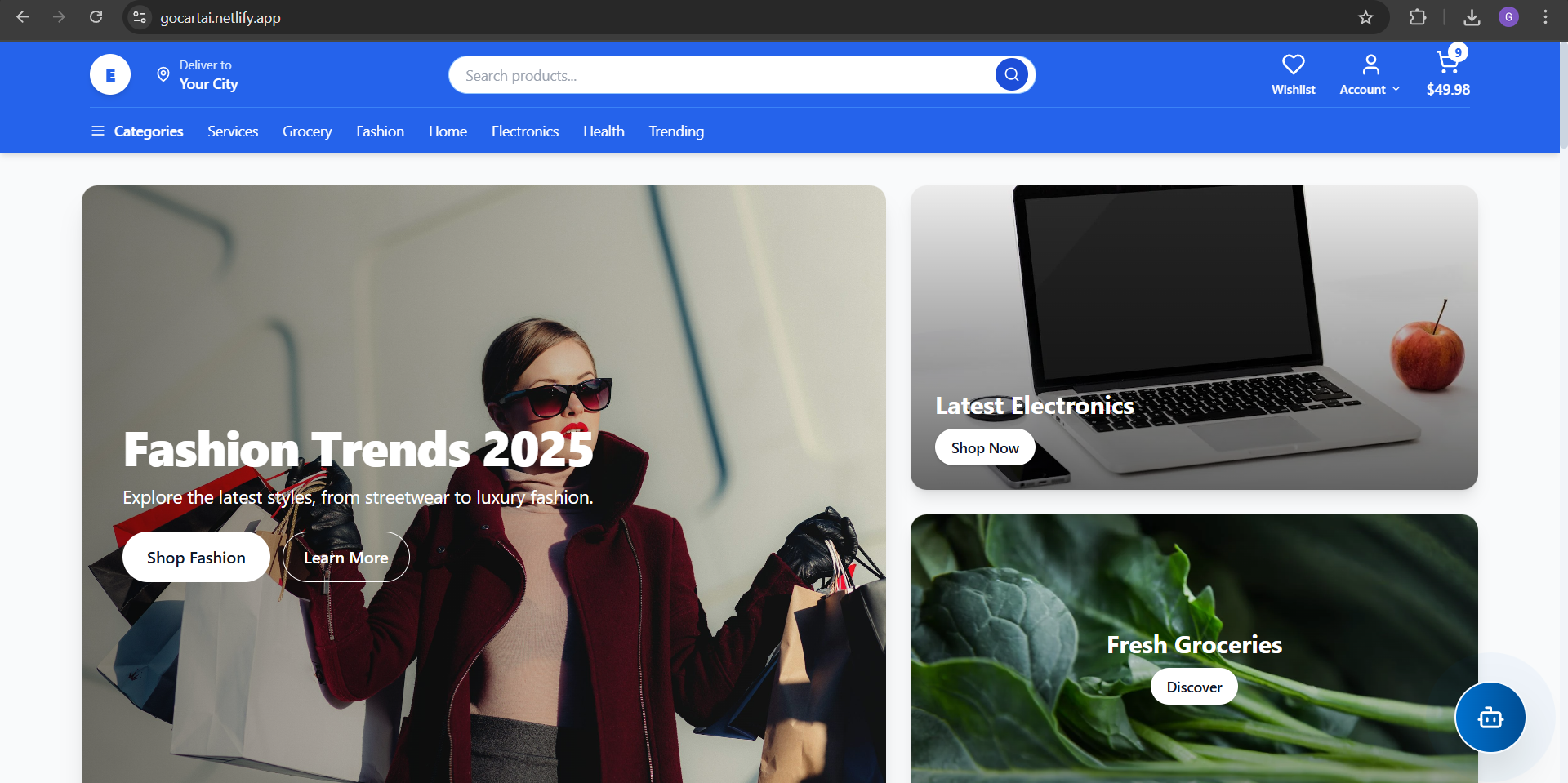
- Frontend SDK: React + Tailwind CSS, scaffolded via Kiro specs, embeddable in any ecommerce store (goCart’s core interface)
- goCart Agent: Built with Groq API and Llama 3.5, structured by Kiro’s spec-to-code pipeline to handle JSON cart generation
- Backend: Supabase integration generated and refined through Kiro, covering auth, sessions, bundles, and analytics events
- Edge Functions: Designed as modular specs in Kiro, automatically translated into budget logic, seasonal triggers, and mood detection
- Analytics Engine: Dashboards generated with Kiro’s inline coding and refinement loops, ensuring real-time tracking of bundles and conversions
- Memory Layer (goCart Memory): Architected in Kiro to handle reusable bundles, reorder patterns, and seasonal nudges with secure Supabase schemas
By relying on Kiro throughout, we turned brainstorming into deployment-ready code with speed and accuracy. The /.kiro directory in our repo reflects the full journey — specs, hooks, and steering — proving that goCart was built in alignment with the hackathon’s requirements.
Challenges we ran into
- API Rate Limits: The ecommerce API we used had a limited number of search requests. With Kiro hooks, we automated token refreshes and session management, reducing delays in our build cycle.
- Agent ↔ App Integration: The goCart Agent generated cart data in JSON, but aligning that with the frontend SDK and product schema was tricky. Kiro’s spec-driven approach helped us enforce consistent schemas across frontend and backend.
- Cart Memory System: Designing the Supabase schema for bundle storage and retrieval was complex. By drafting specs directly in Kiro, we generated and refined database structures quickly, balancing speed with privacy requirements.
Accomplishments we're proud of
- Built a complete shopping agent fully AI-powered, context-aware, and store-ready
- Cart generation happens in under 2 seconds via Groq's blazing speed
- Created reusable Smart Bundles that remember and re-trigger weekly
- Developed a real-time dashboard with trend and conversion analytics
- Embedded intent, emotion, and budget understanding into shopping
- Built the entire system in Kiro with specs, hooks, and inline coding
What we learned
- Users don't want to browse, they want outcomes. Task-first shopping is the future.
- Connecting agents to real actions like cart, reorder, and checkout is 90 percent of the work.
- Memory is not a luxury, it's the bridge to loyalty.
- Kiro is powerful. From idea to execution, it enabled spec-driven, AI-first full-stack development and deployment.
What's next for goCart
- One-click Shopify and Flipkart plugins
- Bundle Marketplace for influencers and creators
- Visual Drag-and-Drop Field Mapping (Zapier style)
- More Agent Skills like meal planning and checklist mode
Final Impact
goCart doesn't just speed up shopping. It removes mental friction, adapts to emotions, and turns scattered intent into smart execution.
For shoppers it is a 2-minute solution to a 30-minute problem
For stores it is bigger carts, smarter bundles, and repeat revenue
It's goal-first, emotion-aware, and built with Kiro AI IDE.
Let's redefine ecommerce one cart at a time.
Built With
- agent-hooks
- elevenlabs
- express.js
- groq
- kiro-ai-ide
- llama
- node.js
- react
- spec-driven-development
- supbase
- typescript

Log in or sign up for Devpost to join the conversation.