-
-
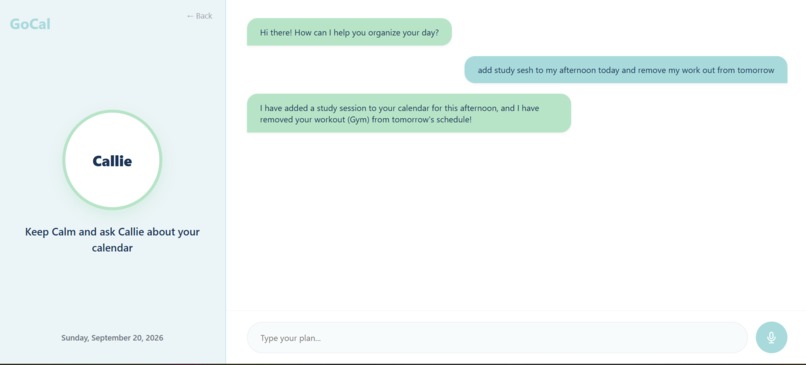
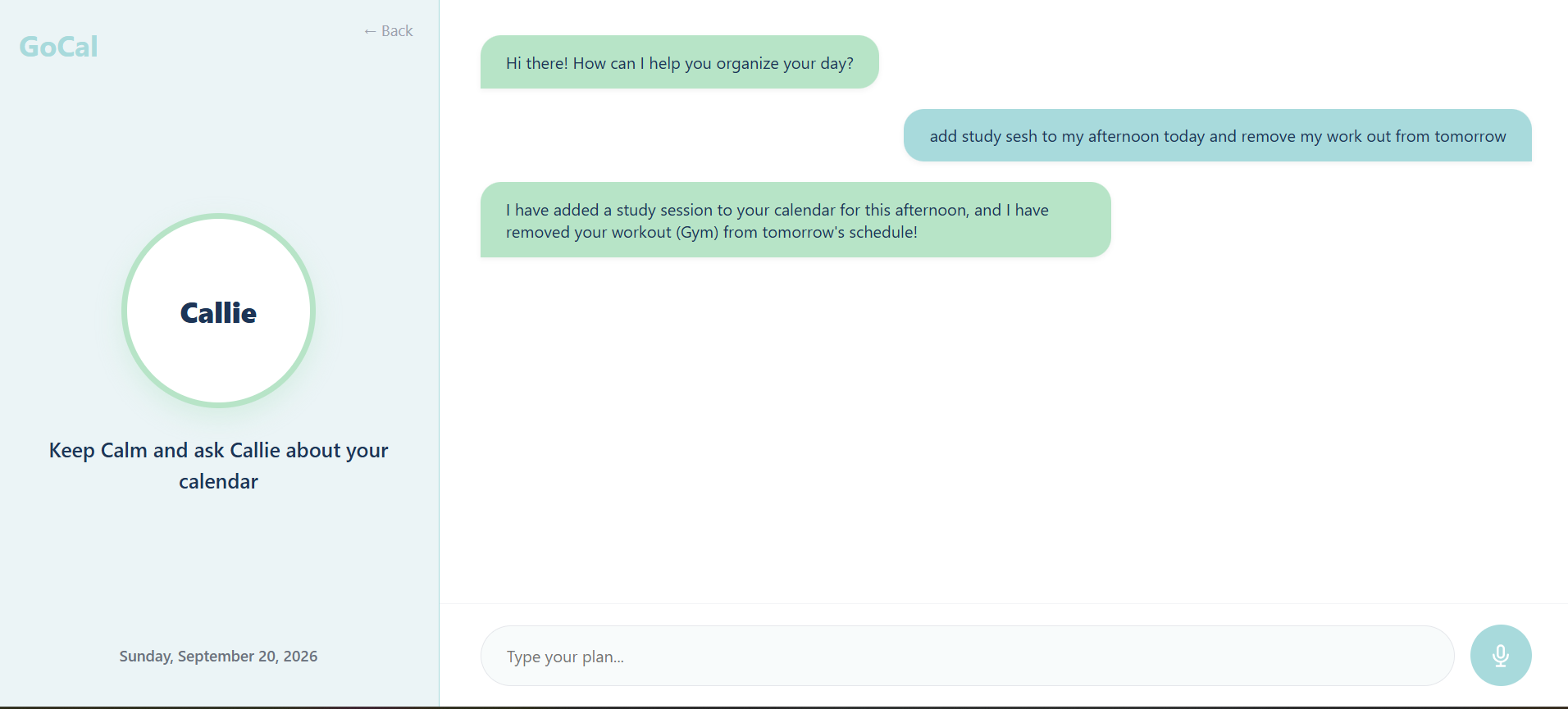
fully updates google calender basde on statments and interperates meanings such as work out being gym in my calender
Inspiration
As students, we rely on Google Calendar every day to juggle classes, club meetings, gym sessions, and mealtimes. However, no two days are exactly the same, and the act of manually inputting these non-negotiable habits every single day becomes a chore in itself. We found ourselves stressed not just by our workload, but by the mental overhead of trying to fit too many activities into too little time. We realized there was a need for a system that doesn't just record events, but actively manages them—potentially even pulling deadlines directly from external sources like Canvas. This daily struggle to balance academic rigor with personal wellness inspired us to build GoCal, solving a problem we face every single day.
What it does
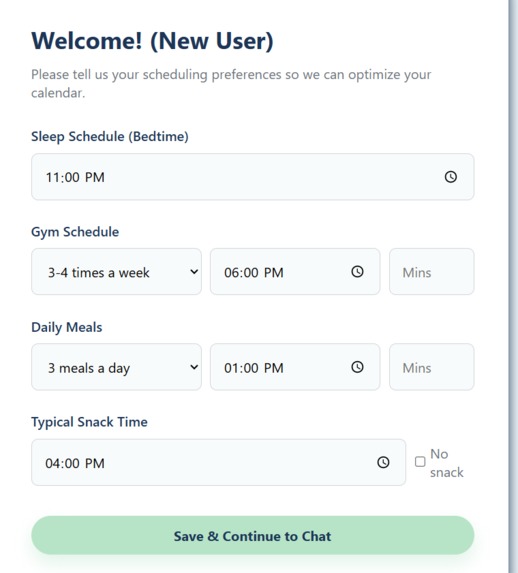
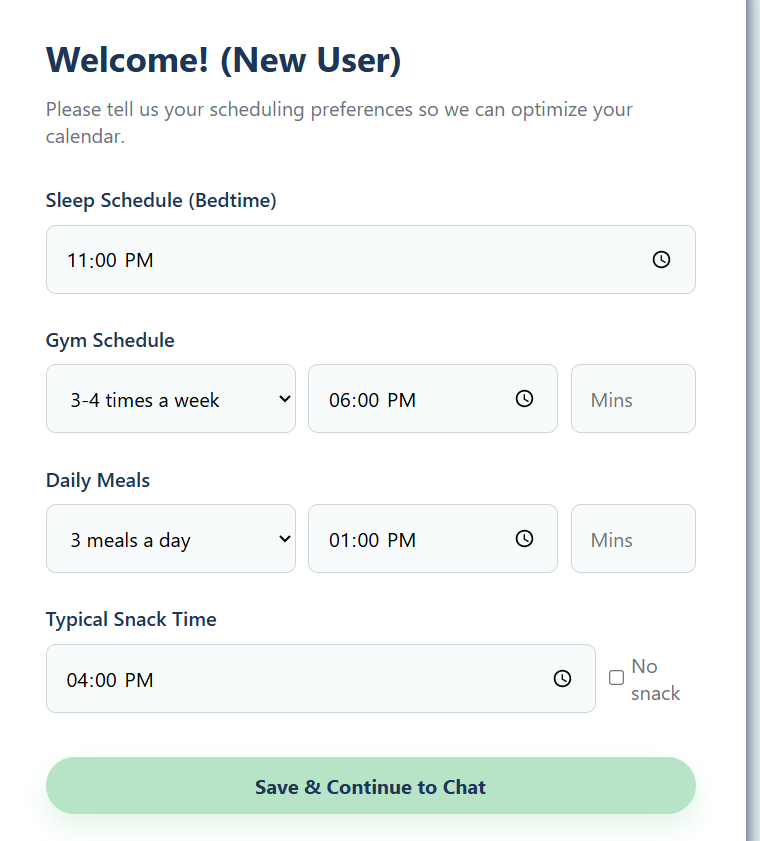
GoCal is an intelligent scheduling web app that integrates with Google Calendar to automate your daily routine. Instead of manually dragging blocks of time, users define their essential boundaries—such as sleep, meal times, and gym sessions. GoCal then automatically protects those slots and dynamically schedules study sessions based on assignment deadlines and social hangouts, creating a balanced, optimized day without the manual effort.
How we built it
We built GoCal using React for the frontend and Python for the backend. To handle the scheduling logic, we integrated the Google Calendar API to read and write events. We implemented a custom scheduling algorithm that prioritizes "fixed" habit blocks first and then fills the remaining "white space" with flexible tasks and study sessions.
Challenges we ran into
The steepest challenge we faced was the learning curve. As a team, we had no prior experience in AI development or building complex automation tools. Starting from scratch meant we had to learn how to architect a project of this scale while simultaneously figuring out how to implement AI logic. We spent a significant amount of time moving past the "blank page" stage, researching how to bridge the gap between a standard web app and an intelligent scheduling system.
Accomplishments that we're proud of
We are proud of creating a scheduling logic that feels intuitive and human. Seeing the app take a chaotic list of tasks and a set of habits and turn them into a clean, organized Google Calendar in seconds was incredibly rewarding. We successfully bridged the gap between a simple "to-do list" and a fully automated time-management system.
What we learned
This project served as a crash course in full-stack development. We gained hands-on experience in building a functional web interface and connecting it to a backend capable of handling complex requests. Most importantly, we mastered API integration—learning how to securely connect to Google Calendar and how to leverage AI to process user data into a structured schedule. We walked away with a deep understanding of how to connect a user-facing UI with powerful AI logic to solve a real-world problem.
What's next for GoCal
Next for GoCal is the integration of speech-to-text for our Gemini-powered chatbot. We want to evolve the app from a manual input tool into a voice-activated personal assistant, allowing users to organize their entire day through simple voice commands.


Log in or sign up for Devpost to join the conversation.