-
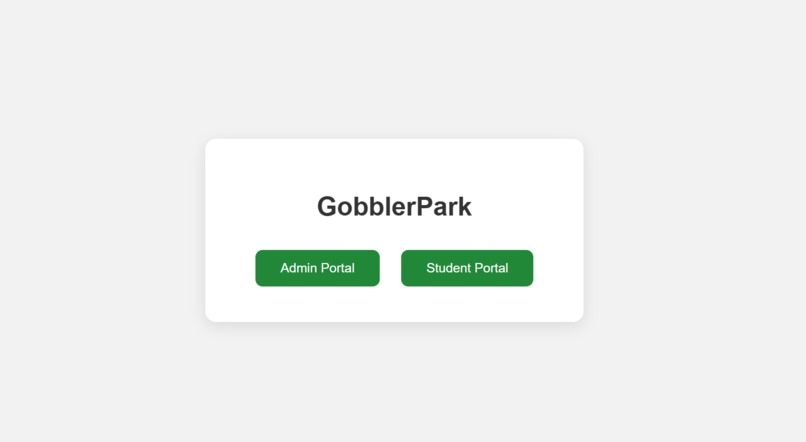
Homepage
-
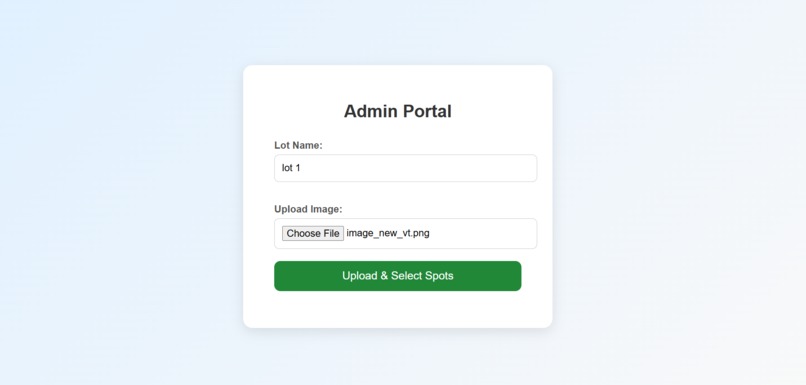
Admin portal (upload parking lot image + select parking spots)
-
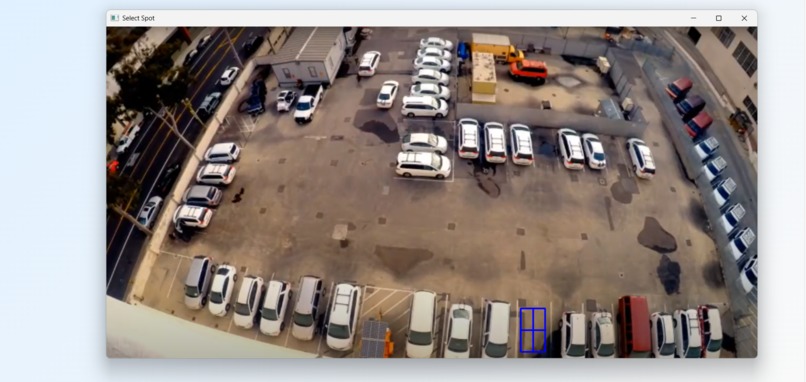
Selecting parking spots (one time setup)
-
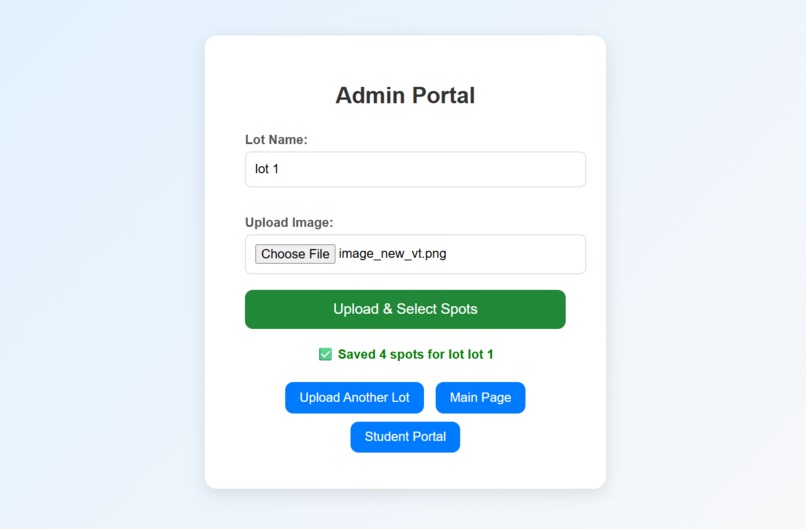
Submitted parking spots
-
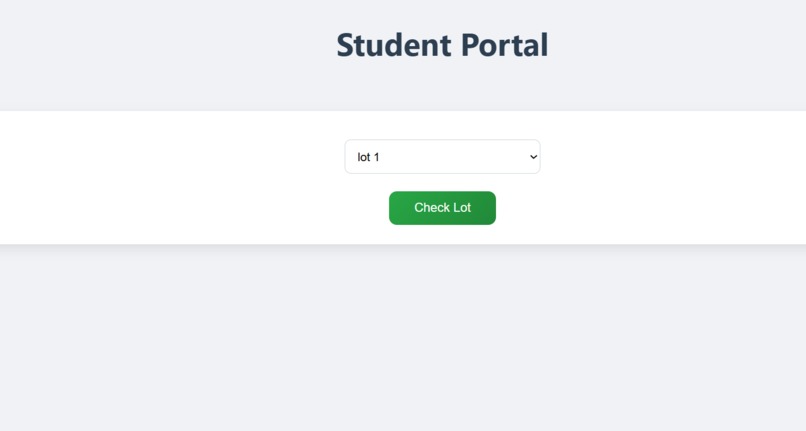
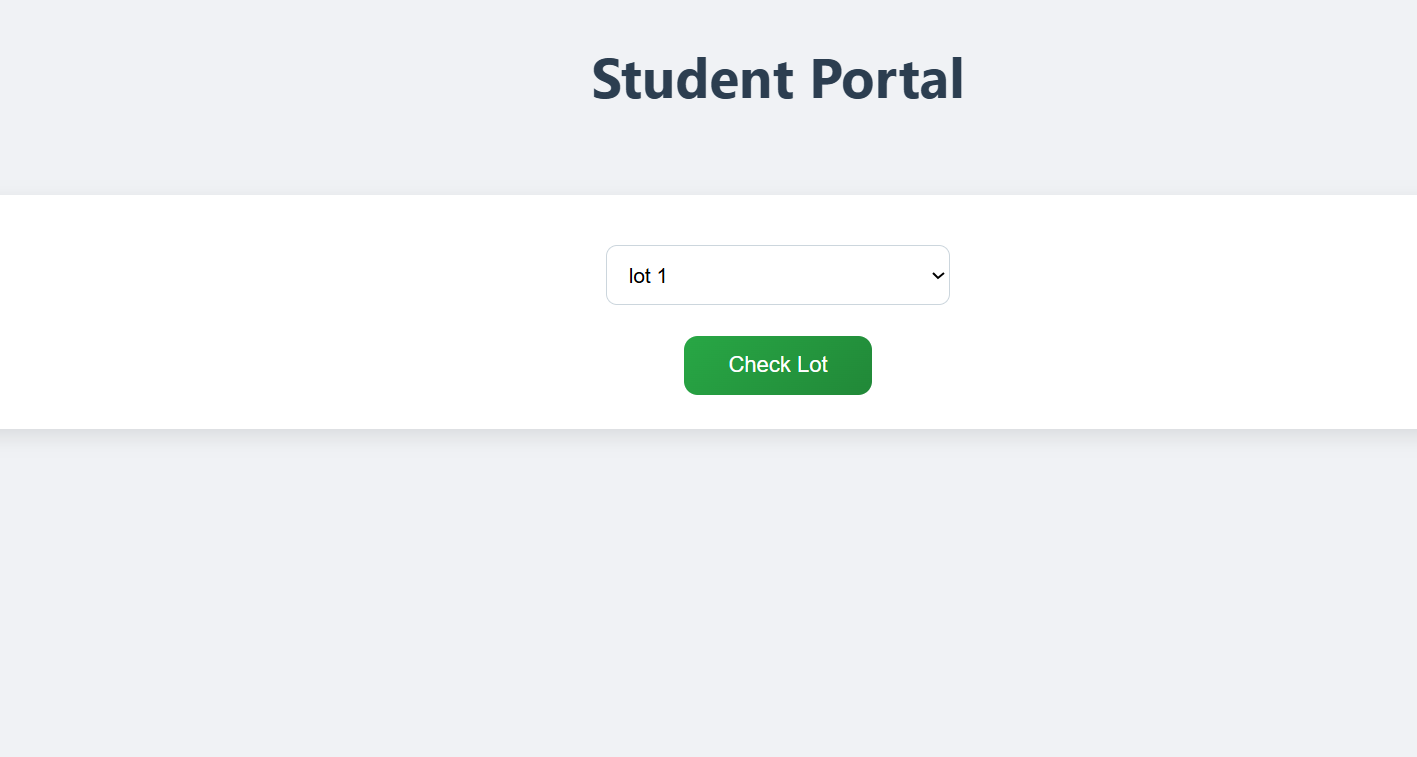
Student portal (picking which parking lot to view)
-
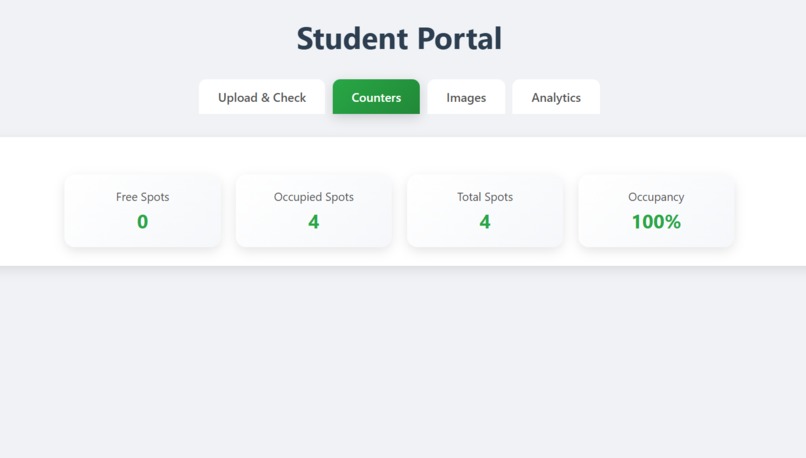
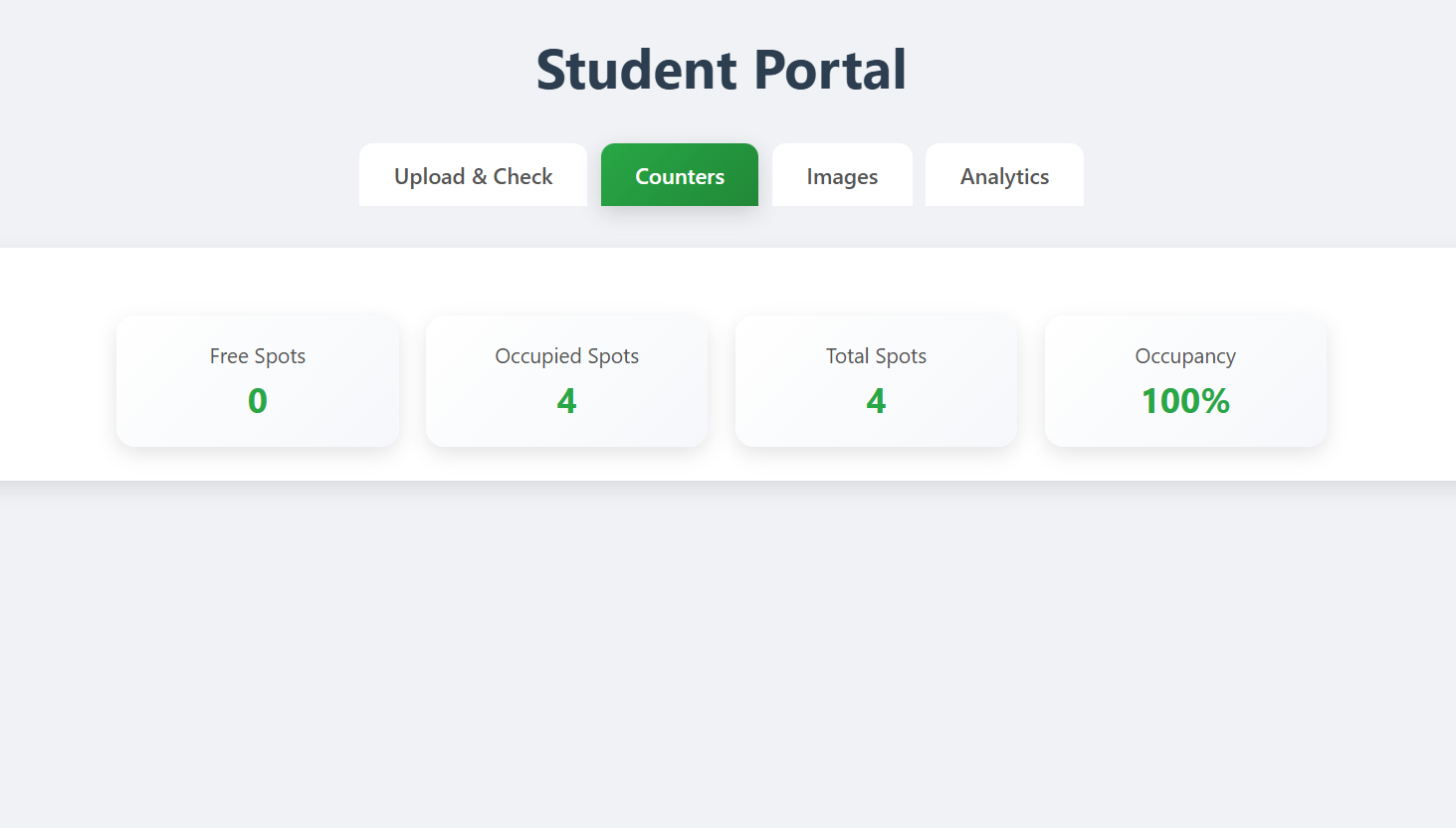
Counter
-
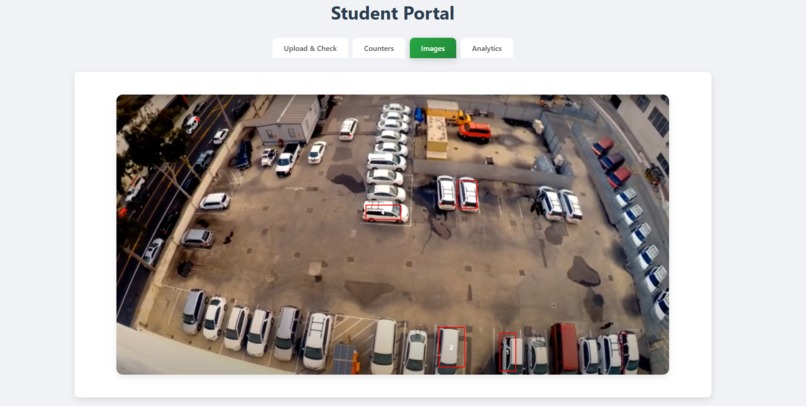
Actual image with occupied/free boxes
-
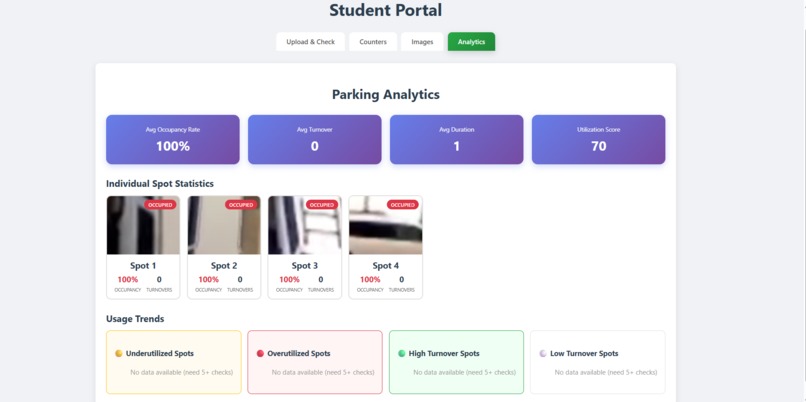
Analytics dashboard and per spot details




The Problem
Campus parking is unpredictable, inefficient, and stressful:
- Wasted Time: Students are often late to classes, exams, and meetings because parking isn’t predictable.
- Congestion: Cars circling for spots clog campus roads and worsen traffic flow.
- Accessibility Gap: Students with disabilities or tight schedules face the greatest challenges.
- Environmental Impact: Extra circling wastes fuel and increases emissions.
- No Analytics: Administrators lack real data on usage, turnover, and demand.
Our Solution: GobblerLot
GobblerLot is an ML-powered parking monitoring system that makes campus parking smarter and more efficient:
- Real-Time Detection: Custom CNN detects free vs. occupied spots using existing camera systems.
- Student App: Displays available spaces before students leave home.
- Admin Dashboard: Provides analytics like turnover, duration, and congestion patterns.
The Technology Behind It
- Custom CNN Model:
- Trained on 38,000 images from the CNR Parking Lot dataset.
- Achieved 99.6% accuracy across diverse conditions (lighting, weather, angles).
- Just 12k parameters vs. YOLOv8’s ~3.2M → <100ms latency, deployable on edge devices.
- Outperformed fine-tuned YOLO models on parking occupancy detection.
- Trained on 38,000 images from the CNR Parking Lot dataset.
- Lower Cost: Smaller model = reduced computational load on VT servers = cheaper to run.
- Admin Setup: Upload a lot photo once, draw boundaries manually (saved permanently), and scale across multiple lots.
- Student Experience: Live updates, instant free/occupied views, and rich analytics on lot usage.
Obstacles & How We Overcame Them
- Designing a CNN small enough to run in real time while maintaining high accuracy.
- Generalizing across variable lighting, weather, and camera angles.
- Building a one-time setup process that remains scalable for multiple lots.
Impact Achieved
- Higher accuracy and lower latency than YOLO-based models.
- Edge deployment for real-time updates without heavy server usage.
- A single platform that benefits both students (convenience) and administrators (data-driven insights).
Key Takeaways
- Efficiency matters as much as accuracy when deploying ML in the real world.
- Small usability choices (like manual boundary setup) unlock scalable adoption.
- Real-time systems require careful optimization for both speed and reliability.
Next Steps & Vision
- Expand to all campus lots with centralized coverage.
- Add predictive analytics to forecast spot availability.
- Integrate with navigation apps and extend to city garages and event venues.
Built With
- fastapi
- gemini
- html
- javascript
- python
- pytorch
- tailwind


Log in or sign up for Devpost to join the conversation.