-
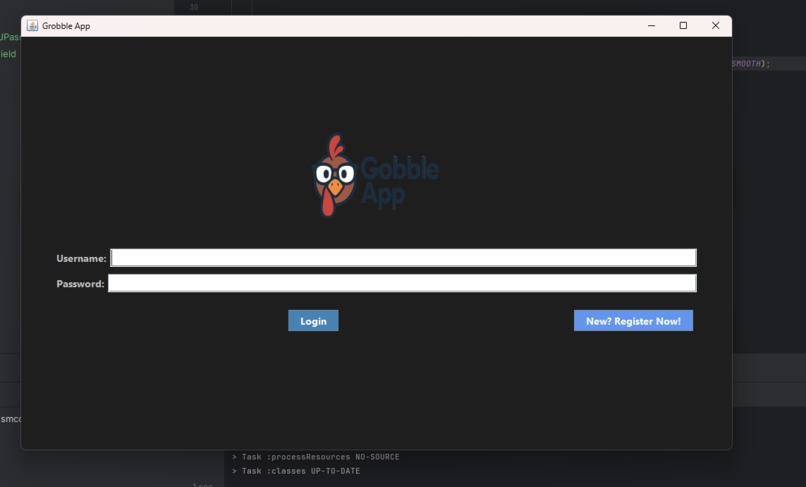
Login Page.
-
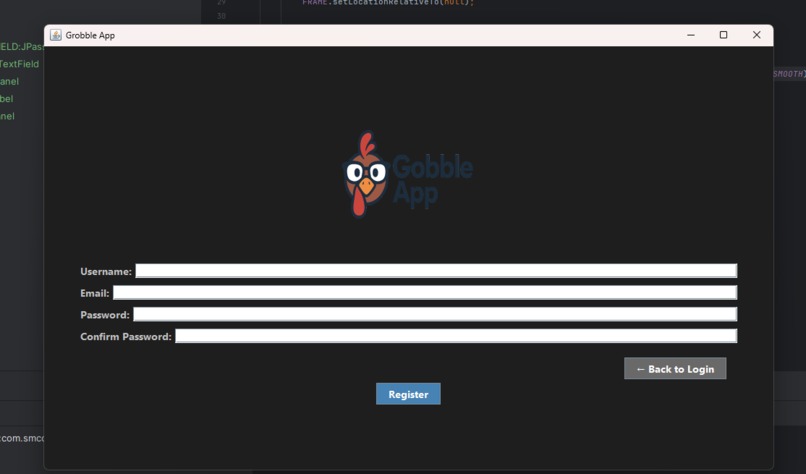
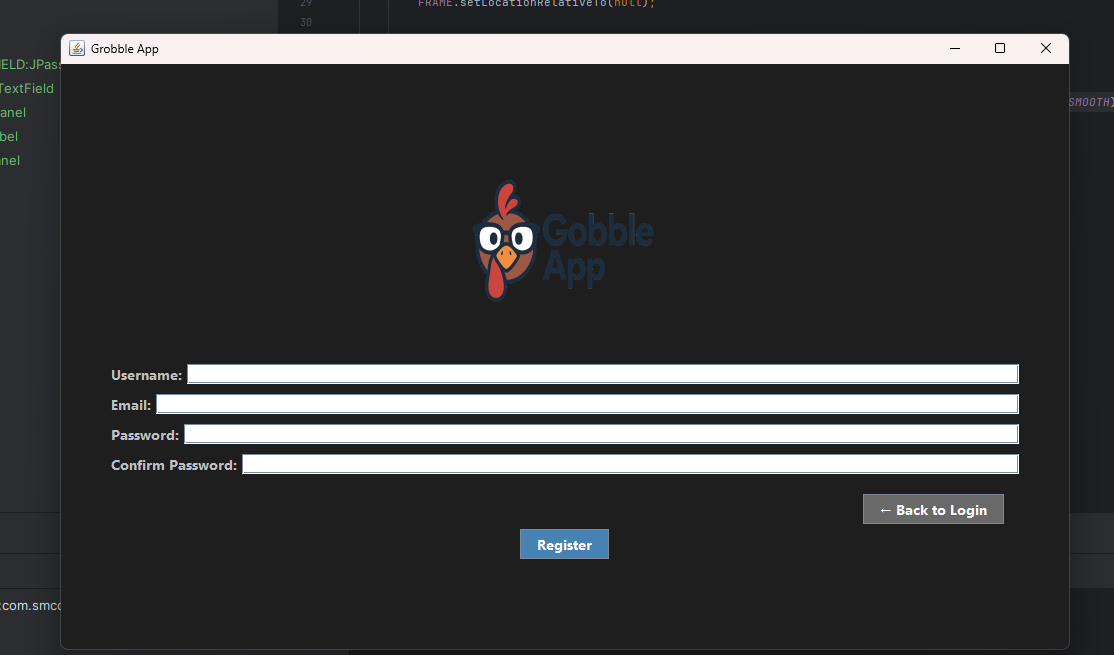
Register Page.
-
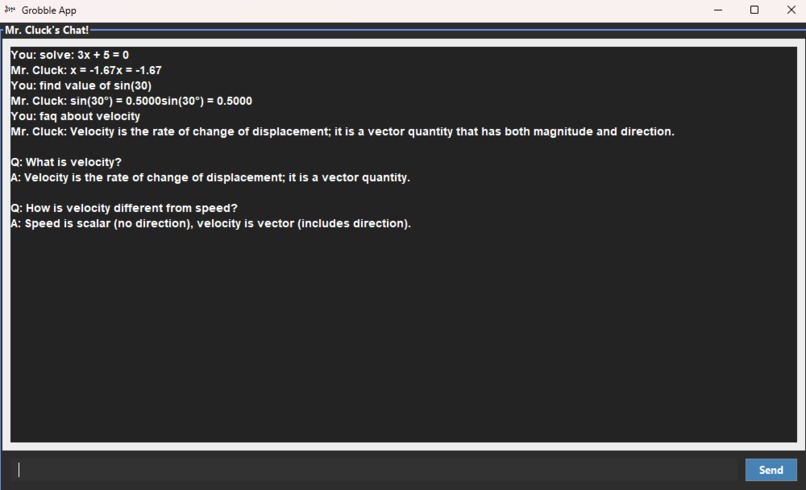
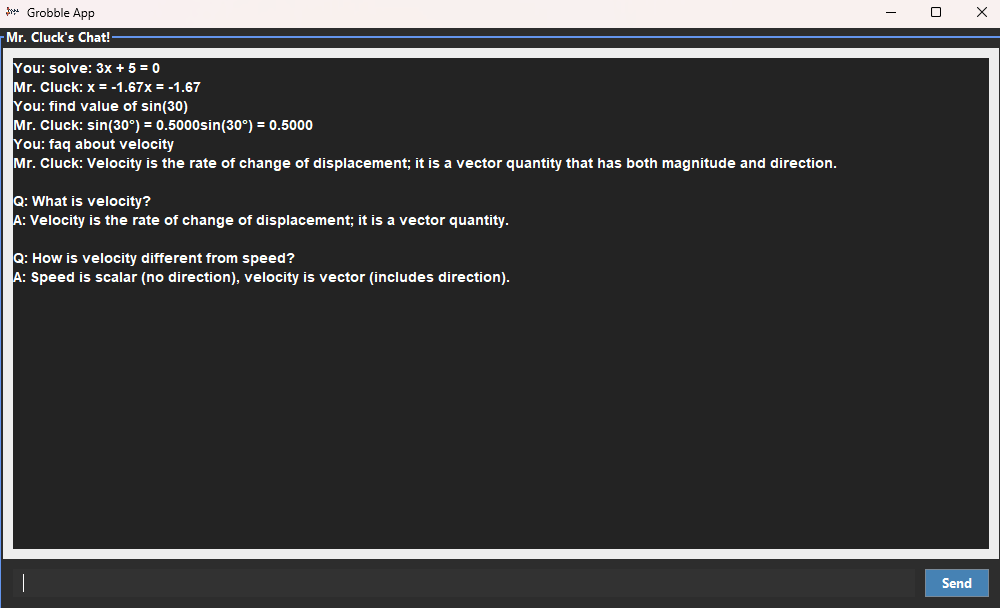
The System Solving Problems.
Inspiration
This Project Has Been Designed To Show That How AI Can Help Education. Not Only Does It Help The One Who Is Using Or Interacting With It, But Also The Ones Who Are Working On Building It Also Gains Some Amount Of Knowledge And Experience On That Specific Topic. We Have Designed Our Own Standalone Basic AI[INDEV] Instead Of Importing Any Public Models, To Show The Use And The Idea Of Creating Can Not Only Be Interesting But Also Can Be A Lot Fun!
What it does
Our project demystifies AI by breaking it down into a simple, interactive experience. It showcases the fundamentals of AI, focusing on the process and the enjoyment of building rather than complexity, making AI accessible and fun for everyone. Our project offers a hands-on, approachable way to understand and engage with artificial intelligence. It’s designed not around massive models or complex neural networks, but rather around the core logic and simplicity behind how an AI system can be built. Alongside showcasing interactive dialogue, it can also solve basic arithmetic problems based on specific parameters and inputs provided in a structured format. This balance between interaction and functionality allows users to not only experience AI but also understand its building blocks in a fun and meaningful way
How we built it
We approached this project with a focus on simplicity, creativity, and transparency. Instead of relying on large-scale machine learning models, we constructed a lightweight framework that mimics the core logic behind conversational AI. Using programming languages like Java and Kotlin[Used By IntelliJ For The Basic Gradle Framework], we built the foundations of a system that can handle structured inputs and respond accordingly.
Challenges we ran into
A major challenge was designing a process that balanced flexibility and control—one that feels interactive but remains easy to understand for those new to AI. We kept everything modular so users could trace how data flows through the system. From setting up input handlers to defining response templates and mathematical logic, every component was designed to be accessible and educational.
Accomplishments that we're proud of
The result is a working mini-AI that can not only carry out conversational exchanges but also perform basic arithmetic calculations when prompted in the right format. This hands-on build gave us—and hopefully our users—an appreciation of how AI systems think, one block at a time.
What we learned
Through this project, we discovered that building AI doesn’t always have to start with massive datasets or advanced algorithms. Sometimes, the best way to learn is by stripping the complexity down to its core and rebuilding it ourselves. We gained a better understanding of how conversational systems process inputs, structure responses, and create a sense of interactivity—even with minimal logic. We also learned the value of clean design and clear formatting. By setting specific parameters for input, we saw firsthand how structure can enable precision, even in something as “human-feeling” as an AI. More importantly, we experienced the creative thrill of designing something that others could engage with and learn from—a tool that’s educational, functional, and fun.
What's next for Gobble App-Mr. Cluck AI
We're envisioning the next version of the Gobble App to be a significant evolution, incorporating advanced AI capabilities. Mr. Cluck AI will transform into a fully independent AI assistant, capable of handling multiple conversation threads, reading and writing from files, and showing chat history for seamless continuity. We're focused on creating a more advanced and refined learning model, aiming to have Gobble App stand-alone as a testament to our in-house innovation.—

Log in or sign up for Devpost to join the conversation.