-
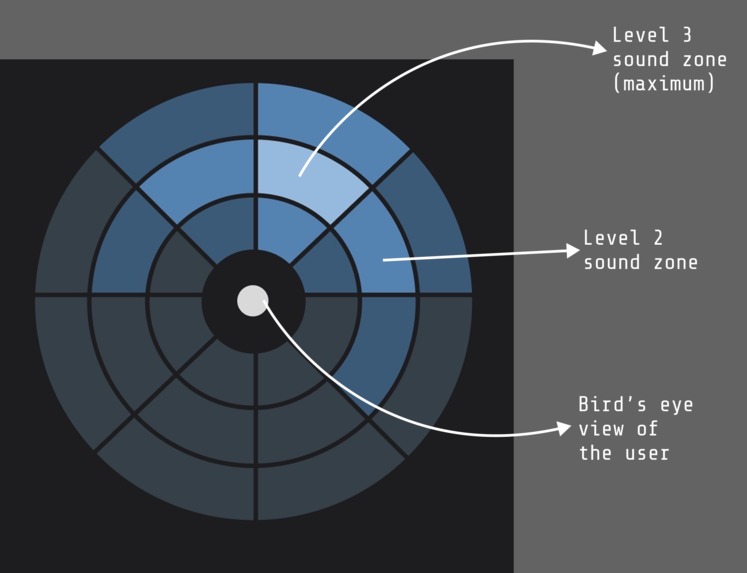
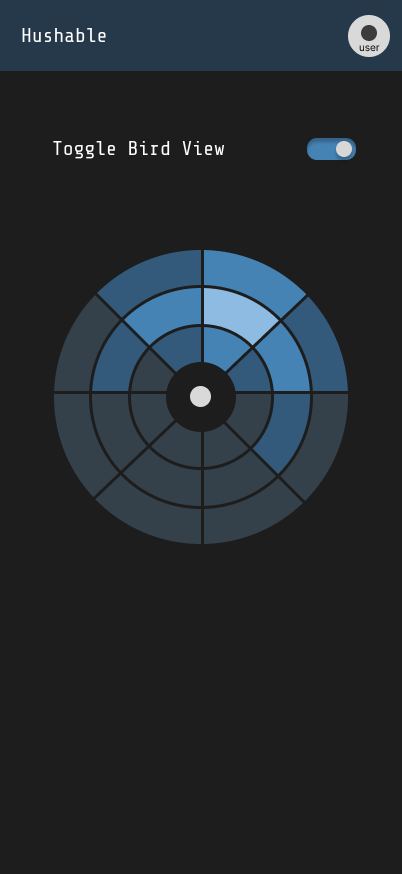
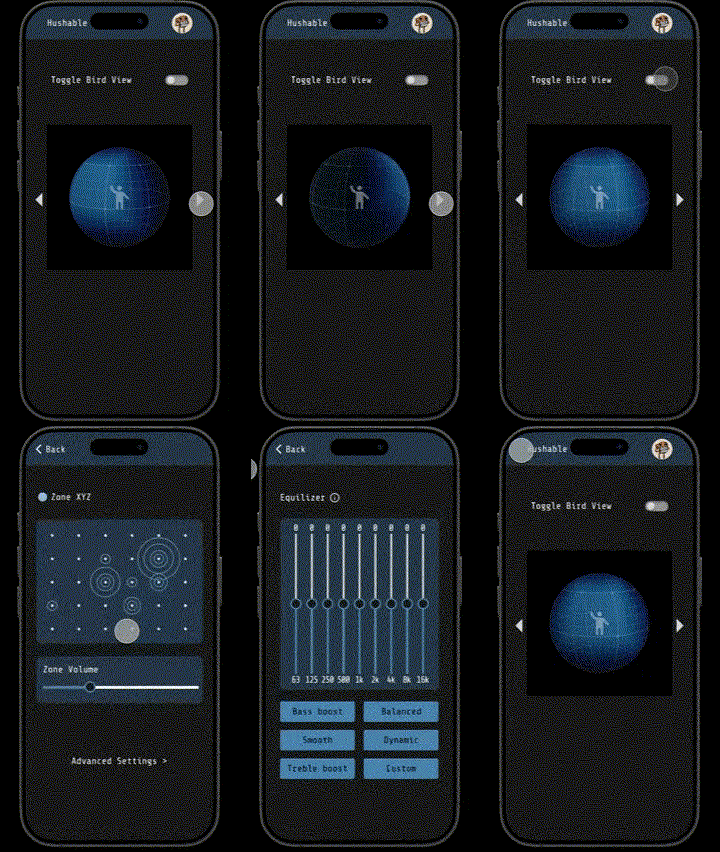
Bird view of the user's sound environment with zone of interest
-
 GIF
GIF
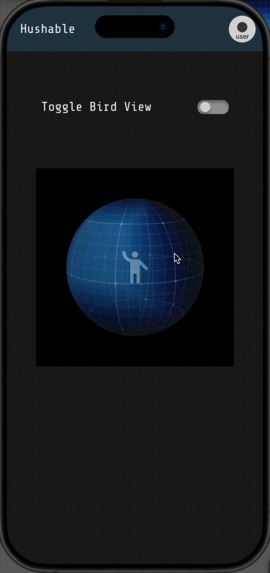
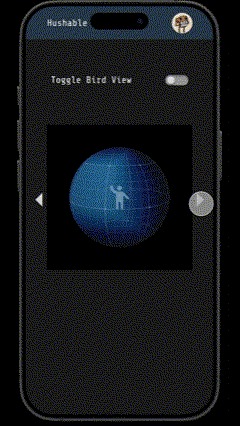
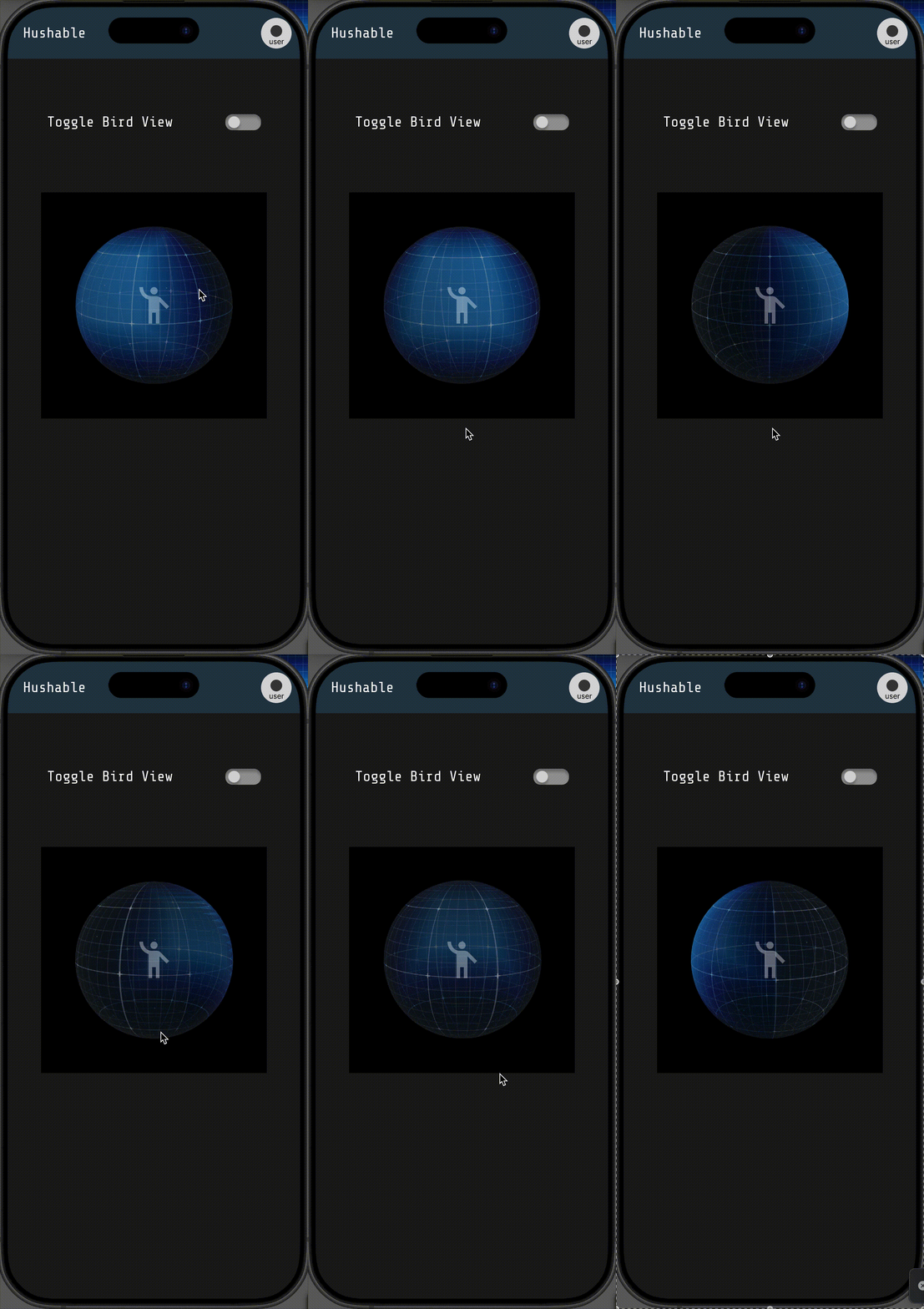
Globe view of the user's sound environment with zone of interest
-
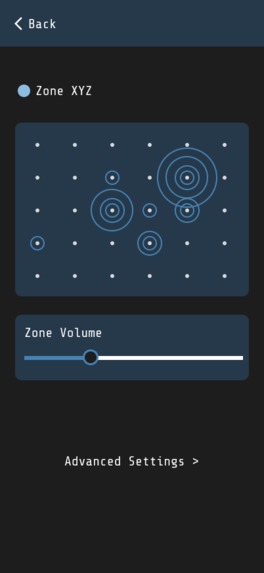
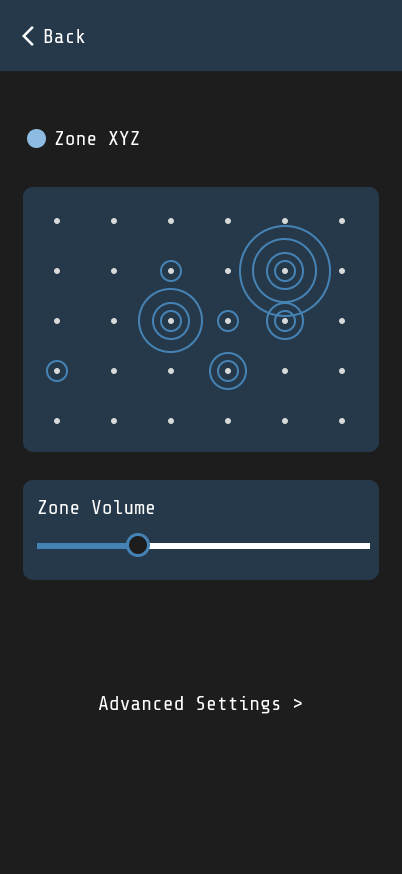
The user can adjust the volume of a specific zone
-
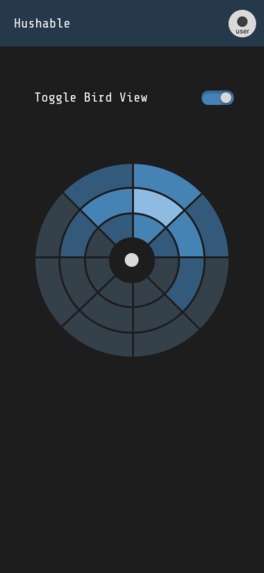
Bird view of the user's sound environment with zone of interest
-
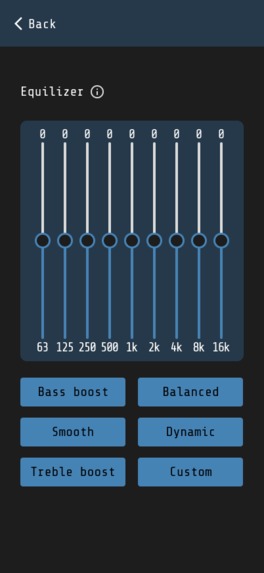
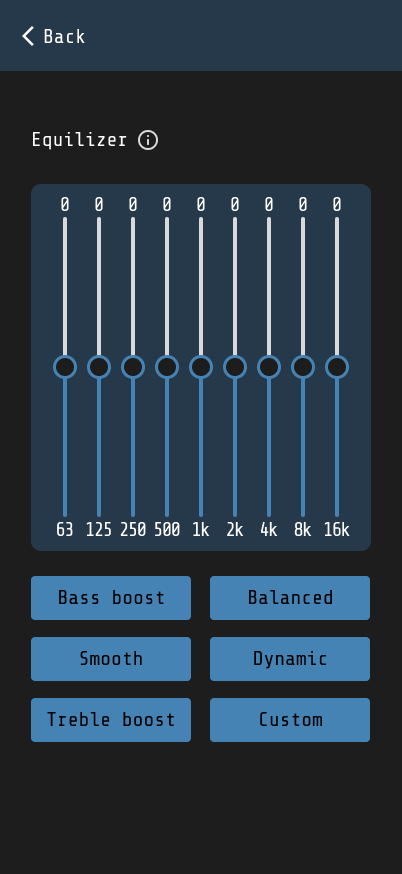
More options for the user to adjust their environment. Presets exist to adjust with commonly used settings
-
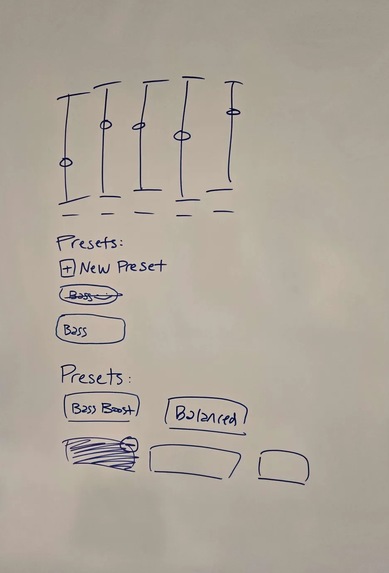
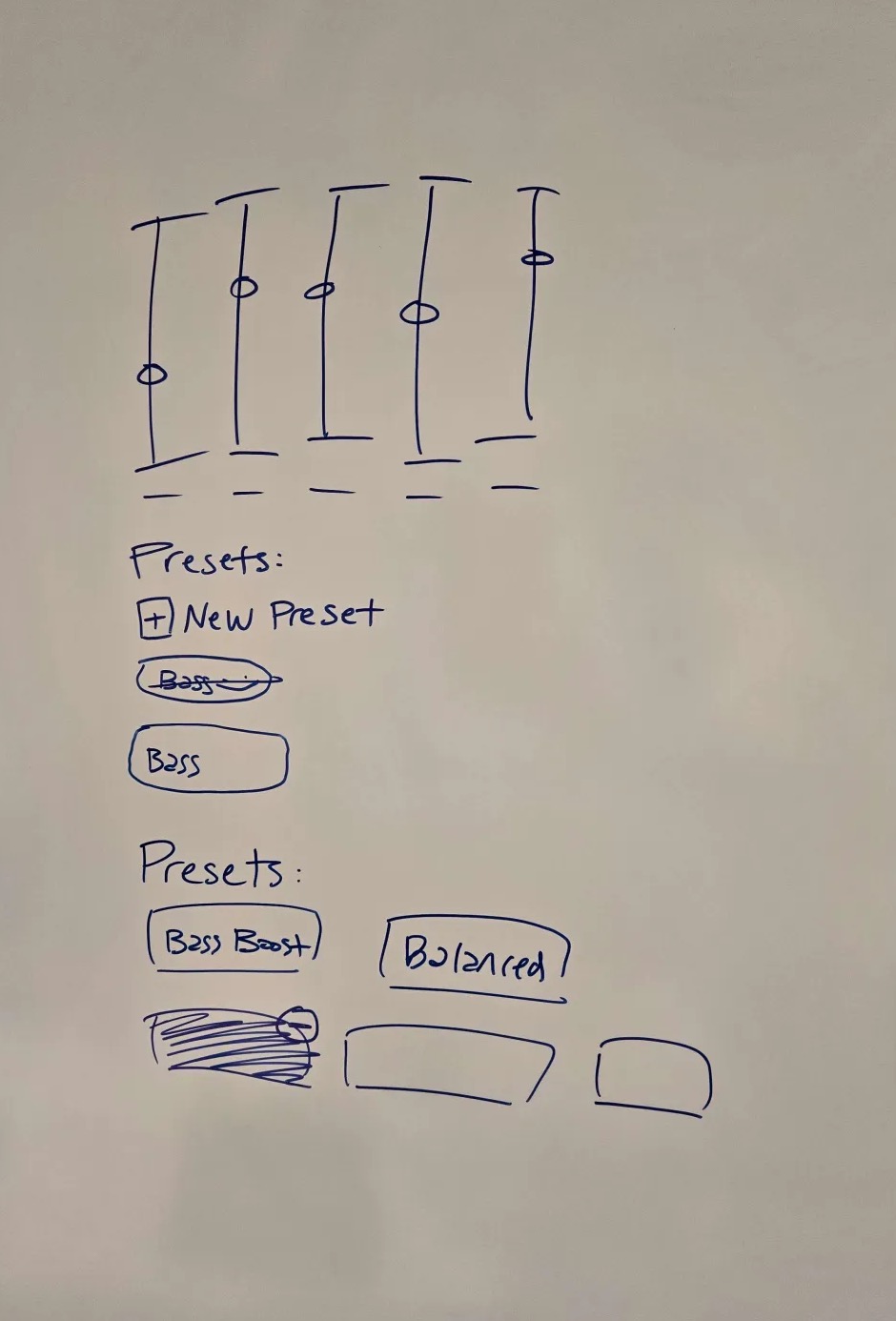
Sketch of how a user can add presets of their desired sound environment
-
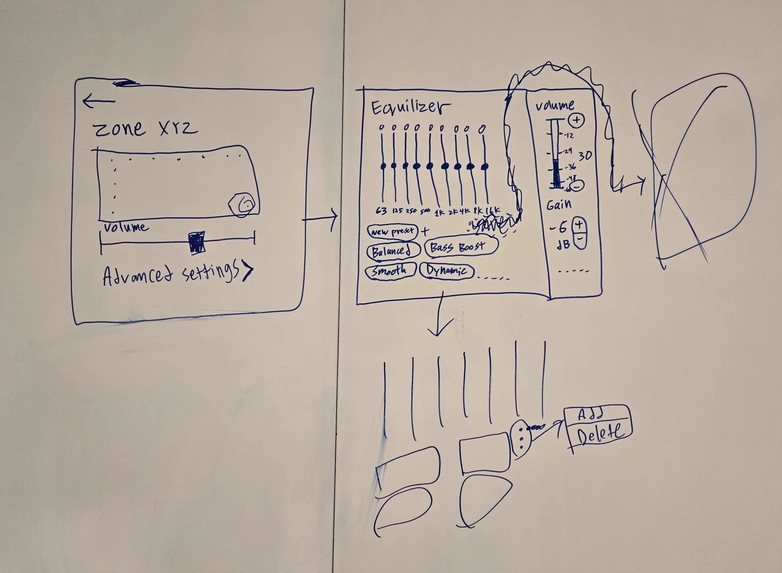
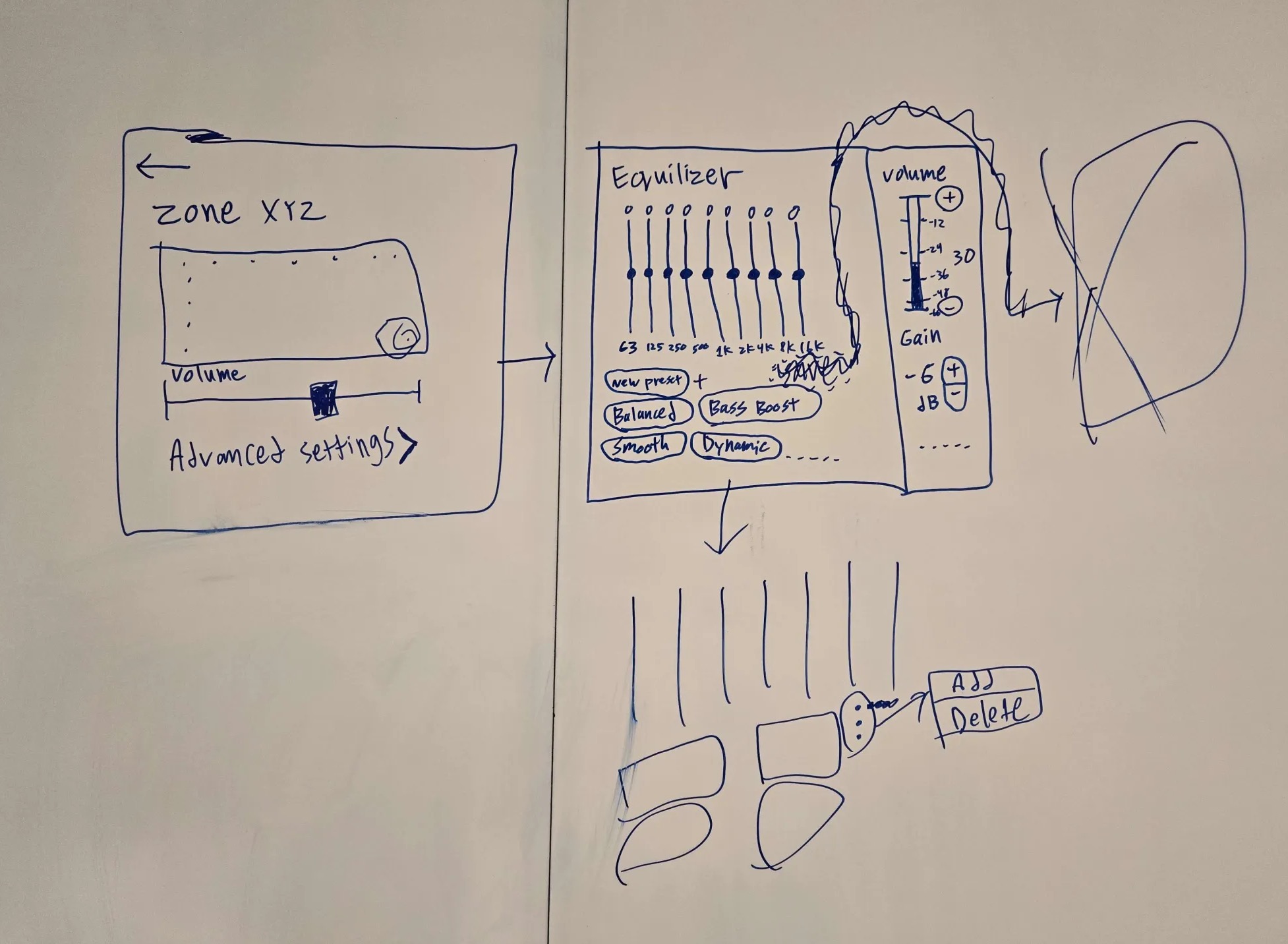
Sketch of what clicking on a desired zone would look like
-
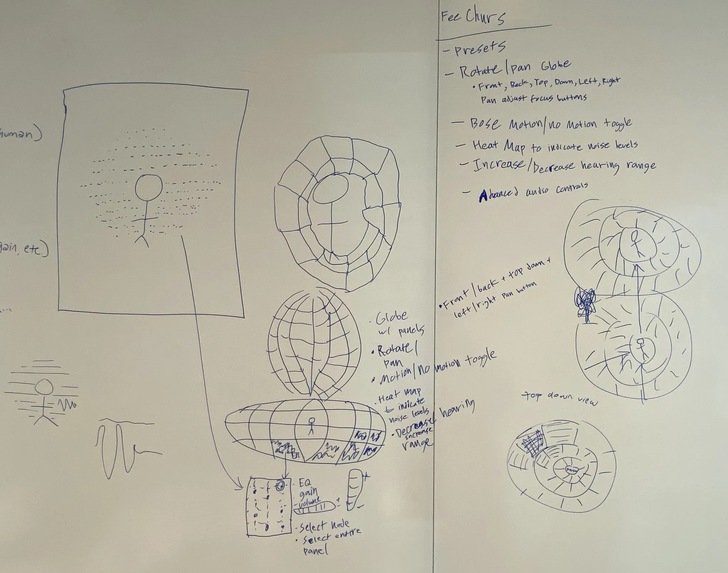
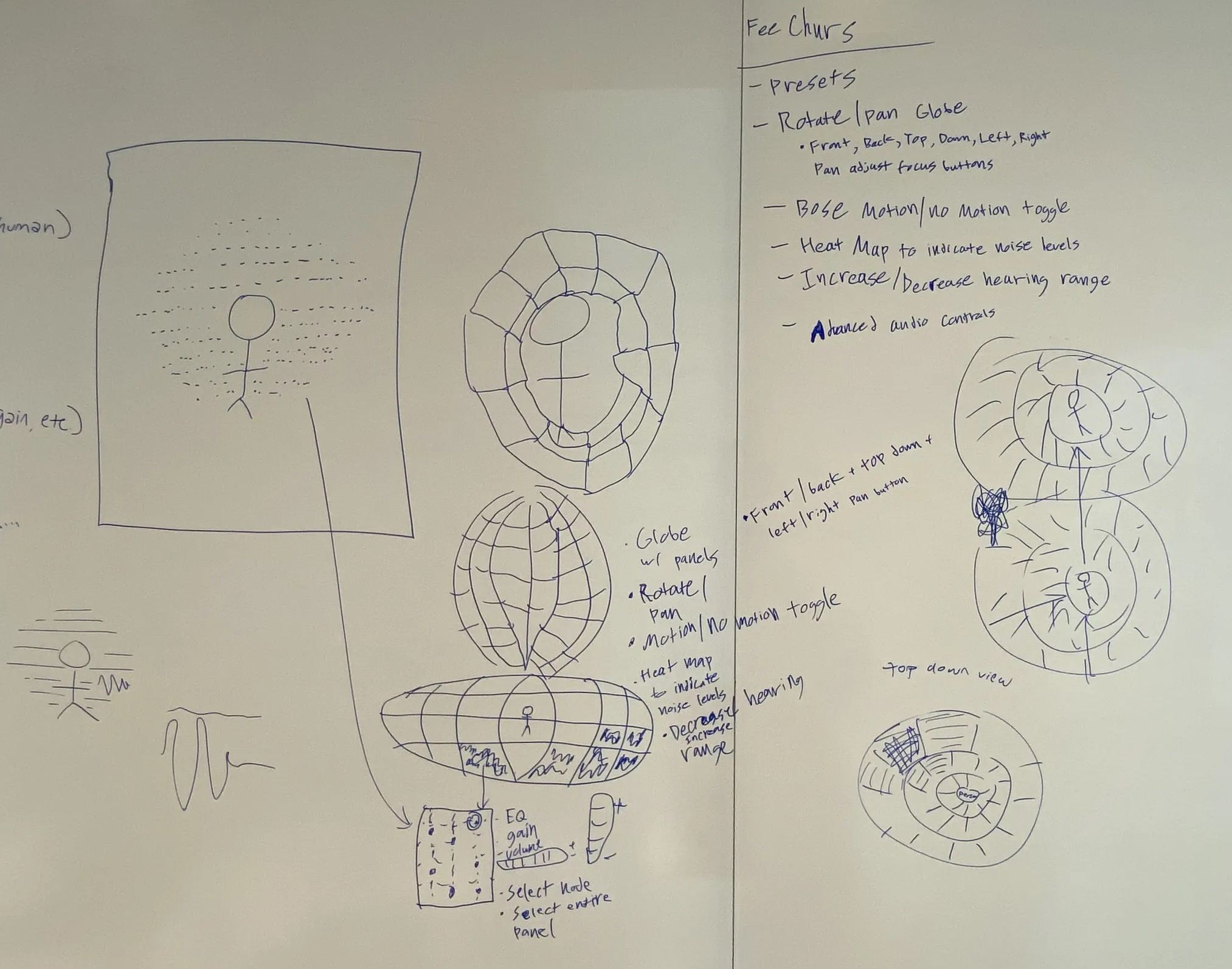
Sketches to visualize the user's surroundings using a "globe" with colored sections
-
 GIF
GIF
GIF of prototype

(In person group)
Problem Statement
With modern day life becoming more and more overstimulating with technology and society, people with auditory sensitivity have a difficult time going through everyday activities without overwhelming auditory stimulation.
Introducing Hushable
Hushable is an app designed to work with a smart set of headphones, giving users the power to control the audio stimuli around them. Imagine you’re at a design-a-thon expo. There are 60 teams presenting. Sixty conversations at once. Keyboards clacking. Announcements blaring from the front. Laughter echoing from the left. And you’re right in the middle, trying to focus on a project that genuinely interests you but you just. can’t. focus.
That’s where Hushable comes in. You clip on your Hushables, open the app, and see an interface that visualizes the room, mapping out sound by direction and intensity. You tap the front of the room to lower the announcements that don’t concern you. The chaos fades, and you're finally able to interface with the world how you would like to.
What inspired us:
Some of us and our friends, experience sensitivity to sound. During the design-a-thon, we spoke with others who shared similar struggles. Many felt overwhelmed in loud environments or irritated by certain everyday sounds, but didn’t know how to manage or escape them. These conversations made us realize how common yet overlooked this experience is.
What stood out most was the emotional toll, feeling anxious, drained, or even panicked in situations where sound couldn’t be controlled. It can feel like you're at the mercy of your environment, with no way to dial it down or tune it out. That sense of helplessness stuck with us. We were motivated to tackle this problem to not only give users comfort, but restores a sense of control and calm in a noisy world.
Who is Hushable for?
Our product is designed for individuals with auditory sensitivities—including those on the autism spectrum, people with sensory processing disorders, or anyone who finds certain everyday sounds overwhelming or distressing. It's also helpful for those with partial hearing loss who want more personalized sound control rather than traditional amplification.
According to the CDC, about 1 in 6 people in the U.S. experience sensory processing differences, and > > noise sensitivity is one of the most common challenges.
Through thoughtful decisions, we aim to empower users to feel more in control of their environments—whether that means reducing background noise, enhancing conversations, or simply making the world a little more manageable.
What we learned:
By conducting research from in-person conversations, online forums, and personal experiences, it became clear that sensitivity to sounds can manifest in many different forms for many different people. For example, many conveyed that loud, open environments are understandably unbearable for long periods of time. On the other hand, interviewees conveyed that even small sounds, such as keyboard typing or paper rustling, negatively affected their ability to focus within lecture settings. From this, we realized that the problem of sound sensitivity is incredibly nuanced and varies from person to person.
The solution we came up with is an interface for a hypothetical set of earphones that would allow a user to control the volume and other sound features of the noises around them. Since our design is meant to accompany earphone hardware, we decided to look at existing mobile applications. One example was Sony’s SoundConnect, which allows custom control over specific headphone/earphone settings, such as noise cancelling and equalizer adjustments.
For our approach, we decided to make the assumption that phone technology allowed the ability to isolate sounds within the environment and allow real time edits to how a human perceives these sounds. This led to us coming up with a design for a mobile application that allows the user to control the sounds in their environment.
How we built Hushable:
We tried to focus on empathy, curiosity, and meaningful conversations.
Identifying the Problem Space We started by focusing on a challenge that was personally meaningful to us and had some experience with. Some of us on the team experience it ourselves, and we wanted to explore how technology could bring comfort and control to those dealing with it daily.
Understanding what already exists (Competitor Research) We looked into existing products and solutions—noise-canceling headphones, sound therapy apps, and assistive hearing devices. This helped us identify gaps in current offerings, especially around user agency and real-time sound filtering.
User Research We spoke to peers at the design-a-thon, held in-person conversations with people who live with sound sensitivity, and read through Reddit threads and YouTube testimonials. These stories helped us understand the emotional and sensory impact of overwhelming environments.
Defining the User Needs
Control over which sounds are filtered not just general noise cancellation.
A way to feel less anxious and more in control in unpredictable environments.
A simple, intuitive interface to adjust sound in real-time.
Ideation and Concept Development We brainstormed different ways to visualize and interact with sound. We landed on the concept of directional sound control—where users could tap into a sound source and adjust volume like tuning a soundboard, all from their phone.
Prototyping the Experience We sketched wireframes and built an interactive prototype of the app interface. Our design focused on clarity, ease of use and accessibility. We used a radial sound map as the centerpiece of the UX.
Challenges we faced:
- At first, it was difficult to design for a hypothetical piece of technology that does not actually exist. It took us a considerable amount of time brainstorming on how to effectively represent surrounding sound that was intuitive and natural to our user.
- Given the short time constraint and the ambition of our idea and associated research, it was difficult to foster an appropriate solution for our intended audience.
- The more we iterated on the design, the more difficult it was to keep track of the scope, especially because the novelty of our product meant that our ambition to add new features kept growing.
Built With
- curiosity
- empathy
- figma

Log in or sign up for Devpost to join the conversation.