Inspiration
AI is becoming part of everyday work, but proving AI capability is still surprisingly difficult.
People can say they know how to use ChatGPT, Gemini, Copilot, or other AI tools. They can complete courses and collect certificates. But for an employer, university, or organization, the more important questions are still hard to answer:
What has this person actually done with AI?
What problem did they solve?
What did AI produce, what did the person improve, and what was the final result?
Did the work create measurable value?
Can someone else verify it?
This is the gap that led us to build GO4AI AI Passport.
We wanted to move AI capability assessment away from “What did you learn?” toward a more practical question:
“What can you actually do with AI, what value did you create, and can you prove it?”
What we learned
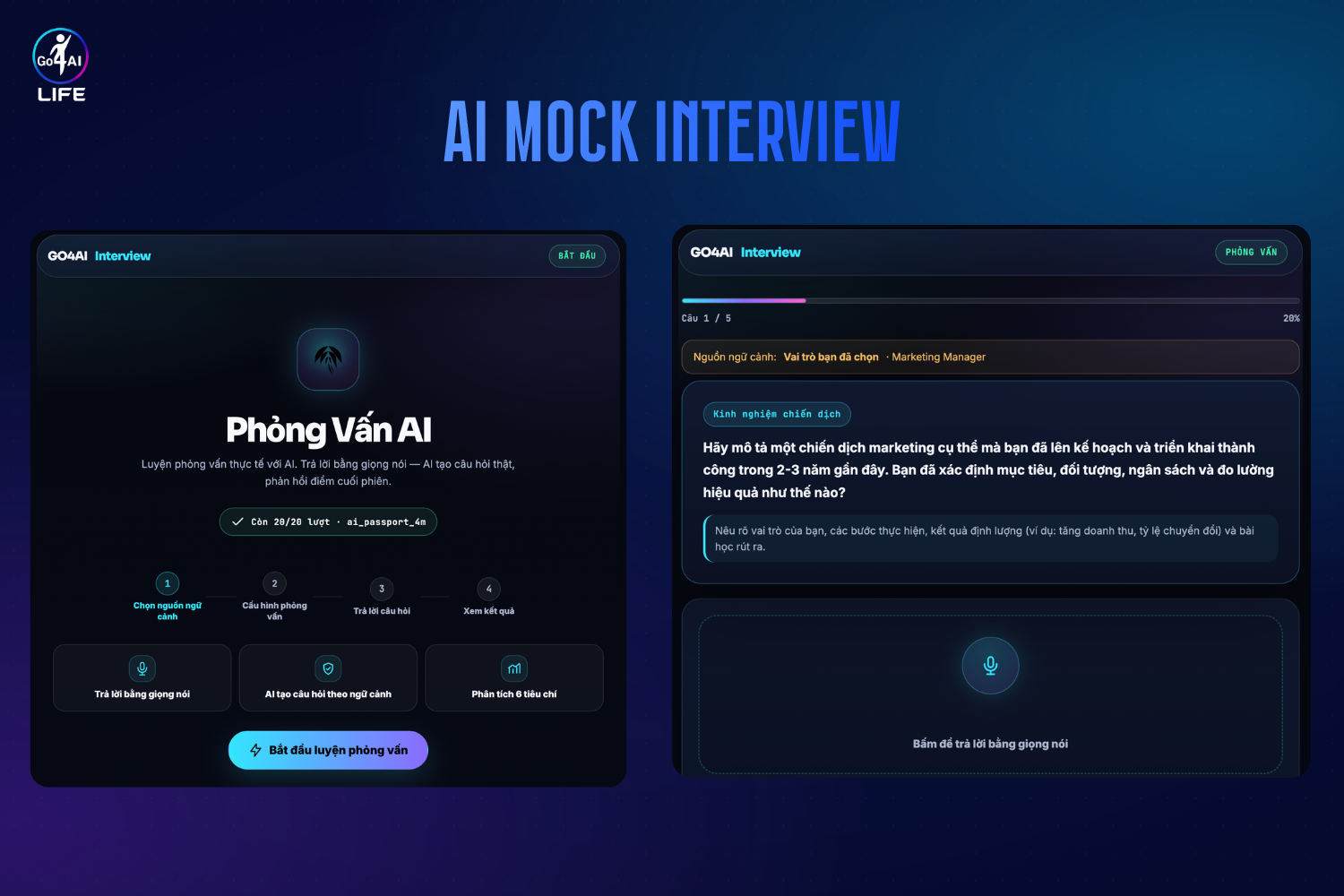
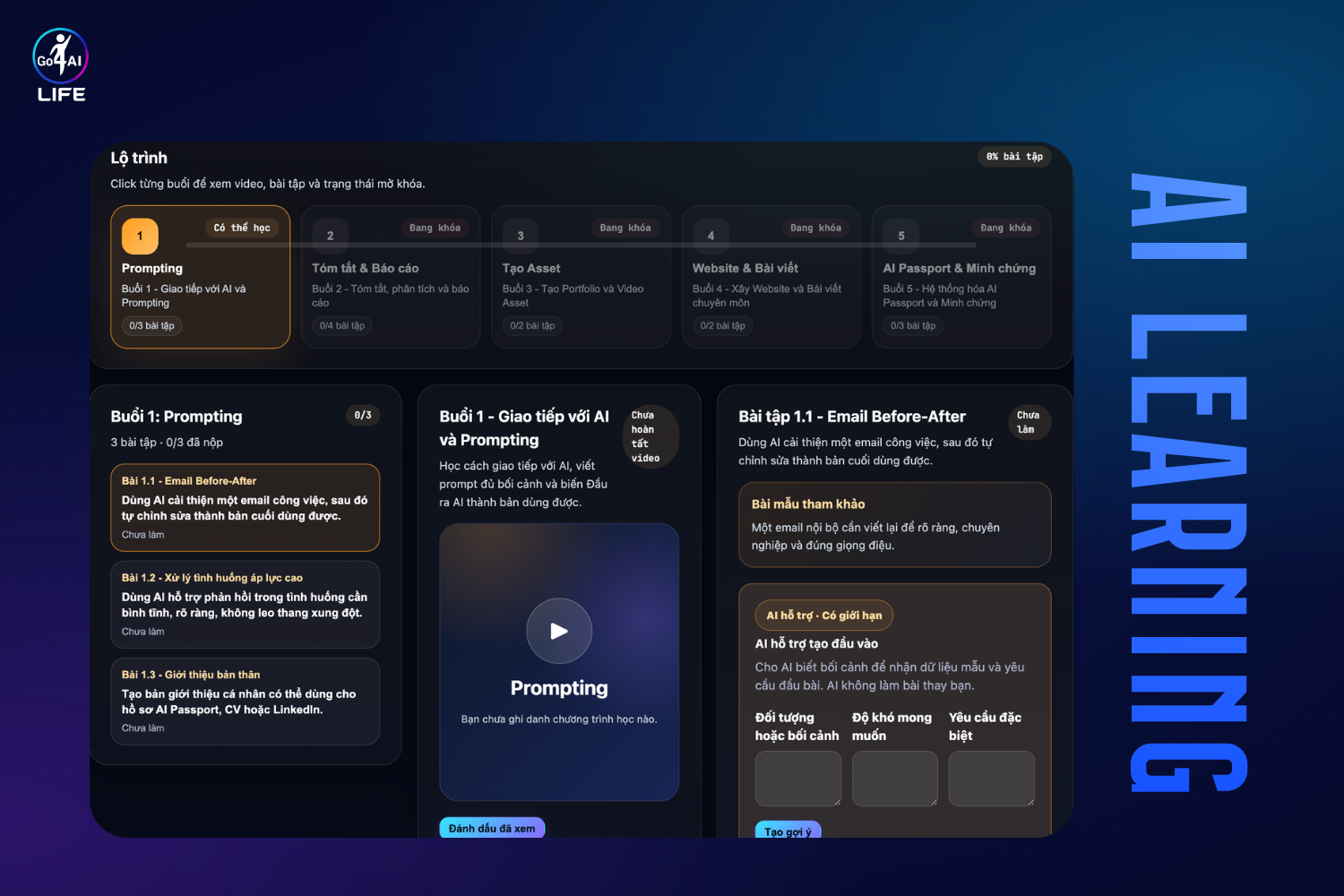
Before building AI Passport as a software product, GO4AI worked with learners, universities, and companies through practical AI training and workforce development programs.
These programs generated approximately USD 40,000 in revenue during our research and development phase. More importantly, they gave us access to real AI use cases and showed us how people actually apply AI at work.
We saw the same problem repeatedly.
Finishing an AI course did not necessarily mean someone could apply AI effectively at work. Knowing how to write a good prompt was not enough either.
The strongest evidence of capability came from the complete work process: understanding the problem, deciding how to use AI, reviewing what AI produced, improving it with human judgment, producing something usable, and showing the result.
That changed the way we thought about assessment.
Instead of asking users to list their AI skills, AI Passport asks them to show the work behind those skills.
We also learned that AI should support the assessment process, but it should not make the final decision.
Our principle is simple:
AI assists. Humans remain accountable.
How we built it
GO4AI AI Passport is an evidence-based platform for assessing and verifying practical AI capability.
Instead of creating another course-completion certificate, we built the product around real work evidence.
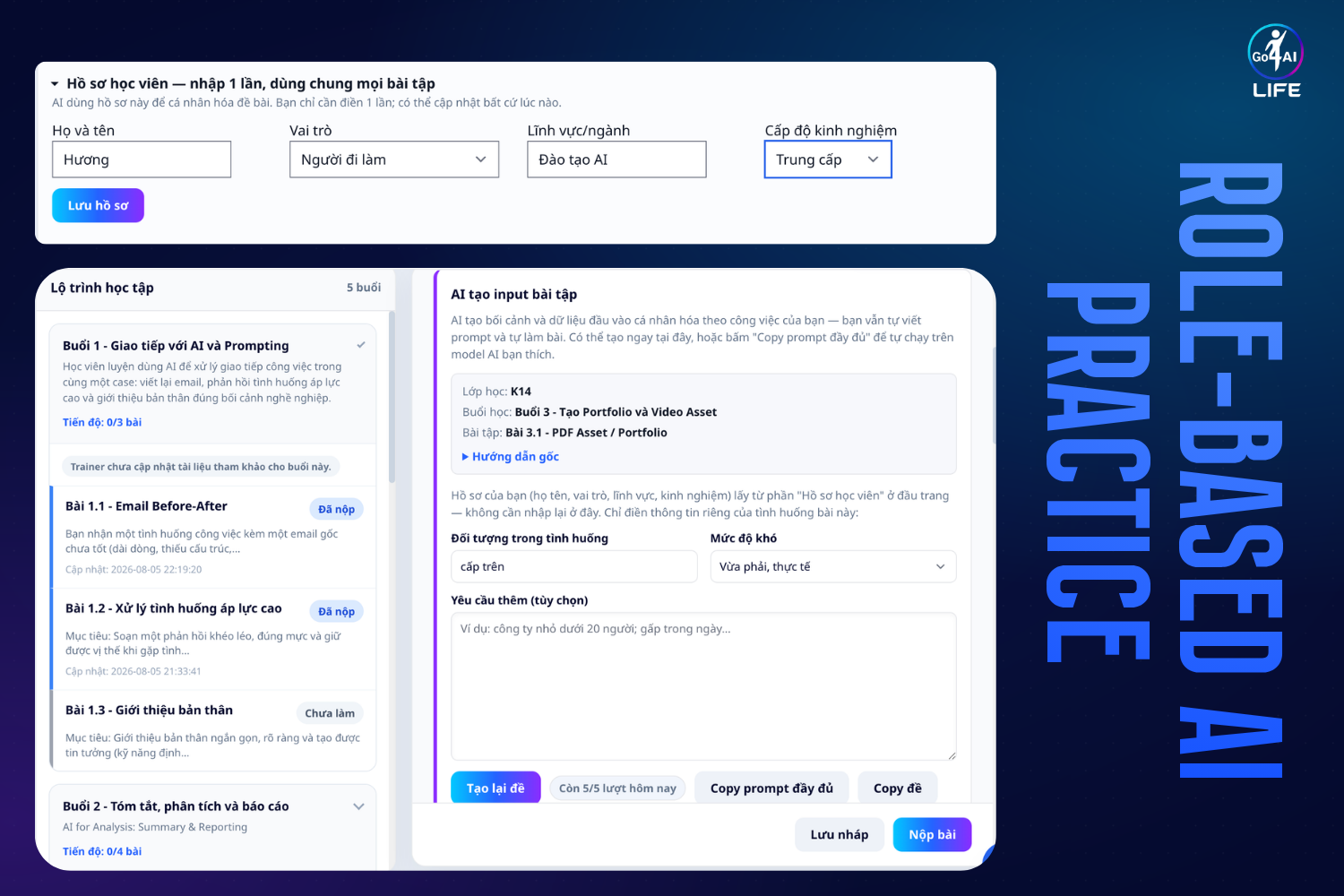
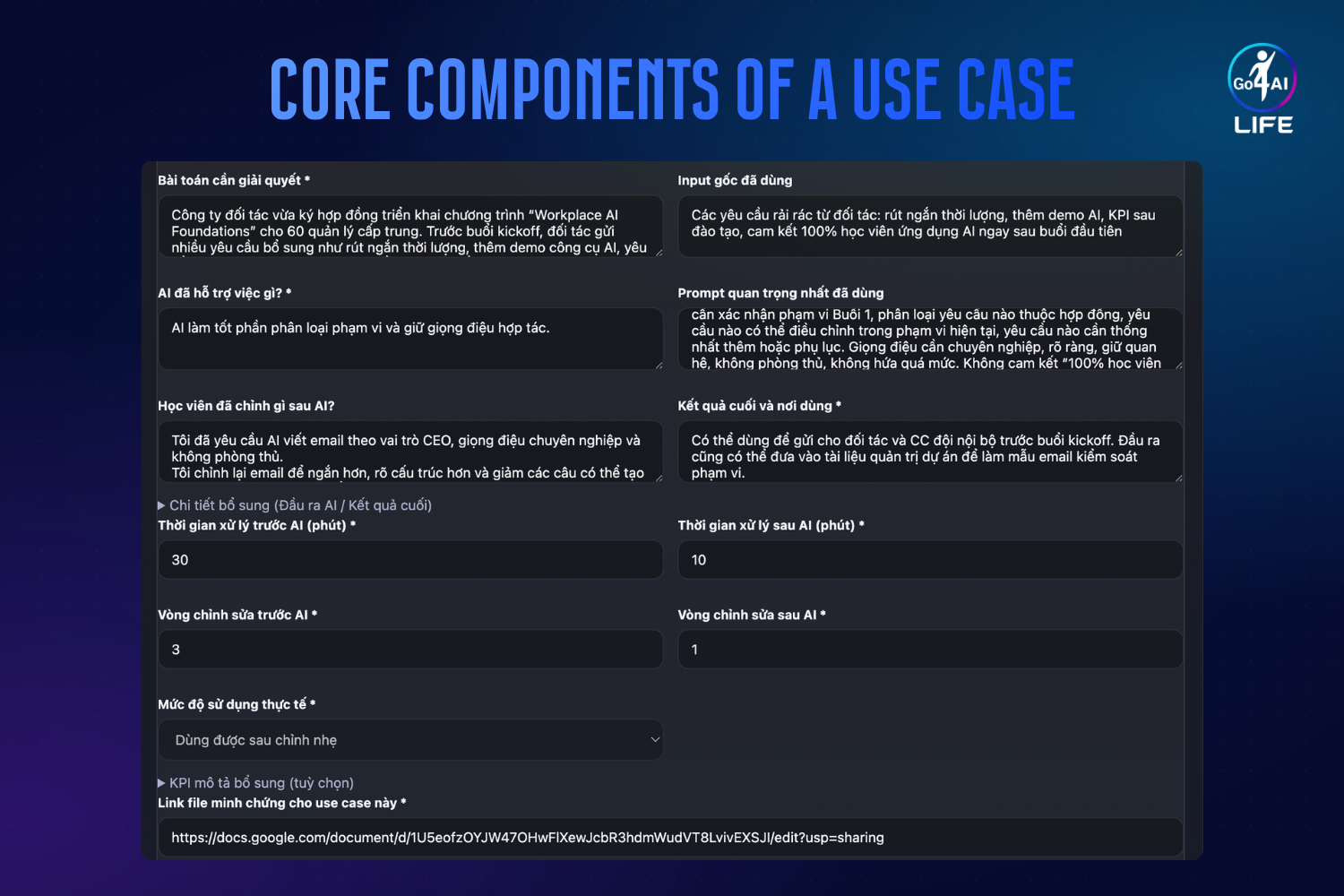
1. Evidence submission
A user starts with something they have actually done with AI.
They provide the context of the task, the problem they were trying to solve, how AI was used, the initial AI-generated output, what they changed, the final result, and any measurable impact.
This provides much more information than a self-declared skill such as “advanced ChatGPT user.”
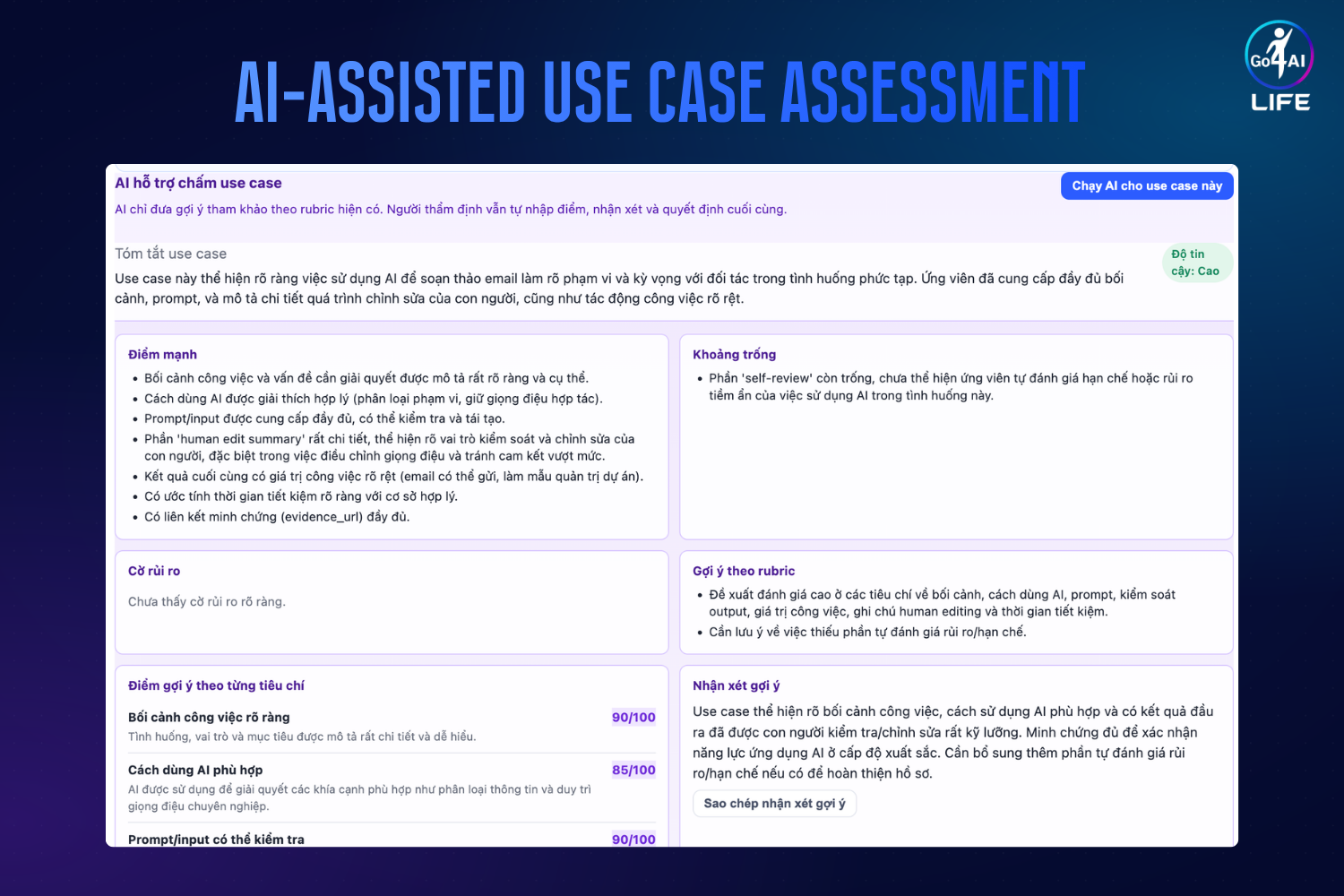
2. AI pre-check
The system checks whether the evidence is complete enough to review.
It can flag issues such as missing context, raw AI output with little human contribution, unclear results, or insufficient evidence that the final output was actually usable.
The purpose of this step is not to make the final decision. It reduces repetitive review work and helps users and reviewers focus on the parts that matter.
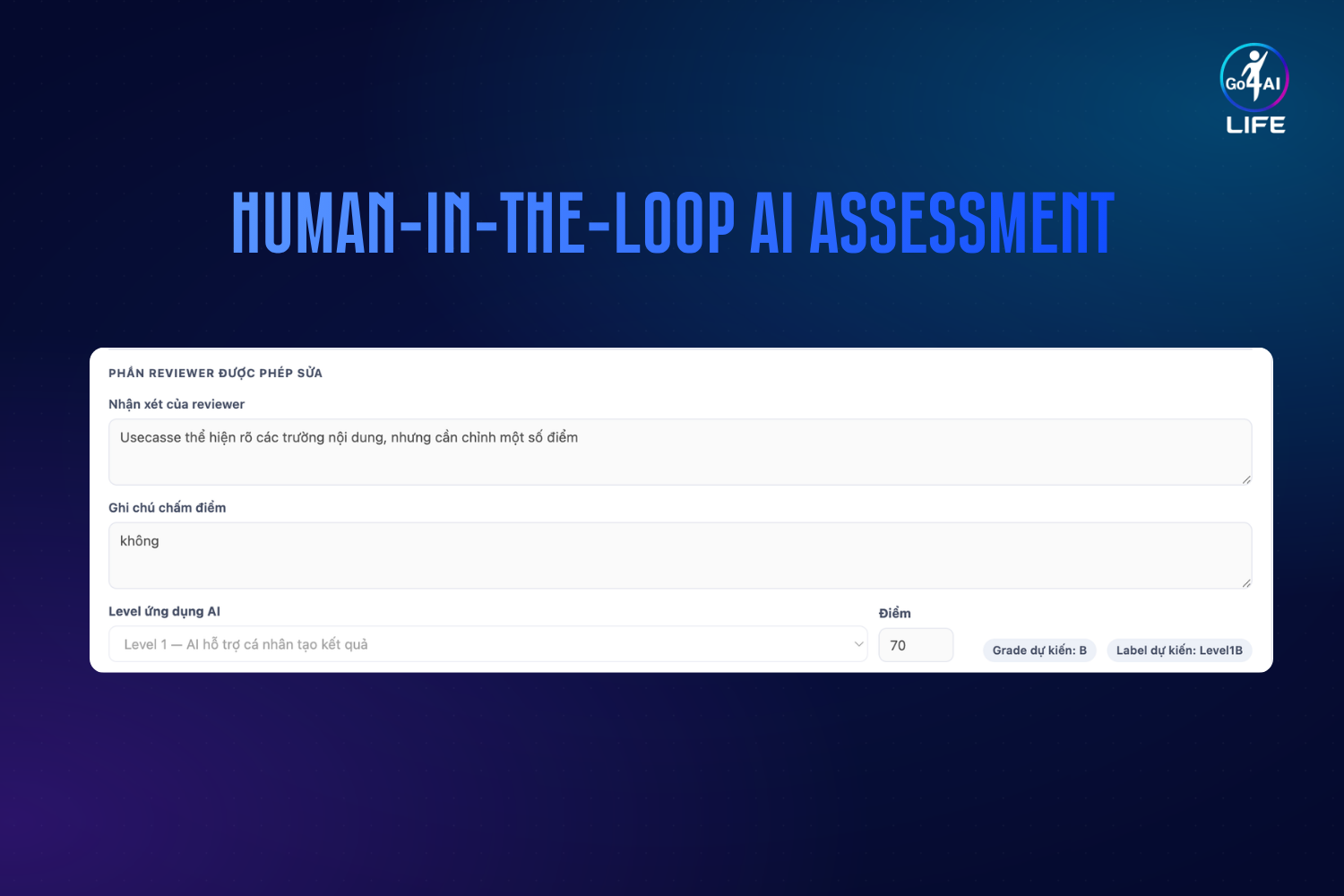
3. Human expert review
A reviewer evaluates the submission against a standardized rubric.
The reviewer considers the quality of the work, how AI was used, the user’s contribution, the final output, and the value created.
The reviewer, not the AI system, makes the final approval decision.
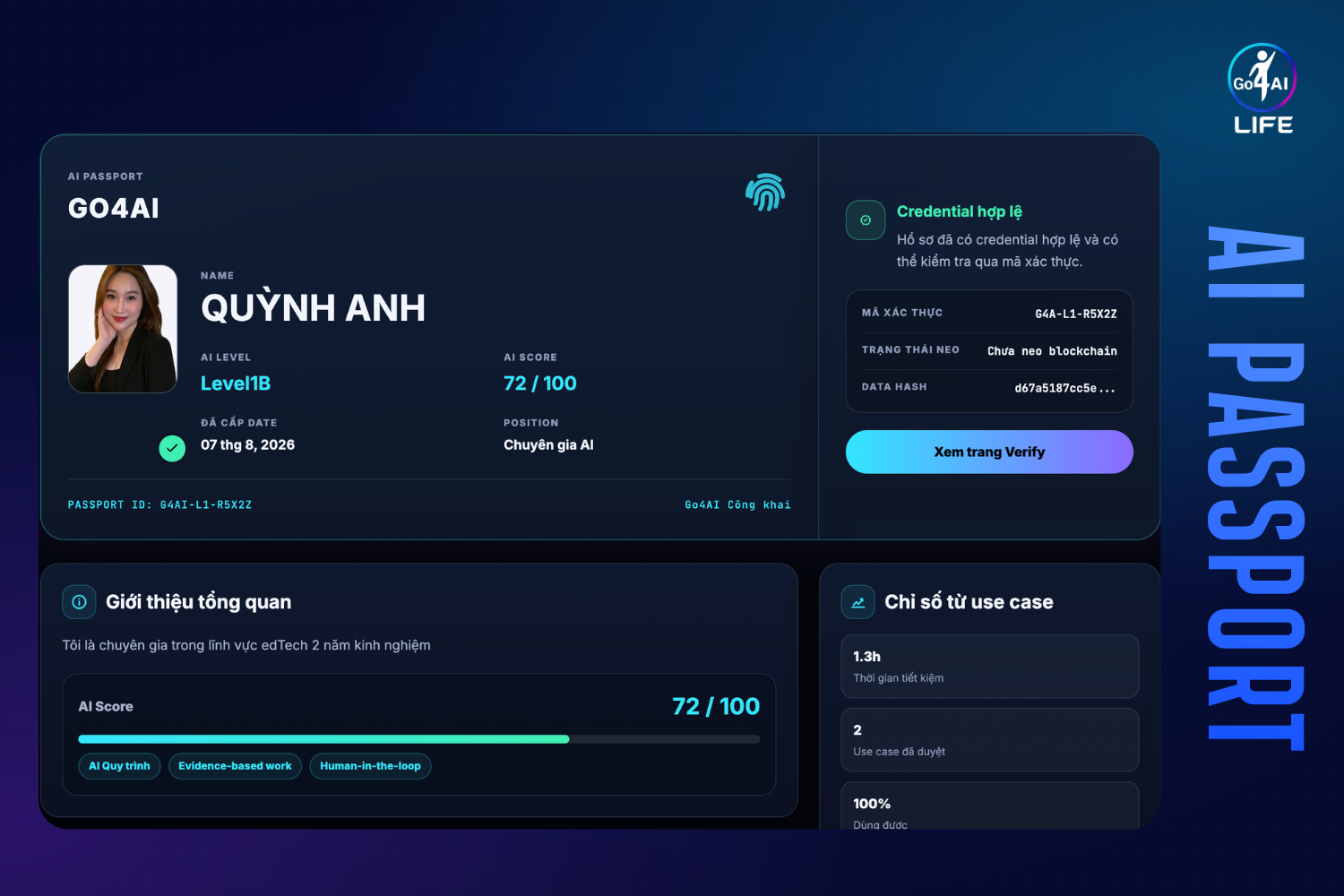
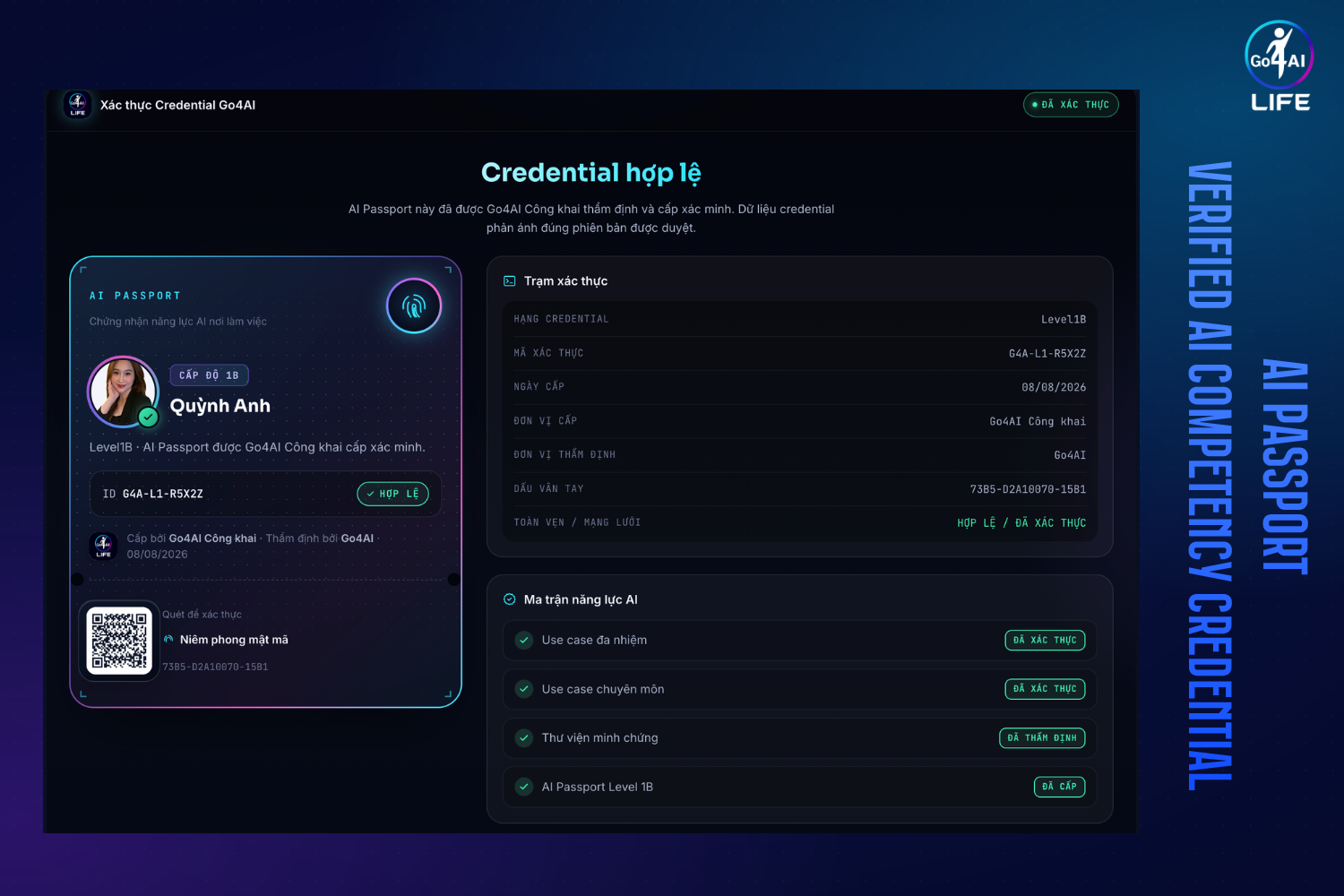
4. AI Passport issuance
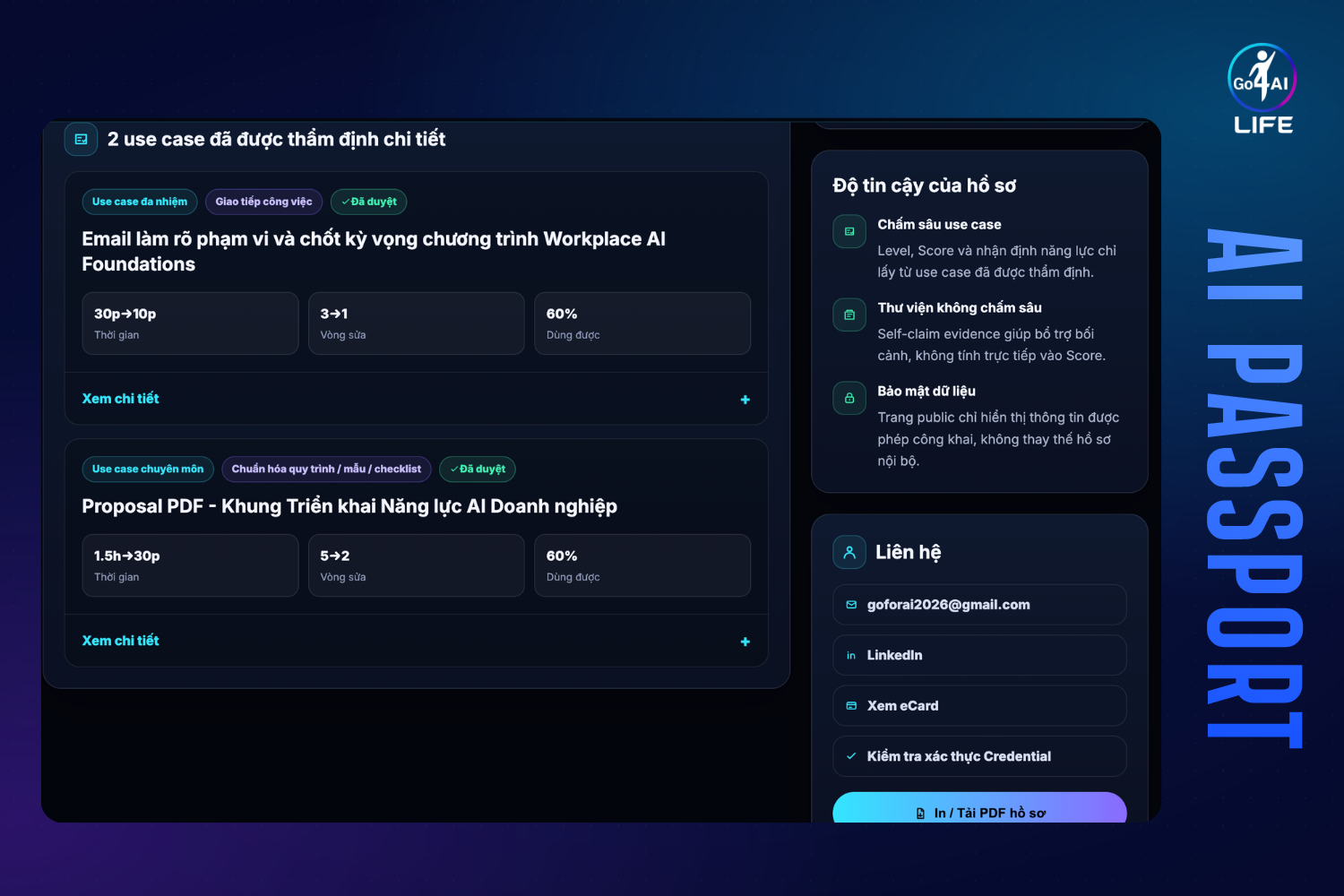
Once approved, the use case becomes part of the user’s AI Passport.
The Passport shows what the person has actually done with AI rather than simply listing the tools they claim to know.
Over time, one person can build a portfolio of verified AI use cases across different tasks, roles, and levels of complexity.
5. Verification
An issued AI Passport has a verification status that can be checked by employers, universities, companies, or other authorized parties.
Public information is separated from the underlying evidence so that verification does not require exposing all of the user’s original work or sensitive organizational information.
The long-term goal is for AI Passport to work alongside existing learning, HR, recruitment, and workforce development systems rather than forcing organizations to replace them.
Challenges we faced
Defining AI capability
This was one of the hardest questions.
Knowing how to write prompts is useful, but it is not the same as being able to use AI effectively in a real work environment.
We needed an assessment model that could look at the whole process:
- Was the right problem identified?
- Was AI used appropriately?
- Did the person evaluate the AI output?
- What did they change or improve?
- Was the final result usable?
- Was measurable value created?
- Is there enough evidence to support the claim?
This required us to think about AI capability as applied work rather than technical knowledge alone.
Keeping humans responsible for important decisions
Fully automated assessment would be easier to scale, but an AI Passport may eventually influence education, hiring, or workforce development decisions.
For that reason, we deliberately chose a human-in-the-loop model.
AI supports evidence checking and analysis. Human experts remain responsible for the final decision.
Making evidence trustworthy
A portfolio is useful, but a self-reported portfolio still depends heavily on what the owner chooses to say about themselves.
We needed a stronger trust layer.
AI Passport combines structured evidence, a standardized review process, human approval, verification status, and a record of the evidence at the time it was approved.
The goal is not to make an absolute claim that someone is “good at AI.”
The goal is to make a more defensible claim: this person completed this piece of work, provided evidence, and that evidence was reviewed against a defined set of criteria.
Protecting real work data
Real work evidence can contain personal information, internal company data, client information, or other sensitive material.
We designed the workflow around data minimization and separation between what is needed for assessment and what needs to be publicly visible.
A third party should be able to verify a Passport without automatically gaining access to the user’s full underlying evidence.
Scaling review without losing quality
Human review gives the system credibility, but it also creates an operational challenge.
If every submission requires the same amount of manual work, the model becomes difficult to scale.
Our approach is to use AI for repetitive pre-checking and evidence preparation while keeping reviewers focused on judgment, context, and final approval.
This allows us to increase review capacity without removing human accountability.
Impact so far
We did not start AI Passport from a theoretical framework.
Before launching the software, GO4AI used practical AI training programs to study how people apply AI at work, what evidence they can realistically provide, and what organizations need in order to evaluate that work.
These programs generated approximately USD 40,000 in revenue during the R&D period and provided real use cases that helped shape the evidence structure, assessment rubric, and review workflow.
We started introducing the software to existing learners on June 1, 2026 to test the experience and collect feedback.
AI Passport officially entered the market on June 17, 2026.
By July 17, 2026, one month after the official launch:
- 100 new users had joined the platform.
- AI Passport and assessment services had generated approximately USD 720 in direct revenue.
- Three educational institutions were implementing the platform: CTIM College, College of Foreign Economic Relations, and Hoa Sen University.
- Two companies, HR1Vietnam Holdings and Thinksmart, were implementing the platform.
- The two enterprise deployments are expected to complete their rollout in September and October 2026.
- Together, these deployments are expected to contribute approximately USD 10,000 in annual platform revenue.
- GO4AI had a broader network of 13+ educational institutions and 10+ companies at different stages of pilot, partnership, or deployment preparation.
- The full workflow from evidence submission to AI pre-check, human review, Passport issuance, and verification was already operating with real users.
- Our operational target is to process a complete and valid submission within 24 hours.
The early numbers are still small, and we are careful not to present pilots or projected contracts as realized revenue.
What matters at this stage is that the full operating model is already being tested with real users, universities, and companies.
Why this matters for individuals
For an individual, AI Passport provides a way to move beyond saying, “I know how to use AI.”
Instead, they can show what they have actually done.
A Passport can become a growing professional record of real AI-assisted work, including the problems solved, the person’s contribution, the outputs created, and the results achieved.
It is not intended to replace a degree, professional certification, CV, or work experience.
It adds another signal: evidence of practical AI capability that can be reviewed and verified.
Why this matters for universities
Universities already measure attendance, grades, credits, and course completion.
What is much harder to measure is whether students can use AI to produce meaningful work.
AI Passport adds an evidence layer to that process.
A university can see what students built, which capabilities are emerging, where the gaps are, and which students have work that can be presented to employers.
This can help institutions connect AI education more directly with employability.
Why this matters for companies
For companies, the question is not simply whether employees have access to AI tools.
The more useful questions are:
Who is actually using AI effectively?
Which tasks are producing value?
Which use cases can be repeated?
Where are the capability gaps?
Is AI training producing measurable improvement?
As more AI Passport evidence is collected, organizations can begin to identify patterns across teams and roles.
Successful individual practices can potentially be turned into reusable workflows, SOPs, checklists, playbooks, prompt patterns, and other internal knowledge assets.
This is where we see AI Passport moving beyond an individual credential and becoming part of an organization’s AI capability infrastructure.
What's next
Vietnam is our first validation market.
Our immediate focus is to prove that the model can work consistently across individuals, universities, and companies before expanding further.
The next stage focuses on three areas.
First, better assessment.
We will continue refining the evidence structure, reviewer rubric, and AI-assisted pre-check process based on real submissions and reviewer feedback.
Second, organizational capability analytics.
Instead of looking at one Passport at a time, organizations should be able to understand capability across a cohort, team, department, or workforce.
Third, integration.
AI Passport is intended to become an assessment and verification layer that can connect with learning platforms, HR systems, recruitment systems, and other workforce infrastructure.
Once the model is sufficiently validated in Vietnam, we plan to expand through local education, workforce, and enterprise partners across Southeast Asia.
Our ambition is not to create another AI certificate.
We want to build a practical way for people and organizations to answer a more important question:
Can this person actually use AI to create useful, measurable work?
If the answer is yes, there should be evidence to prove it.
AI capability should not simply be claimed. It should be demonstrated, reviewed, and verified.
Built With
- ai
- api
- assessment
- b2b
- blockchain
- credential
- css
- edtech
- engineering
- evaluation
- gemini
- human-in-the-loop
- javascript
- node.js
- postgresql
- prompt
- react
- review
- rubric-based
- saas
- studio
- supabase
- tailwind
- verification
- vite


Log in or sign up for Devpost to join the conversation.