-
-
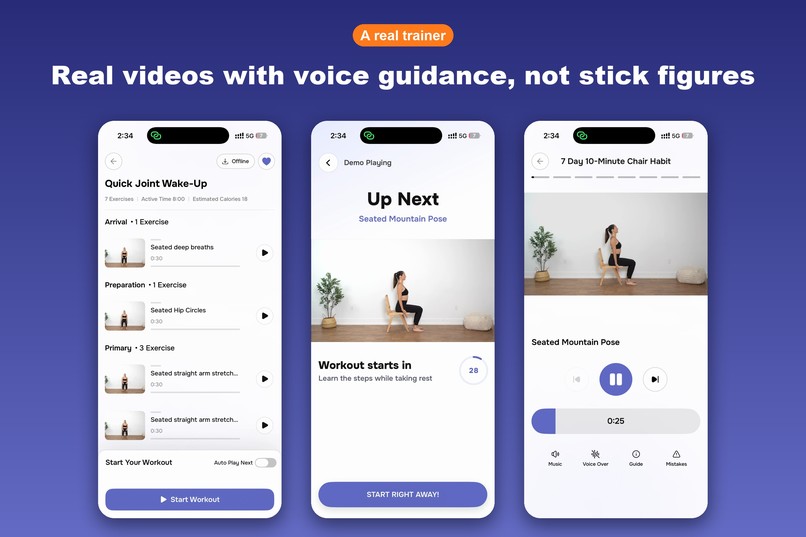
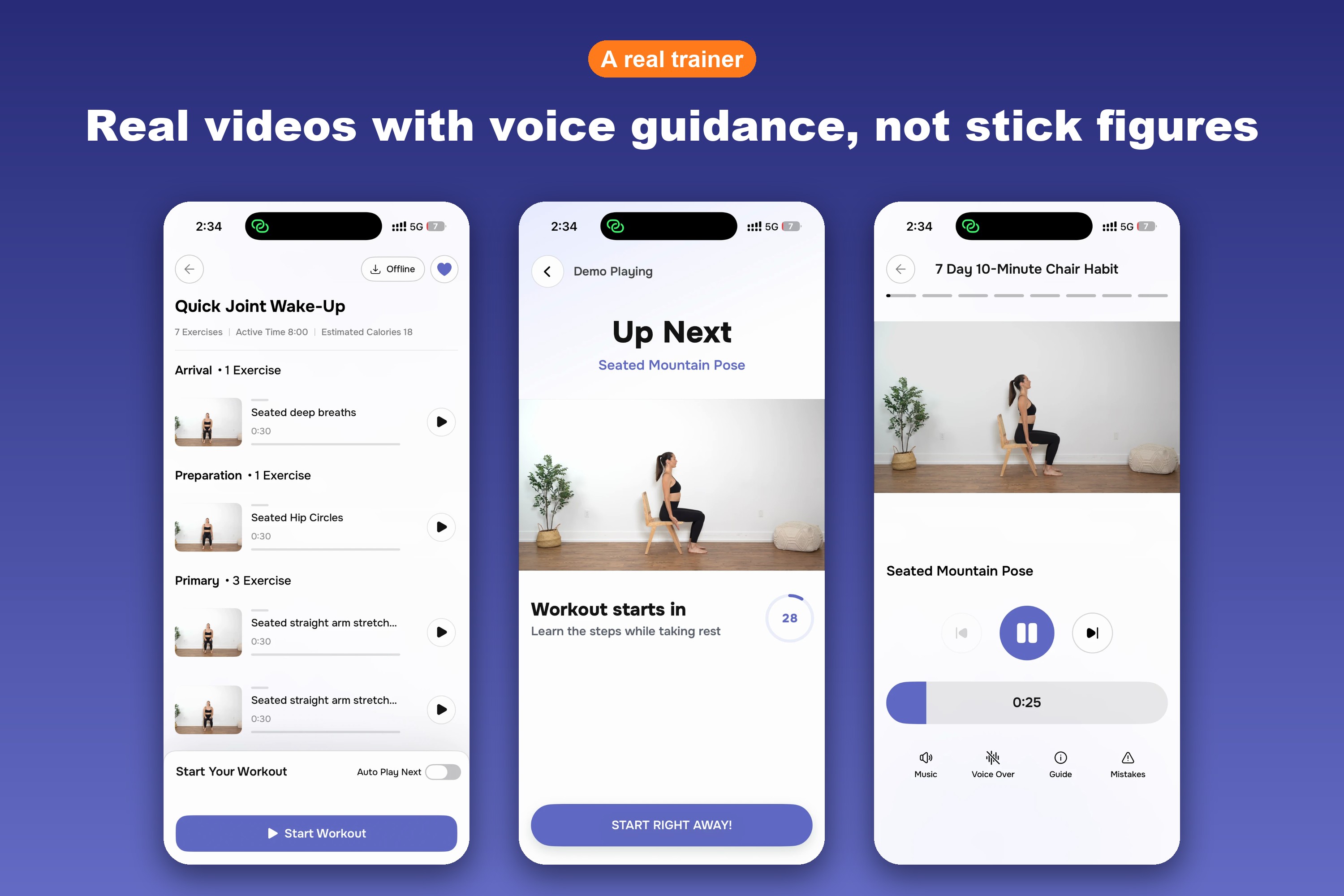
Real Workouts
-
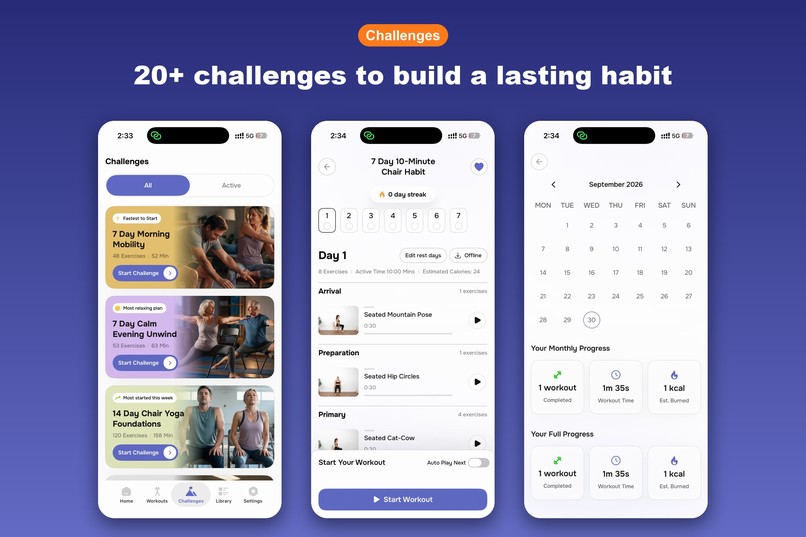
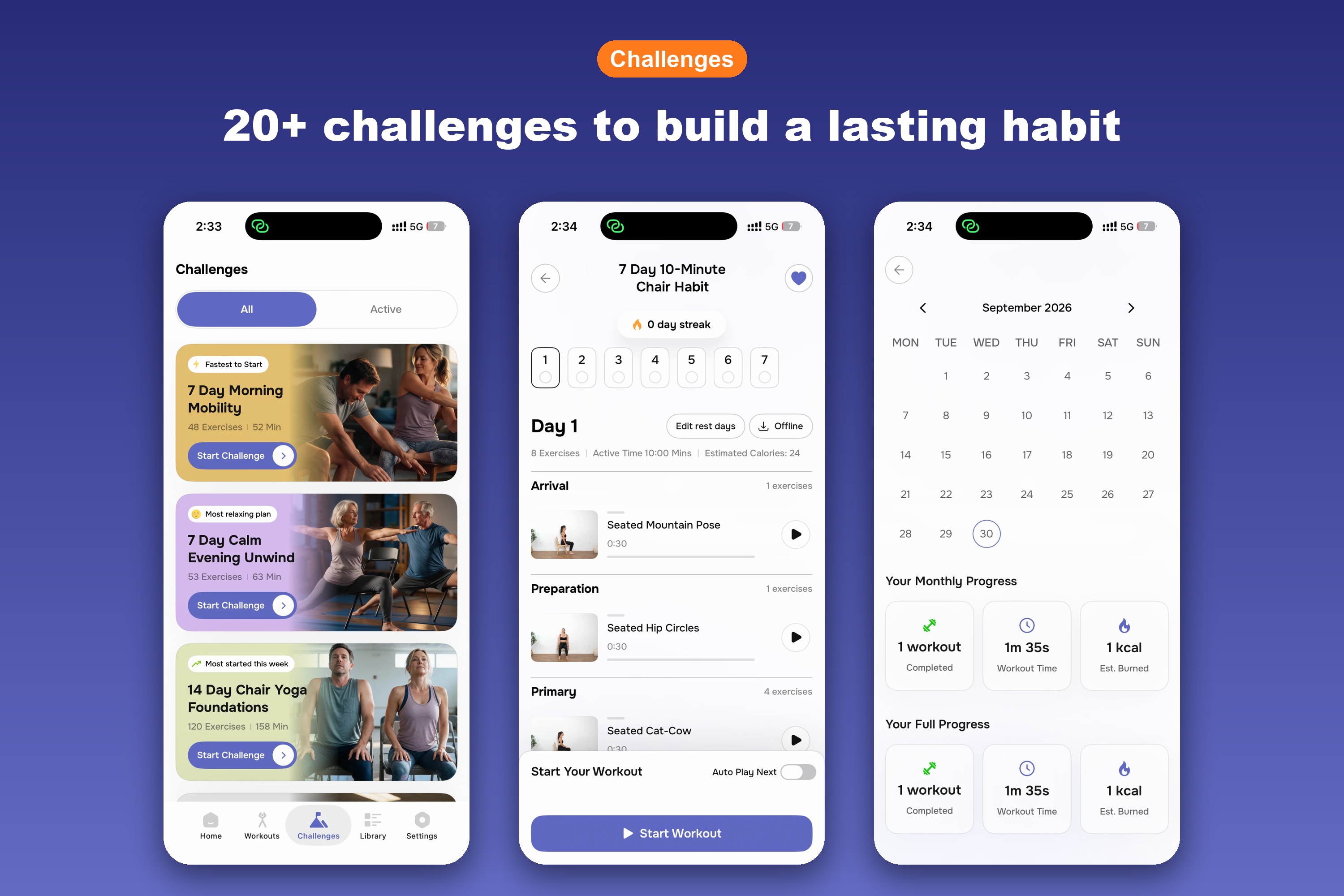
Challenges
-
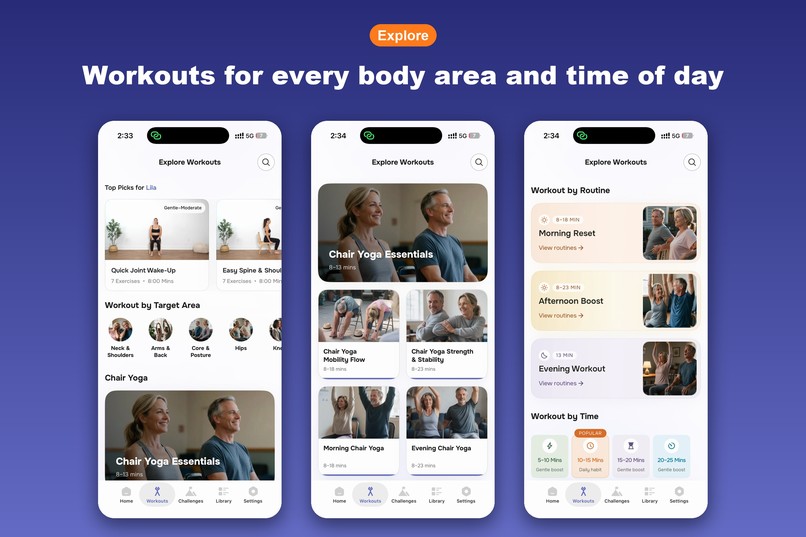
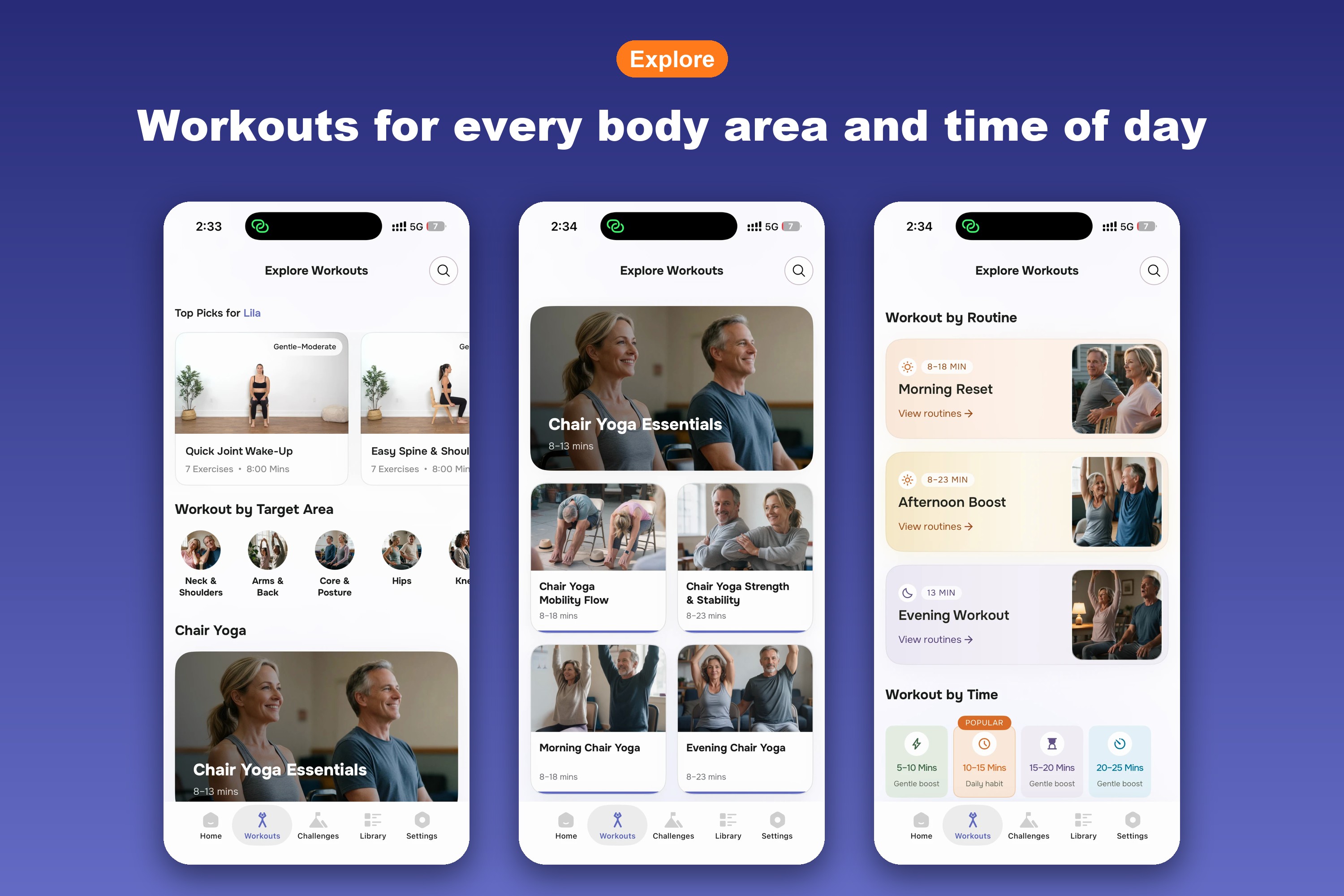
Explore Workouts
-

App Icon
-
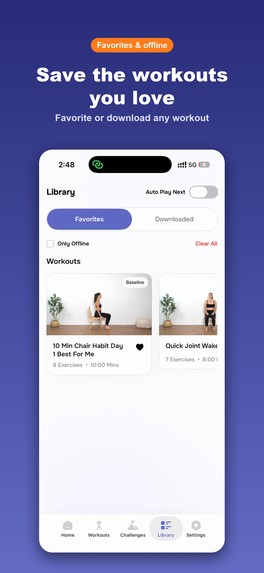
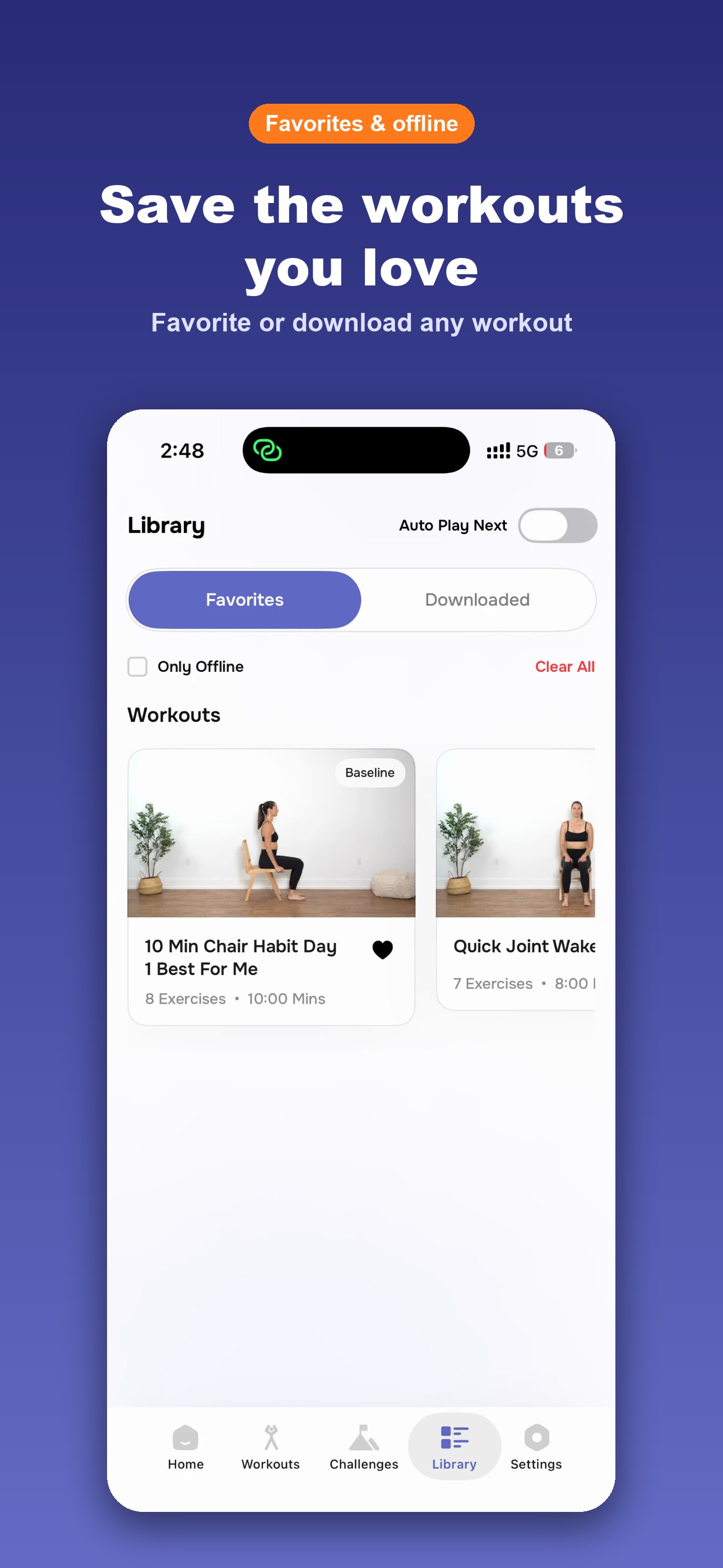
Liked a workout, want to repeat? Favorite it
-
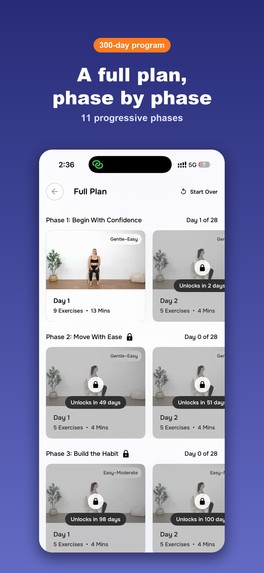
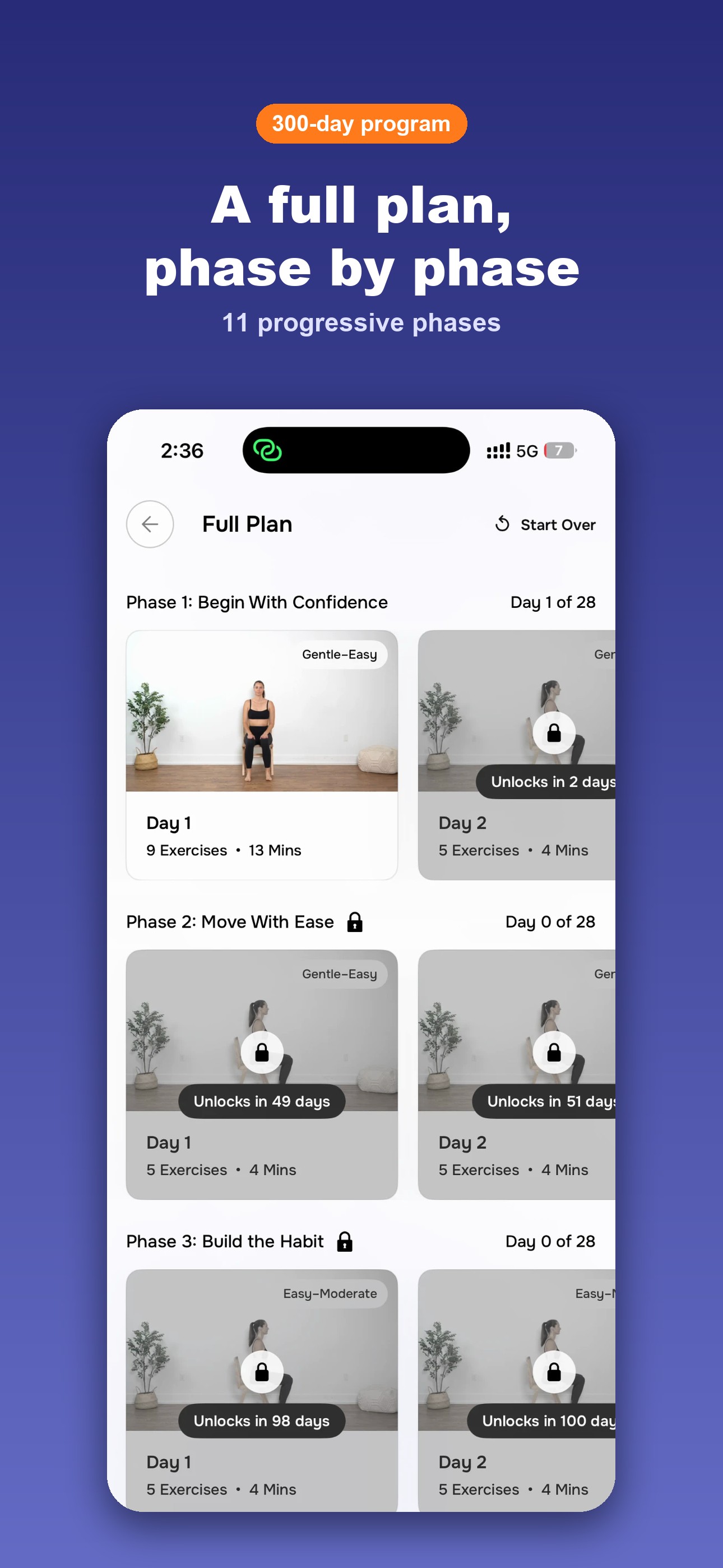
A fully personalized plan for 11 phases (300 days)
-
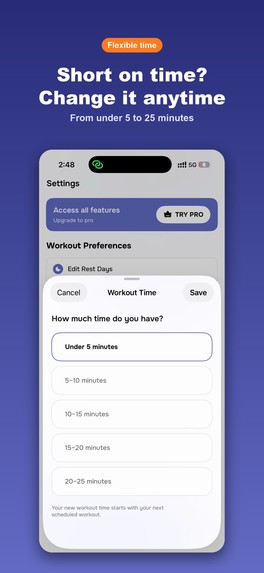
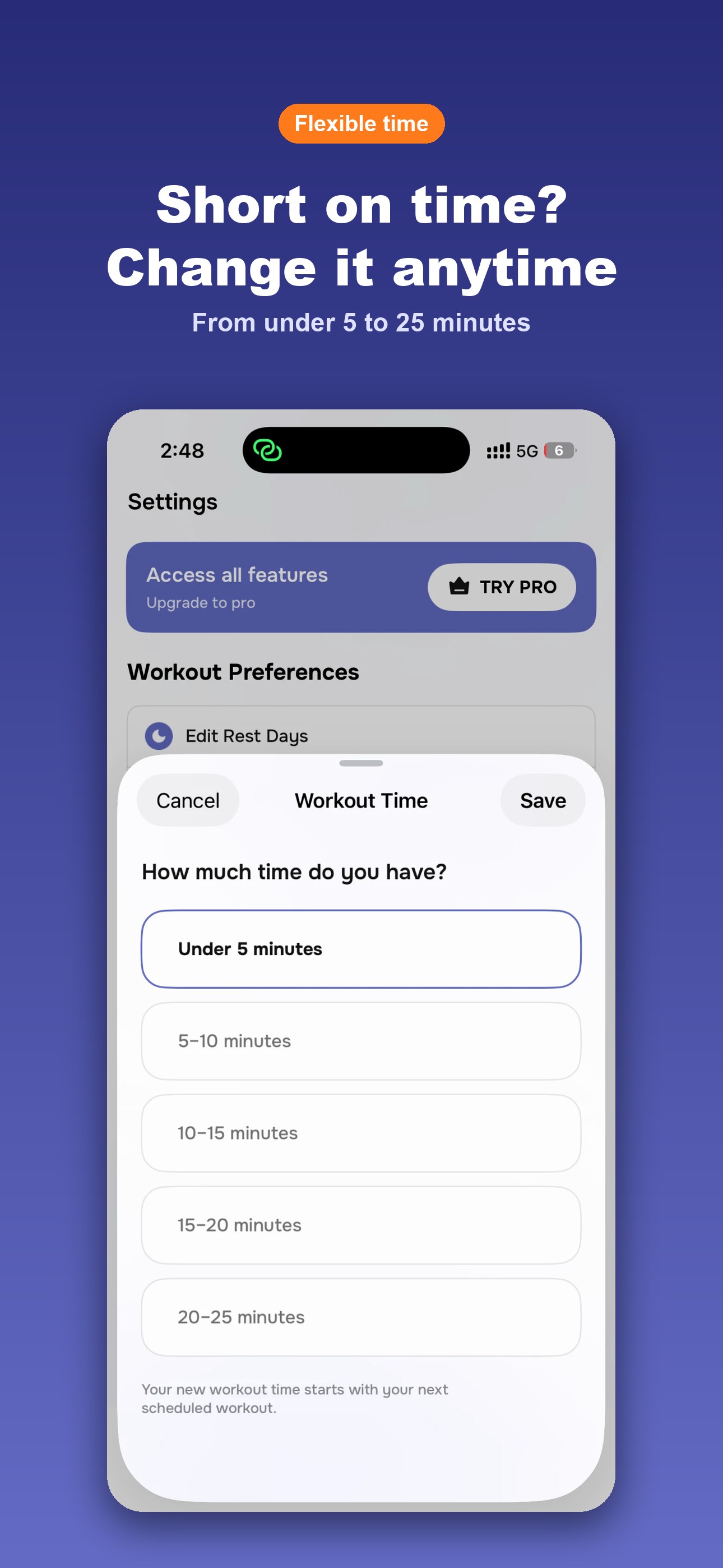
Change Workout Time from Settings
-
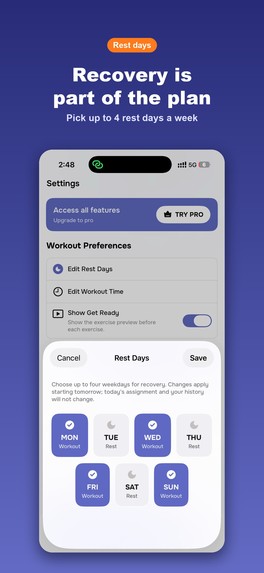
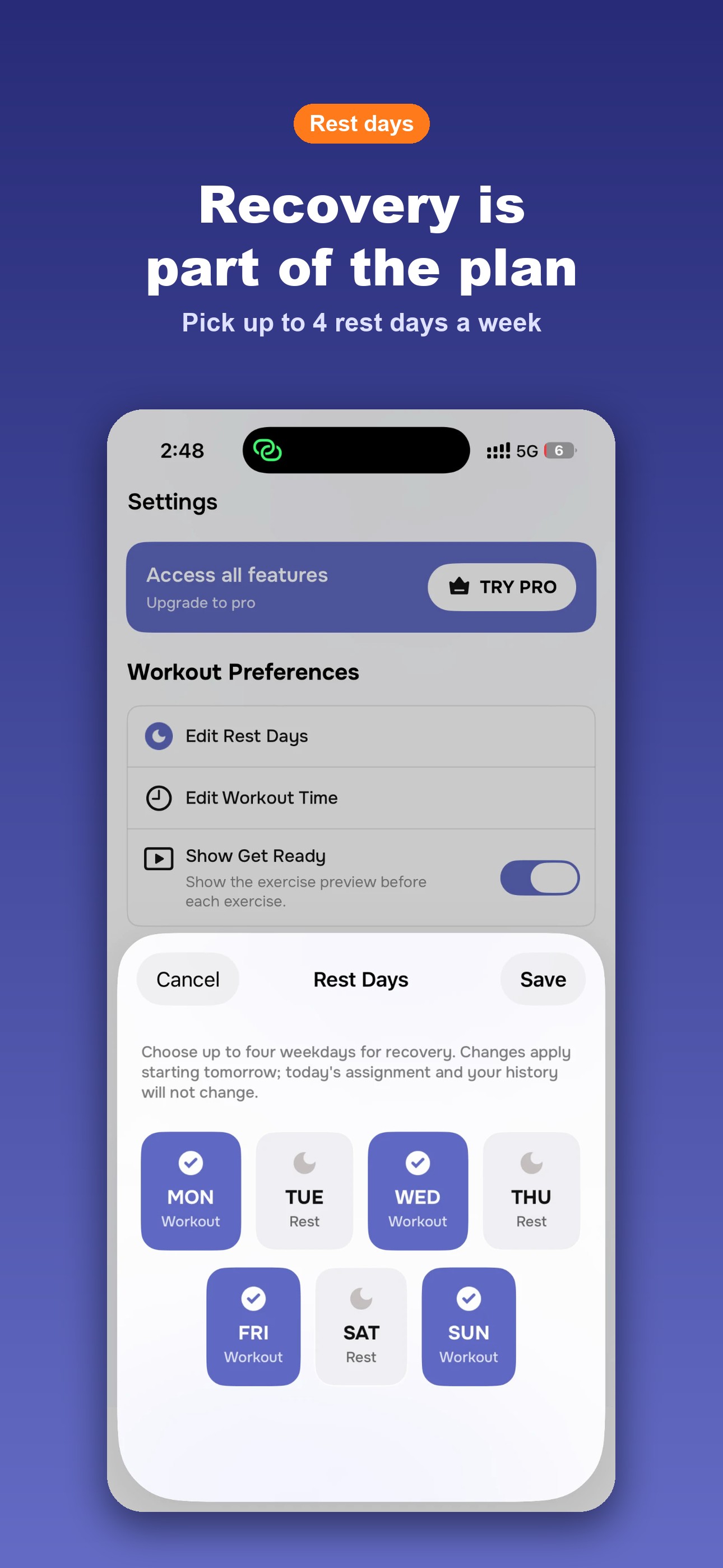
Change of schedule? Update it
-
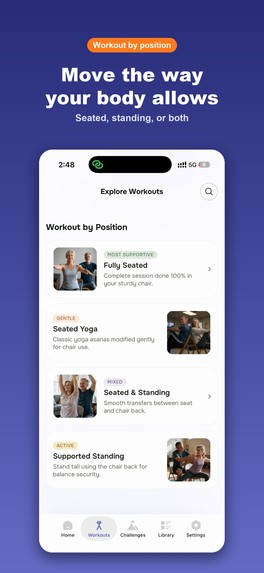
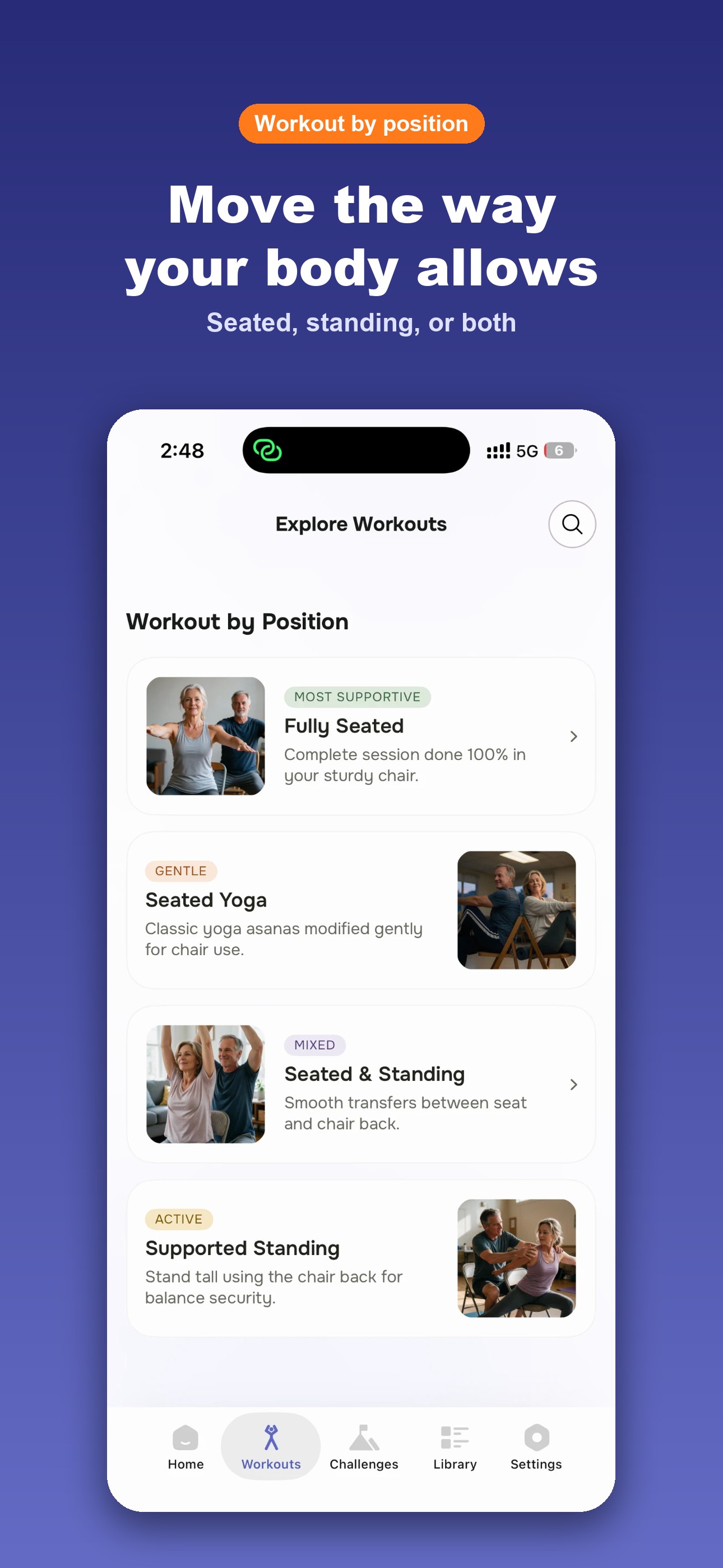
Movement by Position You Prefer

Inspiration
Search "chair yoga" or "senior workout" on the App Store and you'll find a lot of apps built on stick-figure animations and randomly shuffled exercises. Older adults deserve better. They need movement that is safe, progressive, and demonstrated by a real person.
For many seniors, gentle regular movement is what keeps them independent. It makes getting up from a chair, reaching and bending, carrying shopping, and staying steady on their feet easier. Most fitness apps either ignore this audience or treat "senior" as one easy mode. We built GO to take this audience as seriously as mainstream apps take athletes.
What makes GO different
We didn't build a stick-animation app. We built a real program.
- Designed with a professional fitness creator. The program and the full workout library were created with a fitness creator, and a real trainer demonstrates every exercise on video, with voice guidance and step-by-step instructions.
- Built on exercise guidelines for older adults. Workouts follow established senior exercise guidelines for safe progression, intensity, and a balance of strength, mobility, and stability work.
- A 300-day program, not a random workout. 300 sessions across 11 progressive phases, so users build strength and confidence gradually instead of plateauing or getting hurt.
What it does
1. Onboarding that actually listens. In a short, one-question-per-screen flow, GO learns:
- What should feel easier in everyday life: getting up after sitting, reaching or bending, carrying shopping, standing and moving with confidence, keeping up with the things you enjoy
- What's holding you back: workouts feel too intense, getting down to the floor is difficult, keeping a routine, not knowing which workouts fit
- Main goal and secondary focus: move more freely, build strength for everyday life, feel steadier; plus energy and stamina, posture and core, or relaxation
- Fitness level and starting point: from "I need a very gentle start" to "I exercise regularly"
- Care areas: knees, hips, back, neck, and shoulders. The program is built to go easy on the areas users need to protect.
- Movement preference: mostly seated, a mix of seated and supported standing, or more active movement around the chair
- Time and schedule: active minutes per day (under 5 up to 20), which days to train and rest, and when a workout fits naturally ("after breakfast", "in the afternoon")
2. A transparent, personal plan. GO doesn't just say "your plan is ready." It shows how it matched your first workout to your answers: main focus, preferred mix, movement format, starting level, active time, care preferences, and movement setup and safety cues (e.g. "use a sturdy, non-wheeled chair"). Rest days and a daily routine cue are built into the plan.
3. Today's workout, already planned. The home screen shows today's session from the 300-day program. One tap to preview, one tap to play all videos with auto-play, and it resumes where you left off.
4. Seated, standing, and floor workouts to choose from. A full library beyond the main plan, including Morning Mobility, Strong Arms & Back, Fully Seated, Sunrise Glute Flow, and more.
5. 20+ challenges such as Steady & Balanced, Supported Standing Confidence, and Seated Energy Boost.
6. Progress that encourages, not pressures. A daily streak earned with just 5 minutes of movement, a workout history, and favorites.
7. Offline downloads so workouts can be followed without internet.
How we built it
- Native iOS app (iOS 17+, iPhone and iPad).
- Program design and video production with a professional fitness creator: we filmed and edited a real workout library instead of generating animations.
- A personalization engine that maps onboarding answers (goals, care areas, movement preference, starting level, time, schedule) to the right phase, movement format, and session length.
- RevenueCat SDK powers subscriptions: entitlements, the paywall, and a 7-day free trial on the $29.99 yearly plan.
Challenges we ran into
- Building a real program, not a demo. Structuring 300 progressive sessions, finding a creator who could help us make the program, took far more effort than an animated exercise app. For seniors, we think it's the only responsible way to do it.
Personalizing without overwhelming. We needed to ask about goals, care areas, starting level, and routine without tiring an older audience. We used one question per screen, plain language, large tap targets, and a short explanation of why each question matters.
Designing for safety. Care areas and movement preference directly shape which exercises appear, and every plan includes setup and support guidance.
Personalizing without becoming monotonous. Every care area and movement preference a user picks removes exercises from their pool. Someone protecting their knees and back who wants to stay fully seated has far fewer options than everyone else, and a naive engine would give them the same handful of moves every day. We built the engine to stay safe and varied: the 11 progressive phases rotate movements and gradually build difficulty within those limits, so day 40 feels different from day 4 without asking a user's body for anything it can't do. Every plan also comes with setup and support guidance, such as using a sturdy, non-wheeled chair.
Accomplishments we're proud of
- Shipped to the App Store on September 24, 2026, within the Shipaton window. Despite delays with Apple's App Store
- Launched with a complete, creator-built 300-day program and a real video library, not an MVP with placeholder content.
- Our first paying subscribers within days of launch.
What we learned
Launching is the start of the conversation, not the finish line. Our first users and early reviews have shown us where the experience needs work, and we're prioritizing those fixes over adding new features.
What's next
- Improving the app based on early user feedback and reviews
- Expanding the challenge and workout library
- Deeper accessibility support for older users (larger text, VoiceOver, captions)

Log in or sign up for Devpost to join the conversation.