-
-
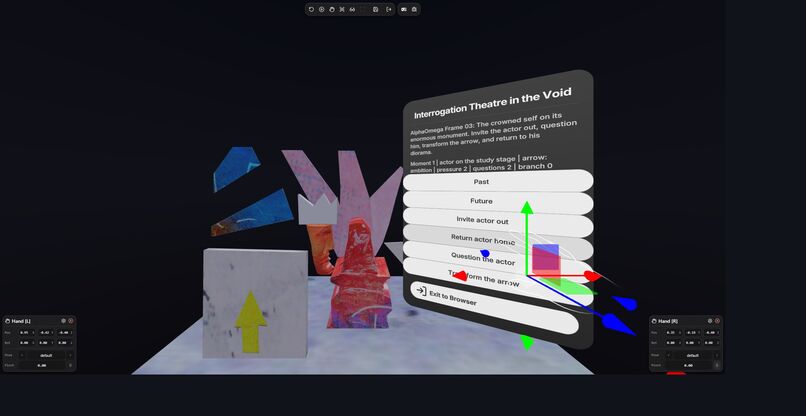
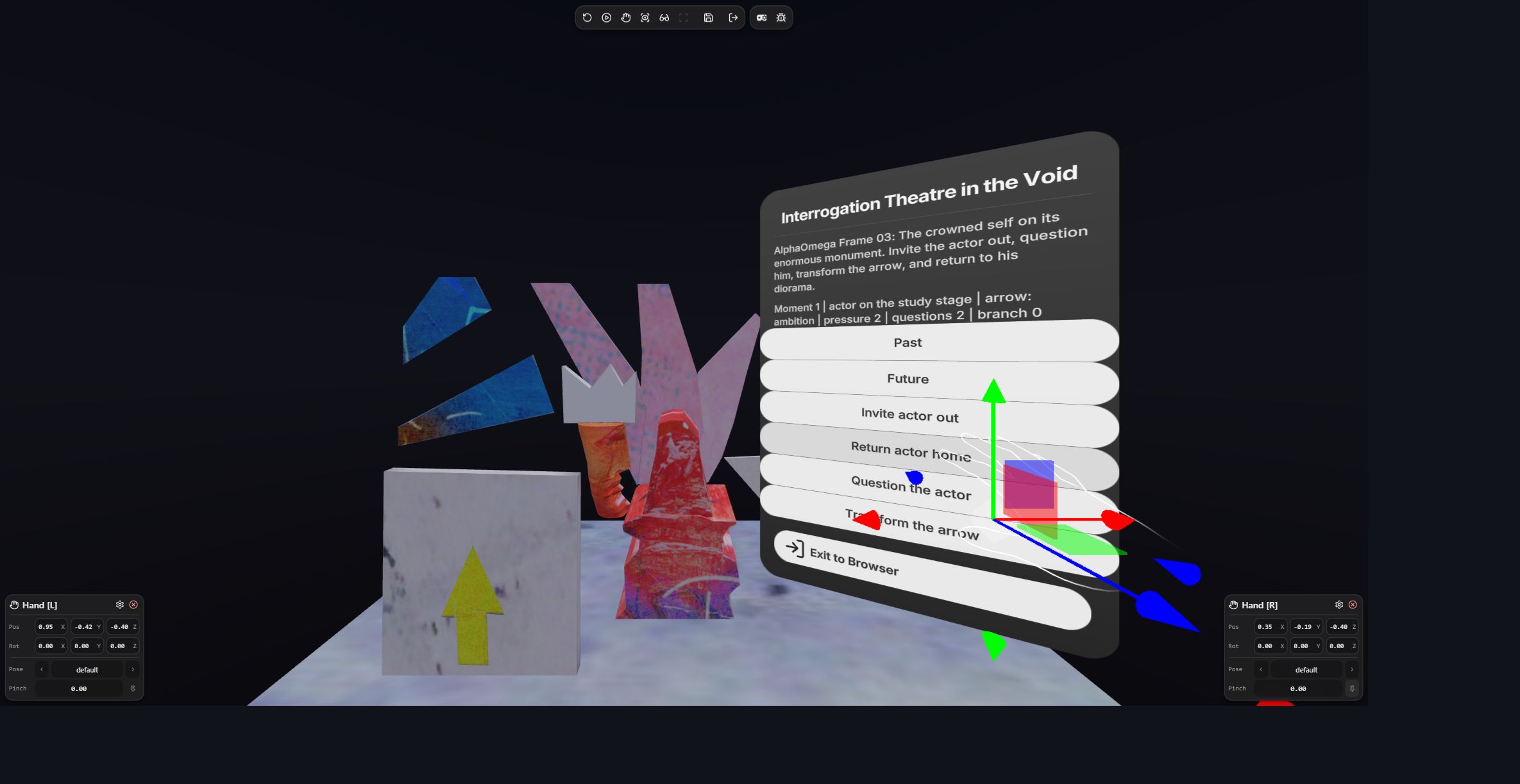
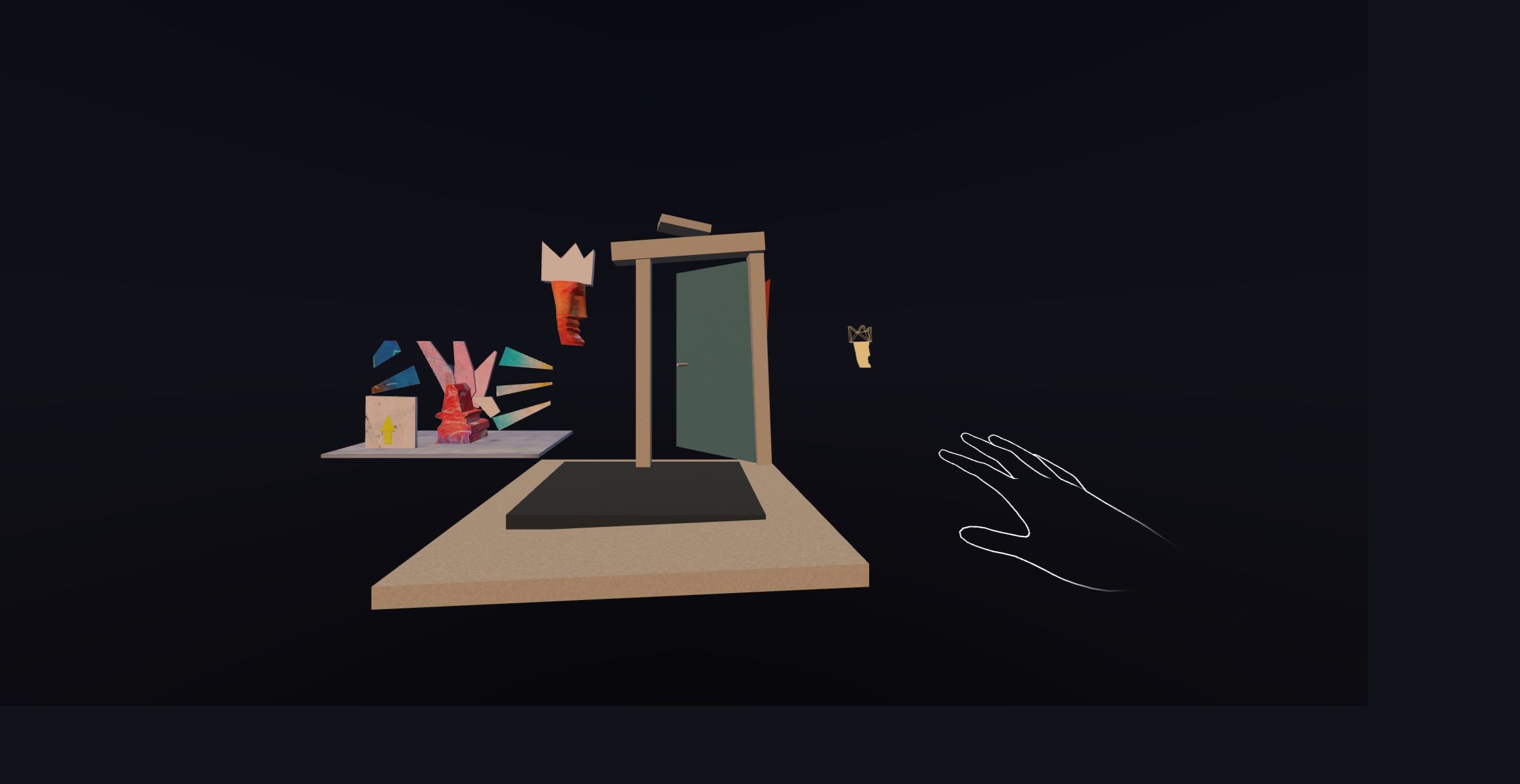
ALPHAOMEGA theatre study is now built and tested—including emulated hand grabbing, movement, release, and return to the diorama.
-
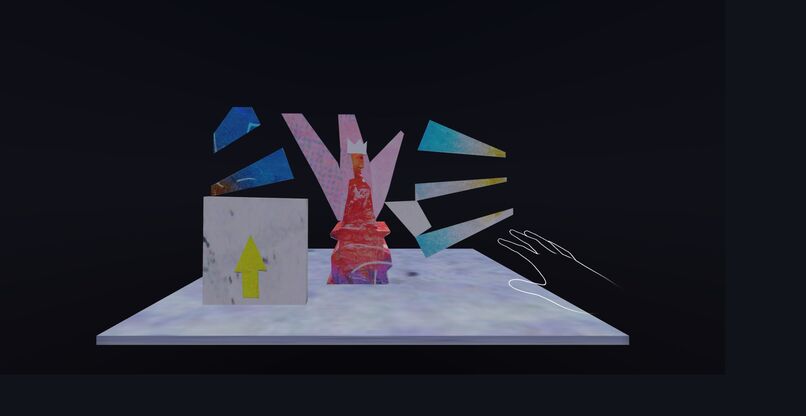
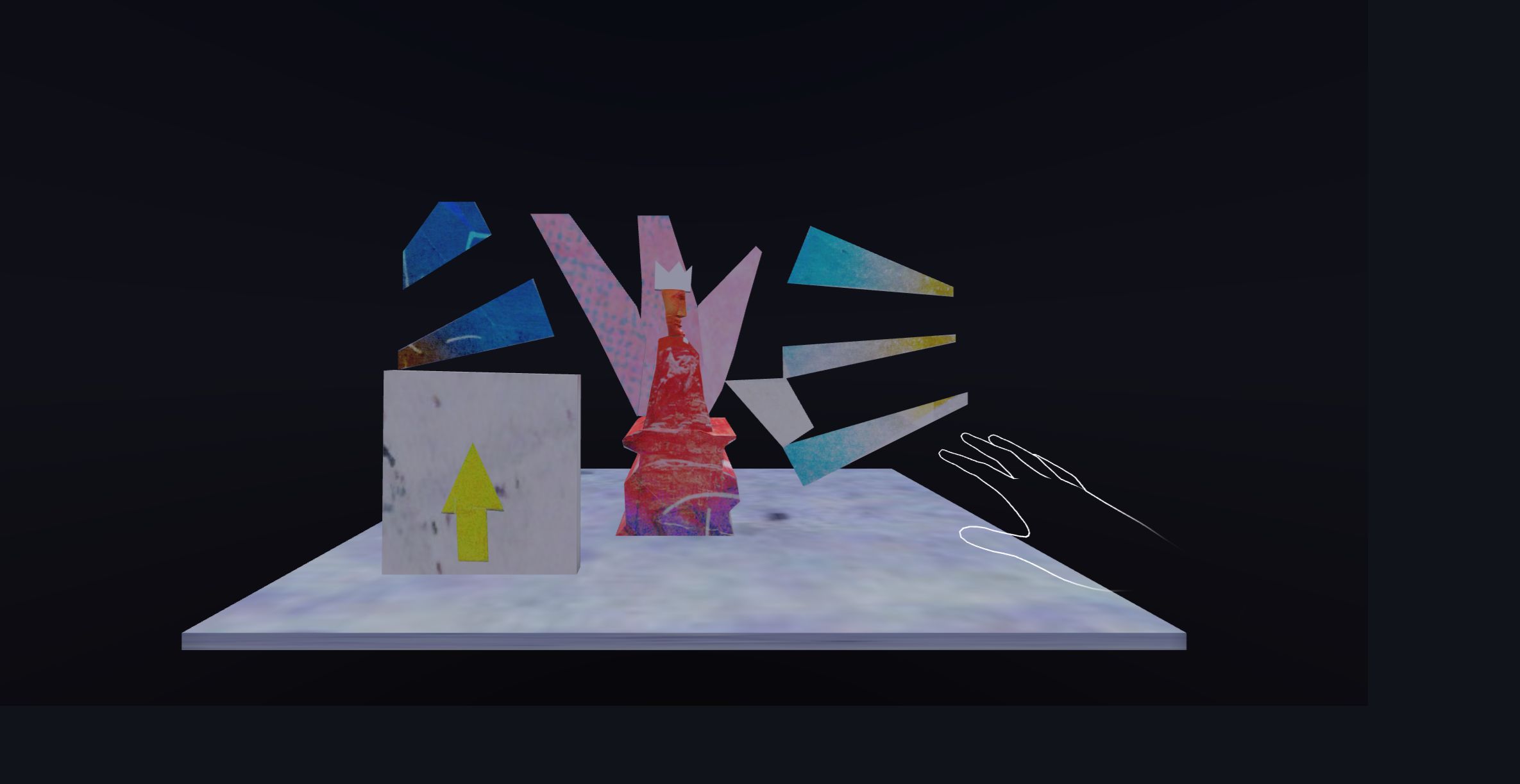
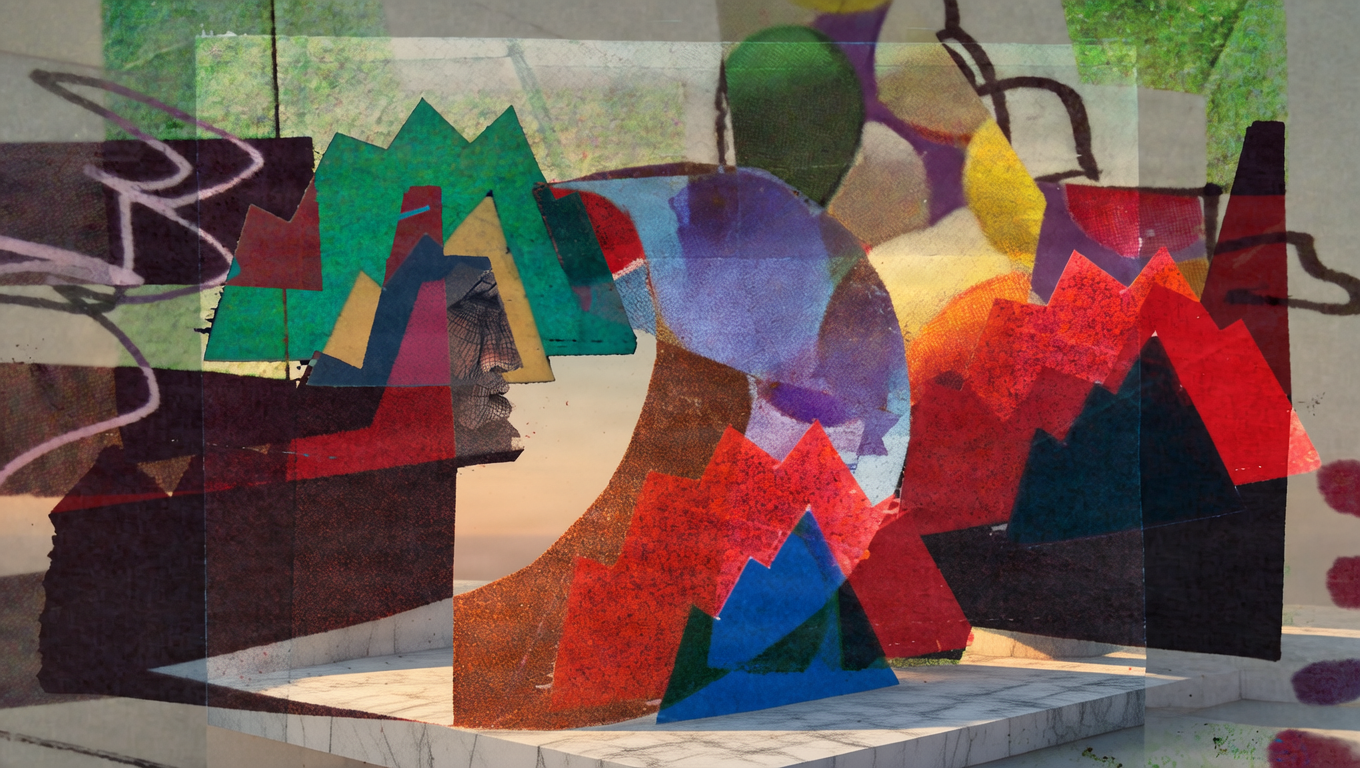
Habitat. The crowned self, his monument and the ambition arrow. Returning home restores the arrangement and retains the episode history.
-
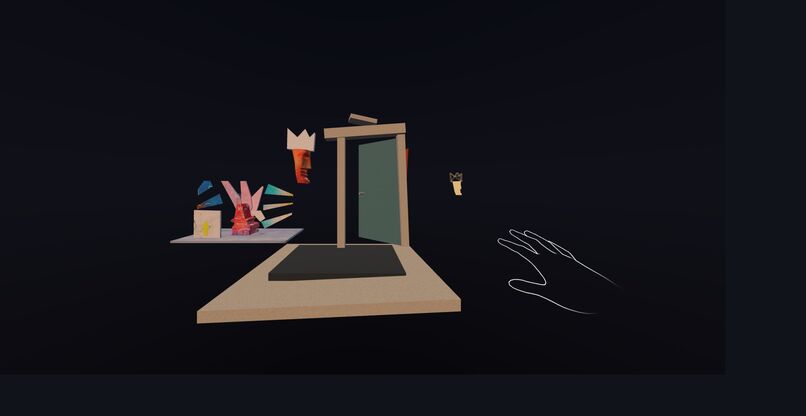
Creative theatre. The head comes forward, the habitat recedes, and the existing HERO door appears under warmer light.
-
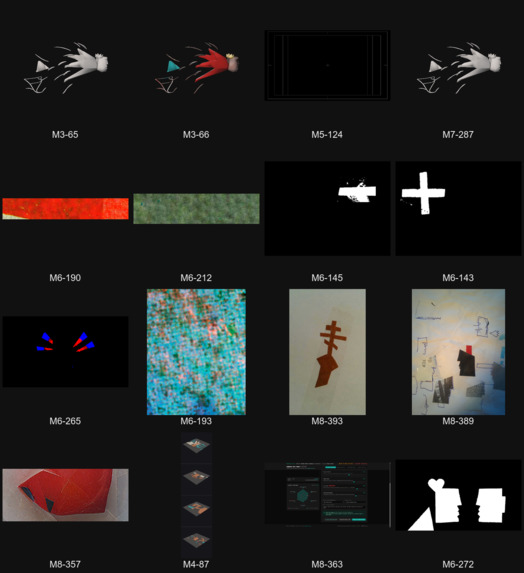
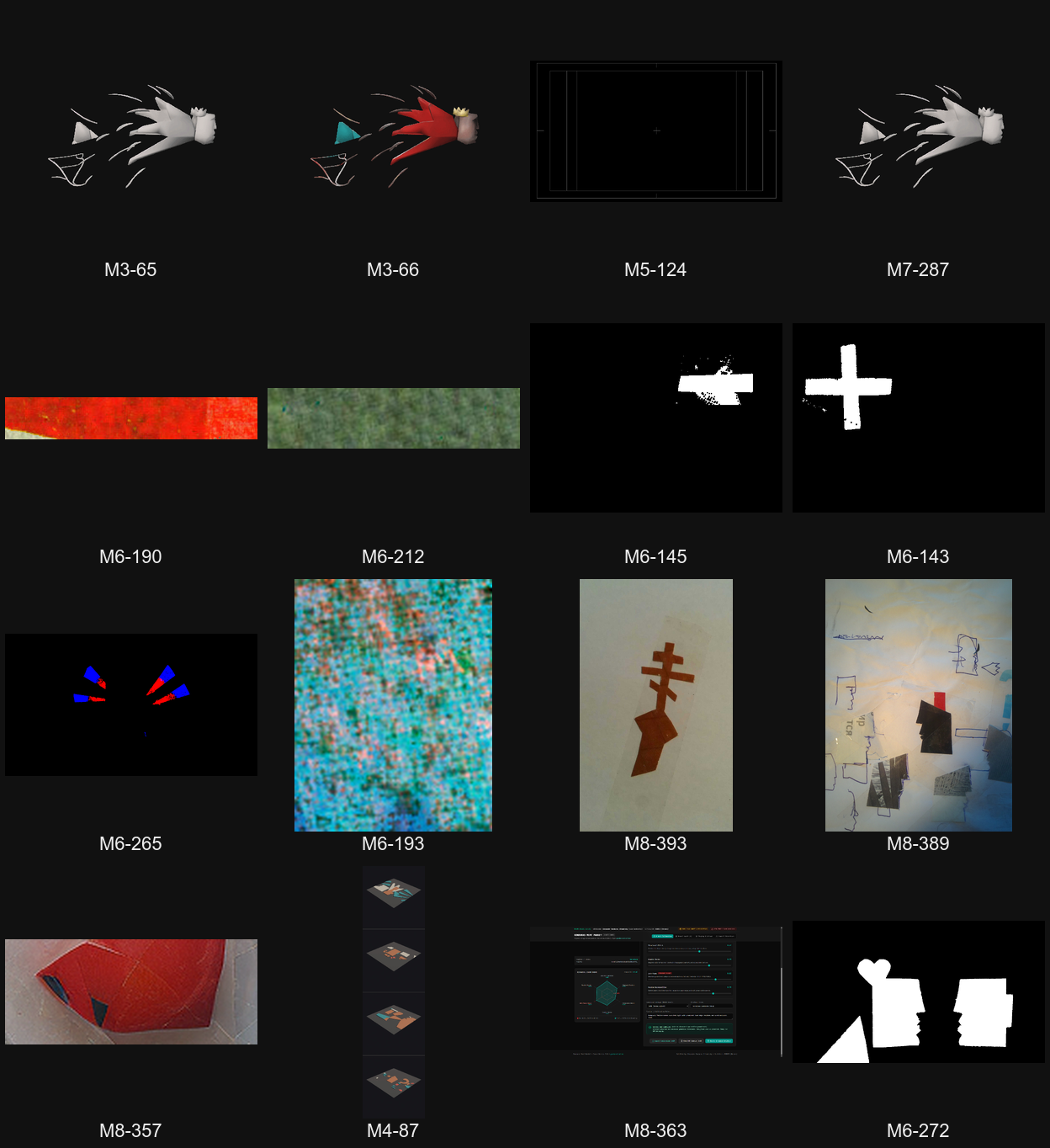
Fragment batch catalog: Reviewing extracted paper cuts, masks, and test textures across the M3–M8 dataset.
-
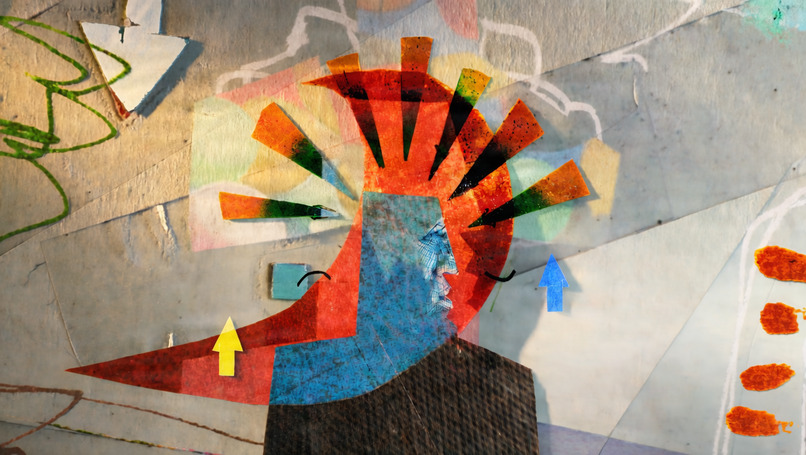
Z-depth prototype: Testing metric depth offsets between background paper planes and foreground cutouts.
-
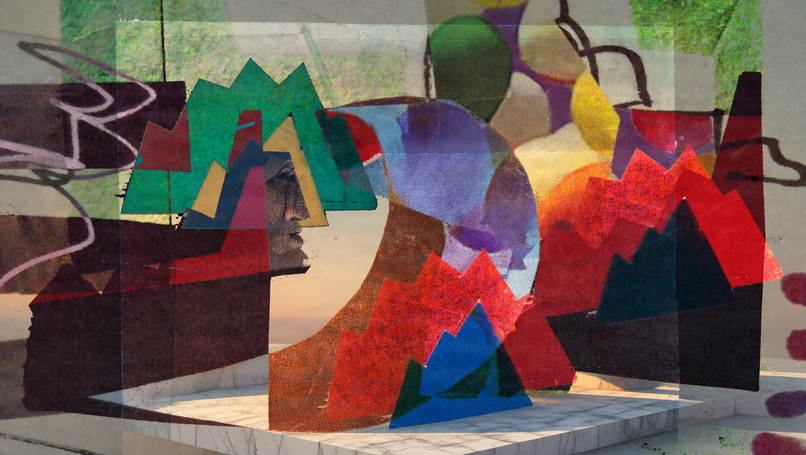
Scene test (3_TR_3): Assembling the crowned head, ambition arrow, and plinth in a test diorama environment.
-
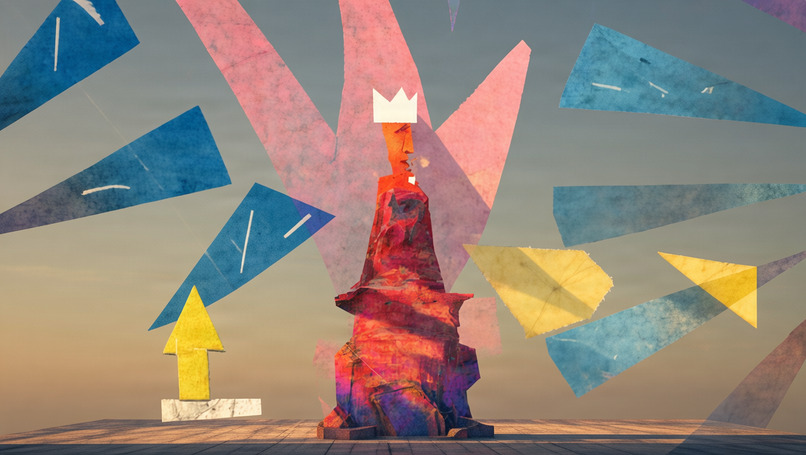
Diorama render test: Checking spatial proportions between the crowned head, upward arrow, and plinth.
-
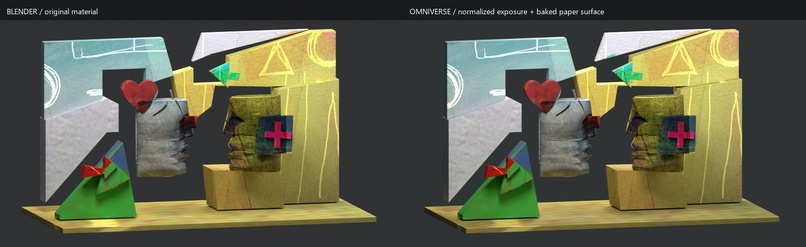
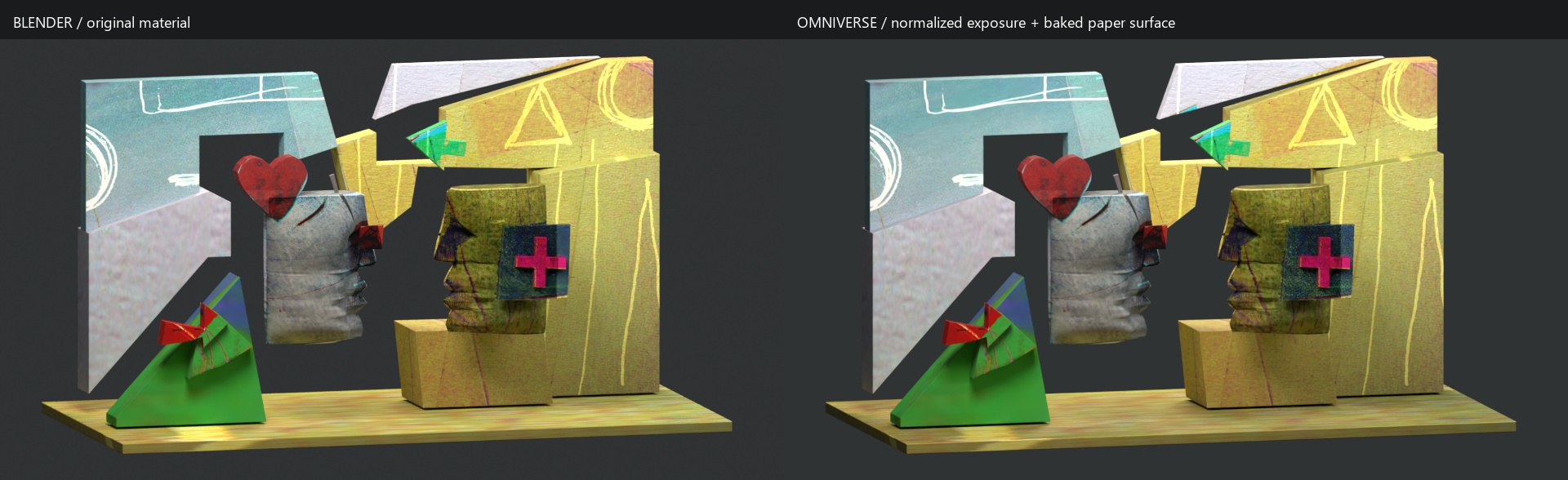
Shader comparison: Testing Blender native materials vs. Omniverse baked paper surface with normalized exposure.
-
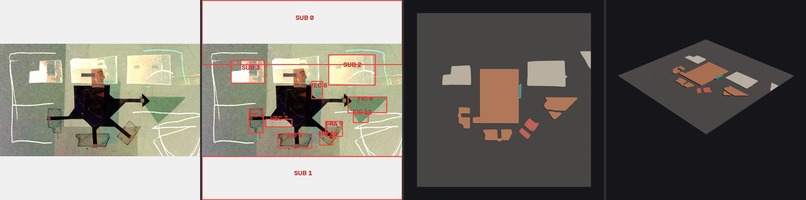
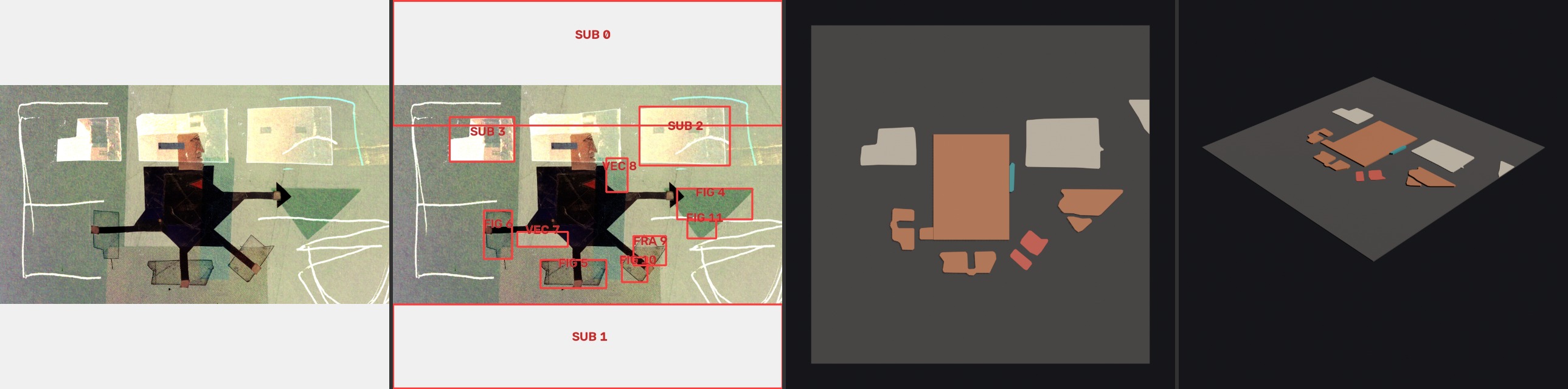
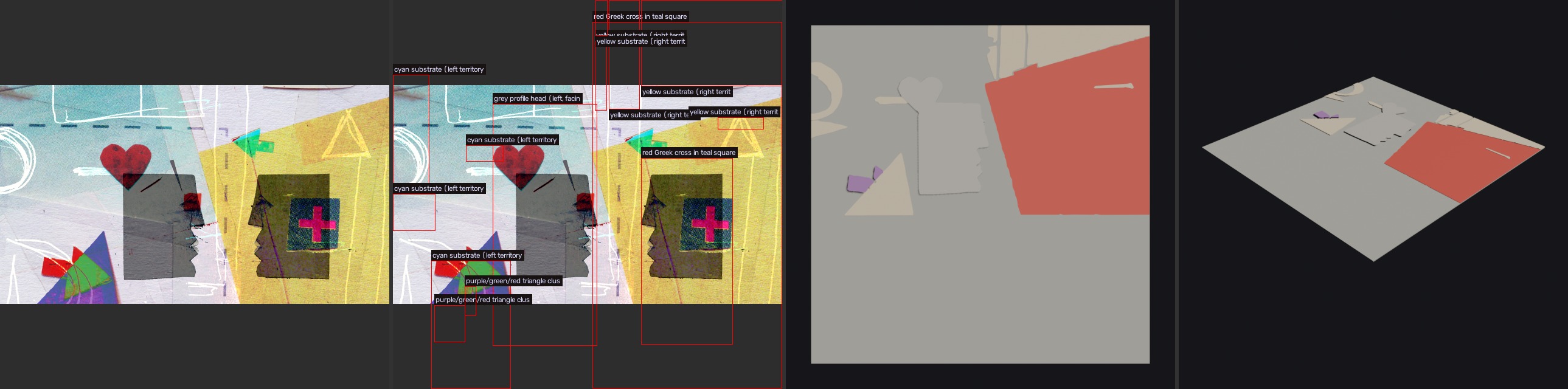
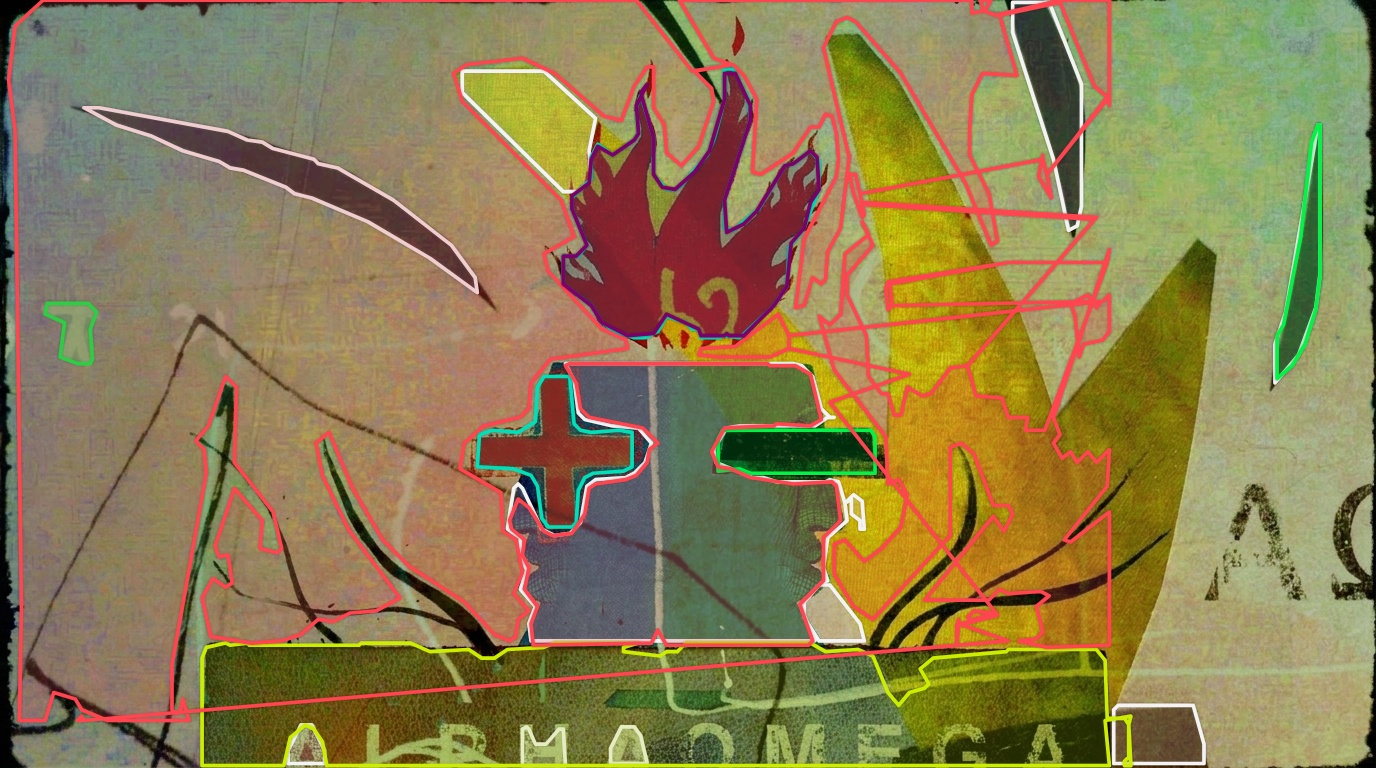
Pipeline test: Evaluating 2D collage extraction, bounding boxes, segmentation masks, and 3D layer relief.
-
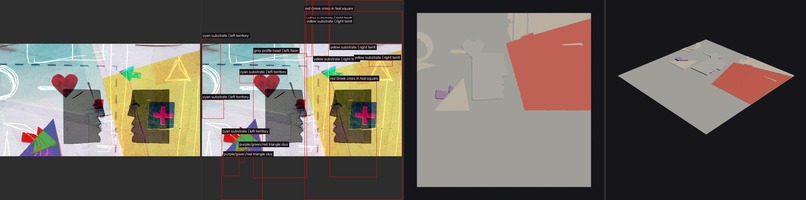
Spatial vector study: Mapping directional vectors and depth relationships across collage figures for 3D rotation.
-
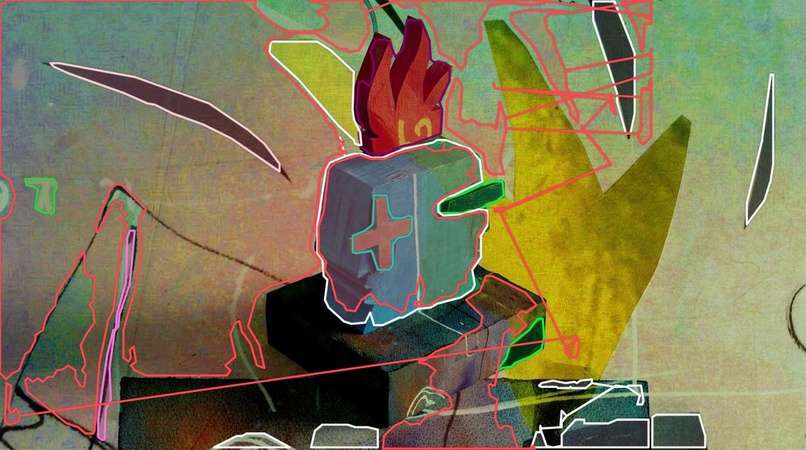
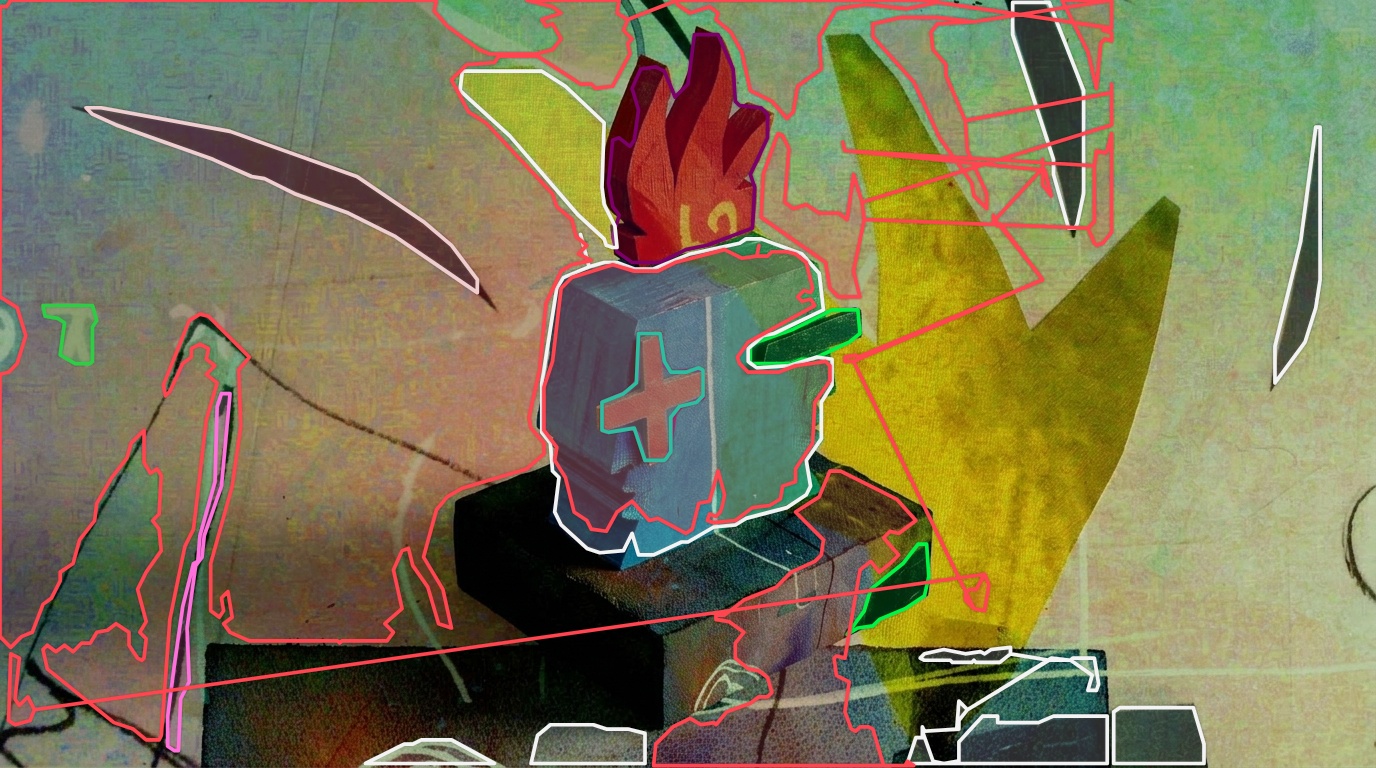
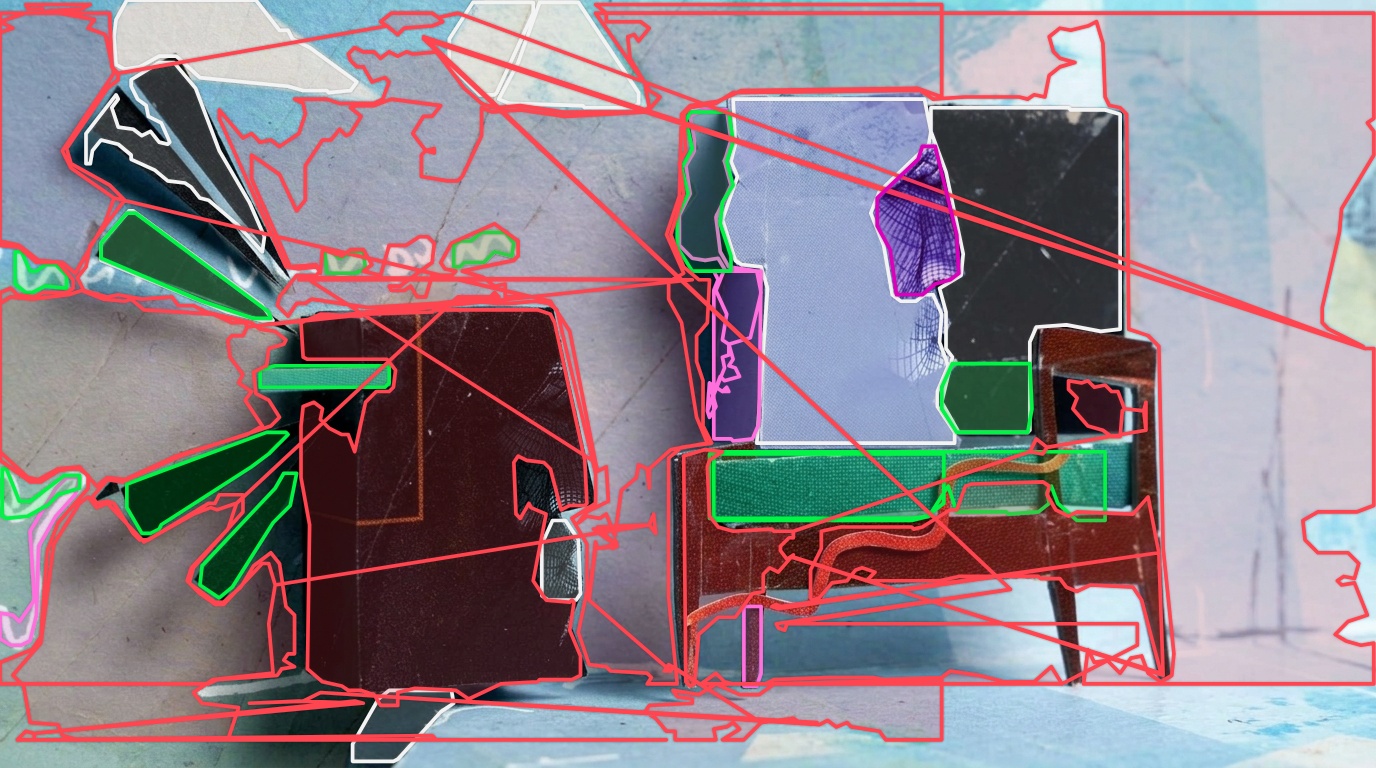
Segmentation test: Evaluating polygon boundary masks on the 2D collage for instance extraction models.
-
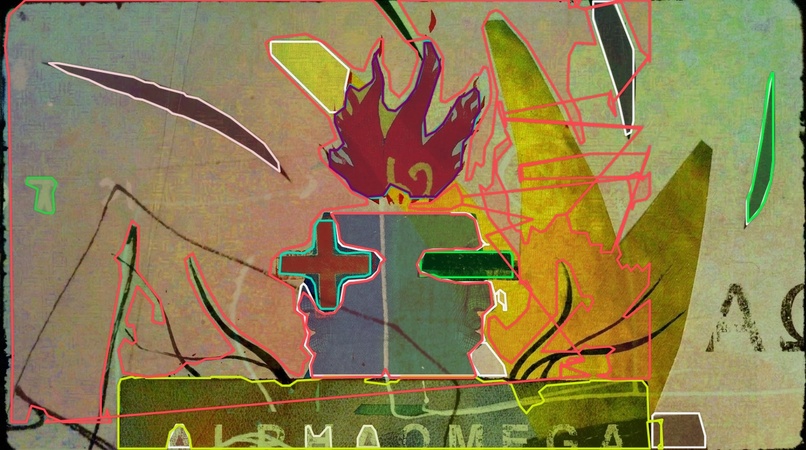
Extrusion inspection: Side view in Blender testing relief thickness and hidden volumes behind collage planes.
-
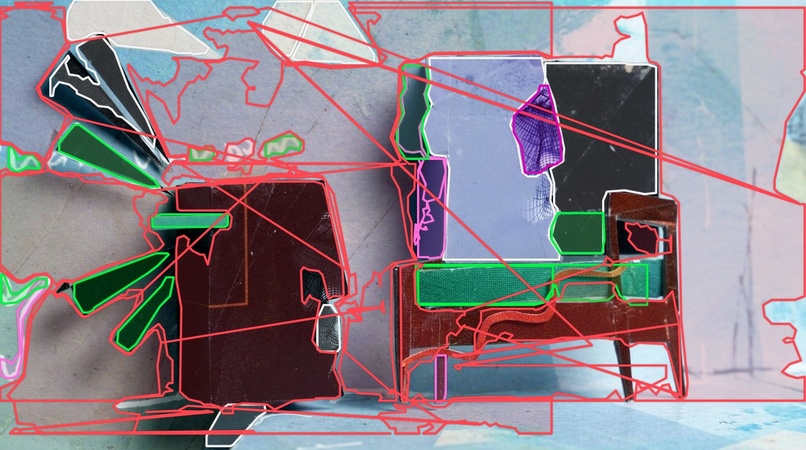
Projection test (10_TR_2): Checking segmentation mask alignment against the 3D perspective monument and plinth.
-
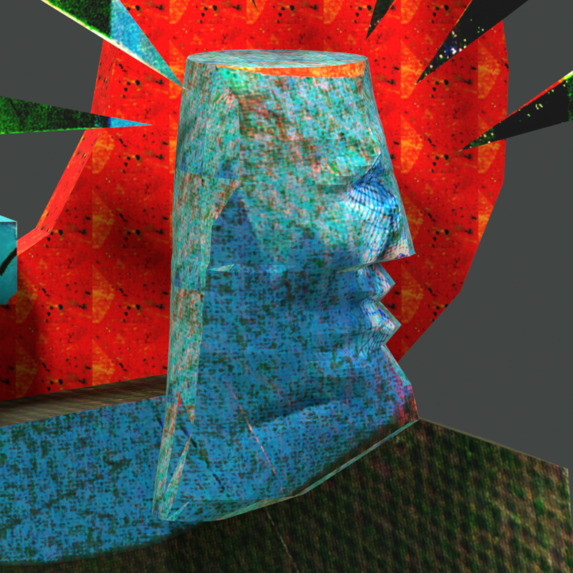
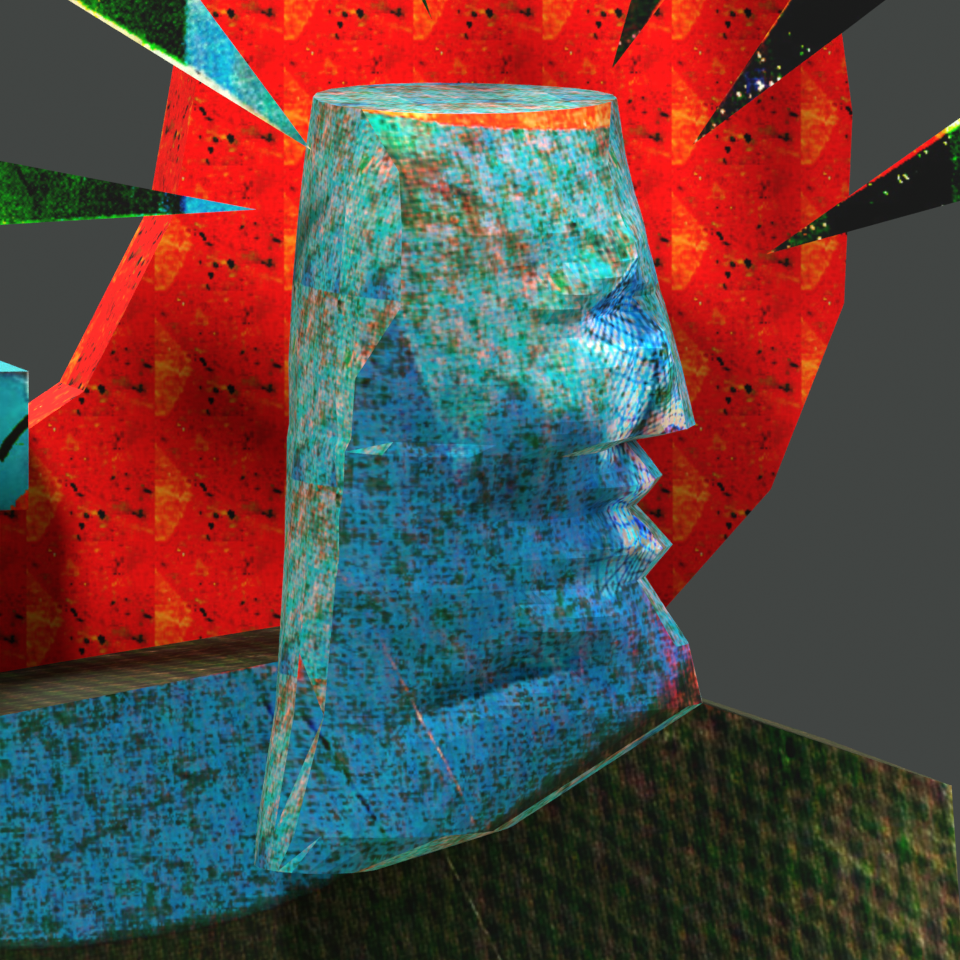
Facial mesh study: Testing low-poly constructivist facial planes and projected analog print textures.

Inspiration
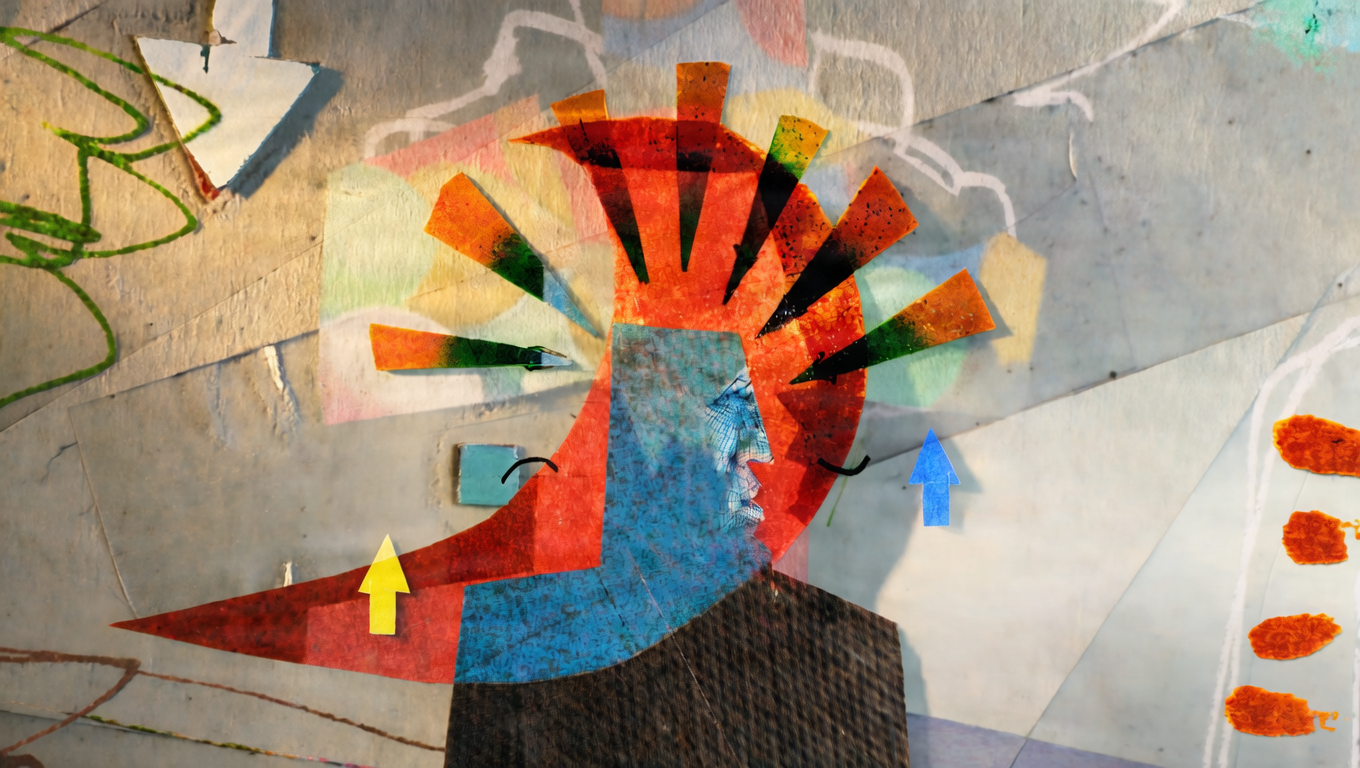
For over 20 years, Alexander "Gonduras" Jitomirsky has developed an uncompromising physical collage practice: Gondurastration—a constructivist visual language built from physical newsprint grain, dense lithographic ink, hand-cut paper vectors, scorched borders, and liquid resin highlights.
When digital generative spaces and metaverses emerged, they brought an acute creative crisis: environments became weightless, synthetic, and populated by hyper-smooth, sterile 3D meshes. Most VR spaces lack physical memory, material friction, and genuine artistic struggle.
As opportunist artists, we let technical constraints and spatial runtimes directly shape our work. Virtual reality frees constructivist art from the flat picture plane: inside Meta Quest and open WebXR runtimes, the user enters an interrogation theatre in the void, stepping between discrete floating paper planes, grasping spatial cutouts, and walking around volumetric character armatures.
What It Does: Habitat ↔ Creative Theatre
GMM Art System: Art in Meta Space focuses on a strict spatial mechanic: One actor, a place of origin, and a space in which to question and configure him.
State 01 — Habitat (The Origin):
- The crowned actor stands in his canonical diorama habitat alongside his vertical monument and ambition arrow.
- Discrete metric depth offsets ($Z = 0.00, +0.02, +0.04, +0.08$) preserve true tactile paper layering, cut-edge shadows, and specular resin highlights.
- Returning home restores the source physical arrangement while retaining the cumulative episode history.
State 02 — Creative Theatre (The Spatial Interrogation):
- The crowned head is pulled forward into interrogation space, the habitat plane recedes into the background void, and the existing HERO door emerges under warm theatrical key light.
- The actor can be examined beside alternative structural possibilities (represented by clean illustrative wireframe wedges, not speculative black-box predictions).
- Spatial hand interaction allows direct ray-pinch translation, spatial rotation, and repositioning within the void.
Volumetric Manifold Armatures:
- Rejects flat bas-relief cardboard cutouts. The character head and torso form continuous volumetric geometries that preserve authentic 45° constructivist wedges from any viewing angle.
How We Built It
We built an end-to-end bridge linking physical analog collage, automated vision pipelines, agent-driven export repair, and WebXR spatial execution:
- Substrate Extraction & Segmentation: Archival high-resolution scans of physical collages are segmented into clean semantic cutout cards using BRIA RMBG-2.0 and SAM2, preserving raking-light paper textures and edge micro-creases.
- Asset Separation & Assembly: AGY isolates individual spatial components; assets are composed into OpenUSD (
.usda/.usdc) scene graphs in Blender 5.1 and staged under calibrated PBR material shading. - Codex Staging & Export Repair: Automated CI validation routines repair node-graph export anomalies and compile optimized GLTF/GLB packages that maintain 90 FPS performance under WebXR constraints.
- IWSDK WebXR Architecture: Built natively on the Immersive Web SDK (IWSDK) and WebXR Device API. The current running application is captured and verified live inside the browser emulator with active rendered hand tracking and 6DOF locomotion (physical Quest headset validation is actively pending).
Challenges & Honest Technical Limitations
- Visual Separation of Temporal Markers: Distinguishing between the actor's current active transform, his past origin marker in Habitat, and hypothetical wireframe futures required establishing strict lighting contrast ratios rather than flat color coding.
- Avoiding the "Bas-Relief" Trap: Early 3D generative meshes collapsed layered paper into flat cardboard cutouts. Enforcing volumetric armatures and discrete Z-plane air gaps restored true parallax and physical presence.
- Emulator vs. Hardware Ground Truth: Emulator diagnostic overlays were hidden only during clean captures; the underlying runtime scene, real-time spatial calculations, and rendered virtual hands remain fully operational.
What We Learned
Constructivism was born when El Lissitzky and Vladimir Tatlin attempted to bring non-objective monuments into three-dimensional space, only to be constrained by physical material gravity. Inside Meta VR and WebXR, an artist can build an infinite constructivist theater where torn paper fibers, lithographic ink, and procedural scene graphs operate with zero physical weight and immediate tactile presence.
What's Next for GMM Art System
- Physical Meta Quest 3 Hardware Verification: Validating hand-tracking latency and passthrough contrast on physical Quest 3 hardware to complement our existing IWSDK emulator test runs.
- Interactive Stage Actor Recombination: Expanding the Creative Theatre into a live workshop where users can grab, decouple, and reassemble constructivist armatures from the 15 canonical AlphaOmega frames.
- Horizon Creative Worlds Packaging: Exporting the bipartite Habitat ↔ Theatre scene graph into persistent Meta Horizon social environments.
Lineage & Credits
- Original Art & Visual Authority: Alexander "Gonduras" Jitomirsky
- Asset Separation & System Topology: Antigravity (AGY)
- Staging, Export Repair & Verification Harnesses: Codex
- Pipeline Foundations: ALPHAOMEGA and HERO master series

Log in or sign up for Devpost to join the conversation.