-
-
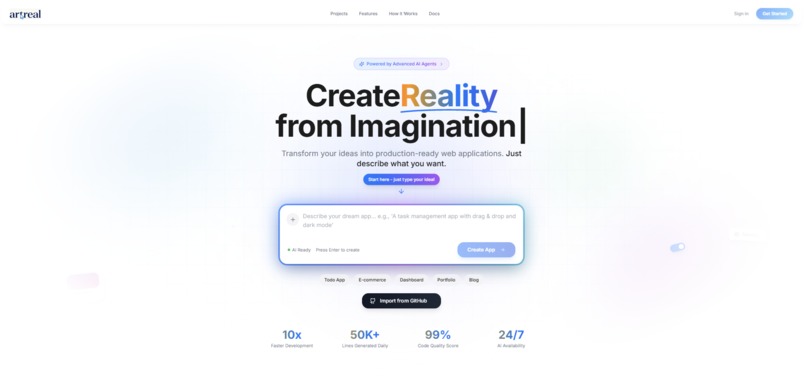
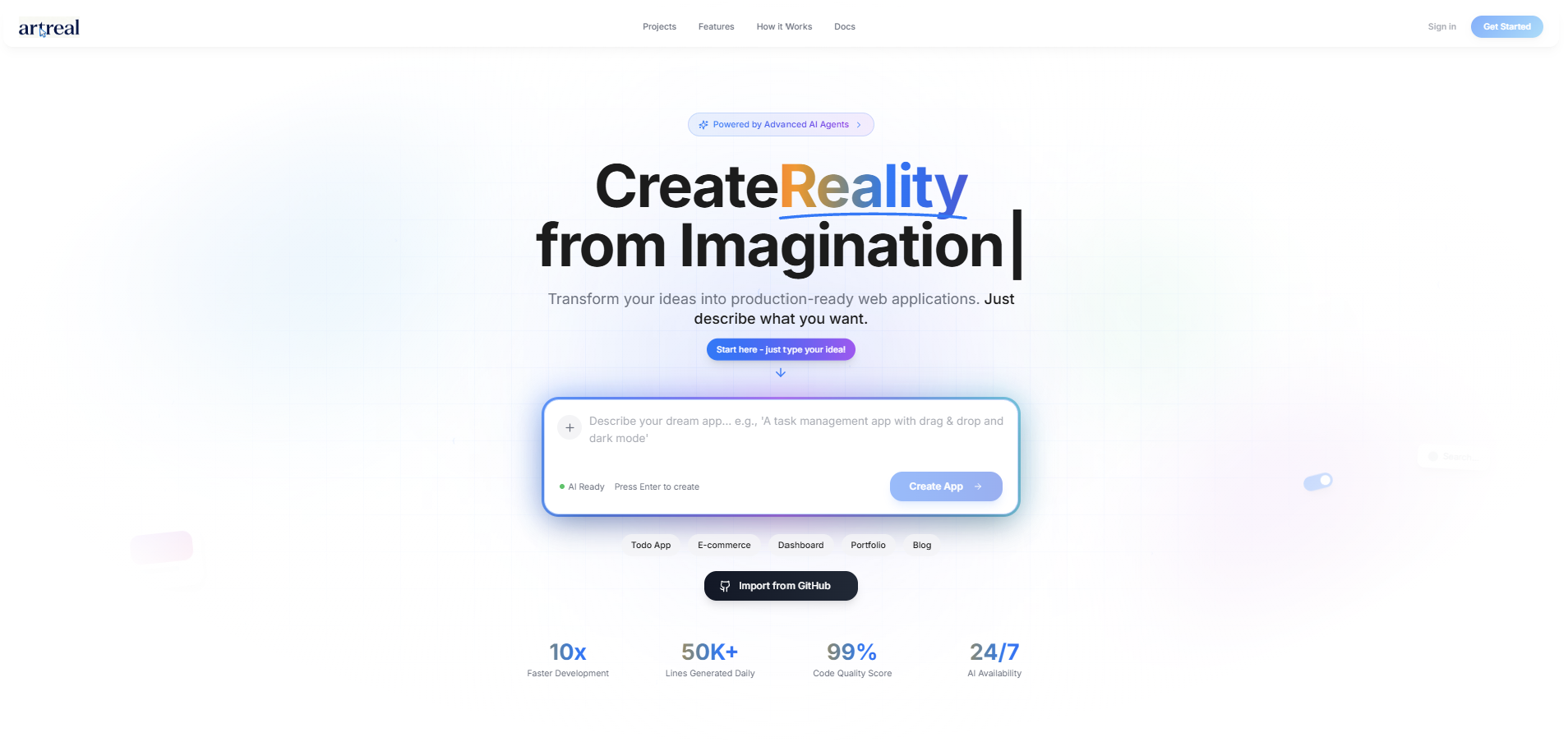
Landing Page - Hero Page
-
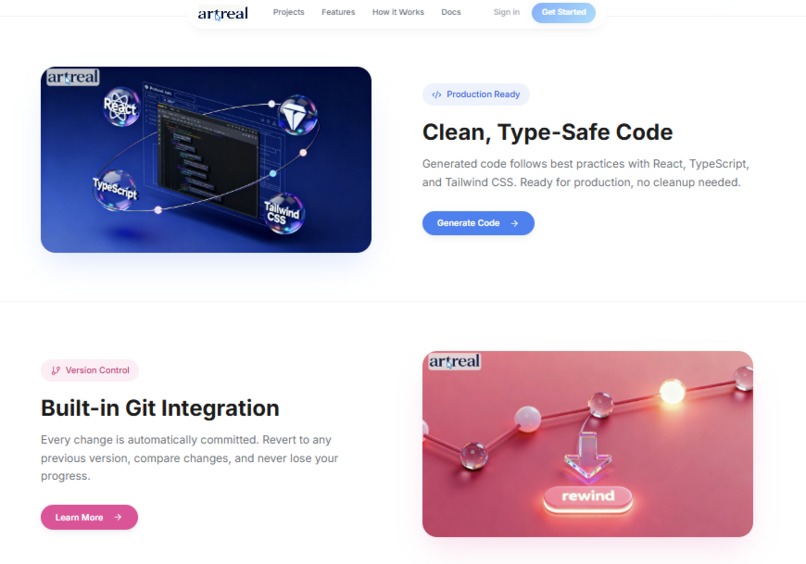
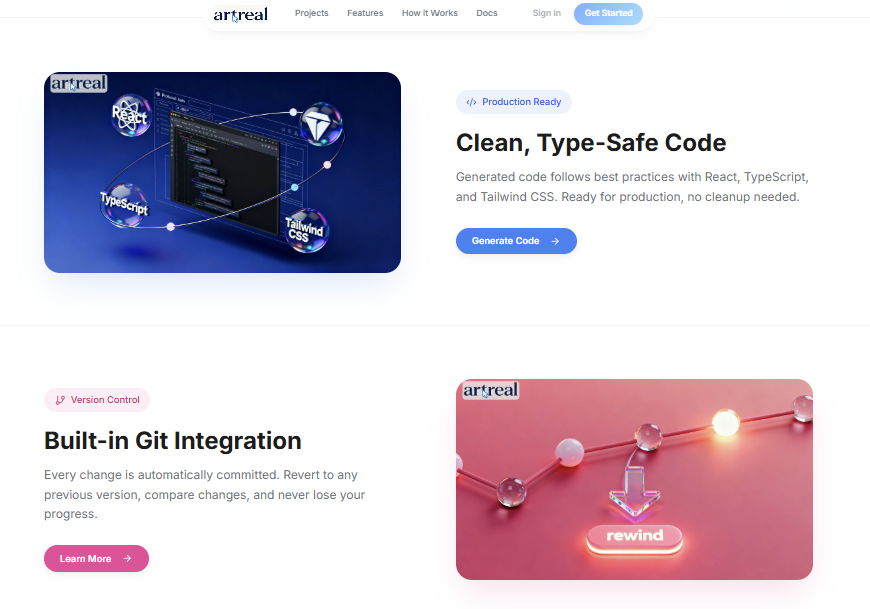
Landing Page - Features
-
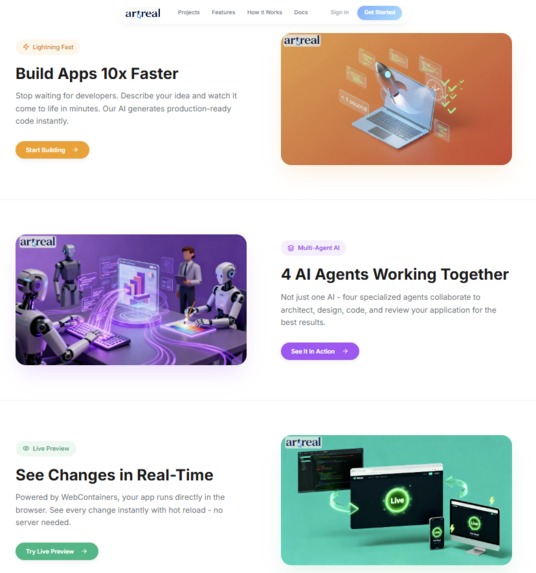
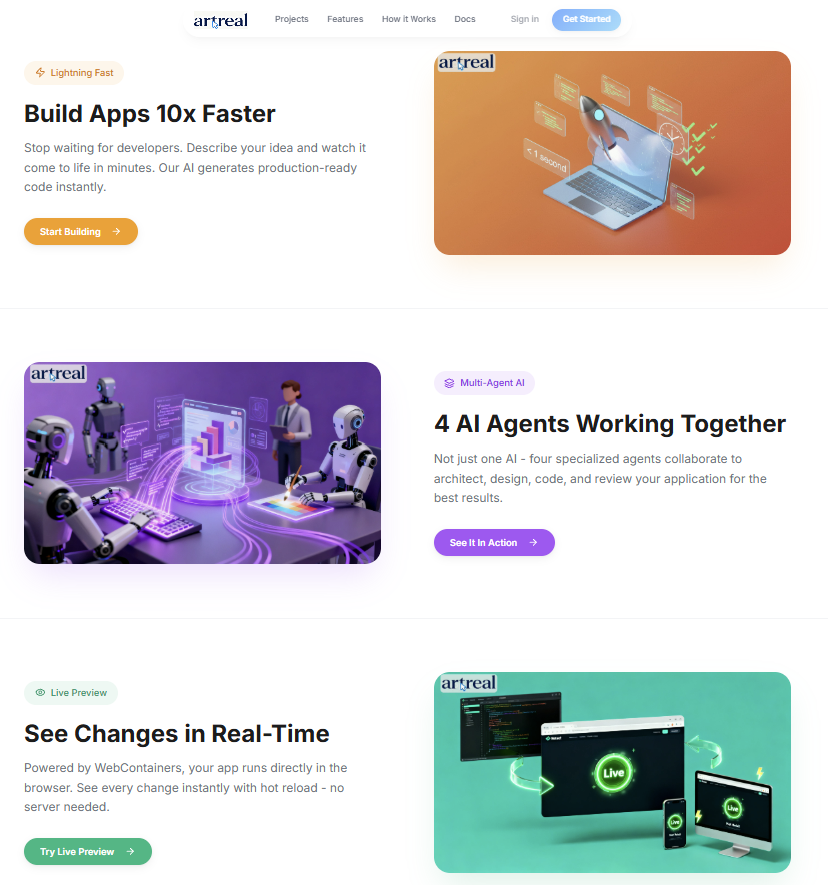
Landing Page - Features
-
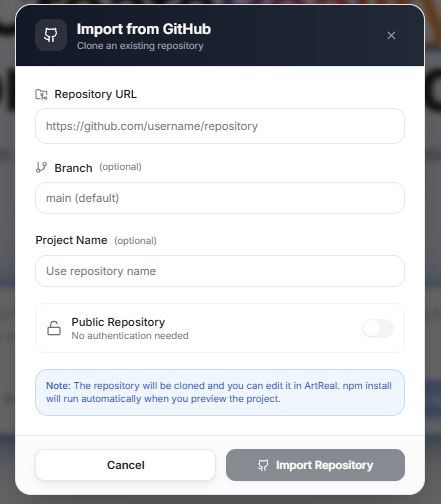
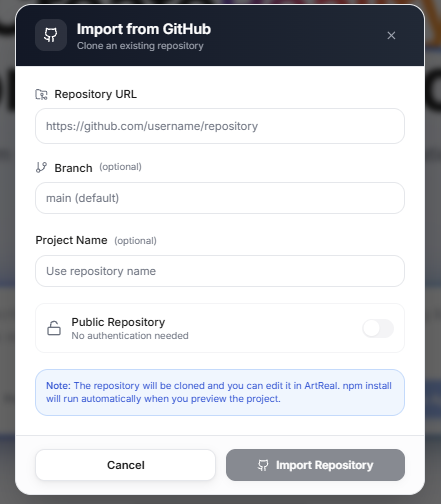
Import from Github
-
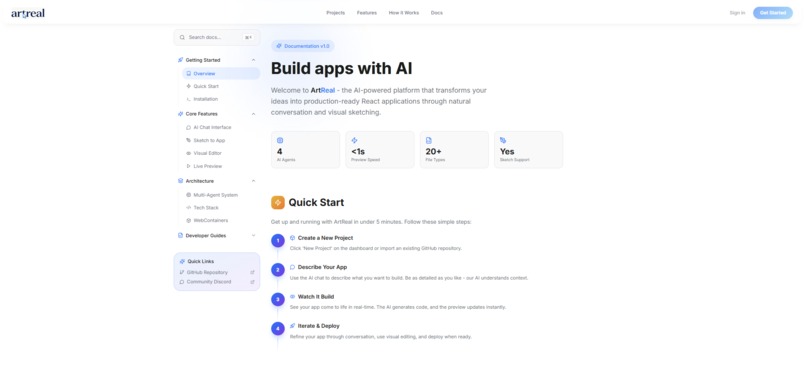
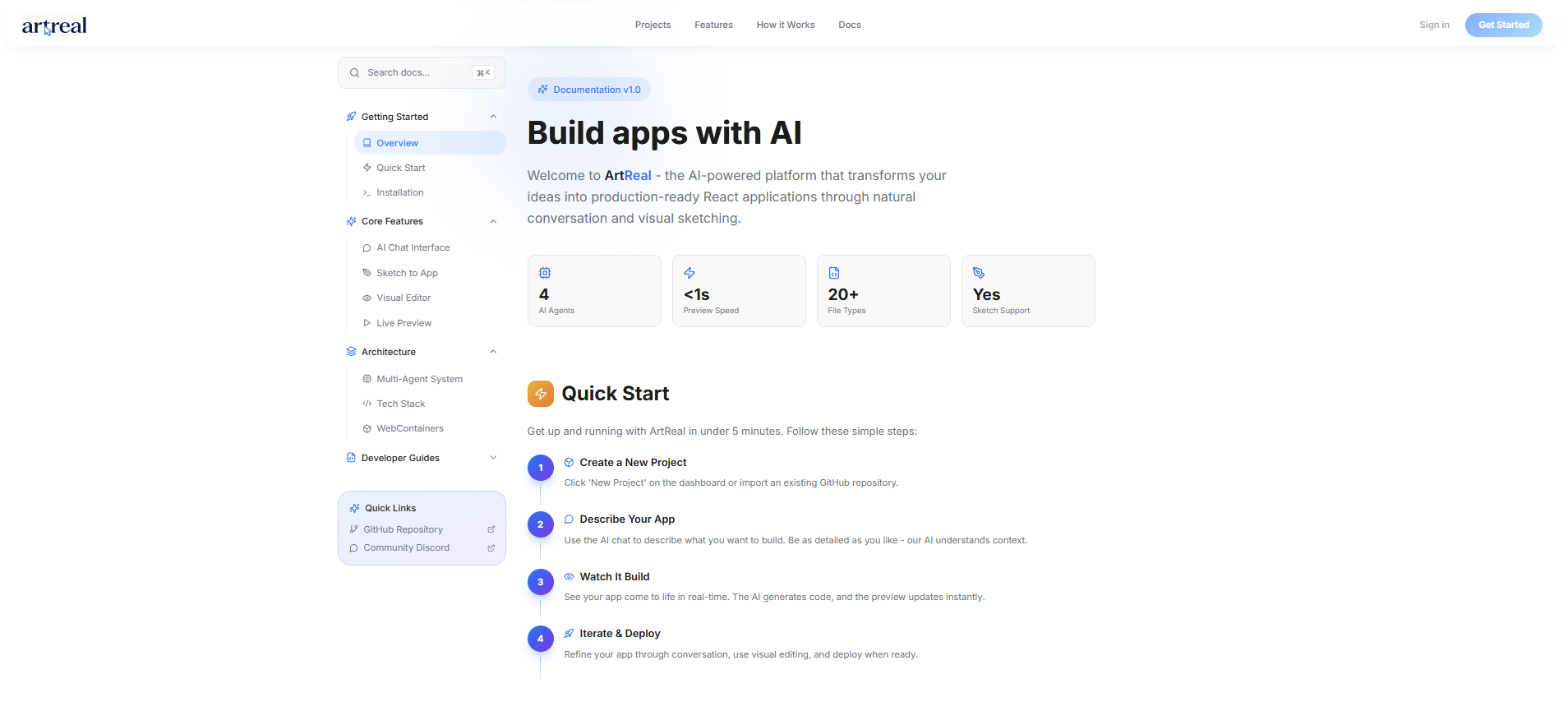
Documentations
-
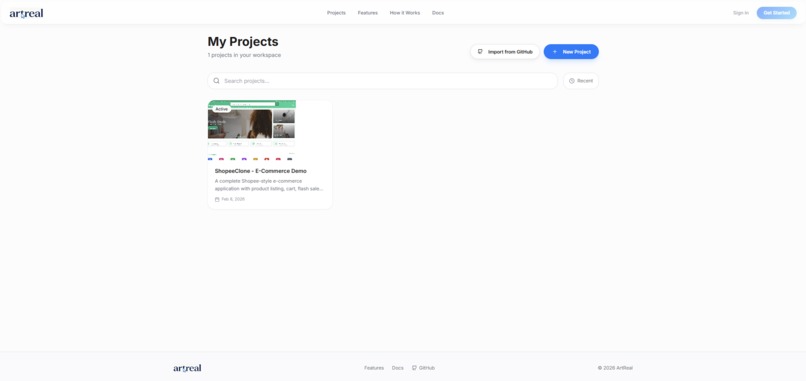
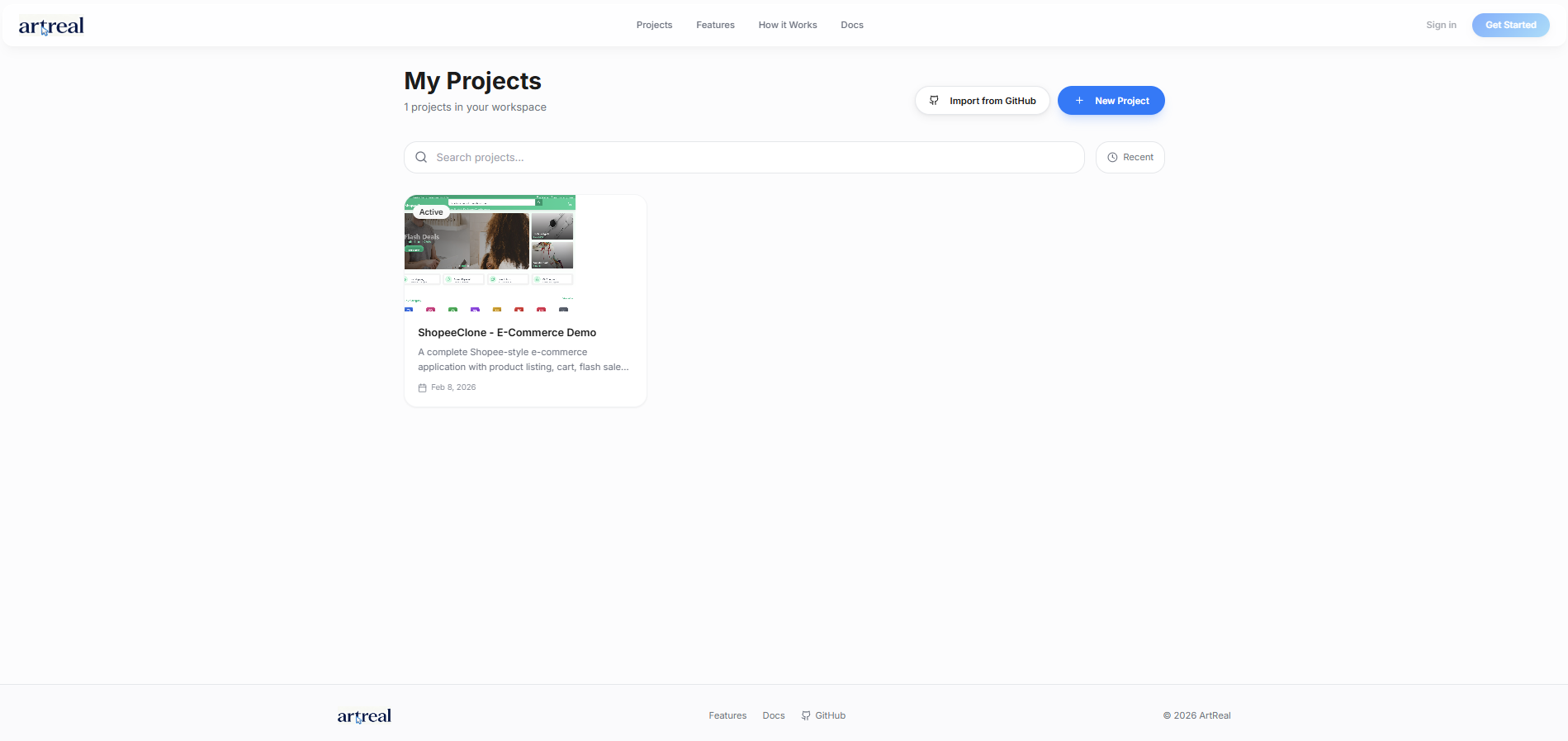
Projects
-
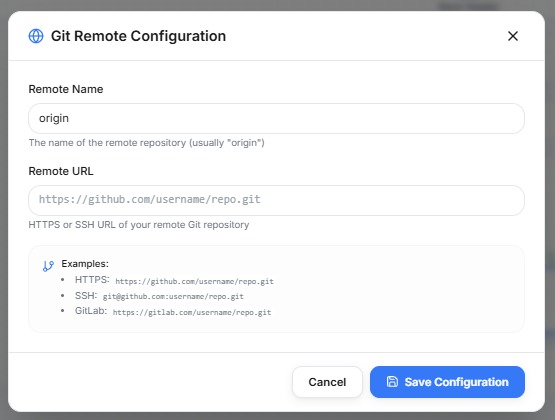
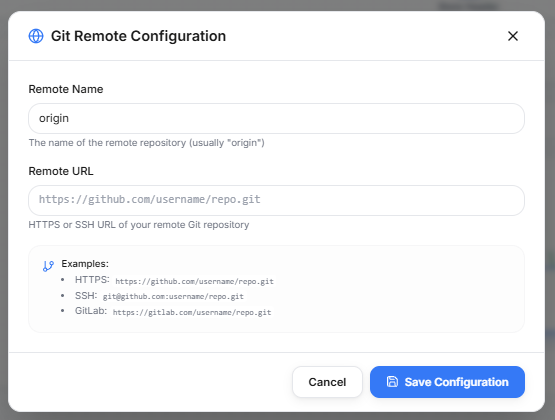
Git Remot Config
-
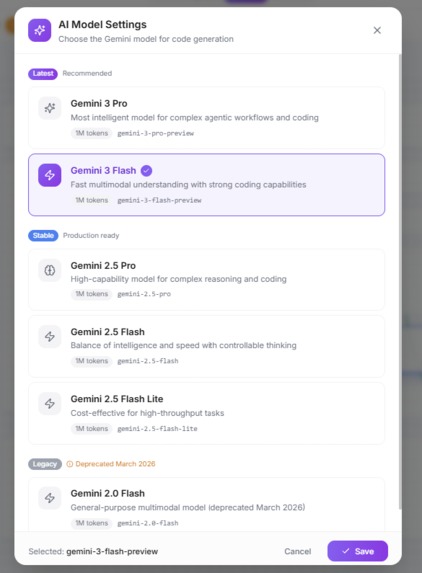
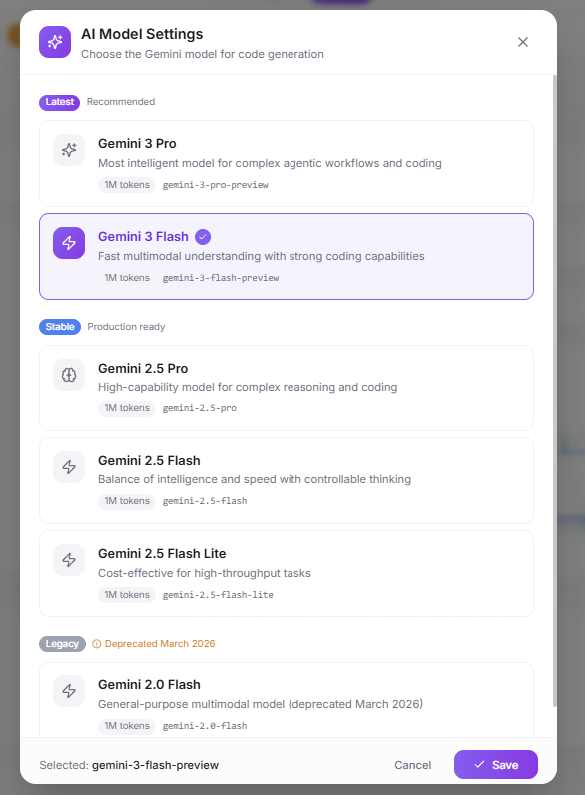
Model Settings
-
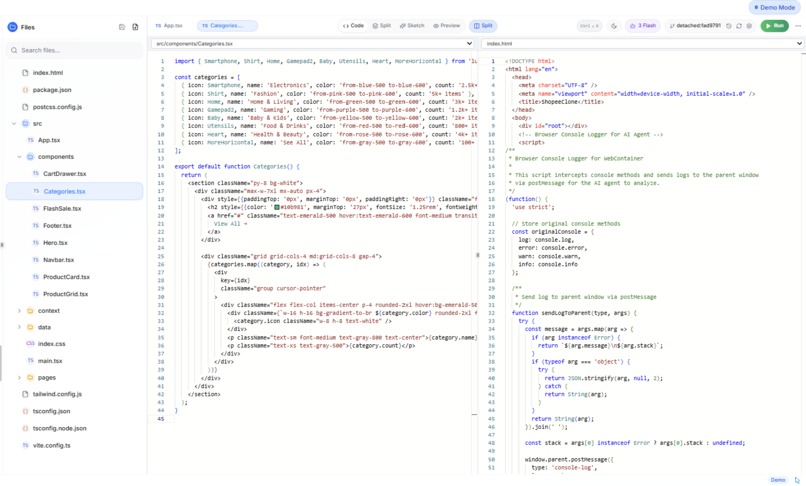
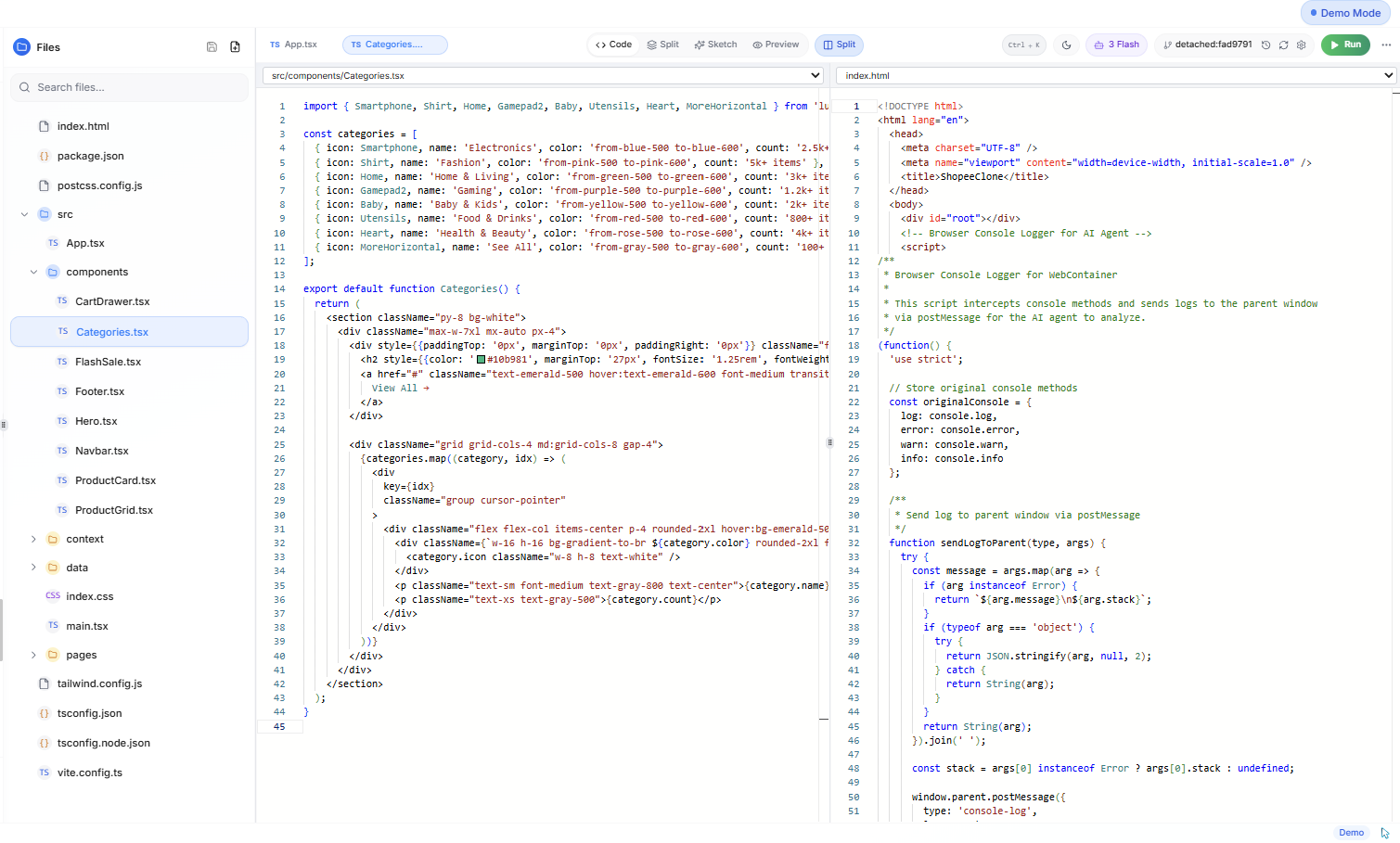
Code Editor
-
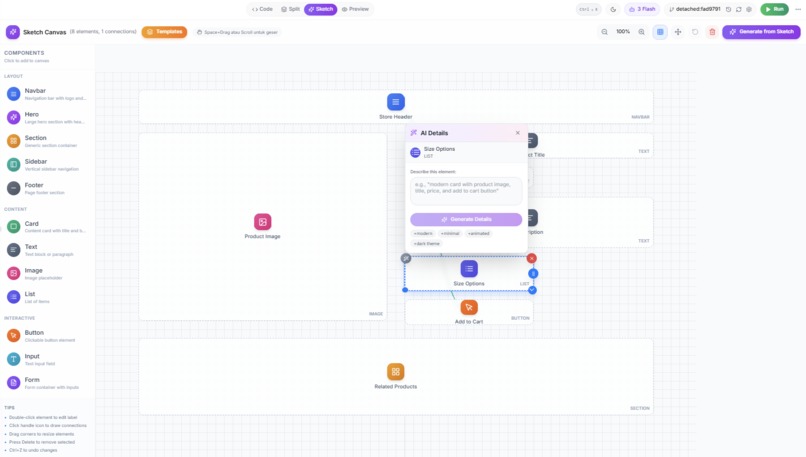
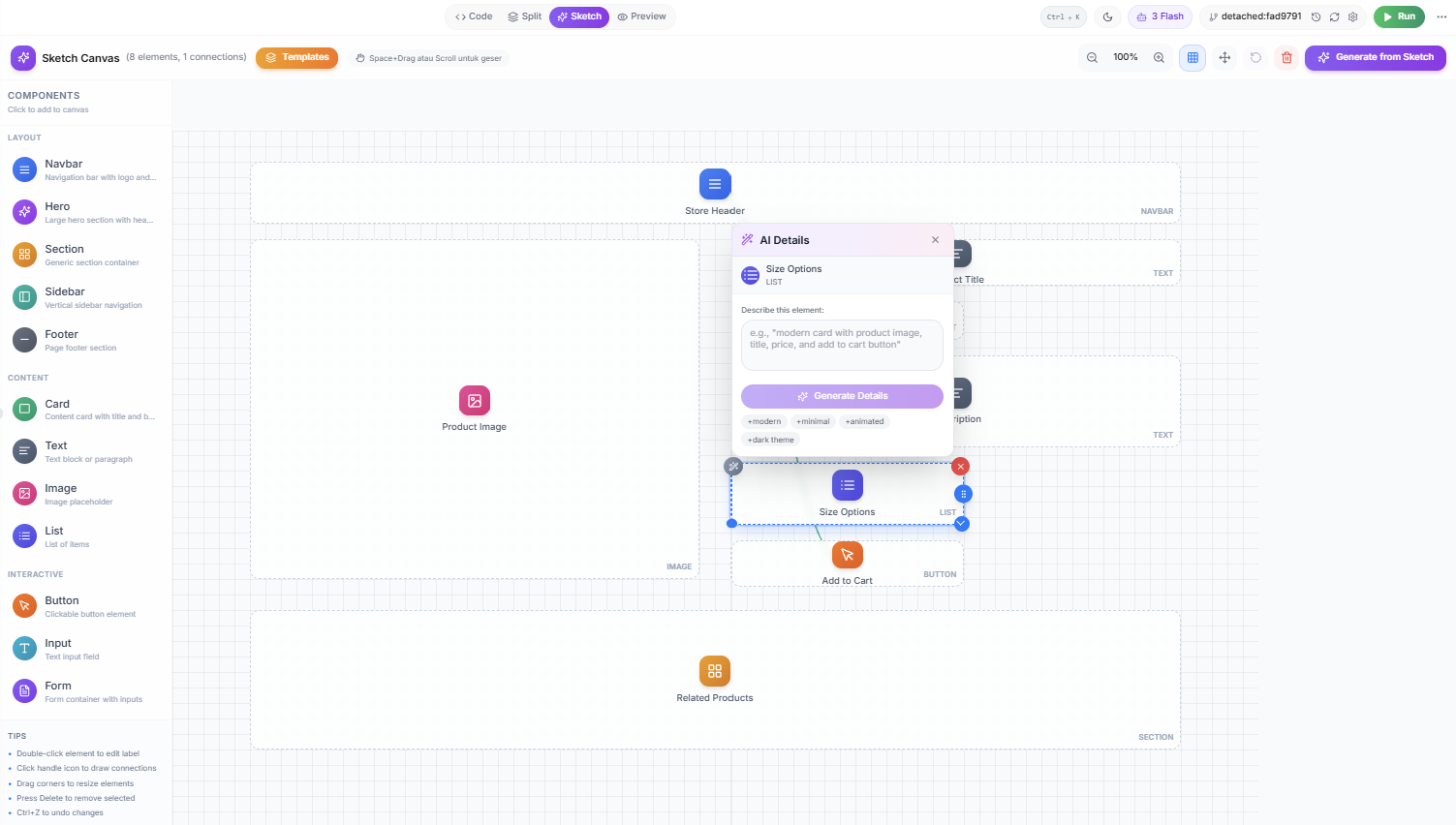
Sketch Canvas
-
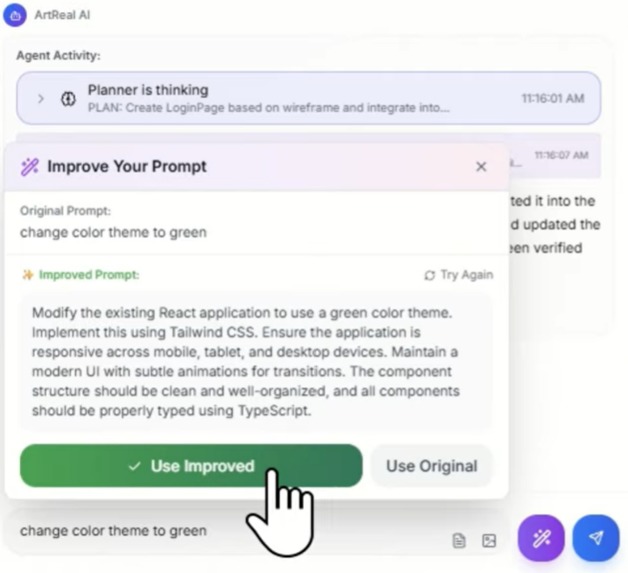
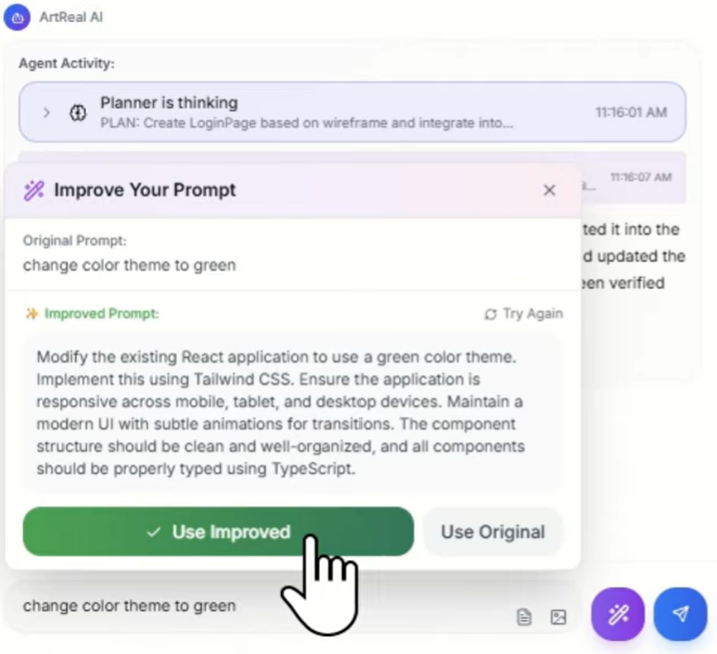
Prompt Enhancer
-
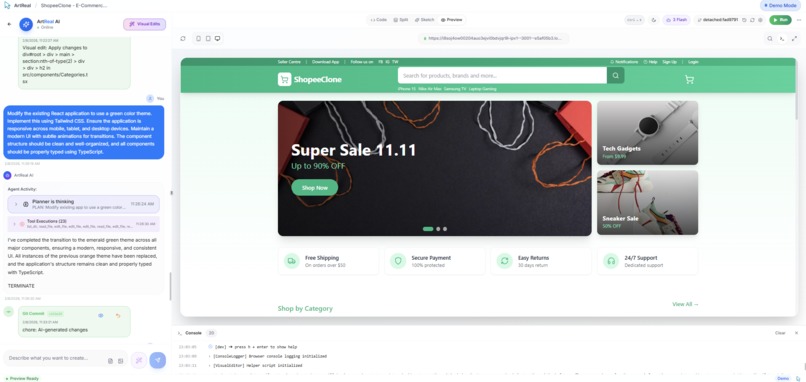
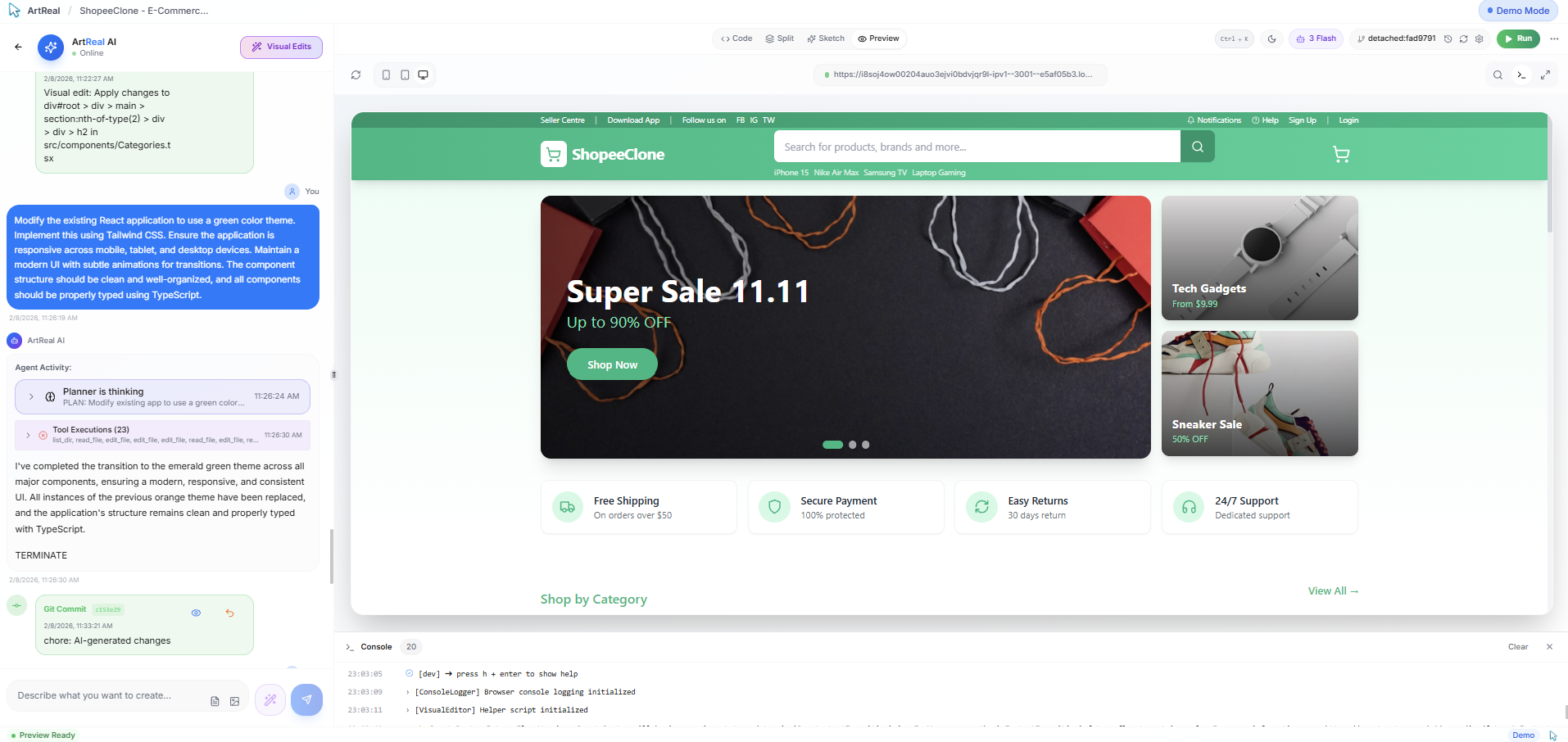
Preview
ArtReal
Inspiration
Every developer knows the frustration: you have a perfect vision in your mind, but translating it into code takes hours of boilerplate, debugging, and iteration. We observed how people naturally communicate ideas — they sketch on whiteboards, describe in plain language, or show reference screenshots. Yet traditional development tools only accept one input: code.
When Google announced Gemini with its powerful multimodal capabilities, we saw an opportunity to bridge this gap. What if building software could be as natural as explaining your idea to a colleague?
ArtReal was born from a simple belief: the best interface for building software should match how humans naturally think and communicate.
What it does
ArtReal is an AI-powered web development platform that transforms ideas into production-ready React applications through three intuitive input methods:
- 💬 Chat — Describe what you want in plain English: "Create a pricing page with 3 tiers"
- ✏️ Sketch — Drag and drop components on a visual canvas, connect elements, click generate
- 📸 Upload — Share screenshots, mockups, or PDFs and watch AI recreate them in code
The platform features:
- Live Preview — See your app running instantly in the browser via WebContainers (no server needed)
- Visual Editing — Click any element in the preview to edit styles directly
- Version Control — Automatic Git commits for every AI change with one-click restore
- Multi-Agent AI — Specialized Planner and Coder agents collaborate for better results
How we built it
Frontend: React 18 + TypeScript + Vite + Tailwind CSS + shadcn/ui
- Monaco Editor for VS Code-quality code editing
- WebContainers (StackBlitz) for browser-native Node.js runtime
- Server-Sent Events (SSE) for real-time AI streaming
- React Query for state management
Backend: Python + FastAPI + SQLAlchemy
- Multi-agent orchestration with Planner → Coder workflow
- Google Gemini API for multimodal understanding and code generation
- Tool-based generation (create_file, edit_file, delete_file) for structured outputs
- Filesystem + Git integration for version control
Key Architecture Decisions:
- Streaming responses — Users see AI "thinking" in real-time, creating transparency
- Context injection — Every request includes project structure and conversation history
- Browser-based preview — WebContainers eliminate server-side compute for previews
- Automatic commits — Every AI change is versioned, enabling easy rollbacks
Challenges we ran into
WebContainer Compatibility — Next.js 15+ uses Turbopack which requires native bindings unavailable in WASM. We built an auto-fix system that detects and downgrades Next.js only in the preview while preserving user's original code.
Context Persistence — Early versions produced inconsistent code because each request was independent. We implemented context injection that includes project files and conversation history with every AI call.
Dependency Caching — Navigation between projects caused full page reloads, requiring fresh npm installs (30-60 seconds). We switched to client-side routing to preserve the WebContainer instance and implemented smart dependency diffing.
Streaming Complex Agents — Multi-agent systems produce output in unpredictable chunks. We designed a structured SSE protocol with event types (thought, tool_call, tool_response) so the frontend can render each appropriately.
Image-to-Code Quality — Initial screenshot-to-code attempts produced visually similar but poorly structured results. We iterated on prompts 50+ times to focus on semantic structure, component decomposition, and accessibility.
Accomplishments that we're proud of
Zero-config preview — Users see their app running instantly without any setup, thanks to WebContainers running Node.js directly in the browser
Multimodal input — True flexibility in how users express ideas: chat, sketch, or upload images
Real-time collaboration with AI — Streaming responses show the AI thinking process, making it feel like pair programming
Automatic version control — Every change is committed with AI-generated messages, enabling confident experimentation
Smart compatibility fixes — The system automatically handles framework compatibility issues without user intervention
Sub-second hot reload — Changes appear instantly in the preview with Vite HMR
What we learned
Multimodal AI is transformative — Gemini's ability to understand images alongside text enables use cases we hadn't imagined, like recreating designs from screenshots
Agents > Single prompts — Decomposing tasks across specialized agents (Planner, Coder) dramatically improves output quality and consistency
Context is everything — AI without project context produces generic code; with context, it produces code that fits perfectly in your codebase
Browser capabilities have evolved — WebContainers prove that full development environments can run entirely client-side, eliminating infrastructure complexity
UX matters as much as AI — The best AI means nothing if users can't interact with it naturally; streaming, visual editing, and intuitive inputs are crucial
What's next for ArtReal
- Collaborative editing — Multiple users working on the same project in real-time
- Component marketplace — Share and reuse AI-generated components across projects
- One-click deployment — Direct integration with Vercel, Netlify, and other platforms
- Mobile app generation — Extend to React Native for iOS/Android development
- Design system import — Import components and styles from Figma or Sketch
- More framework support — Vue, Svelte, and other popular frameworks
Built With
- fastapi
- git
- google-gemini-api
- monaco-editor
- node.js
- python
- react
- shadcn/ui
- sqlalchemy
- sqlite
- tailwind-css
- typescript
- vite
- webcontainers

Log in or sign up for Devpost to join the conversation.