-
-
GlucoWise Logo
-
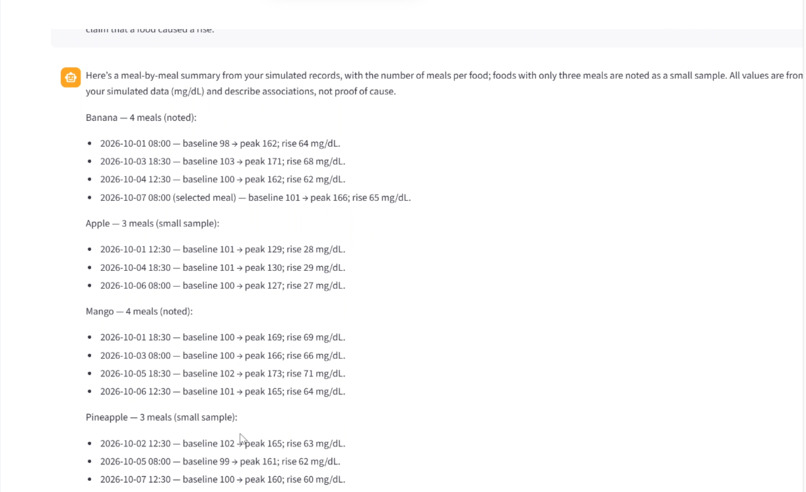
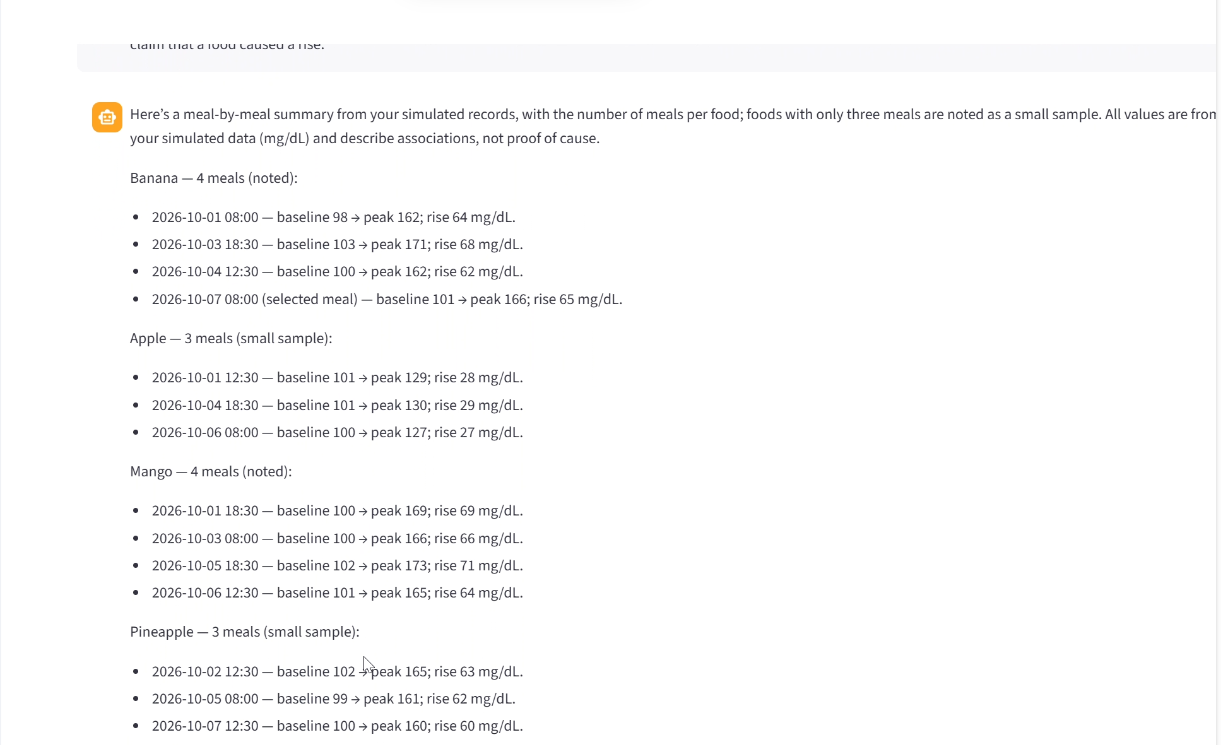
AI Insights: ask a question, get meal-by-meal glucose responses backed by real numbers.
-
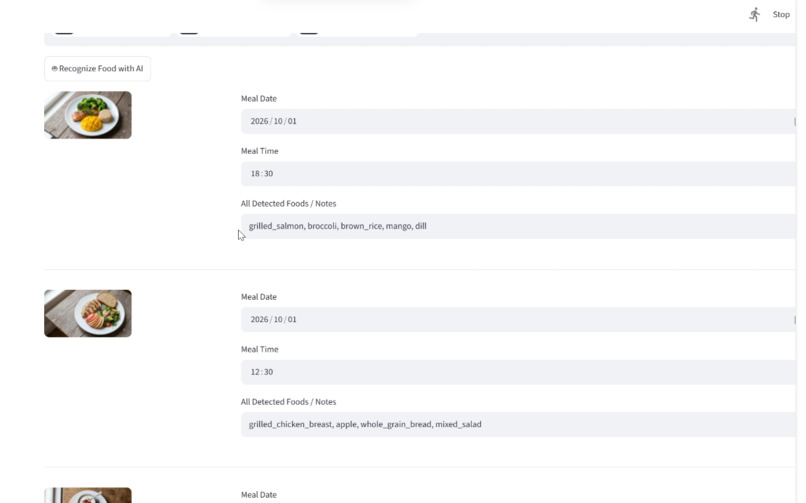
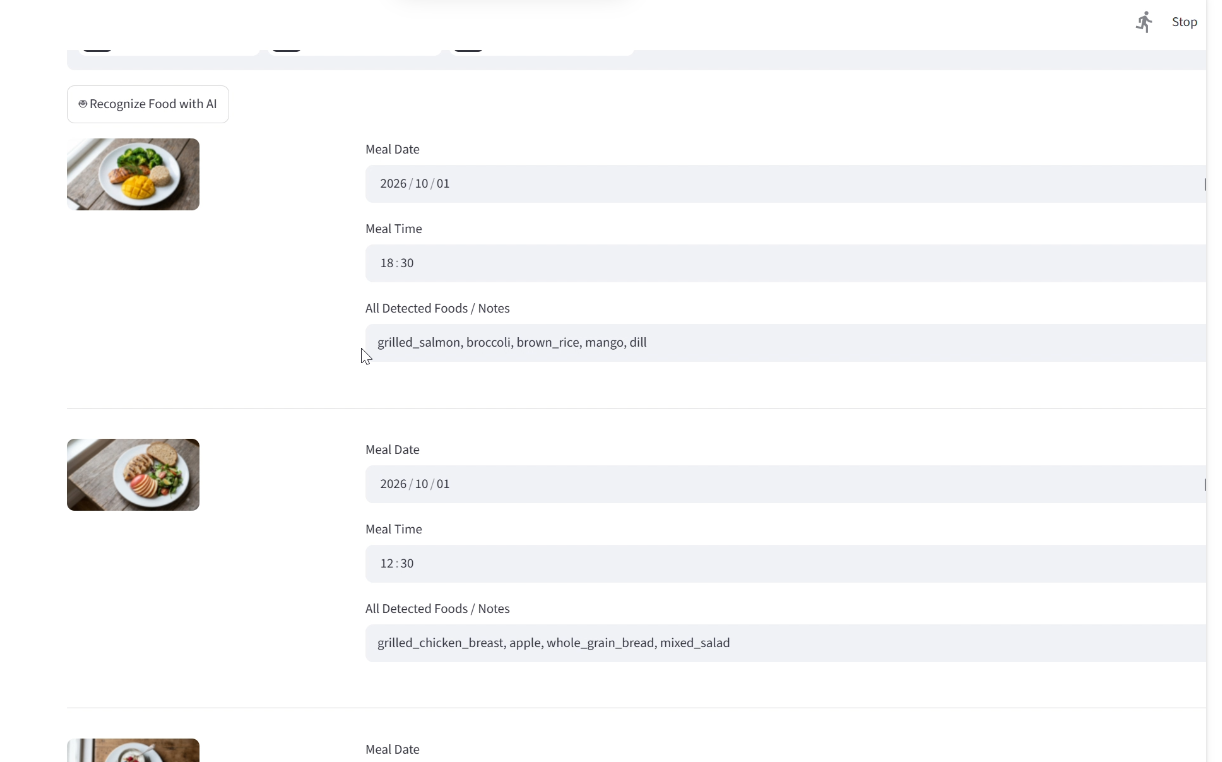
AI identifies the foods in your meal photo; you confirm the details and edit before saving.
Inspiration
According to the CDC, approximately 57% of U.S. adults have diabetes or prediabetes, highlighting how widespread glucose-related health concerns are.
Despite advances in medical technology, including GLP-1 medications and continuous glucose monitors (CGMs), cost remains a major barrier to access. CGM sensors can be expensive and typically last only a limited number of days, depending on the model.
What if people could gain meaningful insights into their personal glucose responses, even from a short period of CGM use?
CGMs show glucose changes, but it can be difficult to remember what we ate when looking back at the graphs. Some existing apps already connect meal photos with CGM data, but we wanted to go further.
People respond differently to food, even when they have the same medical condition. We wanted to help users discover their own food-related glucose patterns simply by asking AI questions.
That's how GlucoWise was born.
Know Your Glucose. Live Wiser.
What it does
GlucoWise is an AI-powered web application that connects meal records with continuous glucose monitoring (CGM) data to help users understand their personal glucose response patterns.
Key features:
- CGM Upload: Import glucose readings from CSV files.
- AI Food Recognition: Record meals using photos and edit the recognized food information.
- Glucose Visualization: View glucose changes before and after meals.
- Meal Analysis: Calculate baseline glucose, peak glucose, and glucose rise.
- Historical Comparisons: Compare glucose responses across recorded meals.
- Conversational AI: Ask questions about personal glucose patterns in natural language.
For example, users can ask:
"Do you notice any recurring patterns in how my glucose responds to different foods?"
Then follow up with:
"Can you compare similar meals and show me the actual numbers?"
GlucoWise goes beyond tracking food and glucose. It helps users explore patterns in their own data.
Our hackathon prototype uses simulated CGM data and does not provide medical diagnoses or establish causation.
How we built it
We built GlucoWise with Python, Streamlit, and Microsoft Foundry, using simulated CGM data and meal records created by our team.
- Python for data analysis: Connects meal records with CGM readings and calculates baseline glucose (15-minute pre-meal average), peak glucose (highest value within 2 hours), and glucose rise. All numbers are calculated by Python, so the AI never has to guess a measurement.
- Streamlit for the web app: One interactive interface for food photo uploads, meal records, glucose graphs, historical comparisons, and AI chat.
- Microsoft Foundry for personalized insights: Foundry is the AI core of GlucoWise.
- GlucoWise-Agent: We built this agent in Foundry to interpret the structured meal and CGM results that Python calculates, and to turn them into plain-language explanations.
- Conversational follow-ups: The agent keeps the context of the conversation, so users can start with a broad question like “Do you see any recurring patterns?” and then dig deeper with “Compare similar meals and show me the actual numbers.”
- AI food recognition: Foundry also powers meal photo recognition, and users can review and edit the recognized foods before saving.
By splitting the work, Python for calculation and Microsoft Foundry for interpretation, GlucoWise turns glucose data into insights that are personalized, understandable, and traceable to real numbers.
Challenges we ran into
Making AI Responses Reliable
Our biggest challenge was ensuring that AI explanations were grounded in actual glucose data. We addressed this by separating numerical calculations in Python from natural-language interpretation in Microsoft Foundry.
Integrating Multiple Technologies
Connecting food records, CGM datasets, timestamps, glucose analysis, Streamlit, and Microsoft Foundry required careful coordination. Under a tight deadline, we learned to prioritize a working end-to-end experience over adding unnecessary features.
Collaborating Across Disciplines
Our team brought together students with different backgrounds and limited hackathon experience. Two members were first-time participants, while the third had participated once before.
Our team included a Food Science and Engineering exchange student from Korea with almost no programming experience, alongside teammates with computer science and data-related skills.
Working together across different areas of expertise was challenging, but it became one of the most valuable parts of our experience.
Accomplishments that we're proud of
Our proudest accomplishment was bringing food science, software development, and data analysis together to turn an idea into a working application.
GlucoWise started with a food science question: Why do people respond differently to similar foods, and how can we make those differences easier to understand?
A student with almost no programming experience contributed the original concept and food science knowledge, while teammates with technical expertise helped bring the idea to life.
Together, we developed a prototype combining meal records, CGM analysis, data visualization, and conversational AI powered by Microsoft Foundry.
For a team with limited hackathon experience, seeing our different skills come together in one functional project was especially rewarding.
What we learned
This project taught us that building a useful AI application requires more than connecting a language model to a website.
We learned the importance of combining domain knowledge with technical skills, separating numerical calculations from AI interpretation, and designing AI systems that acknowledge uncertainty.
Most importantly, we learned the value of interdisciplinary teamwork.
An idea inspired by food science became a functional software prototype through collaboration across different fields.
We also learned that personalized health-related insights must be communicated responsibly. Observed glucose patterns can provide useful information, but they do not necessarily prove that a particular food caused the response.
What's next for GlucoWise
We hope to keep developing GlucoWise into a more reliable and accessible tool for understanding personal glucose patterns. Our next steps are:
- Evidence-backed insights: Connecting our PubMed search to Microsoft Foundry so the app can retrieve relevant scientific literature and evaluate how well it supports each observed pattern.
- Validation with real-world data: Moving beyond simulated CGM data to test GlucoWise with real CGM and meal records, with appropriate privacy and security safeguards.
- Reliability and usability: Improving the app’s stability and user experience so it is easier to set up and use.
Our goal is to help users gain more meaningful insights from their glucose data, even when their monitoring period is limited.
GlucoWise doesn’t just show users their glucose data. It helps them discover the patterns behind it.
Know Your Glucose. Live Wiser.


Log in or sign up for Devpost to join the conversation.