Inspiration
Diabetes affects hundreds of millions of people worldwide, and frequent glucose monitoring is essential for effective disease management. Unfortunately, traditional monitoring methods require painful finger-prick tests that can discourage regular use. Our team wanted to create a more comfortable and accessible solution that could improve patient compliance and quality of life.
We were inspired by the potential of wearable healthcare technology and artificial intelligence to transform how people manage chronic diseases. This motivated us to develop GlucoSense AI, a non-invasive system that estimates blood glucose levels using optical sensors and machine learning.
What it does
How we built it
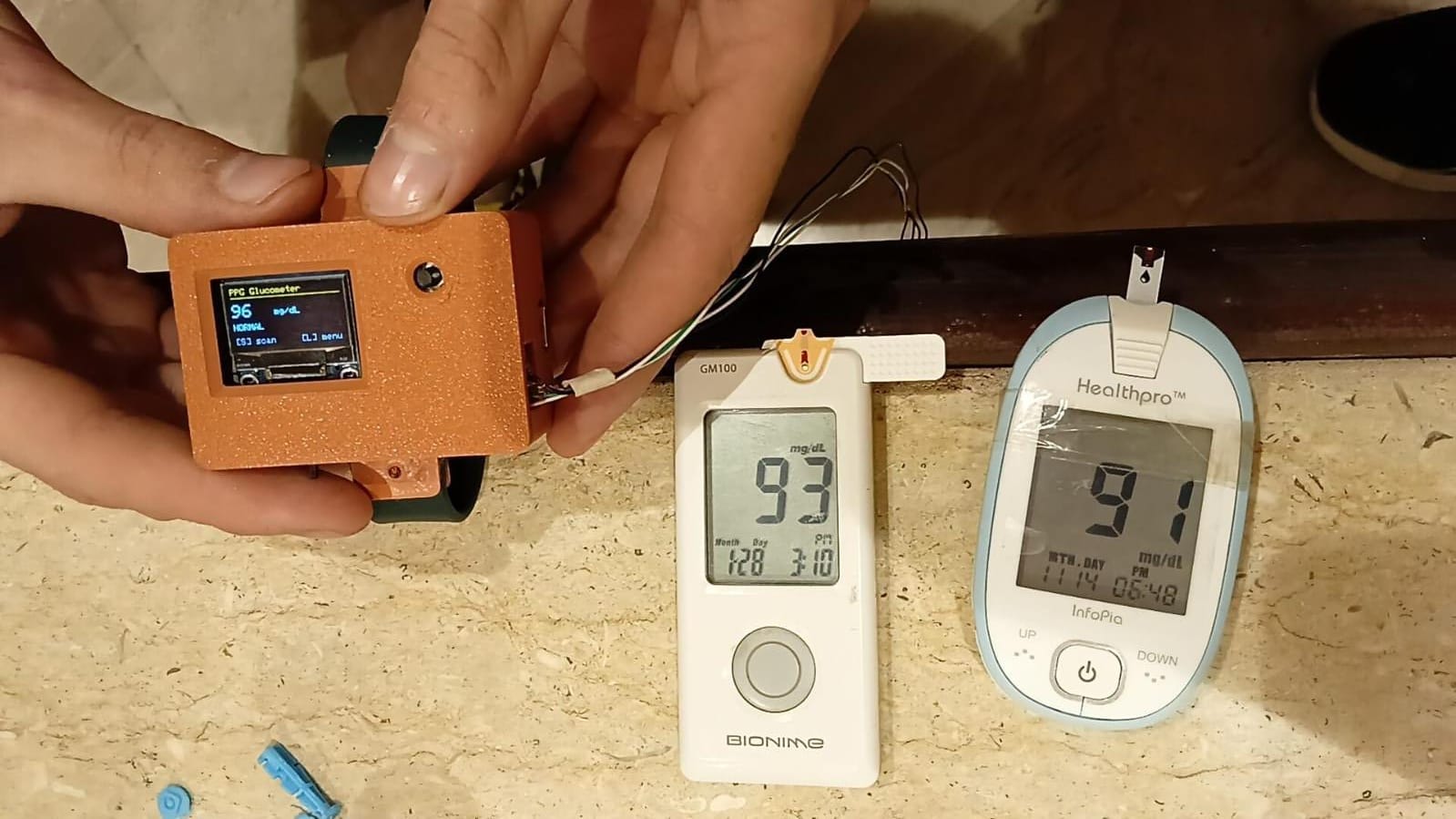
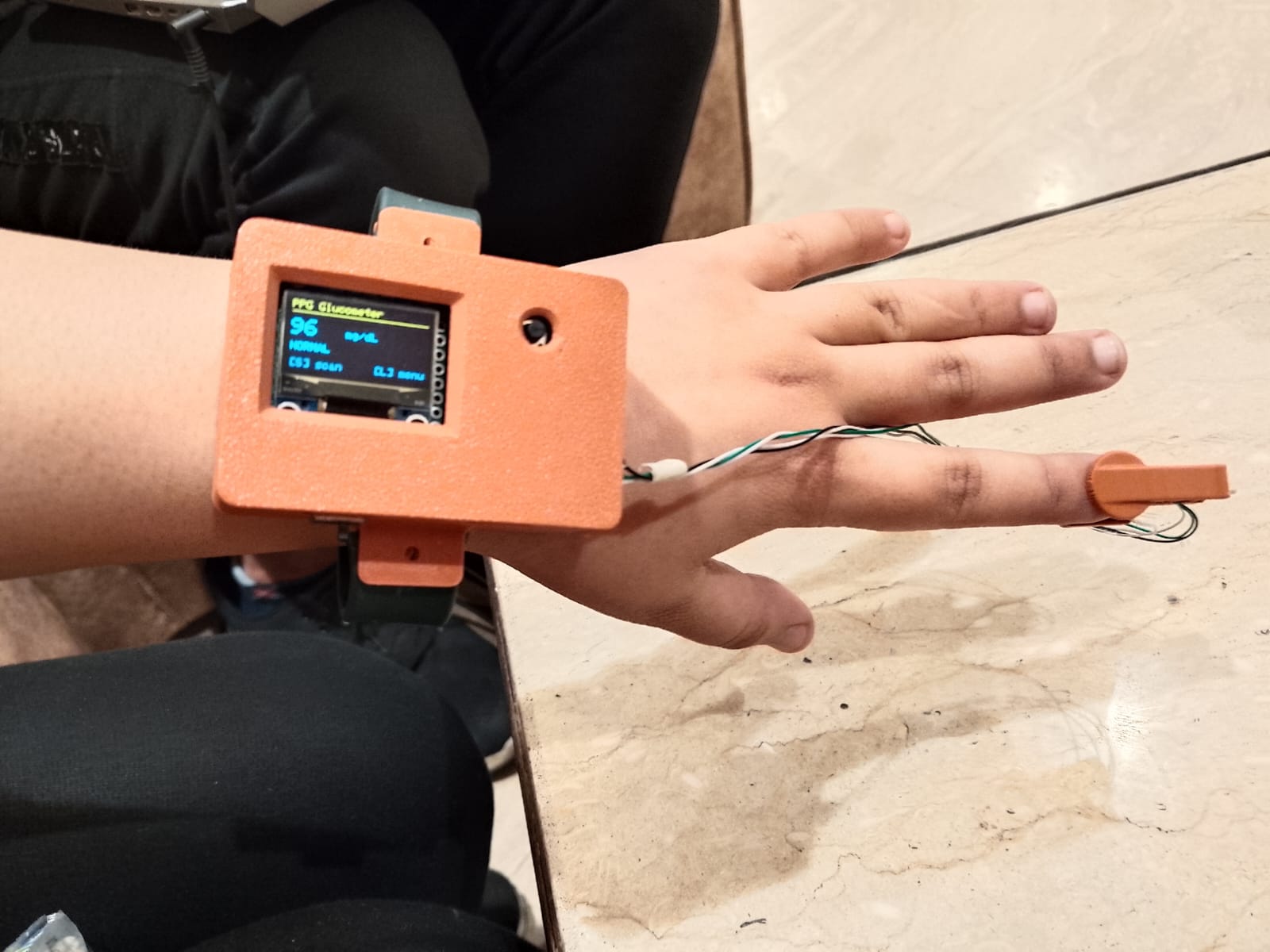
GlucoSense AI is a wearable blood glucose monitoring solution that uses Photoplethysmography (PPG) signals and artificial intelligence to estimate glucose levels without requiring blood samples.
The system captures optical signals from the user's fingertip, processes the data in real time, extracts meaningful physiological features, and applies machine learning algorithms to predict blood glucose levels. Results are displayed instantly, providing users with a painless and convenient monitoring experience.
Challenges we ran into
Developing a non-invasive glucose monitoring system presented several challenges:
Dealing with noisy optical sensor signals. Handling motion artifacts caused by hand movement. Accounting for differences between users, such as skin characteristics and physiological variability. Finding a reliable relationship between PPG signals and blood glucose levels. Balancing prediction accuracy with the limited computational resources of embedded devices.
These challenges required extensive experimentation with signal processing, feature extraction, and machine learning techniques.
Accomplishments that we're proud of
Successfully designing a working prototype using affordable hardware components. Developing an end-to-end pipeline from signal acquisition to glucose prediction. Integrating machine learning with embedded systems for real-time operation. Creating a personalized calibration mechanism to improve prediction performance. Building a solution that has the potential to make glucose monitoring more comfortable and accessible for diabetic patients.
What we learned
Through this project, we gained practical experience in:
Biomedical signal processing Machine learning model development Embedded systems programming Sensor integration and hardware design Healthcare technology innovation Data collection and validation methodologies
Most importantly, we learned how interdisciplinary collaboration can turn complex healthcare challenges into innovative technological solutions.
What's next for GlucoSense AI
Our next goal is to improve prediction accuracy through larger datasets and advanced machine learning models. We also plan to develop a companion mobile application, cloud-based analytics platform, and physician dashboard for remote patient monitoring.
Future versions of GlucoSense AI will focus on continuous monitoring, wearable integration, health trend analysis, and clinical validation to move closer toward a practical healthcare solution that can positively impact millions of people living with diabetes.
Built With
- c++
- data
- embedded
- esp32
- healthcare
- iot
- learning
- machine
- max30102
- numpy
- oled
- pandas
- photoplethysmography
- processing
- python
- regression
- ridge
- scikit-learn
- signal
- systems
- technology
- wearable

Log in or sign up for Devpost to join the conversation.