Inspiration
Diabetes management can be stressful and time-consuming. Many people forget or struggle with regular sugar checks, so I wanted to create a robot that makes monitoring simple, automatic, and reliable.
What it does
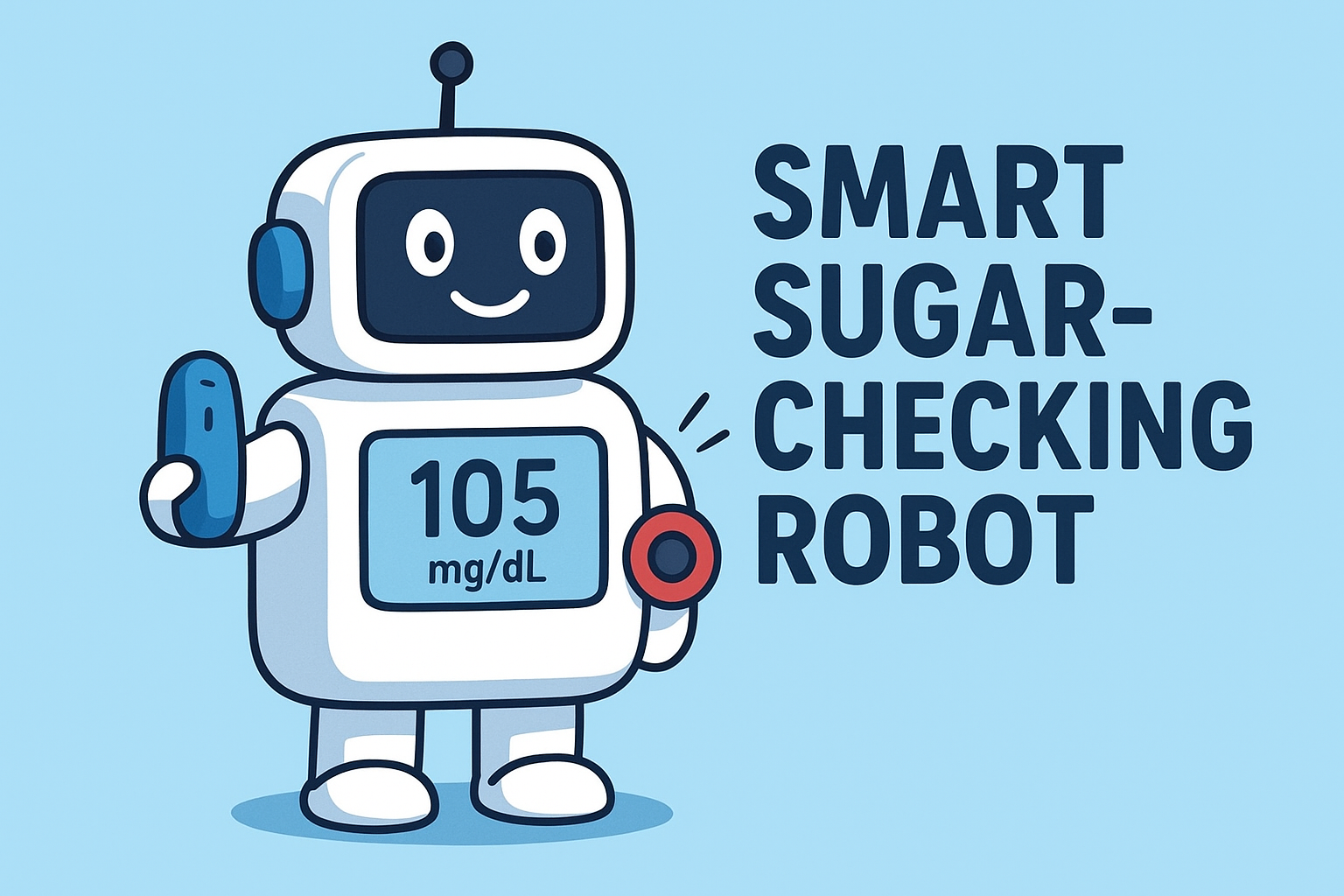
The Smart Sugar-Checking Robot detects sugar levels using a glucose sensor, displays readings on an LCD, and provides instant alerts through a buzzer. With IoT integration, it can send data to a mobile app for easy tracking and long-term monitoring.
How I built it
I built it using Arduino, a glucose sensor, LCD display, buzzer, and rechargeable battery. The casing was 3D printed for portability, and IoT integration allows real-time data transfer to a mobile app.
Challenges I ran into
Calibrating the glucose sensor for accurate readings
Ensuring smooth IoT data transfer without delays
Designing a compact 3D-printed body that fits all components
Managing power consumption with a rechargeable battery
Accomplishments that I'm proud of
Successfully integrated hardware with IoT
Created a working prototype that provides instant alerts
Built a portable design with a user-friendly mobile app
Made sugar checking simpler and more engaging with robotics
What I learned
How to integrate sensors with Arduino for real-time monitoring
Basics of IoT data transmission and app syncing
Hardware design challenges in making robots compact and reliable
The importance of user-centered design in health-related devices
What's next for Untitled
Improve sensor accuracy and explore non-invasive glucose monitoring
Add voice assistant integration for accessibility
Enhance mobile app with AI-based health recommendations
Scale the design for hospitals and home healthcare use
Built With
- 3d
- arduino
- buzzer
- glucose
- iot-integration
- lcd
- mobile
- printed
- rechargeable-battery
- sensor

Log in or sign up for Devpost to join the conversation.