-
-
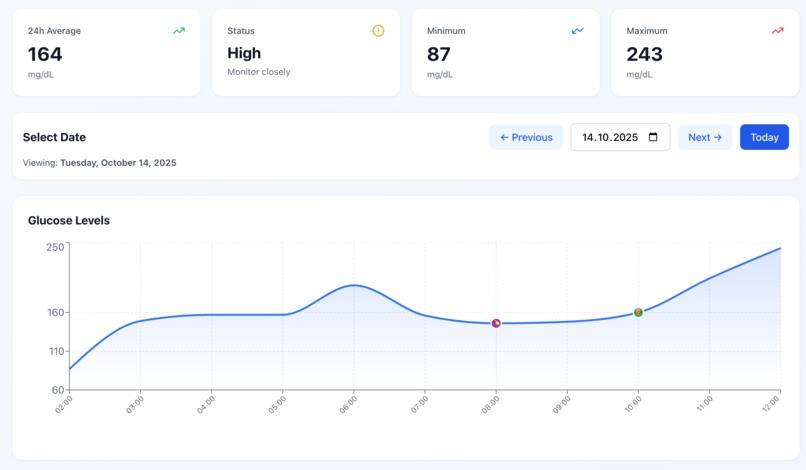
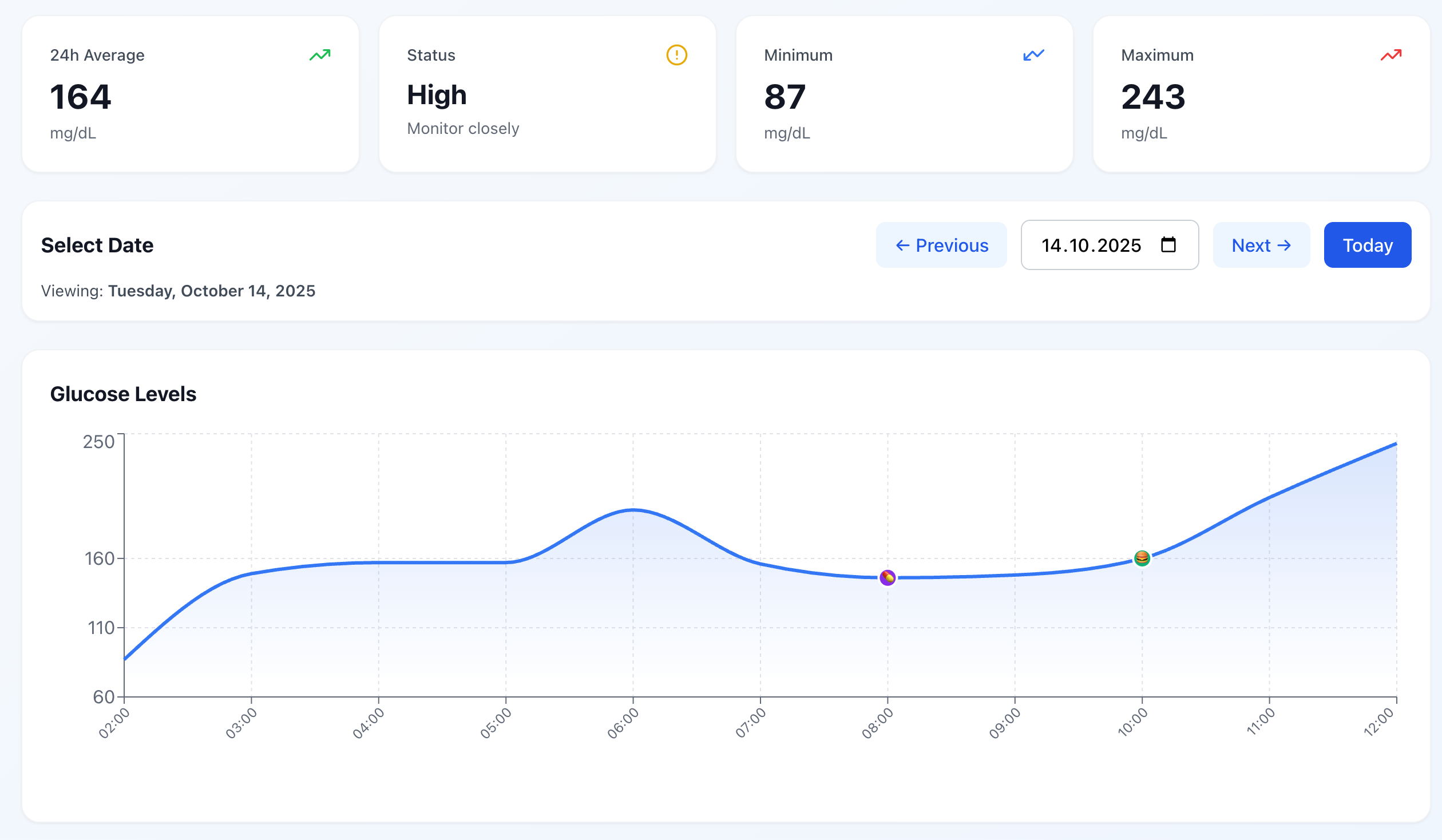
Glucose data insight
-
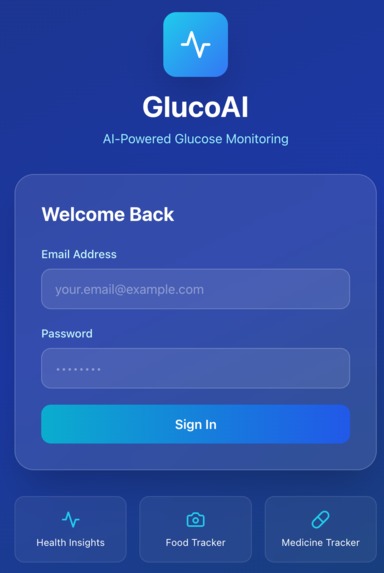
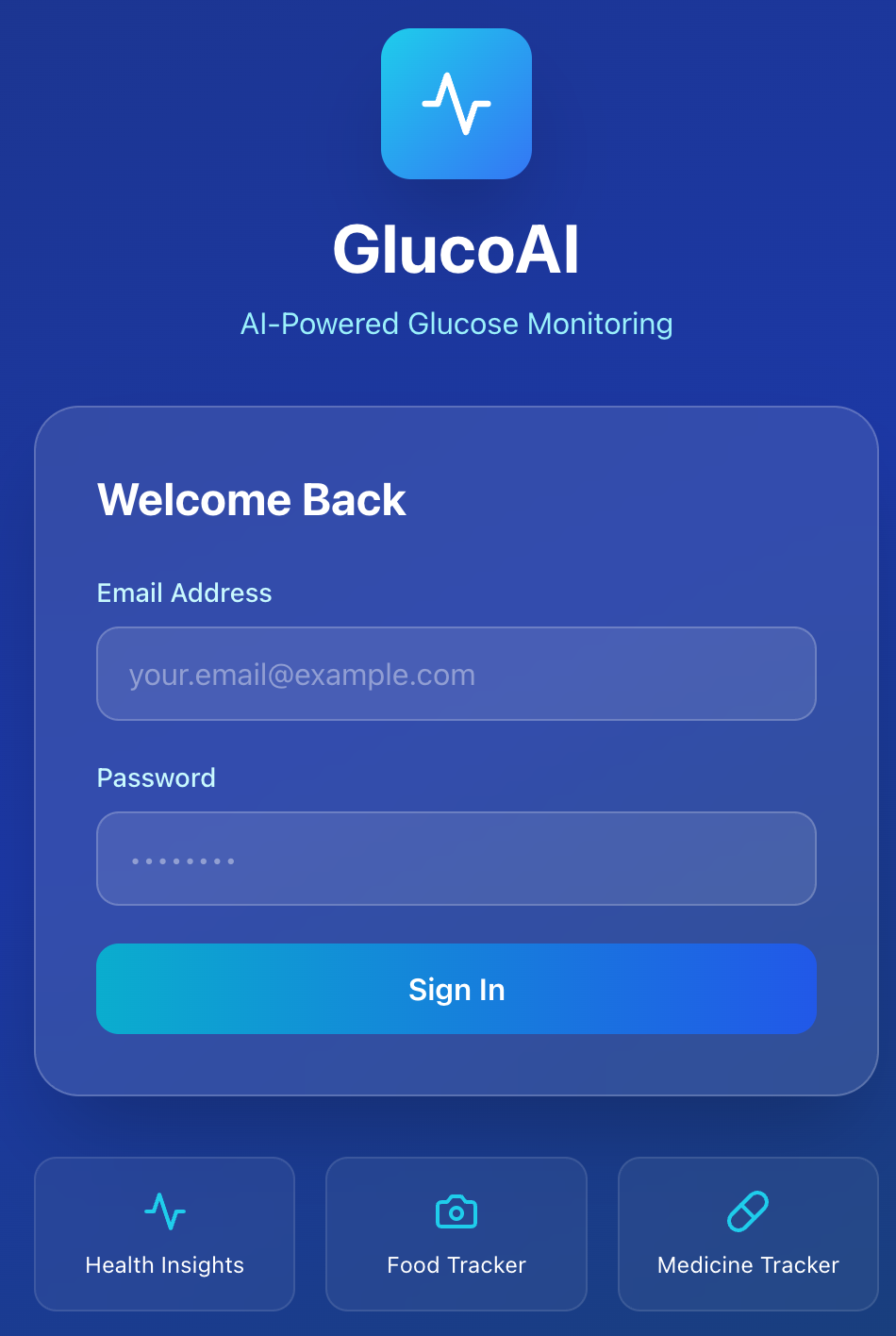
Login page
-
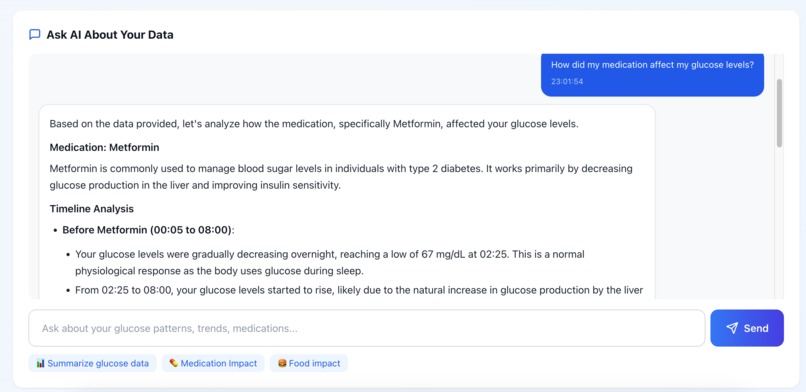
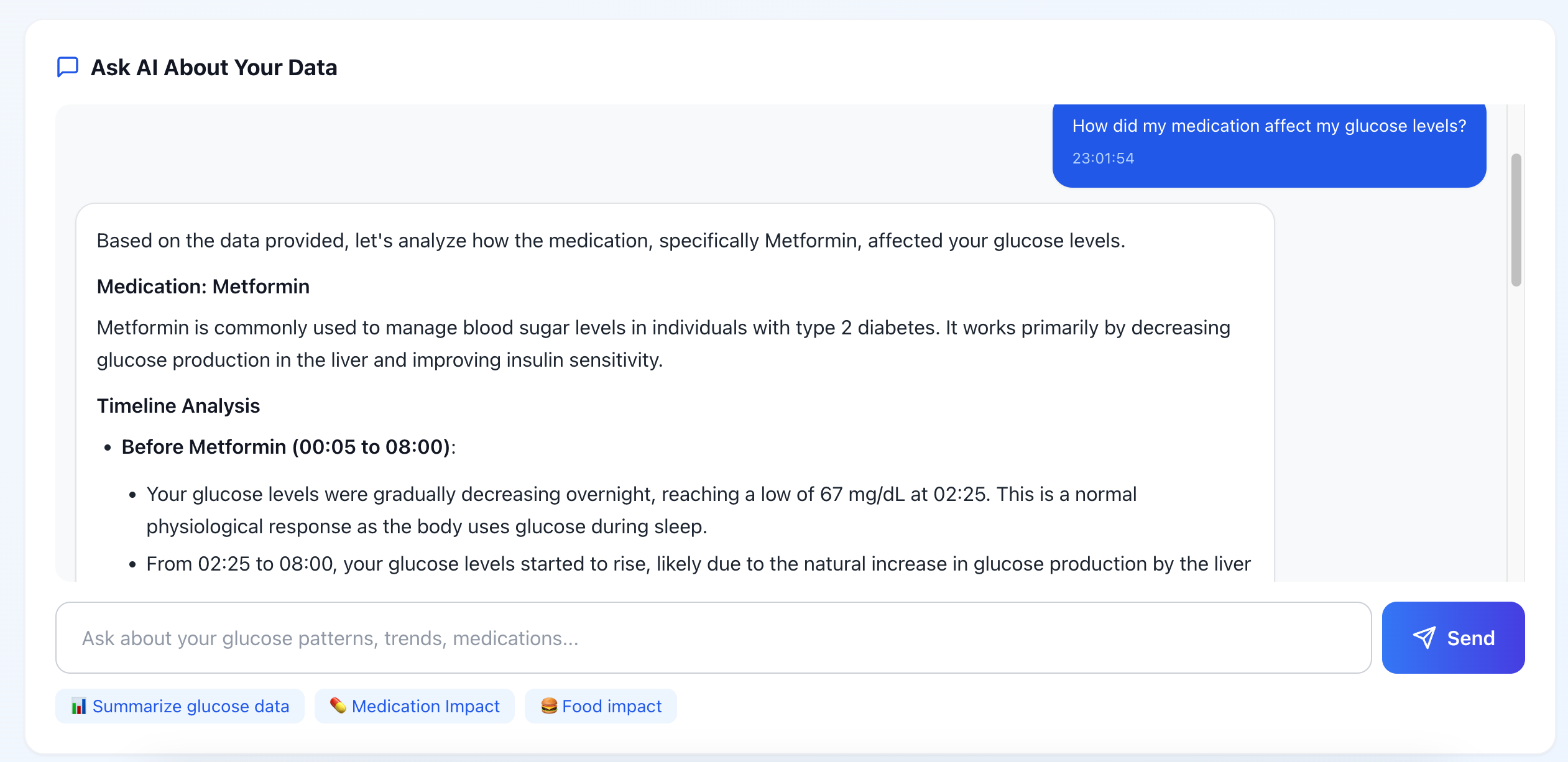
AI agent - chatbot
-
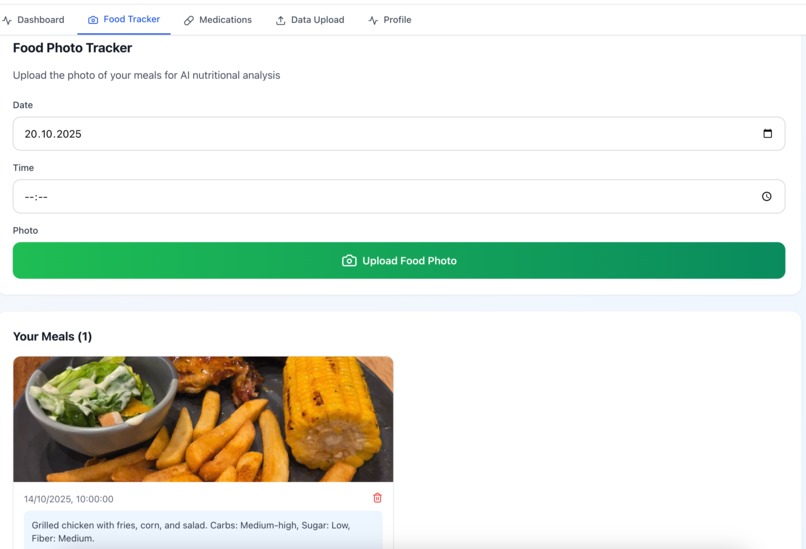
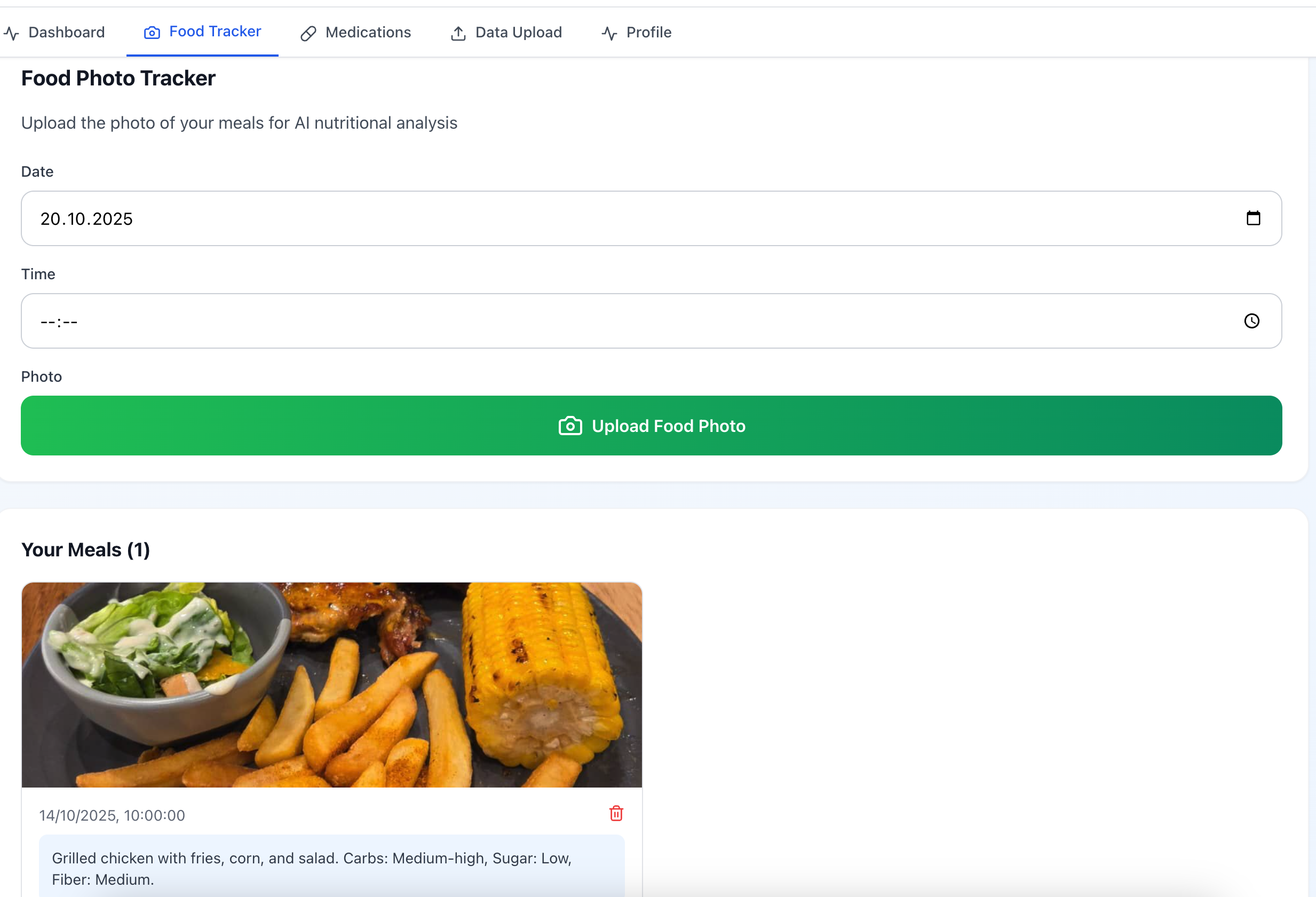
real time food analysis
-
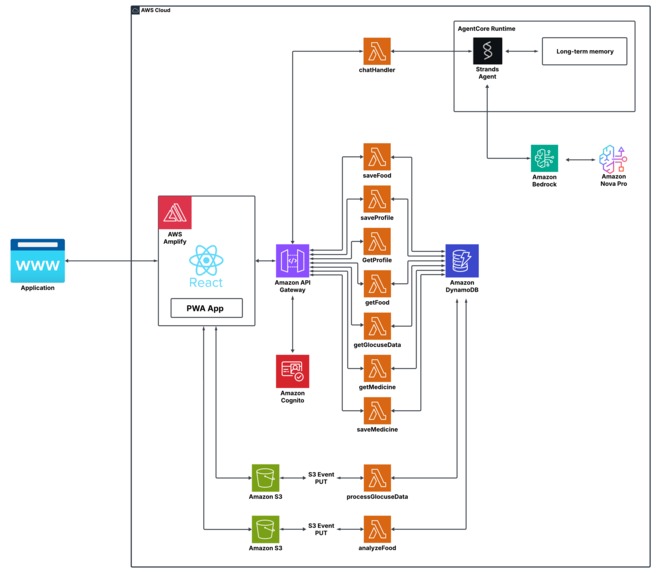
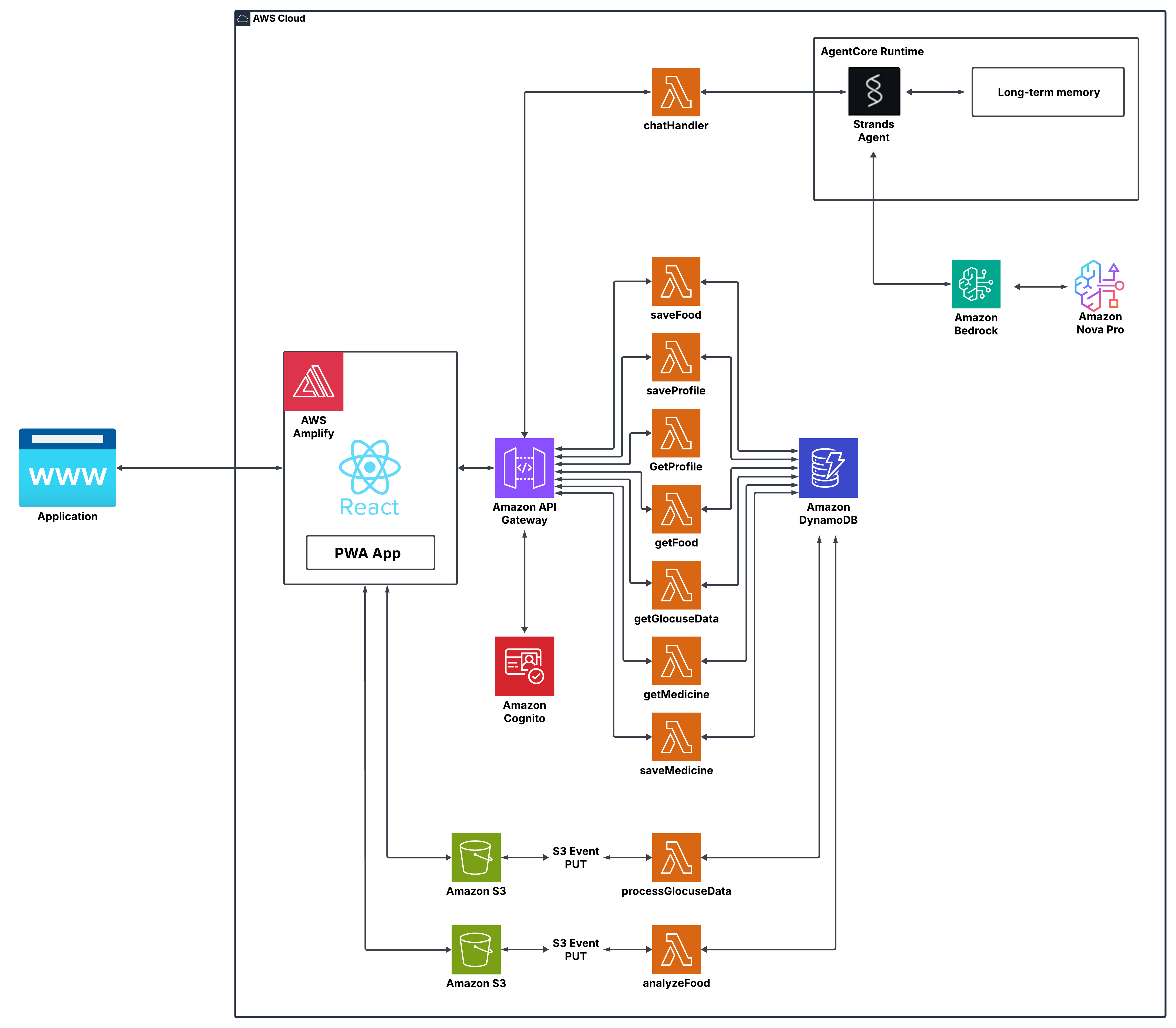
Serverless architecture
Inspiration
According to the International Diabetes Federation, more than 500 million adults are living with diabetes today — a lifelong disease with no cure, requiring continuous monitoring and management.
In many developing countries, awareness and access to diabetes care remain limited. Many patients lack proper insurance coverage or specialist guidance. Meanwhile, managing glucose can be overwhelming — every brand of CGM (Continuous Glucose Monitor) has its own app interface, making integration difficult. Tracking food intake manually is time-consuming, tedious, and prone to errors. Together, these hurdles make diabetes management a constant uphill battle. Our goal: to empower people with diabetes — and anyone seeking optimal glucose health — to make informed, data-driven lifestyle decisions, accessible anytime, anywhere.
What it does
GlucoAI is an intelligent health assistant designed to simplify diabetes management by integrating glucose, medication, and food data into one easy-to-use dashboard.
How we built it
We built an intelligent and agentic health assistant using a fully serverless AWS architecture. The frontend is a React Progressive Web App hosted on AWS Amplify, which connects to a backend powered by Amazon API Gateway and multiple AWS Lambda functions handling data processing, profile management, and AI interactions. User authentication is managed through Amazon Cognito, while Amazon DynamoDB stores glucose readings, food entries, and medication data. Amazon S3 triggers event-driven Lambda functions that process glucose data and analyze food uploads in real time. A Strands Agent running on AgentCore Runtime integrates with Amazon Bedrock (Nova Pro) to deliver context-aware, AI-driven health recommendations with persistent memory and reasoning capabilities.
Challenges we ran into
Initially, we needed to analyze uploaded food images to extract details such as carbs and sugar content, so we designed an event-driven architecture where S3 PUT events triggered Lambda functions for automated processing. The same approach was used for CSV uploads containing glucose data, with Lambda functions extracting key datapoints into DynamoDB. Another major challenge was that the agent initially generated only generic responses, lacking personalization. To solve this, we introduced a long-term memory mechanism in agentCore that stores user profiles—including weight, age, and diabetes type—so the agent could continuously tailor its recommendations based on individual health contexts.
Accomplishments that we're proud of
We’re proud of building a unified, intelligent platform that simplifies diabetes management through automation and personalization. Our event-driven architecture seamlessly analyzes uploaded food images and glucose CSV data, transforming them into actionable insights stored in DynamoDB. By integrating an agent powered by Amazon Bedrock with long-term memory, we enabled truly personalized guidance that continuously considers each user’s profile — including weight, age, and diabetes type.
What we learned
We learned how to design scalable, event-driven systems on AWS using Lambda, API Gateway, DynamoDB, and S3, while maintaining secure and efficient cross-service communication with Cognito and IAM. Integrating AgentCore with Strands and Amazon Bedrock opened up exciting possibilities for building autonomous, context-aware agents capable of reasoning, learning from user interactions, and maintaining long-term memory — moving beyond traditional chatbots toward true agentic intelligence.
What's next for GlucoAI
Next, we plan to integrate Continuous Glucose Monitor (CGM) data directly into the platform to enable real-time tracking. We’re also working on predictive glucose spike alerts powered by AI models, along with personalized meal planning recommendations tailored to each user’s glucose patterns. In the long term, we aim to develop a doctor dashboard to help healthcare professionals monitor patients and provide data-driven guidance remotely.
Built With
- agentcore
- amazon-cloudwatch
- amazon-dynamodb
- amplify
- anthropic
- api
- apigateway
- awsamplify
- bedrock
- cognito
- lambda
- nova
- python
- react
- s3
- strands
- typescript


Log in or sign up for Devpost to join the conversation.