-
-
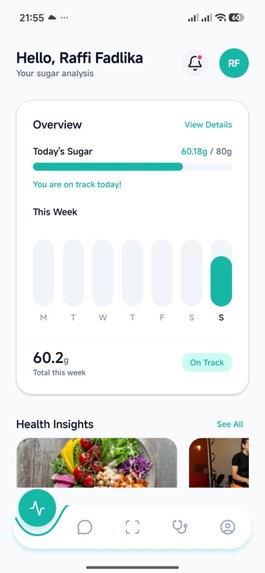
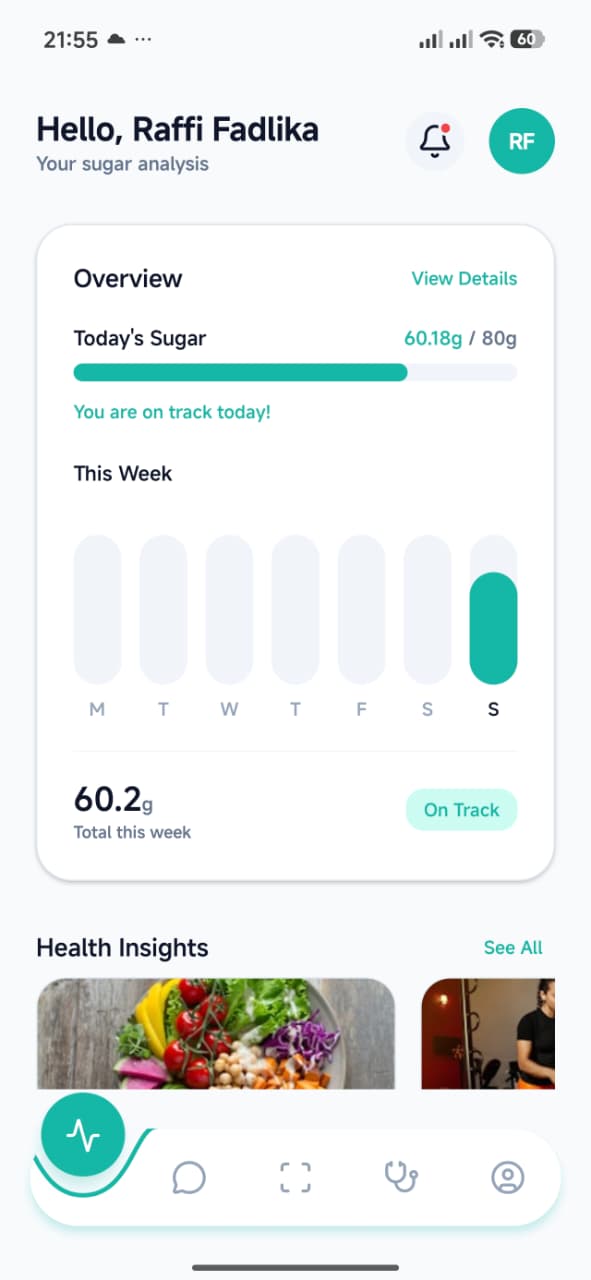
Home Screen
-
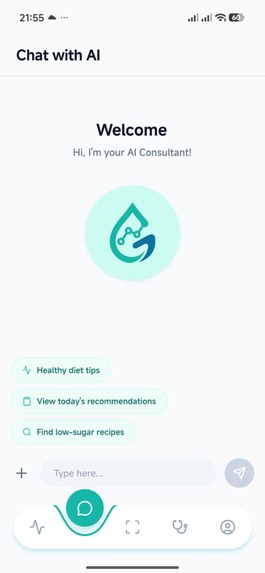
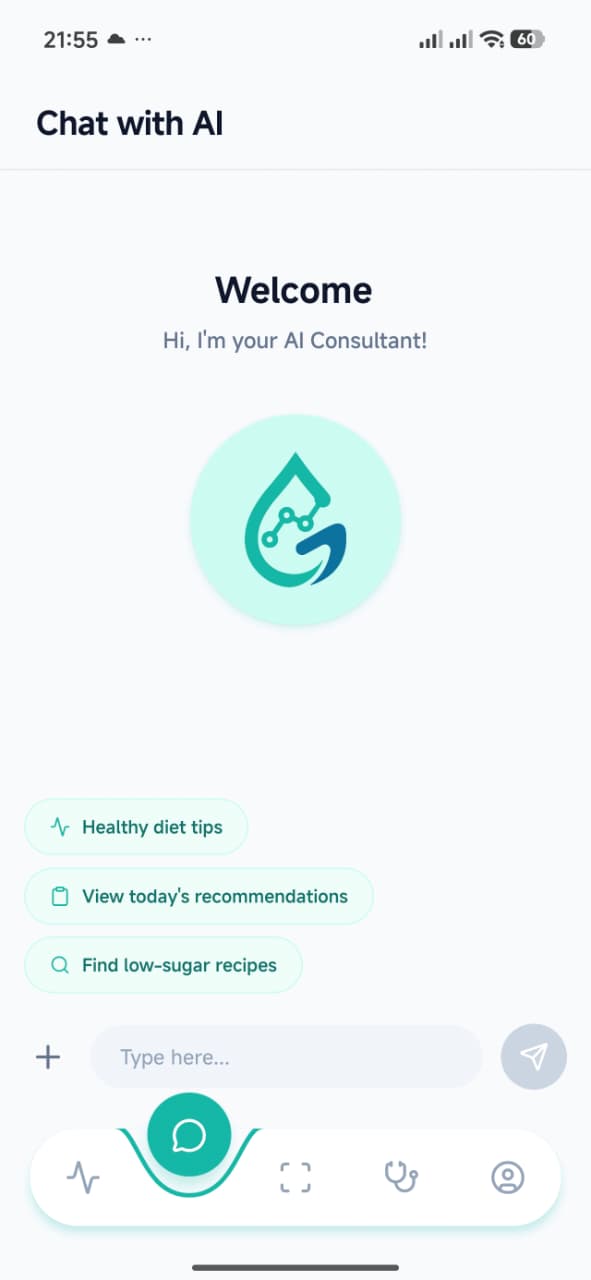
Chatbot Screen
-
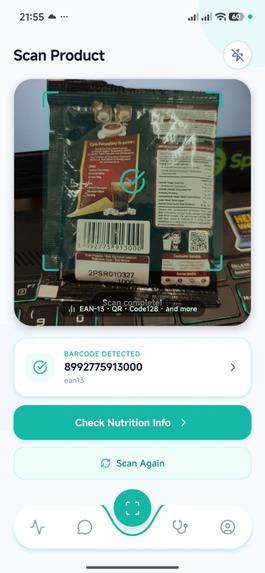
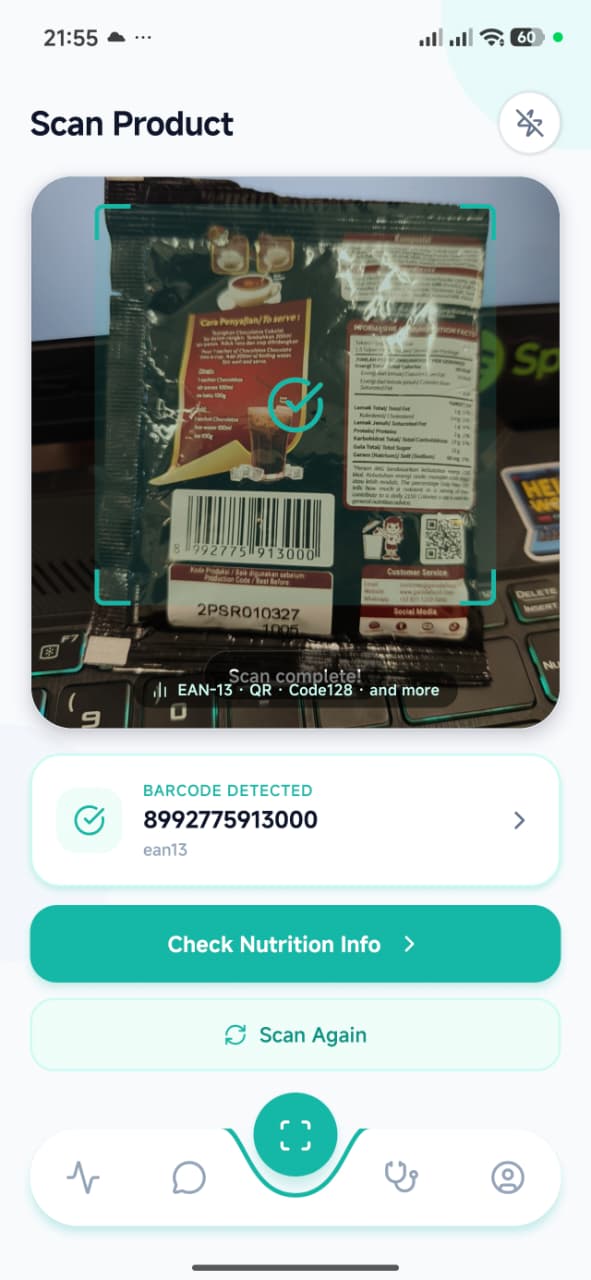
Scan Product Screen
-
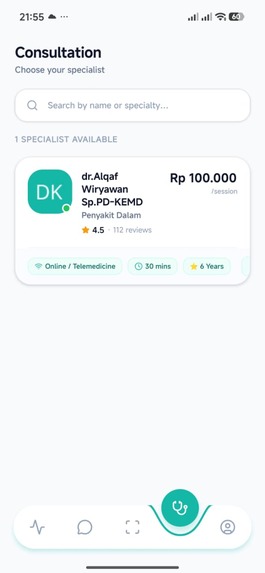
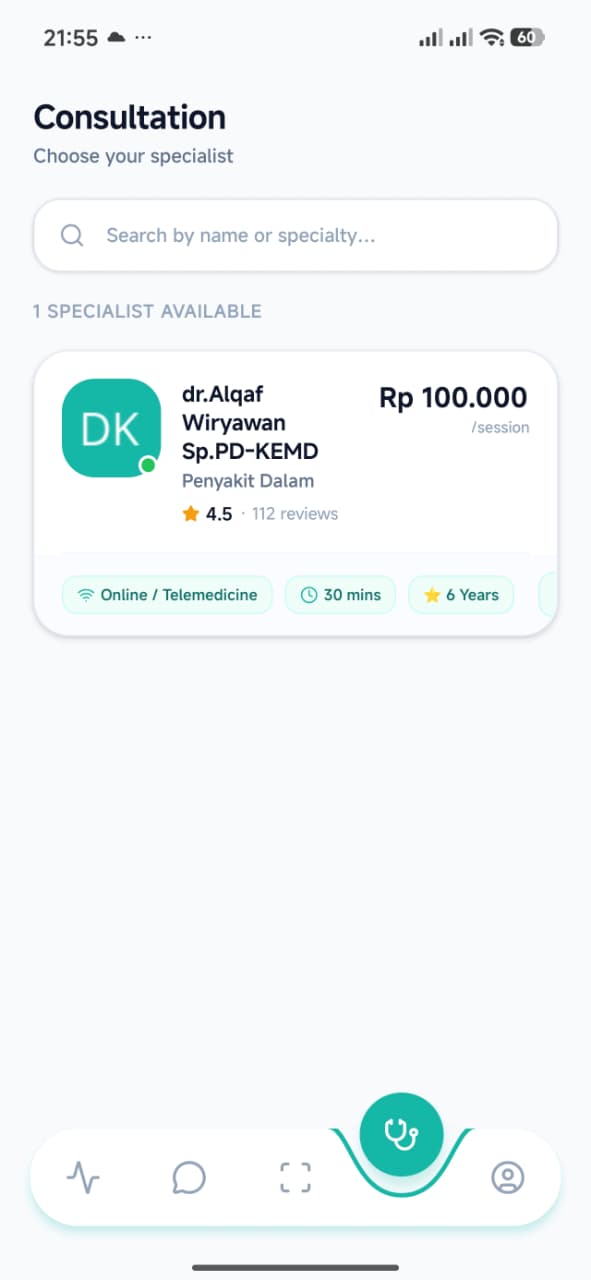
Consultation Screen
-
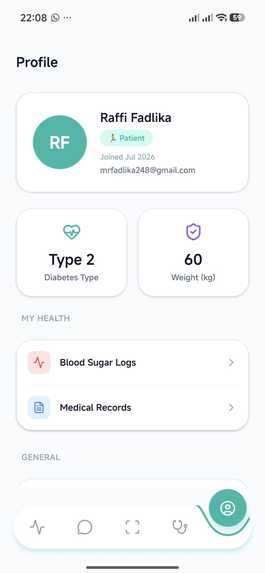
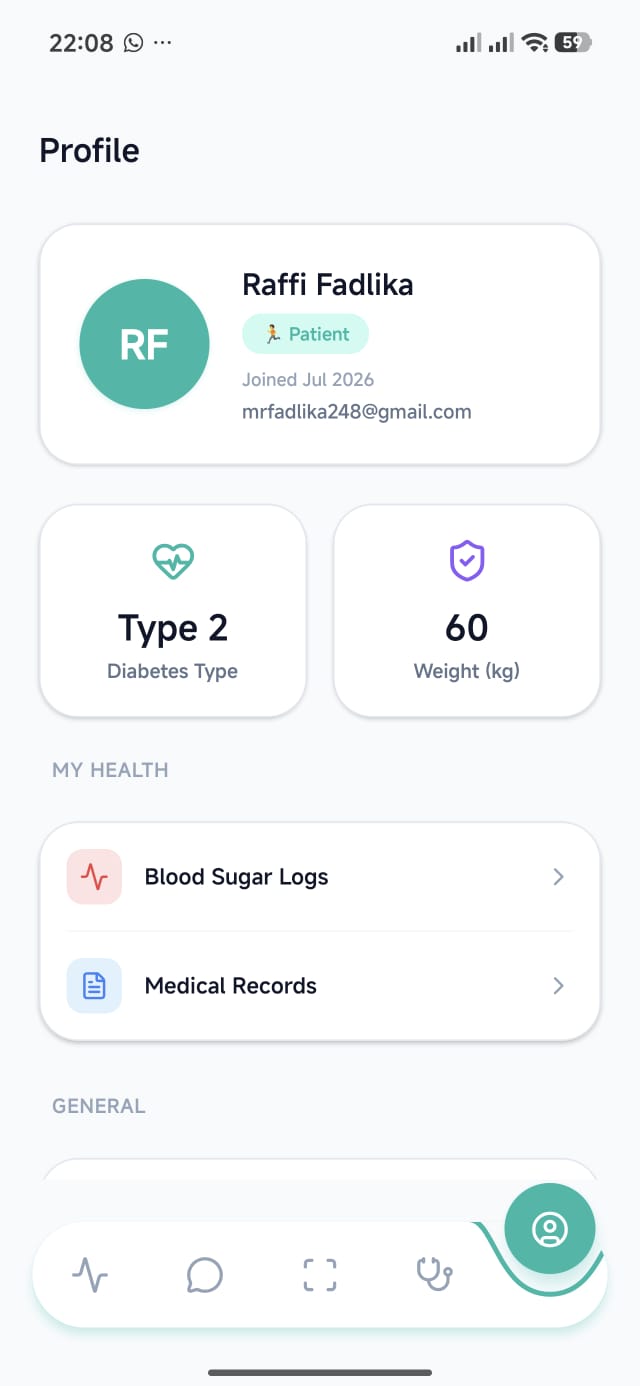
Profile Screen
-
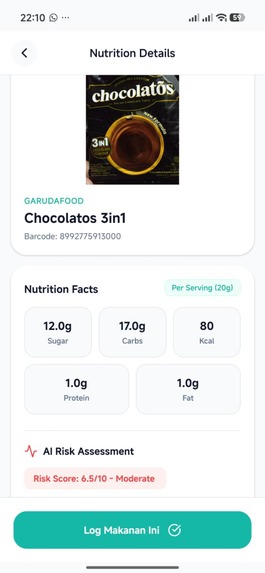
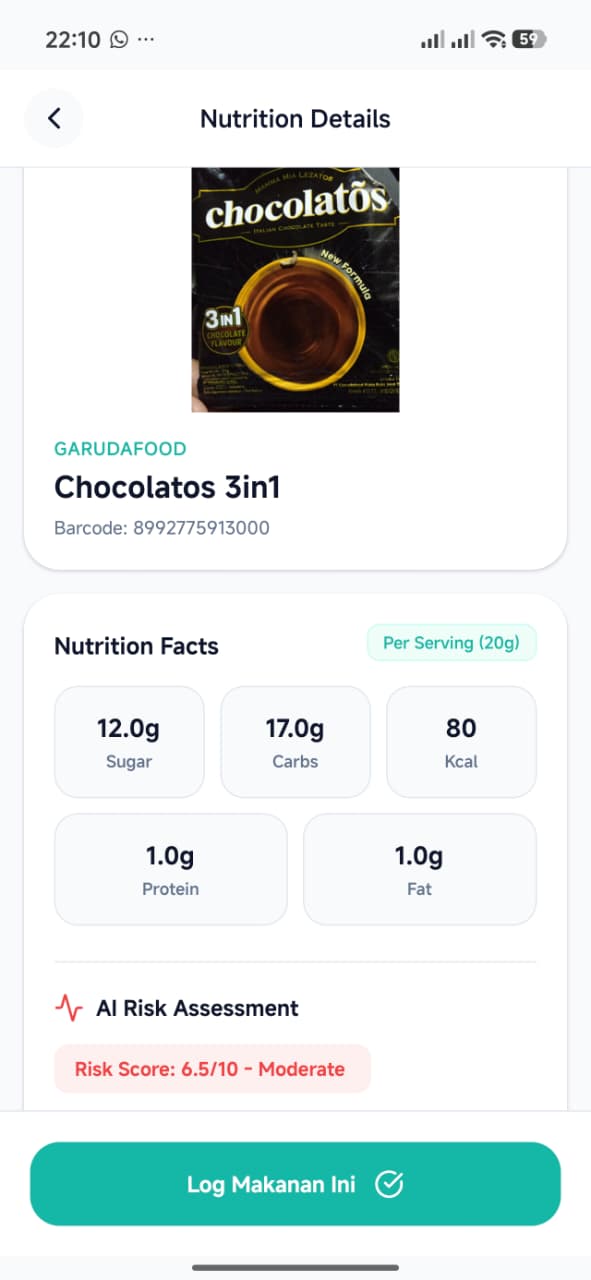
Nutrition Details Screen
Inspiration
Glucate was inspired by the growing diabetes crisis in Indonesia and the increasing need for accessible digital health support.
According to recent studies, diabetes prevalence in Indonesia is projected to increase from 9.19% (18.7 million cases) in 2020 to 16.09% (40.7 million cases) by 2045, an increase of 75.1% in just 25 years. Meanwhile, the International Diabetes Federation (IDF) reports that Southeast Asia is home to approximately 90 million people living with diabetes, highlighting that diabetes has become one of the region's most pressing long-term health challenges.
Beyond the numbers, we found that many people struggle to manage diabetes consistently. Blood sugar records are often written manually, medication schedules are forgotten, nutrition labels are difficult to understand, and many existing health apps are not designed around Indonesian language, local foods, or everyday healthcare needs.
These challenges motivated us to build Glucate, an AI-powered mobile health companion that helps users understand what they eat, monitor blood sugar, organize medical information, and make healthier daily decisions from a single application.
Our market research further reinforced the opportunity.
The Total Addressable Market (TAM) is:
$$ \text{TAM}=285,000,000 \times 11.3\% \approx 32.2\text{ million people} $$
Assuming approximately 40% digital health adoption, the Serviceable Available Market (SAM) becomes:
$$ \text{SAM}=32.2\text{M}\times40\%\approx12.9\text{ million users} $$
Our initial goal is to reach 1-3% of the SAM within the first few years:
$$ \text{SOM}=12.9\text{M}\times(1\%-3\%)\approx130,000\text{–}390,000\text{ users} $$
Our vision is simple:
Help people control their sugar intake before diabetes controls their lives.
What it does
Glucate is an AI-powered mobile application that helps people manage diabetes through continuous monitoring, nutrition analysis, personalized recommendations, and healthcare support.
Instead of relying on multiple disconnected apps, Glucate brings the entire diabetes journey into one platform.
Users can:
- Track blood sugar levels and monitor long-term trends.
- Log meals and analyze nutritional intake.
- Scan packaged food products to instantly understand sugar and nutrition content.
- Receive AI-powered food recommendations and healthier alternatives.
- Chat with an AI assistant for diabetes education, recipe ideas, and nutrition guidance.
- Store medical records securely.
- Book consultations and manage doctor appointments.
- Receive reminders for medications and important health activities.
Unlike many existing diabetes apps that focus only on glucose tracking or telemedicine, Glucate combines nutrition intelligence, AI assistance, health tracking, doctor consultation, and personalized insights into a single ecosystem designed specifically for Indonesian users.
How we built it
We built Glucate using a service-based architecture so each part of the system could focus on a specific responsibility.
The mobile application was developed with React Native and Expo, allowing us to build a single codebase for Android and iOS. It handles authentication, blood sugar tracking, meal logging, barcode scanning, AI chat, medical records, notifications, and doctor-related features.
Our backend is built with Go using the Gin Framework, while JWT secures authentication and GORM simplifies database management on top of MySQL.
Instead of putting every AI feature into the main backend, we created a separate Python FastAPI service responsible for nutrition analysis, food scoring, health insights, trend prediction, report generation, and image-based food analysis. Keeping AI separate makes the system easier to maintain and allows future AI models to be integrated without changing the core backend.
For conversational AI, the mobile application communicates directly with Google Gemini, providing faster responses and a smoother chat experience for users.
We also explored blockchain technology using Hardhat, Solidity, and OpenZeppelin. Although still experimental, we developed prototype smart contracts for consultation escrow and permission-based medical record sharing to explore how decentralized technologies could improve transparency and patient ownership of healthcare data.
Challenges we ran into
One of the biggest challenges was combining multiple healthcare services into one application without overwhelming users.
Diabetes management involves blood sugar monitoring, nutrition, medication, healthcare providers, education, and long-term habit building. Designing an interface that remained intuitive while supporting all these workflows required multiple design iterations.
Another significant challenge was integrating AI into a production-like architecture. We needed to determine which AI features should be handled by our backend and which should communicate directly with Gemini. Separating responsibilities between the Go backend, Python AI service, and frontend required careful API design and authentication management.
Working with nutrition data was also challenging. Indonesian food databases are less comprehensive than global datasets, while packaged food labels often use inconsistent formats. We had to combine multiple data sources to provide useful and reliable nutrition analysis.
Finally, because Glucate operates in the healthcare domain, we carefully designed our AI to provide educational guidance and recommendations without making unsafe medical diagnoses or replacing healthcare professionals.
Accomplishments that we're proud of
We're proud that Glucate evolved into a complete digital health platform instead of just another hackathon prototype.
Within a short development period, we successfully built:
- A fully functional cross-platform mobile application
- A scalable Go backend API
- A dedicated AI microservice
- AI-powered nutrition recommendations
- Barcode-based product scanning
- Blood sugar monitoring and trend tracking
- Medical record management
- Doctor consultation workflows
- Prototype blockchain smart contracts for secure healthcare access
Most importantly, we're proud that Glucate was designed around Indonesian users. Rather than simply adapting an existing solution, we focused on local foods, local language, and the everyday challenges faced by people living with diabetes and their families.
What we learned
Building healthcare technology taught us that creating useful software is only part of the challenge.
Healthcare applications must prioritize trust, clarity, safety, accessibility, and consistency.
Technically, we learned how to design and integrate a distributed architecture consisting of a mobile application, backend services, AI microservices, and blockchain components.
We also learned that AI in healthcare should empower users not replace healthcare professionals. The best AI systems provide education, recommendations, and decision support while respecting the boundaries of medical expertise.
What's next for Glucate
We're just getting started.
Our roadmap focuses on transforming Glucate into an intelligent healthcare ecosystem rather than simply another diabetes tracker.
Our next milestones include:
- Expanding the Indonesian food and nutrition database.
- Improving barcode recognition accuracy.
- Delivering personalized AI recommendations based on blood sugar trends, dietary habits, medication adherence, and health goals.
- Integrating Bluetooth-enabled glucometers for automatic blood sugar logging.
- Building richer analytics and downloadable health reports for healthcare professionals.
- Strengthening teleconsultation workflows and appointment management.
- Introducing community support and educational content for patients and caregivers.
- Partnering with clinics and healthcare providers across Indonesia.
Our long-term vision is to make Glucate the most trusted AI-powered diabetes companion in Indonesia, and eventually throughout Southeast Asia, helping millions of people make healthier decisions every single day
Built With
- fastapi
- golang
- hardhat
- python
- react-native
- solidity


Log in or sign up for Devpost to join the conversation.