-
-
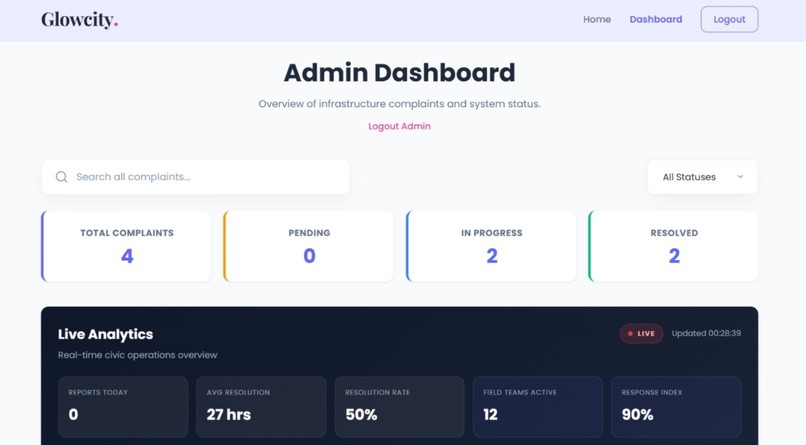
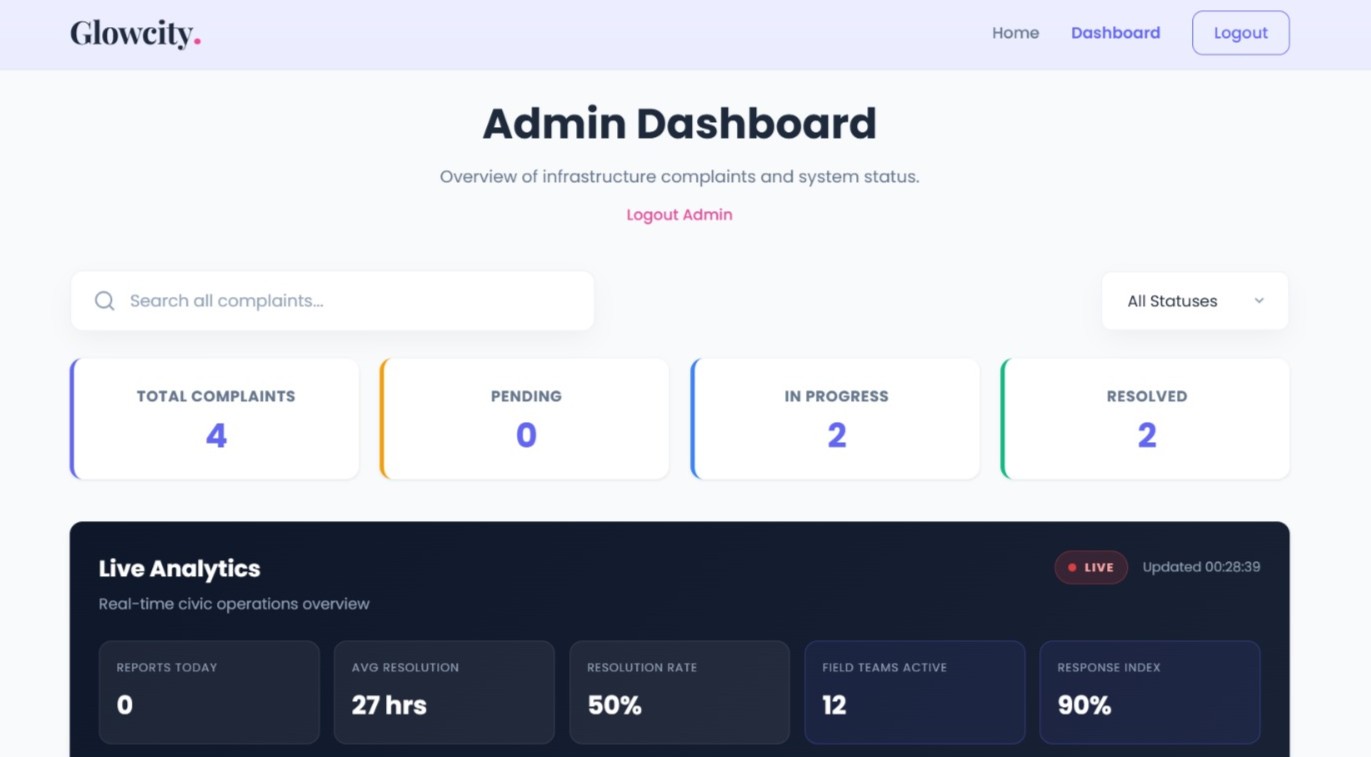
admin dashboard 1
-
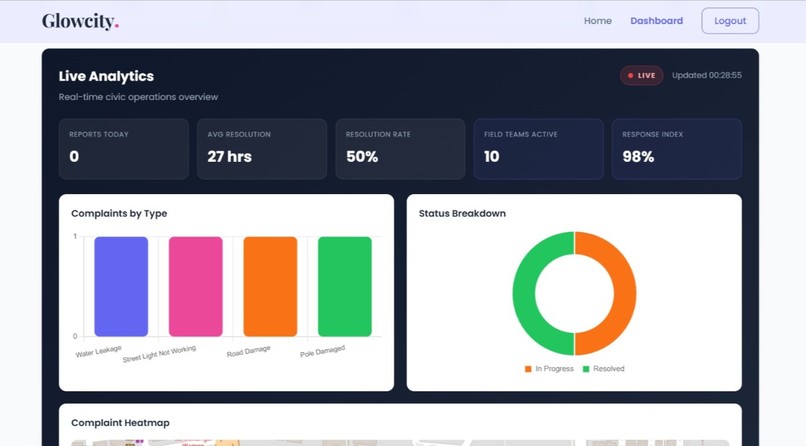
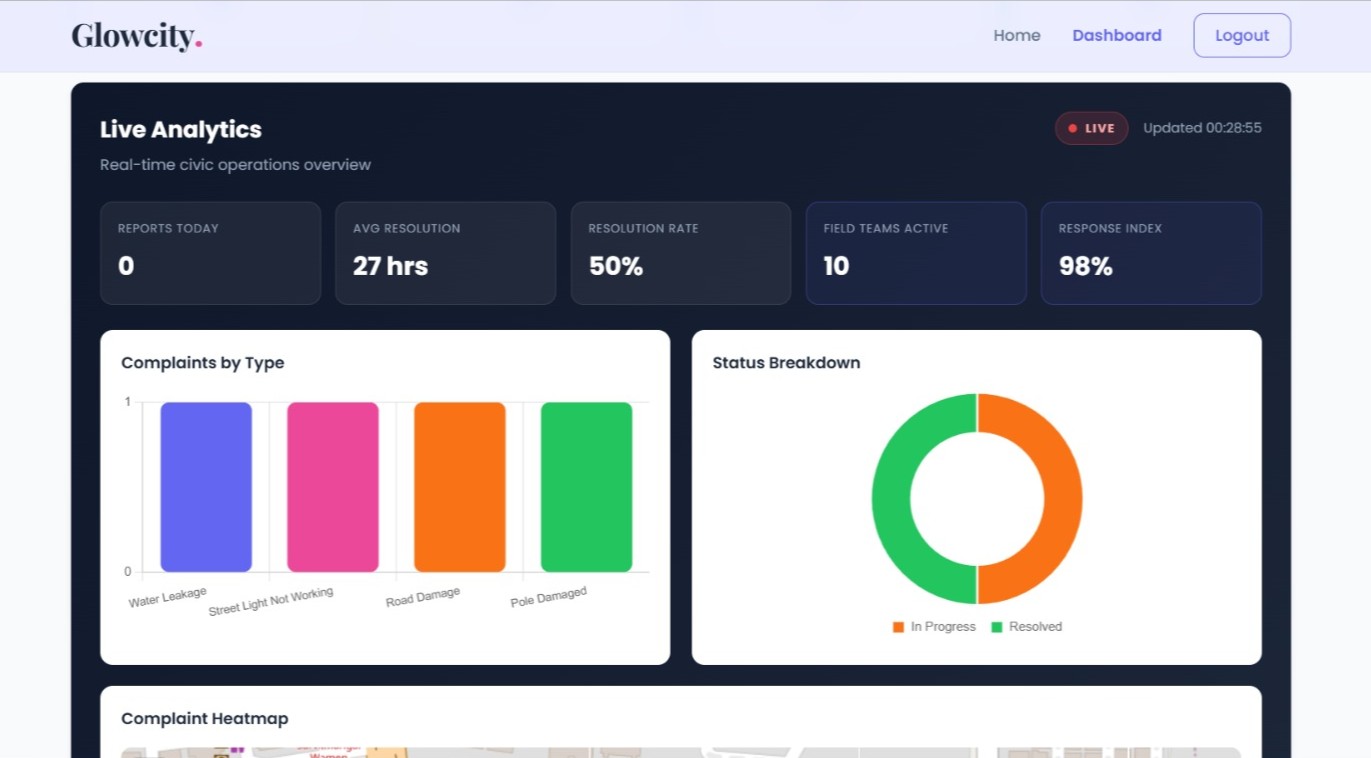
admin dashboard 2
-
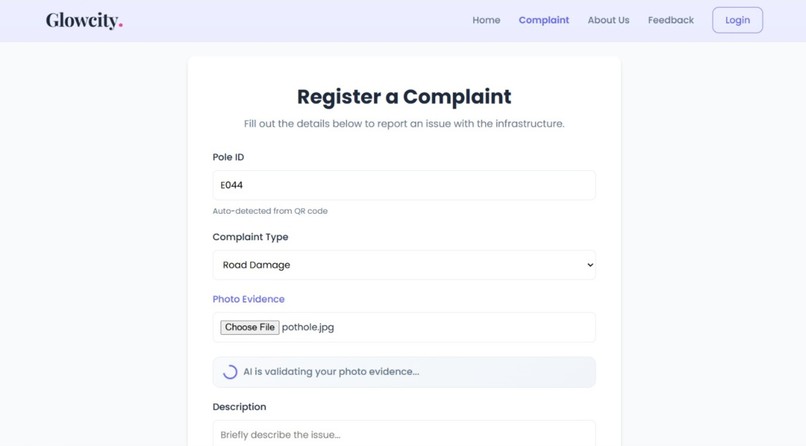
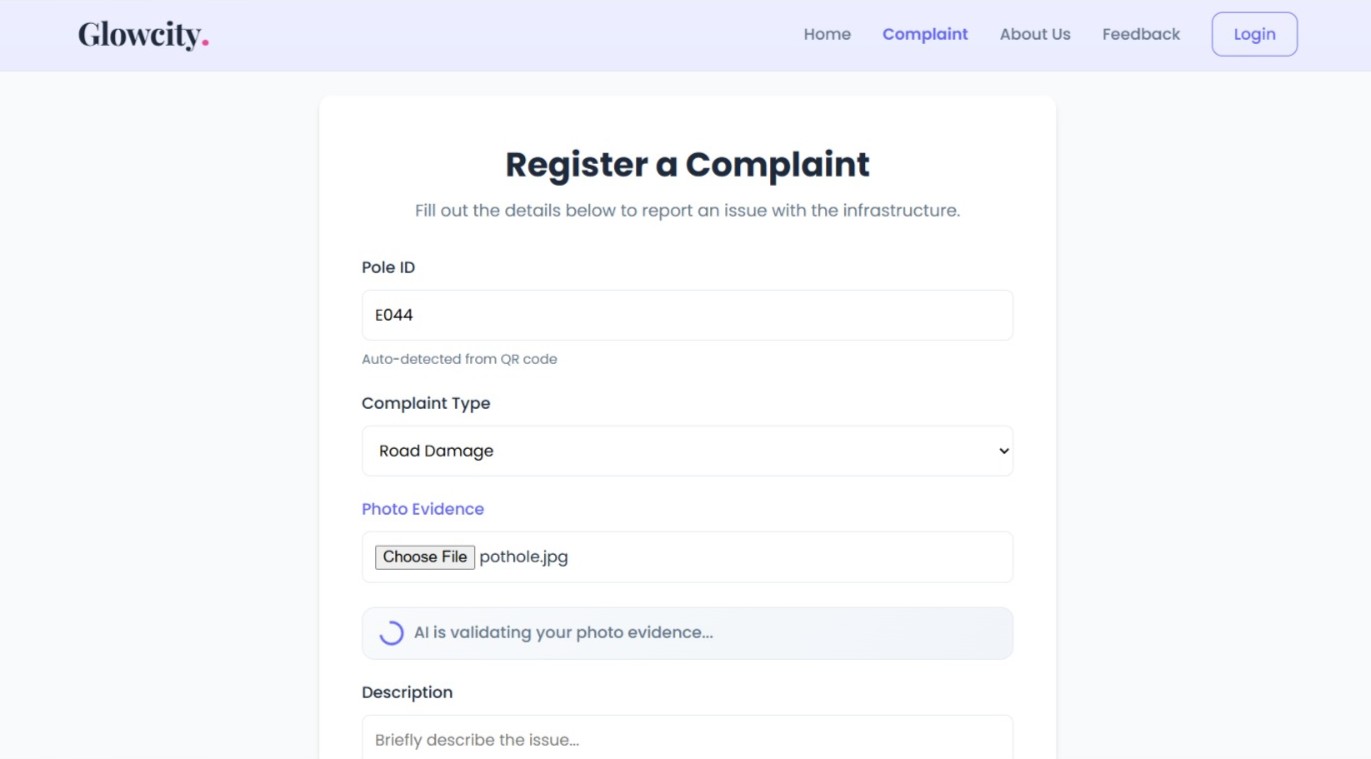
file complaint
-
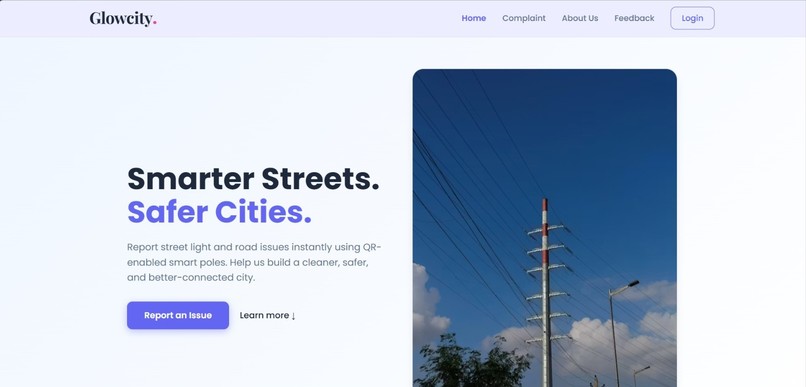
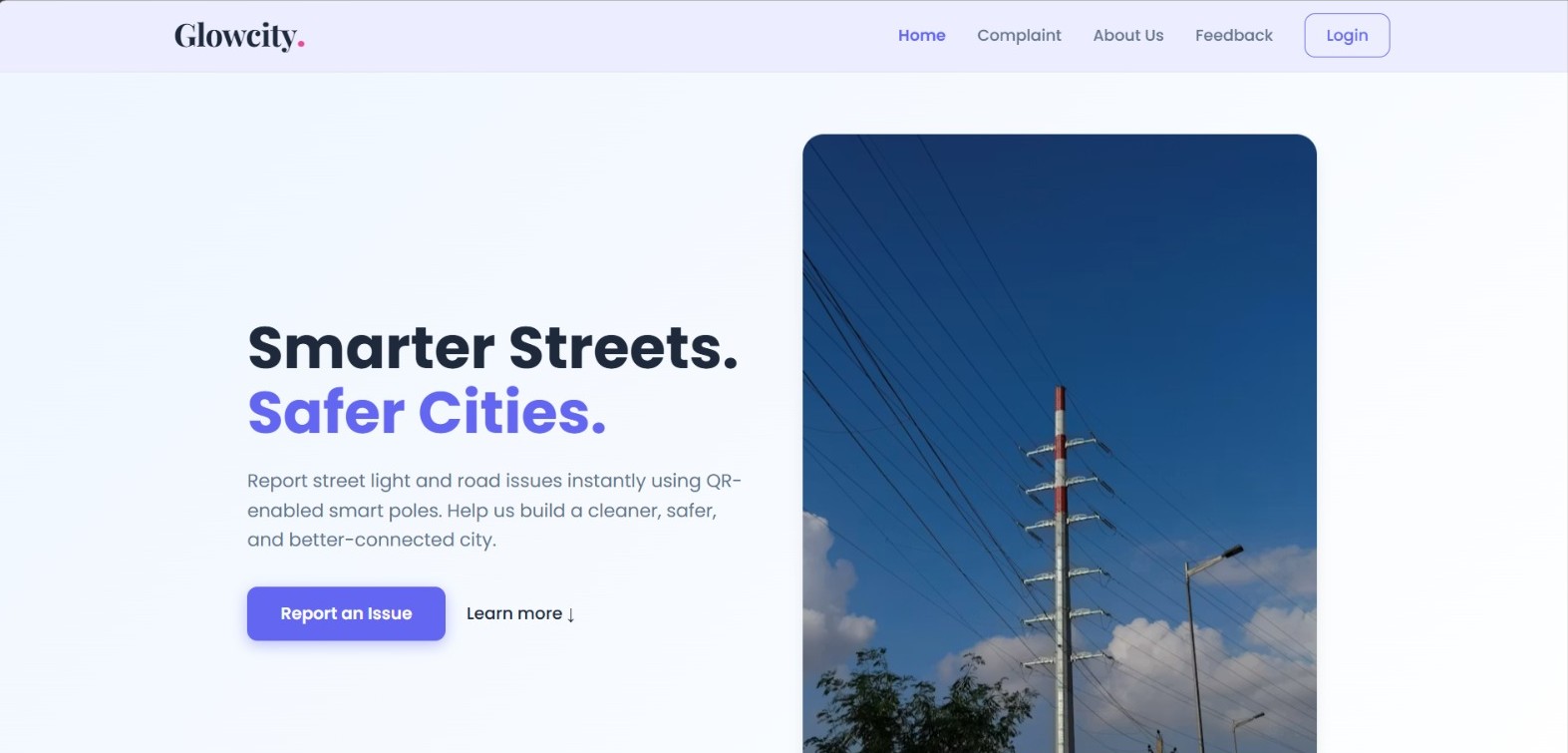
home
Inspiration
In countries like India, fast-growing cities face daily civic problems that directly affect safety and quality of life: broken streetlights, potholes, garbage accumulation, unsafe roads, poor infrastructure maintenance, and pollution-related risks. Reporting these issues is often frustrating because complaints pass through multiple middlemen, phone calls, paper forms, or scattered WhatsApp messages, with little transparency or accountability. As a result, many complaints are delayed, ignored, misplaced, or never resolved at all. Citizens rarely know whether action is actually being taken. I built Glowcity to reduce this gap between citizens and authorities by creating a centralized smart civic platform where anyone can report infrastructure issues in seconds using photos and location data, while municipalities can track, prioritize, and resolve them transparently. Smarter cities are not just about technology — they are about trust, visibility, faster response systems, and making public spaces safer and less neglected for everyone.
What it does
Glowcity is a civic complaint and smart infrastructure monitoring platform.
Citizen Features
- File complaints using:
- Pole ID
- Issue type
- Description
- Image upload
- GPS location or manual address
- Track complaint progress in real time
- Receive live status updates with notifications
- View personal complaint history
- Submit platform feedback
AI Validation
Glowcity uses OpenAI CLIP zero-shot image classification to validate uploaded complaint images and help reject unrelated or spam uploads.
Admin Features
Admins can:
- Manage and resolve complaints
- Update complaint status:
- Pending
- In Progress
- Resolved
- Search and filter complaints
- Monitor analytics dashboards
- View complaint heatmaps
- Analyze complaint trends visually
Additional Features
- Google Sign-In authentication
- Separate citizen and admin login systems
- Live complaint map on homepage
- Real-time polling updates
- Optional resolution emails using Resend API
- Responsive UI for desktop and mobile
The complaint map helps identify patterns such as unsafe dark zones, repeated pothole regions, or infrastructure hotspots that require faster government attention.
How I built it
Backend
- Python Flask
- SQLite database
- Session-based authentication
- REST APIs for complaints, analytics, and live updates
Frontend
- HTML templates
- Custom CSS
- Responsive layouts
- Shared reusable UI components
Libraries & Tools
- Chart.js for analytics visualization
- Leaflet.js for maps and heatmaps
- Hugging Face Transformers
- OpenAI CLIP (
clip-vit-base-patch32) - Gunicorn for deployment
AI System
The AI validation system uses CLIP zero-shot classification to analyze uploaded images and detect whether they match the reported complaint category. The model is lazy-loaded to reduce memory usage and improve application startup performance.
Location System
Users can:
- Use browser GPS location
- Enter manual addresses
- Convert addresses to coordinates using Nominatim geocoding
Security
- Environment variables stored in
.env - API keys never committed publicly
- Flask secret key configuration
- Admin credentials secured through environment configuration
Deployment
Glowcity was deployed using:
- Render free tier hosting
- Gunicorn production server
- Separate lightweight deployment requirements
Since free cloud hosting has RAM limitations, AI validation is enabled locally while cloud deployment uses a lightweight mode for stability.
Challenges I ran into
Managing AI on limited hardware
PyTorch and CLIP dependencies were extremely heavy and increased the project size to nearly 850MB, mostly because of the virtual environment and model-related dependencies. To solve this:
- dependencies were separated
- upload rules were documented
.gitignorewas optimized- lightweight deployment configurations were created
Cloud deployment limitations
Render’s free tier only provides limited RAM, which was not enough to reliably run CLIP-based AI validation. To handle this:
- AI was separated into optional deployment modes
ENABLE_AI=falsewas added for cloud deployment- Full AI support remains available locally
Real-time status system
Building live complaint updates without refreshing the page required:
- polling APIs
- SQLite update tracking
- toast notification systems
- dynamic table updates
Authentication complexity
Managing separate citizen and admin login systems while maintaining proper route protection, redirects, session handling, and clean UI flow required multiple redesigns and debugging cycles.
API key and email management
Handling API keys securely while preparing for GitHub deployment was challenging because secrets could not be exposed publicly. Email delivery using the Resend API also required correct headers, environment configuration, and deployment-safe credential management.
UI consistency
Another challenge was maintaining consistent navigation, responsive layouts, admin actions, and reusable components across multiple pages while continuously adding new features close to the deadline.
Accomplishments that I'm proud of
- Built a complete end-to-end civic reporting system
- Implemented AI validation for complaint images
- Added live complaint tracking and notifications
- Created separate citizen and admin portals
- Developed real-time analytics dashboards and heatmaps
- Successfully deployed the project publicly
- Solved deployment, authentication, and API security issues under hackathon pressure
- Built something that addresses a real public infrastructure problem instead of just a demo concept
One of the biggest accomplishments was turning a complex idea involving AI, real-time systems, mapping, analytics, authentication, and deployment into a working full-stack product within a limited hackathon timeline.
What I learned
Through Glowcity, I learned:
- Full-stack web development using Flask
- Authentication and session management
- REST API architecture
- Real-time frontend updates
- AI model integration
- Secure API key handling
- Deployment optimization
- Cloud hosting limitations
- Database-driven analytics systems
- Responsive UI/UX design
- Debugging interconnected systems under time pressure
I also learned how difficult real-world deployment and scalability become once AI systems, authentication, databases, maps, and live updates are combined into one application.
What's next for Glowcity
Smart Government Authorization
Future admin access will only be granted through verified government authorization systems. Government departments will be able to:
- generate official admin credentials
- manage regional admin access
- securely store admin records in the database
This prevents normal users from accessing administrative systems.
Future Improvements
- PostgreSQL production database
- Persistent cloud file storage
- AI microservice deployment
- WhatsApp and SMS notifications
- Multilingual support (Hindi and regional languages)
- Dark/light theme customization
- QR codes on smart poles for instant reporting
- Progressive Web App (PWA)
- Mobile application support
- Offline complaint submission support
- Nearby emergency service suggestions during accidents
- Municipal workflow integrations
- Open-data dashboards for infrastructure transparency
The long-term vision is to evolve Glowcity into a scalable smart-city civic infrastructure platform that improves transparency, response time, and public trust between citizens and local authorities.
Built With
- chart.js
- flask
- git
- github
- google-oauth-signin
- gunicorn
- html/css
- hugging-face-transformers
- javascript
- leaflet.js
- open-ai-clip
- pillow
- python
- pytorch
- render
- resend-api
- sqlite
- tailwindcss

Log in or sign up for Devpost to join the conversation.