Inspiration
We started with a simple observation: every winter, people slow down, cancel plans, and lose focus — then blame themselves for it. We wanted to understand why. That led us to chronoception, the body's sense of biological time, and how seasonal light reduction quietly disrupts it before anyone notices. The gap between your biological clock and your fixed work schedule felt like exactly the kind of invisible, unmeasurable experience this challenge was asking us to design for.
What it does
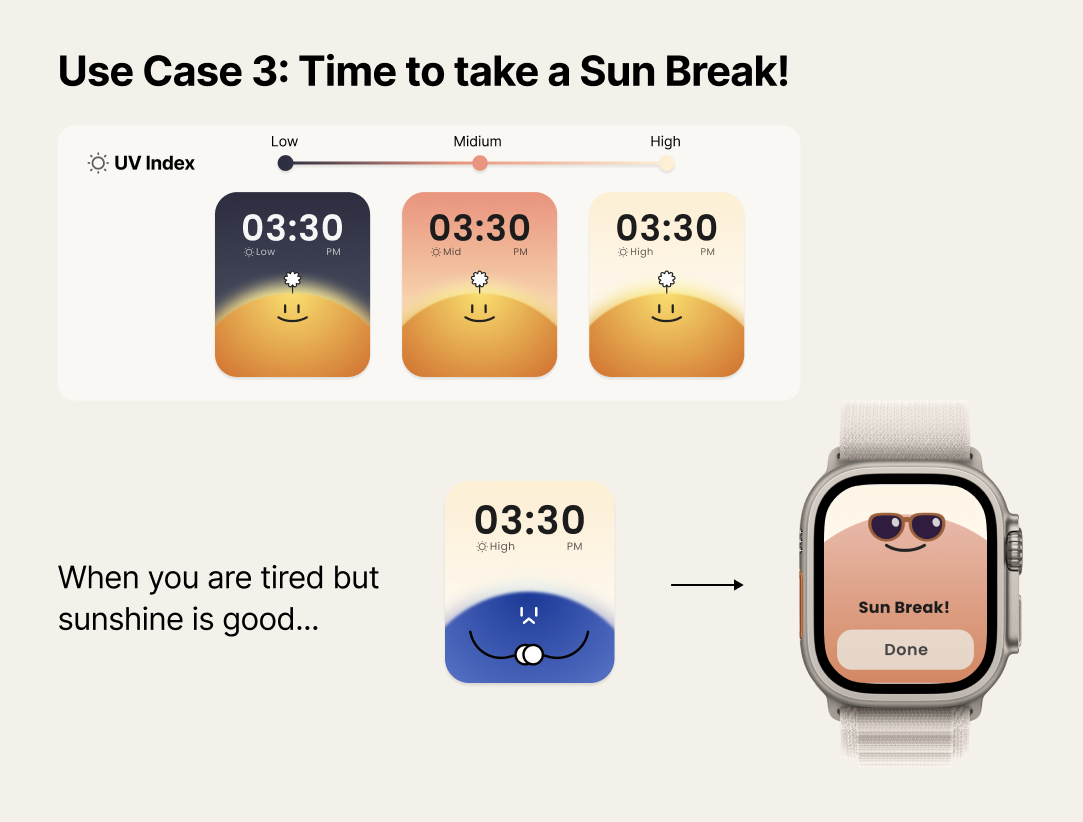
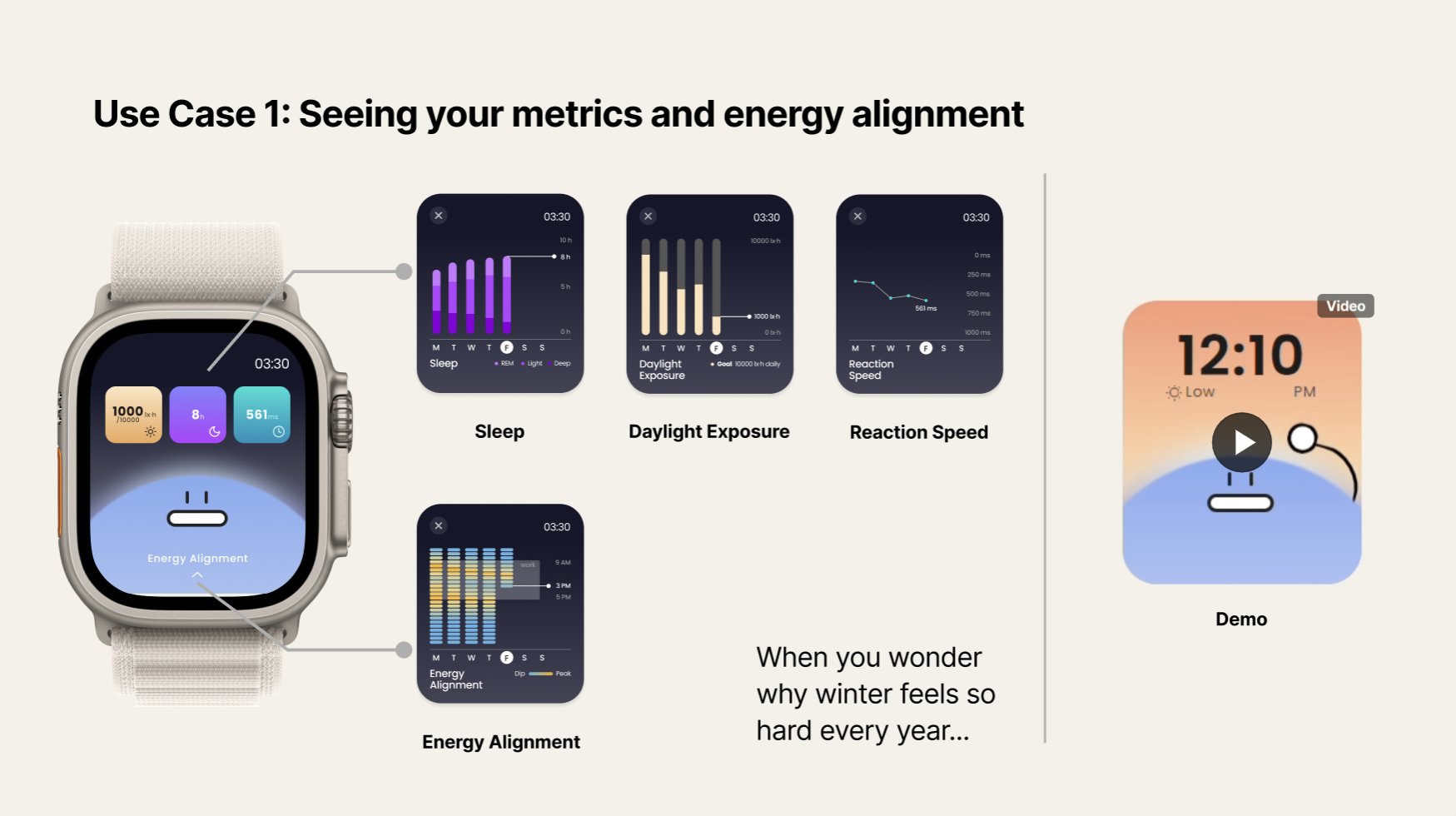
Glowbe is an Apple Watch app that tracks three signals — daylight exposure, sleep anchor drift, and reaction speed — to calculate your real-time energy level and visualize where your biological rhythm and work schedule don't match. When outdoor UV is favorable and your energy is low, it surfaces one simple action: a Sun Break. No lifestyle overhaul. Just the right nudge at the right moment.
How we built it
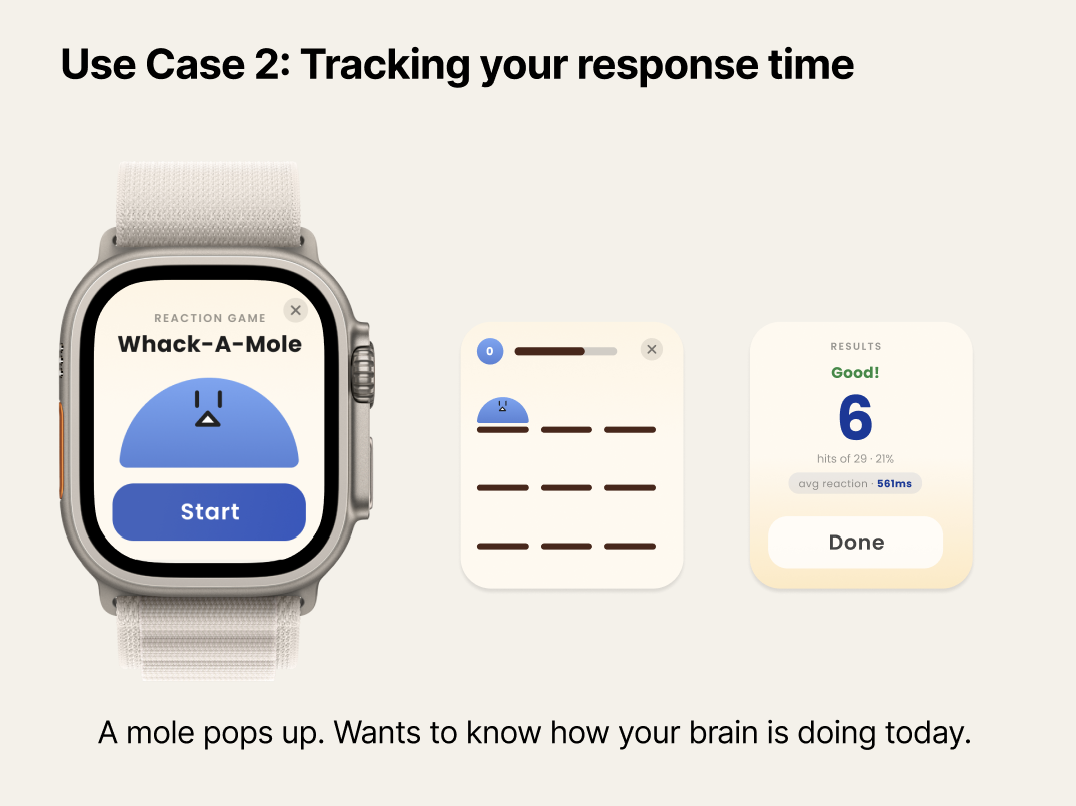
We designed the full experience in Figma, building a watch UI system around a central metaphor — a glowing orb that reflects your energy state. We developed the standby interface, Energy Alignment view, three data detail screens, the Whack-a-Mole reaction test, and the Sun Break intervention flow. The visual language draws from the relationship between light, the earth, and biological rhythms.
Challenges we ran into
The hardest part was making something invisible feel tangible without overloading the user with data. We went through many iterations trying to balance scientific accuracy with emotional clarity — especially on a small watch screen. We also had to resist the temptation to make it feel like a medical tool when the real goal was quiet, everyday awareness.
Accomplishments that we're proud of
We're proud of building a coherent metaphor — the glowing orb, the standby states, the energy alignment view — that communicates the core insight without a single technical term. The Whack-a-Mole reaction test as a casual, non-intrusive way to measure cognitive state felt like a genuine design breakthrough. And landing on "Your body follows the sun. Your schedule doesn't." as the core framing felt like the moment everything clicked.
What we learned
Designing for an invisible sense requires you to work backwards from feeling, not data. Users don't need to understand chronoception — they just need to feel seen when they look at their watch and think: that's exactly what's been happening to me. We also learned that the most powerful intervention is often the smallest one, delivered at exactly the right moment.
What's next for Glowbe
Personalized seasonal baselines that adapt as winter deepens. Integration with smart home lighting for passive light therapy. A light therapy lamp companion that triggers automatically when UV is too low. And longer-term pattern insights — so users can see their own seasonal rhythm year over year, and finally stop wondering why winter always feels so hard.
Built With
- english
- figma
- figmamake


Log in or sign up for Devpost to join the conversation.