-
-
-
-
-
-
-
-
yurr
Inspiration
The rise of beauty, skincare, and "looksmaxxing" culture has led more people to seek objective ways to evaluate and improve their skin health. While there are countless skincare products on the market, most people struggle to understand which products actually help their skin, which ingredients may conflict with each other, and how their skincare routine impacts their skin over time. We wanted to create a platform that combines facial skin analysis with ingredient-aware product recommendations, giving users actionable insights instead of guesswork. Additionally, we found that we often struggled with finding skincare recommendations online and were more confused after reading conflicting reviews.
What it does
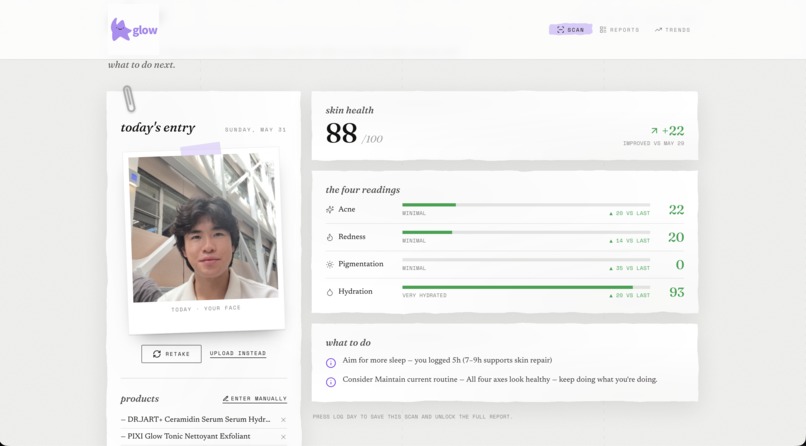
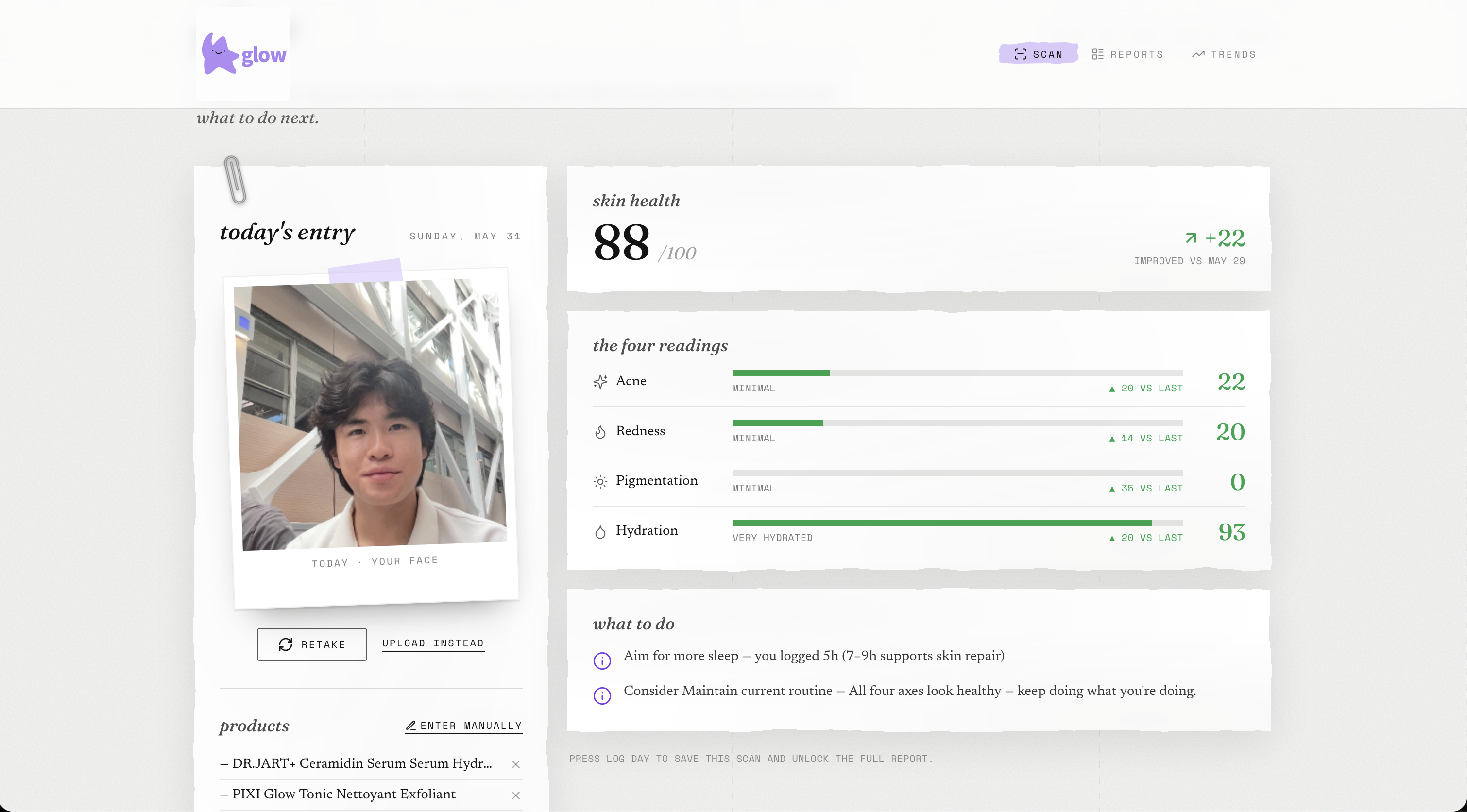
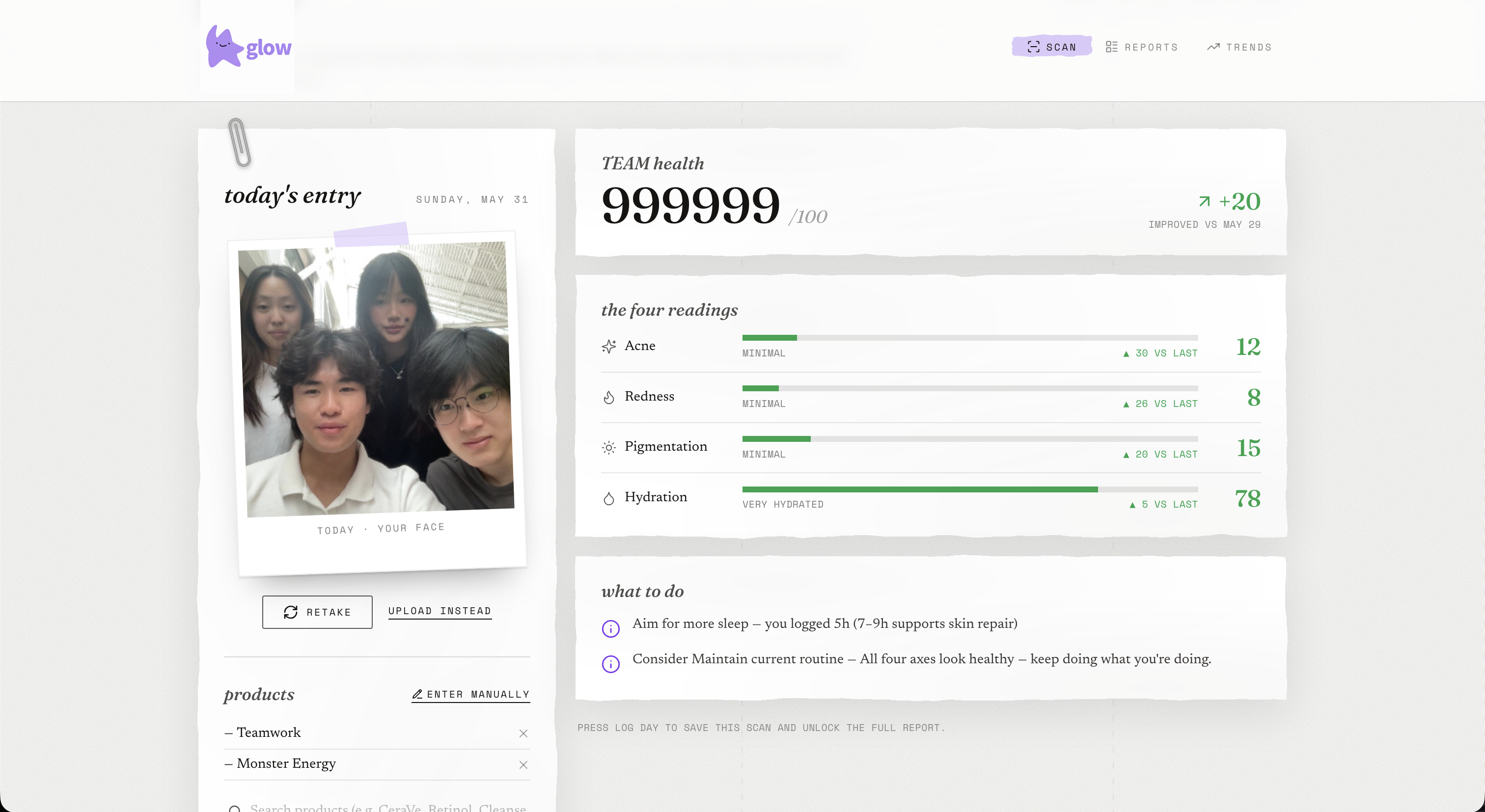
Glow is a personalized skincare analysis platform that helps users understand and improve their skin through daily tracking and AI-driven insights. Each day, a user simply takes or uploads a photo of their face and logs the skincare products they used. Products can be selected from a database or manually entered, and users can optionally add lifestyle details such as sleep, diet, and stress levels.
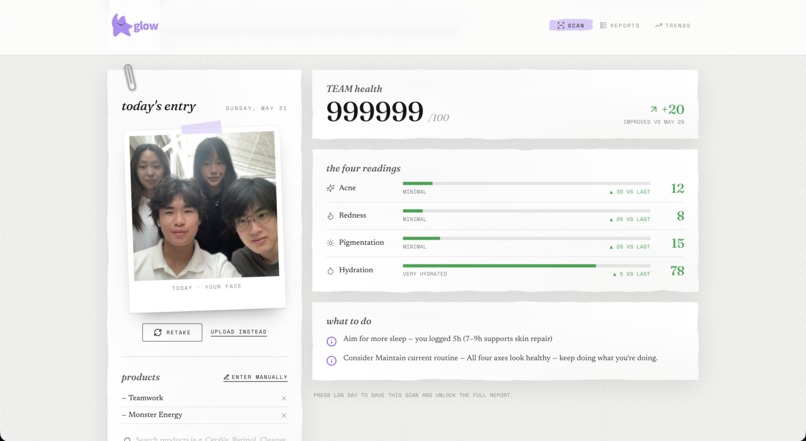
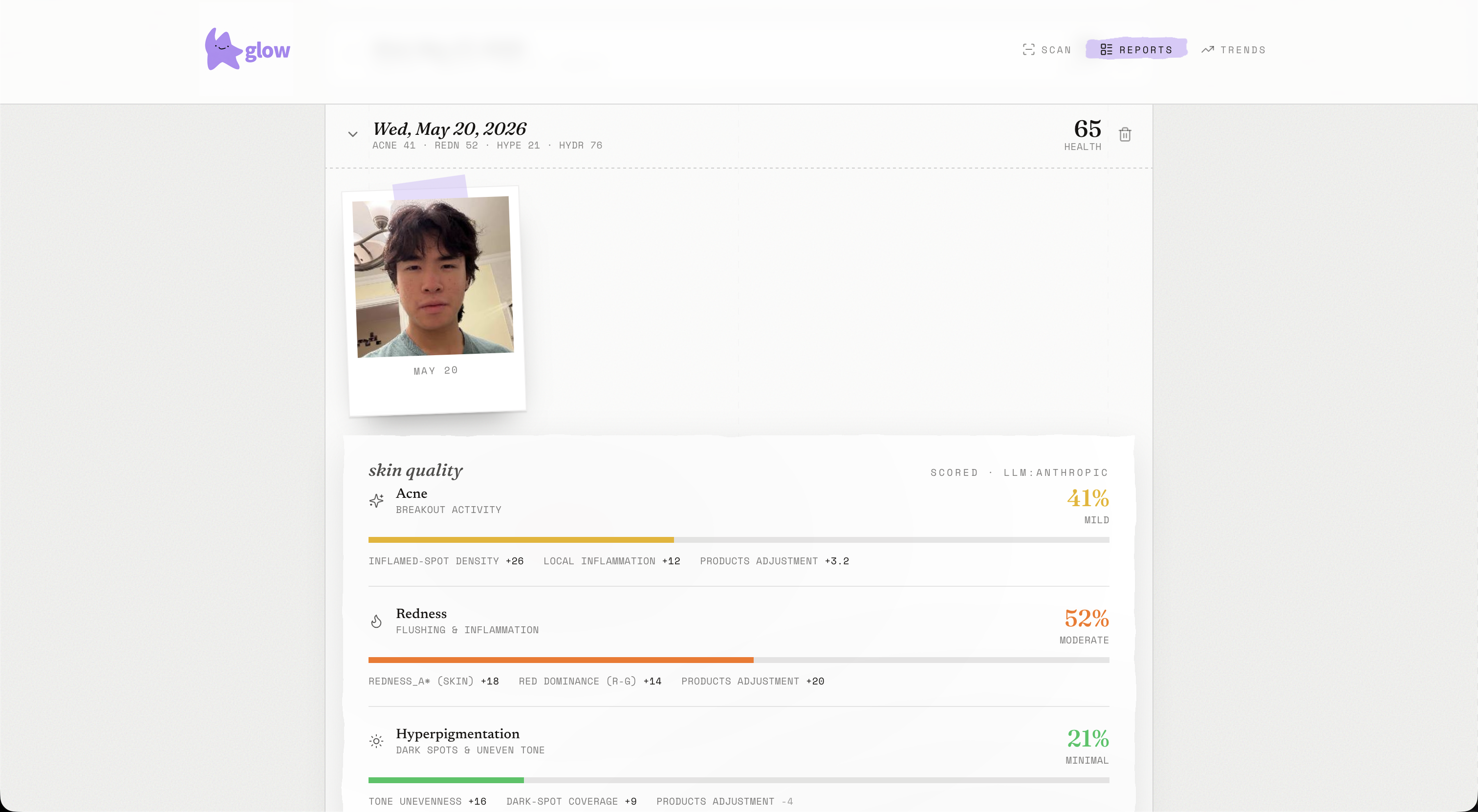
Once the user clicks “Analyze Skin,” Glow processes the image and generates a detailed skin report. This includes an overall skin health score, along with four key metrics: acne, redness, pigmentation, and hydration (or dryness). Alongside these readings, Glow provides personalized feedback and actionable suggestions to help users improve their skin over time.
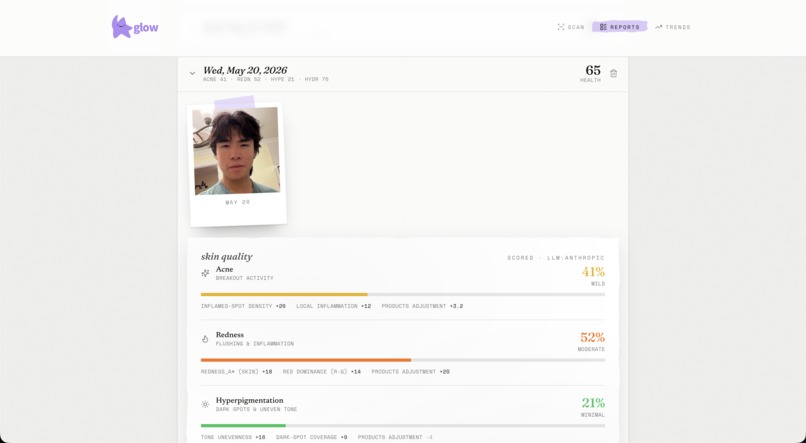
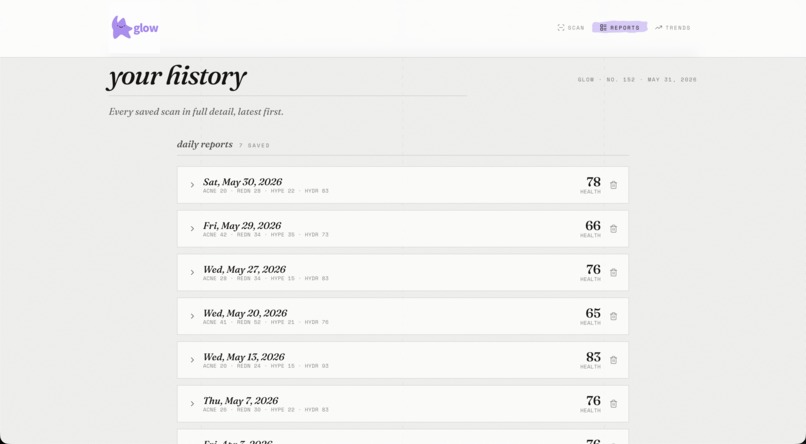
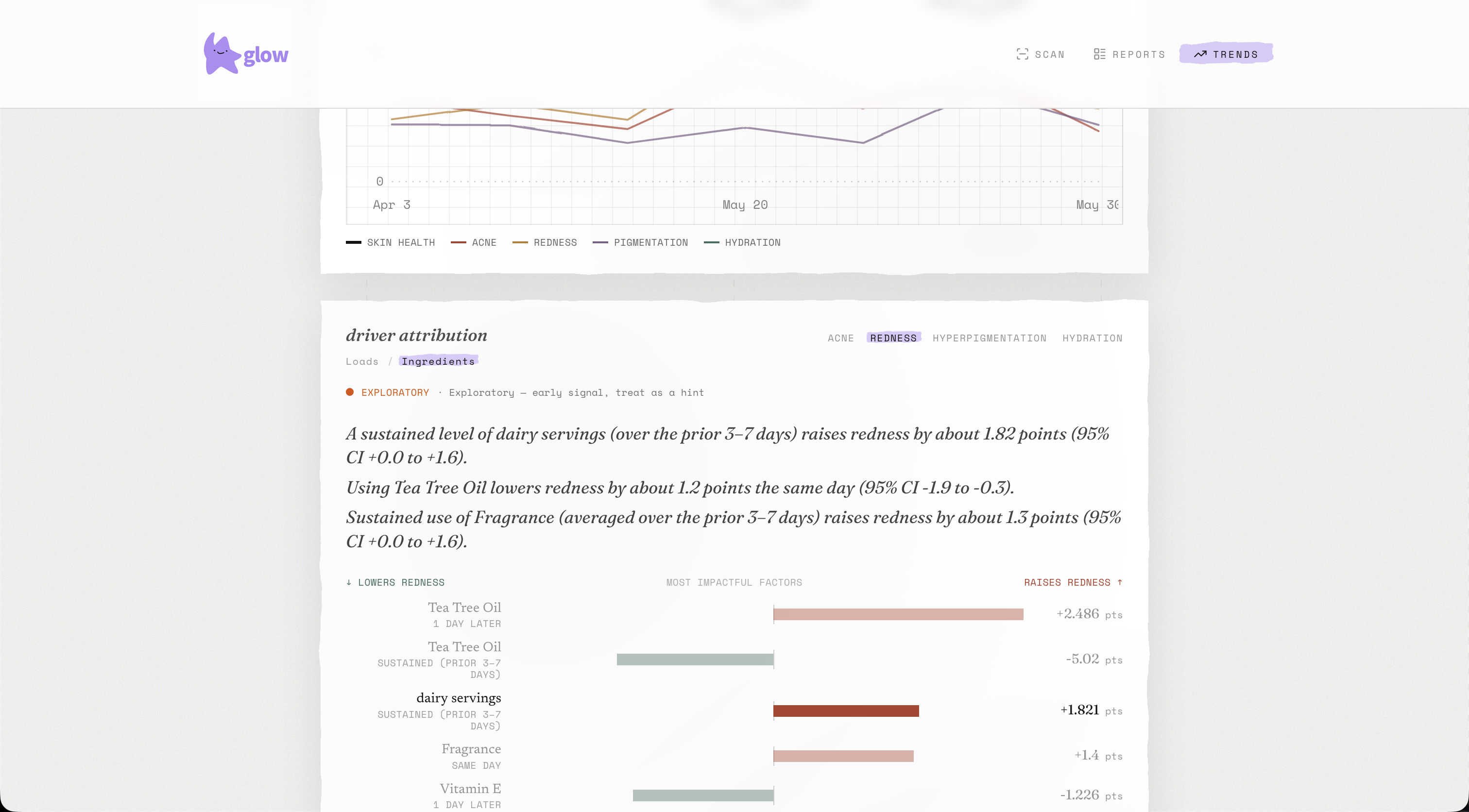
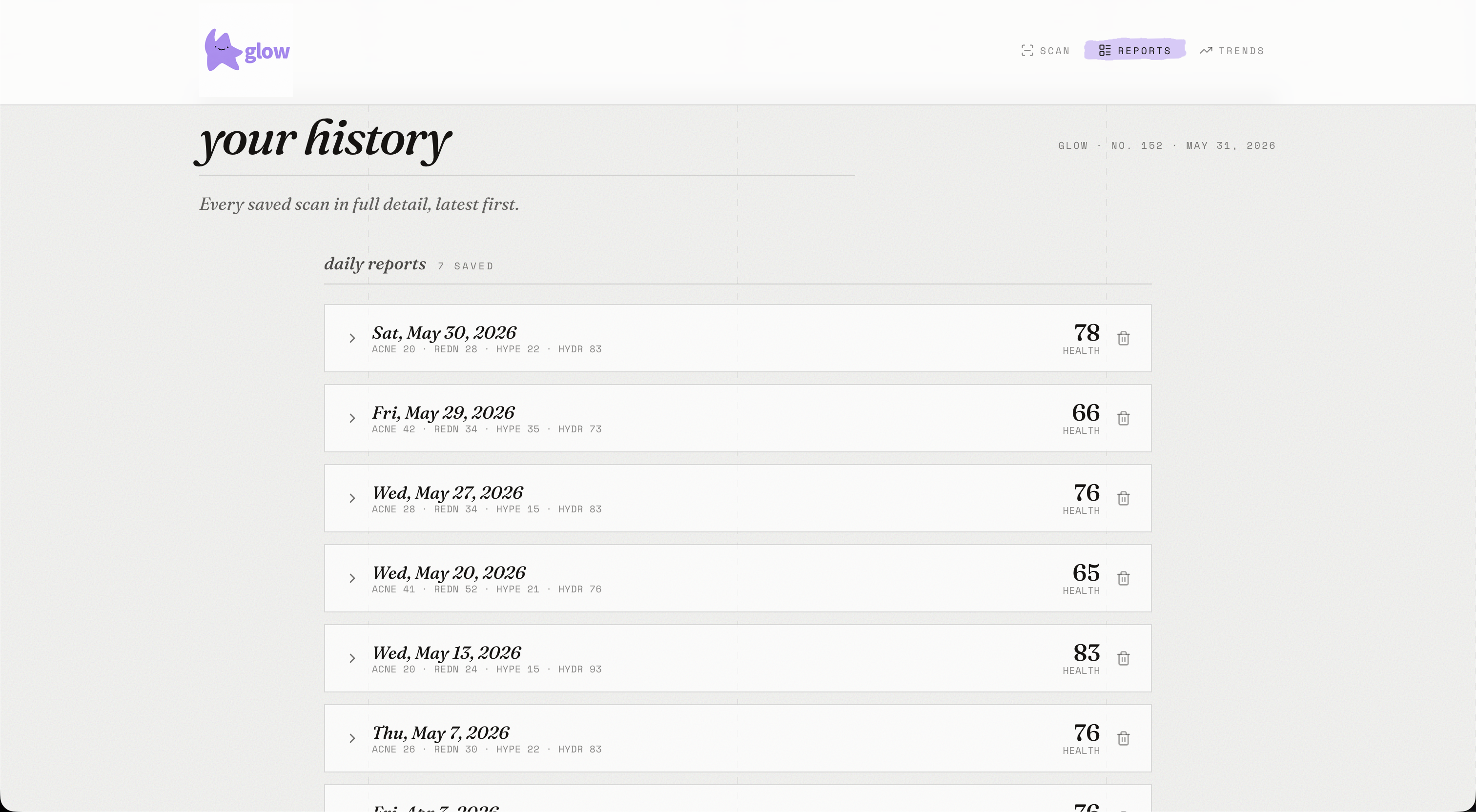
After analysis, users can save each day as a log entry. In the reports section, they can revisit past analyses and view a breakdown of their skincare routine for each day, including potential ingredient interactions or conflicts and tailored product and ingredient recommendations.
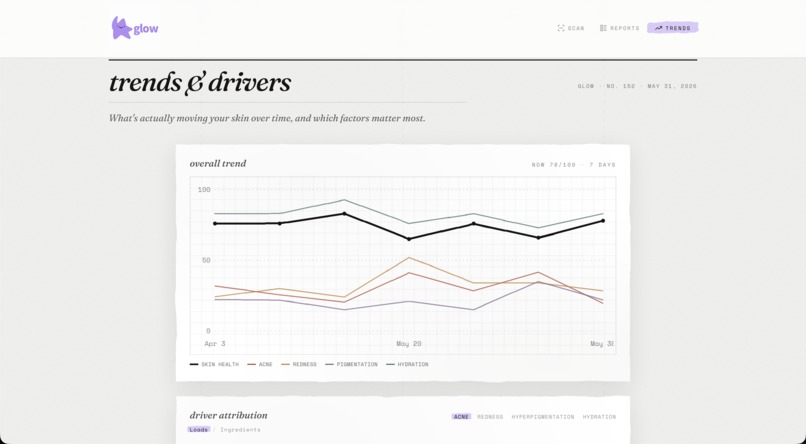
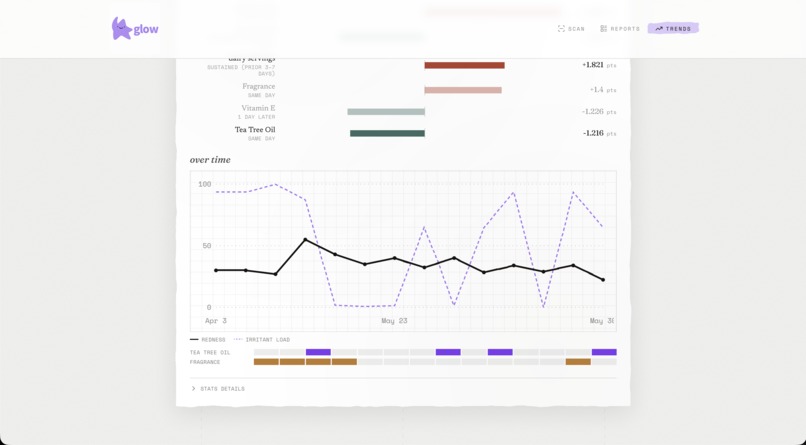
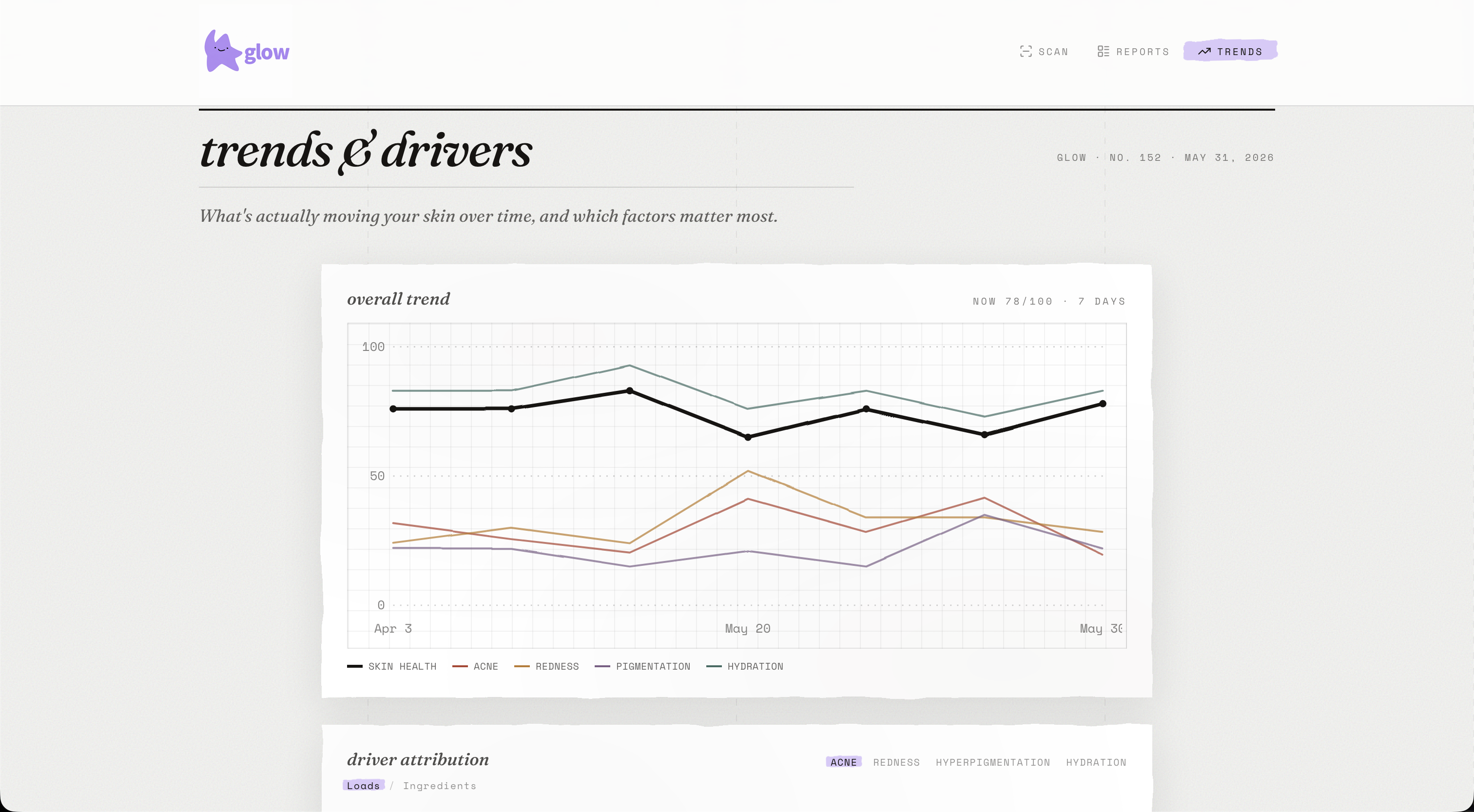
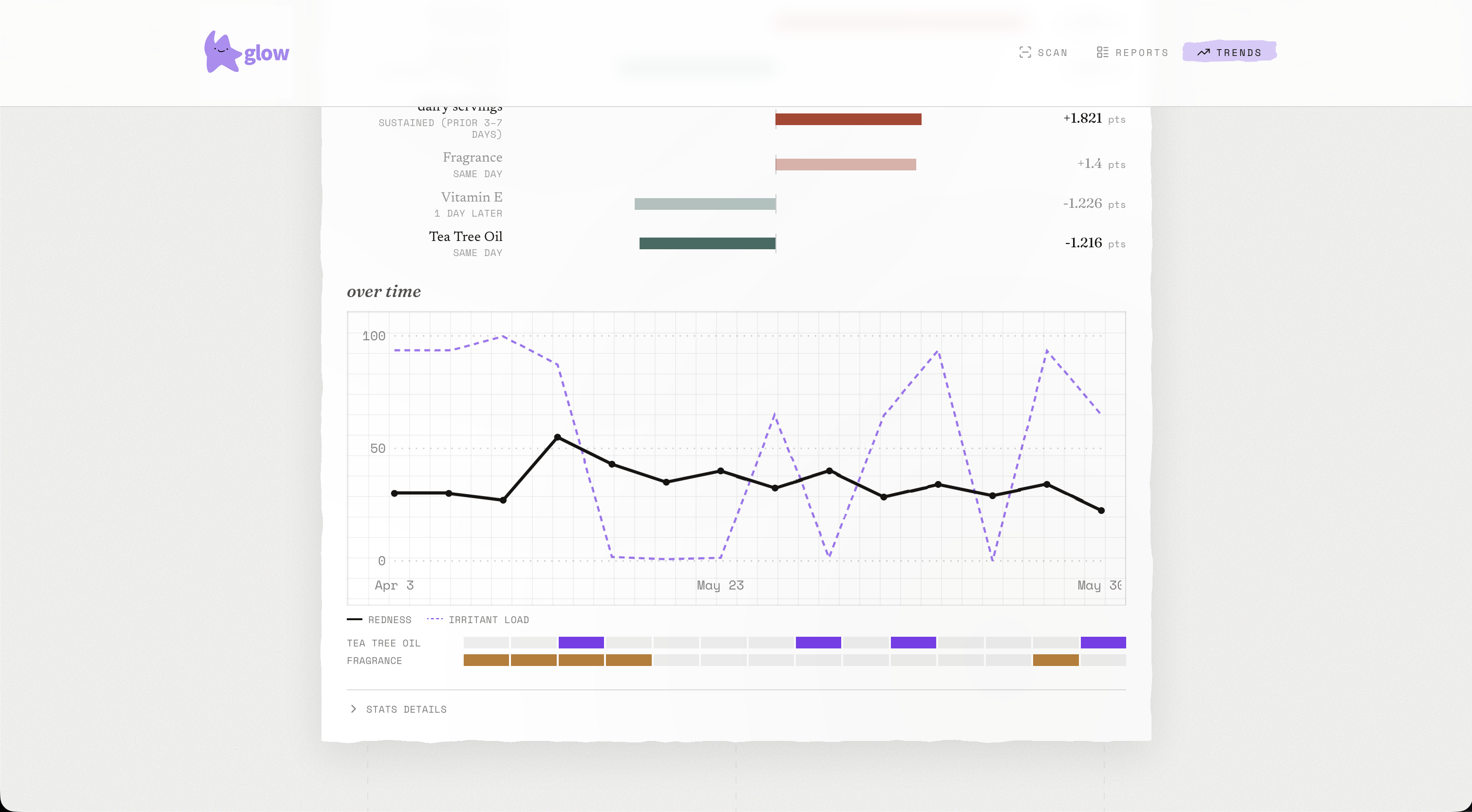
Over time, Glow allows users to track trends, observe improvements or regressions, and better understand how their skincare routine and lifestyle choices affect their skin.
How we built it
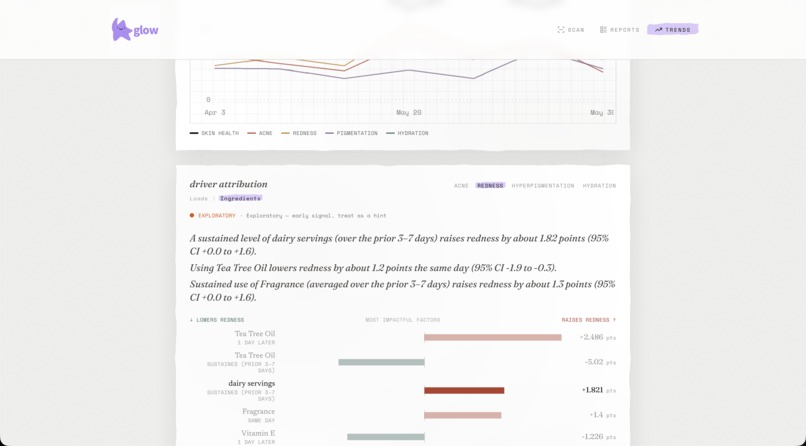
We first found and fine-tuned skin health CV models for accuracy, then designed a straightforward UX around it with react, tailwind, and vite. To attribute changes in skin health over time to real habits and products, we had to refine our regression to reliably produce results on the limited datasets we had without overfitting; a simple linreg turned out best.
Challenges we ran into
We struggled to standardize some of the analytic features. For example, we were getting really large numbers for hyperpigmentation when there wasn't actually any.
Accomplishments that we're proud of
Zero numerical hallucination from clean impact modeling implementation, a nicely designed UI, ability to log daily analytics, and generate a report based off of a period of time.
What we learned
As our first hackathon, we came in with little experience in GitHub, collaborative coding, or even how a hackathon works. Over the course of the event, we taught ourselves version control, learned how to divide and build a codebase as a team, and figured out how to take an idea from concept to a working product under pressure. Beyond the technical skills, we learned how to scope a project realistically, adapt when things didn't work, and present our work with clarity and confidence. It was a crash course in everything at once, and we're walking away with more than we expected. Thank you to XdHacks for this amazing opportunity!
What's next for glow
First, we'll build a dedicated mobile interface that pulls in real-time data from relevant apps, including weather, health, and diet tracking, to give users a fuller picture of what's driving their skin changes. Second, we'll implement video-based analysis for multidimensional skin scanning and real-time product identification, taking our scan feature beyond static photos. Finally, we'll pursue brand partnerships with leading skincare companies to accelerate R&D and open doors for targeted product promotion, turning Glow into not just a tool for users, but a platform for the industry.
AI Policy: https://docs.google.com/document/d/1CQortO84wsPmXOhWfTStqBscmtnrW5xjTNcapqeb12E/edit?usp=sharing
Built With
- fastapi
- opencv
- python
- python-multipart
- react
- scikit-learn
- tailwind
- vite


Log in or sign up for Devpost to join the conversation.