-
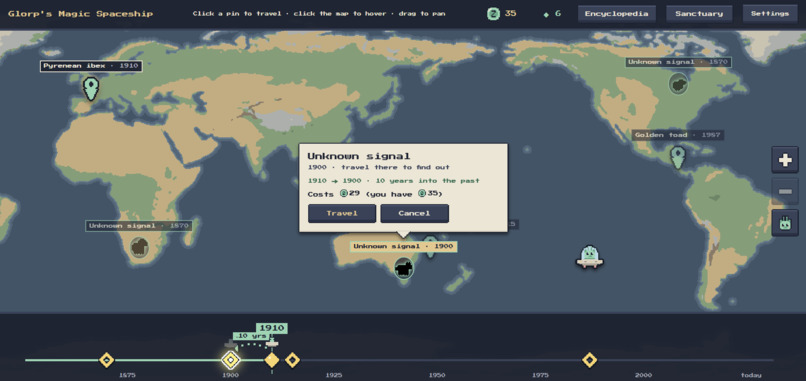
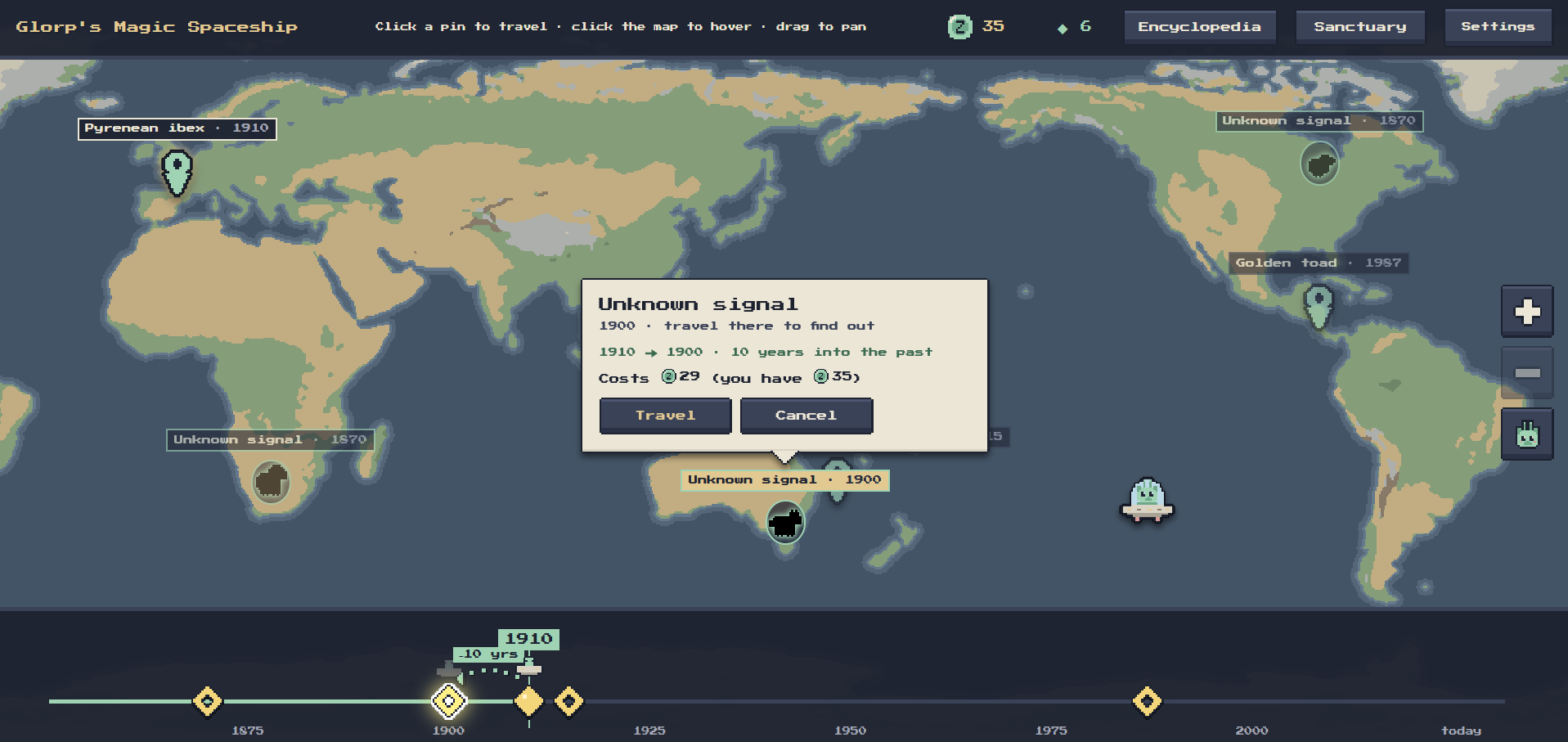
Main world and timeline view
-
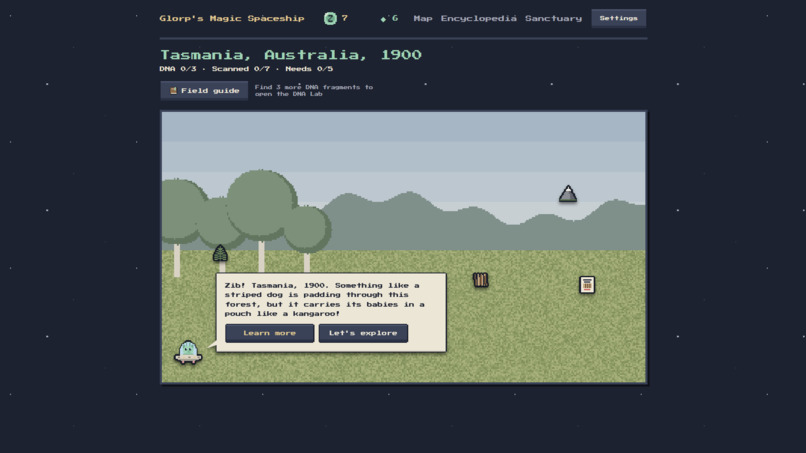
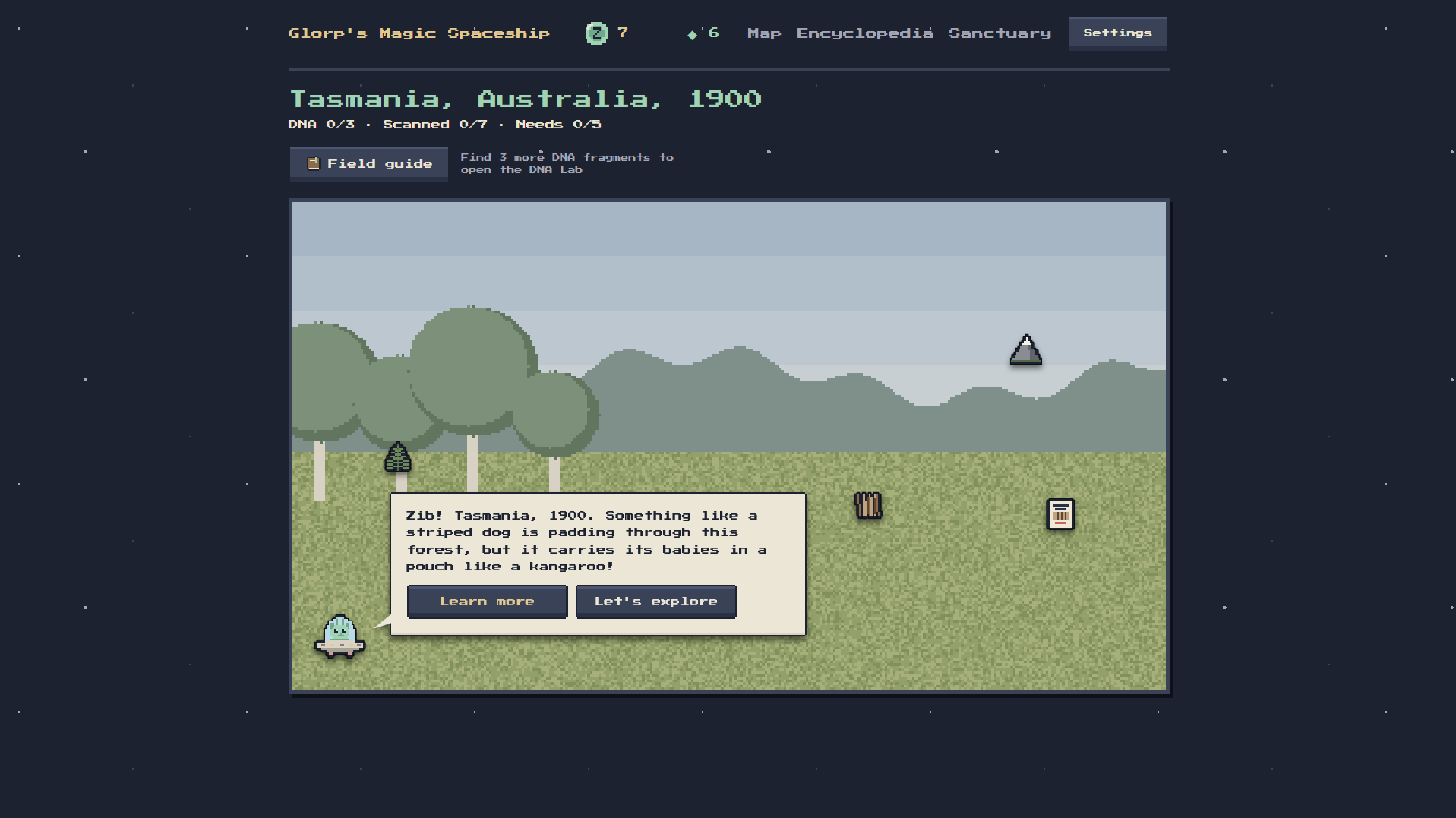
Habitat
-
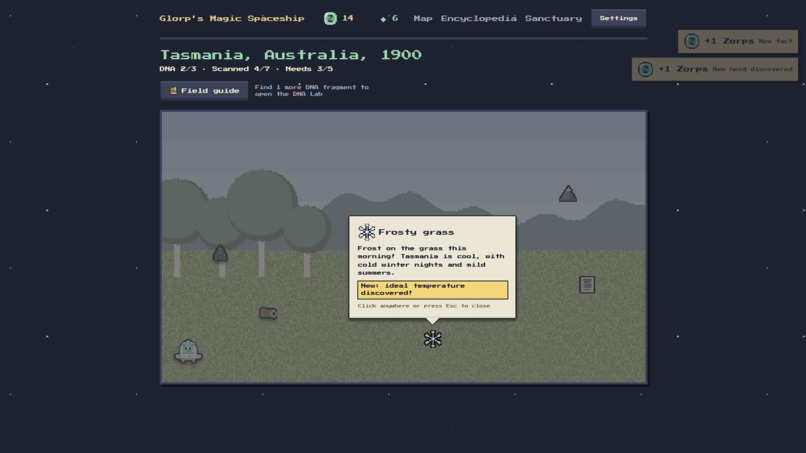
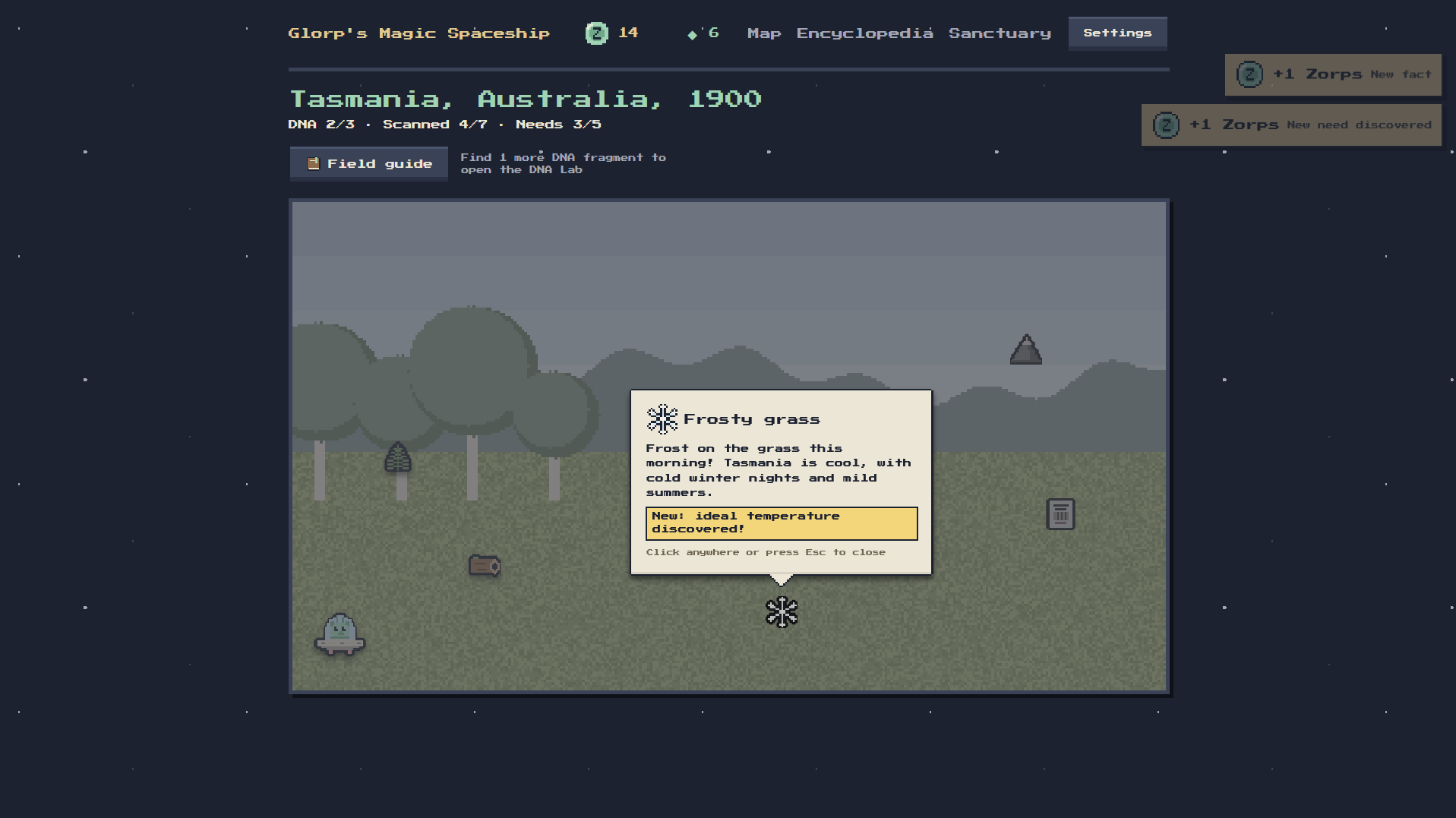
Info. gathering details
-
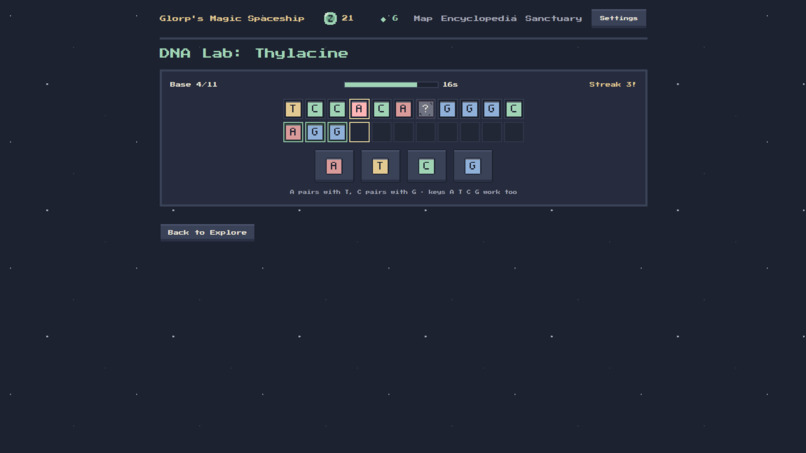
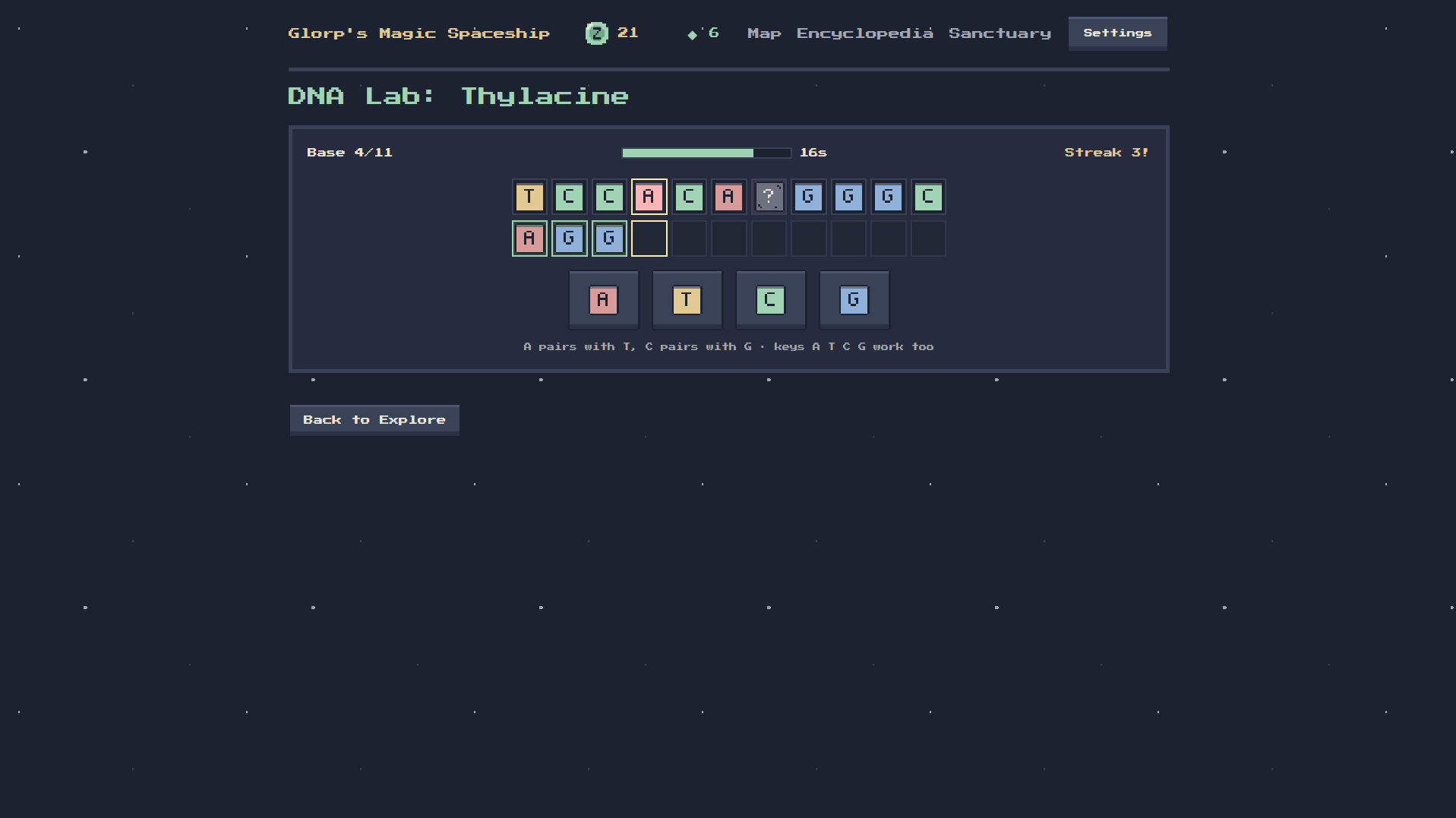
DNA-lab mini game
-
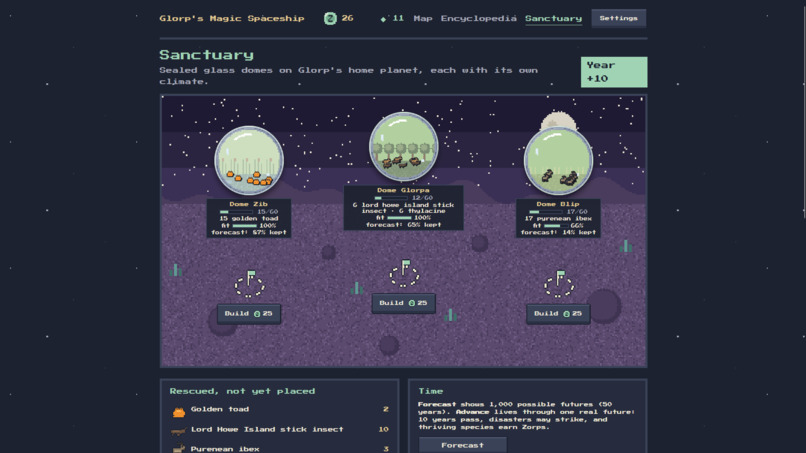
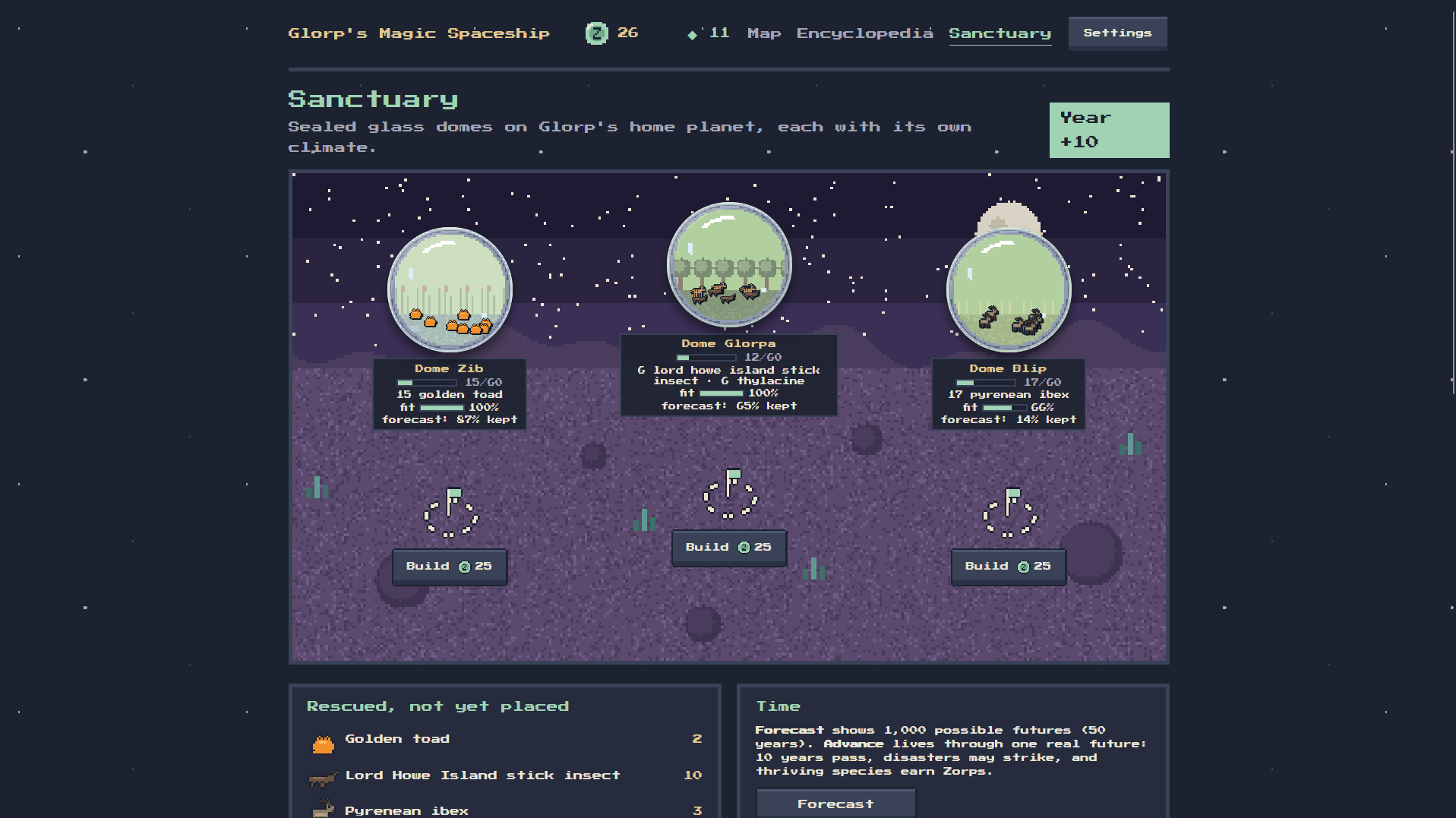
Sanctuary
-
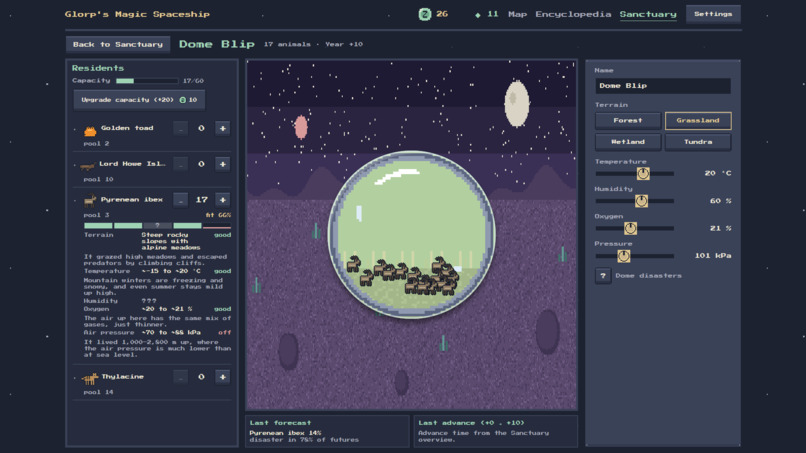
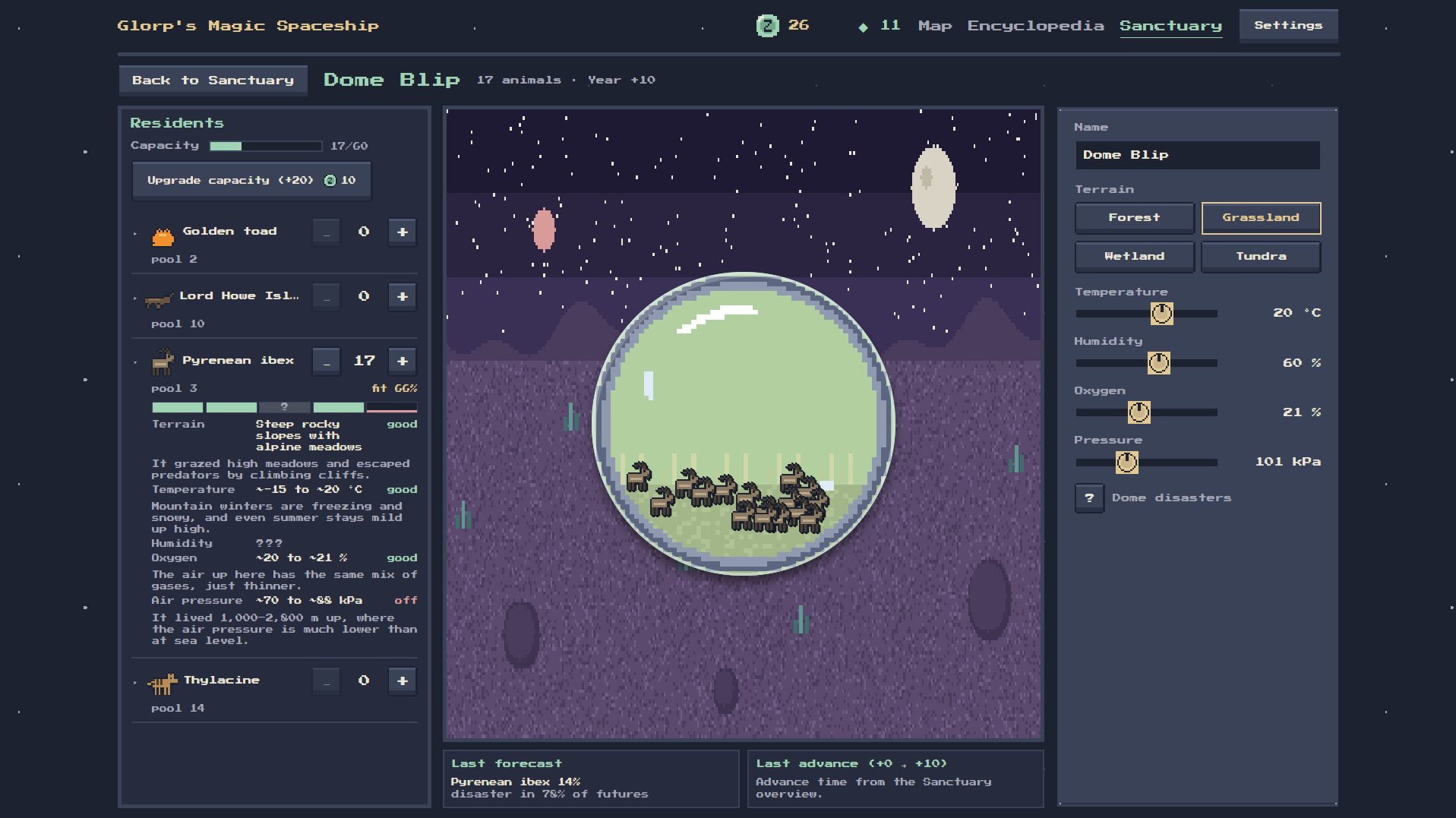
Dome menu
-
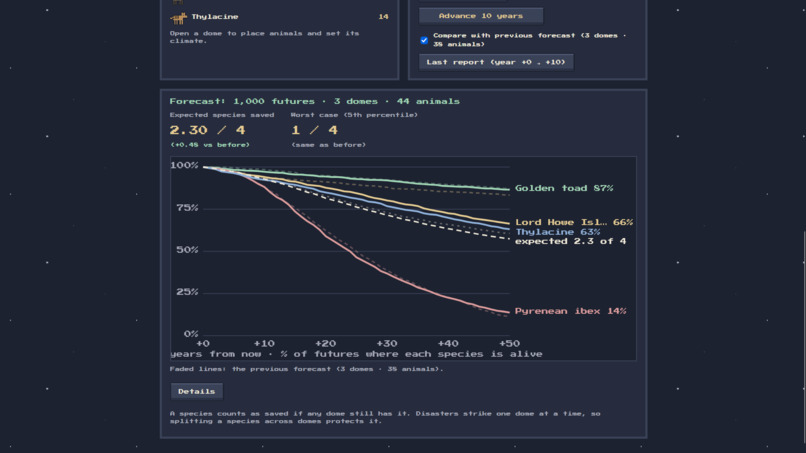
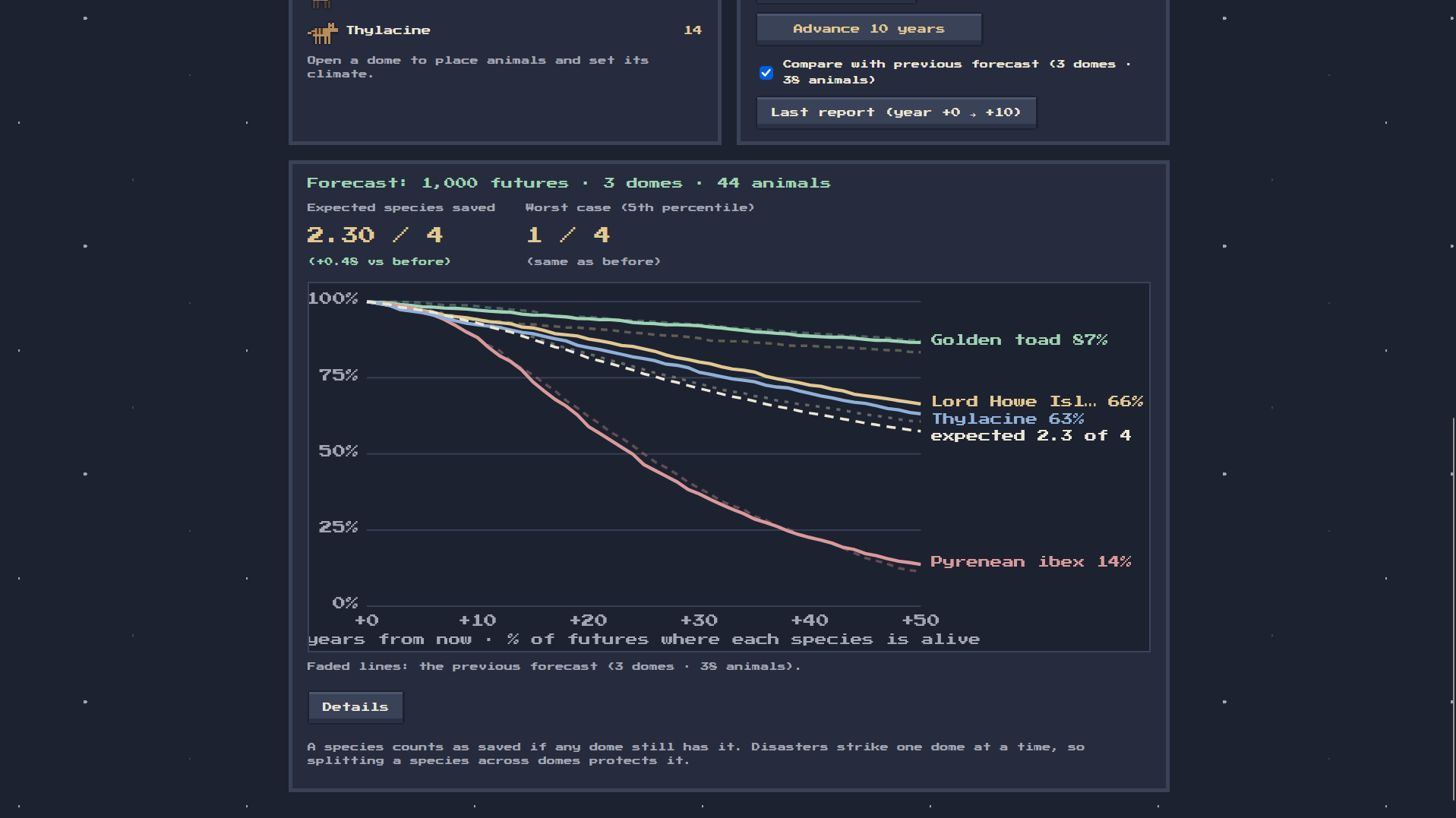
Forecast graph
-
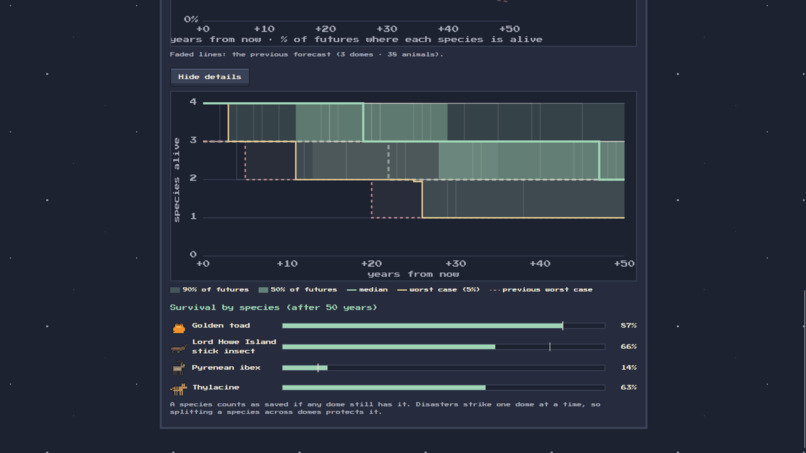
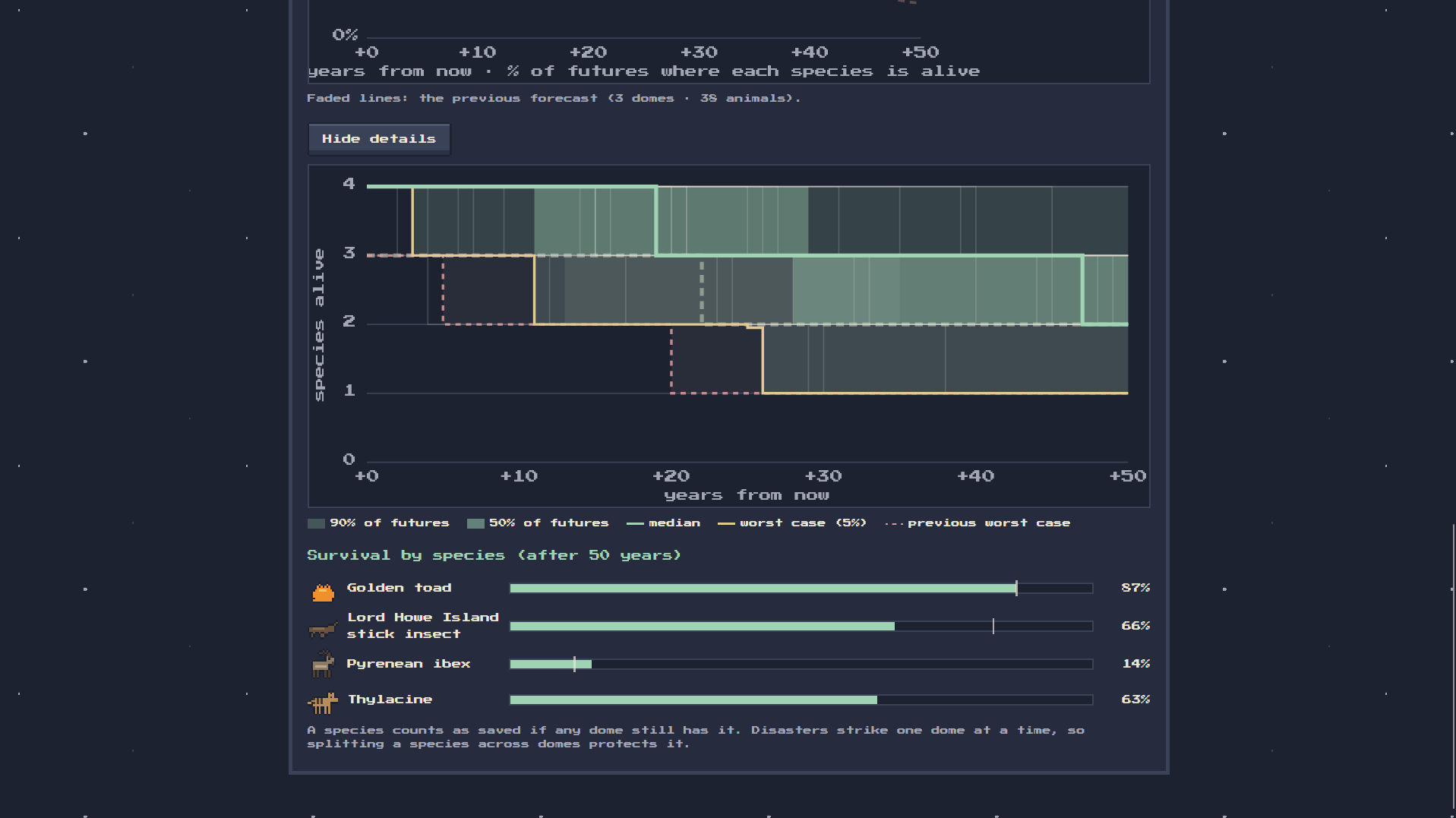
Detailed forecast
-
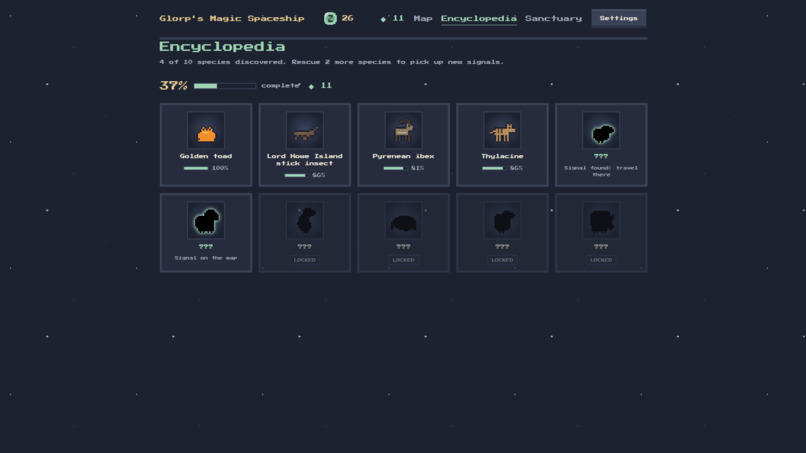
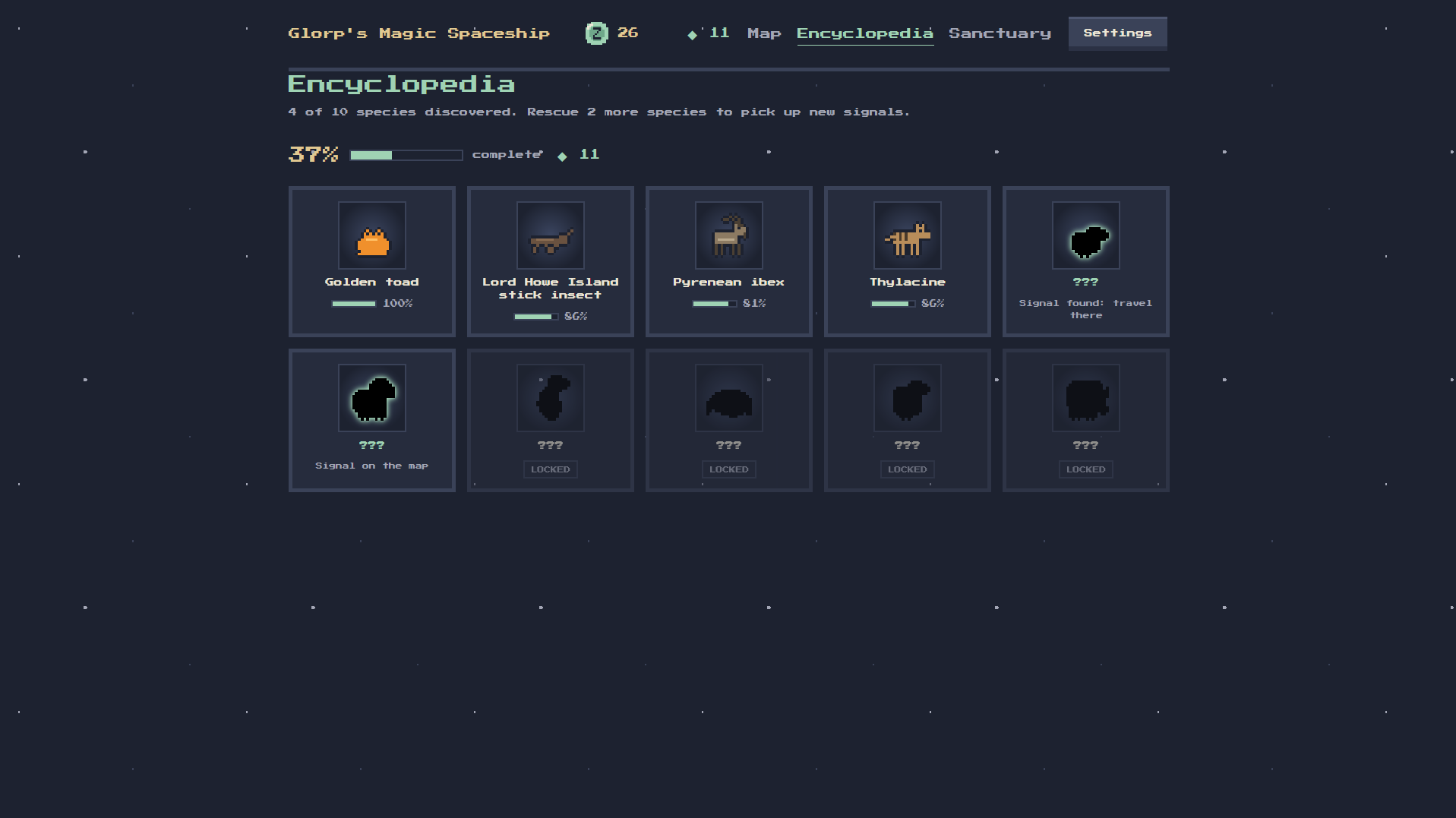
Encyclopedia
Inspiration
Most takes on "new worlds" point outward, to space or the deep sea. We pointed backwards. A historical world nobody alive has seen, like Mauritius in 1600 or Wrangel Island 4,000 years ago, is as new to a player as another planet. Glorp's spaceship ties the past to the future: species that vanished from those old worlds get a second chance in new ones, domes built for them to thrive in. Keeping them alive there is a question of risk, which led us to Weitzman's Noah's Ark problem (1998): how do you save the most diversity with limited resources?
What it does
You play as Glorp, an alien cat with a time-travelling spaceship. Pick a species on the world map and fly to its era, anywhere from 2000 BC to 1987. In each world you scan clues to learn what the species needs, then play a quick DNA minigame to rescue as many animals as you can. Back home you set the terrain and climate of up to six domes and decide who lives with whom. Before committing you can forecast 1,000 possible futures; then you advance time and see which one actually happens. The goal is to complete the encyclopedia of 10 species with the highest diversity score.
How we built it
- Frontend: React, TypeScript and Vite, with pixel art, a wrapping world map built on Natural Earth data, and a log-scale timeline from 2000 BC to today.
- Backend: FastAPI in Python. Each species is one JSON file with researched needs, facts and sources.
- Simulation: individual animals per dome per year, with Poisson births, Binomial deaths, an Allee effect, shared dome capacity, lingering disease and disasters correlated within a dome.
- Forecasts report survival curves per species, expected species saved and a 5th-percentile worst case; an advance picks one run as reality and reports how lucky it was.
Challenges we ran into
- Teaching diversification without turning the game into a finance dashboard: no finance words appear in the game itself.
- Keeping the forecast and the realised future on the same model, so the luck line means something.
- A timeline and travel cost that work from 1987 back to 2000 BC without the old eras being squashed or impossibly expensive.
- Windows-only bugs, such as file encoding, found late.
Accomplishments that we're proud of
- In the same sanctuary, splitting animals across two domes barely changes the average but lifts the worst case from 0 species to 2.
- 10 researched species, each with sourced needs, hotspots and facts.
- The forecast-then-reality loop, which shows players the difference between a bad decision and bad luck.
- Hand-drawn pixel-art sprites
What we learned
Monte Carlo methods, Value at Risk, correlated versus independent risk, and how much easier parallel work is with an agreed API contract and mocks.
What's next for Glorp's Magic Spaceship
Predator–prey interactions between species sharing a dome, expected shortfall next to the worst case, calibration against Living Planet Index trends, and more eras.
Built With
- fastapi
- natural-earth
- pydantic
- python
- react
- typescript
- vite
- wikipedia

