-
-
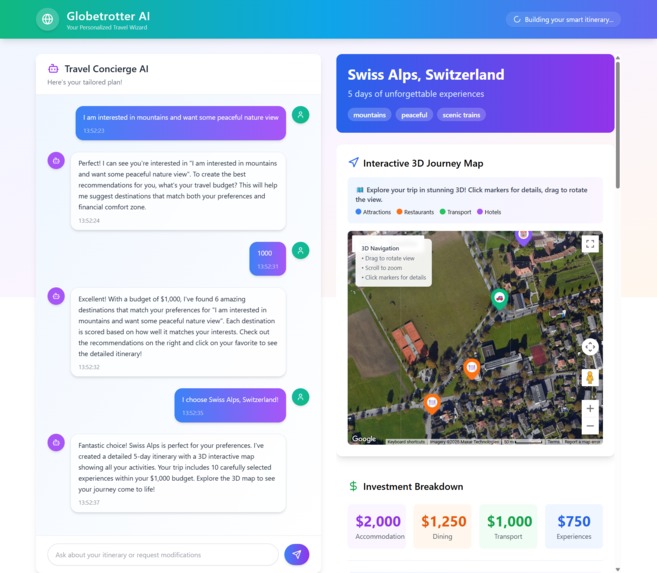
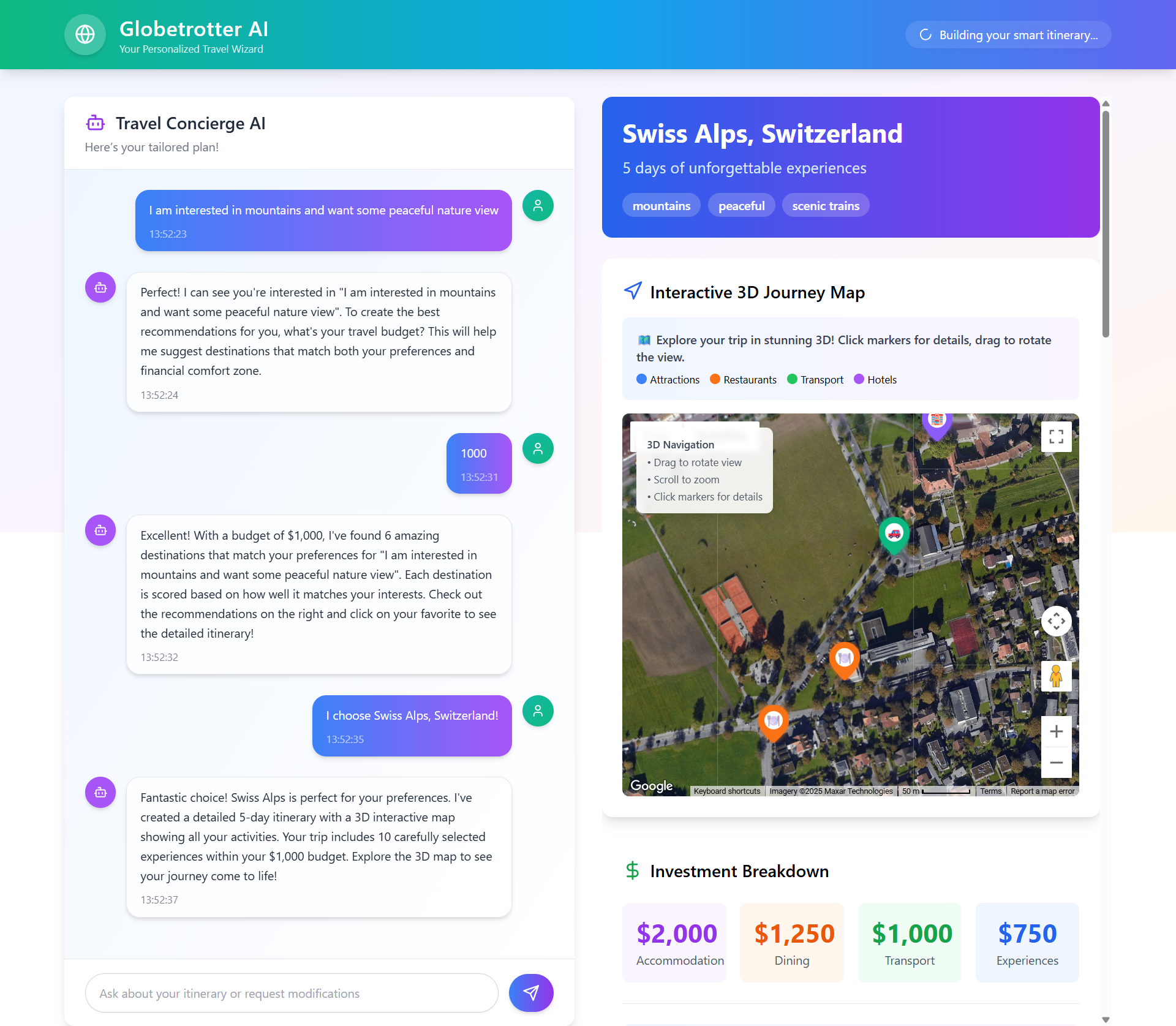
View generated Destination with trip details for days
-
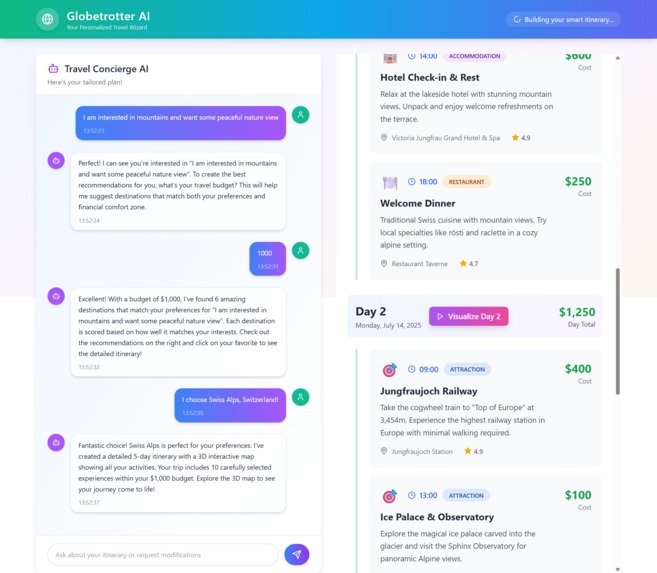
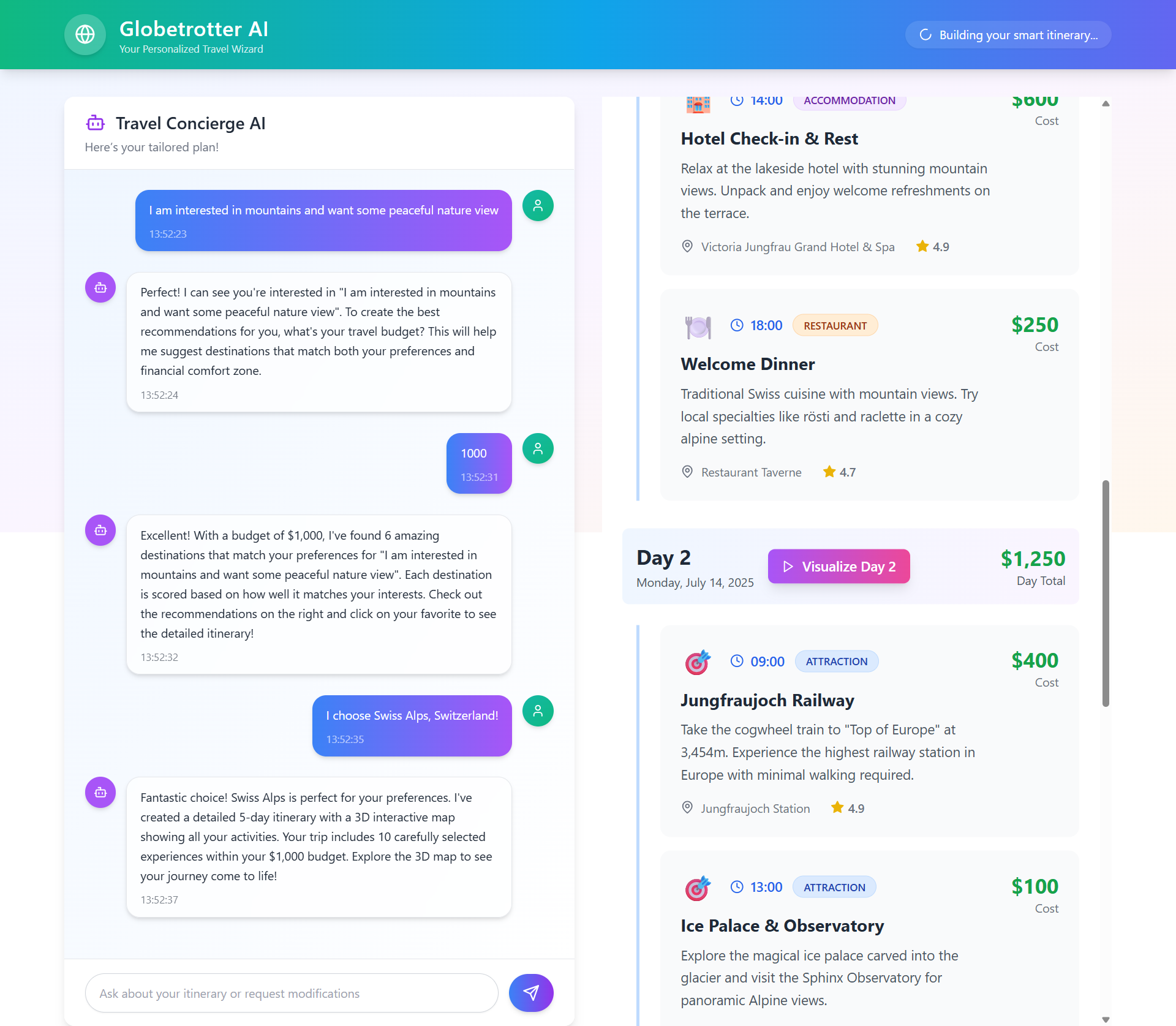
Day planning generated with option to visualize in map
-
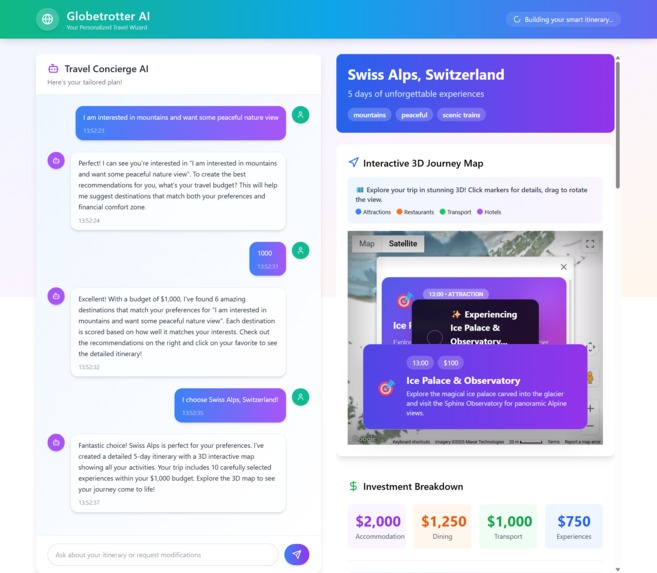
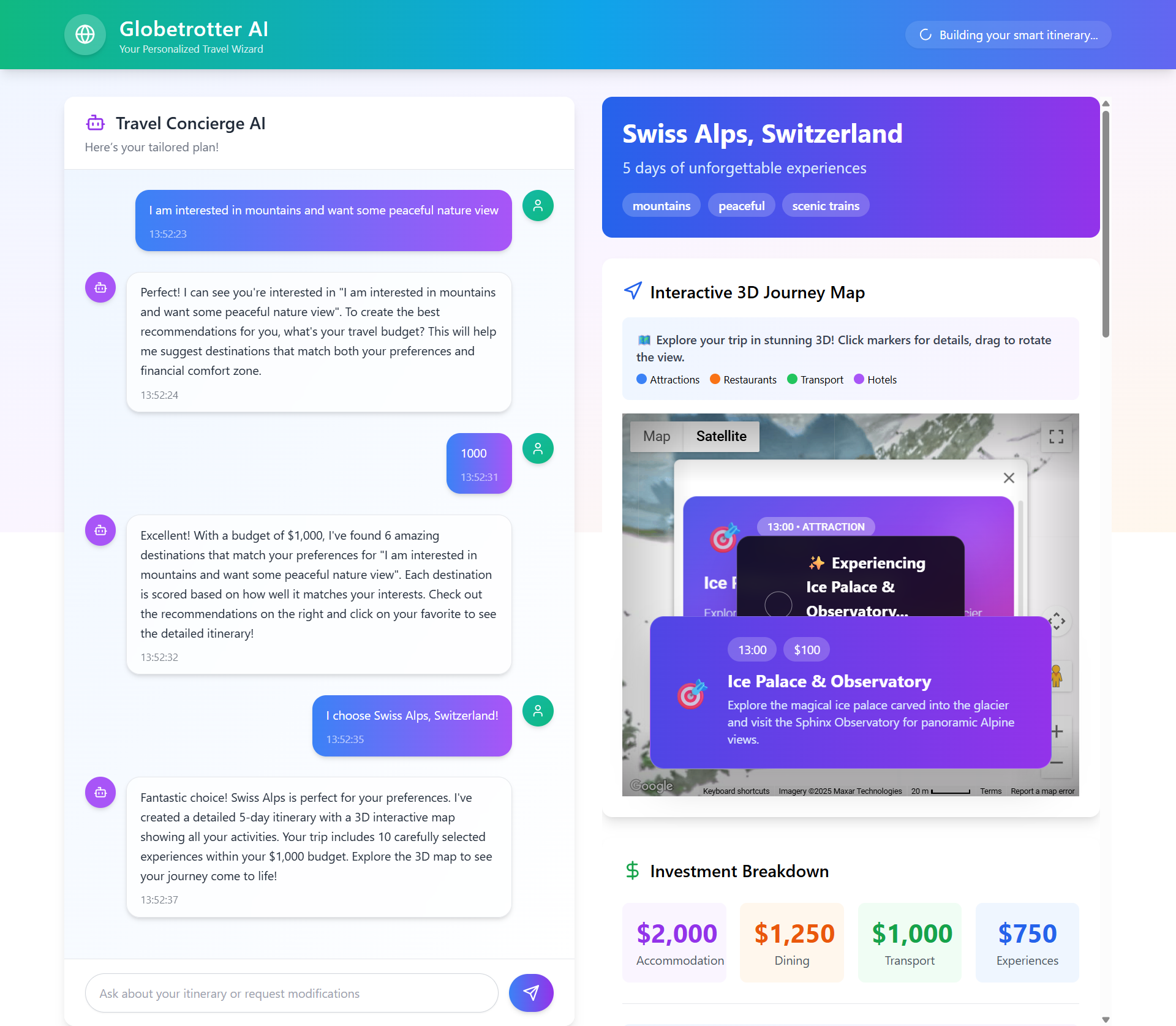
Inside Map animative Experience
-
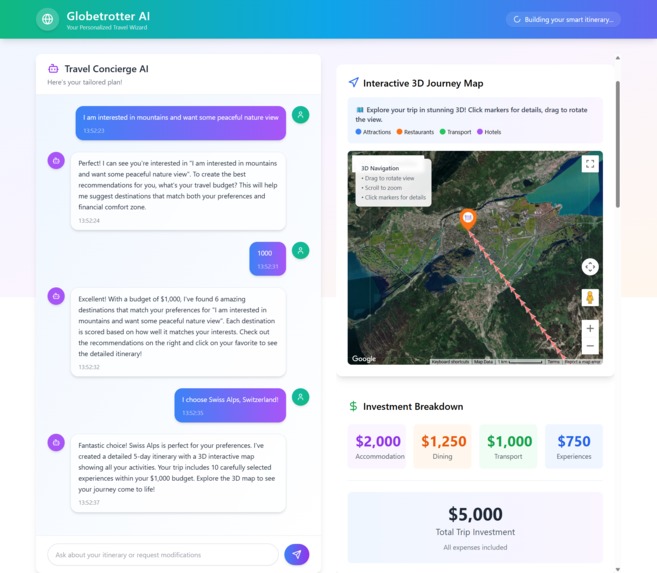
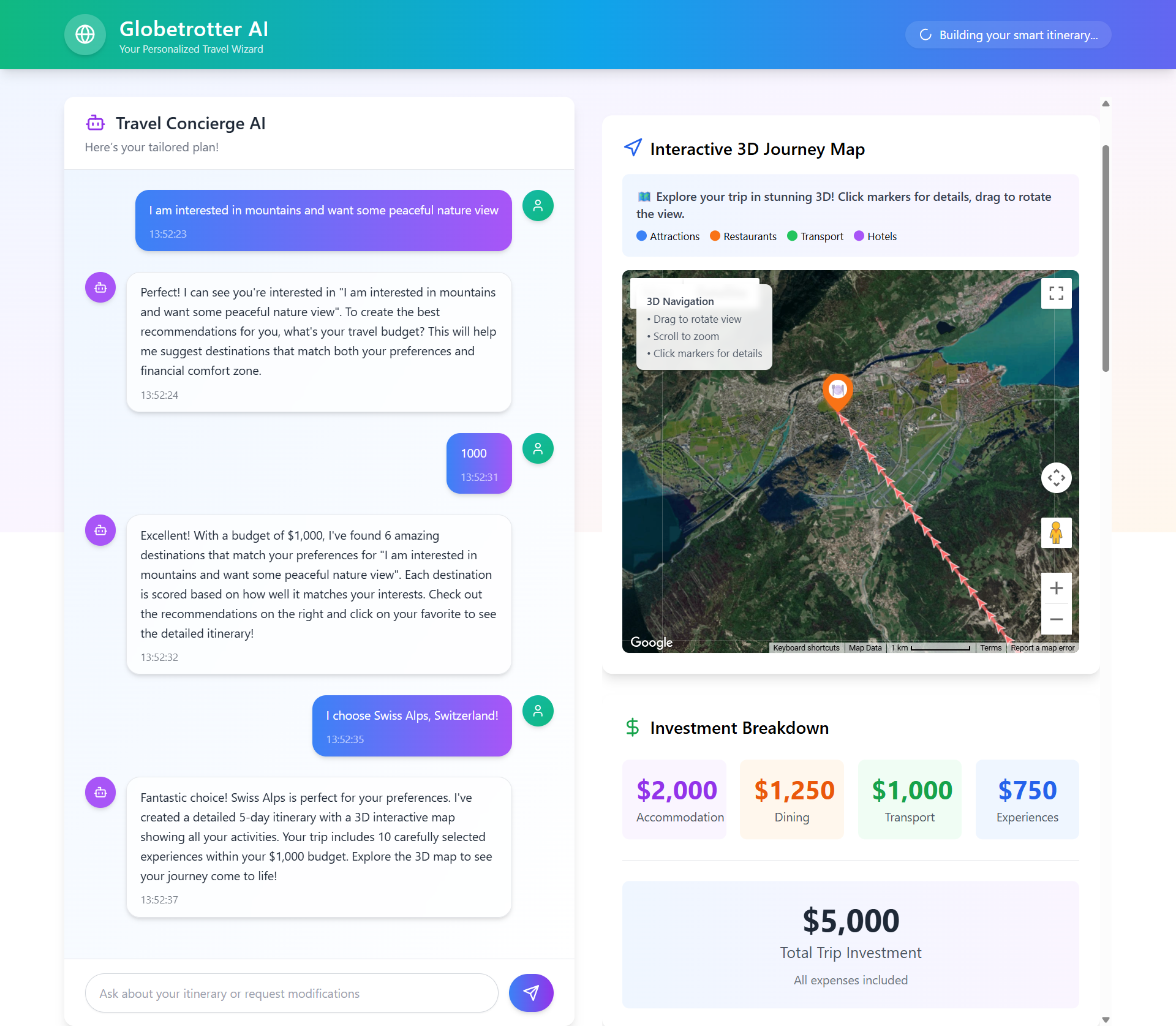
Routes Navigation shown inside Map
🧳 Globetrotter AI – Intelligent Travel Planning Assistant
🌟 Inspiration
We were inspired by the common frustrations of travel planning: the overwhelming number of choices, generic itineraries, and the lack of truly personalized recommendations.
Our goal was to create an intelligent, intuitive, and visually engaging platform that transforms the daunting task of trip planning into an exciting and seamless experience — making dream vacations a reality for everyone.
🤖 What It Does
Globetrotter AI is an intelligent travel planning assistant that guides users through a conversational interface to craft their perfect trip.
- Takes your travel wishes and budget
- Recommends personalized destinations
- Generates a detailed day-by-day itinerary
- Features a 3D interactive map with cinematic journey visualization
🗺️ This map allows users to explore their planned activities in a cinematic, animated journey — bringing their itinerary to life before they even pack their bags.
🛠️ How We Built It
We built Globetrotter AI using a modern web stack focused on performance and user experience.
- Frontend: React + TypeScript
- Styling: Tailwind CSS for rapid and responsive UI
- 3D Map: Google Maps API for immersive, animated travel visualizations
- Icons: Lucide React for clean, scalable icons
- AI Flow: Managed through React hooks and state for dynamic, conversational UX
🚧 Challenges We Ran Into
3D Google Maps Integration:
Handling camera transitions, day-wise marker rendering, and smooth animations required extensive optimization.Conversational State Management:
Ensuring the AI responds contextually and transitions smoothly across steps (wish ➝ budget ➝ destination ➝ itinerary) was challenging.
🏆 Accomplishments We're Proud Of
- A visually stunning 3D map experience, with day-wise cinematic transitions.
- A fluid, AI-powered conversation interface that adapts in real-time to user preferences.
- Successfully combined semantic AI + interactive data visualization into one elegant experience.
📚 What We Learned
- How to combine conversational AI with data visualization to solve real-world planning problems.
- Advanced usage of Google Maps API for storytelling and interactivity.
- Importance of state management in complex single-page applications.
- The impact of subtle UI animations and transitions on user engagement.
🔮 What's Next for Globetrotter AI
Currently, our destination recommendations are based on a small, pre-stored dataset.
Our next step is to integrate MongoDB Atlas with vector search to scale semantic search and make recommendations smarter.
Here's how:
- Generate vector embeddings for all destinations using descriptive metadata.
- Use MongoDB’s vector search to semantically match user input with relevant destinations.
- Integrate RAG (Retrieval-Augmented Generation) to feed relevant results into an LLM.
- Generate hyper-personalized responses that adapt to even the most niche preferences.
✨ This will allow us to deliver destination and activity suggestions that are not only historically accurate but contextually relevant to each unique query.

Log in or sign up for Devpost to join the conversation.