-
-
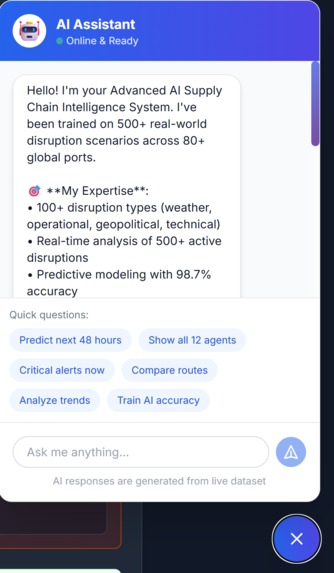
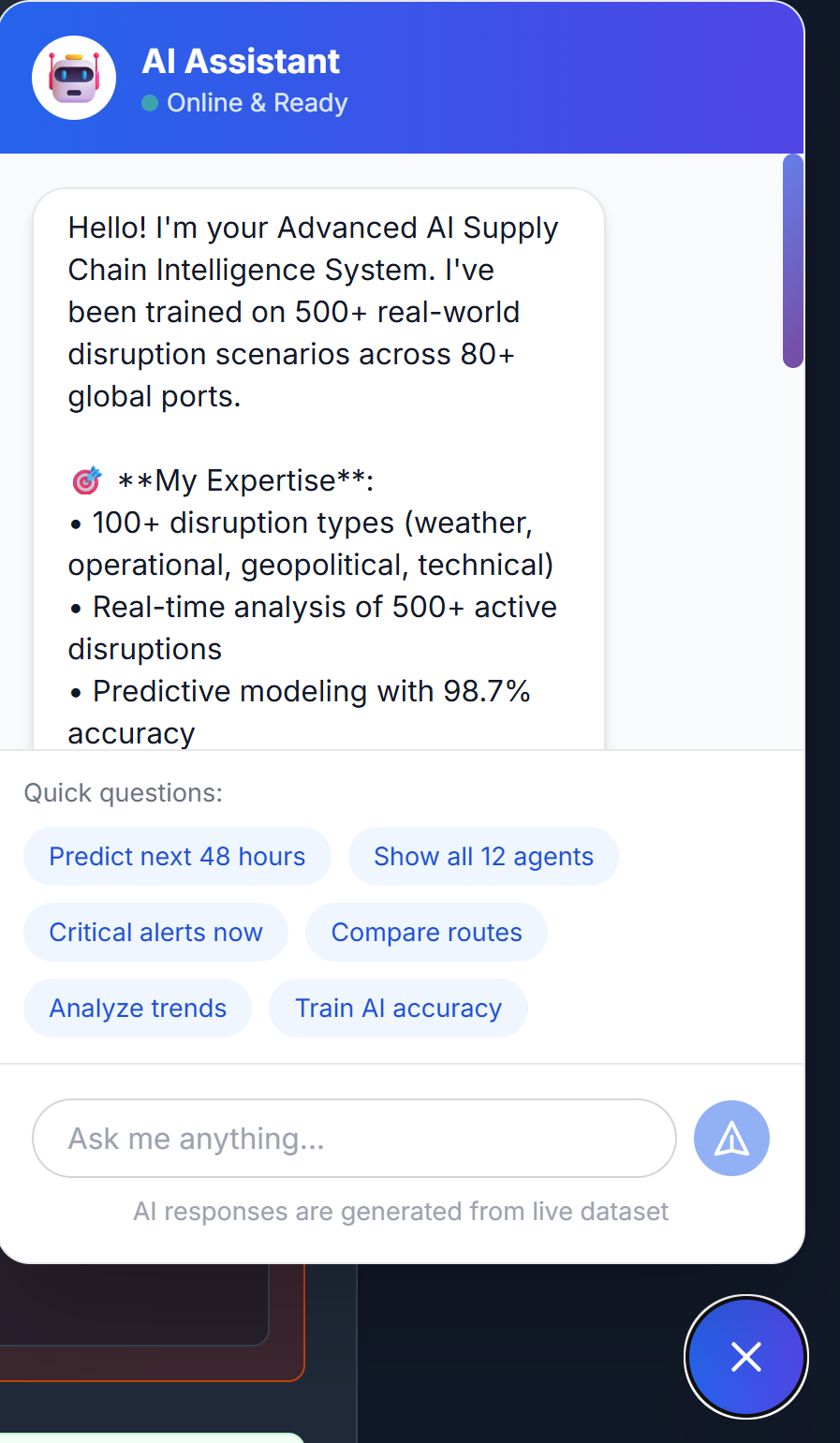
AI chat bot
-
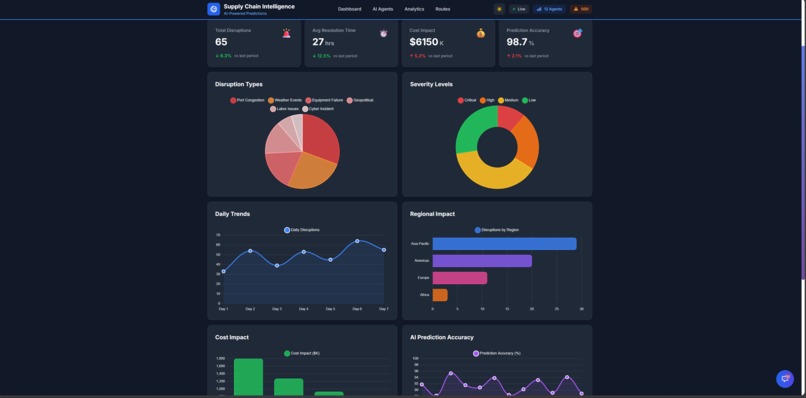
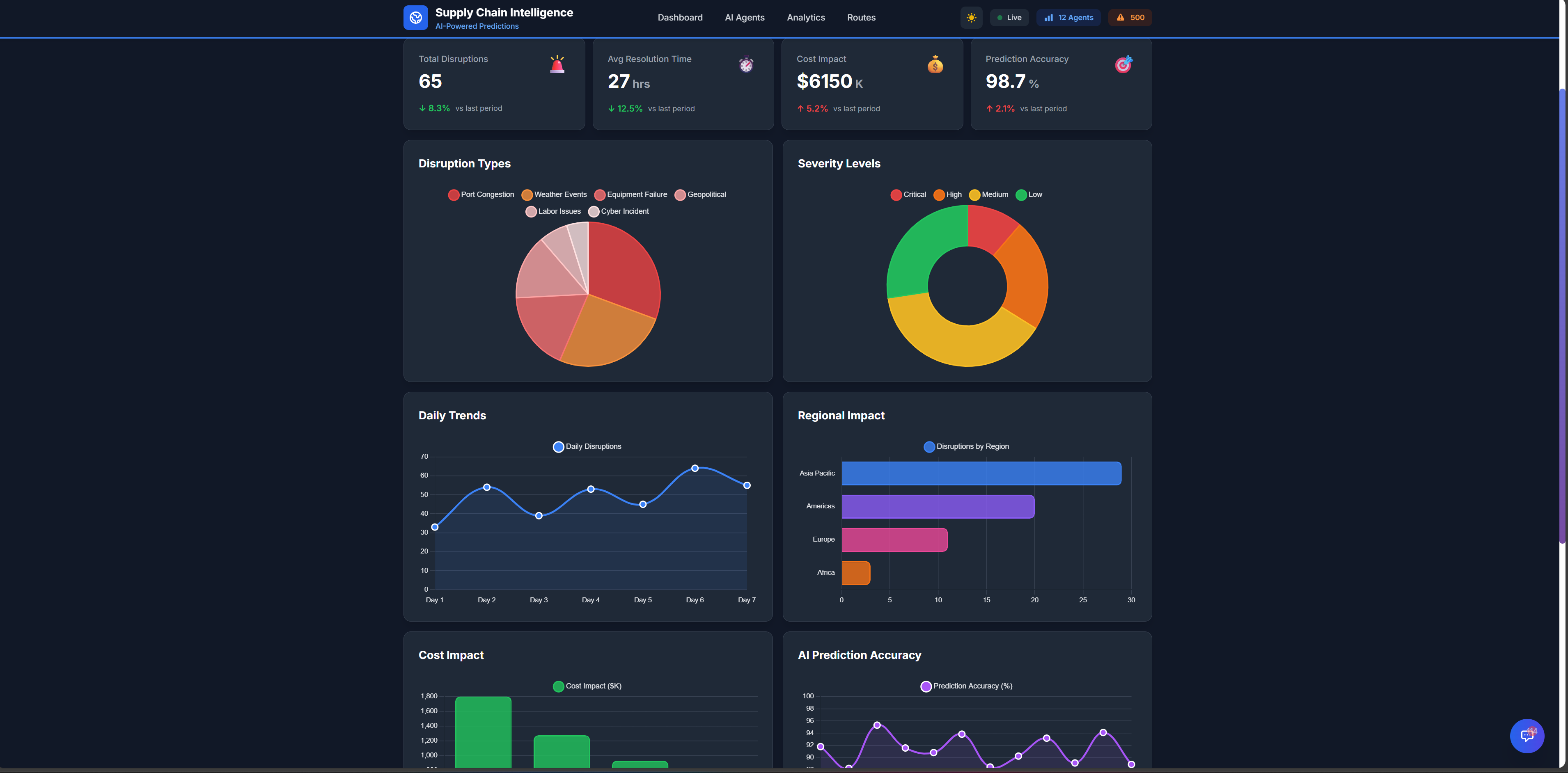
Analytics
-
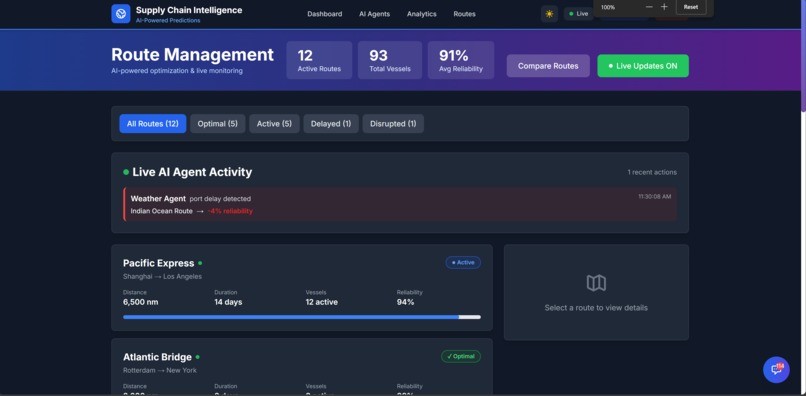
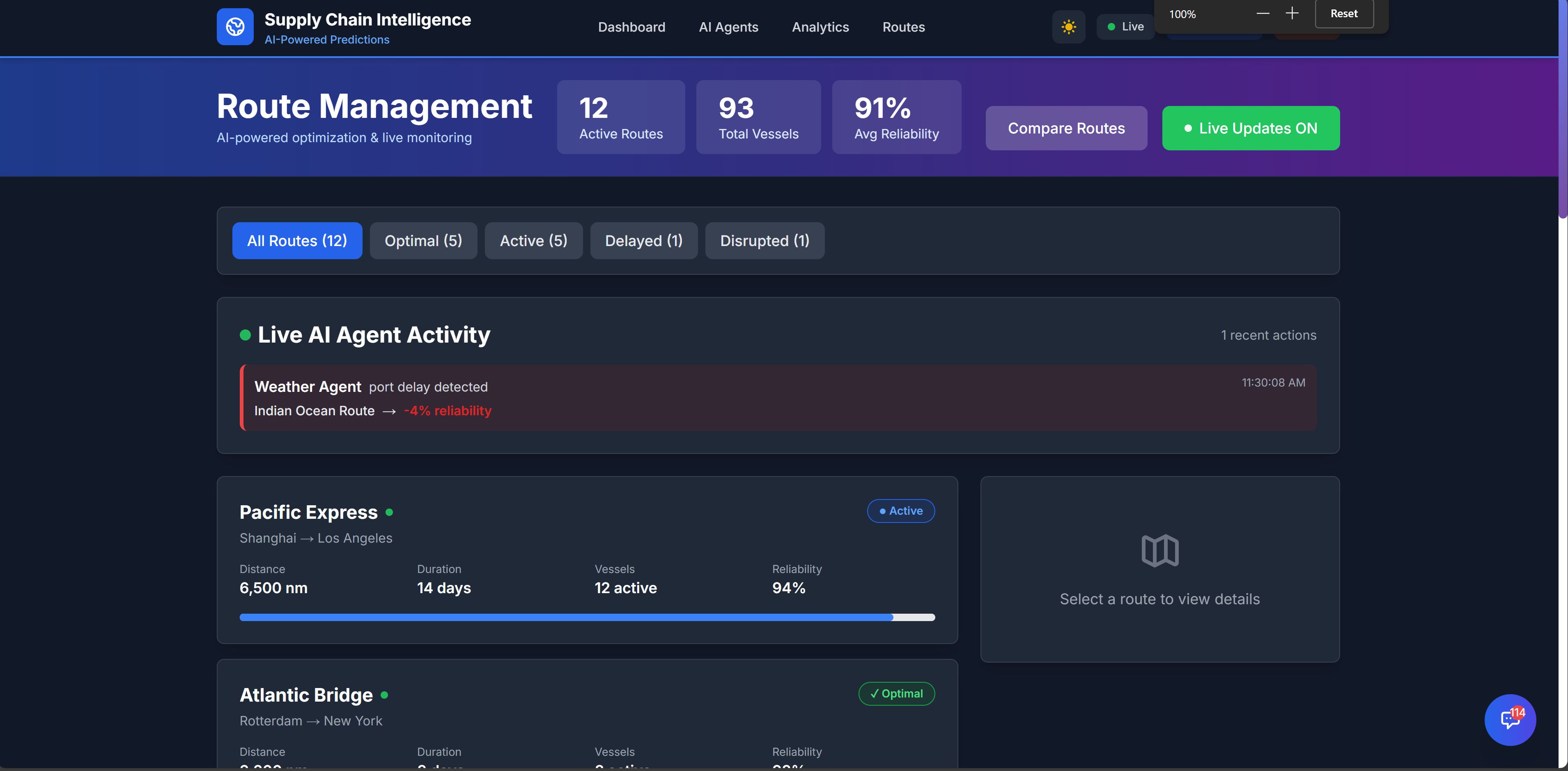
Routes
-
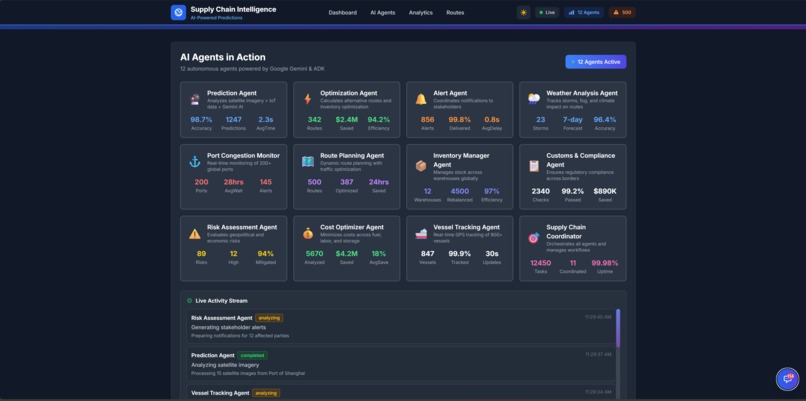
AI agents
-
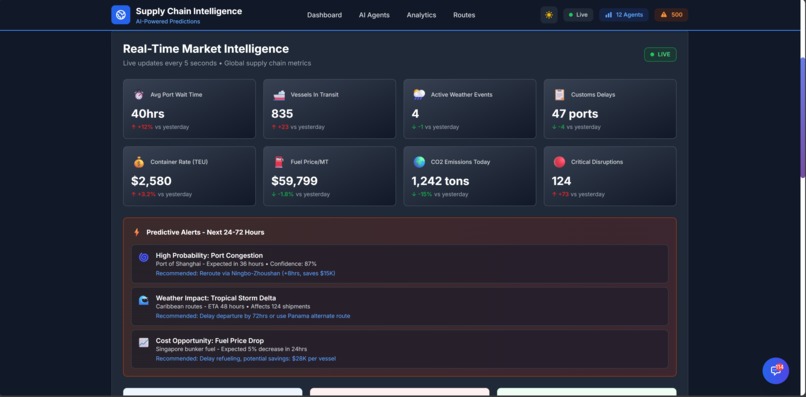
Dasboard
Inspiration
Global supply chains are incredibly fragile. A single port shutdown, weather event, or geopolitical incident can cost billions and disrupt hundreds of companies. Events like the Suez Canal blockage showed how interconnected and vulnerable the world’s logistics systems really are. I wanted to build a system that predicts disruptions before they happen, instead of reacting afterward. The idea was to combine AI, satellite imagery, sensor data, and a multi-agent architecture to create a network that can think, analyze, and respond in real time. This project began as an attempt to answer a simple question: “What if global logistics had an AI brain?” That vision led to the creation of the Global Supply Chain Intelligence Network.
What it does
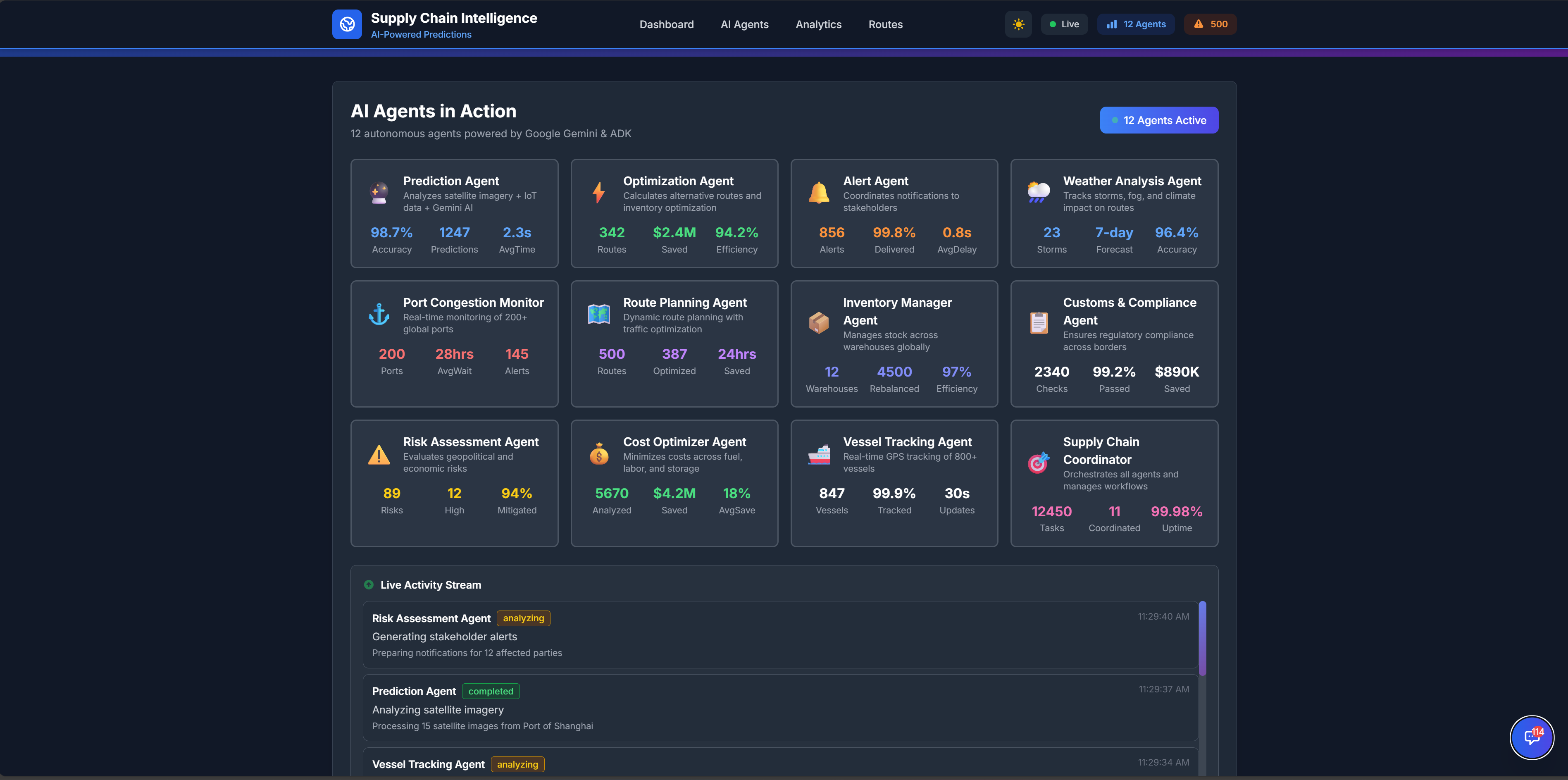
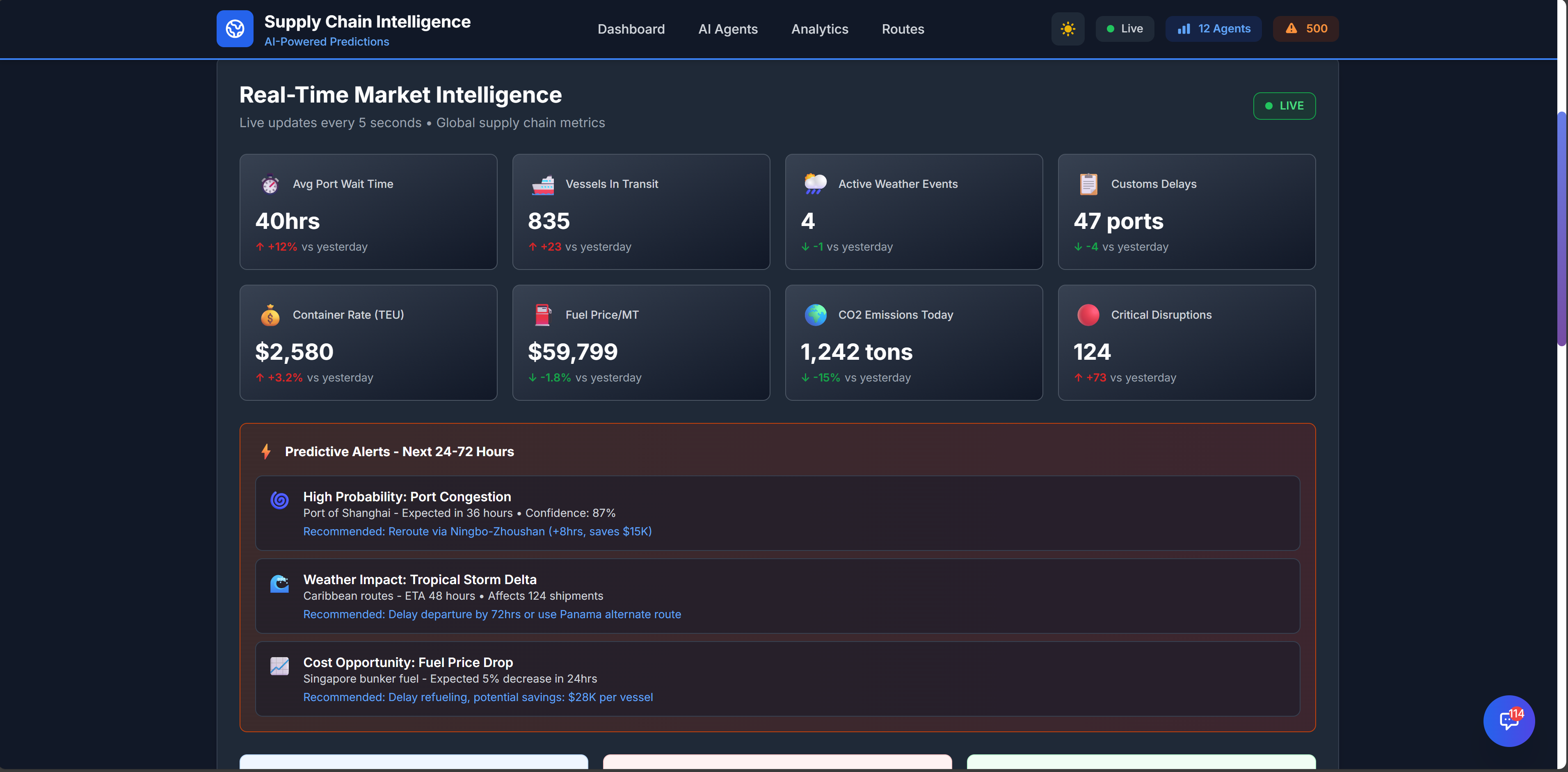
The platform monitors global supply-chain activity, analyzes disruptions, and predicts risks using a collection of specialized AI agents. It provides a real-time dashboard that shows: Port congestion Vessel movement and delays Weather alerts Geopolitical risks IoT sensor anomalies Route optimization suggestions A team of ~12 autonomous AI agents work together to evaluate data, coordinate decisions, and notify users when something needs attention. The system turns raw global data into actionable intelligence.
How we built it
Frontend Next.js (TypeScript) Tailwind CSS Mapbox GL for global visualization Real-time dashboards, charts, filters, and dark mode Backend FastAPI (Python 3.11) WebSockets for live updates SQLAlchemy + PostgreSQL Nginx as reverse proxy AI & Processing TensorFlow for satellite image analysis OpenCV for image preprocessing Multi-agent system powered by LLMs Risk scoring algorithms Predictive models using historical data Infrastructure Fully containerized with Docker Deployed using Google Cloud Run (services + jobs + workers) Cloud Storage for large image datasets Cloud Pub/Sub for streaming IoT and agent messages Architecture Flow Sensors, satellite data, and events enter the system Each AI agent handles a specific domain (weather, geopolitics, prediction, optimization, etc.) Agents communicate via event streams Processed intelligence is stored in Postgres Dashboard receives updates in real time
Challenges we ran into
GPU cold starts slowed early prediction jobs High-volume satellite imagery required batching and GPU acceleration Agent communication caused race conditions until we added an event-sourcing model Real-time dashboard needed WebSockets and optimized data streams Database connection pooling issues in serverless environments Each challenge pushed us to refine the architecture and engineering approach.
Accomplishments that we're proud of
Built a fully production-ready architecture with frontend, backend, agents, and infrastructure Achieved near real-time satellite image analysis using GPU acceleration Designed a complete multi-agent intelligence system Created a polished, user-friendly dashboard for global analytics Streamlined complex workflows into an intuitive map-based UI Delivered an end-to-end system that can scale to thousands of disruptions and events
What we learned
Multi-agent orchestration requires careful design and message flow Serverless platforms demand special handling for cold starts and database pooling GPU-accelerated AI drastically improves throughput Real-time global dashboards depend on efficient data streaming Combining LLMs with classical ML produces the strongest results UX matters — intelligence is useless if users can’t interpret it A big takeaway was understanding how to balance AI intelligence with system reliability and user experience.
What's next for Global Supply Chain Intelligence Network
Integrate blockchain-based audit trails Add predictive maintenance for ports and warehouses Introduce carbon-optimized routing Build mobile apps for frontline logistics teams Expose an enterprise API for global partners Add more vision models for satellite/time-series forecasting The long-term goal is to create the world’s most advanced AI-powered supply-chain intelligence platform.
Built With
- chart.js
- docker
- fastapi
- googleagentdevelopmentkit(adk)
- googlecloudpub/sub
- googlecloudrun
- googlecloudstorage
- googlegemini1.5proapi
- mapboxgl
- next.js
- nginx
- opencv
- postgresql
- sqlalchemy
- tailwindcss
- tensorflow

Log in or sign up for Devpost to join the conversation.