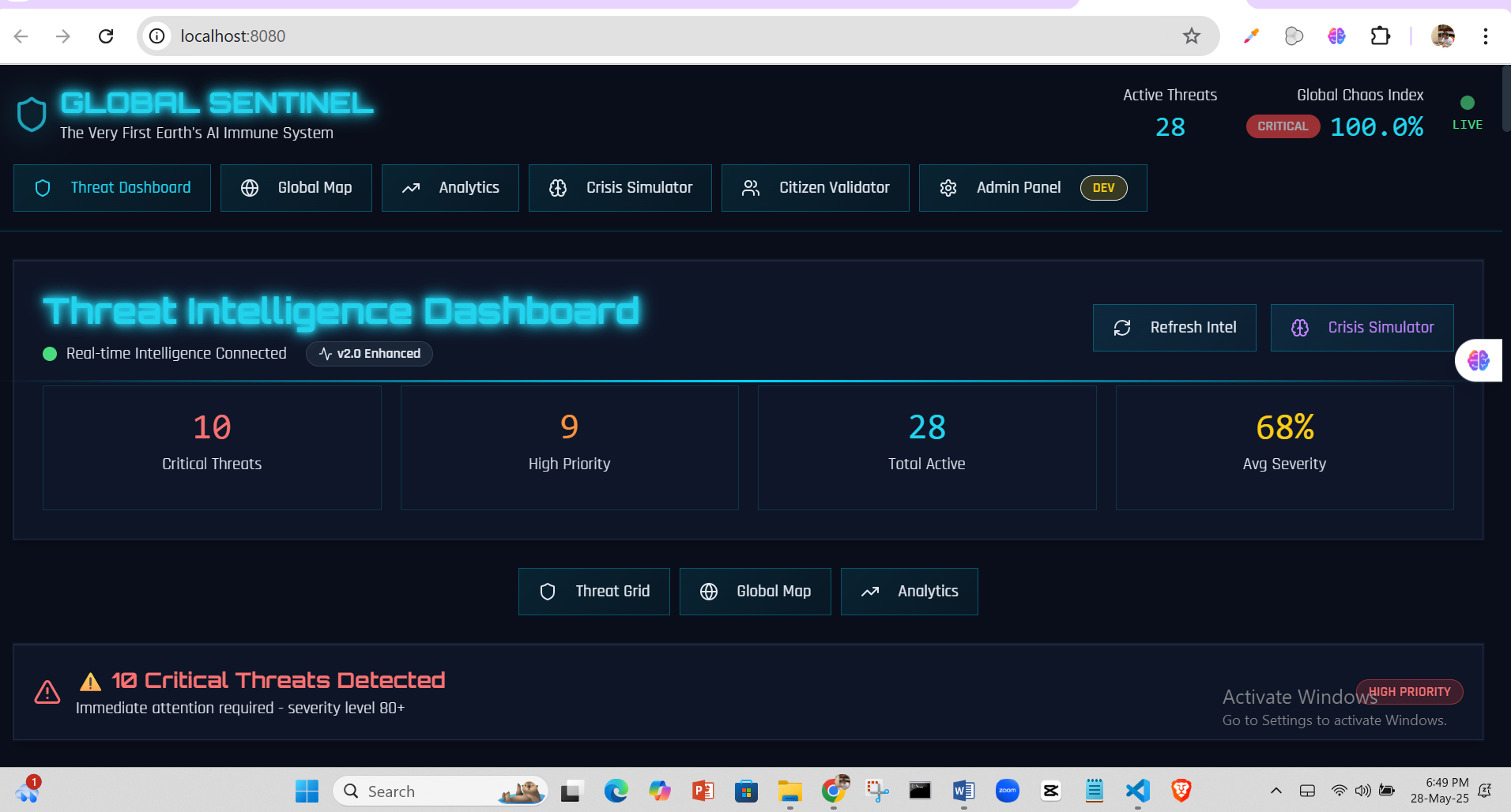
🌍 About the Project — Global Sentinel
🧠 The Premise
In a world inundated with disinformation, geopolitical volatility, and cascading system failures, Global Sentinel was born to answer a critical question:
"What if Earth had an immune system — one capable of detecting crises early, simulating their impact, and empowering humanity to respond with clarity?"
Inspired by the architecture of biological immunity and the power of reasoning engines like Sonar, we envisioned an always-on sentinel — one that could detect threats, simulate complex causal chains, and invite public participation in verifying and neutralizing emerging risks.
💡 Inspiration
From deepfake-driven cyberattacks to climate-induced migration waves, global threats are increasingly multi-dimensional and fast-moving. Traditional systems — slow, centralized, and reactive — are no match for the speed of modern crises.
We were inspired by:
- Immune biology — detect, reason, respond.
- Mission-critical systems — dashboards used in aerospace and defense.
- Crowdsourced verification — like Wikipedia and GitHub, but for crisis truth.
- LLMs as reasoning agents — Sonar's models offered logic, not just language.
Our goal became clear: Build a system that can simulate global threats like falling dominoes, validate their credibility in real time, and surface mitigation actions before disaster strikes.
🛰 Real-Time Threat Scraping — The System's Eyes
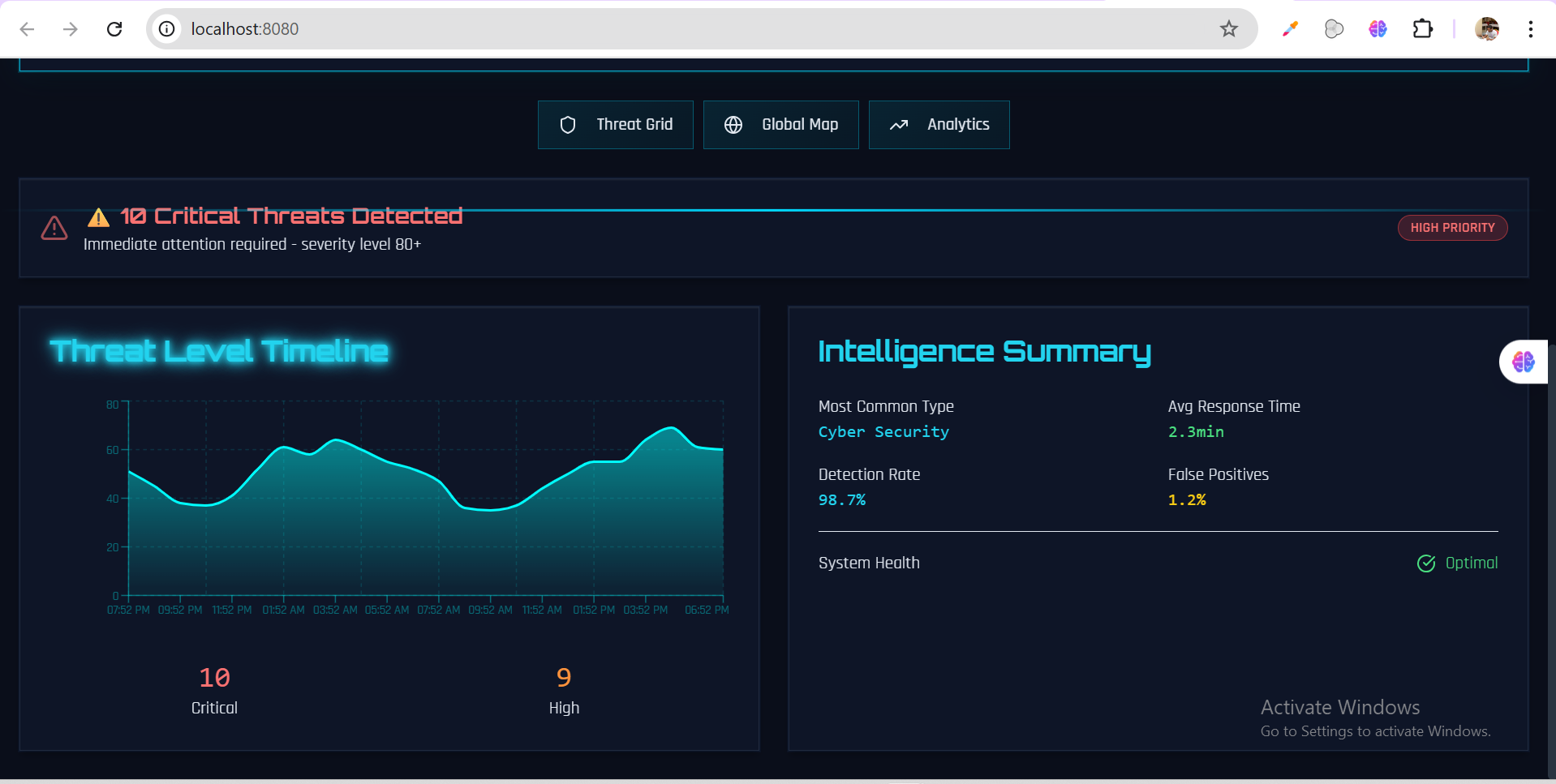
At the heart of Global Sentinel is a custom-built global threat scraping engine — a backend service that continuously monitors, extracts, and analyzes live threat signals from some of the world's most trusted and authoritative news sources.
This scraper acts as the system's eyes, feeding our database with raw intelligence:
- Geopolitical flashpoints
- Cyber intrusions
- Civil unrest and conflict signals
- Environmental warnings
- Economic instability markers
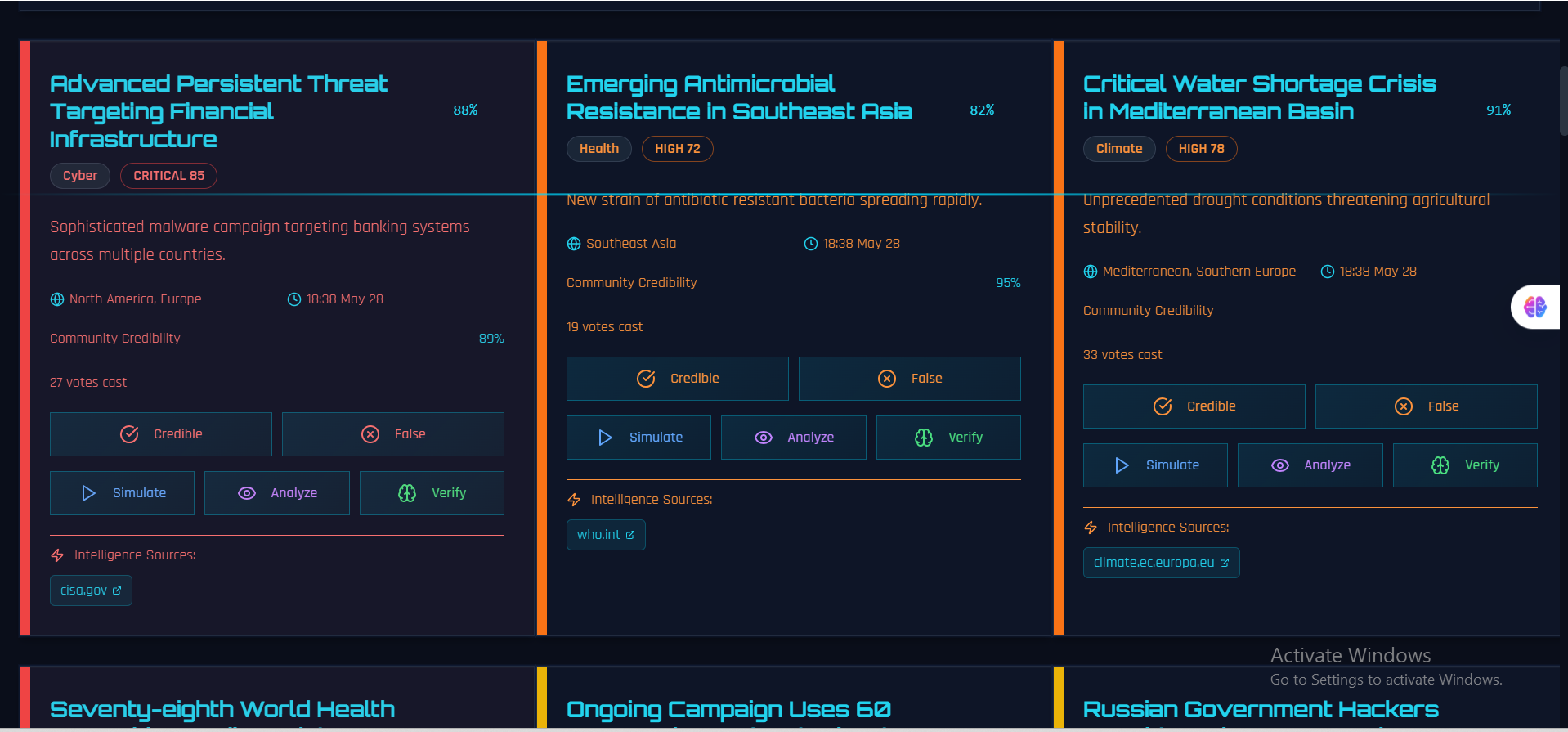
Each headline is parsed, enriched, and evaluated as a potential threat seed. Once flagged, it becomes a candidate for deeper simulation and public validation.
This data is the foundation upon which simulations are launched and the Chaos Index is calculated — ensuring our system doesn't just react to user prompts, but remains aware of global instability as it unfolds.
🛠 How We Built It
⚙️ Frontend
- React + TypeScript: Built an immersive UI for inputting hypotheses, visualizing simulation flows, and comparing dual-sided reasoning.
- Framer Motion + Tailwind: Delivered animated causal chain visualizations and soft-card UI for suggested mitigations and citations.
- State Management: Managed simulation states, verdict rendering, and dynamic views with React context and hooks.
🔗 Backend
- Node.js + Express: Created secure API endpoints to trigger simulations, retrieve results, and manage votes and validations.
- OpenRouter API: Integrated Sonar's reasoning, reasoning (counter), and deep_search endpoints to power core intelligence.
- Firebase Firestore: Stored simulations, threats, user votes, and validation metadata in a scalable, real-time cloud database.
- Global Threat Scraper: Continuously ingests and filters live global data to detect high-risk developments as they emerge.
- Security: Implemented rate-limiting, CORS, and Firebase Admin roles for protected operations.
🧠 AI Models
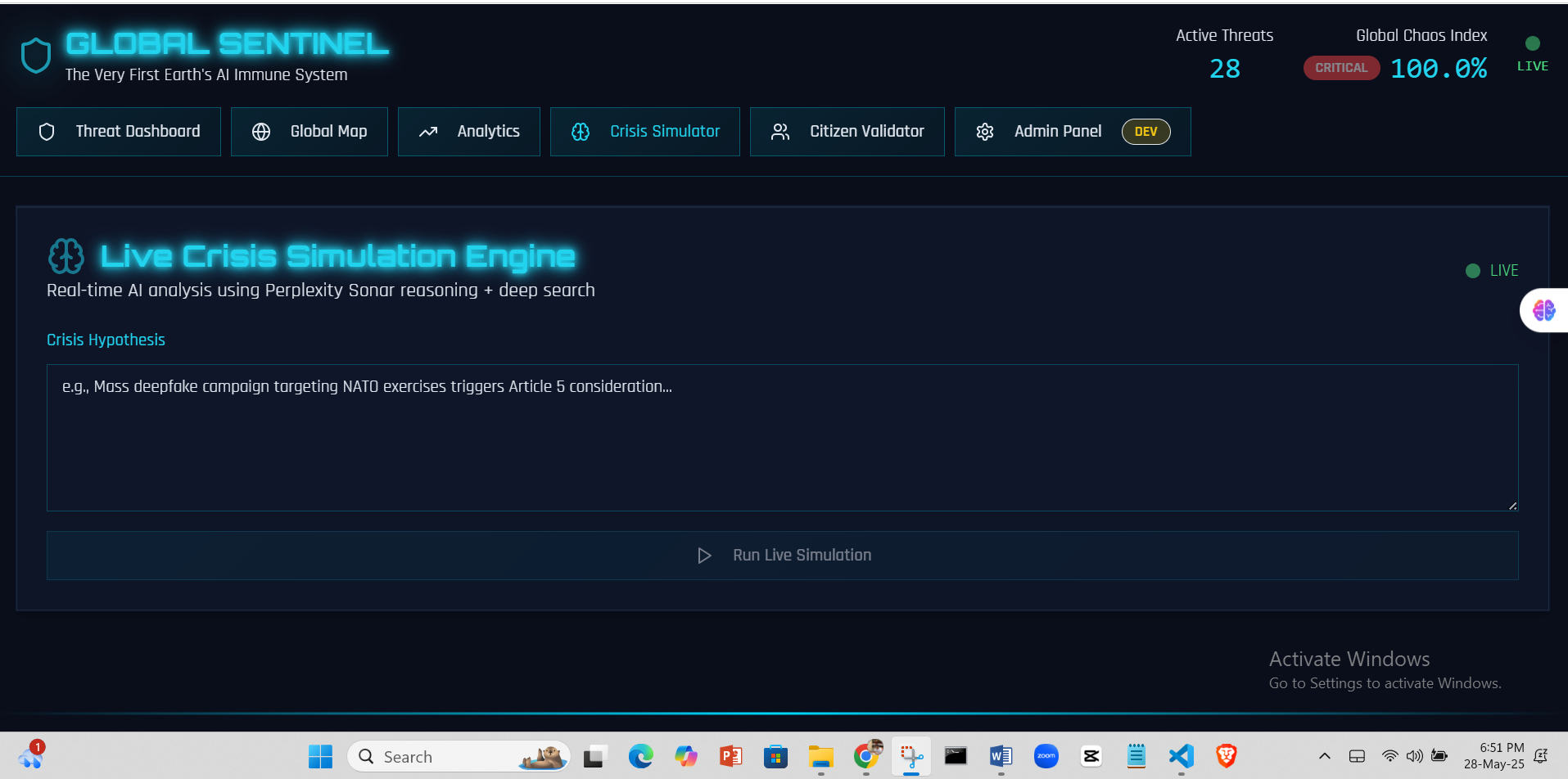
- sonar.reasoning: Generated multi-step causal chains from hypotheses.
- sonar.deep_search: Retrieved cited, trustworthy signals to support or contradict scenarios.
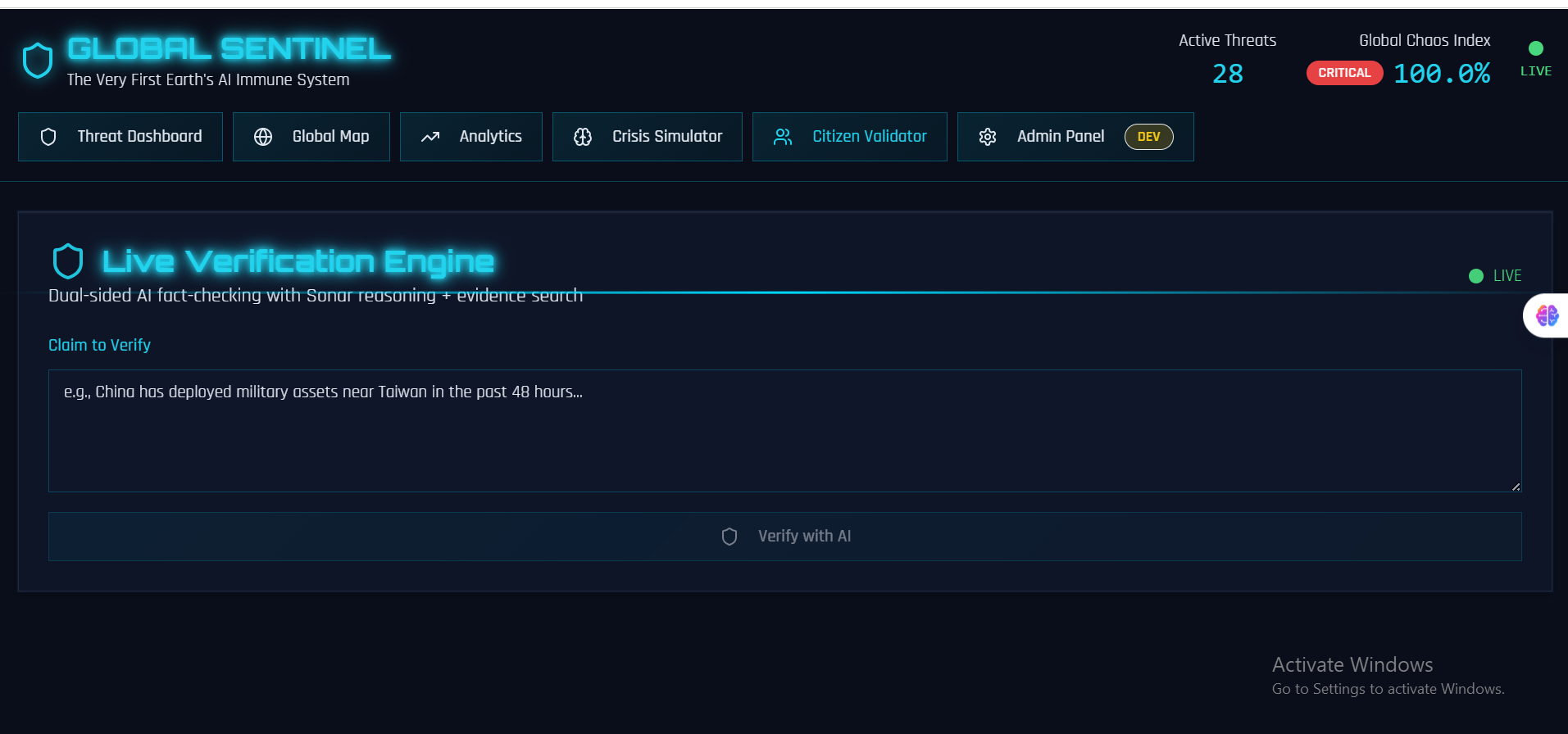
- sonar.reasoning(counter: true): Created dual-sided arguments for public credibility validation.
🚧 Challenges We Faced
1. LLM Prompt Engineering for Logic
Crafting prompts that elicit structured, step-by-step reasoning from Sonar models required iterative refinement. We discovered that subtle differences in wording radically altered the logic chain outputs.
2. Real-Time Scraper Accuracy
Building a scraper that is both fast and precise — one that avoids false positives while catching subtle threat signals — involved complex logic, NLP filters, and smart scheduling.
3. Causal Chain Visualization
Translating AI-generated reasoning into animated flowcharts that felt coherent, legible, and dynamic took careful design thinking and performance tuning.
4. Trust Layer Engineering
We didn't just want to simulate crises — we needed users to trust the outcomes. Building a transparent, clickable argument comparison system with citations was complex but vital.
🎓 What We Learned
- LLMs are not just chatbots — they are reasoning engines.
- Crisis simulation is a domain where AI can truly serve humanity.
- Combining structured prompts, public validation, and evidence-based citations creates trust in AI-driven systems.
- Real-time scraping is both a science and an art — the quality of what goes in determines the clarity of what comes out.
- Design is not just aesthetics — it's how insight flows.
🌐 Final Reflection
Global Sentinel is more than a hackathon project. It's a blueprint for a new kind of planetary intelligence — one that senses, simulates, and responds.
A living system where:
- Crises are spotted early
- Risks are reasoned through
- Truth is validated by people and machines together
We engineered not just a system — but a signal.
A signal that Earth is listening — and now, responding.
Built by the Global Sentinel team, Inspired by Perplexity Hackathon.
Built With
- cheerio
- express.js
- firebase
- llm
- node.js
- perplexity
- react
- sonar-deepsearch
- sonar-reasoning

Log in or sign up for Devpost to join the conversation.